Communication
Liwayway Lintag., LPT
Communication
Communication is the transfer of
information from one person to another
person. It is a way of reaching others by
transmitting ideas, facts, thoughts, emotions,
feelings, and values. Simply put,
communication is an exchange of facts, ideas,
opinions, or emotions by two or more persons.
Aspects of Communication
1.Sender
2.Encoding
3.Message
4.Channel or Medium
5.Receiver
6.Decoding
7.Feedback
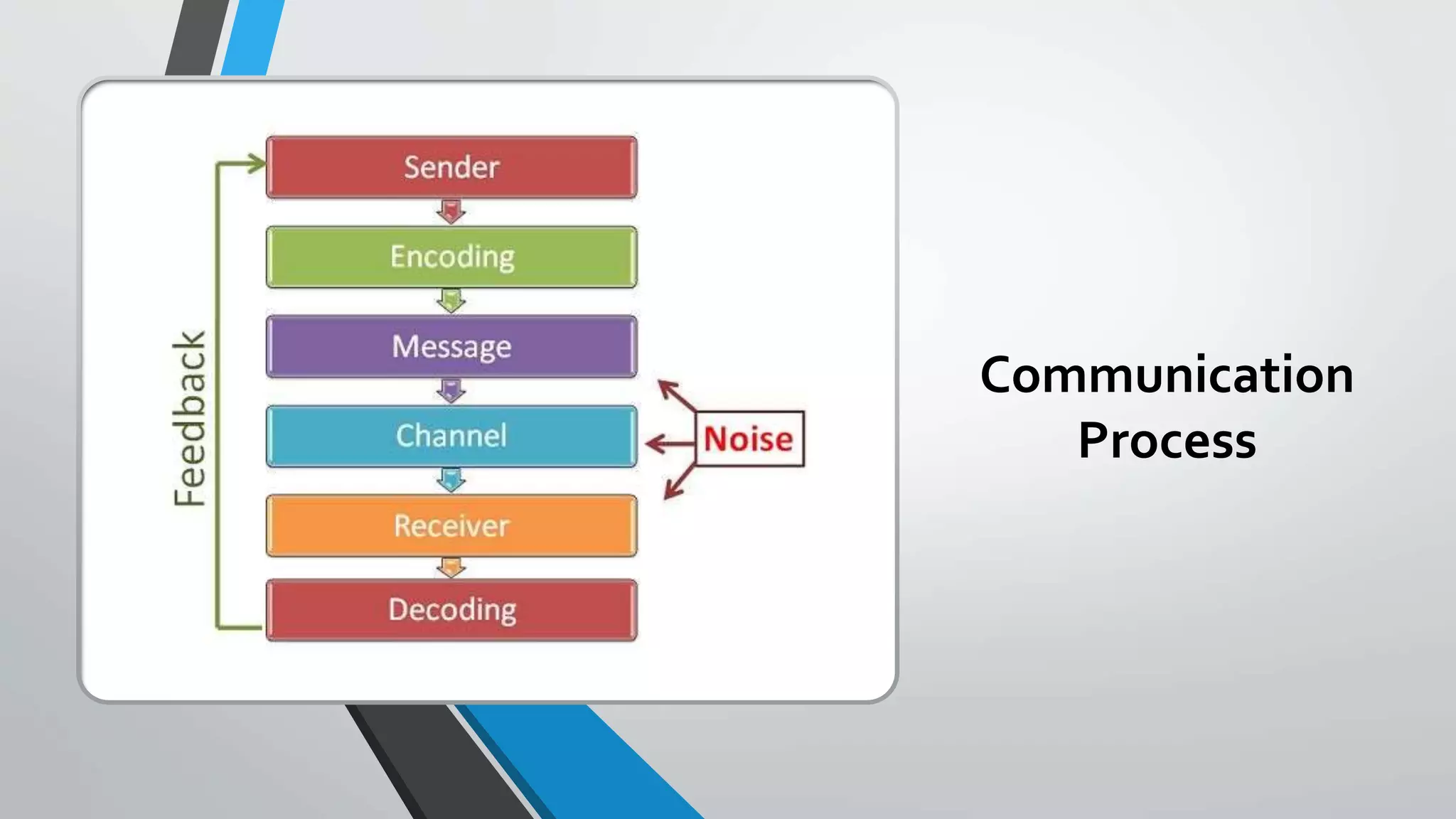
Communication
Process
Communication Process
1. Sender – the one that delivers a message to
a recipient.
2. Encoding – process of turning thoughts into
communication. Usually done by the sender.
3. Message – refers to the information that the
sender is relaying to the receiver.
Communication Process
4. Channel or Medium – is the manner or method through
which a message is sent to its intended recipient.
5. Receiver – the person who is getting or receiving the
message.
6. Decoding – is the interpretation of the message. Usually
done by the receiver.
7. Feedback – In some instances, the receiver might have a
feedback or a response to the sender.This starts
Types of Communication
1. Intrapersonal Communication – communication
with self. One thinks and introspects.
2. Interpersonal Communication – direct, face-to-
face communication between two people.
3. Group Communication – interaction with a
number of people in order to share information,
develop ideas, make decisions, solve problems, or
for amusement.
Types of Communication
4. Public Communication – persuasion of audience to
hold certain attitudes, values, or beliefs, so that they
think, believe, or act in a certain way.
5. Non-Verbal Communication – includes: facial
expressions, eye contact, body language, gestures,
proximity, touch, and personal appearance.
6. Mass Communication – includes tools such as books,
internet, cinema, television, radio, newspaper, etc
Forms of Communication
1.Verbal Communication - is when messages are
communicated through words.
a. Oral – is a channel of communication where
message is conveyed in spoken form.
b.Written – information is exchanged in written or
printed form
Forms of Communication
2. Non-Verbal Communication – is communication without the
use of words. It includes:
Facial expressions;
Eyes;
Touching;
Tone of voice;
Appearance; and
Posture or gesture
Barriers to Communication
Miscommunication: It is a ruined form of
communication. What is to be communicated
does not get communicated and an obstructed
form of the message is transmitted.
Barriers to Communication
Barriers to Communication: The sum total of all the factors
that can distort or prevent communication.
1.Physical Barriers – structural obstructions both
humanmade and natural.
2.Linguistic Barriers – speaking different languages.
3. Emotional Barriers – lack of emotional awareness and
control.
4.Cultural Barriers – difference in values and beliefs.
5.Perception Barriers – mental blocks, difference in insight.

Lesson-2-Communication.pptx

  • 1.
  • 2.
    Communication Communication is thetransfer of information from one person to another person. It is a way of reaching others by transmitting ideas, facts, thoughts, emotions, feelings, and values. Simply put, communication is an exchange of facts, ideas, opinions, or emotions by two or more persons.
  • 3.
    Aspects of Communication 1.Sender 2.Encoding 3.Message 4.Channelor Medium 5.Receiver 6.Decoding 7.Feedback
  • 4.
  • 5.
    Communication Process 1. Sender– the one that delivers a message to a recipient. 2. Encoding – process of turning thoughts into communication. Usually done by the sender. 3. Message – refers to the information that the sender is relaying to the receiver.
  • 6.
    Communication Process 4. Channelor Medium – is the manner or method through which a message is sent to its intended recipient. 5. Receiver – the person who is getting or receiving the message. 6. Decoding – is the interpretation of the message. Usually done by the receiver. 7. Feedback – In some instances, the receiver might have a feedback or a response to the sender.This starts
  • 7.
    Types of Communication 1.Intrapersonal Communication – communication with self. One thinks and introspects. 2. Interpersonal Communication – direct, face-to- face communication between two people. 3. Group Communication – interaction with a number of people in order to share information, develop ideas, make decisions, solve problems, or for amusement.
  • 8.
    Types of Communication 4.Public Communication – persuasion of audience to hold certain attitudes, values, or beliefs, so that they think, believe, or act in a certain way. 5. Non-Verbal Communication – includes: facial expressions, eye contact, body language, gestures, proximity, touch, and personal appearance. 6. Mass Communication – includes tools such as books, internet, cinema, television, radio, newspaper, etc
  • 9.
    Forms of Communication 1.VerbalCommunication - is when messages are communicated through words. a. Oral – is a channel of communication where message is conveyed in spoken form. b.Written – information is exchanged in written or printed form
  • 10.
    Forms of Communication 2.Non-Verbal Communication – is communication without the use of words. It includes: Facial expressions; Eyes; Touching; Tone of voice; Appearance; and Posture or gesture
  • 11.
    Barriers to Communication Miscommunication:It is a ruined form of communication. What is to be communicated does not get communicated and an obstructed form of the message is transmitted.
  • 12.
    Barriers to Communication Barriersto Communication: The sum total of all the factors that can distort or prevent communication. 1.Physical Barriers – structural obstructions both humanmade and natural. 2.Linguistic Barriers – speaking different languages. 3. Emotional Barriers – lack of emotional awareness and control. 4.Cultural Barriers – difference in values and beliefs. 5.Perception Barriers – mental blocks, difference in insight.