lesson 49 Visualizing the ratio of 2 given numbers (2).ppt
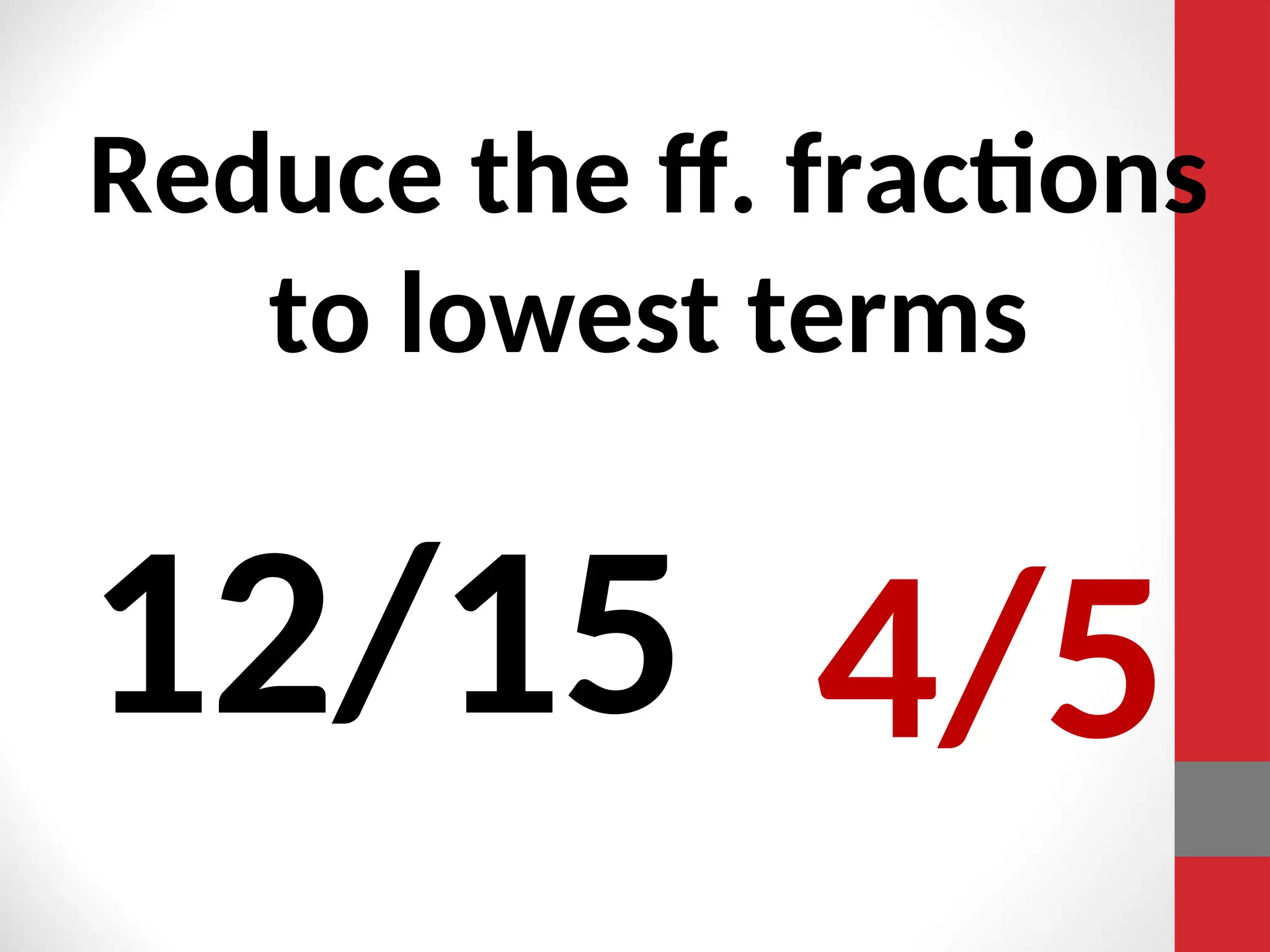
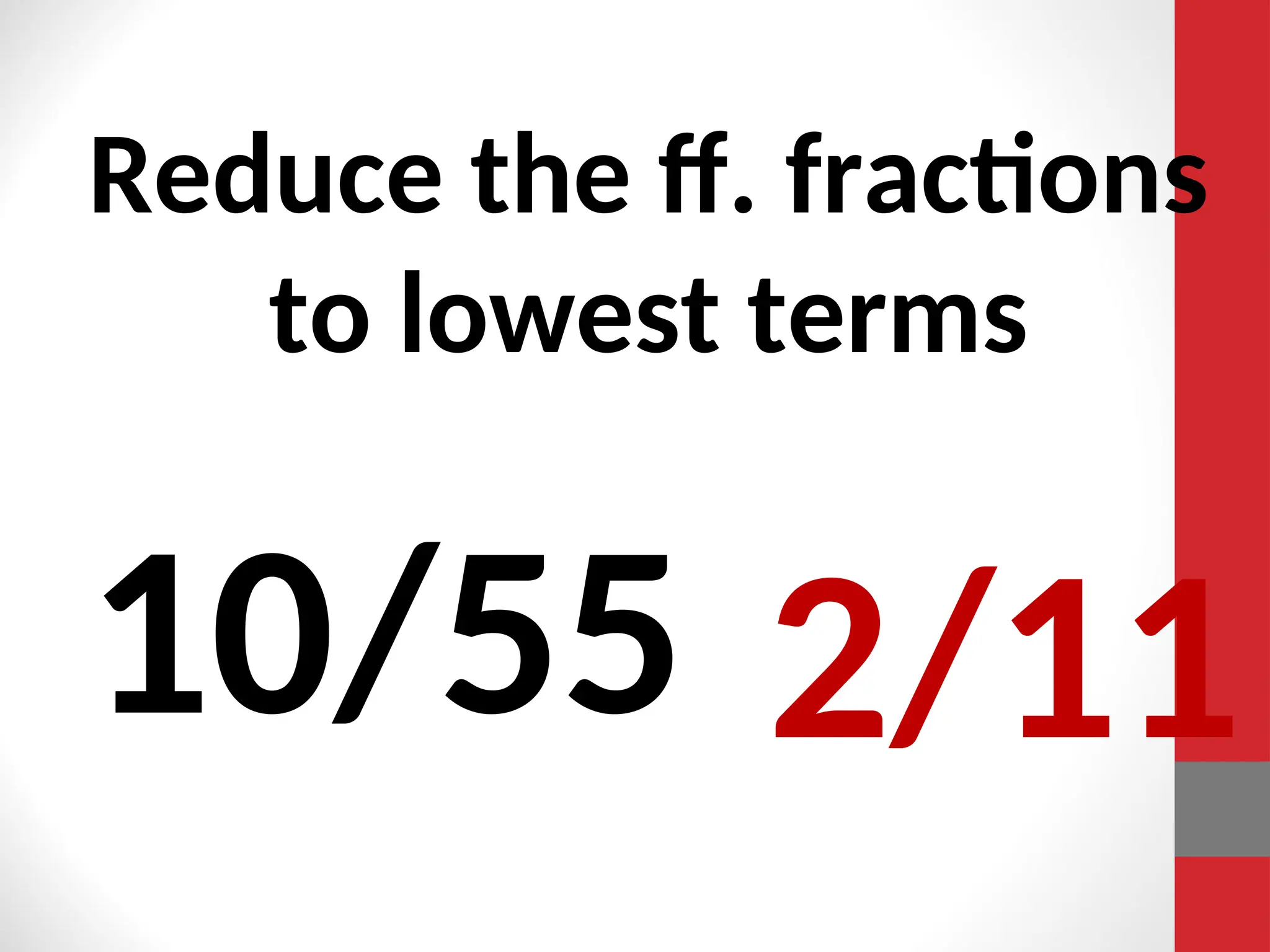
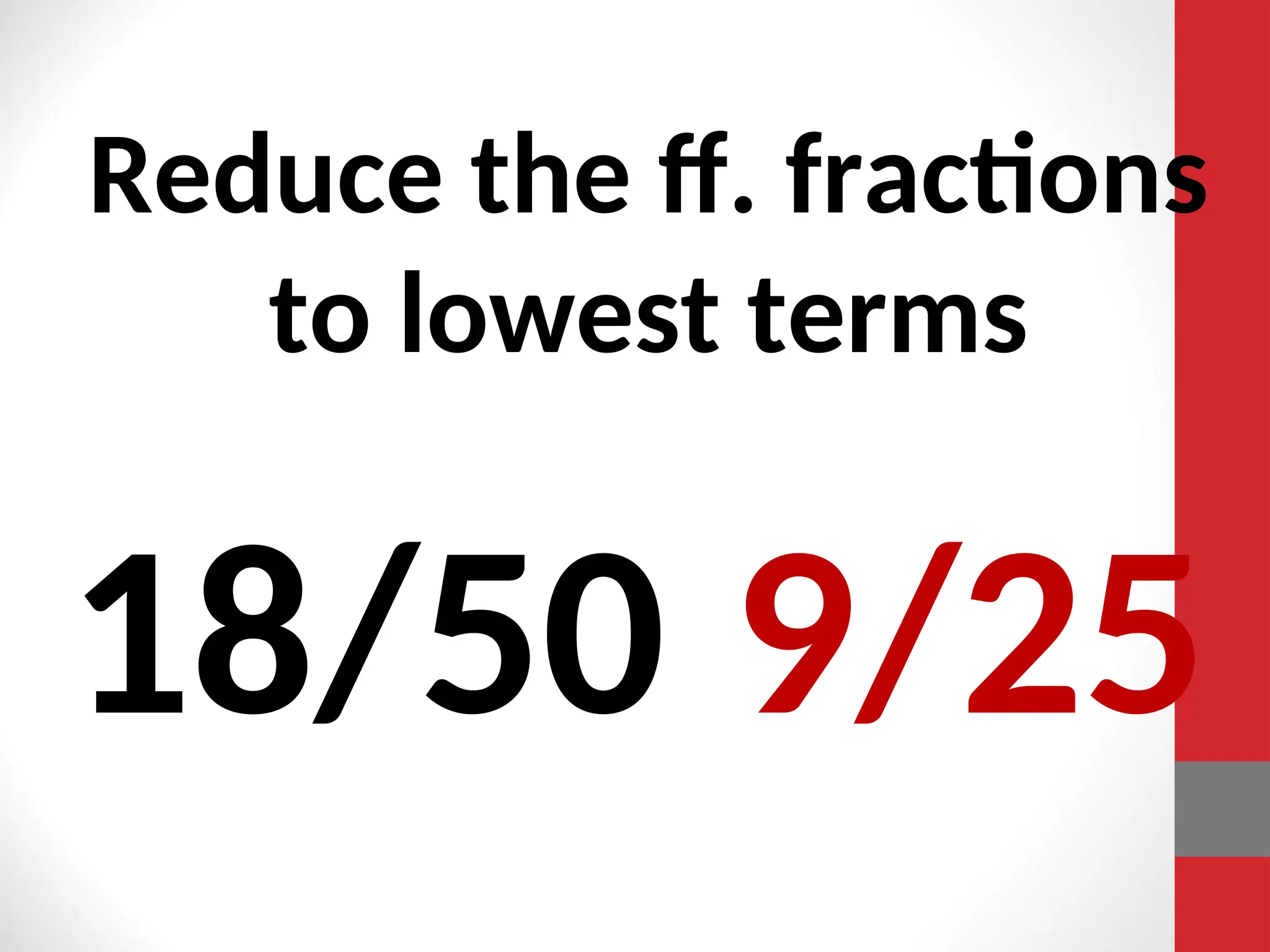
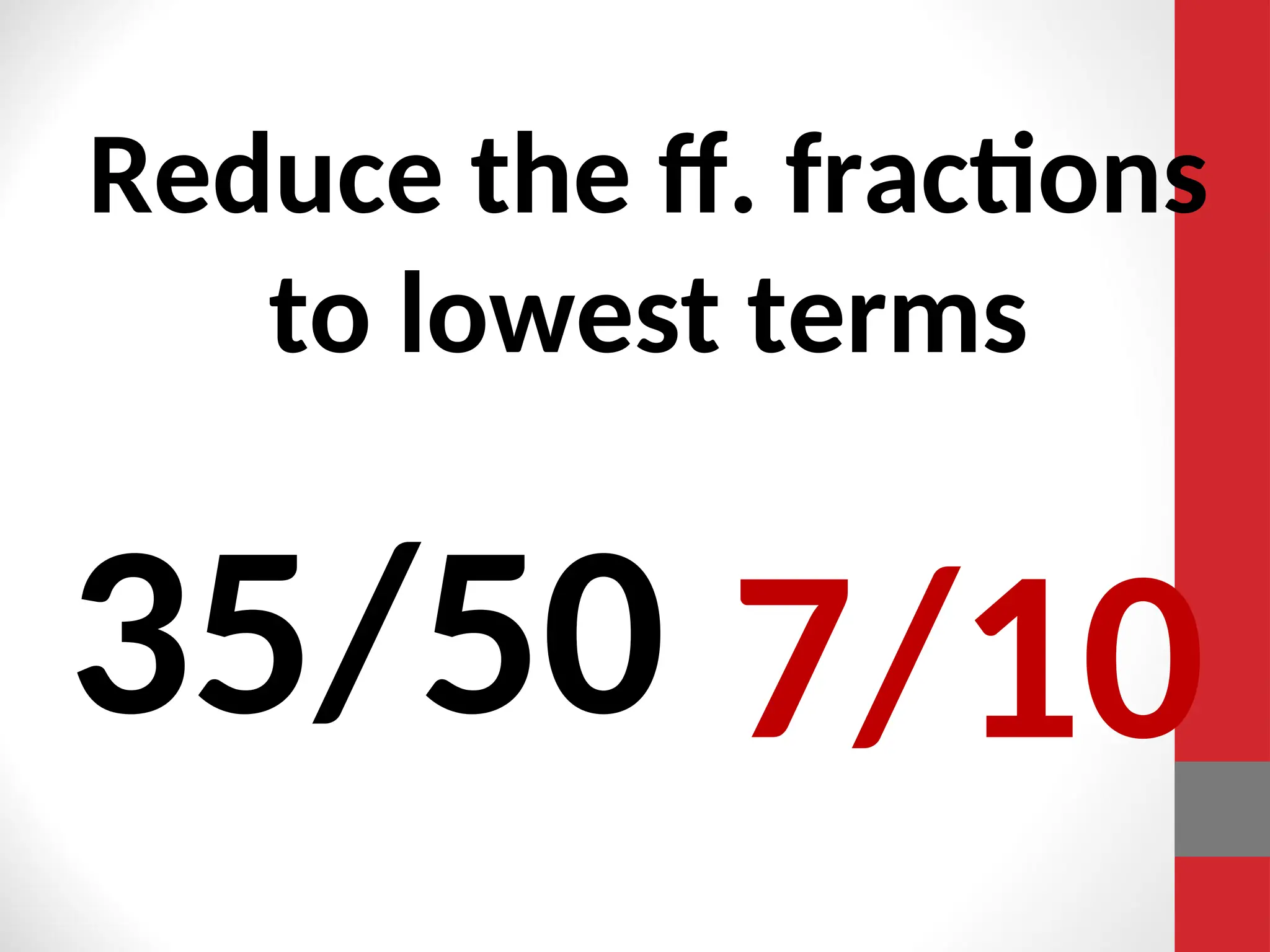
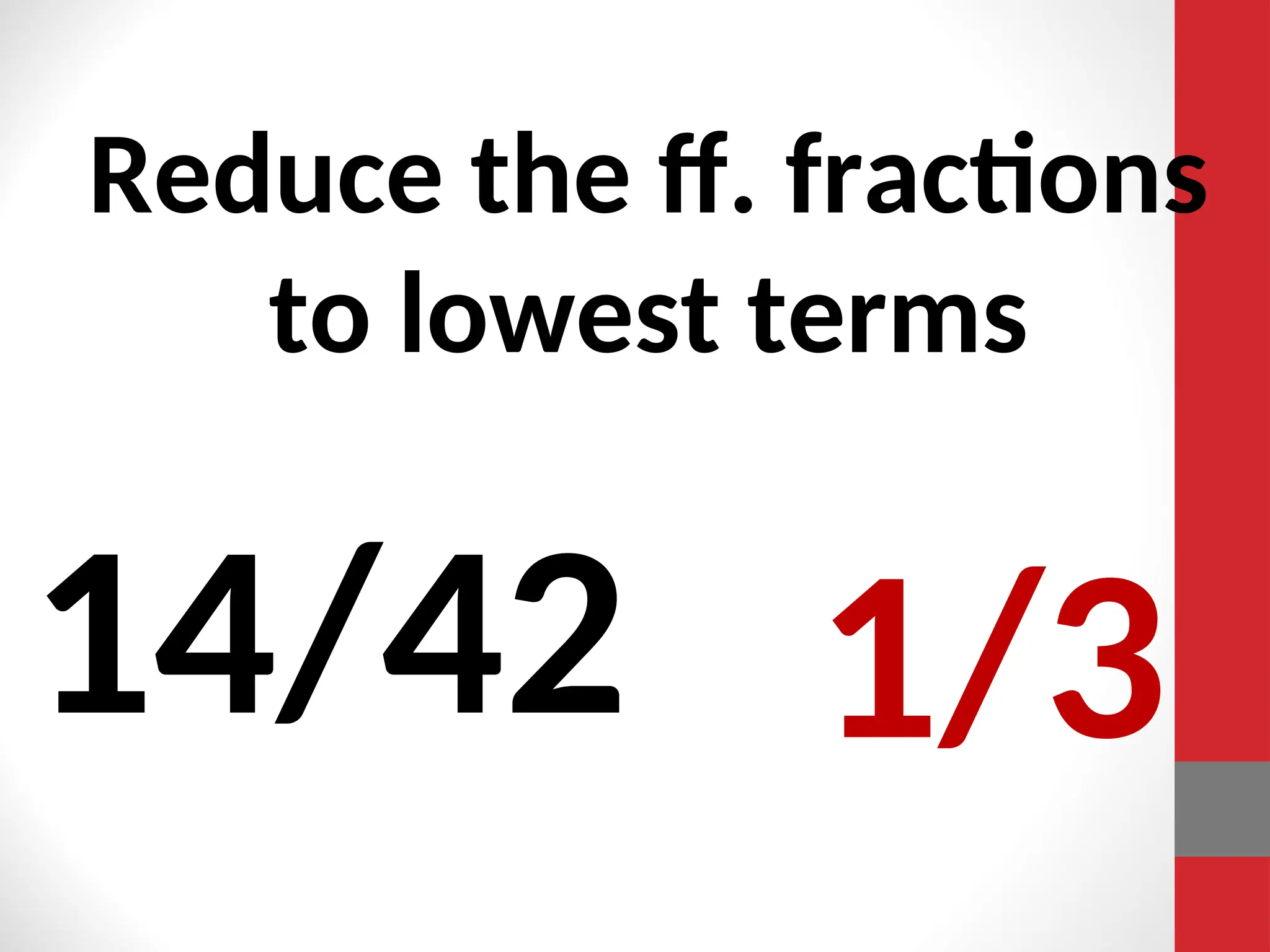
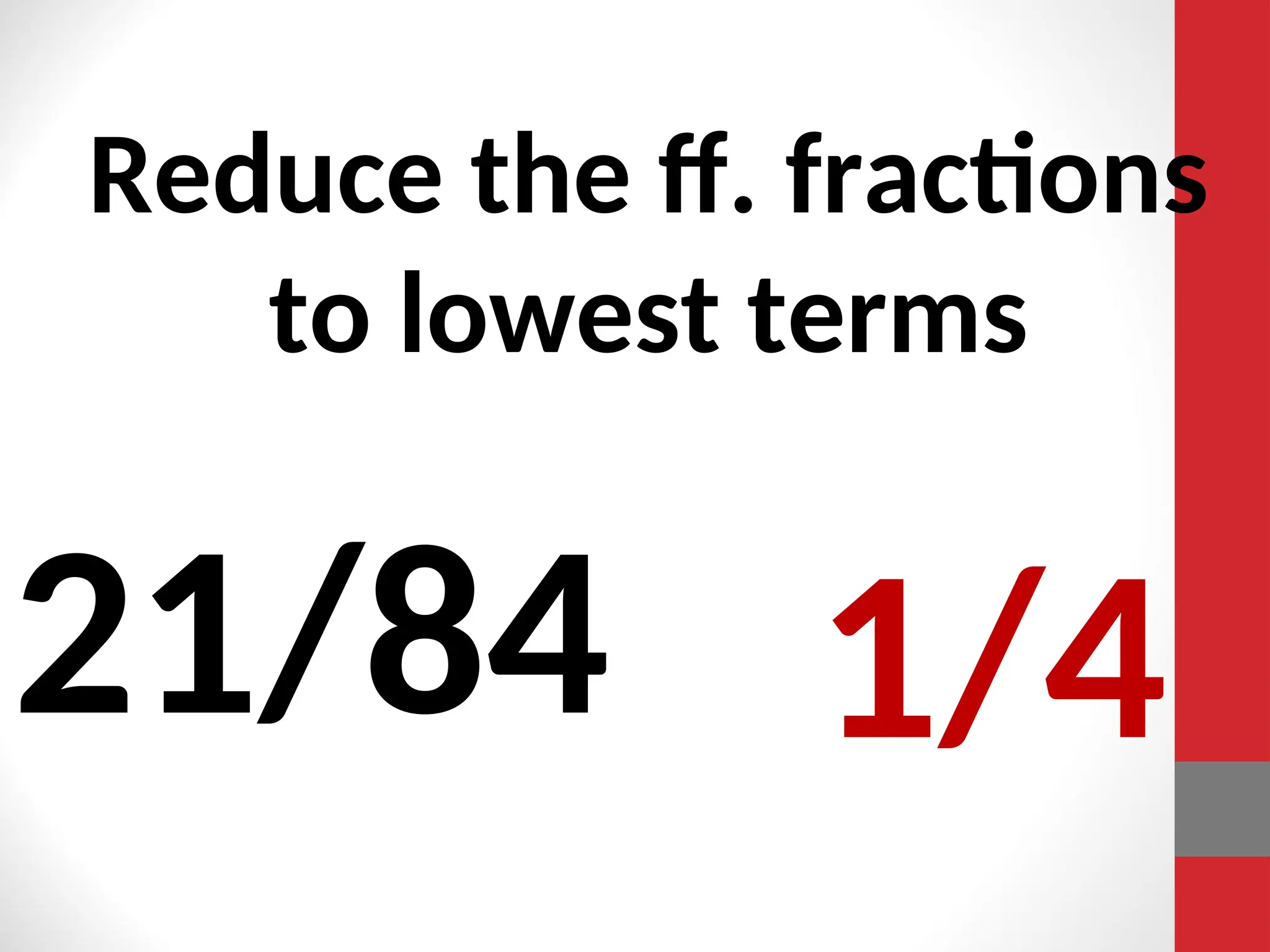
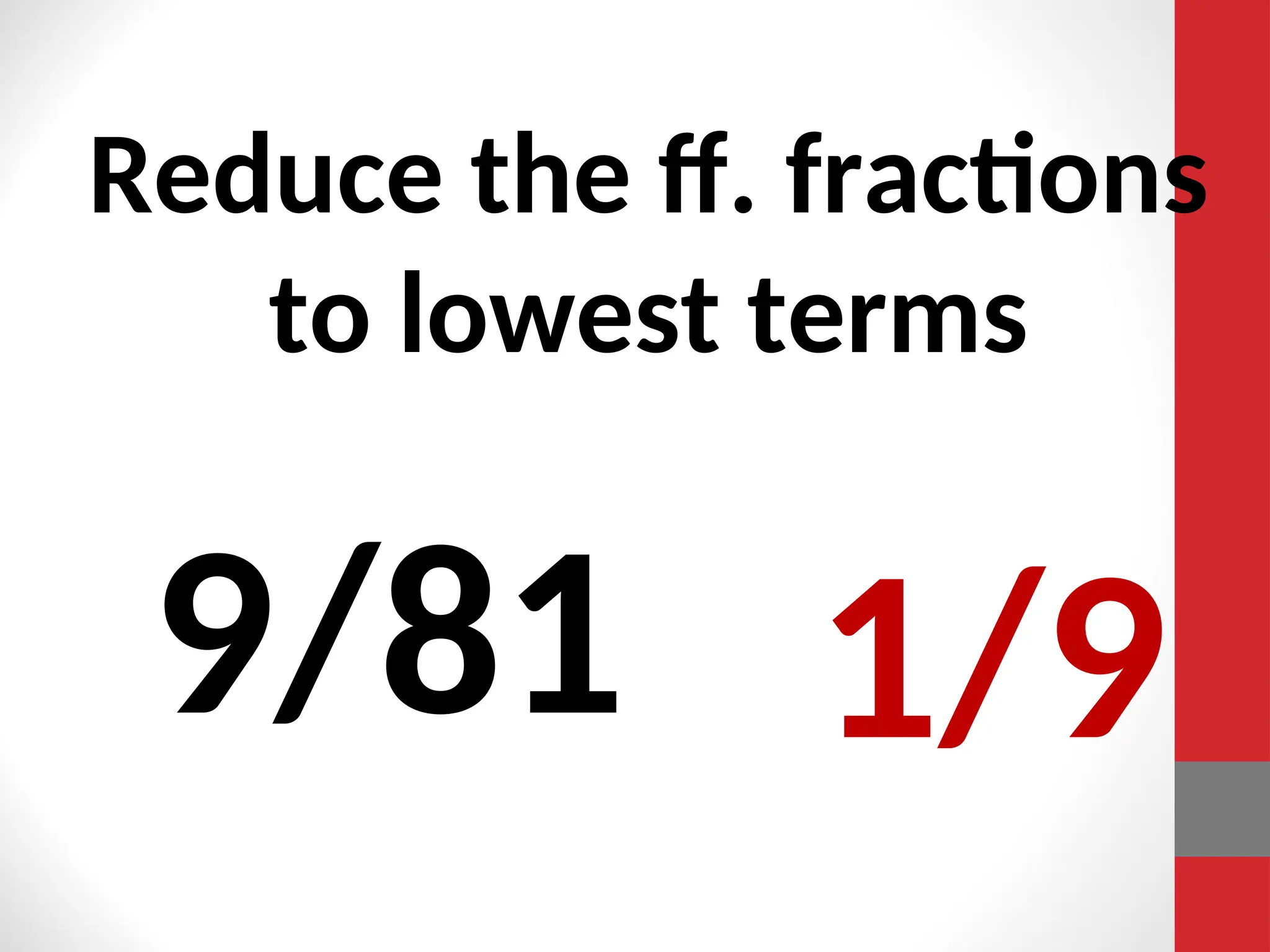
The document presents a lesson plan focused on visualizing and understanding ratios through activities involving students counting and comparing numbers of boys and girls in their classes. It includes instructions for reducing fractions to their lowest terms, defining ratios, and demonstrating how to simplify them. Additionally, it covers methods for expressing proportions and practical examples of direct proportion problems.
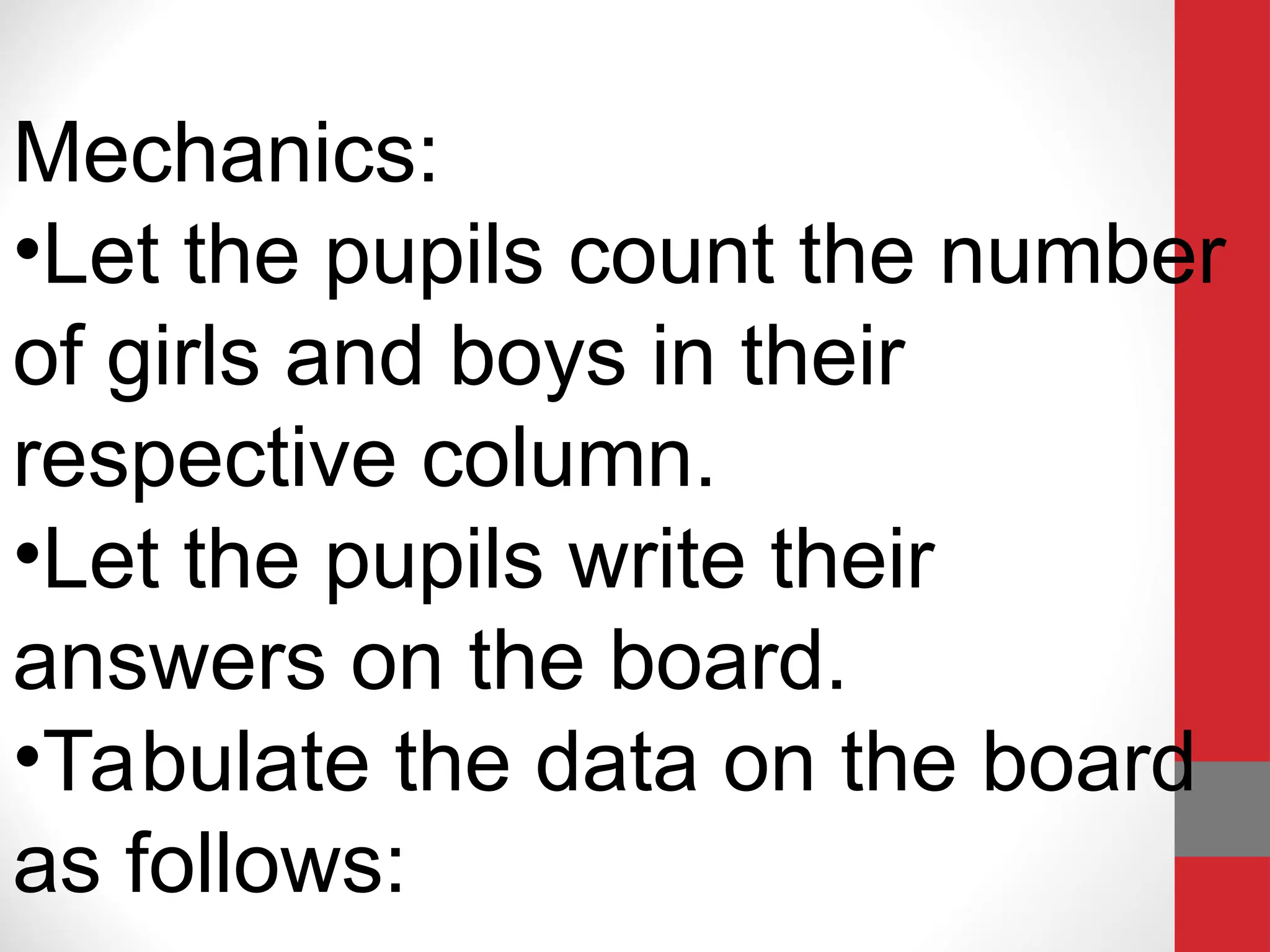
Mechanics:
•Let the pupilscount the number
of girls and boys in their
respective column.
•Let the pupils write their
answers on the board.
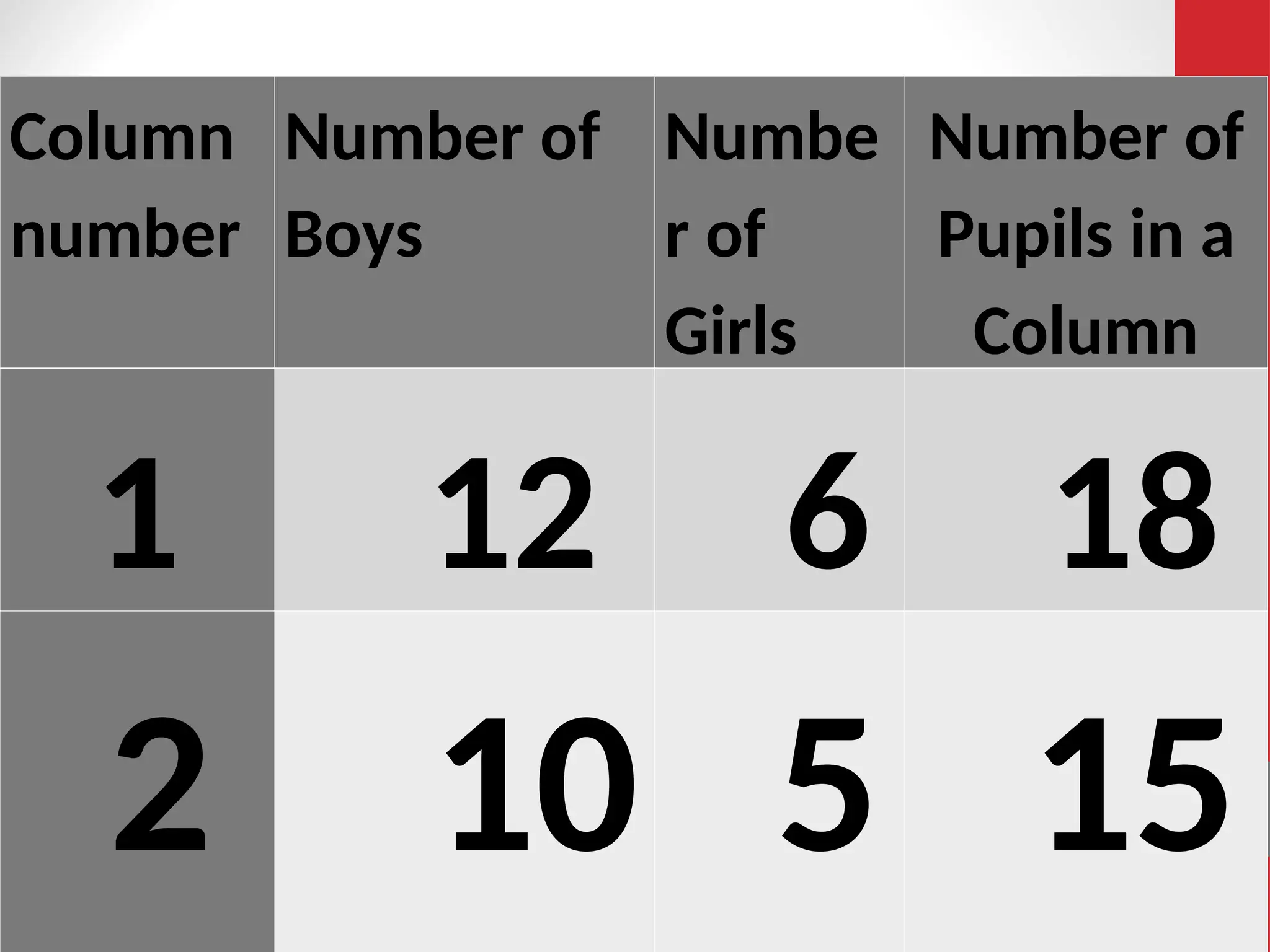
•Tabulate the data on the board
as follows:
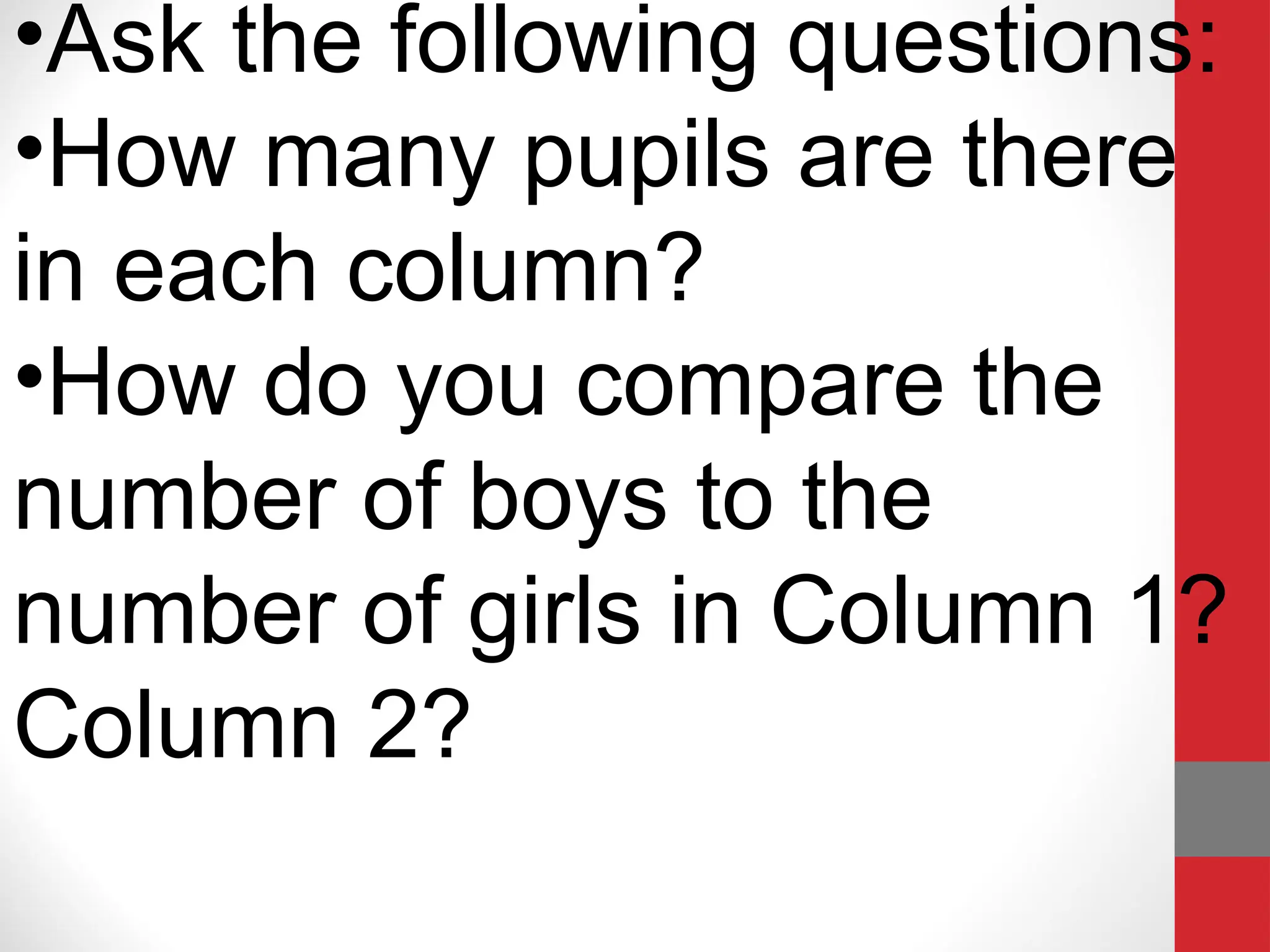
•Ask the followingquestions:
•How many pupils are there
in each column?
•How do you compare the
number of boys to the
number of girls in Column 1?
Column 2?
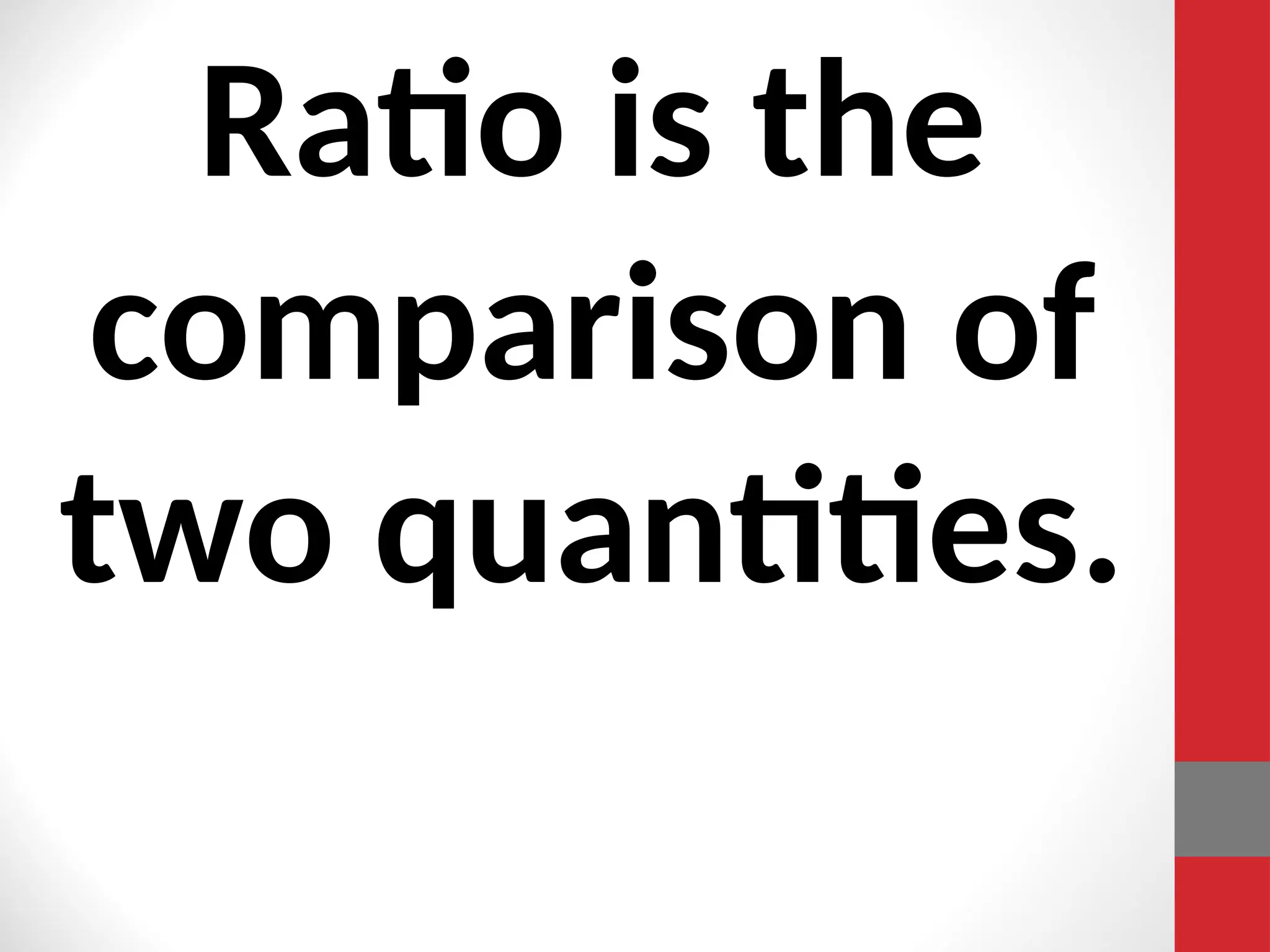
Ratio
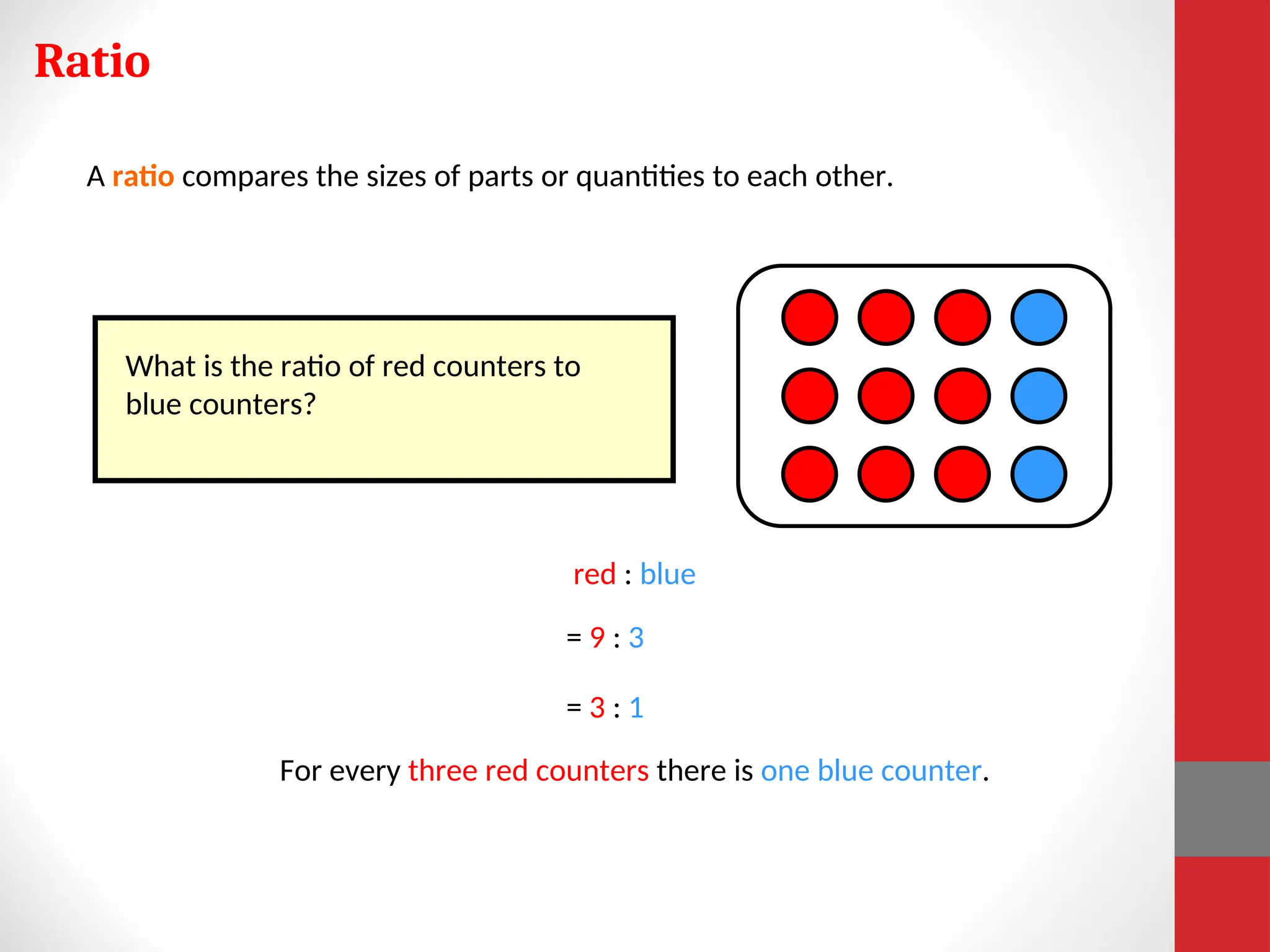
A ratio comparesthe sizes of parts or quantities to each other.
What is the ratio of red counters to
blue counters?
red : blue
= 9 : 3
= 3 : 1
For every three red counters there is one blue counter.
30.
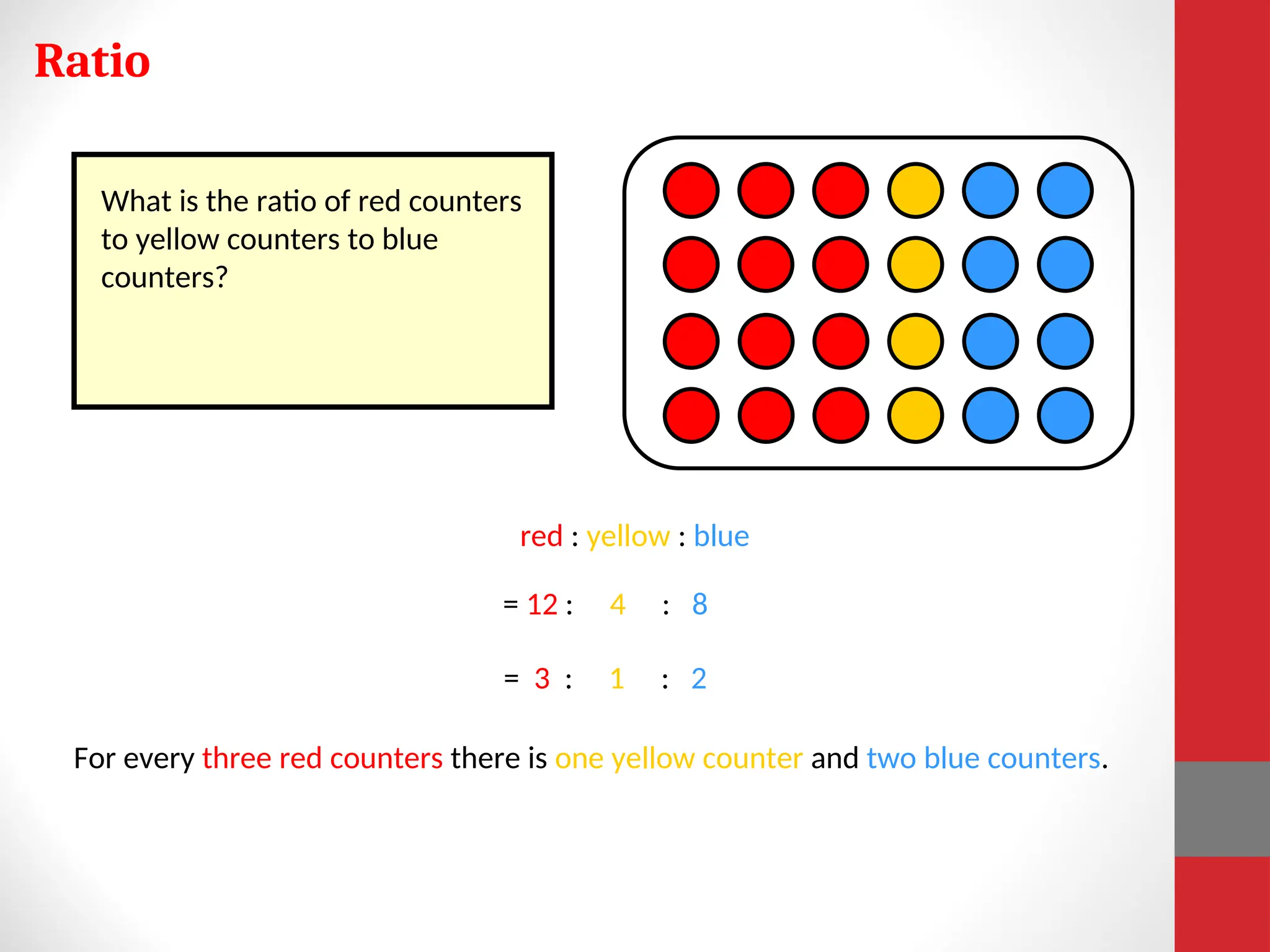
What is theratio of red counters
to yellow counters to blue
counters?
Ratio
red : yellow : blue
= 12 : 4 : 8
= 3 : 1 : 2
For every three red counters there is one yellow counter and two blue counters.
31.
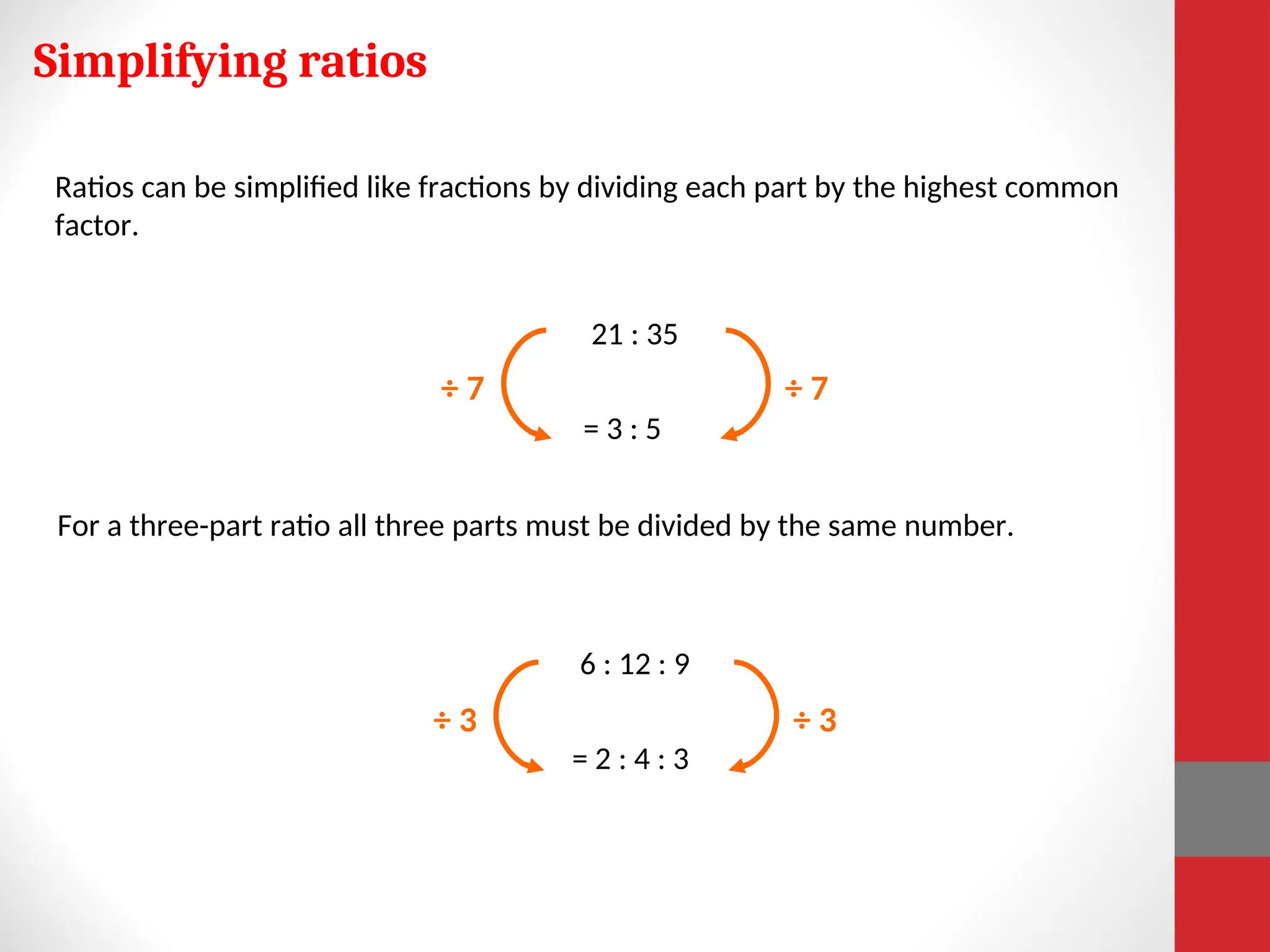
Simplifying ratios
Ratios canbe simplified like fractions by dividing each part by the highest common
factor.
21 : 35
= 3 : 5
÷ 7 ÷ 7
For a three-part ratio all three parts must be divided by the same number.
6 : 12 : 9
= 2 : 4 : 3
÷ 3 ÷ 3
32.
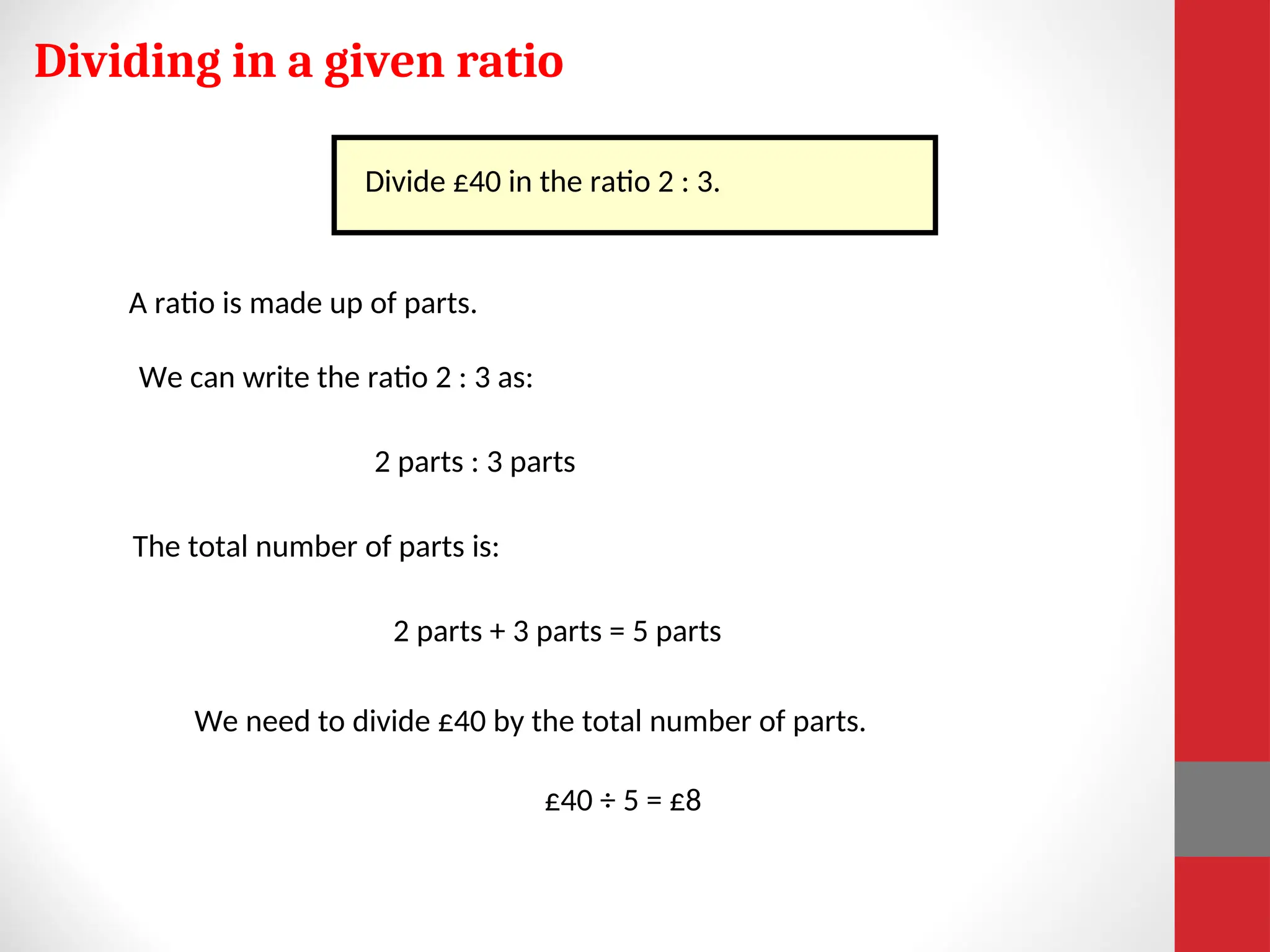
Dividing in agiven ratio
A ratio is made up of parts.
We can write the ratio 2 : 3 as:
2 parts : 3 parts
The total number of parts is:
2 parts + 3 parts = 5 parts
Divide £40 in the ratio 2 : 3.
£40 ÷ 5 = £8
We need to divide £40 by the total number of parts.
33.
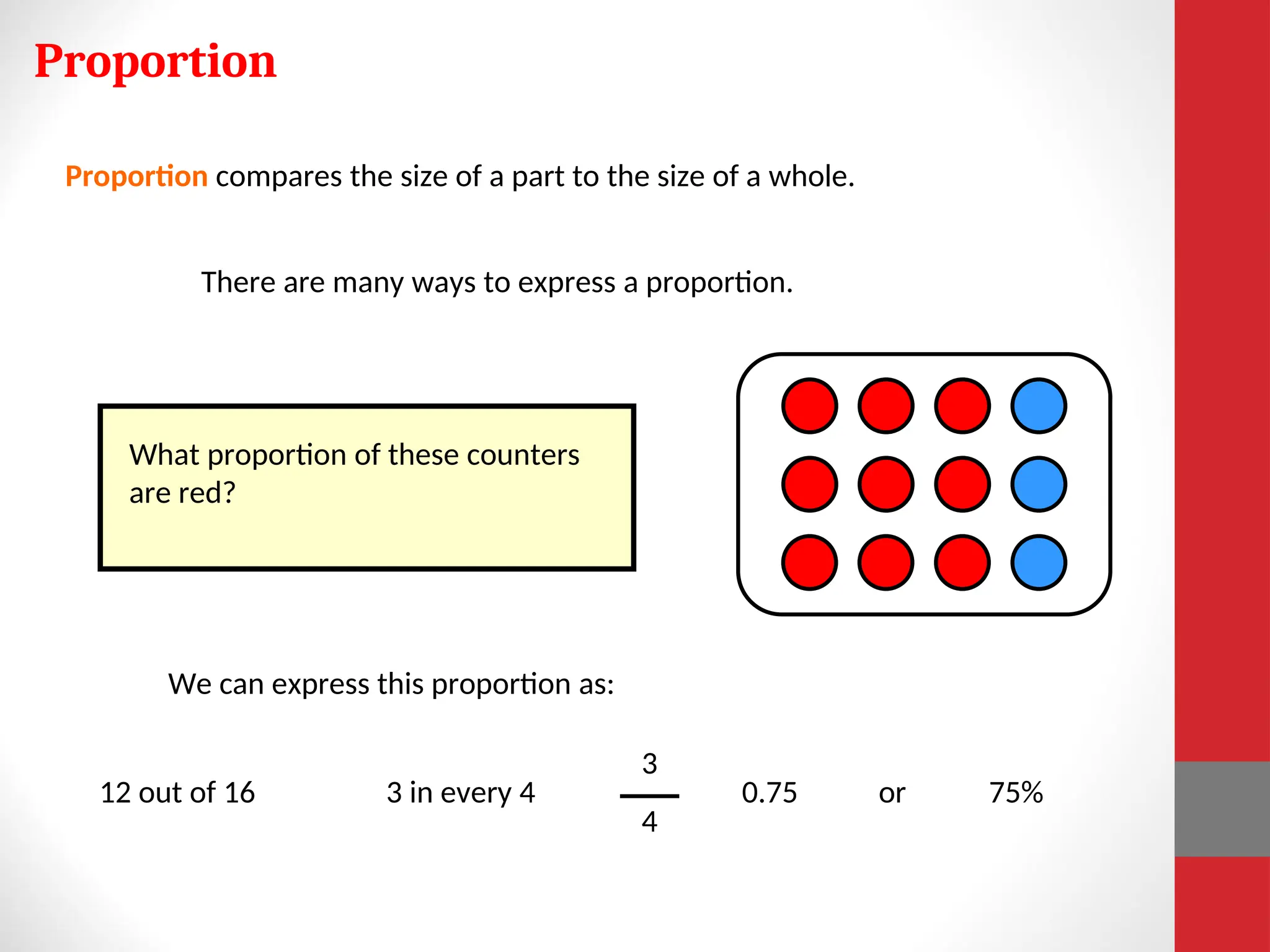
Proportion
There are manyways to express a proportion.
We can express this proportion as:
12 out of 16 3 in every 4
3
4
0.75 or 75%
Proportion compares the size of a part to the size of a whole.
What proportion of these counters
are red?
34.
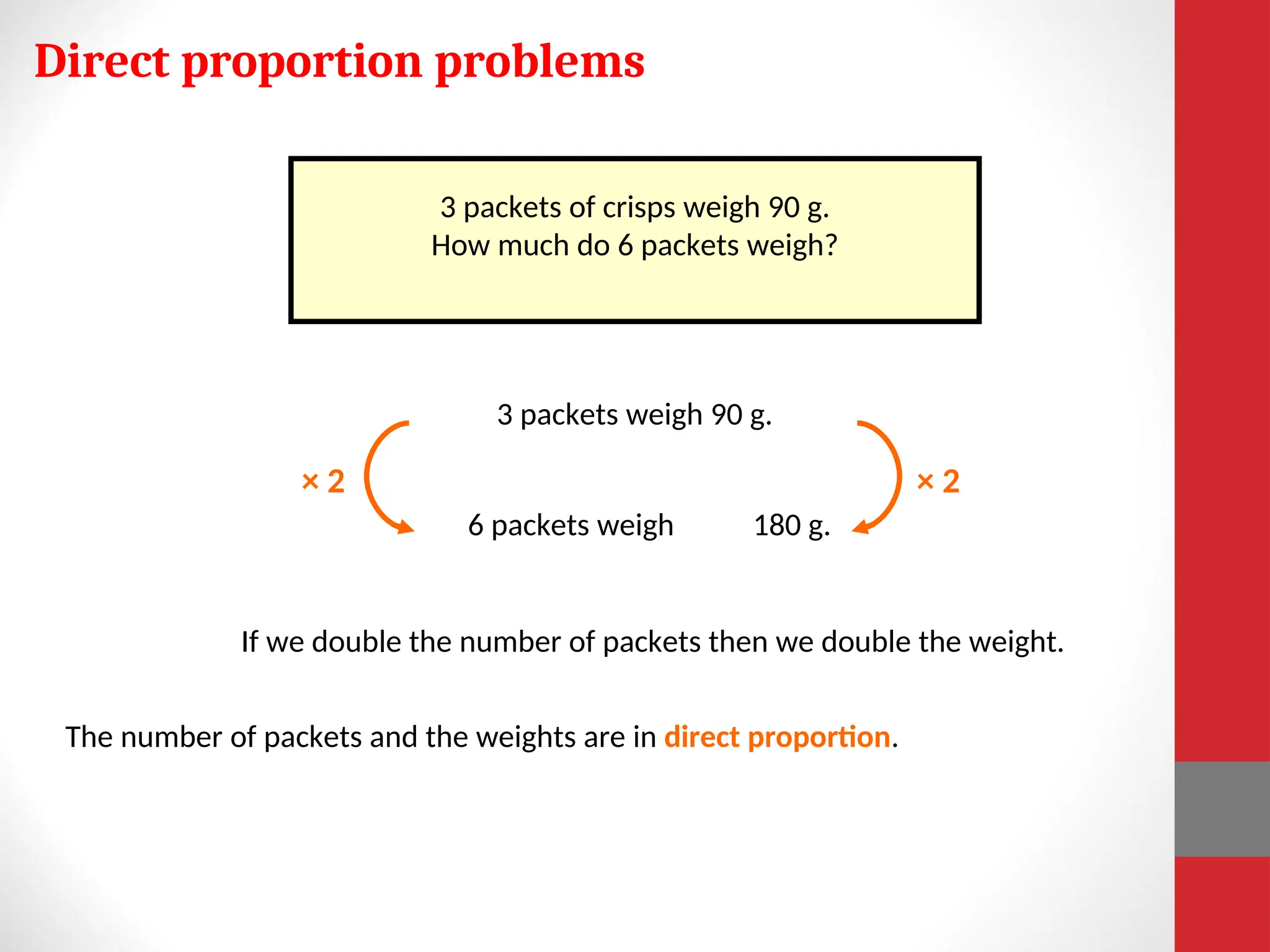
Direct proportion problems
3packets of crisps weigh 90 g.
How much do 6 packets weigh?
3 packets weigh 90 g.
× 2
6 packets weigh
× 2
180 g.
If we double the number of packets then we double the weight.
The number of packets and the weights are in direct proportion.
#29 Talk through the points on the slide showing, with reference to the diagram, that the ratio 9 : 3 is equivalent to the ratio 3 : 1. State that this is the ratio in its simplest form. Compare this to simplifying fractions.
Ask pupils what statements they can make about the number of red counters compared with the number of blue counters. For example, ‘the number of blue counters is a third of the number of red counters’ or ‘the number of red counters is three times the number of blue counters’.
To distinguish between ratio and proportion you may wish to ask,
What proportion of the counters are red? (three quarters)
Emphasize that ratio compares the sizes of parts to each other while proportion compares the sizes of parts to the whole.
#30 Show that ratios can compare more than two parts or quantities.
Explain with reference to the diagram that 12 : 4 : 8 simplifies to 3 : 1 : 2.
For every three red counters there is one yellow counter and two blue counters.
#33 Discuss the various ways of expressing a proportion in words, as a fraction, as a decimal and as a percentage.
Ask pupils to tell you what proportion of the counters are blue.
Compare this slide to the ratio slide that shows the ratio of red counters to blue counters.
Emphasize that ratio compares the sizes of parts or quantities to each other while proportion compares the size of a part to the size of the whole.
Ratios can also be expressed as fractions, decimals and percentages and so pupils often confuse these two.
#34 Establish that the number of packets of crisps and the weight of the packet are in direct proportion as long as the weight of each packet is the same.
That means that if we double the number of packets, as in the example, we double the weight. If we half the number of packets, we half the weight, and so on.
The number of packets and the weight of the packets are in direct proportion if the ratio of the number of packets : weight of packets is always the same.