Codes and Conventions
Media Language/What is Science Fiction?
Media
Language
• How the different modes and language associated with different media forms communicate multiple
meanings
• How the combination of elements of media language influence meaning. In terms of television, you will
need to look at technical and visual codes (e.g. camera, lighting, mise-en-scène, framing, audio, editing) and
narrative structures here
• The codes and conventions of media forms and products, including processes through which media
language develops as a genre
• The dynamic and historically relative nature of genre Link to Neale here – repetition and difference
• The processes through which meanings are created through intertextuality
• How audiences respond to and interpret the above aspects of media language. This could easily be linked
to the “Audience” section of the theoretical framework
• Narratology (including Todorov)
• Genre (including Neale)
• Structuralism (including Lévi Strauss) at A level
• Postmodernism (including Baudrillard) at A level
Learning Aims
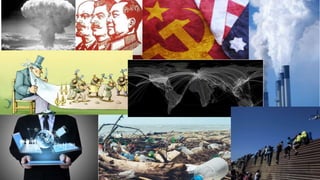
To gain knowledge of the themes of Science Fiction films
throughout the 20th century until today
To examine Humans and the themes it explores
To examine how the micro elements create meaning for the
audience within the theoretical framework
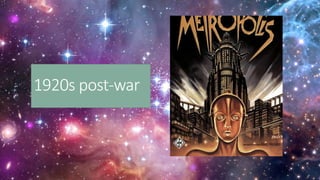
1920s post-war
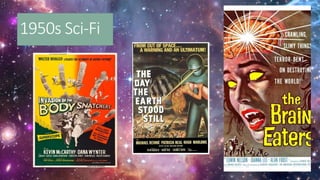
1950s Sci-Fi
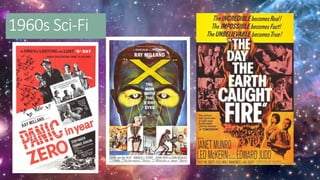
1960s Sci-Fi
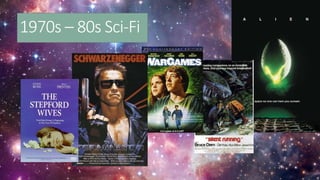
1970s – 80s Sci-Fi
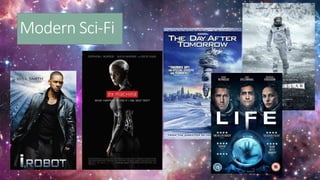
Modern Sci-Fi
A1: What is science
fiction?
Steve Neale suggests that genres
exist within particular contexts and
develop through borrowing from
other texts. e.g. borrowings from
mythology, literature, Dan
O’Bannon screenwriter for Alien –
“It was stolen from everywhere”;
art - H.R. Giger
What are the
codes and
conventions of
the sci-fi
genre?
Think RESISTS
Recurring situations
Elements of narrative
Style
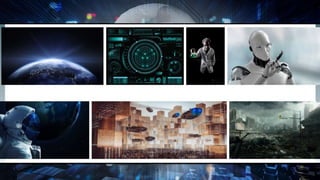
Iconography
Settings
Themes
Stock characters
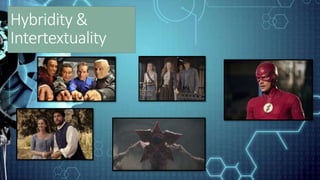
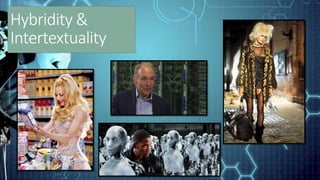
Hybridity &
Intertextuality
Hybridity &
Intertextuality
Codes and conventions of sci fi

Codes and conventions of sci fi

  • 1.
    Codes and Conventions MediaLanguage/What is Science Fiction?
  • 3.
    Media Language • How thedifferent modes and language associated with different media forms communicate multiple meanings • How the combination of elements of media language influence meaning. In terms of television, you will need to look at technical and visual codes (e.g. camera, lighting, mise-en-scène, framing, audio, editing) and narrative structures here • The codes and conventions of media forms and products, including processes through which media language develops as a genre • The dynamic and historically relative nature of genre Link to Neale here – repetition and difference • The processes through which meanings are created through intertextuality • How audiences respond to and interpret the above aspects of media language. This could easily be linked to the “Audience” section of the theoretical framework • Narratology (including Todorov) • Genre (including Neale) • Structuralism (including Lévi Strauss) at A level • Postmodernism (including Baudrillard) at A level
  • 4.
    Learning Aims To gainknowledge of the themes of Science Fiction films throughout the 20th century until today To examine Humans and the themes it explores To examine how the micro elements create meaning for the audience within the theoretical framework
  • 7.
  • 8.
  • 9.
  • 10.
  • 11.
  • 12.
    A1: What isscience fiction? Steve Neale suggests that genres exist within particular contexts and develop through borrowing from other texts. e.g. borrowings from mythology, literature, Dan O’Bannon screenwriter for Alien – “It was stolen from everywhere”; art - H.R. Giger
  • 14.
    What are the codesand conventions of the sci-fi genre? Think RESISTS Recurring situations Elements of narrative Style Iconography Settings Themes Stock characters
  • 15.
  • 16.

Editor's Notes

  • #2 https://www.youtube.com/watch?v=Xs0K4ApWl4g
  • #14 https://www.youtube.com/watch?v=JI9lVkJdif4&feature=emb_logo What conventions are evident? What ideologies or concerns can you identify?