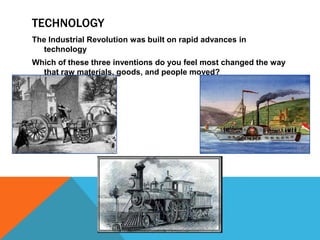
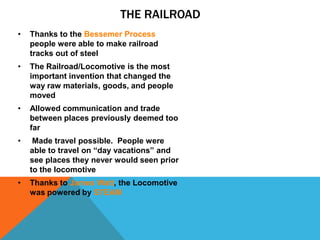
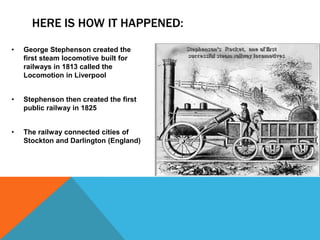
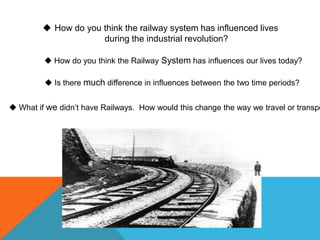
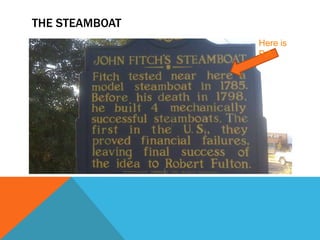
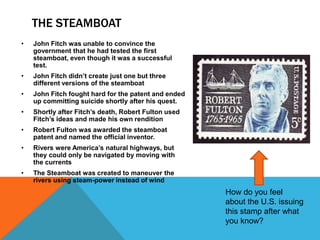
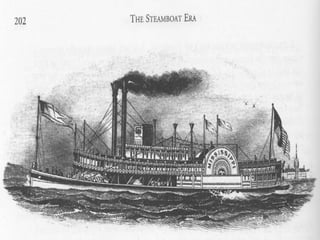
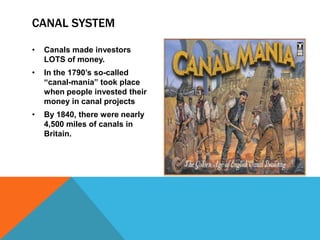
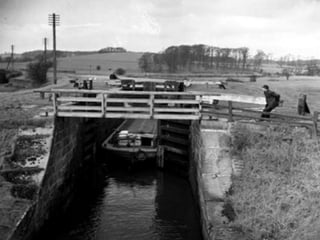
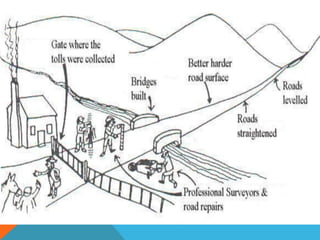
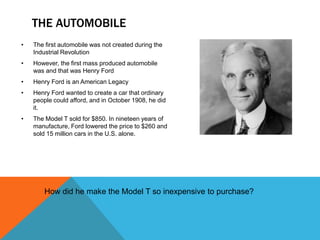
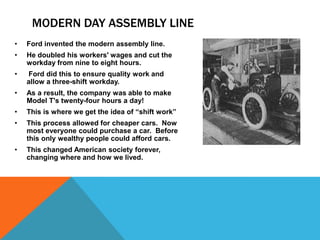
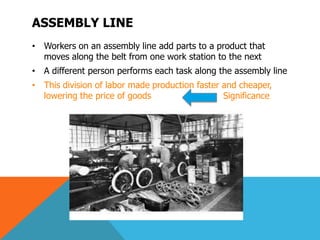
The document discusses five inventions that changed mobility: the railroad, steamboat, canal system, turnpikes, and automobile. It focuses on the railroad and how it allowed for improved communication and trade by making travel possible between places that were previously too far. The railroad system influenced lives during the industrial revolution by connecting cities and influencing modern lives through infrastructure. It also discusses John Fitch's early work on the steamboat and how Robert Fulton was later awarded the patent. The canal system allowed transport of goods like coal and pottery over long distances. Turnpikes charged tolls for road use, funding improvements. Henry Ford later developed the assembly line, making automobiles affordable to the masses.