What Was the Industrial Revolution?
agricultural – Farming and growing crops.
industrial – Factories producing goods
on a large scale.
manufacturing – Making items in large
numbers using machines.
rural – The countryside.
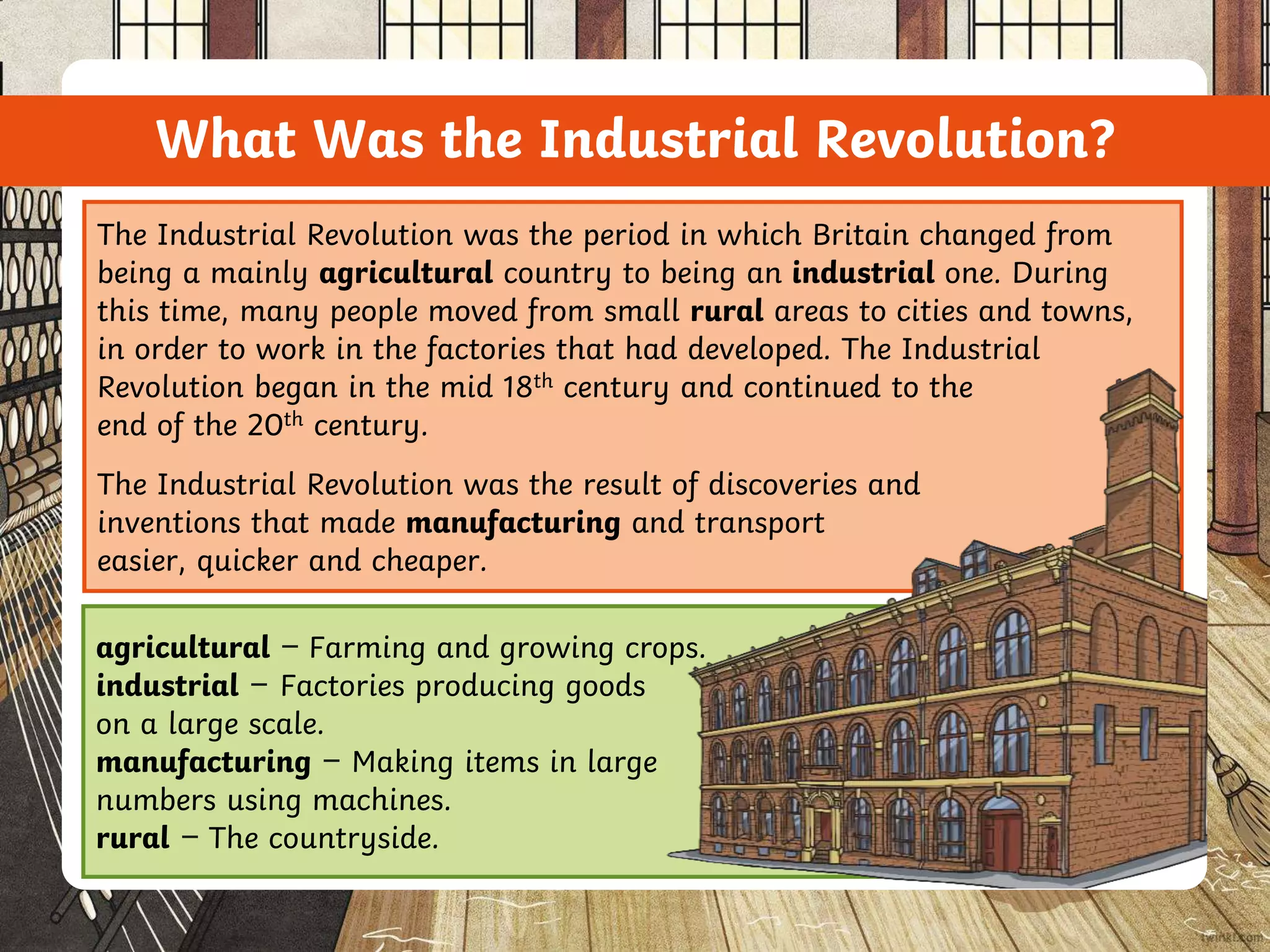
The Industrial Revolution was the period in which Britain changed from
being a mainly agricultural country to being an industrial one. During
this time, many people moved from small rural areas to cities and towns,
in order to work in the factories that had developed. The Industrial
Revolution began in the mid 18th century and continued to the
end of the 20th century.
The Industrial Revolution was the result of discoveries and
inventions that made manufacturing and transport
easier, quicker and cheaper.
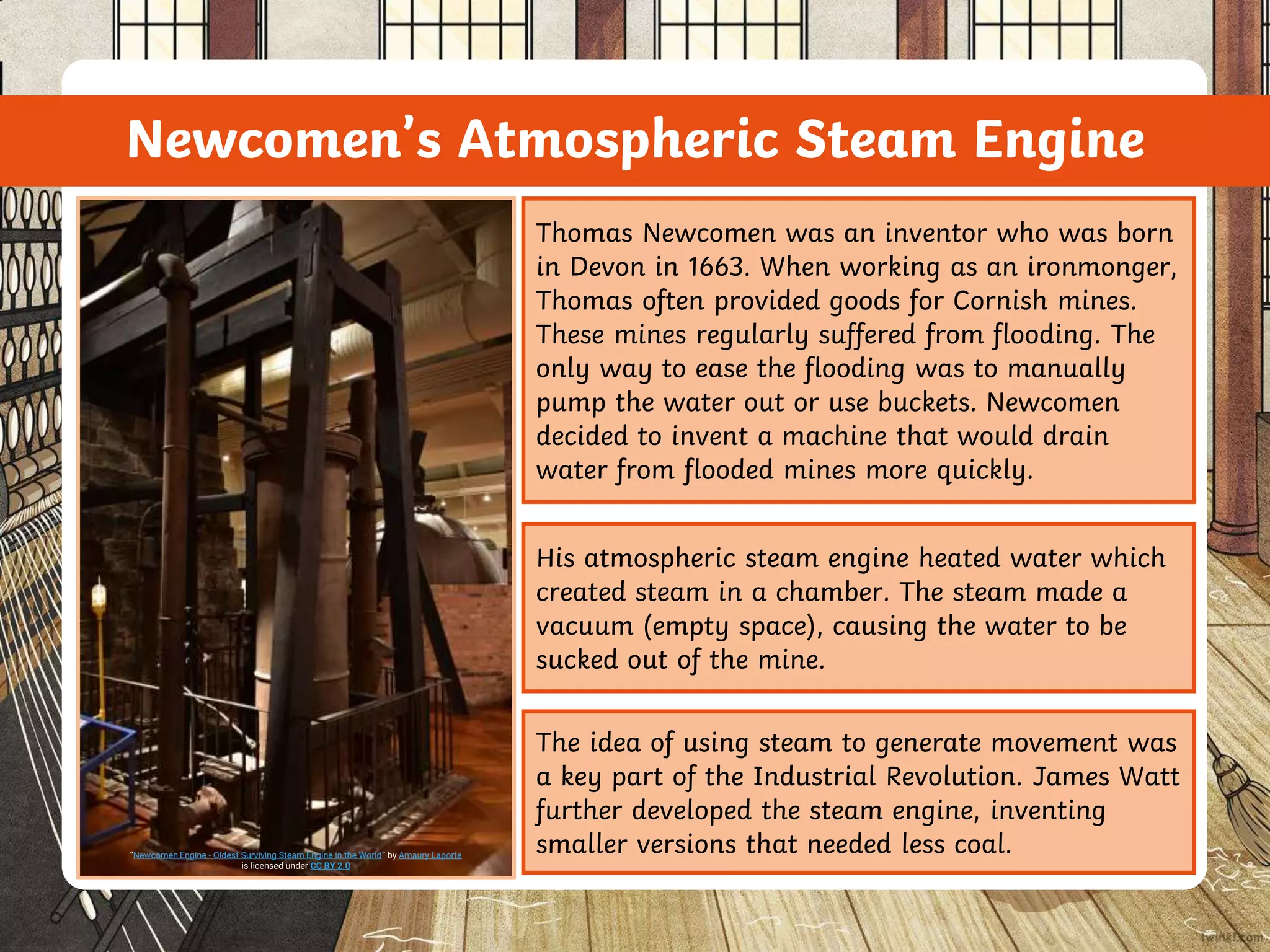
Newcomen’s Atmospheric Steam Engine
Thomas Newcomen was an inventor who was born
in Devon in 1663. When working as an ironmonger,
Thomas often provided goods for Cornish mines.
These mines regularly suffered from flooding. The
only way to ease the flooding was to manually
pump the water out or use buckets. Newcomen
decided to invent a machine that would drain
water from flooded mines more quickly.
His atmospheric steam engine heated water which
created steam in a chamber. The steam made a
vacuum (empty space), causing the water to be
sucked out of the mine.
The idea of using steam to generate movement was
a key part of the Industrial Revolution. James Watt
further developed the steam engine, inventing
smaller versions that needed less coal.
“Newcomen Engine - Oldest Surviving Steam Engine in the World” by Amaury Laporte
is licensed under CC BY 2.0
The Spinning Jenny
Before the Industrial Revolution, fabric was made using a spinning wheel. It
was often done by people in their own homes. This way of manufacturing
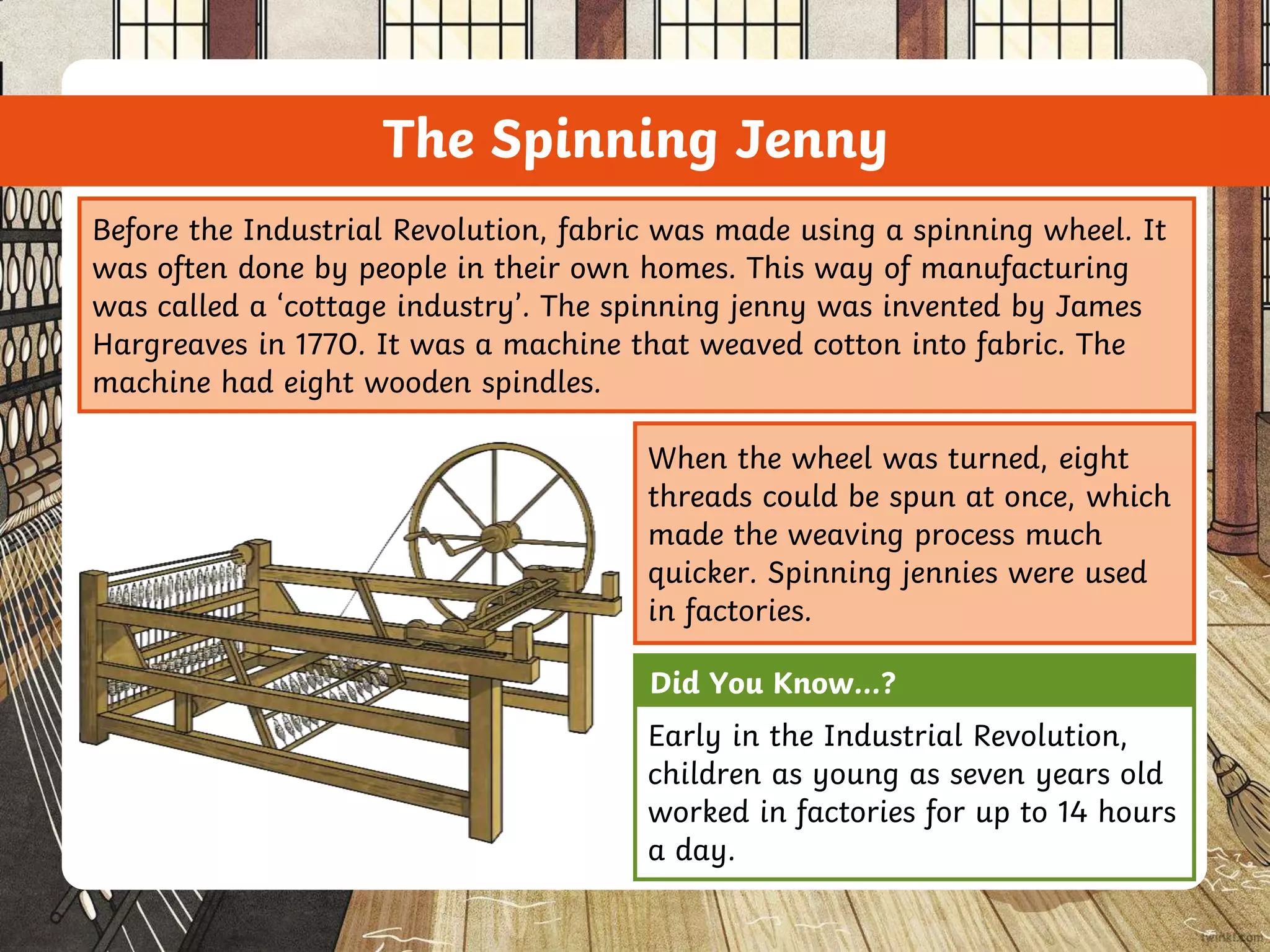
was called a ‘cottage industry’. The spinning jenny was invented by James
Hargreaves in 1770. It was a machine that weaved cotton into fabric. The
machine had eight wooden spindles.
When the wheel was turned, eight
threads could be spun at once, which
made the weaving process much
quicker. Spinning jennies were used
in factories.
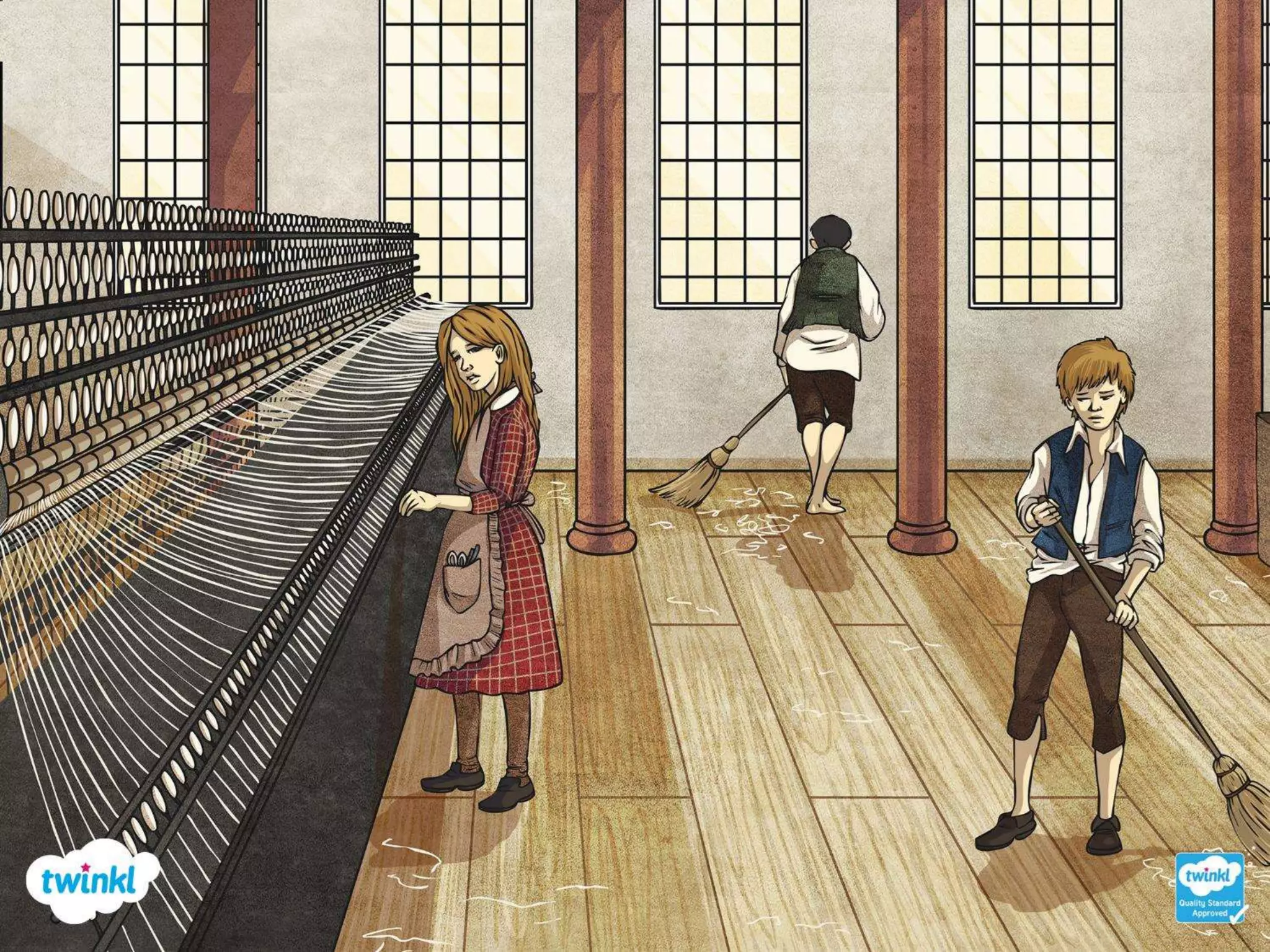
Early in the Industrial Revolution,
children as young as seven years old
worked in factories for up to 14 hours
a day.
Did You Know…?
The Cotton Gin
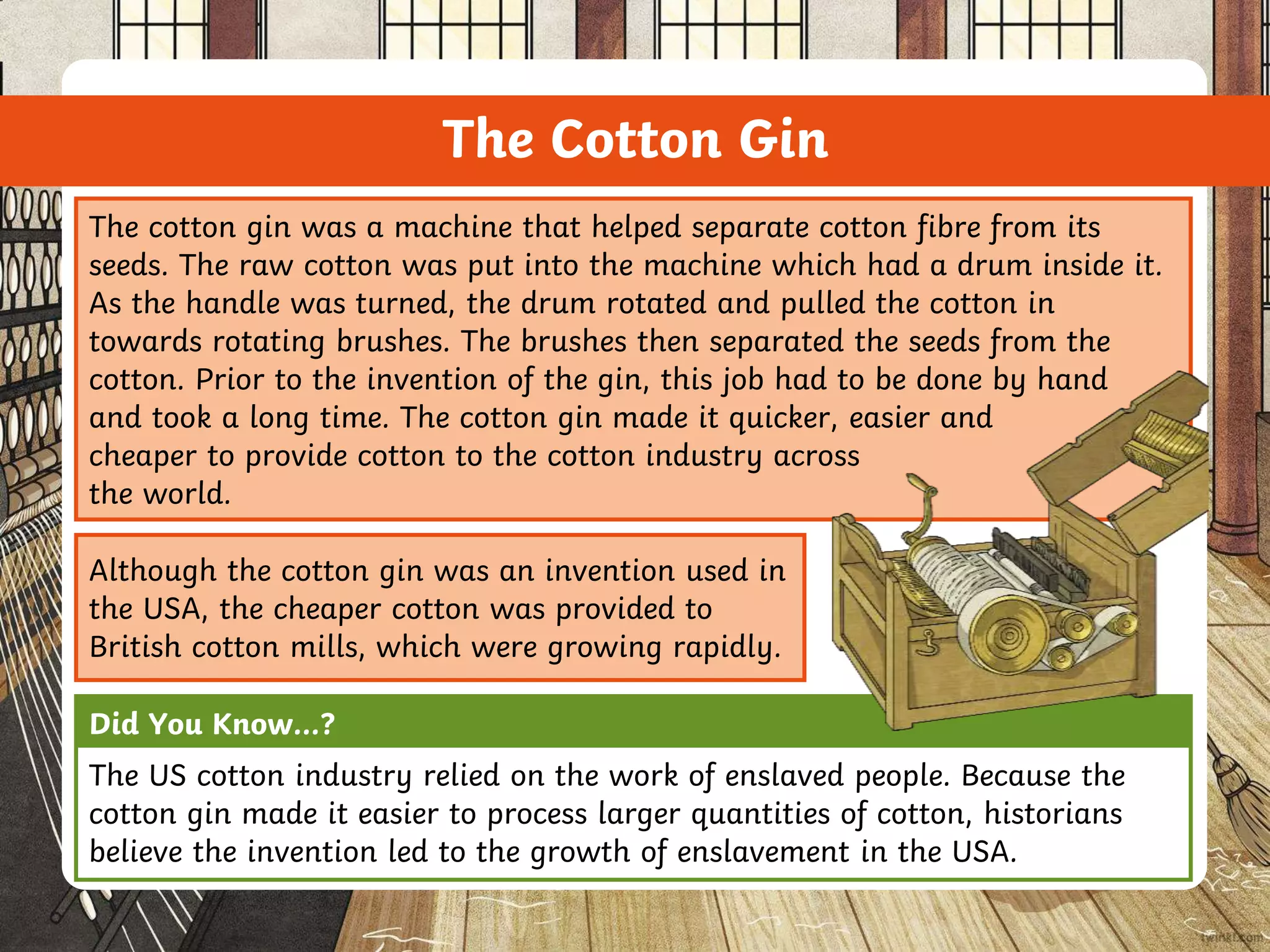
The cotton gin was a machine that helped separate cotton fibre from its
seeds. The raw cotton was put into the machine which had a drum inside it.
As the handle was turned, the drum rotated and pulled the cotton in
towards rotating brushes. The brushes then separated the seeds from the
cotton. Prior to the invention of the gin, this job had to be done by hand
and took a long time. The cotton gin made it quicker, easier and
cheaper to provide cotton to the cotton industry across
the world.
Although the cotton gin was an invention used in
the USA, the cheaper cotton was provided to
British cotton mills, which were growing rapidly.
The US cotton industry relied on the work of enslaved people. Because the
cotton gin made it easier to process larger quantities of cotton, historians
believe the invention led to the growth of enslavement in the USA.
Did You Know…?
In 1861, the US Civil War started, with
President Abraham Lincoln leading the
fight for the end of enslavement. His
troops blocked cotton from being shipped
to the UK. Cotton workers in Lancashire
wrote to Lincoln to express their support
for this and their wish for enslavement to
end, even though it meant they were now
out of work and facing starvation.
Did You Know…?
Other Textile Industry Inventions
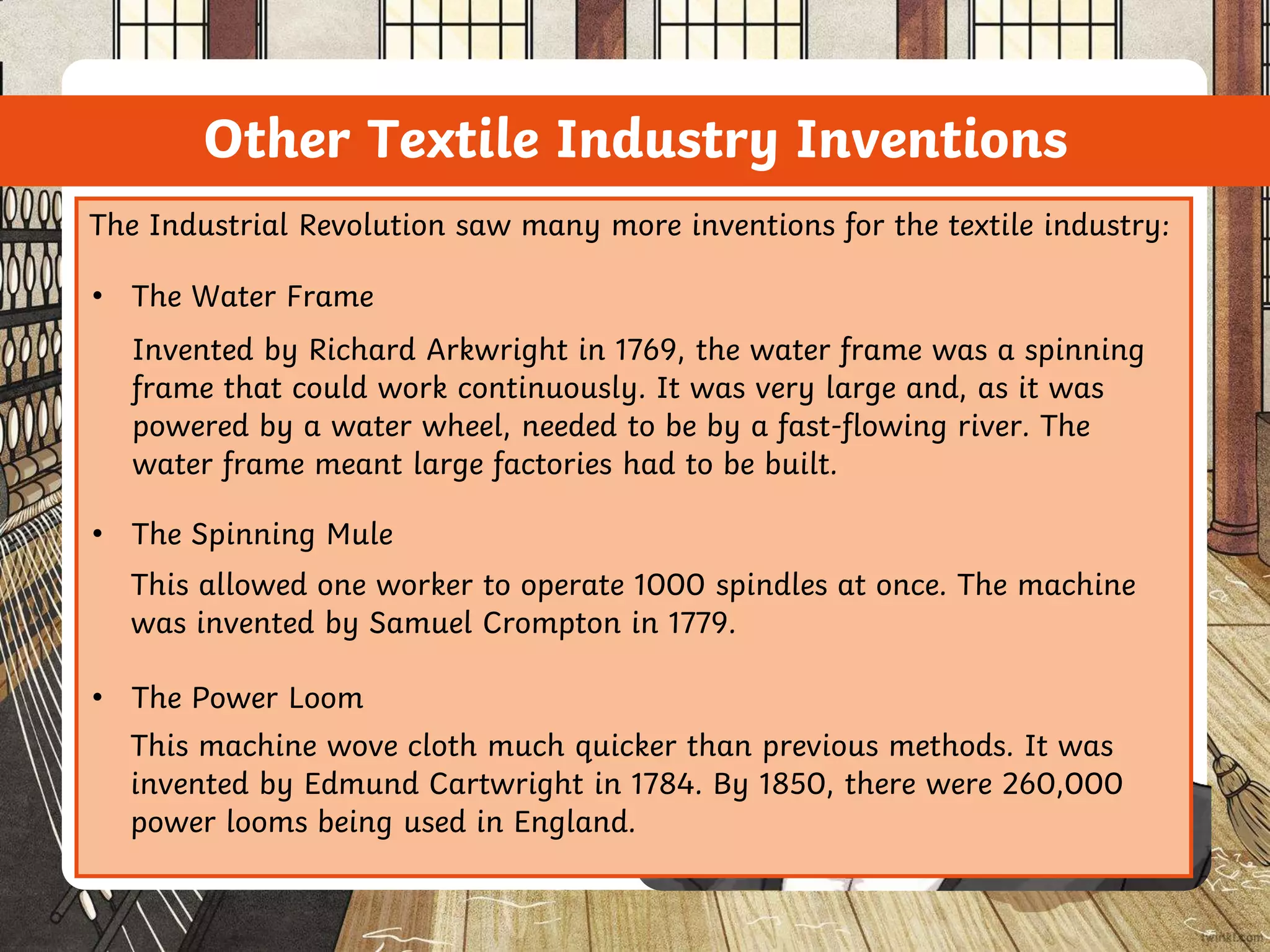
The Industrial Revolution saw many more inventions for the textile industry:
• The Spinning Mule
This allowed one worker to operate 1000 spindles at once. The machine
was invented by Samuel Crompton in 1779.
• The Water Frame
Invented by Richard Arkwright in 1769, the water frame was a spinning
frame that could work continuously. It was very large and, as it was
powered by a water wheel, needed to be by a fast-flowing river. The
water frame meant large factories had to be built.
• The Power Loom
This machine wove cloth much quicker than previous methods. It was
invented by Edmund Cartwright in 1784. By 1850, there were 260,000
power looms being used in England.
The Locomotive
The railways became so popular that the 1840s became known as a time of
‘railway mania’.
Did You Know…?
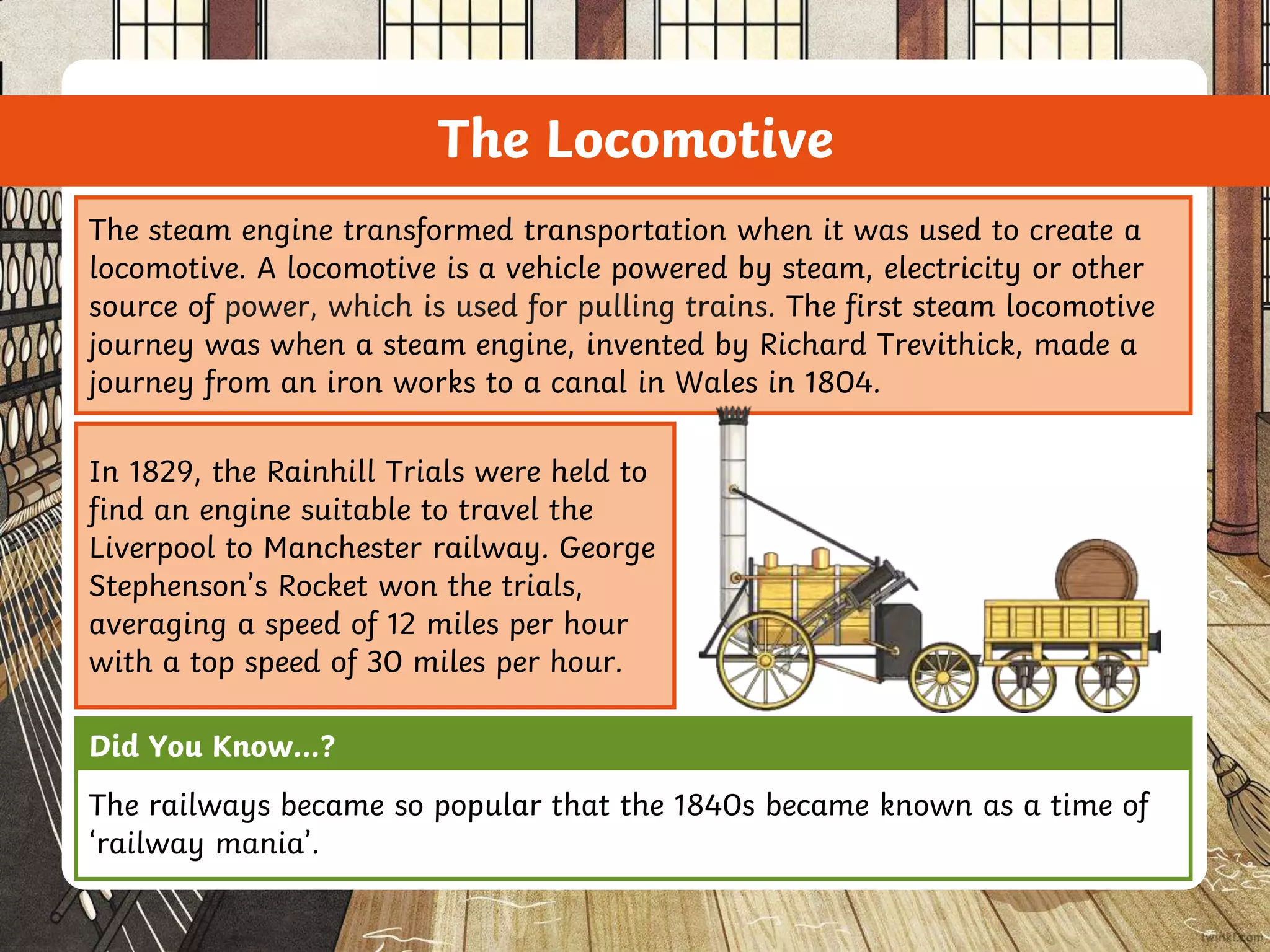
The steam engine transformed transportation when it was used to create a
locomotive. A locomotive is a vehicle powered by steam, electricity or other
source of power, which is used for pulling trains. The first steam locomotive
journey was when a steam engine, invented by Richard Trevithick, made a
journey from an iron works to a canal in Wales in 1804.
In 1829, the Rainhill Trials were held to
find an engine suitable to travel the
Liverpool to Manchester railway. George
Stephenson’s Rocket won the trials,
averaging a speed of 12 miles per hour
with a top speed of 30 miles per hour.
The Electric Telegraph
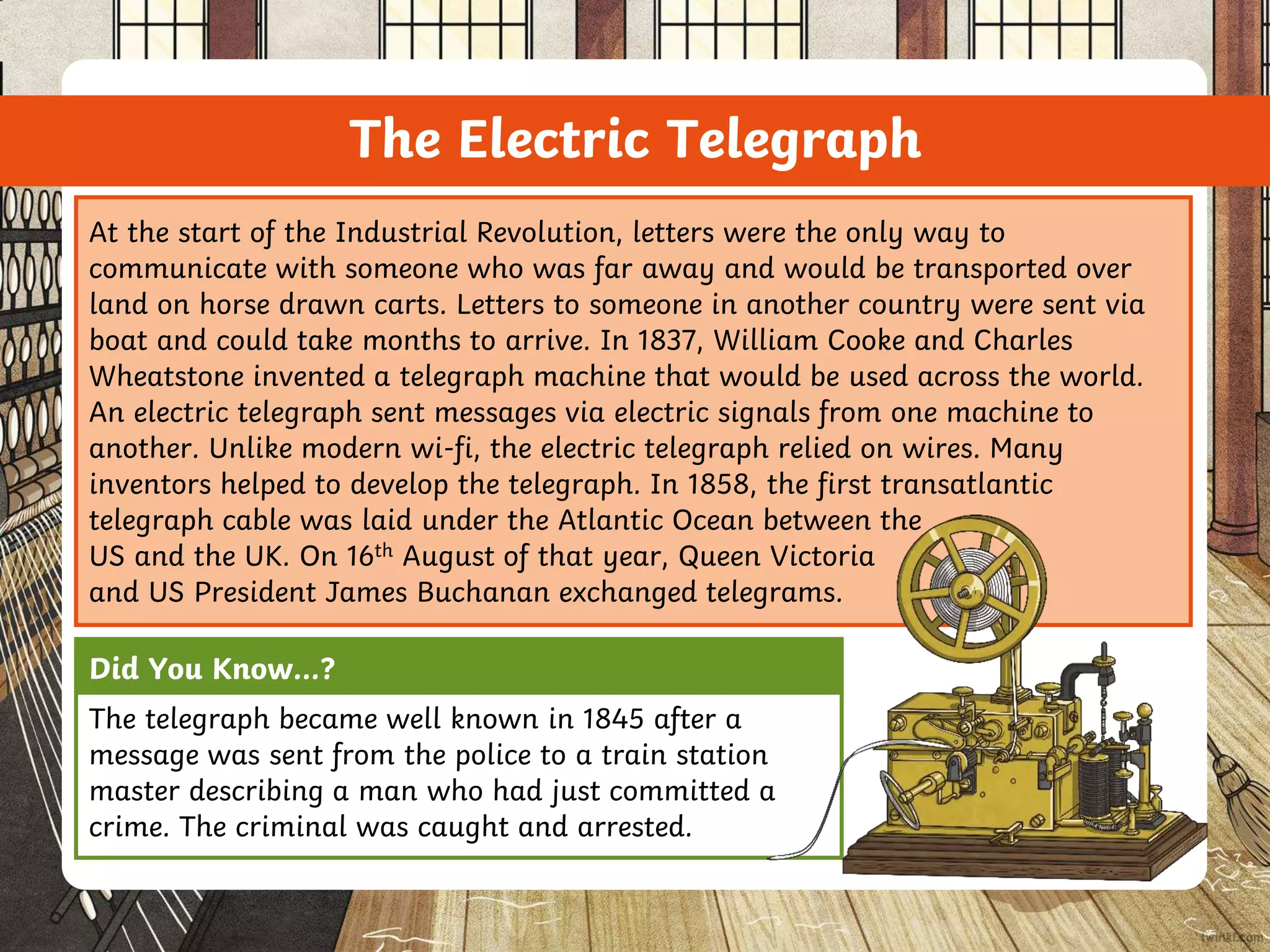
At the start of the Industrial Revolution, letters were the only way to
communicate with someone who was far away and would be transported over
land on horse drawn carts. Letters to someone in another country were sent via
boat and could take months to arrive. In 1837, William Cooke and Charles
Wheatstone invented a telegraph machine that would be used across the world.
An electric telegraph sent messages via electric signals from one machine to
another. Unlike modern wi-fi, the electric telegraph relied on wires. Many
inventors helped to develop the telegraph. In 1858, the first transatlantic
telegraph cable was laid under the Atlantic Ocean between the
US and the UK. On 16th August of that year, Queen Victoria
and US President James Buchanan exchanged telegrams.
The telegraph became well known in 1845 after a
message was sent from the police to a train station
master describing a man who had just committed a
crime. The criminal was caught and arrested.
Did You Know…?
Transport
The Industrial Revolution saw other important improvements in
transportation. The steam engine was used to develop steam ships. The first
steamship to cross the Atlantic was the Savannah in 1819. The journey took
just 24 days. Prior to steam, the journey could take six weeks
or even longer depending on weather.
An invention called the internal-combustion engine led to the
first car being developed by Carl Benz in
1885. That same year, an inventor called
Gottlieb Daimler invented the first
motorcycle.
How do you think the invention
of the car changed the world?
Talk About It
Quiz
Who invented the atmospheric steam engine?
a. James Hargreaves
b. Thomas Newcomen
c. Richard Arkwright
What is the name of another invention for the textile industry during the
Industrial Revolution?
a. Power wheel
b. Power loom
c. Power spindle
Where did the first steam-powered locomotion journey take place?
a. Wales
b. USA
c. France
Quiz
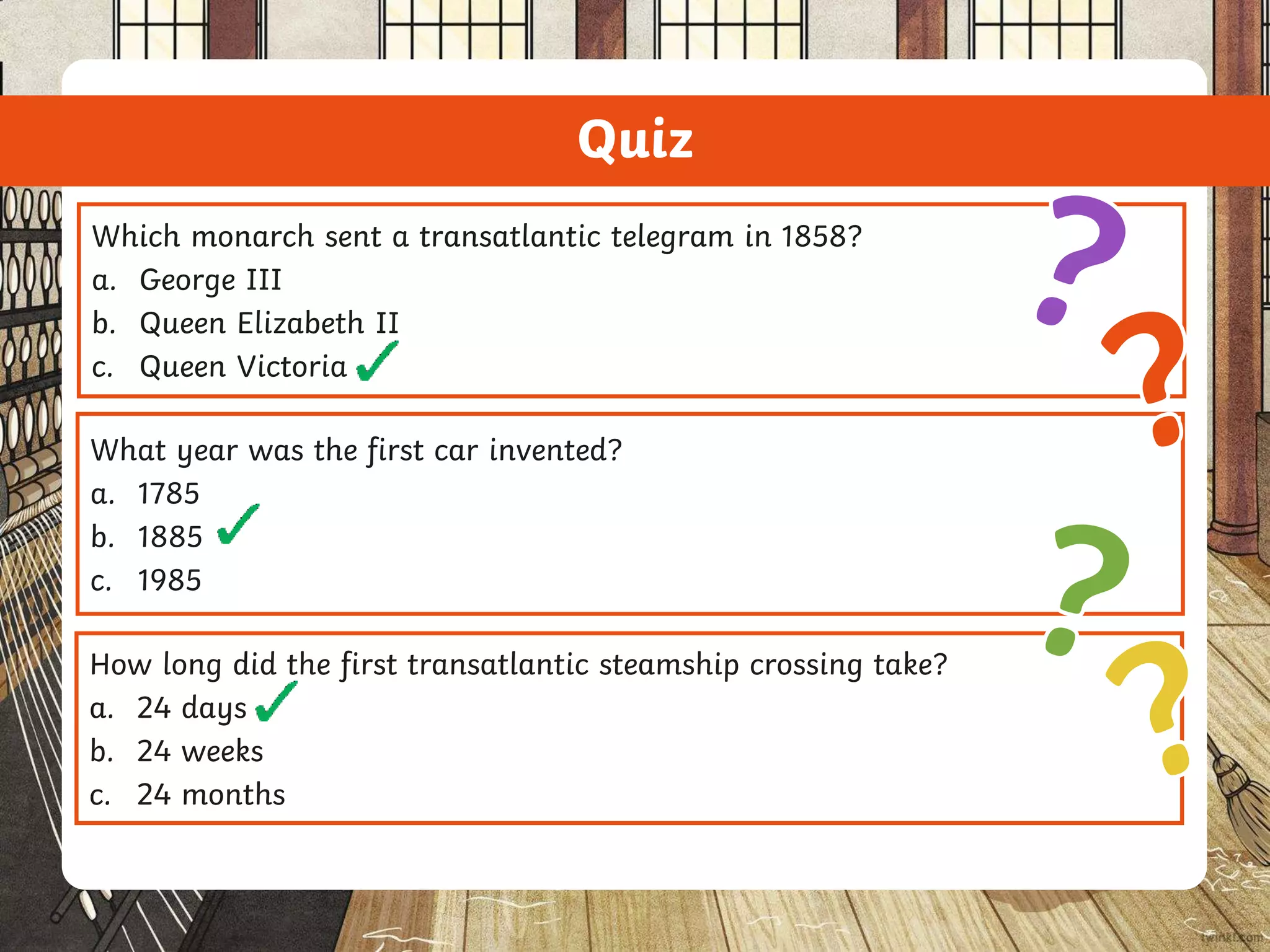
Which monarch sent a transatlantic telegram in 1858?
a. George III
b. Queen Elizabeth II
c. Queen Victoria
What year was the first car invented?
a. 1785
b. 1885
c. 1985
How long did the first transatlantic steamship crossing take?
a. 24 days
b. 24 weeks
c. 24 months
t-mfl-490-ks2-famous-inventions-of-the-industrial-revolution-ppt-4_ver_1.pptx

t-mfl-490-ks2-famous-inventions-of-the-industrial-revolution-ppt-4_ver_1.pptx

  • 2.
    What Was theIndustrial Revolution? agricultural – Farming and growing crops. industrial – Factories producing goods on a large scale. manufacturing – Making items in large numbers using machines. rural – The countryside. The Industrial Revolution was the period in which Britain changed from being a mainly agricultural country to being an industrial one. During this time, many people moved from small rural areas to cities and towns, in order to work in the factories that had developed. The Industrial Revolution began in the mid 18th century and continued to the end of the 20th century. The Industrial Revolution was the result of discoveries and inventions that made manufacturing and transport easier, quicker and cheaper.
  • 3.
    Newcomen’s Atmospheric SteamEngine Thomas Newcomen was an inventor who was born in Devon in 1663. When working as an ironmonger, Thomas often provided goods for Cornish mines. These mines regularly suffered from flooding. The only way to ease the flooding was to manually pump the water out or use buckets. Newcomen decided to invent a machine that would drain water from flooded mines more quickly. His atmospheric steam engine heated water which created steam in a chamber. The steam made a vacuum (empty space), causing the water to be sucked out of the mine. The idea of using steam to generate movement was a key part of the Industrial Revolution. James Watt further developed the steam engine, inventing smaller versions that needed less coal. “Newcomen Engine - Oldest Surviving Steam Engine in the World” by Amaury Laporte is licensed under CC BY 2.0
  • 4.
    The Spinning Jenny Beforethe Industrial Revolution, fabric was made using a spinning wheel. It was often done by people in their own homes. This way of manufacturing was called a ‘cottage industry’. The spinning jenny was invented by James Hargreaves in 1770. It was a machine that weaved cotton into fabric. The machine had eight wooden spindles. When the wheel was turned, eight threads could be spun at once, which made the weaving process much quicker. Spinning jennies were used in factories. Early in the Industrial Revolution, children as young as seven years old worked in factories for up to 14 hours a day. Did You Know…?
  • 5.
    The Cotton Gin Thecotton gin was a machine that helped separate cotton fibre from its seeds. The raw cotton was put into the machine which had a drum inside it. As the handle was turned, the drum rotated and pulled the cotton in towards rotating brushes. The brushes then separated the seeds from the cotton. Prior to the invention of the gin, this job had to be done by hand and took a long time. The cotton gin made it quicker, easier and cheaper to provide cotton to the cotton industry across the world. Although the cotton gin was an invention used in the USA, the cheaper cotton was provided to British cotton mills, which were growing rapidly. The US cotton industry relied on the work of enslaved people. Because the cotton gin made it easier to process larger quantities of cotton, historians believe the invention led to the growth of enslavement in the USA. Did You Know…?
  • 6.
    In 1861, theUS Civil War started, with President Abraham Lincoln leading the fight for the end of enslavement. His troops blocked cotton from being shipped to the UK. Cotton workers in Lancashire wrote to Lincoln to express their support for this and their wish for enslavement to end, even though it meant they were now out of work and facing starvation. Did You Know…? Other Textile Industry Inventions The Industrial Revolution saw many more inventions for the textile industry: • The Spinning Mule This allowed one worker to operate 1000 spindles at once. The machine was invented by Samuel Crompton in 1779. • The Water Frame Invented by Richard Arkwright in 1769, the water frame was a spinning frame that could work continuously. It was very large and, as it was powered by a water wheel, needed to be by a fast-flowing river. The water frame meant large factories had to be built. • The Power Loom This machine wove cloth much quicker than previous methods. It was invented by Edmund Cartwright in 1784. By 1850, there were 260,000 power looms being used in England.
  • 7.
    The Locomotive The railwaysbecame so popular that the 1840s became known as a time of ‘railway mania’. Did You Know…? The steam engine transformed transportation when it was used to create a locomotive. A locomotive is a vehicle powered by steam, electricity or other source of power, which is used for pulling trains. The first steam locomotive journey was when a steam engine, invented by Richard Trevithick, made a journey from an iron works to a canal in Wales in 1804. In 1829, the Rainhill Trials were held to find an engine suitable to travel the Liverpool to Manchester railway. George Stephenson’s Rocket won the trials, averaging a speed of 12 miles per hour with a top speed of 30 miles per hour.
  • 8.
    The Electric Telegraph Atthe start of the Industrial Revolution, letters were the only way to communicate with someone who was far away and would be transported over land on horse drawn carts. Letters to someone in another country were sent via boat and could take months to arrive. In 1837, William Cooke and Charles Wheatstone invented a telegraph machine that would be used across the world. An electric telegraph sent messages via electric signals from one machine to another. Unlike modern wi-fi, the electric telegraph relied on wires. Many inventors helped to develop the telegraph. In 1858, the first transatlantic telegraph cable was laid under the Atlantic Ocean between the US and the UK. On 16th August of that year, Queen Victoria and US President James Buchanan exchanged telegrams. The telegraph became well known in 1845 after a message was sent from the police to a train station master describing a man who had just committed a crime. The criminal was caught and arrested. Did You Know…?
  • 9.
    Transport The Industrial Revolutionsaw other important improvements in transportation. The steam engine was used to develop steam ships. The first steamship to cross the Atlantic was the Savannah in 1819. The journey took just 24 days. Prior to steam, the journey could take six weeks or even longer depending on weather. An invention called the internal-combustion engine led to the first car being developed by Carl Benz in 1885. That same year, an inventor called Gottlieb Daimler invented the first motorcycle. How do you think the invention of the car changed the world? Talk About It
  • 10.
    Quiz Who invented theatmospheric steam engine? a. James Hargreaves b. Thomas Newcomen c. Richard Arkwright What is the name of another invention for the textile industry during the Industrial Revolution? a. Power wheel b. Power loom c. Power spindle Where did the first steam-powered locomotion journey take place? a. Wales b. USA c. France
  • 11.
    Quiz Which monarch senta transatlantic telegram in 1858? a. George III b. Queen Elizabeth II c. Queen Victoria What year was the first car invented? a. 1785 b. 1885 c. 1985 How long did the first transatlantic steamship crossing take? a. 24 days b. 24 weeks c. 24 months