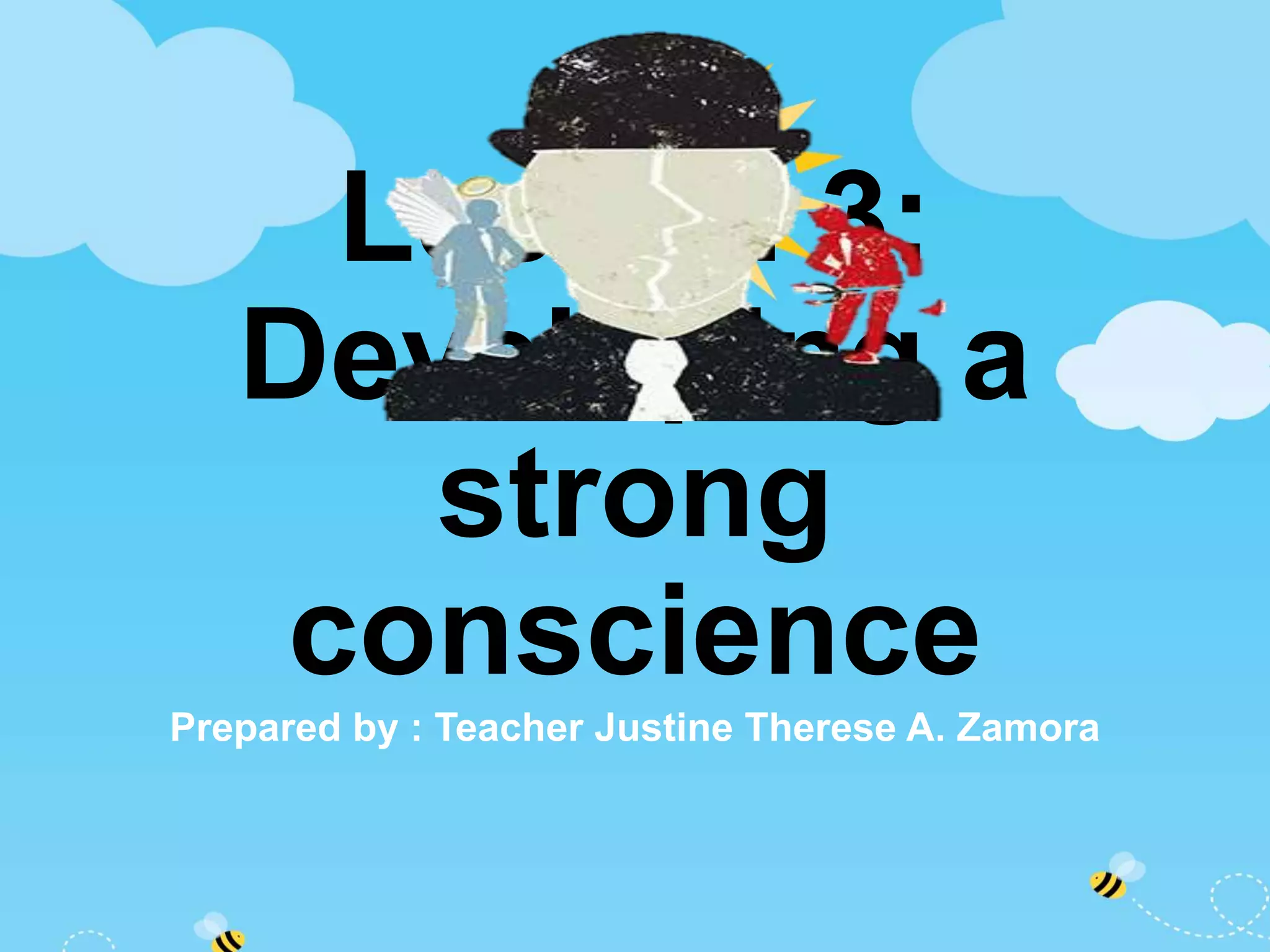
Lesson 3:
Developing a
strong
conscience
Prepared by : Teacher Justine Therese A. Zamora
Conscience
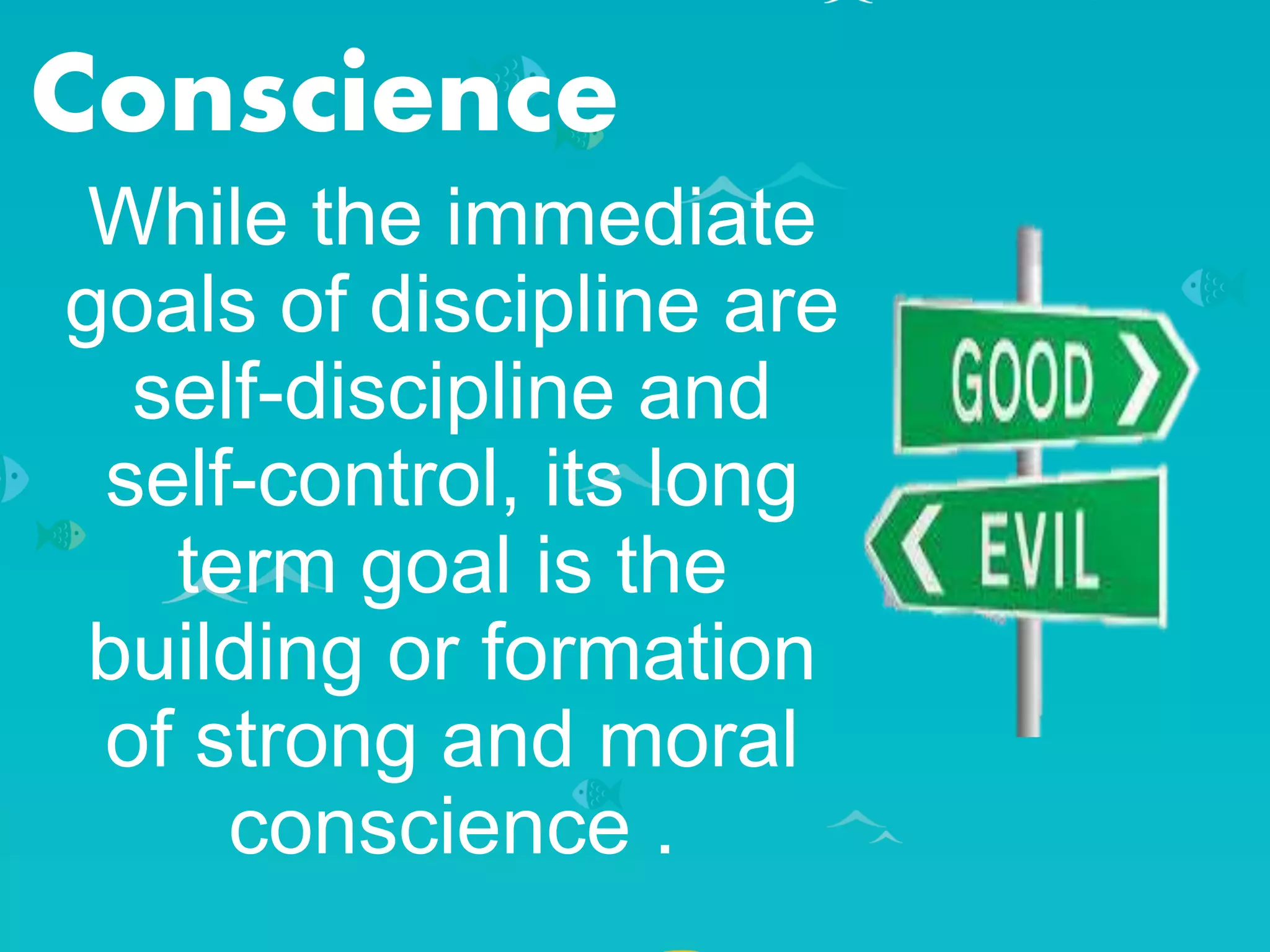
While the immediate
goals of discipline are
self-discipline and
self-control, its long
term goal is the
building or formation
of strong and moral
conscience .
Conscience
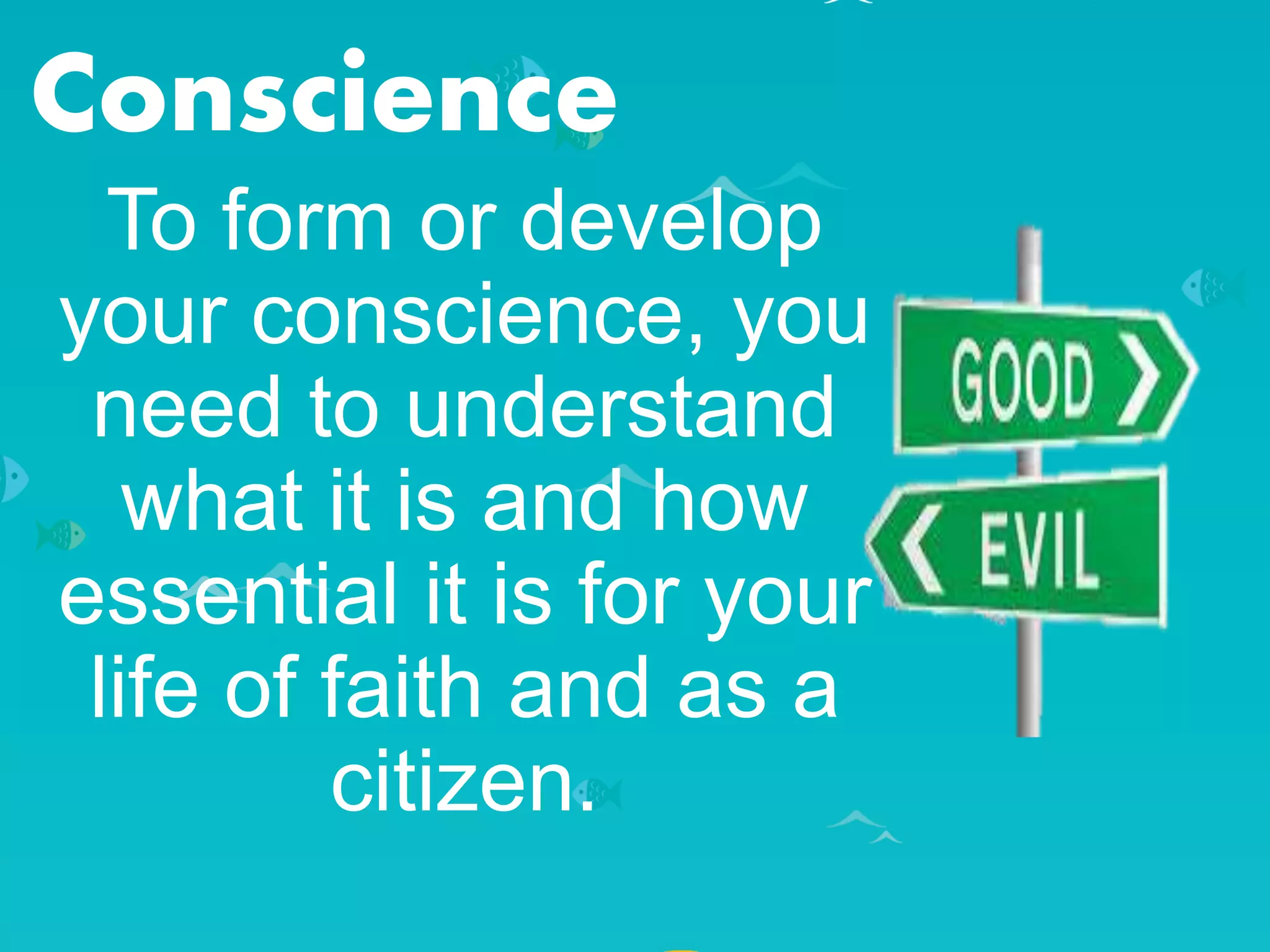
To form or develop
your conscience, you
need to understand
what it is and how
essential it is for your
life of faith and as a
citizen.
What is Conscience?
What is Conscience?
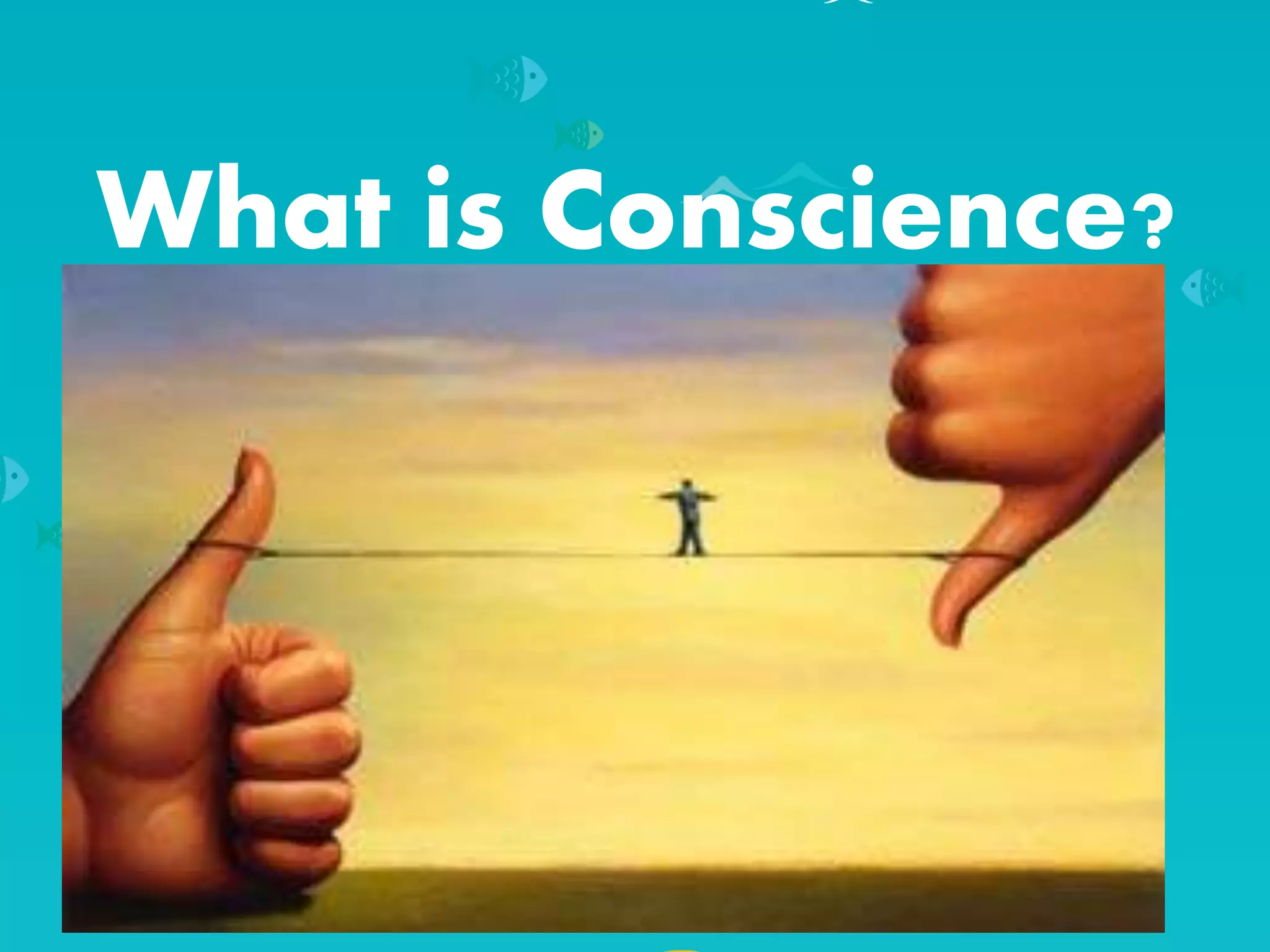
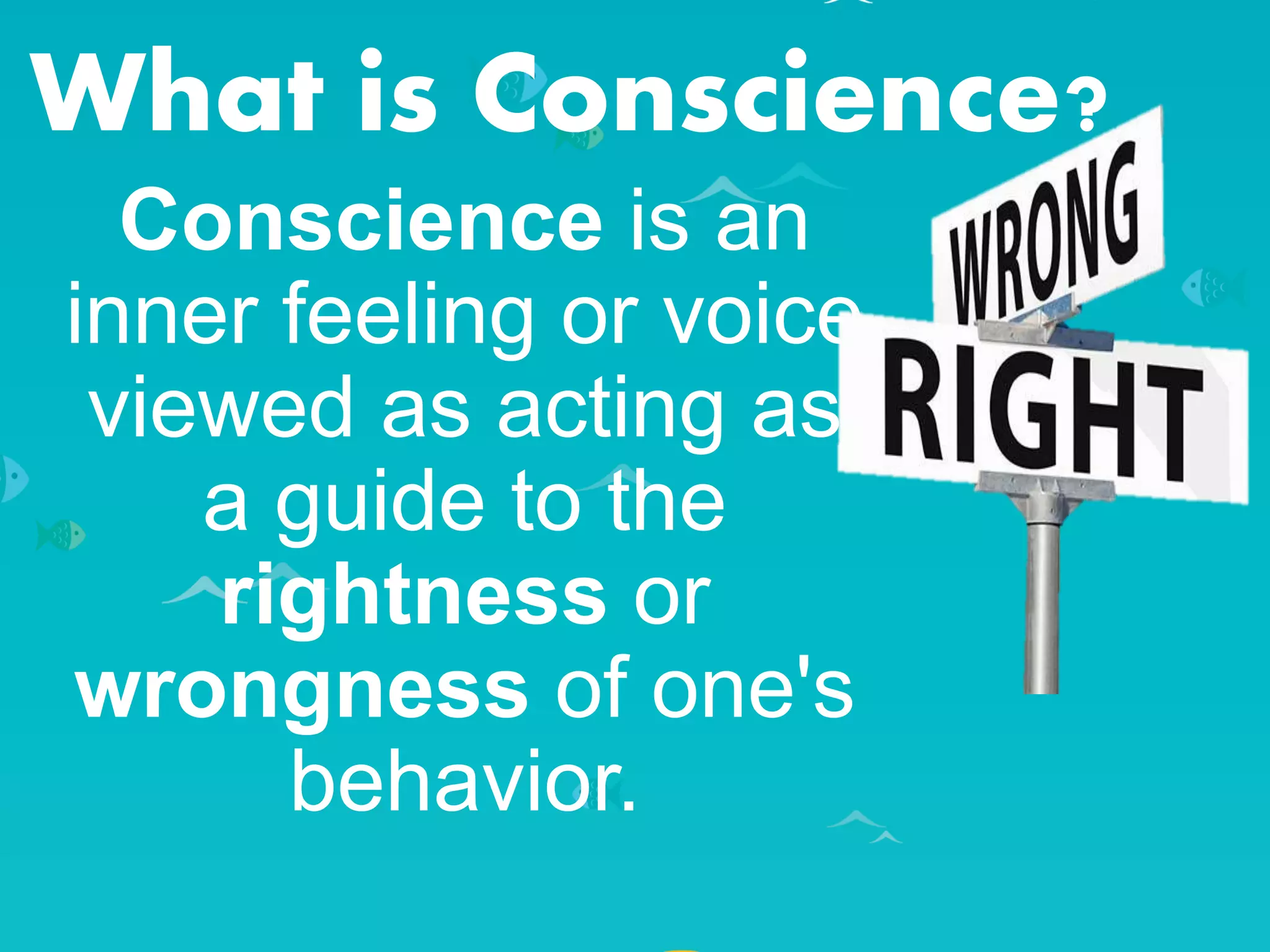
Conscience is an
inner feeling or voice
viewed as acting as
a guide to the
rightness or
wrongness of one's
behavior.
What is Conscience?
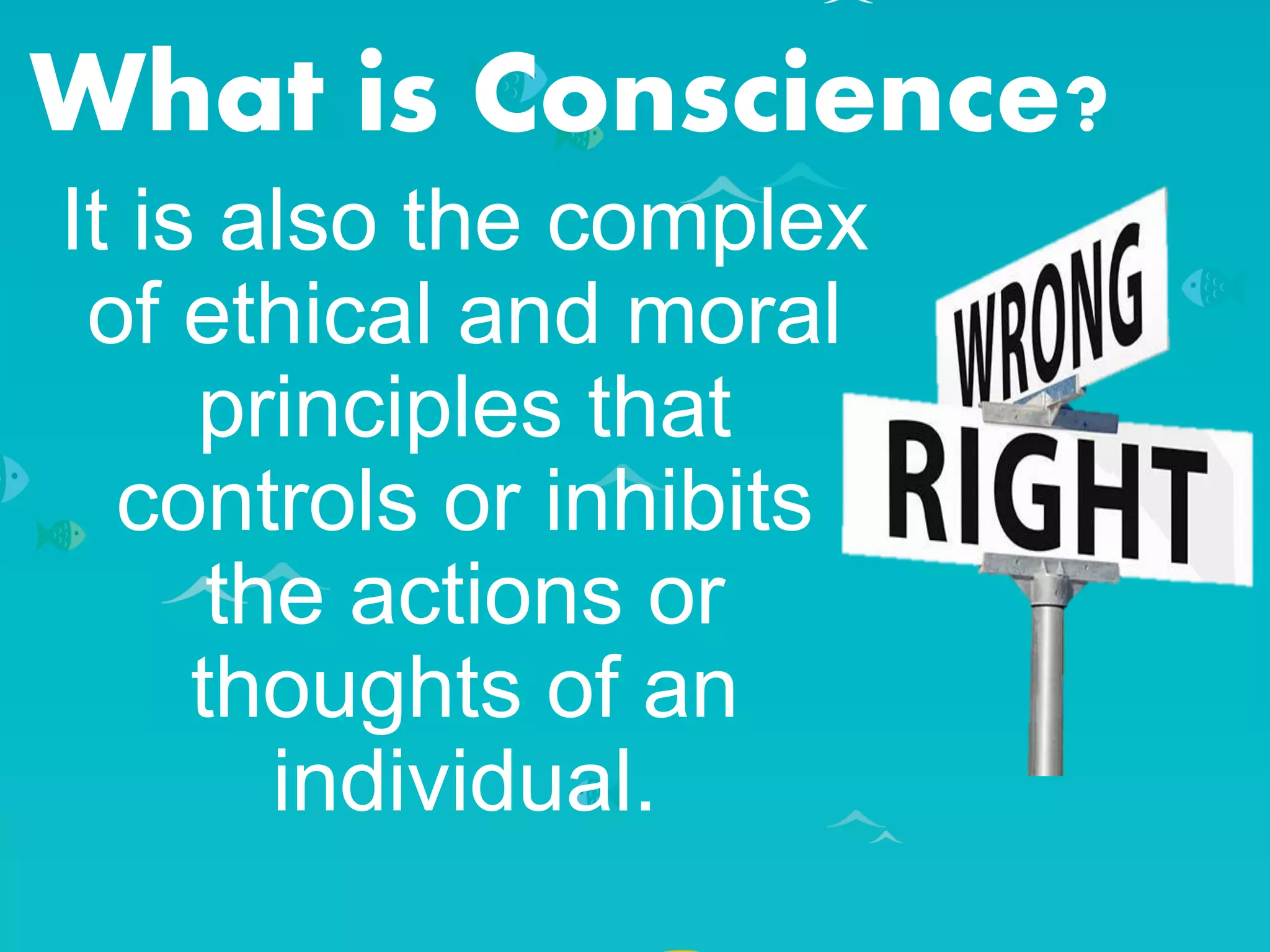
It is also the complex
of ethical and moral
principles that
controls or inhibits
the actions or
thoughts of an
individual.
Roles of Conscience
1. It reminds you t do good and
evil.
2. It judges all decisions and
choices you make and actions
you have taken in any given
situation.
3. It bears witness to all the good
and evil you have done.
Roles of Conscience
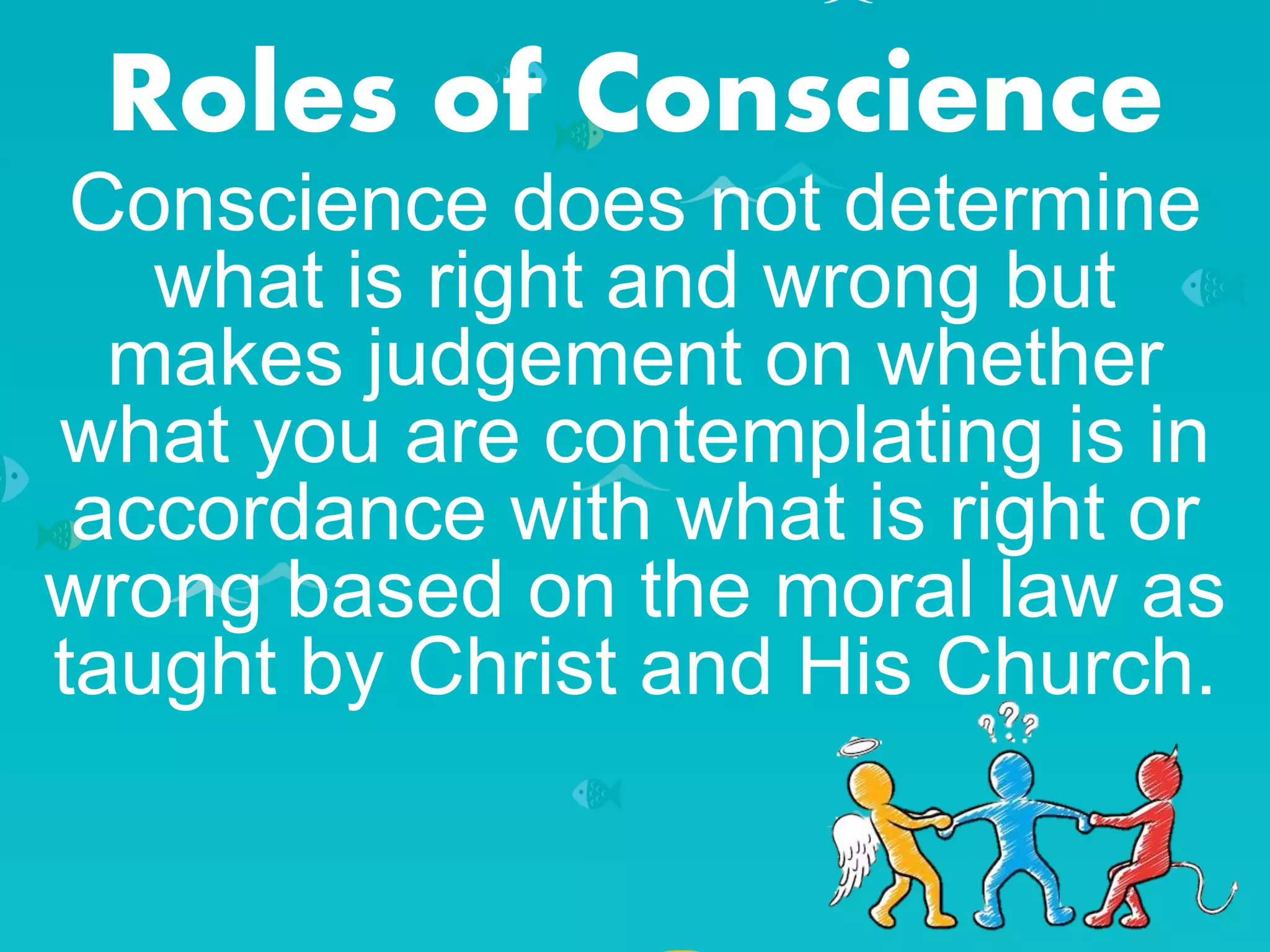
Conscience does not determine
what is right and wrong but
makes judgement on whether
what you are contemplating is in
accordance with what is right or
wrong based on the moral law as
taught by Christ and His Church.
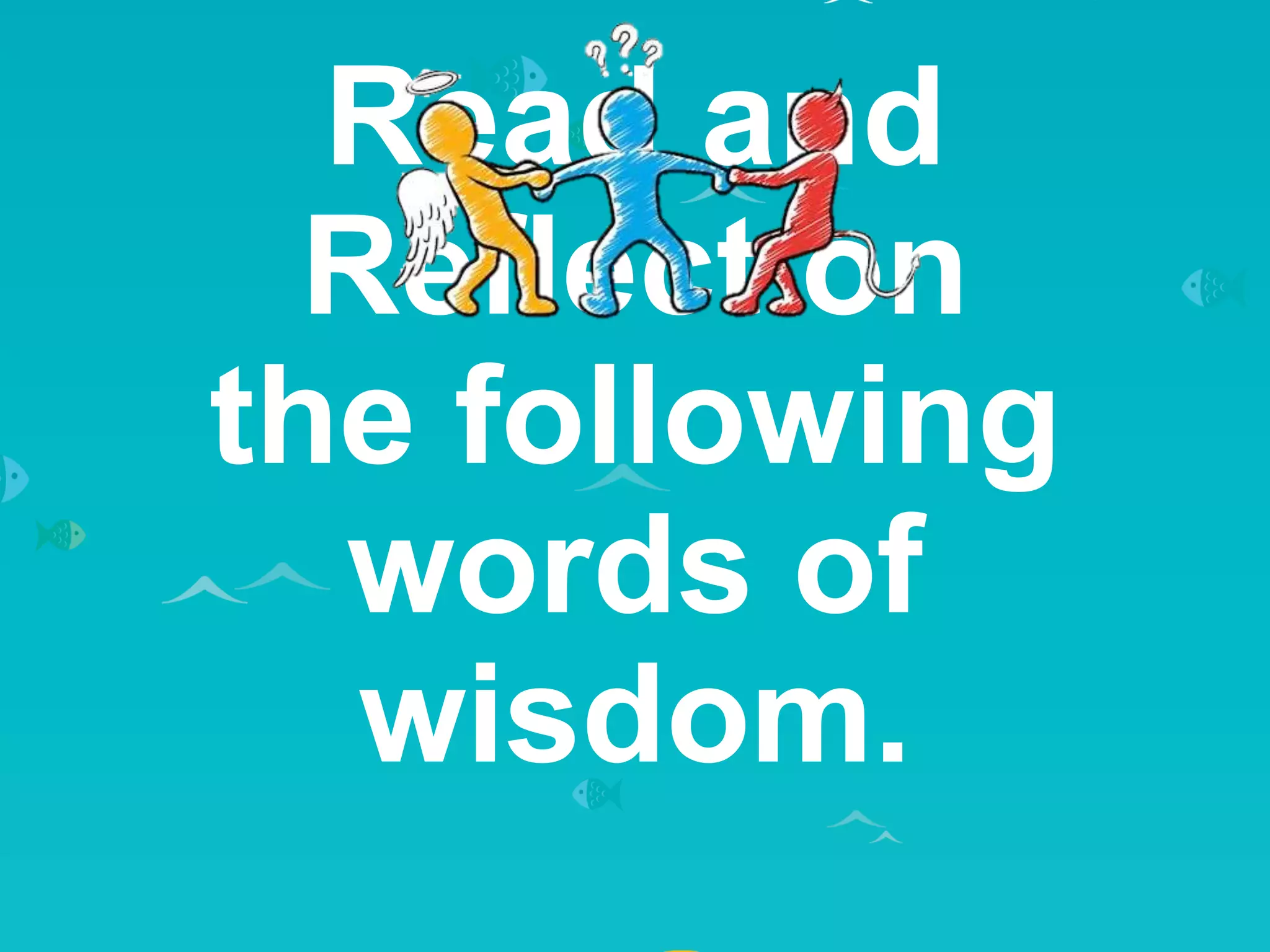
Read and
Reflect on
the following
words of
wisdom.
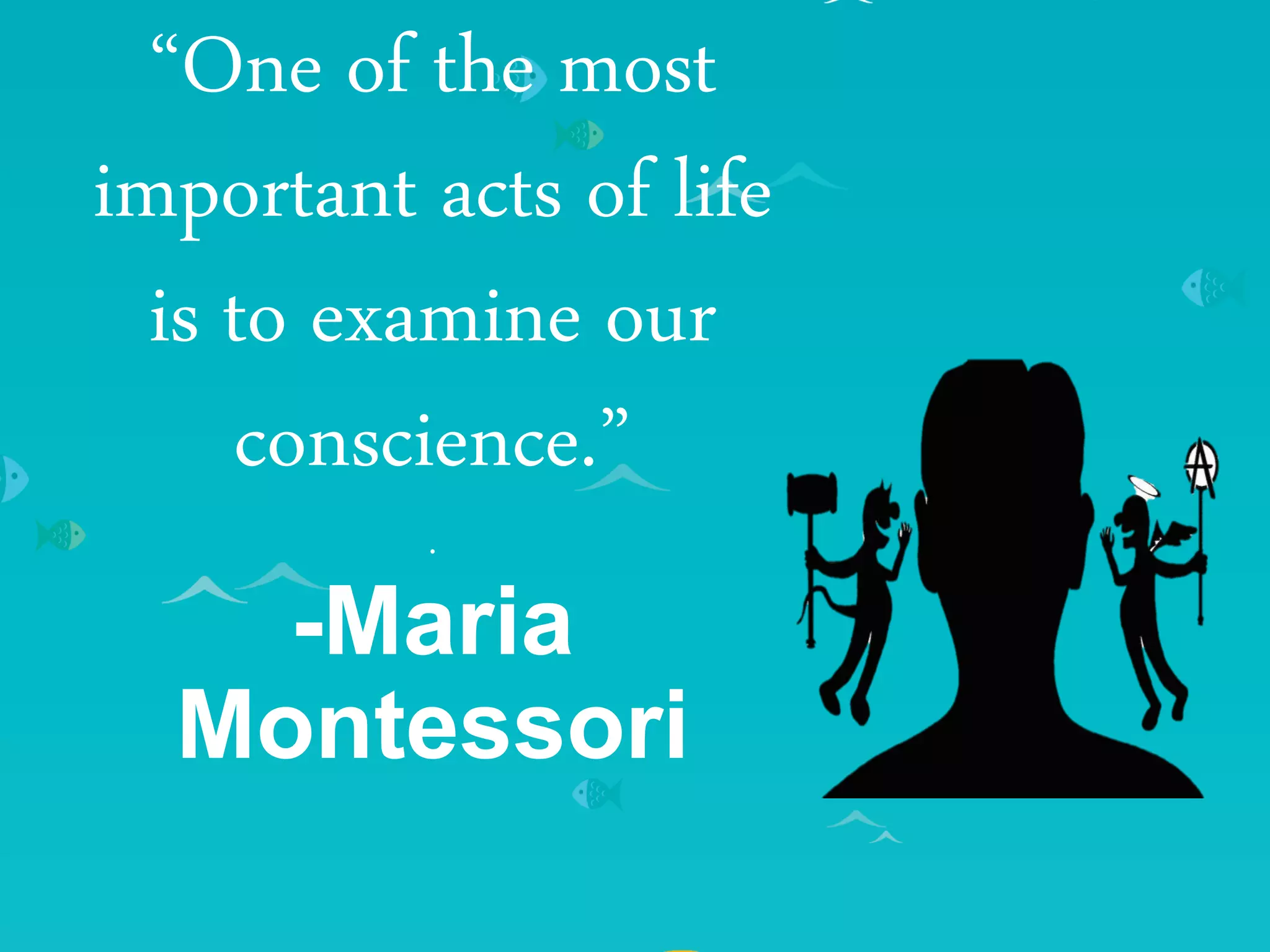
“One of the most
important acts of life
is to examine our
conscience.”
.
-Maria
Montessori
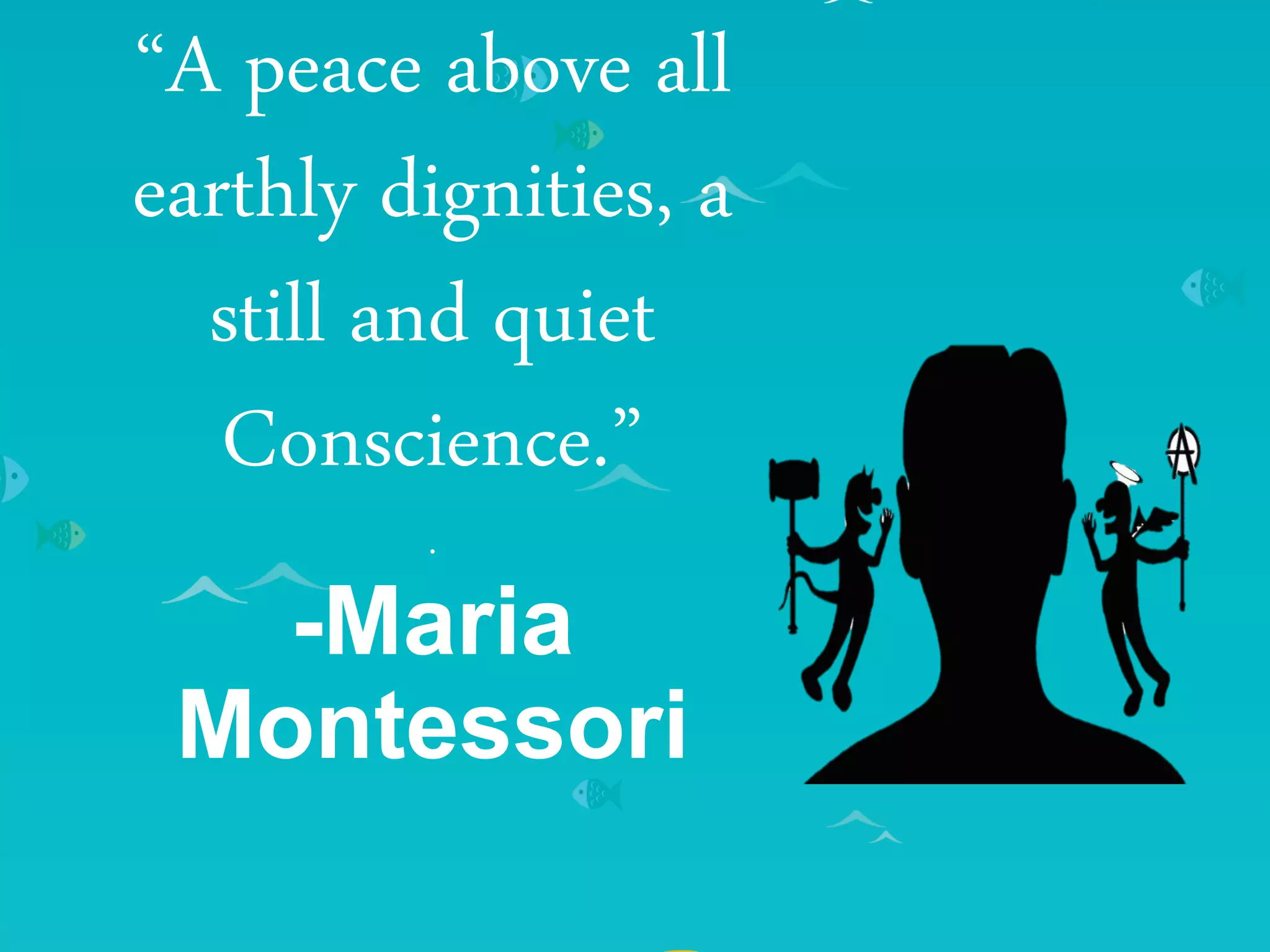
“A peace above all
earthly dignities, a
still and quiet
Conscience.”
.
-Maria
Montessori
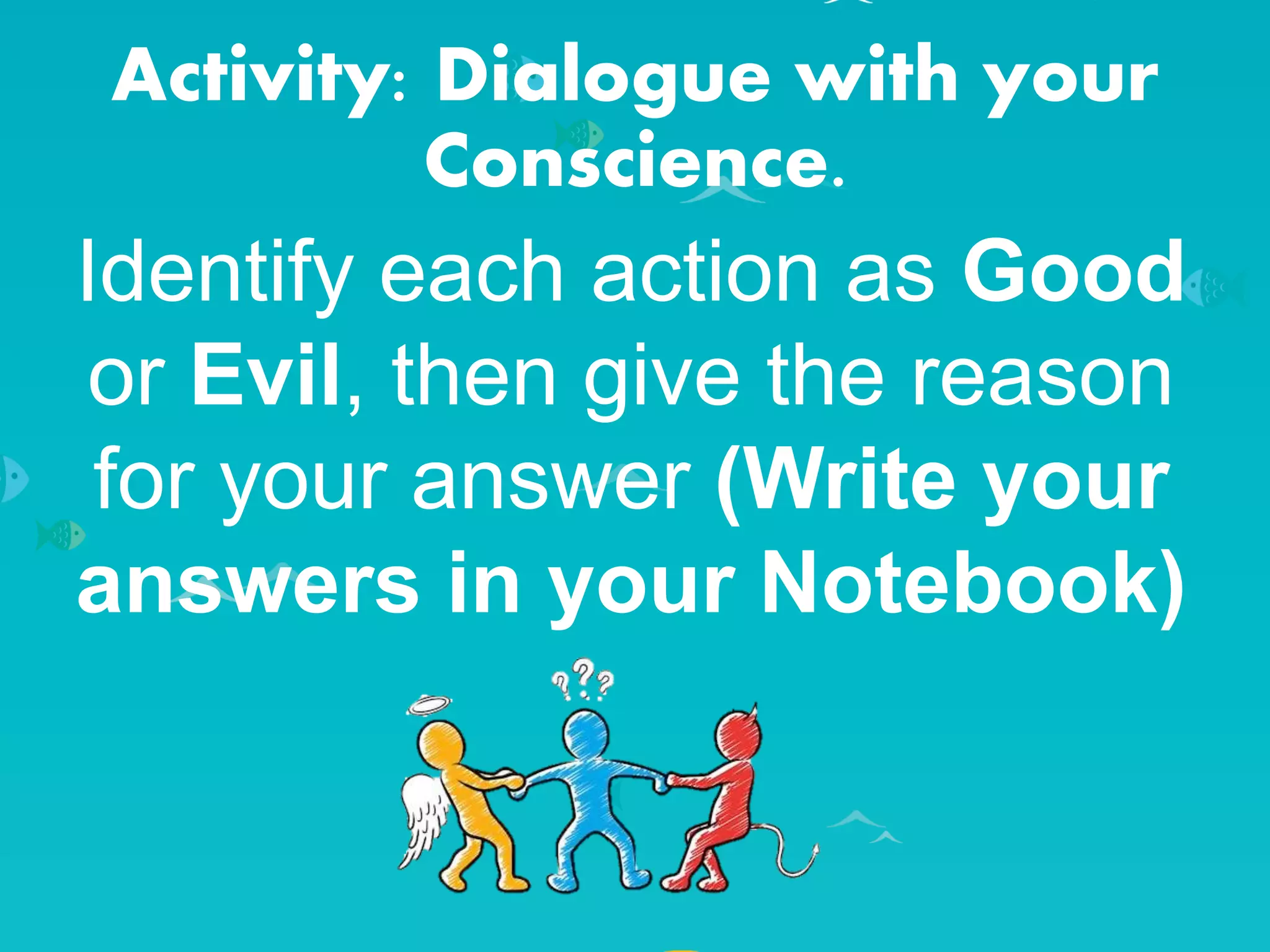
Activity: Dialogue with your
Conscience.
Identify each action as Good
or Evil, then give the reason
for your answer (Write your
answers in your Notebook)
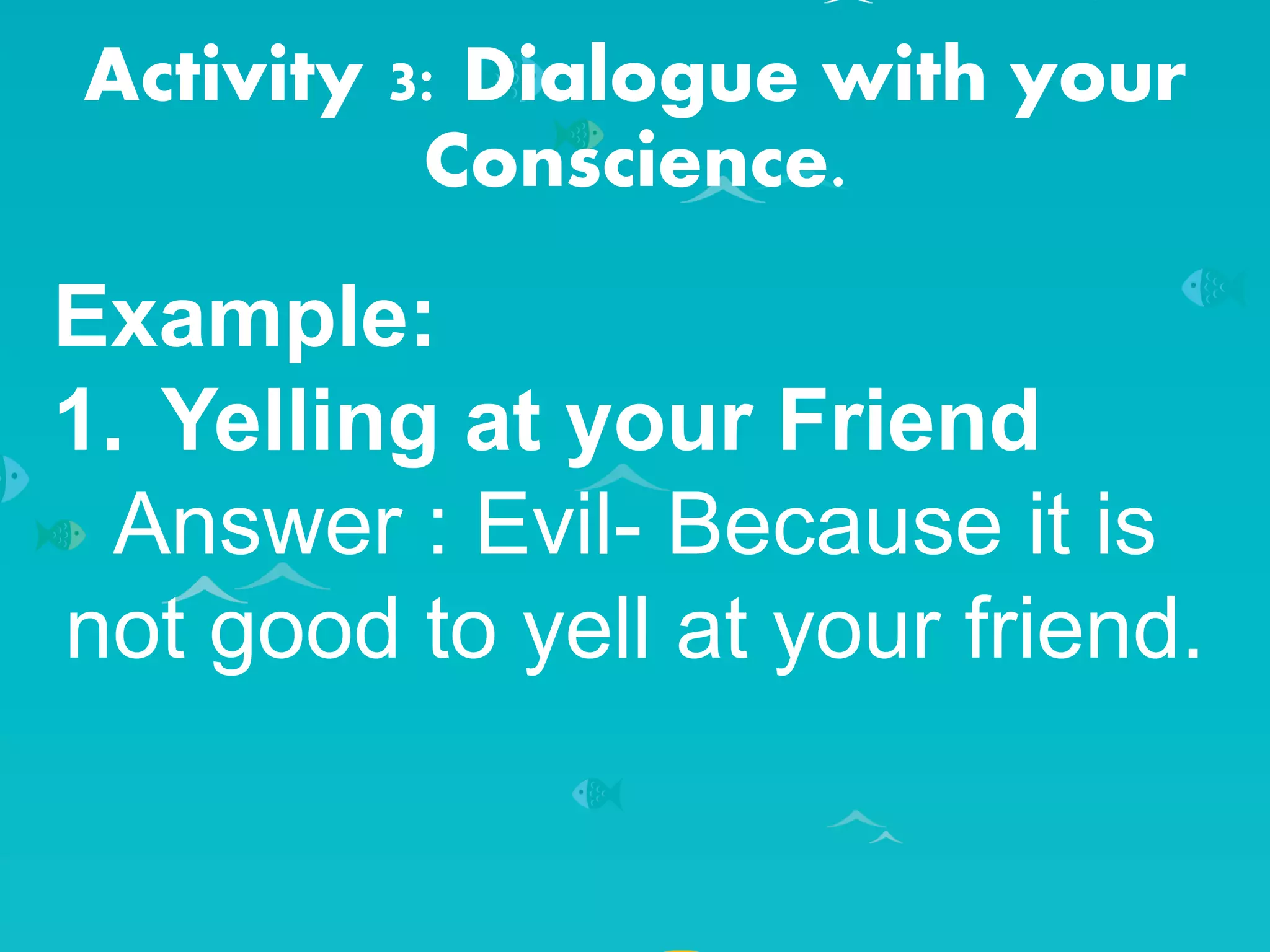
Activity 3: Dialogue with your
Conscience.
Example:
1. Yelling at your Friend
Answer : Evil- Because it is
not good to yell at your friend.
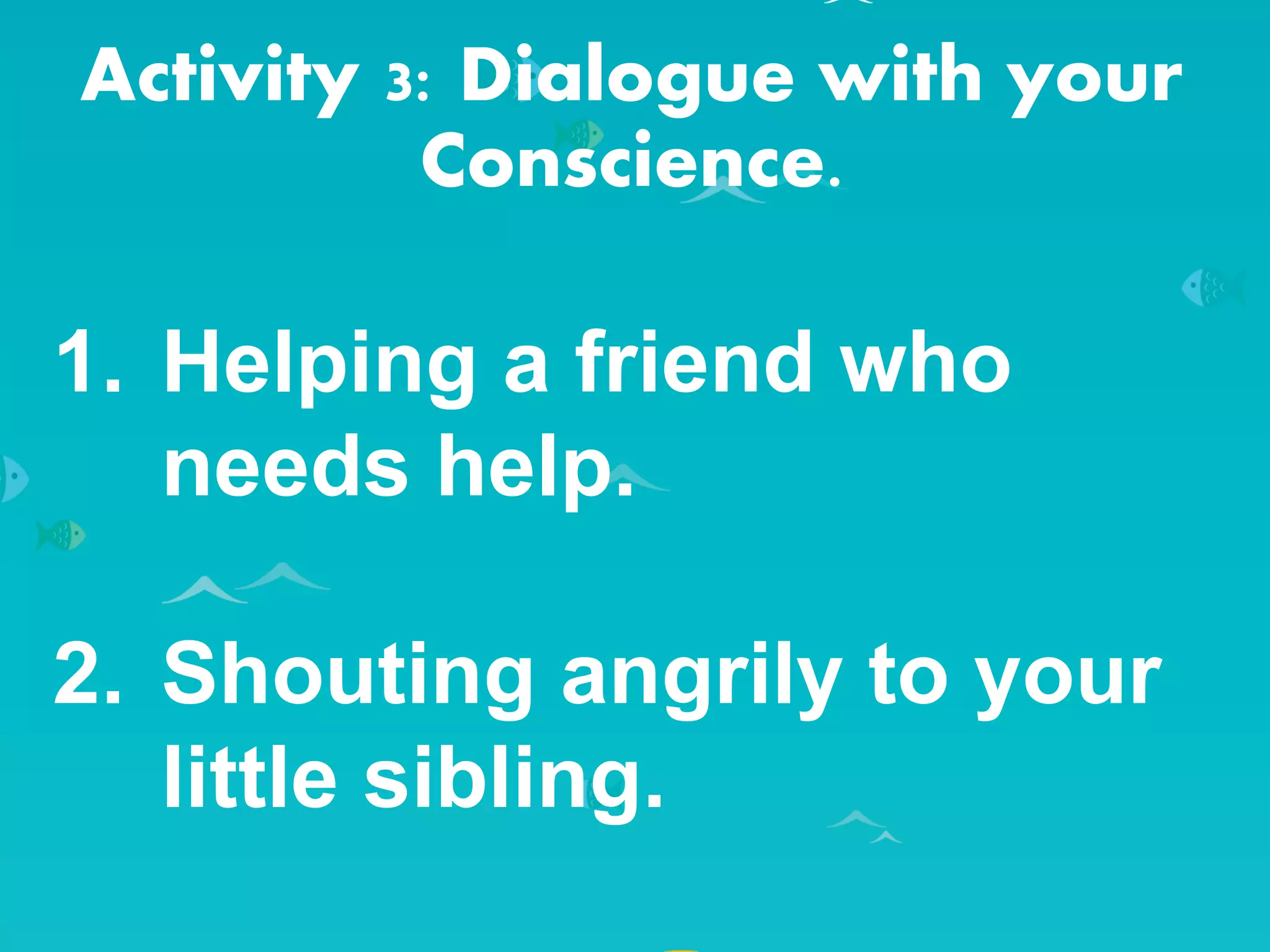
Activity 3: Dialogue with your
Conscience.
1. Helping a friend who
needs help.
2. Shouting angrily to your
little sibling.
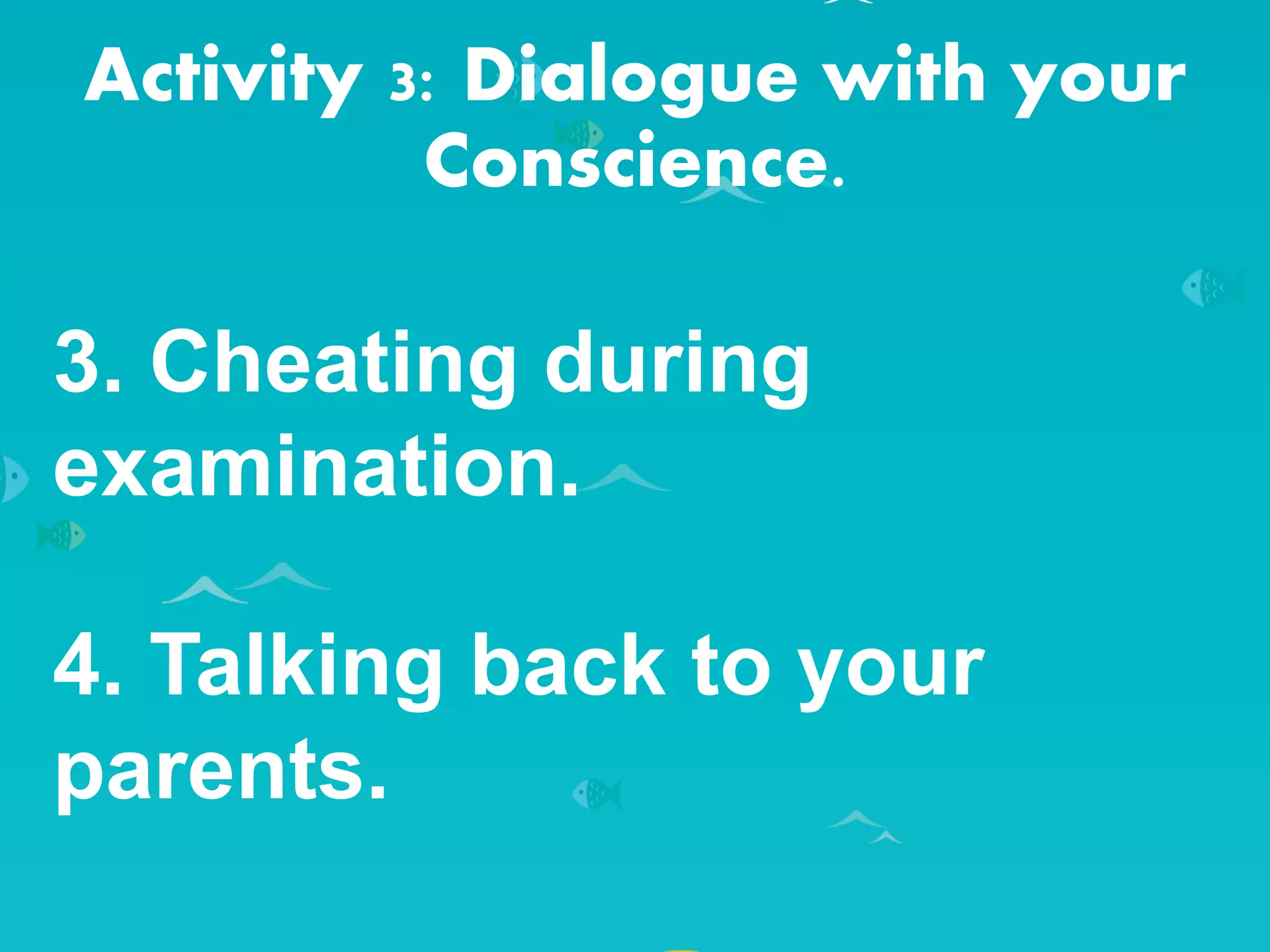
Activity 3: Dialogue with your
Conscience.
3. Cheating during
examination.
4. Talking back to your
parents.
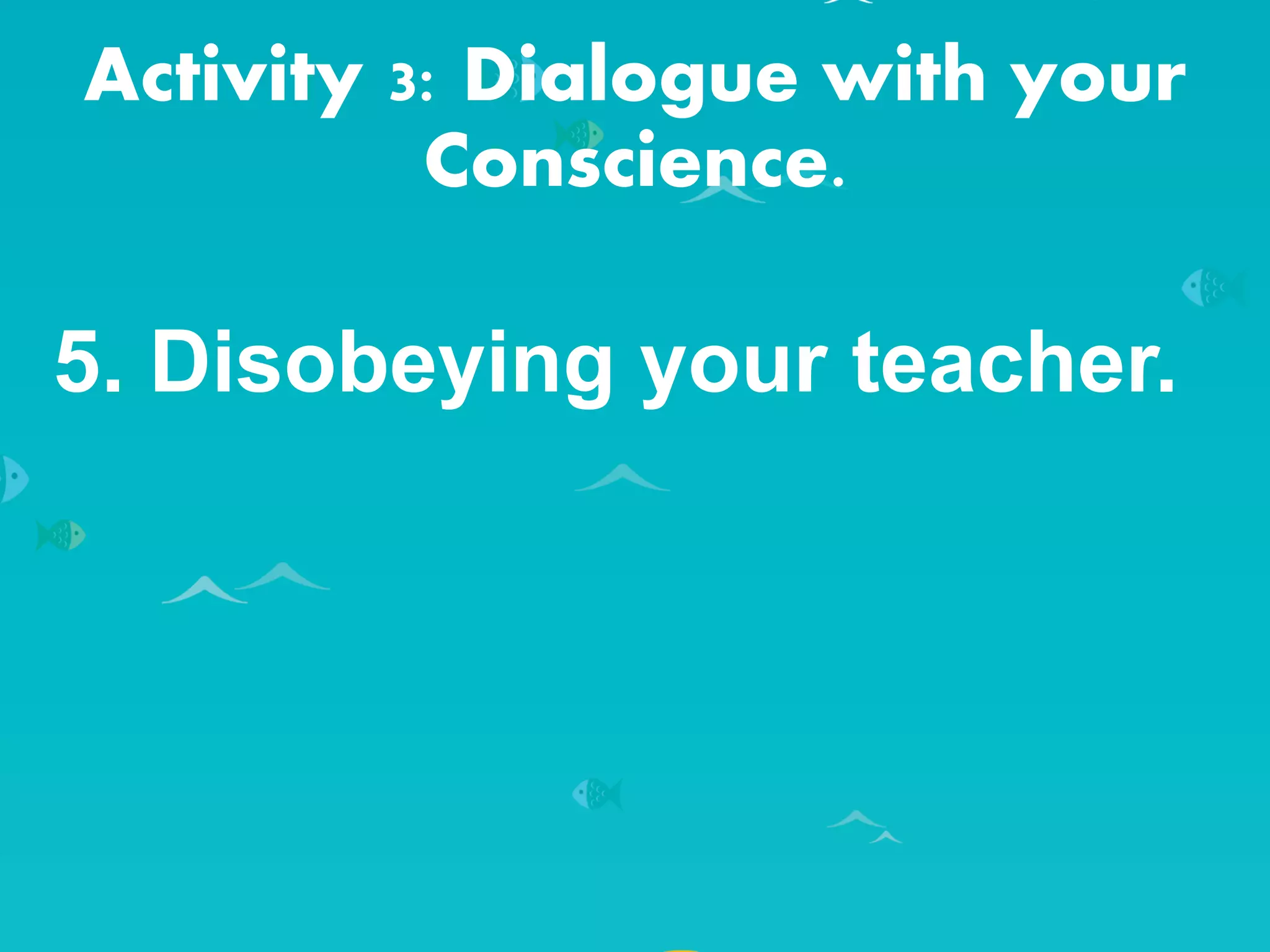
Activity 3: Dialogue with your
Conscience.
5. Disobeying your teacher.
Activity 3: Dialogue with your
Conscience.
Note :
Attach your captured activity
in our Val Ed 9 Google
classroom.
Thank You !

Lesson 3 developing a strong conscience

  • 1.
    Lesson 3: Developing a strong conscience Preparedby : Teacher Justine Therese A. Zamora
  • 2.
    Conscience While the immediate goalsof discipline are self-discipline and self-control, its long term goal is the building or formation of strong and moral conscience .
  • 3.
    Conscience To form ordevelop your conscience, you need to understand what it is and how essential it is for your life of faith and as a citizen.
  • 4.
  • 5.
    What is Conscience? Conscienceis an inner feeling or voice viewed as acting as a guide to the rightness or wrongness of one's behavior.
  • 6.
    What is Conscience? Itis also the complex of ethical and moral principles that controls or inhibits the actions or thoughts of an individual.
  • 7.
    Roles of Conscience 1.It reminds you t do good and evil. 2. It judges all decisions and choices you make and actions you have taken in any given situation. 3. It bears witness to all the good and evil you have done.
  • 8.
    Roles of Conscience Consciencedoes not determine what is right and wrong but makes judgement on whether what you are contemplating is in accordance with what is right or wrong based on the moral law as taught by Christ and His Church.
  • 9.
    Read and Reflect on thefollowing words of wisdom.
  • 10.
    “One of themost important acts of life is to examine our conscience.” . -Maria Montessori
  • 11.
    “A peace aboveall earthly dignities, a still and quiet Conscience.” . -Maria Montessori
  • 12.
    Activity: Dialogue withyour Conscience. Identify each action as Good or Evil, then give the reason for your answer (Write your answers in your Notebook)
  • 13.
    Activity 3: Dialoguewith your Conscience. Example: 1. Yelling at your Friend Answer : Evil- Because it is not good to yell at your friend.
  • 14.
    Activity 3: Dialoguewith your Conscience. 1. Helping a friend who needs help. 2. Shouting angrily to your little sibling.
  • 15.
    Activity 3: Dialoguewith your Conscience. 3. Cheating during examination. 4. Talking back to your parents.
  • 16.
    Activity 3: Dialoguewith your Conscience. 5. Disobeying your teacher.
  • 17.
    Activity 3: Dialoguewith your Conscience. Note : Attach your captured activity in our Val Ed 9 Google classroom.
  • 18.