MARLOU A
PRAYER
Checking of Attendance
Activity Instruction:
• Papers that is given to your group contains jumbled letters.
• There are 10 words to be exact.
• In the span of five (5) minutes, you are going to write your answer
on the board, answers must be covered to avoid benchmarking.
Keep your voices slow that other group cannot hear.
• Every solved jumbled word shall merit 5 points each.
• Finish or not finish, you have to stop when timer stops.
• Answers will be checked after the discussion.
• Your timer starts now….
ZPISNTCIEIH
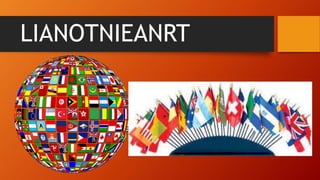
LIANOTNIEANRT
RFEORNGEI
AECLNLAEIG
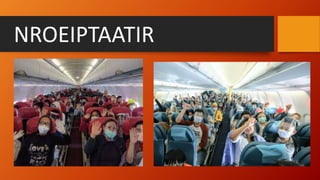
NROEIPTAATIR
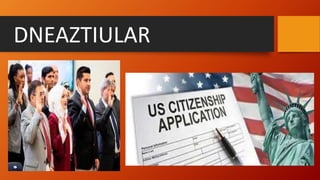
DNEAZTIULAR
NAOCIQTUISI
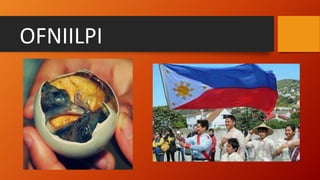
OFNIILPI
YNTAITLIAON
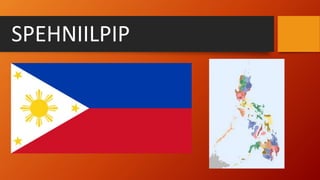
SPEHNIILPIP
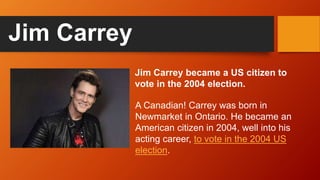
Jim Carrey became a US citizen to
vote in the 2004 election.
Jim Carrey
A Canadian! Carrey was born in
Newmarket in Ontario. He became an
American citizen in 2004, well into his
acting career, to vote in the 2004 US
election.
Marcus Douthit & Andray Blatche
Naturalized
GILAS PILIPINAS centers
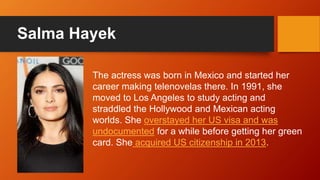
Salma Hayek
The actress was born in Mexico and started her
career making telenovelas there. In 1991, she
moved to Los Angeles to study acting and
straddled the Hollywood and Mexican acting
worlds. She overstayed her US visa and was
undocumented for a while before getting her green
card. She acquired US citizenship in 2013.
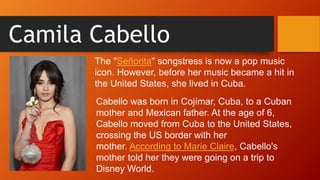
Camila Cabello
Cabello was born in Cojímar, Cuba, to a Cuban
mother and Mexican father. At the age of 6,
Cabello moved from Cuba to the United States,
crossing the US border with her
mother. According to Marie Claire, Cabello's
mother told her they were going on a trip to
Disney World.
The "Señorita" songstress is now a pop music
icon. However, before her music became a hit in
the United States, she lived in Cuba.
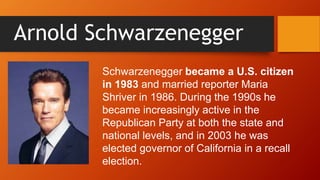
Arnold Schwarzenegger
Schwarzenegger became a U.S. citizen
in 1983 and married reporter Maria
Shriver in 1986. During the 1990s he
became increasingly active in the
Republican Party at both the state and
national levels, and in 2003 he was
elected governor of California in a recall
election.
Lesson 15:
Philippine Politics and
Governance
CITIZENSHIP
Objective:
a. explain citizenship and avenues for citizen participation
b. distinguish the natural born from naturalized Filipino
c. Enumerate the rights, privileges and obligations of
citizenship
What is citizen?
A member of a democratic community who enjoys
full civil and political rights and is accorded protection
inside and outside the territory of the State. Citizens
may be regarded by all nations either born in their
territories or born of their citizens, or it could be both.
- it denotes membership of a citizen in a
political society which membership implies,
reciprocally, a duty of allegiance on the part of
the members and duty of protection on the part
of the state
What is citizenship?
ACQUISITION OF CITIZENSHIP
1. Involuntary method -
a. jus sanguinis - by birth of blood relationship
b. jus soli - place of birth
2. Voluntary method
a. by naturalization
A natural-born citizens are those who are
citizens of the Philippines from birth without
having to perform any act to acquire or perfect
their Philippine citizenship.
NATURAL-BORN CITIZENS
The act of formally adopting a foreigner into
political body of the state and clothing him with the
rights and privileges of citizenship. It implies the
renunciation of a former nationality and the facts of
the entrance similar relation towards a new body
politics.
NATURALIZATION
WAYS OF ACQUIRING CITIZENSHIP
BY NATURALIZATION
1. By judgement of the Court
2. By direct act of congress
A FILIPINO CITIZEN:
1. Those who are citizens of the Philippines at the time of the
adoption of this Constitution.
2. Those whose fathers or mothers are citizens of the
Philippines
3. Those born on January 17 1973, of Filipino mothers, who
elect Philippine citizenship upon reaching the age of
majority; and
4. Those who are naturalized in accordance with law.
WAYS OF LOSING CITIZENSHIP
1. Voluntarily
a. by naturalization in a foreign country
b. by express renunciation of citizenship
c. by supporting the constitution and laws of a foreign
country
d. by rendering service to the armed forces of a foreign
country
WAYS OF LOSING CITIZENSHIP
2. Involuntarily
a. by cancellation of his certificate of naturalization by
the court
b. by having been declared a deserter in the Philippine
armed forces in time of war.
WAYS OF REACQUIRING CITIZENSHIP
a. by repatriation of deserters of the Philippine
armed forces
b. by direct of congress
c. by naturalization
*** Citizens of the Philippines who marry aliens
shall retain their citizenship unless by their act
or omission they are deemed, under the law, to
have renounced it.
SECTION - IV
SECTION - V
The Dual allegiance of citizens is inimical to
the national interest and shall be dealt with by
law.
Dual Citizenship – is a situation in which a person
simultaneously owes, by some positive act, loyalty to two or
more states. It arises because our laws cannot control laws of
other countries on matters of citizenship
OBLIGATIONS OF CITIZENS
1. to be loyal to the republic or have of a sense of patriotism.
2. to defend the state
3. to contribute to the development and welfare of the state.
4. to uphold the constitution and obey the laws
5. to cooperate with the duly constituted authorities
6. to exercise rights responsibly and with due regard for the right of
others
7. to engage in gainful work
8. to register and vote
• The class shall be divided into two.
• Each group shall have a paper that contains cases about
citizenship.
• The group shall discuss their opinions and eventually come up
with an agreement.
• Select one of the group to defend their respective answers.
• The other group may conform or rebut
• One point for every correct answer, conformity or rebut.
APPLICATION
APPLICATION ACTIVITY
1. If a Filipino marries an alien, will she lose her
citizenship?
2. What is the citizenship of a child if he was born
under the 1935 Constitution and during his
minority his mother is a Filipino and his father is
a Chinese.
APPLICATION ACTIVITY
3. Whose citizenship must a child follow if he was born
while his mother is unmarried?
4. Fernando ran for governor of Zamboanga and won.
Hernan contended that Fernando cannot be qualified
because he was not yet a citizen of the Philippines at the
time he filed his certificate of candidacy. Fernando
contended however, that he was already a citizen at the
time he assumed office. Whose contention is correct?
APPLICATION ACTIVITY
5. Lawrence was elected mayor in Dampalan City. His
rival Romel sought to disqualify Lawrence because he is
still using his U.S. visa at the present whenever he
traveled abroad. Was the action of Romel proper?
6. Dina was born at Canada and both of his parents are
Filipinos. What is the citizenship of Dina?
APPLICATION ACTIVITY
7. It denotes membership of a citizen in a political
society, which membership implies, reciprocally, a duty
of allegiance on the part of the member and duty or
protection on the part of the State
8. It is a reacquisition which is effected by merely taking
the necessary oath of the allegiance to the republic of
the Philippines and registering the same in the proper
civil registry.
CITIZENSHIP
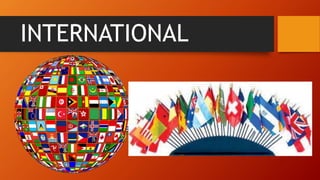
INTERNATIONAL
FOREIGNER
ALLEGIANCE
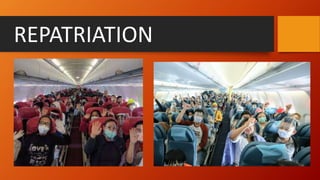
REPATRIATION
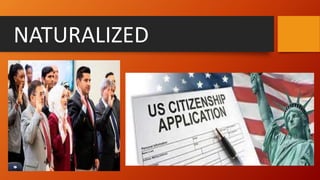
NATURALIZED
ACQUISITION
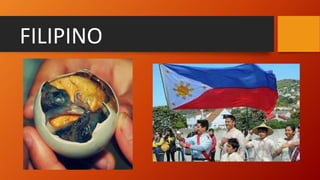
FILIPINO
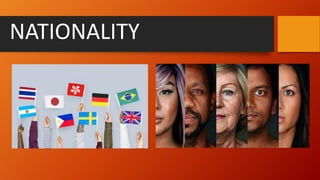
NATIONALITY
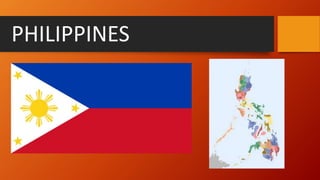
PHILIPPINES
GENERALIZATION QUESTIONS:
•How important is it to become a
citizen of a country you are
living?
•Does it affects our daily life?
ASSESSMENT:
a. Dual allegiance b. Naturalization c. Birth
d. Jus sanguinis e. Repatriation f. Jus soli
Write the correct answer on the space provided before the number. Choose
answers from the given words.
1. An involuntary method of acquiring citizenship
2. It is the birthright of a citizen in acquiring citizenship on basis of the place of
birth.
3. It is the acquisition of citizenship by blood relationship.
4. A prohibited act which refers to the continued allegiance of naturalized
nationals to their mother country even after reacquiring Filipino citizenship
5. act of formally adopting a foreigner into the political body of the state how
politics happen
ASSIGNMENT:
½ Crosswise (yellow paper)
On Page 9 of your module, answer the
Enrichment Activity.
Submit it next meeting.
Lesson 15 - Citizenship (PPG).pptx

Lesson 15 - Citizenship (PPG).pptx

  • 1.
  • 2.
  • 3.
  • 4.
    Activity Instruction: • Papersthat is given to your group contains jumbled letters. • There are 10 words to be exact. • In the span of five (5) minutes, you are going to write your answer on the board, answers must be covered to avoid benchmarking. Keep your voices slow that other group cannot hear. • Every solved jumbled word shall merit 5 points each. • Finish or not finish, you have to stop when timer stops. • Answers will be checked after the discussion. • Your timer starts now….
  • 5.
  • 6.
  • 7.
  • 8.
  • 9.
  • 10.
  • 11.
  • 12.
  • 13.
  • 14.
  • 15.
    Jim Carrey becamea US citizen to vote in the 2004 election. Jim Carrey A Canadian! Carrey was born in Newmarket in Ontario. He became an American citizen in 2004, well into his acting career, to vote in the 2004 US election.
  • 16.
    Marcus Douthit &Andray Blatche Naturalized GILAS PILIPINAS centers
  • 17.
    Salma Hayek The actresswas born in Mexico and started her career making telenovelas there. In 1991, she moved to Los Angeles to study acting and straddled the Hollywood and Mexican acting worlds. She overstayed her US visa and was undocumented for a while before getting her green card. She acquired US citizenship in 2013.
  • 18.
    Camila Cabello Cabello wasborn in Cojímar, Cuba, to a Cuban mother and Mexican father. At the age of 6, Cabello moved from Cuba to the United States, crossing the US border with her mother. According to Marie Claire, Cabello's mother told her they were going on a trip to Disney World. The "Señorita" songstress is now a pop music icon. However, before her music became a hit in the United States, she lived in Cuba.
  • 19.
    Arnold Schwarzenegger Schwarzenegger becamea U.S. citizen in 1983 and married reporter Maria Shriver in 1986. During the 1990s he became increasingly active in the Republican Party at both the state and national levels, and in 2003 he was elected governor of California in a recall election.
  • 20.
    Lesson 15: Philippine Politicsand Governance CITIZENSHIP
  • 21.
    Objective: a. explain citizenshipand avenues for citizen participation b. distinguish the natural born from naturalized Filipino c. Enumerate the rights, privileges and obligations of citizenship
  • 22.
    What is citizen? Amember of a democratic community who enjoys full civil and political rights and is accorded protection inside and outside the territory of the State. Citizens may be regarded by all nations either born in their territories or born of their citizens, or it could be both.
  • 23.
    - it denotesmembership of a citizen in a political society which membership implies, reciprocally, a duty of allegiance on the part of the members and duty of protection on the part of the state What is citizenship?
  • 24.
    ACQUISITION OF CITIZENSHIP 1.Involuntary method - a. jus sanguinis - by birth of blood relationship b. jus soli - place of birth 2. Voluntary method a. by naturalization
  • 25.
    A natural-born citizensare those who are citizens of the Philippines from birth without having to perform any act to acquire or perfect their Philippine citizenship. NATURAL-BORN CITIZENS
  • 26.
    The act offormally adopting a foreigner into political body of the state and clothing him with the rights and privileges of citizenship. It implies the renunciation of a former nationality and the facts of the entrance similar relation towards a new body politics. NATURALIZATION
  • 27.
    WAYS OF ACQUIRINGCITIZENSHIP BY NATURALIZATION 1. By judgement of the Court 2. By direct act of congress
  • 28.
    A FILIPINO CITIZEN: 1.Those who are citizens of the Philippines at the time of the adoption of this Constitution. 2. Those whose fathers or mothers are citizens of the Philippines 3. Those born on January 17 1973, of Filipino mothers, who elect Philippine citizenship upon reaching the age of majority; and 4. Those who are naturalized in accordance with law.
  • 29.
    WAYS OF LOSINGCITIZENSHIP 1. Voluntarily a. by naturalization in a foreign country b. by express renunciation of citizenship c. by supporting the constitution and laws of a foreign country d. by rendering service to the armed forces of a foreign country
  • 30.
    WAYS OF LOSINGCITIZENSHIP 2. Involuntarily a. by cancellation of his certificate of naturalization by the court b. by having been declared a deserter in the Philippine armed forces in time of war.
  • 31.
    WAYS OF REACQUIRINGCITIZENSHIP a. by repatriation of deserters of the Philippine armed forces b. by direct of congress c. by naturalization
  • 32.
    *** Citizens ofthe Philippines who marry aliens shall retain their citizenship unless by their act or omission they are deemed, under the law, to have renounced it. SECTION - IV
  • 33.
    SECTION - V TheDual allegiance of citizens is inimical to the national interest and shall be dealt with by law. Dual Citizenship – is a situation in which a person simultaneously owes, by some positive act, loyalty to two or more states. It arises because our laws cannot control laws of other countries on matters of citizenship
  • 34.
    OBLIGATIONS OF CITIZENS 1.to be loyal to the republic or have of a sense of patriotism. 2. to defend the state 3. to contribute to the development and welfare of the state. 4. to uphold the constitution and obey the laws 5. to cooperate with the duly constituted authorities 6. to exercise rights responsibly and with due regard for the right of others 7. to engage in gainful work 8. to register and vote
  • 35.
    • The classshall be divided into two. • Each group shall have a paper that contains cases about citizenship. • The group shall discuss their opinions and eventually come up with an agreement. • Select one of the group to defend their respective answers. • The other group may conform or rebut • One point for every correct answer, conformity or rebut. APPLICATION
  • 36.
    APPLICATION ACTIVITY 1. Ifa Filipino marries an alien, will she lose her citizenship? 2. What is the citizenship of a child if he was born under the 1935 Constitution and during his minority his mother is a Filipino and his father is a Chinese.
  • 37.
    APPLICATION ACTIVITY 3. Whosecitizenship must a child follow if he was born while his mother is unmarried? 4. Fernando ran for governor of Zamboanga and won. Hernan contended that Fernando cannot be qualified because he was not yet a citizen of the Philippines at the time he filed his certificate of candidacy. Fernando contended however, that he was already a citizen at the time he assumed office. Whose contention is correct?
  • 38.
    APPLICATION ACTIVITY 5. Lawrencewas elected mayor in Dampalan City. His rival Romel sought to disqualify Lawrence because he is still using his U.S. visa at the present whenever he traveled abroad. Was the action of Romel proper? 6. Dina was born at Canada and both of his parents are Filipinos. What is the citizenship of Dina?
  • 39.
    APPLICATION ACTIVITY 7. Itdenotes membership of a citizen in a political society, which membership implies, reciprocally, a duty of allegiance on the part of the member and duty or protection on the part of the State 8. It is a reacquisition which is effected by merely taking the necessary oath of the allegiance to the republic of the Philippines and registering the same in the proper civil registry.
  • 41.
  • 42.
  • 43.
  • 44.
  • 45.
  • 46.
  • 47.
  • 48.
  • 49.
  • 50.
  • 51.
    GENERALIZATION QUESTIONS: •How importantis it to become a citizen of a country you are living? •Does it affects our daily life?
  • 52.
    ASSESSMENT: a. Dual allegianceb. Naturalization c. Birth d. Jus sanguinis e. Repatriation f. Jus soli Write the correct answer on the space provided before the number. Choose answers from the given words. 1. An involuntary method of acquiring citizenship 2. It is the birthright of a citizen in acquiring citizenship on basis of the place of birth. 3. It is the acquisition of citizenship by blood relationship. 4. A prohibited act which refers to the continued allegiance of naturalized nationals to their mother country even after reacquiring Filipino citizenship 5. act of formally adopting a foreigner into the political body of the state how politics happen
  • 53.
    ASSIGNMENT: ½ Crosswise (yellowpaper) On Page 9 of your module, answer the Enrichment Activity. Submit it next meeting.