Bicol University
College of Agriculture and Forestry
Lesson 11: The Computer as
Teacher's Tool
Judith C. Napucao
III-BAT-ATE 2
Bachelor in Agricultural Technology Major in
Agricultural Technology Education
We saw the computer can
act as a tutor, particularly
along a behaviorist and
cognitivist approach to
learning. We also saw
how computer programs
have been developed to
foster higher thinking
skills and creativity.
We shall again look at the computer, but this
time from another perspective the computer as
the teacher's handy-tool.
In fact it can support the constructivist and
social constructivist paradigms of learning.
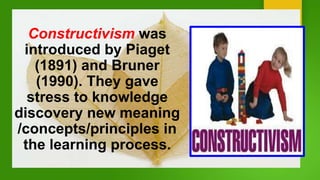
Constructivism was
introduced by Piaget
(1891) and Bruner
(1990). They gave
stress to knowledge
discovery new meaning
/concepts/principles in
the learning process.
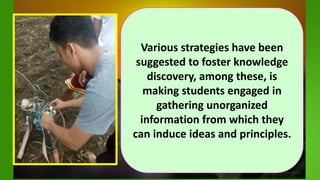
Various strategies have been
suggested to foster knowledge
discovery, among these, is
making students engaged in
gathering unorganized
information from which they
can induce ideas and principles.
While knowledge is constructed by individual learner in
constructivism, knowledge can also be socially
constructed. Social constructivism is an effort to show
that the construction of knowledge is governed by social,
historical, and cultural contexts.
.
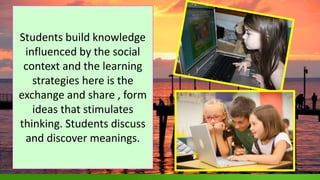
Students build knowledge
influenced by the social
context and the learning
strategies here is the
exchange and share , form
ideas that stimulates
thinking. Students discuss
and discover meanings.
The Computers
Capabilities
Computer can provide
access to information,
foster creative social
knowledge-building and
enhance the
communication of the
achieved project package.
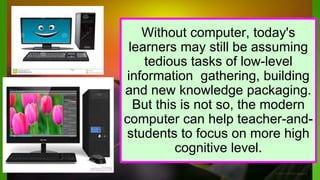
Without computer, today's
learners may still be assuming
tedious tasks of low-level
information gathering, building
and new knowledge packaging.
But this is not so, the modern
computer can help teacher-and-
students to focus on more high
cognitive level.
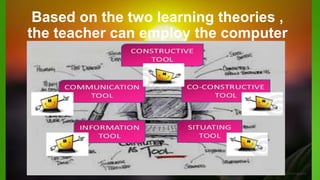
Based on the two learning theories ,
the teacher can employ the computer
as a/an :
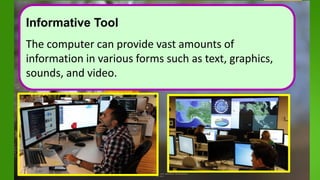
Informative Tool
The computer can provide vast amounts of
information in various forms such as text, graphics,
sounds, and video.
The internet itself provides an
enormous database from which user
can access global information
resources that includes the latest
news, weather forecasts, airline
schedule, sports development,
entertainment news as well as
educational information directly
useful to learners.
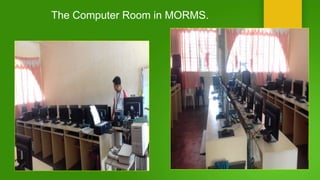
The Computer Room in MORMS.
Communication
Tool
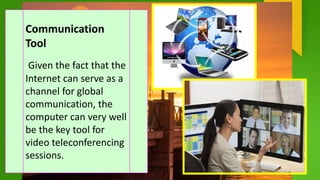
Given the fact that the
Internet can serve as a
channel for global
communication, the
computer can very well
be the key tool for
video teleconferencing
sessions.
Constructive Tool
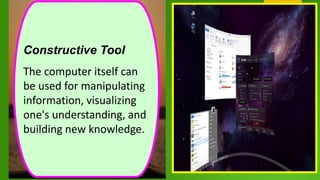
The computer itself can
be used for manipulating
information, visualizing
one's understanding, and
building new knowledge.
The Microsoft Word
computer programs
itself is a desktop
publishing software
that alloows users to
organize and present
their ideas in attractive
formats.
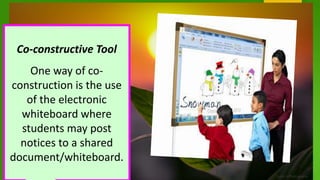
Co-constructive Tool
One way of co-
construction is the use
of the electronic
whiteboard where
students may post
notices to a shared
document/whiteboard.
The Computer-Supported Intentional Learning
Environments (CSILE) is an example of an
integrated environment developed by the
Ontario Institute for Education. Within CSILE,
students can enter their ideas in notes and
respond to each other's ideas.
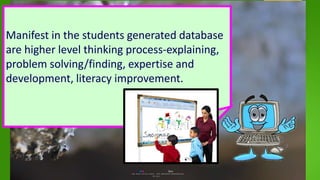
Manifest in the students generated database
are higher level thinking process-explaining,
problem solving/finding, expertise and
development, literacy improvement.
Situating Tool
By means of virtual reality (RS)
extension systems, the computer can
create 3-D images on display to give the
user the feeling that are situated in a
virtual environment.
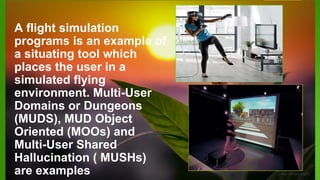
A flight simulation
programs is an example of
a situating tool which
places the user in a
simulated flying
environment. Multi-User
Domains or Dungeons
(MUDS), MUD Object
Oriented (MOOs) and
Multi-User Shared
Hallucination ( MUSHs)
are examples
of situating systems. MuDs and MOOs
are mainly text-based virtual reality
environments on the Internet. When the
users log to a MOO environment , they
may interact with the virtual reality
through simple text-based commands.
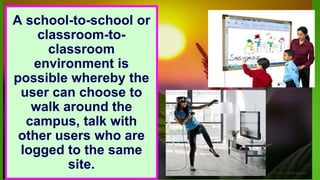
A school-to-school or
classroom-to-
classroom
environment is
possible whereby the
user can choose to
walk around the
campus, talk with
other users who are
logged to the same
site.
To caution user, the computer as a
situating tool is news and still
undergoing further research and
development.
.
Activity :
• Log on Singapore's History City Learning community
(http://www.is.nuss.sg/RND/cs/idl/HistoryCity/overview.h
tml)
Try History City's activities of collecting, trading, and
creating interactive dioramas. Report your experience to
the class.
Thank You ! 🙌😊

Lesson 11: The Computer as Teacher's tool

  • 1.
    Bicol University College ofAgriculture and Forestry Lesson 11: The Computer as Teacher's Tool Judith C. Napucao III-BAT-ATE 2 Bachelor in Agricultural Technology Major in Agricultural Technology Education
  • 2.
    We saw thecomputer can act as a tutor, particularly along a behaviorist and cognitivist approach to learning. We also saw how computer programs have been developed to foster higher thinking skills and creativity.
  • 3.
    We shall againlook at the computer, but this time from another perspective the computer as the teacher's handy-tool. In fact it can support the constructivist and social constructivist paradigms of learning.
  • 4.
    Constructivism was introduced byPiaget (1891) and Bruner (1990). They gave stress to knowledge discovery new meaning /concepts/principles in the learning process.
  • 5.
    Various strategies havebeen suggested to foster knowledge discovery, among these, is making students engaged in gathering unorganized information from which they can induce ideas and principles.
  • 6.
    While knowledge isconstructed by individual learner in constructivism, knowledge can also be socially constructed. Social constructivism is an effort to show that the construction of knowledge is governed by social, historical, and cultural contexts.
  • 8.
    . Students build knowledge influencedby the social context and the learning strategies here is the exchange and share , form ideas that stimulates thinking. Students discuss and discover meanings.
  • 9.
    The Computers Capabilities Computer canprovide access to information, foster creative social knowledge-building and enhance the communication of the achieved project package.
  • 10.
    Without computer, today's learnersmay still be assuming tedious tasks of low-level information gathering, building and new knowledge packaging. But this is not so, the modern computer can help teacher-and- students to focus on more high cognitive level.
  • 11.
    Based on thetwo learning theories , the teacher can employ the computer as a/an :
  • 12.
    Informative Tool The computercan provide vast amounts of information in various forms such as text, graphics, sounds, and video.
  • 13.
    The internet itselfprovides an enormous database from which user can access global information resources that includes the latest news, weather forecasts, airline schedule, sports development, entertainment news as well as educational information directly useful to learners.
  • 14.
  • 15.
    Communication Tool Given the factthat the Internet can serve as a channel for global communication, the computer can very well be the key tool for video teleconferencing sessions.
  • 16.
    Constructive Tool The computeritself can be used for manipulating information, visualizing one's understanding, and building new knowledge.
  • 17.
    The Microsoft Word computerprograms itself is a desktop publishing software that alloows users to organize and present their ideas in attractive formats.
  • 19.
    Co-constructive Tool One wayof co- construction is the use of the electronic whiteboard where students may post notices to a shared document/whiteboard.
  • 20.
    The Computer-Supported IntentionalLearning Environments (CSILE) is an example of an integrated environment developed by the Ontario Institute for Education. Within CSILE, students can enter their ideas in notes and respond to each other's ideas.
  • 21.
    Manifest in thestudents generated database are higher level thinking process-explaining, problem solving/finding, expertise and development, literacy improvement.
  • 22.
    Situating Tool By meansof virtual reality (RS) extension systems, the computer can create 3-D images on display to give the user the feeling that are situated in a virtual environment.
  • 23.
    A flight simulation programsis an example of a situating tool which places the user in a simulated flying environment. Multi-User Domains or Dungeons (MUDS), MUD Object Oriented (MOOs) and Multi-User Shared Hallucination ( MUSHs) are examples
  • 24.
    of situating systems.MuDs and MOOs are mainly text-based virtual reality environments on the Internet. When the users log to a MOO environment , they may interact with the virtual reality through simple text-based commands.
  • 25.
    A school-to-school or classroom-to- classroom environmentis possible whereby the user can choose to walk around the campus, talk with other users who are logged to the same site.
  • 26.
    To caution user,the computer as a situating tool is news and still undergoing further research and development.
  • 27.
    . Activity : • Logon Singapore's History City Learning community (http://www.is.nuss.sg/RND/cs/idl/HistoryCity/overview.h tml) Try History City's activities of collecting, trading, and creating interactive dioramas. Report your experience to the class.
  • 28.
    Thank You !🙌😊