INTRODUCTION TO
INFORMATION AND
COMMUNICATIONS
TECHNOLOGY
ICT
The technology required for information
processing, in particular, the use of
electronic computers, communication
devices and software applications to
convert, store, protect, process, transmit
and retrieve information from anywhere,
anytime.
INFORMATION
It refers to the knowledge obtained
from reading, investigation, study or
research. The tools to transmit the
information are the telephone, television
and radio. Information is knowledge and
helps us fulfill our daily tasks.
COMMUNICATION
Communication is an act of
transmitting messages. It is a process
whereby information is exchanged
between individuals using symbols, signs
or verbal interaction. Communication is
important in order to gain knowledge.
TECHNOLOGY
Technology is the use of scientific
knowledge, experience and resources to
create process products that fulfill human
needs. Technology is vital in
communication.
INFORMATION and
COMMUNICATIONS
TECHNOLOGY
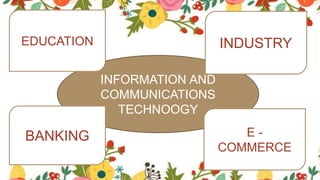
Usage of ICT in our everyday lives:
INFORMATION AND
COMMUNICATIONS
TECHNOOGY
EDUCATION INDUSTRY
BANKING E -
COMMERCE
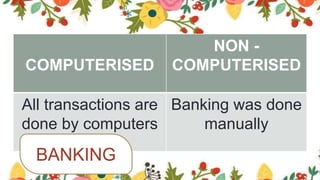
COMPUTERISED
NON -
COMPUTERISED
All transactions are
done by computers
Banking was done
manually
BANKING
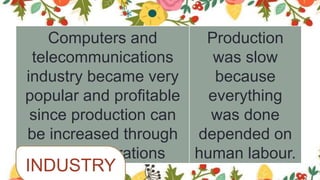
Computers and
telecommunications
industry became very
popular and profitable
since production can
be increased through
all day operations
Production
was slow
because
everything
was done
depended on
human labour.
INDUSTRY
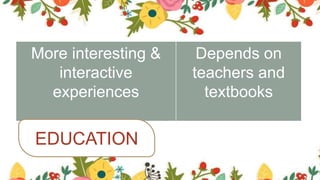
More interesting &
interactive
experiences
Depends on
teachers and
textbooks
EDUCATION
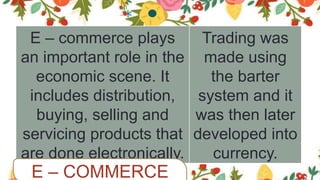
E – commerce plays
an important role in the
economic scene. It
includes distribution,
buying, selling and
servicing products that
are done electronically.
Trading was
made using
the barter
system and it
was then later
developed into
currency.
E – COMMERCE
ICT IN OUR DAILY LIVES
HOW MANY OF THE
FOLLOWING ICONS ARE
YOU FAMILIAR WITH?
DO YOU OFTEN VISIT
THOSE
APPLICATIONS/SITES?
1. TEENS SAY THAT THEY OWN
WHICH OF THE FOLLOWING?
A) CELL PHONE
B) SMARTPHONE
C) IPOD TOUCH OR SIMILAR
DEVICE
D) IPAD OR SIMILAR DEVICE
2. WHAT PERCENT OF TEENS
DESCRIBE THEMSELVES AS
“ADDICTED” TO THEIR CELL
PHONES?
A) 11%
B) 27%
C) 41%
D) 63%
3. TEENS SAY THEY DO WHICH OF
THE FOLLOWING AT LEAST ONCE A
DAY?
A) TEXT
B) VISITA SOCIAL NETWORK
C) INSTANT MESSAGE (IM)
D) USE EMAIL
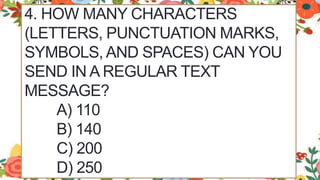
4. HOW MANY CHARACTERS
(LETTERS, PUNCTUATION MARKS,
SYMBOLS, AND SPACES) CAN YOU
SEND IN A REGULAR TEXT
MESSAGE?
A) 110
B) 140
C) 200
D) 250
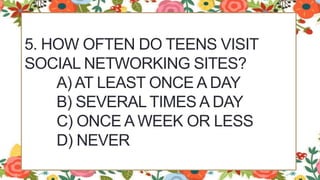
5. HOW OFTEN DO TEENS VISIT
SOCIAL NETWORKING SITES?
A) AT LEAST ONCE A DAY
B) SEVERAL TIMES A DAY
C) ONCE A WEEK OR LESS
D) NEVER
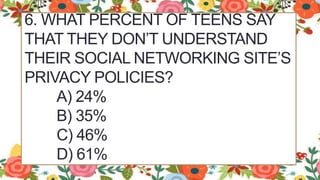
6. WHAT PERCENT OF TEENS SAY
THAT THEY DON’T UNDERSTAND
THEIR SOCIAL NETWORKING SITE’S
PRIVACY POLICIES?
A) 24%
B) 35%
C) 46%
D) 61%
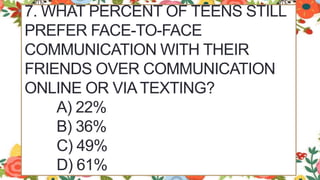
7. WHAT PERCENT OF TEENS STILL
PREFER FACE-TO-FACE
COMMUNICATION WITH THEIR
FRIENDS OVER COMMUNICATION
ONLINE OR VIATEXTING?
A) 22%
B) 36%
C) 49%
D) 61%
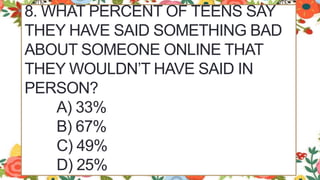
8. WHAT PERCENT OF TEENS SAY
THEY HAVE SAID SOMETHING BAD
ABOUT SOMEONE ONLINE THAT
THEY WOULDN’T HAVE SAID IN
PERSON?
A) 33%
B) 67%
C) 49%
D) 25%
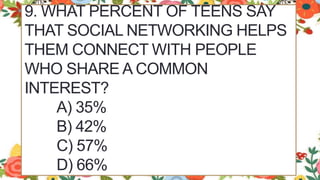
9. WHAT PERCENT OF TEENS SAY
THAT SOCIAL NETWORKING HELPS
THEM CONNECT WITH PEOPLE
WHO SHARE A COMMON
INTEREST?
A) 35%
B) 42%
C) 57%
D) 66%
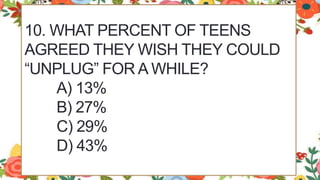
10. WHAT PERCENT OF TEENS
AGREED THEY WISH THEY COULD
“UNPLUG” FOR A WHILE?
A) 13%
B) 27%
C) 29%
D) 43%

Lesson 1: Introduction to Information and Communication Technology

  • 1.
  • 2.
    ICT The technology requiredfor information processing, in particular, the use of electronic computers, communication devices and software applications to convert, store, protect, process, transmit and retrieve information from anywhere, anytime.
  • 3.
    INFORMATION It refers tothe knowledge obtained from reading, investigation, study or research. The tools to transmit the information are the telephone, television and radio. Information is knowledge and helps us fulfill our daily tasks.
  • 4.
    COMMUNICATION Communication is anact of transmitting messages. It is a process whereby information is exchanged between individuals using symbols, signs or verbal interaction. Communication is important in order to gain knowledge.
  • 5.
    TECHNOLOGY Technology is theuse of scientific knowledge, experience and resources to create process products that fulfill human needs. Technology is vital in communication.
  • 6.
  • 7.
    Usage of ICTin our everyday lives: INFORMATION AND COMMUNICATIONS TECHNOOGY EDUCATION INDUSTRY BANKING E - COMMERCE
  • 8.
    COMPUTERISED NON - COMPUTERISED All transactionsare done by computers Banking was done manually BANKING
  • 9.
    Computers and telecommunications industry becamevery popular and profitable since production can be increased through all day operations Production was slow because everything was done depended on human labour. INDUSTRY
  • 10.
    More interesting & interactive experiences Dependson teachers and textbooks EDUCATION
  • 11.
    E – commerceplays an important role in the economic scene. It includes distribution, buying, selling and servicing products that are done electronically. Trading was made using the barter system and it was then later developed into currency. E – COMMERCE
  • 12.
    ICT IN OURDAILY LIVES
  • 15.
    HOW MANY OFTHE FOLLOWING ICONS ARE YOU FAMILIAR WITH?
  • 16.
    DO YOU OFTENVISIT THOSE APPLICATIONS/SITES?
  • 17.
    1. TEENS SAYTHAT THEY OWN WHICH OF THE FOLLOWING? A) CELL PHONE B) SMARTPHONE C) IPOD TOUCH OR SIMILAR DEVICE D) IPAD OR SIMILAR DEVICE
  • 18.
    2. WHAT PERCENTOF TEENS DESCRIBE THEMSELVES AS “ADDICTED” TO THEIR CELL PHONES? A) 11% B) 27% C) 41% D) 63%
  • 19.
    3. TEENS SAYTHEY DO WHICH OF THE FOLLOWING AT LEAST ONCE A DAY? A) TEXT B) VISITA SOCIAL NETWORK C) INSTANT MESSAGE (IM) D) USE EMAIL
  • 20.
    4. HOW MANYCHARACTERS (LETTERS, PUNCTUATION MARKS, SYMBOLS, AND SPACES) CAN YOU SEND IN A REGULAR TEXT MESSAGE? A) 110 B) 140 C) 200 D) 250
  • 21.
    5. HOW OFTENDO TEENS VISIT SOCIAL NETWORKING SITES? A) AT LEAST ONCE A DAY B) SEVERAL TIMES A DAY C) ONCE A WEEK OR LESS D) NEVER
  • 22.
    6. WHAT PERCENTOF TEENS SAY THAT THEY DON’T UNDERSTAND THEIR SOCIAL NETWORKING SITE’S PRIVACY POLICIES? A) 24% B) 35% C) 46% D) 61%
  • 23.
    7. WHAT PERCENTOF TEENS STILL PREFER FACE-TO-FACE COMMUNICATION WITH THEIR FRIENDS OVER COMMUNICATION ONLINE OR VIATEXTING? A) 22% B) 36% C) 49% D) 61%
  • 24.
    8. WHAT PERCENTOF TEENS SAY THEY HAVE SAID SOMETHING BAD ABOUT SOMEONE ONLINE THAT THEY WOULDN’T HAVE SAID IN PERSON? A) 33% B) 67% C) 49% D) 25%
  • 25.
    9. WHAT PERCENTOF TEENS SAY THAT SOCIAL NETWORKING HELPS THEM CONNECT WITH PEOPLE WHO SHARE A COMMON INTEREST? A) 35% B) 42% C) 57% D) 66%
  • 26.
    10. WHAT PERCENTOF TEENS AGREED THEY WISH THEY COULD “UNPLUG” FOR A WHILE? A) 13% B) 27% C) 29% D) 43%