HANDICRAFT
PRODUCTION
LESSON 1 :
PRODUCE EMBROIDERED
ARTICLES
EMBROIDERY
- the art of designing
with needle and thread.
FABRIC
- any woven, knitted or
felt cloth.
THREAD
- a very fine cord
composed of strand or
strands of spun silk, flax or
cotton used in sewing.
DESIGN
- arrangement of line, form,
color and texture with the
purpose of achieving order and
beauty.
DEVELOPMENT OF
PHILIPPINE EMBROIDER
EMBROIDERY
-is the ornamentation of textiles and other
materials with needlework for personal use
and decoration not only at home but for
offices as well. The term embroidery is an
English word derived from the old French
embroiders meaning edge and border
-was introduced into the Orient by the
Netherlanders in the 15th century. It was
bought by the Spaniards into the
Philippines where it has made a wonderful
growth, and work done it rivals the best
work done in Switzerland, a country noted
for its exquisite embroidery.
TOOLS AND MATERIALS
USE IN EMBROIDERY ITS
USES AND
MAINTENANCE
TOOLS
GAUGE
- use to
measure
short
distance
TAPE MEASURE
- use for measuring
more than one-
foot distance or
materials
THIMBLES
- made from metal or plastic,
protect the middle finger and push
the needle while doing your
embroidery work. This come in
sizes 6 (small) to 12 (large)
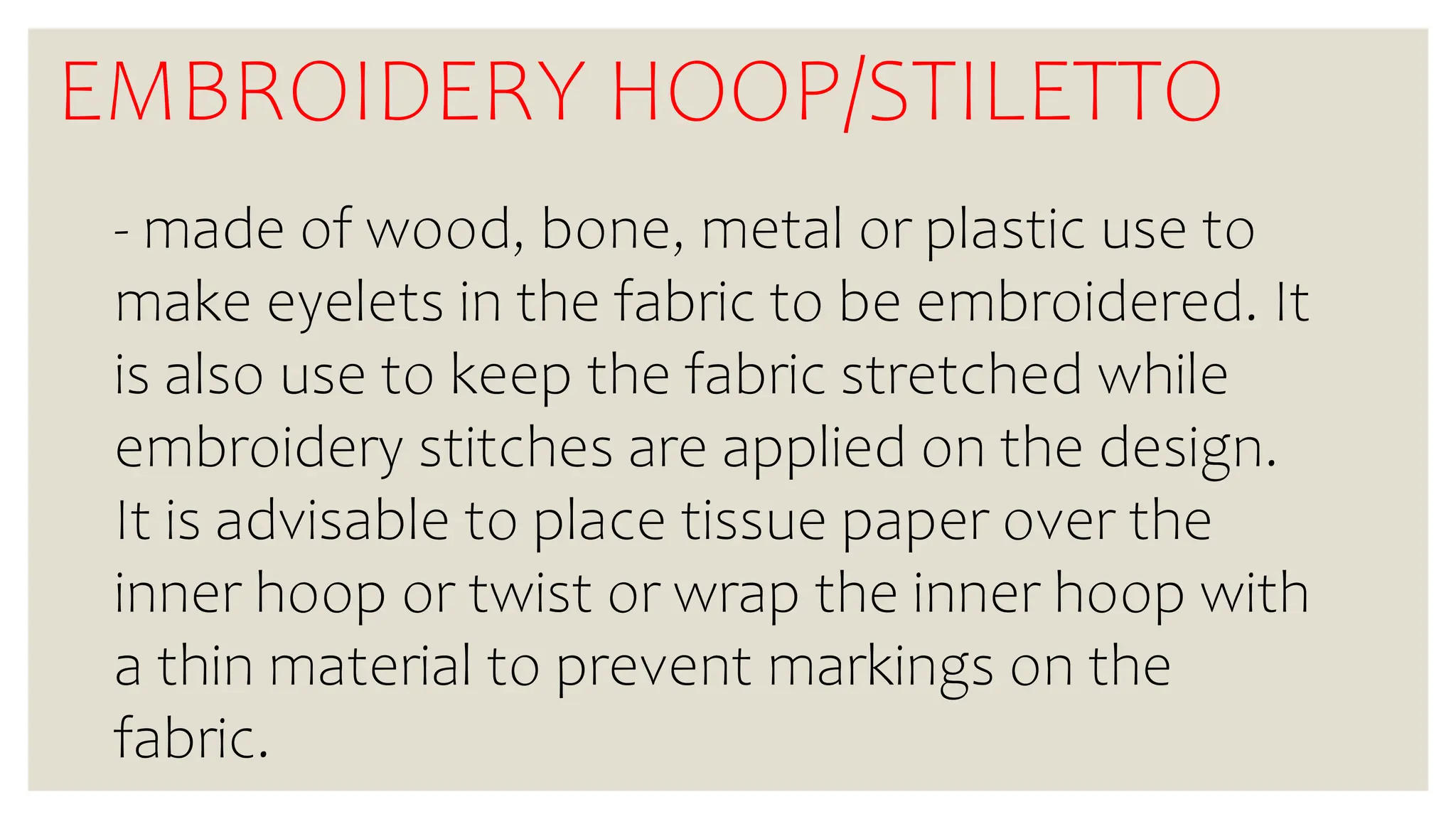
EMBROIDERY HOOP/STILETTO
- made of wood, bone, metal or plastic use to
make eyelets in the fabric to be embroidered. It
is also use to keep the fabric stretched while
embroidery stitches are applied on the design.
It is advisable to place tissue paper over the
inner hoop or twist or wrap the inner hoop with
a thin material to prevent markings on the
fabric.
EMBROIDERY SCISSOR
- is small, sharp and pointed-good for fine
work use for trimming scallops, clipping
threads, and cutting large eyelets.
Protect the blade by keeping them in a
sheath or cover and get them sharpened
occasionally
NEEDLE THREADER
- is use for easier
threading especially
by those sewers
with poor eyesight.
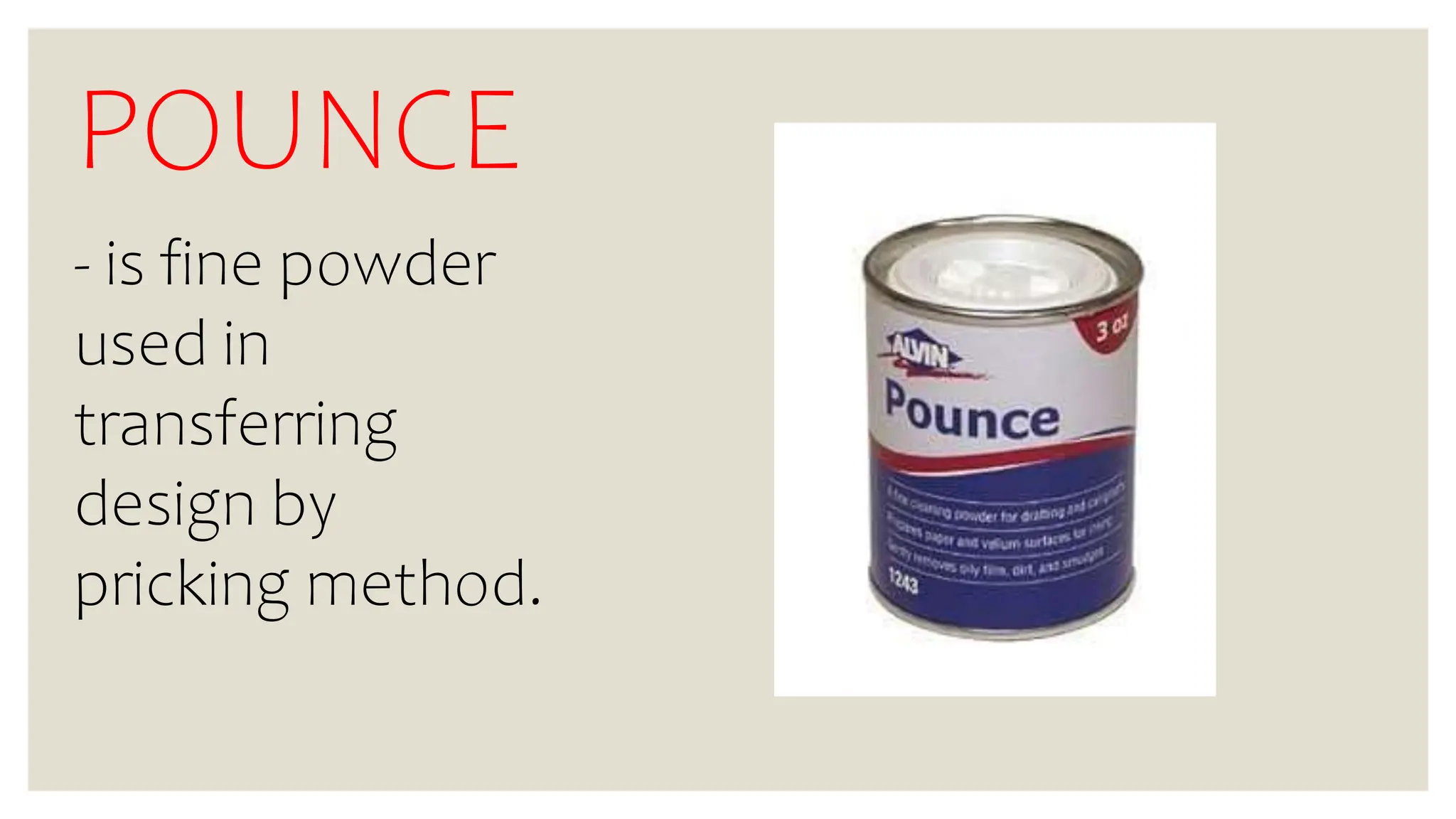
POUNCE
- is fine powder
used in
transferring
design by
pricking method.
EMBROIDERY NEEDLE
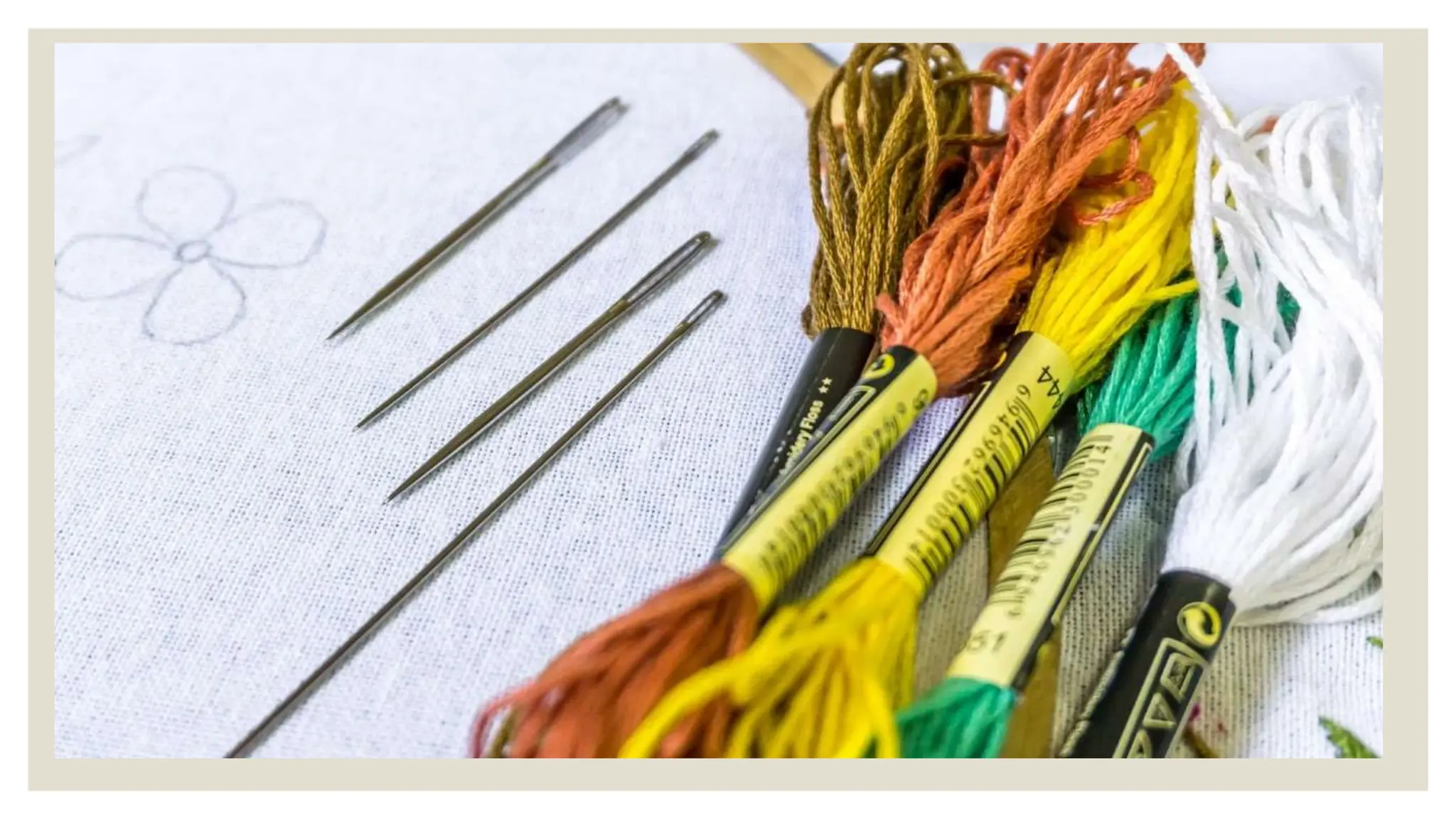
a short pieces of steel with a fine point at one end and a little opening or eye
at the other. The kind of embroidery work to do and the kind of thread to use
are two things to be considered in choosing your needle.
Needles should always have a fine tip so that they can easily move in and out
of the fabric. Do not use a needle which is bent, without a point or rusty. This
will affect the regularity and neatness of work. Protect your needles by
storing them in a needle case. to sharpen needles or make pins last longer by
rubbing them with an abrasive material such as sandpaper or heavy wool.
Keep in mind that pins and needles are one of the most inexpensive notions
used. Simple care and knowing when to discard them are key. It is
recommended to discard your needle after eight hours of use; usually when
threads or fibers start breaking and you feel it pulling on your fabric instead of
gliding through it.
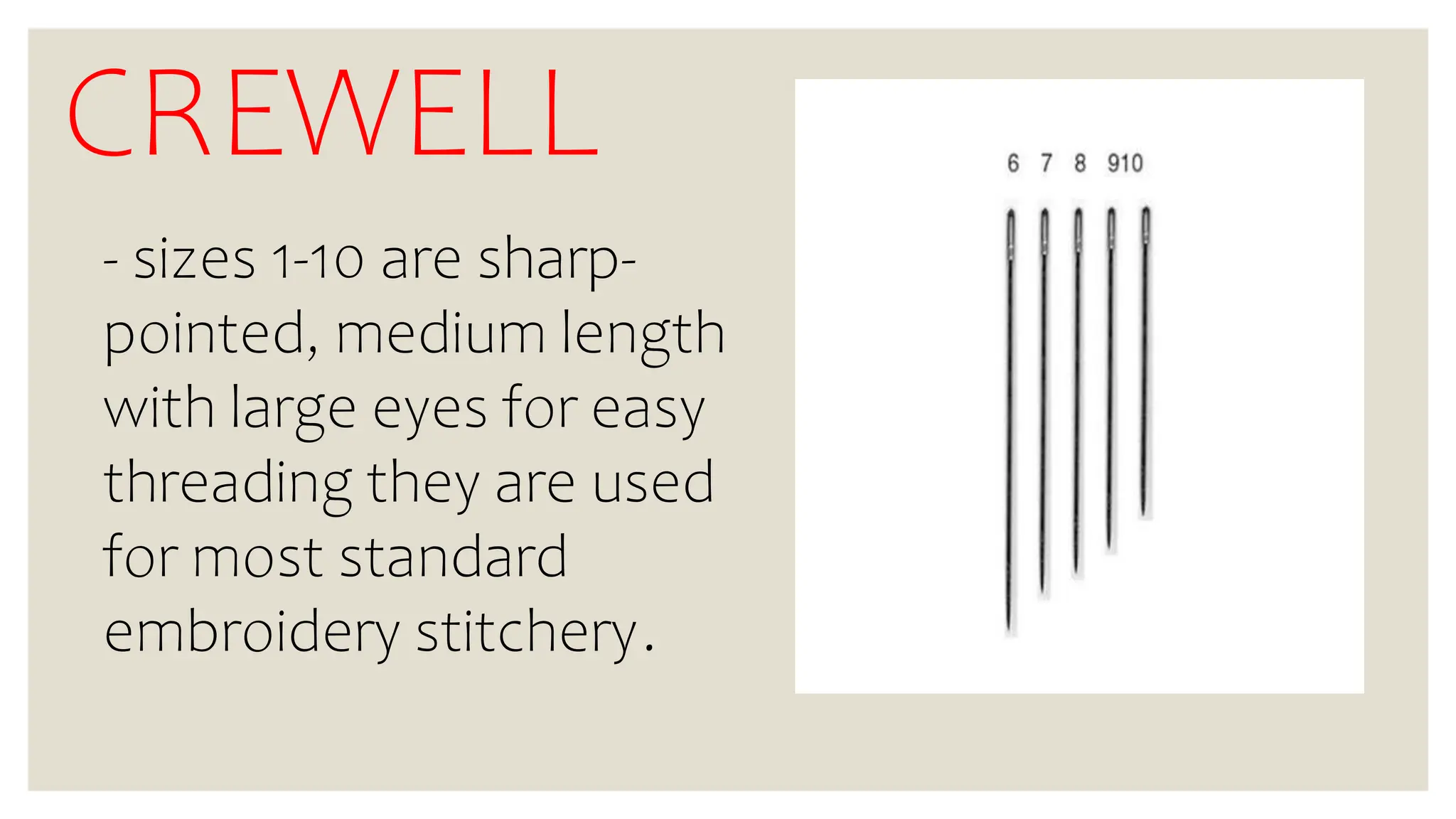
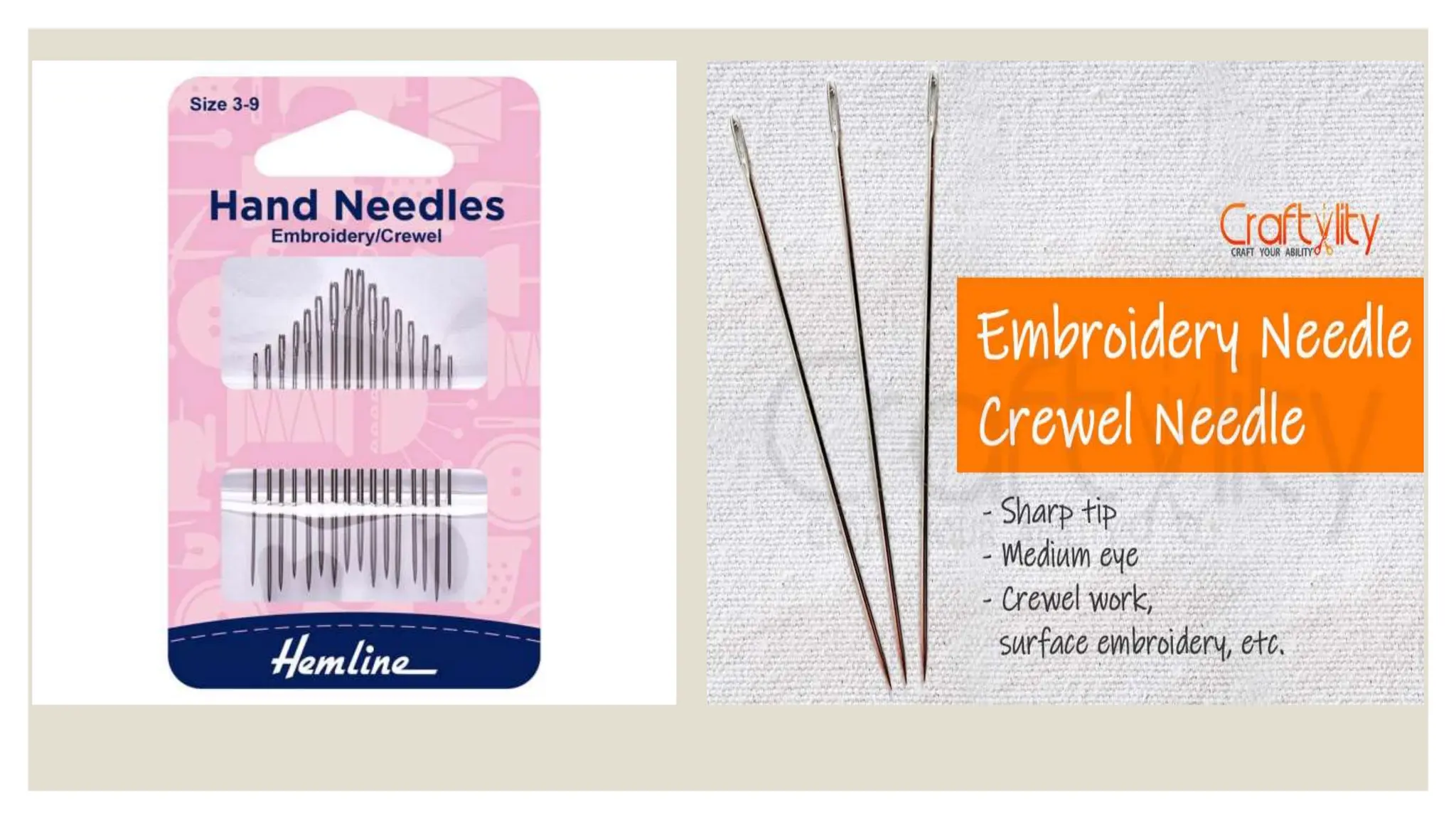
CREWELL
- sizes 1-10 are sharp-
pointed, medium length
with large eyes for easy
threading they are used
for most standard
embroidery stitchery.
Chenille
- sizes 13-26 are also
sharp-pointed needles but
they are thicker and
longer and have larger
eyes. They are that types
of needles appropriate for
embroidery that is worked
with heavier yarns.
TAPESTRY NEEDLE
- is from sizes 13 -26. They
are similar in size to
chenille but are blunt
rather than sharp. This
makes them best for
thread-counting
embroidery and for the
needle point as well.
WATER COLOR BRUSH
- use for
transferring the
design using
pricking and
pouncing
methods.
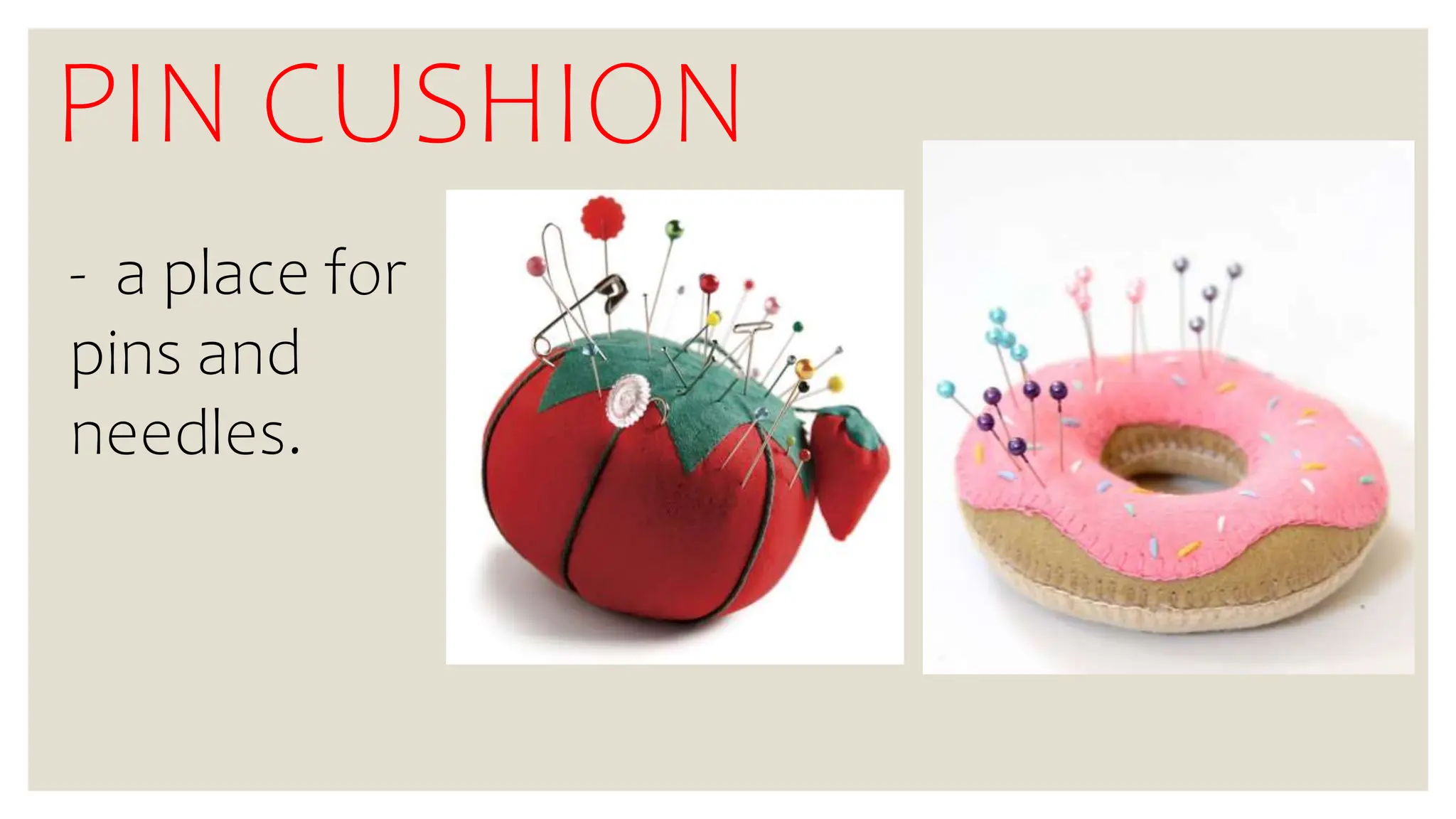
PIN CUSHION
- a place for
pins and
needles.
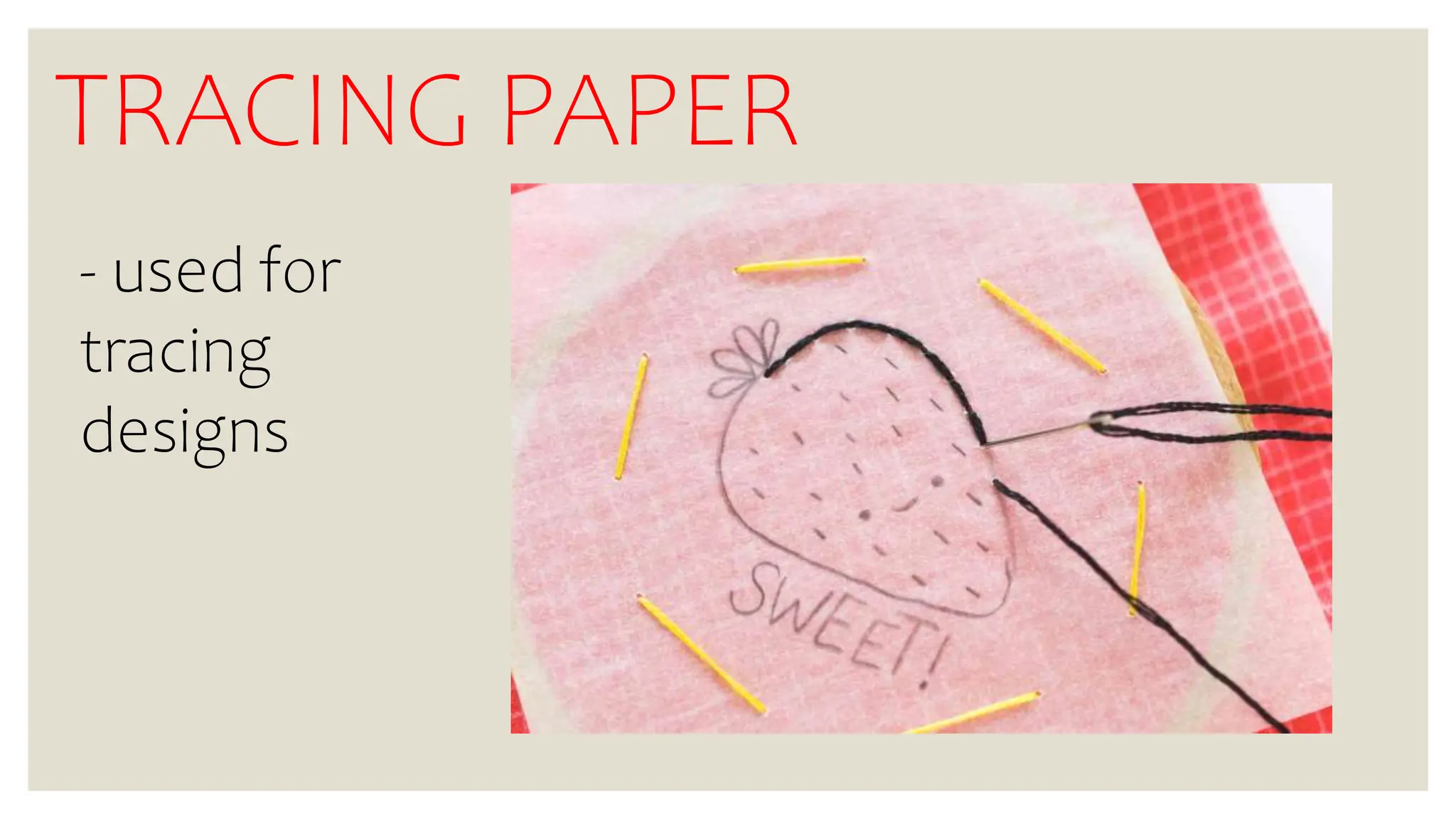
TRACING PAPER
- used for
tracing
designs
SEWING BOX
- use to keep
together the
embroidery tools
and materials.
BAG
- to keep work clean
and fresh, have a bag
made from washable
material to hold your
work when not busy
on it.
MATERIALS
FABRIC
- sometimes referred to as cloth,
are of great variety and they differ
in material, weight, weave, design,
color, and finish.
THREE TYPES OF
FABRIC
COMMON WEAVE
- includes most tightly woven fabrics with
a relatively smooth surface like linen, wool
and cotton. They are best used for articles
with decorative stitches.
EVEN-WEAVE
- are intended for hardanger
embroidery since the number of
threads per square inch is same for
both warp and woof.
BASKET WEAVE
- is commonly used by beginners and ramie
linen by those who have been used to this
embroidery. It supplies guidelines for cross
stitch and smocking having an evenly spaced
pattern like gingham cloth and polka dots.
BRITTLENESS
◦In addition to discoloring and fading,
excessive exposure to sunlight can dry
out the thread and lead to brittleness in
the fibers. Obviously, this will weaken
the thread and lead to excessive thread
breaks.
LESSON 1- EMBROIDERY POWERPOINT MODULE.pptx

LESSON 1- EMBROIDERY POWERPOINT MODULE.pptx

  • 2.
  • 3.
    LESSON 1 : PRODUCEEMBROIDERED ARTICLES
  • 5.
    EMBROIDERY - the artof designing with needle and thread.
  • 6.
    FABRIC - any woven,knitted or felt cloth.
  • 7.
    THREAD - a veryfine cord composed of strand or strands of spun silk, flax or cotton used in sewing.
  • 8.
    DESIGN - arrangement ofline, form, color and texture with the purpose of achieving order and beauty.
  • 9.
  • 10.
    EMBROIDERY -is the ornamentationof textiles and other materials with needlework for personal use and decoration not only at home but for offices as well. The term embroidery is an English word derived from the old French embroiders meaning edge and border
  • 11.
    -was introduced intothe Orient by the Netherlanders in the 15th century. It was bought by the Spaniards into the Philippines where it has made a wonderful growth, and work done it rivals the best work done in Switzerland, a country noted for its exquisite embroidery.
  • 13.
    TOOLS AND MATERIALS USEIN EMBROIDERY ITS USES AND MAINTENANCE
  • 14.
  • 15.
  • 17.
    TAPE MEASURE - usefor measuring more than one- foot distance or materials
  • 18.
    THIMBLES - made frommetal or plastic, protect the middle finger and push the needle while doing your embroidery work. This come in sizes 6 (small) to 12 (large)
  • 20.
    EMBROIDERY HOOP/STILETTO - madeof wood, bone, metal or plastic use to make eyelets in the fabric to be embroidered. It is also use to keep the fabric stretched while embroidery stitches are applied on the design. It is advisable to place tissue paper over the inner hoop or twist or wrap the inner hoop with a thin material to prevent markings on the fabric.
  • 22.
    EMBROIDERY SCISSOR - issmall, sharp and pointed-good for fine work use for trimming scallops, clipping threads, and cutting large eyelets. Protect the blade by keeping them in a sheath or cover and get them sharpened occasionally
  • 24.
    NEEDLE THREADER - isuse for easier threading especially by those sewers with poor eyesight.
  • 26.
    POUNCE - is finepowder used in transferring design by pricking method.
  • 28.
    EMBROIDERY NEEDLE a shortpieces of steel with a fine point at one end and a little opening or eye at the other. The kind of embroidery work to do and the kind of thread to use are two things to be considered in choosing your needle. Needles should always have a fine tip so that they can easily move in and out of the fabric. Do not use a needle which is bent, without a point or rusty. This will affect the regularity and neatness of work. Protect your needles by storing them in a needle case. to sharpen needles or make pins last longer by rubbing them with an abrasive material such as sandpaper or heavy wool. Keep in mind that pins and needles are one of the most inexpensive notions used. Simple care and knowing when to discard them are key. It is recommended to discard your needle after eight hours of use; usually when threads or fibers start breaking and you feel it pulling on your fabric instead of gliding through it.
  • 31.
    CREWELL - sizes 1-10are sharp- pointed, medium length with large eyes for easy threading they are used for most standard embroidery stitchery.
  • 33.
    Chenille - sizes 13-26are also sharp-pointed needles but they are thicker and longer and have larger eyes. They are that types of needles appropriate for embroidery that is worked with heavier yarns.
  • 34.
    TAPESTRY NEEDLE - isfrom sizes 13 -26. They are similar in size to chenille but are blunt rather than sharp. This makes them best for thread-counting embroidery and for the needle point as well.
  • 36.
    WATER COLOR BRUSH -use for transferring the design using pricking and pouncing methods.
  • 38.
    PIN CUSHION - aplace for pins and needles.
  • 39.
    TRACING PAPER - usedfor tracing designs
  • 41.
    SEWING BOX - useto keep together the embroidery tools and materials.
  • 43.
    BAG - to keepwork clean and fresh, have a bag made from washable material to hold your work when not busy on it.
  • 45.
  • 46.
    FABRIC - sometimes referredto as cloth, are of great variety and they differ in material, weight, weave, design, color, and finish.
  • 47.
  • 48.
    COMMON WEAVE - includesmost tightly woven fabrics with a relatively smooth surface like linen, wool and cotton. They are best used for articles with decorative stitches.
  • 49.
    EVEN-WEAVE - are intendedfor hardanger embroidery since the number of threads per square inch is same for both warp and woof.
  • 50.
    BASKET WEAVE - iscommonly used by beginners and ramie linen by those who have been used to this embroidery. It supplies guidelines for cross stitch and smocking having an evenly spaced pattern like gingham cloth and polka dots.
  • 68.
    BRITTLENESS ◦In addition todiscoloring and fading, excessive exposure to sunlight can dry out the thread and lead to brittleness in the fibers. Obviously, this will weaken the thread and lead to excessive thread breaks.