Machine Maintenance
Cleaning 
• The machine should be carefully cleaned of 
dust, lint, and thread before it is used and 
again before it is put away. 
• Thread, carelessly left, often results in 
damage to the shuttle and in the blunting of 
needles.
Oiling 
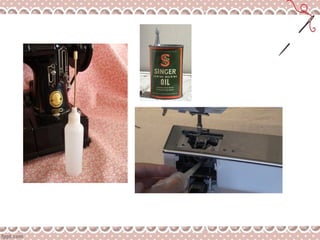
• Oiling keep the parts working smoothly 
and without unnecessary wear. 
• Only a drop of oil once a week may be 
required.
• Places on the sewing machine which 
require oiling include: 
– two or more points on the treadle 
– two points on the band-wheel crank 
– one point on the band wheel
• The head of the machine has many more 
point which needs to be oiled. 
• If a more thorough oiling is necessary, 
the upper thread, presser foot, face 
plate, slide plate, bobbin, bobbin case, 
and throat plate should be removed. The 
shuttle case should then be cleaned and 
oiled.
The arrows show where the machine is to be oiled
Caring for the 
Sewing Machine
1. Wipe off dust from the exposed parts. 
2. Lower or raise the head by holding the arm 
carefully. 
3. With soft cloth, clean the: 
– tension regulator 
– take-up lever and thread guides 
– bobbin case and shuttle 
– machine surface holes
4. Do not use detergents for cleaning 
5. Using the lint brush, clean the: 
– feed dog 
– shuttle (area under the throat plate)
6. Sew a line of stitching on a scrap material to 
remove excess oil 
7. If there is a need to disassemble some parts, 
remember how they were placed 
8. Replace each part carefully using the correct 
screwdriver
9. Lubricate the bottom part of the machine by 
tilting the machine back and oil parts 
indicated below 
10.Put 2-3 layers of swatches between presser 
foot and feed dog. Keep the sewing machine 
in its bed and cover.
1. Clucking noise. This happens when the top tension is 
not properly or correctly threaded. Re-thread the 
upper tension from the thread guide. 
2. Stuck balance wheel. This happens when threads 
tangle around the bobbin. Gently rock the balance 
wheel back and forth to untangle the thread. Slowly 
pull out the thread with tweezers.
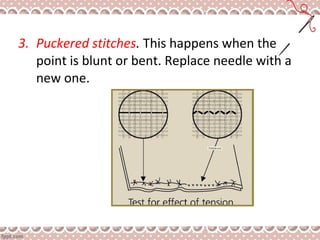
3. Puckered stitches. This happens when the 
point is blunt or bent. Replace needle with a 
new one.
4. Machine skip stitches. This is caused by using the 
wrong size of the needle specified for the kind of 
fabric being sewn. Make sure you have the right size 
of the needle. 
5. Fabric does not move. This happens when the feed 
dog is not adjusted to the correct sewing position. 
Raise the feed dog by turning the feed dog regulator 
or darning knob. 
6. Uneven stitches. This is caused by holding tight or 
pulling back the fabric while sewing. Hold the fabric 
lightly as you stitch.
7. Needle breaks. This happens when the needle 
strikes the presser foot or around the needle 
hole. Tighten the presser foot to avoid 
misaligning the needle, the presser foot and 
the needle hole.
8. Thread breaks at the needle eye. This 
happens when the needle eye is not 
threaded correctly. Thread the needle 
properly following the direction of the arrow 
indicated in the throat plate. The needle 
must be placed with the needle groove 
turned toward the side from which the 
needle is threaded.
By: CJ Fajilan 
- from reference books and internet -

Machine Maintenance and Simple Troubleshooting

  • 1.
  • 2.
    Cleaning • Themachine should be carefully cleaned of dust, lint, and thread before it is used and again before it is put away. • Thread, carelessly left, often results in damage to the shuttle and in the blunting of needles.
  • 3.
    Oiling • Oilingkeep the parts working smoothly and without unnecessary wear. • Only a drop of oil once a week may be required.
  • 4.
    • Places onthe sewing machine which require oiling include: – two or more points on the treadle – two points on the band-wheel crank – one point on the band wheel
  • 5.
    • The headof the machine has many more point which needs to be oiled. • If a more thorough oiling is necessary, the upper thread, presser foot, face plate, slide plate, bobbin, bobbin case, and throat plate should be removed. The shuttle case should then be cleaned and oiled.
  • 7.
    The arrows showwhere the machine is to be oiled
  • 8.
    The arrows showwhere the machine is to be oiled
  • 9.
    Caring for the Sewing Machine
  • 10.
    1. Wipe offdust from the exposed parts. 2. Lower or raise the head by holding the arm carefully. 3. With soft cloth, clean the: – tension regulator – take-up lever and thread guides – bobbin case and shuttle – machine surface holes
  • 11.
    4. Do notuse detergents for cleaning 5. Using the lint brush, clean the: – feed dog – shuttle (area under the throat plate)
  • 12.
    6. Sew aline of stitching on a scrap material to remove excess oil 7. If there is a need to disassemble some parts, remember how they were placed 8. Replace each part carefully using the correct screwdriver
  • 13.
    9. Lubricate thebottom part of the machine by tilting the machine back and oil parts indicated below 10.Put 2-3 layers of swatches between presser foot and feed dog. Keep the sewing machine in its bed and cover.
  • 15.
    1. Clucking noise.This happens when the top tension is not properly or correctly threaded. Re-thread the upper tension from the thread guide. 2. Stuck balance wheel. This happens when threads tangle around the bobbin. Gently rock the balance wheel back and forth to untangle the thread. Slowly pull out the thread with tweezers.
  • 16.
    3. Puckered stitches.This happens when the point is blunt or bent. Replace needle with a new one.
  • 17.
    4. Machine skipstitches. This is caused by using the wrong size of the needle specified for the kind of fabric being sewn. Make sure you have the right size of the needle. 5. Fabric does not move. This happens when the feed dog is not adjusted to the correct sewing position. Raise the feed dog by turning the feed dog regulator or darning knob. 6. Uneven stitches. This is caused by holding tight or pulling back the fabric while sewing. Hold the fabric lightly as you stitch.
  • 18.
    7. Needle breaks.This happens when the needle strikes the presser foot or around the needle hole. Tighten the presser foot to avoid misaligning the needle, the presser foot and the needle hole.
  • 19.
    8. Thread breaksat the needle eye. This happens when the needle eye is not threaded correctly. Thread the needle properly following the direction of the arrow indicated in the throat plate. The needle must be placed with the needle groove turned toward the side from which the needle is threaded.
  • 20.
    By: CJ Fajilan - from reference books and internet -