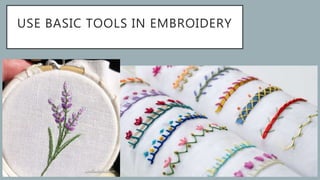
USE BASIC TOOLS IN EMBROIDERY
HISTORY
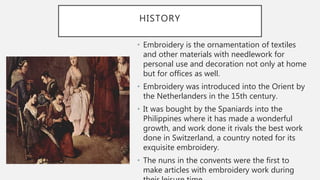
• Embroidery is the ornamentation of textiles
and other materials with needlework for
personal use and decoration not only at home
but for offices as well.
• Embroidery was introduced into the Orient by
the Netherlanders in the 15th century.
• It was bought by the Spaniards into the
Philippines where it has made a wonderful
growth, and work done it rivals the best work
done in Switzerland, a country noted for its
exquisite embroidery.
• The nuns in the convents were the first to
make articles with embroidery work during
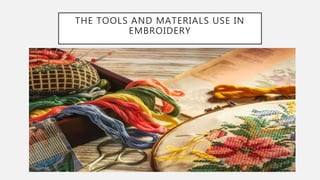
THE TOOLS AND MATERIALS USE IN
EMBROIDERY
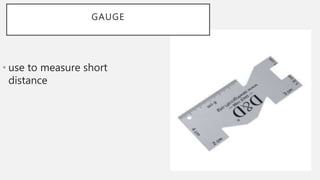
GAUGE
• use to measure short
distance
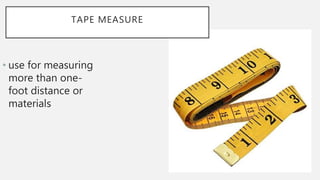
TAPE MEASURE
• use for measuring
more than one-
foot distance or
materials
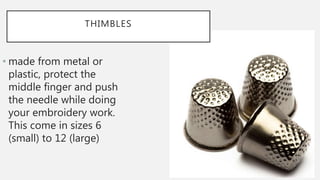
THIMBLES
• made from metal or
plastic, protect the
middle finger and push
the needle while doing
your embroidery work.
This come in sizes 6
(small) to 12 (large)
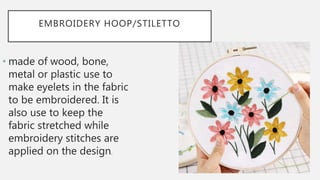
EMBROIDERY HOOP/STILETTO
• made of wood, bone,
metal or plastic use to
make eyelets in the fabric
to be embroidered. It is
also use to keep the
fabric stretched while
embroidery stitches are
applied on the design.
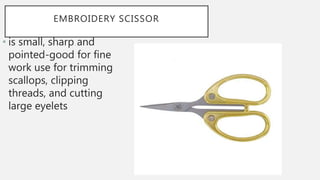
EMBROIDERY SCISSOR
• is small, sharp and
pointed-good for fine
work use for trimming
scallops, clipping
threads, and cutting
large eyelets
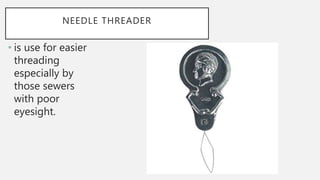
NEEDLE THREADER
• is use for easier
threading
especially by
those sewers
with poor
eyesight.
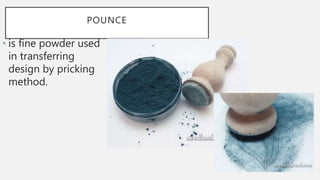
POUNCE
• is fine powder used
in transferring
design by pricking
method.
EMBROIDERY NEEDLE
• a short pieces of
steel with a fine
point at one end
and a little opening
or eye at the other
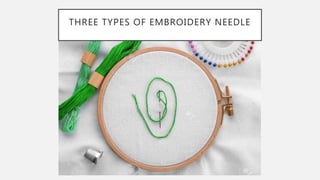
THREE TYPES OF EMBROIDERY NEEDLE
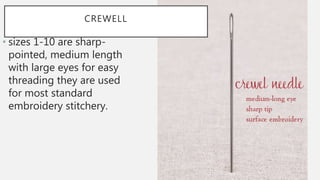
CREWELL
• sizes 1-10 are sharp-
pointed, medium length
with large eyes for easy
threading they are used
for most standard
embroidery stitchery.
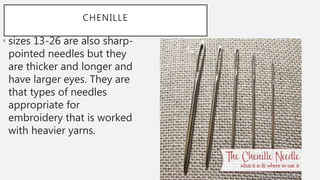
CHENILLE
• sizes 13-26 are also sharp-
pointed needles but they
are thicker and longer and
have larger eyes. They are
that types of needles
appropriate for
embroidery that is worked
with heavier yarns.
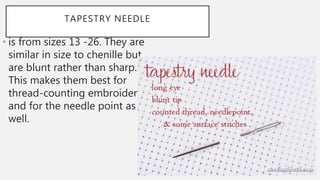
TAPESTRY NEEDLE
• is from sizes 13 -26. They are
similar in size to chenille but
are blunt rather than sharp.
This makes them best for
thread-counting embroidery
and for the needle point as
well.
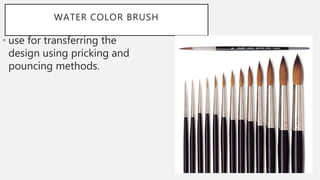
WATER COLOR BRUSH
• use for transferring the
design using pricking and
pouncing methods.
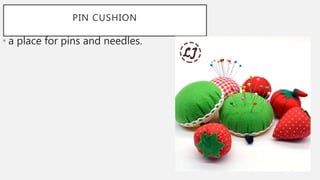
PIN CUSHION
• a place for pins and needles.
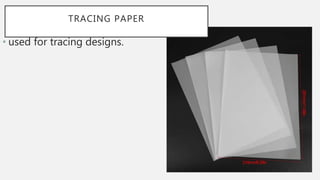
TRACING PAPER
• used for tracing designs.
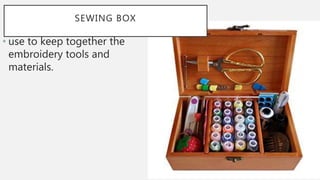
SEWING BOX
• use to keep together the
embroidery tools and
materials.
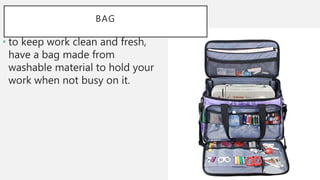
BAG
• to keep work clean and fresh,
have a bag made from
washable material to hold your
work when not busy on it.
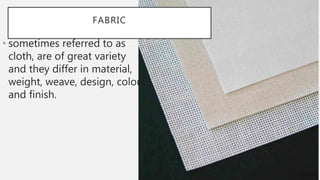
FABRIC
• sometimes referred to as
cloth, are of great variety
and they differ in material,
weight, weave, design, color,
and finish.
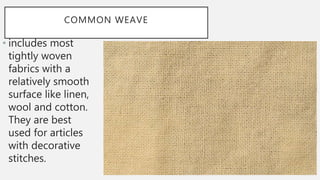
COMMON WEAVE
• includes most
tightly woven
fabrics with a
relatively smooth
surface like linen,
wool and cotton.
They are best
used for articles
with decorative
stitches.
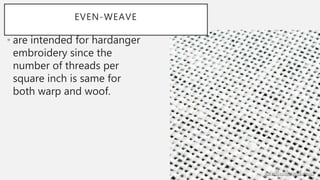
EVEN-WEAVE
• are intended for hardanger
embroidery since the
number of threads per
square inch is same for
both warp and woof.
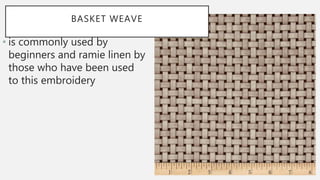
BASKET WEAVE
• is commonly used by
beginners and ramie linen by
those who have been used
to this embroidery
Use basic tools in embroidery

Use basic tools in embroidery

  • 1.
    USE BASIC TOOLSIN EMBROIDERY
  • 2.
    HISTORY • Embroidery isthe ornamentation of textiles and other materials with needlework for personal use and decoration not only at home but for offices as well. • Embroidery was introduced into the Orient by the Netherlanders in the 15th century. • It was bought by the Spaniards into the Philippines where it has made a wonderful growth, and work done it rivals the best work done in Switzerland, a country noted for its exquisite embroidery. • The nuns in the convents were the first to make articles with embroidery work during
  • 3.
    THE TOOLS ANDMATERIALS USE IN EMBROIDERY
  • 4.
    GAUGE • use tomeasure short distance
  • 5.
    TAPE MEASURE • usefor measuring more than one- foot distance or materials
  • 6.
    THIMBLES • made frommetal or plastic, protect the middle finger and push the needle while doing your embroidery work. This come in sizes 6 (small) to 12 (large)
  • 7.
    EMBROIDERY HOOP/STILETTO • madeof wood, bone, metal or plastic use to make eyelets in the fabric to be embroidered. It is also use to keep the fabric stretched while embroidery stitches are applied on the design.
  • 8.
    EMBROIDERY SCISSOR • issmall, sharp and pointed-good for fine work use for trimming scallops, clipping threads, and cutting large eyelets
  • 9.
    NEEDLE THREADER • isuse for easier threading especially by those sewers with poor eyesight.
  • 10.
    POUNCE • is finepowder used in transferring design by pricking method.
  • 11.
    EMBROIDERY NEEDLE • ashort pieces of steel with a fine point at one end and a little opening or eye at the other
  • 12.
    THREE TYPES OFEMBROIDERY NEEDLE
  • 13.
    CREWELL • sizes 1-10are sharp- pointed, medium length with large eyes for easy threading they are used for most standard embroidery stitchery.
  • 14.
    CHENILLE • sizes 13-26are also sharp- pointed needles but they are thicker and longer and have larger eyes. They are that types of needles appropriate for embroidery that is worked with heavier yarns.
  • 15.
    TAPESTRY NEEDLE • isfrom sizes 13 -26. They are similar in size to chenille but are blunt rather than sharp. This makes them best for thread-counting embroidery and for the needle point as well.
  • 16.
    WATER COLOR BRUSH •use for transferring the design using pricking and pouncing methods.
  • 17.
    PIN CUSHION • aplace for pins and needles.
  • 18.
    TRACING PAPER • usedfor tracing designs.
  • 19.
    SEWING BOX • useto keep together the embroidery tools and materials.
  • 20.
    BAG • to keepwork clean and fresh, have a bag made from washable material to hold your work when not busy on it.
  • 21.
    FABRIC • sometimes referredto as cloth, are of great variety and they differ in material, weight, weave, design, color, and finish.
  • 22.
    COMMON WEAVE • includesmost tightly woven fabrics with a relatively smooth surface like linen, wool and cotton. They are best used for articles with decorative stitches.
  • 23.
    EVEN-WEAVE • are intendedfor hardanger embroidery since the number of threads per square inch is same for both warp and woof.
  • 24.
    BASKET WEAVE • iscommonly used by beginners and ramie linen by those who have been used to this embroidery