ASSIGNMENT 
Submitted By 
LEKSHMI. J 
B Ed. 
SOCIAL SCIENCE 
Submitted To : 
ANUPAMA MISS 
(LECTURER IN SOCIAL SCIENCE)
TOPIC 
COMMUNALISM
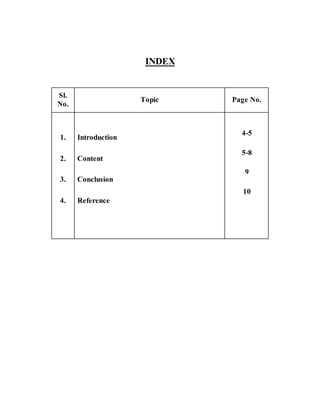
INDEX 
Sl. 
No. 
Topic Page No. 
1. 
2. 
3. 
4. 
Introduction 
Content 
Conclusion 
Reference 
4-5 
5-8 
9 
10
INTRODUCTION 
Communalism is the brief that because a group of people follow a particular 
religion they have, as a result, common social, political and economic interest. It is 
the belief tat in India Hindus, Muslims, christians and sikhs from different and 
distinct communities which are independently and separately structured or 
consolidated, that all the flowers of a religion share not only a community of religion 
interests but also common secular interest. 
The Indians inevitably perceive such interests through the spectacles of the 
religious grouping and are bound to processes a sense of identity based on religion. 
Religion has to become the basic of the organization of Modern politics in India and 
of the perception of economic, political and politics in India and of the perception of 
economic, political and politics in India and of the perception of economic, political 
and cultural issues by the Indian people; that the real Hindu or Muslim can belong 
only to a partly of the community and cannot differ politically from other Hindu or 
Muslims.
The communalist assumes that the most meaningful distinction among the 
Indian people on social, cultural, economic and political issues is to be made on the 
basis of such units of religious communities. Communalism emerged as a 
consequences of the emergence of Modern politics which marked a sharp break with 
the politics of the Medieval or ancient or Pre-1857 period communalism a also 
Nationalism or socialism, could emerge as and as ideology only after a structural 
break had occurred in the Nature of politics, that is, after politics based on the people, 
politics of popular sovereignty, politics of popular sovereignty, politics of popular 
sovereignty, politics of popular participation and modernization politics based on the 
creation and Modernization of public opinion had been introduced even if the term 
people was defined Narrowly. 
CONTENT 
Communalism is the brief that because a group of pole follow a particular 
religion they have, as a result, common social, political and economic interest. It is 
the belief that in India Hindu, Muslims, Christians and Sikh from different and 
distinct communications which are independently and separately structured or 
consolidated, that all the flowers of a region share not only a community of religion 
interests but also common secular interest.
The communalist assumes that the most Meaningful distinction among the 
Indian people on social, cultural, economic and political issues is to be made on the 
basis of such units of religious communities. Communalism is the second nation that 
the social, cultural, economic and political interests of Hindus, Muslims, Christians 
and Sikh are dissimilarity, as also the nation of common secular interests on the basis 
of religion, are never sought to be demonstrated empirically or logically in any of the 
fields. 
Communalism was not a remonant of the past a hangover from the Medival 
period, a language of the post. It was a Modern ideology that incorporated some 
aspects and elements of the past ideologies and institution and historical background 
to from a new ideological and political discourse or mix because it is used many 
elements inherited. 
Communalism emerged as consequences of the emergence of Modern politics 
which marked a sharp break with the politics of the Medieval or ancient or pre-1857 
period. Communalism as also Nationalism or socialism, could emerge as a ideology 
only after and structural break had occurred in the Nature of politics, that is after 
politics based on the people, politics of sovereignty, politics of popular participation 
and Mobilization, politics based on the creation and Mobilization of public opinion 
had been introduced, even if the term people was defined Narrowly. Communalism 
as a revival of traditional ideology or as an aspect of traditional India that has how to 
be discarded.
Communalism was one of the by-product of colonialism of the colonial 
character of the Indian economy, if colonial under development and in recent year of 
the failure and incapacity of capitalism to develop the economy and society. 
Communalism is the belief that because a group of people follow a particular 
religion they have as a result, common, social political and economic interest. It is 
the belief that in India, Hindu, Muslim, Christian and Sikh from different and distinct 
communities which are independently and structured on consolidated that all the 
factories of a religion share not only a community of religion interests but also 
common secular interest, that Indians inviolably perceive such interest through this 
spectacles of the religious grouping and are bound to process is a sense of identity 
based on religion. 
Communalism is to second nation that the social, cultural, economic and 
politic interest of Hindu, and Muslims, Christians and Sikhs are dissimilarity, as also 
the notion of common secularinterest on the basis of religion are never sought to be 
demonstrated empirically or logically is any of the field. Communalism emerged as a 
consequences of the emergence of modern politics which marked a sharp break with 
politics of the Medieval or Ancient or pre 1857 period.
communalism as rival of traditional ideology or as an aspect of traditional 
India that has now to be discarded. The communal view was not present in our 
tradition; it was not a primordial feeling. 
Communalism as a revival of traditional ideology or as an aspect of traditional 
India that has now to be discarded. The communal view was now present in our 
tradition. The tendency of communal problem in terms of the political conflict 
between Hindus and Muslims alone has bad some unfortunate consequences for the 
Analysis and understanding of this subject.
CONCLUSION 
Communalism is the belief that because a group of people follow a particular 
religion they have as a result, common social political and economic interests. 
Communalism is the second nation that the social culture economic and political 
interest of Hindu, Muslims and Christian are dissimilar and divergent. Communalism 
was not a remnant of the past – a handover from the Medieval Period, a language of 
the past, it was a Modern ideology that incorporated some aspects and elements of the 
past ideologies and institution and historical backgrounds to from a new ideological 
and political discourse or Mix. 
Communalism, as also nationalism and socialism put emerge as politics and as 
ideology only after a structural break bad occurred in the nature of politics. 
Communalism as revival of traditional ideology or as an aspect of traditional India 
that has now to be discarded.
REFERENCES 
1) Bipin Chandra, Communalism in Modern India, Vikas Publishing House, 
New Delhi. 
2) Engineer Asghar Ali and SankarMoin communalism in India, Aianta 
Publication, New Delhi, 1985. 
3) PanickerK.M, Communalism in India, Manohar Publication, New Delhi, 
1991. 
Corrected by 
AnupamaM R 
Lr. in Social Science

Lekshmi j(2)

  • 1.
    ASSIGNMENT Submitted By LEKSHMI. J B Ed. SOCIAL SCIENCE Submitted To : ANUPAMA MISS (LECTURER IN SOCIAL SCIENCE)
  • 2.
  • 3.
    INDEX Sl. No. Topic Page No. 1. 2. 3. 4. Introduction Content Conclusion Reference 4-5 5-8 9 10
  • 4.
    INTRODUCTION Communalism isthe brief that because a group of people follow a particular religion they have, as a result, common social, political and economic interest. It is the belief tat in India Hindus, Muslims, christians and sikhs from different and distinct communities which are independently and separately structured or consolidated, that all the flowers of a religion share not only a community of religion interests but also common secular interest. The Indians inevitably perceive such interests through the spectacles of the religious grouping and are bound to processes a sense of identity based on religion. Religion has to become the basic of the organization of Modern politics in India and of the perception of economic, political and politics in India and of the perception of economic, political and politics in India and of the perception of economic, political and cultural issues by the Indian people; that the real Hindu or Muslim can belong only to a partly of the community and cannot differ politically from other Hindu or Muslims.
  • 5.
    The communalist assumesthat the most meaningful distinction among the Indian people on social, cultural, economic and political issues is to be made on the basis of such units of religious communities. Communalism emerged as a consequences of the emergence of Modern politics which marked a sharp break with the politics of the Medieval or ancient or Pre-1857 period communalism a also Nationalism or socialism, could emerge as and as ideology only after a structural break had occurred in the Nature of politics, that is, after politics based on the people, politics of popular sovereignty, politics of popular sovereignty, politics of popular sovereignty, politics of popular participation and modernization politics based on the creation and Modernization of public opinion had been introduced even if the term people was defined Narrowly. CONTENT Communalism is the brief that because a group of pole follow a particular religion they have, as a result, common social, political and economic interest. It is the belief that in India Hindu, Muslims, Christians and Sikh from different and distinct communications which are independently and separately structured or consolidated, that all the flowers of a region share not only a community of religion interests but also common secular interest.
  • 6.
    The communalist assumesthat the most Meaningful distinction among the Indian people on social, cultural, economic and political issues is to be made on the basis of such units of religious communities. Communalism is the second nation that the social, cultural, economic and political interests of Hindus, Muslims, Christians and Sikh are dissimilarity, as also the nation of common secular interests on the basis of religion, are never sought to be demonstrated empirically or logically in any of the fields. Communalism was not a remonant of the past a hangover from the Medival period, a language of the post. It was a Modern ideology that incorporated some aspects and elements of the past ideologies and institution and historical background to from a new ideological and political discourse or mix because it is used many elements inherited. Communalism emerged as consequences of the emergence of Modern politics which marked a sharp break with the politics of the Medieval or ancient or pre-1857 period. Communalism as also Nationalism or socialism, could emerge as a ideology only after and structural break had occurred in the Nature of politics, that is after politics based on the people, politics of sovereignty, politics of popular participation and Mobilization, politics based on the creation and Mobilization of public opinion had been introduced, even if the term people was defined Narrowly. Communalism as a revival of traditional ideology or as an aspect of traditional India that has how to be discarded.
  • 7.
    Communalism was oneof the by-product of colonialism of the colonial character of the Indian economy, if colonial under development and in recent year of the failure and incapacity of capitalism to develop the economy and society. Communalism is the belief that because a group of people follow a particular religion they have as a result, common, social political and economic interest. It is the belief that in India, Hindu, Muslim, Christian and Sikh from different and distinct communities which are independently and structured on consolidated that all the factories of a religion share not only a community of religion interests but also common secular interest, that Indians inviolably perceive such interest through this spectacles of the religious grouping and are bound to process is a sense of identity based on religion. Communalism is to second nation that the social, cultural, economic and politic interest of Hindu, and Muslims, Christians and Sikhs are dissimilarity, as also the notion of common secularinterest on the basis of religion are never sought to be demonstrated empirically or logically is any of the field. Communalism emerged as a consequences of the emergence of modern politics which marked a sharp break with politics of the Medieval or Ancient or pre 1857 period.
  • 8.
    communalism as rivalof traditional ideology or as an aspect of traditional India that has now to be discarded. The communal view was not present in our tradition; it was not a primordial feeling. Communalism as a revival of traditional ideology or as an aspect of traditional India that has now to be discarded. The communal view was now present in our tradition. The tendency of communal problem in terms of the political conflict between Hindus and Muslims alone has bad some unfortunate consequences for the Analysis and understanding of this subject.
  • 9.
    CONCLUSION Communalism isthe belief that because a group of people follow a particular religion they have as a result, common social political and economic interests. Communalism is the second nation that the social culture economic and political interest of Hindu, Muslims and Christian are dissimilar and divergent. Communalism was not a remnant of the past – a handover from the Medieval Period, a language of the past, it was a Modern ideology that incorporated some aspects and elements of the past ideologies and institution and historical backgrounds to from a new ideological and political discourse or Mix. Communalism, as also nationalism and socialism put emerge as politics and as ideology only after a structural break bad occurred in the nature of politics. Communalism as revival of traditional ideology or as an aspect of traditional India that has now to be discarded.
  • 10.
    REFERENCES 1) BipinChandra, Communalism in Modern India, Vikas Publishing House, New Delhi. 2) Engineer Asghar Ali and SankarMoin communalism in India, Aianta Publication, New Delhi, 1985. 3) PanickerK.M, Communalism in India, Manohar Publication, New Delhi, 1991. Corrected by AnupamaM R Lr. in Social Science