LEGISLATION RELATING TO
DEVELOPED PRODUCTS
BY DAVID OSAS ENOMA
17PCP01631
1
OUTLINE
 INTRODUCTION
 LEGISLATION RELATING TO FOOD
PRODUCTS IN NIGERIA
 BIOSAFETY REGULATION AND LEGISLATION
 THE NIGERIAN BIOSAFETY ACT
 LEGAL BODIES WITH ROLES TO PLAY
 THE ROLE OF NAFDAC
 REGULATIONS REGARDING MYCOTOXINS
2
INTRODUCTION
 Food legislation serves to safeguard the health of food
consumers and the economic interests of food
producers and traders.
 The European Union (EU) legislation regarding
sustainable development moves along two distinct
lines:
 the impact of industries on the environment (release of
gases and green house effect) and the effect of
cultivating genetically modified organisms (GMOs) on
the environment. (Arvanitoyannis et al., 2006)
3
LEGISLATION RELATING TO
FOOD PRODUCTS IN NIGERIA
 From as far back as 1958, various laws and regulations
had been promulgated over the years to ensure the
safety and wholesomeness of the nation’s food supply.
Such legislations include the following:
 Public Health Laws (1917) now known as Public Health
Ordinance Cap 165 of 1958;
 The Standards Organization of Nigeria Decree No. 56
of 1971;
4
LEGISLATION RELATING TO FOOD
PRODUCTS IN NIGERIA CNTD.
 The Food and Drug Act No 35 of 1974 (now Food and
Drug Act Cap F32 Laws of the Federal Republic of
Nigeria, 2004).
 The Animal Disease Control Decree No. 10 of 1988.
 The Marketing of Breast Milk Substitute Decree No.
41 of 1990 ( now Marketing ( Breast Milk) Act Cap
M5 LFN 2004. ( Jane Omojokun (April 10th 2013) ).
5
LEGISLATION RELATING TO FOOD
PRODUCTS IN NIGERIA CNTD.
 The National Agency for Food and Drugs
Administration and Control Decree No 15 of 1993
(now NAFDAC Act CAP N1 Laws of the Federal
Republic of Nigeria, 2004).
 The Food, Drug and Related Products (Registration
etc) Decree No 19 of 1993 [now Food, Drugs &
Related Products (Registration etc) Act Cap F33 Laws
of the Federal Republic of Nigeria (LFN), 2004](Jane
Omojokun (April 10th 2013).
6
LEGISLATION RELATING TO FOOD
PRODUCTS IN NIGERIA CNTD.
 The Counterfeit and Fake Drugs and Unwholesome
Processed Food Act No 25 of 1999 (now Counterfeit
& Fake Drugs and Unwholesome Processed Foods Act
Cap C34 LFN 2004.
 Various bye-laws enacted by various LGAs in the
country. (Jane Omojokun (April 10th 2013).
7
RELEVANCE OF LEGISLATION IN
FOOD SAFETY
 A co-ordinated approach to food control could be
achieved by establishing a national food safety policy
that will amongst other things assign roles and
responsibilities to all stakeholders and co-ordinate all
food safety activities.
 The ground work is set and what is next is strength
of institutions and political will.
8
BIOSAFETY REGULATION AND
LEGISLATION
 Biosafety regulations and legislation are in place only in
a few countries of Africa, and such limitation constitutes
a serious constraint that impairs the use, evaluation and
release of genetically modified products.
 Another concomitant issue is the lack of protection of
intellectual property rights in Africa that hampers the
development of new technologies, profitable inventions
and investments, and initiatives by entrepreneurial
African biotechnologists (Johnan et al., 1998)
9
THE NIGERIAN BIOSAFETY ACT
 In April, 2015 Former President Goodluck Jonathan
on Monday signed the National Biosafety Agency Bill
into law.
 “The Biosafety Act will provide the legal framework to
check the activities of modern biotechnology in the
country, as well as the importation of genetically
modified (GM) products into Nigeria
10
THE NIGERIAN BIOSAFETY ACT
CONTD.
 including the provision of an avenue to engage
Nigerian scientists/experts from different fields to
identify and pursue solutions to our local challenges.”
 -Director-General and Chief Executive Officer of the
National Biotechnology Development Agency, Prof.
Lucy Jumeyi Ogbadu (www.vanguardngr.com)
11
BIOSAFETY LAW
 Defines offences and Penalty for violation of the act
 Contains powers to authorize release of GMOs and
practice of modern biotechnology activities.
 Confers the power to carry out risk
assessment/management before the release,
handling and use of GMOs.
 Covers all genetically modified organisms/Living
Modified Organisms (LMOs) and products thereof
including food/feed and processing.
 Covers socio-economic consideration in risk
assessment
12
LEGAL BODIES WITH ROLES TO
PLAY IN FOOD SAFETY
 The National Agency for Food and Drug Administration
and Control (NAFDAC) is responsible for the regulation
and control of the importation, exportation,
 manufacture, advertisement, distribution, sale and use
of food, drug, cosmetics, medical devices, chemicals,
packaged water and detergent at Federal and State
levels in Nigeria.
13
LEGAL BODIES WITH ROLES TO
PLAY IN FOOD SAFETY CNTD
 The Standards Organisation of Nigeria is responsible
for the formulation and enforcement of set standards
on the composition of imported and locally
manufactured food.
 The Federal Ministry of Health is responsible for the
formulation of national policies, guidelines and
regulations on food safety including monitoring and
evaluation.
14
LEGAL BODIES WITH ROLES TO
PLAY IN FOOD SAFETY CNTD
 The Federal Ministry of Agriculture and Rural
Development is responsible for formulating
policies on primary agricultural production and
practices which cover plants, animals, pests
and diseases etc.;
 supervising and overseeing its departments and
parastatals i.e. research
institutes, colleges of agriculture, colleges of fisheries
etc.
15
LEGAL BODIES WITH ROLES TO
PLAY IN FOOD SAFETY CNTD
 The Federal Department of Fisheries has the
responsibility for ensuring that fish and fishery
products produced, imported into or exported from
Nigeria conform to international quality
Regulation and Enforcement of Legislation on Food
Safety in Nigeria
 The aim of all of which is to ensure compliance with
the Fish
Quality and Quarantine Services Regulation of 1995.
16
LEGAL BODIES WITH ROLES TO
PLAY IN FOOD SAFETY CNTD
 Consumer Protection Council is the government
agency responsible for protecting
consumers from unwholesome practices and assisting
them seek redress for unscrupulous
practices and exploitation.
 The Federal Ministry of Environment has a role to
play in the control of environmental food
contaminants, persistent organic pollutants,
environmental pollution, waste disposal, etc.
17
LEGAL BODIES WITH ROLES TO
PLAY IN FOOD SAFETY CNTD
 Federal Ministry of Education has a role to play
through enlightenment and manpower
development by incorporating subjects on safe food
handling in the school curriculum and
 Courses on Food Safety Management Systems i.e.
(GAP), GHP, GMP, HACCP etc in tertiary institutions
necessary for manpower
development.
18
LEGAL BODIES WITH ROLES TO
PLAY IN FOOD SAFETY CNTD
 Tertiary and Research Institutes are responsible for
research and will provide scientific basis
for policy development and programme design in
addition to relevant training programmes
for capacity building and manpower development.
19
REGULATORY STRATEGIES
EMPLOYED BY NAFDAC
 Product Registration
 Documentation such as Certificate of Incorporation of
the representative company in Nigeria; Evidence of
Trade Mark registration.
 Labeling.
 Good Manufacturing Practice (GMP) inspection of the
production facility is carried out prior to registration
of the product.
 Product Approval Committee Meetings.
20
REGULATIONS RELATING TO
MYCOTOXINS IN FOOD
 Mycotoxins are metabolites of fungi capable of having
acute toxic, carcinogenic, mutagenic, teratogenic,
immunotoxic, and oestrogenic effects in man and
animals.
 Regulations relating to mycotoxins have been
established in many countries.
 Different factors play a role in the decision-making
process of setting limits for mycotoxins.
21
REGULATIONS RELATING TO
MYCOTOXINS IN FOOD CONTD.
 Scientific factors e.g. the availability of toxicological
data and occurrence data, detailed knowledge about
possibilities for sampling and analysis, and socio-
economic issues. (van Egmond et al., 2007)
 The number of countries with known specific
mycotoxin regulations has increased from 33 in 1981
to 56 in 1987, 77 in 1995 and 100 in 2003.
22
REGULATIONS RELATING TO
MYCOTOXINS IN FOOD CONTD.
 The regulations were related to aflatoxins, aflatoxin
M1, trichothecenes, fumonisins , agaric acid, ergot
alkaloids, ochratoxin A, patulin, phomopsins,
sterigmatocystin, and zearalenone.
 Current regulations are increasingly based on
scientific opinions of authoritative bodies for example
the FAO/WHO Joint Expert Committee on Food
Additives of the United Nations (JECFA) and the
European Food Safety Authority (EFSA) (van Egmond
et al., 2007).
23
24
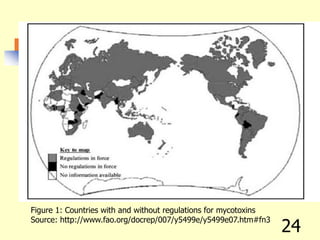
Figure 1: Countries with and without regulations for mycotoxins
Source: http://www.fao.org/docrep/007/y5499e/y5499e07.htm#fn3
25
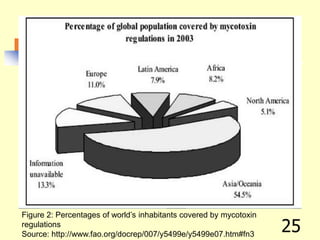
Figure 2: Percentages of world’s inhabitants covered by mycotoxin
regulations
Source: http://www.fao.org/docrep/007/y5499e/y5499e07.htm#fn3
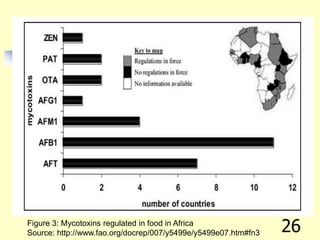
26Figure 3: Mycotoxins regulated in food in Africa
Source: http://www.fao.org/docrep/007/y5499e/y5499e07.htm#fn3
27
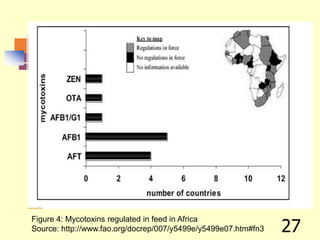
Figure 4: Mycotoxins regulated in feed in Africa
Source: http://www.fao.org/docrep/007/y5499e/y5499e07.htm#fn3
CONCLUSION
 Legislation regarding developed products is important
to ensure the safety and economic value of the
products to the consumers.
 The responsibility lies on policy makers, scientific
advisors, governments and agencies to enact these
legislations in accordance with world standards.
28
REFERENCES
 Jane Omojokun (April 10th 2013). Regulation and Enforcement of Legislation on
Food Safety in Nigeria, Mycotoxin and Food Safety in Developing Countries Hussaini
Makun, IntechOpen, DOI: 10.5772/54423. Available from:
https://www.intechopen.com/books/mycotoxin-and-food-safety-in-developing-
countries/regulation-and-enforcement-of-legislation-on-food-safety-in-nigeria
 Arvanitoyannis, I. S., Choreftaki, S., & Tserkezou, P. (2006). Presentation and
comments on EU legislation related to food industries–environment interactions:
sustainable development, and protection of nature and biodiversity – genetically
modified organisms. International Journal of Food Science & Technology, 41(7):
813-832. doi: doi:10.1111/j.1365-2621.2006.01252.x
 BRINK, Johan A; WOODWARD, Barbara R y DASILVA, Edgar J. Plant biotechnology:
a tool for development in Africa. Electron. J. Biotechnol. [online]. 1998, vol.1, n.3,
pp.14-15. ISSN 0717-3458. http://dx.doi.org/10.4067/S0717-34581998000300004.
 https://www.vanguardngr.com/2015/04/nigeria-gets-biosafety-law-joins-league-of-
biotech-countries/
29
THANK YOU FOR
YOUR ATTENTION!
30

Legislation relating to developed products

  • 1.
    LEGISLATION RELATING TO DEVELOPEDPRODUCTS BY DAVID OSAS ENOMA 17PCP01631 1
  • 2.
    OUTLINE  INTRODUCTION  LEGISLATIONRELATING TO FOOD PRODUCTS IN NIGERIA  BIOSAFETY REGULATION AND LEGISLATION  THE NIGERIAN BIOSAFETY ACT  LEGAL BODIES WITH ROLES TO PLAY  THE ROLE OF NAFDAC  REGULATIONS REGARDING MYCOTOXINS 2
  • 3.
    INTRODUCTION  Food legislationserves to safeguard the health of food consumers and the economic interests of food producers and traders.  The European Union (EU) legislation regarding sustainable development moves along two distinct lines:  the impact of industries on the environment (release of gases and green house effect) and the effect of cultivating genetically modified organisms (GMOs) on the environment. (Arvanitoyannis et al., 2006) 3
  • 4.
    LEGISLATION RELATING TO FOODPRODUCTS IN NIGERIA  From as far back as 1958, various laws and regulations had been promulgated over the years to ensure the safety and wholesomeness of the nation’s food supply. Such legislations include the following:  Public Health Laws (1917) now known as Public Health Ordinance Cap 165 of 1958;  The Standards Organization of Nigeria Decree No. 56 of 1971; 4
  • 5.
    LEGISLATION RELATING TOFOOD PRODUCTS IN NIGERIA CNTD.  The Food and Drug Act No 35 of 1974 (now Food and Drug Act Cap F32 Laws of the Federal Republic of Nigeria, 2004).  The Animal Disease Control Decree No. 10 of 1988.  The Marketing of Breast Milk Substitute Decree No. 41 of 1990 ( now Marketing ( Breast Milk) Act Cap M5 LFN 2004. ( Jane Omojokun (April 10th 2013) ). 5
  • 6.
    LEGISLATION RELATING TOFOOD PRODUCTS IN NIGERIA CNTD.  The National Agency for Food and Drugs Administration and Control Decree No 15 of 1993 (now NAFDAC Act CAP N1 Laws of the Federal Republic of Nigeria, 2004).  The Food, Drug and Related Products (Registration etc) Decree No 19 of 1993 [now Food, Drugs & Related Products (Registration etc) Act Cap F33 Laws of the Federal Republic of Nigeria (LFN), 2004](Jane Omojokun (April 10th 2013). 6
  • 7.
    LEGISLATION RELATING TOFOOD PRODUCTS IN NIGERIA CNTD.  The Counterfeit and Fake Drugs and Unwholesome Processed Food Act No 25 of 1999 (now Counterfeit & Fake Drugs and Unwholesome Processed Foods Act Cap C34 LFN 2004.  Various bye-laws enacted by various LGAs in the country. (Jane Omojokun (April 10th 2013). 7
  • 8.
    RELEVANCE OF LEGISLATIONIN FOOD SAFETY  A co-ordinated approach to food control could be achieved by establishing a national food safety policy that will amongst other things assign roles and responsibilities to all stakeholders and co-ordinate all food safety activities.  The ground work is set and what is next is strength of institutions and political will. 8
  • 9.
    BIOSAFETY REGULATION AND LEGISLATION Biosafety regulations and legislation are in place only in a few countries of Africa, and such limitation constitutes a serious constraint that impairs the use, evaluation and release of genetically modified products.  Another concomitant issue is the lack of protection of intellectual property rights in Africa that hampers the development of new technologies, profitable inventions and investments, and initiatives by entrepreneurial African biotechnologists (Johnan et al., 1998) 9
  • 10.
    THE NIGERIAN BIOSAFETYACT  In April, 2015 Former President Goodluck Jonathan on Monday signed the National Biosafety Agency Bill into law.  “The Biosafety Act will provide the legal framework to check the activities of modern biotechnology in the country, as well as the importation of genetically modified (GM) products into Nigeria 10
  • 11.
    THE NIGERIAN BIOSAFETYACT CONTD.  including the provision of an avenue to engage Nigerian scientists/experts from different fields to identify and pursue solutions to our local challenges.”  -Director-General and Chief Executive Officer of the National Biotechnology Development Agency, Prof. Lucy Jumeyi Ogbadu (www.vanguardngr.com) 11
  • 12.
    BIOSAFETY LAW  Definesoffences and Penalty for violation of the act  Contains powers to authorize release of GMOs and practice of modern biotechnology activities.  Confers the power to carry out risk assessment/management before the release, handling and use of GMOs.  Covers all genetically modified organisms/Living Modified Organisms (LMOs) and products thereof including food/feed and processing.  Covers socio-economic consideration in risk assessment 12
  • 13.
    LEGAL BODIES WITHROLES TO PLAY IN FOOD SAFETY  The National Agency for Food and Drug Administration and Control (NAFDAC) is responsible for the regulation and control of the importation, exportation,  manufacture, advertisement, distribution, sale and use of food, drug, cosmetics, medical devices, chemicals, packaged water and detergent at Federal and State levels in Nigeria. 13
  • 14.
    LEGAL BODIES WITHROLES TO PLAY IN FOOD SAFETY CNTD  The Standards Organisation of Nigeria is responsible for the formulation and enforcement of set standards on the composition of imported and locally manufactured food.  The Federal Ministry of Health is responsible for the formulation of national policies, guidelines and regulations on food safety including monitoring and evaluation. 14
  • 15.
    LEGAL BODIES WITHROLES TO PLAY IN FOOD SAFETY CNTD  The Federal Ministry of Agriculture and Rural Development is responsible for formulating policies on primary agricultural production and practices which cover plants, animals, pests and diseases etc.;  supervising and overseeing its departments and parastatals i.e. research institutes, colleges of agriculture, colleges of fisheries etc. 15
  • 16.
    LEGAL BODIES WITHROLES TO PLAY IN FOOD SAFETY CNTD  The Federal Department of Fisheries has the responsibility for ensuring that fish and fishery products produced, imported into or exported from Nigeria conform to international quality Regulation and Enforcement of Legislation on Food Safety in Nigeria  The aim of all of which is to ensure compliance with the Fish Quality and Quarantine Services Regulation of 1995. 16
  • 17.
    LEGAL BODIES WITHROLES TO PLAY IN FOOD SAFETY CNTD  Consumer Protection Council is the government agency responsible for protecting consumers from unwholesome practices and assisting them seek redress for unscrupulous practices and exploitation.  The Federal Ministry of Environment has a role to play in the control of environmental food contaminants, persistent organic pollutants, environmental pollution, waste disposal, etc. 17
  • 18.
    LEGAL BODIES WITHROLES TO PLAY IN FOOD SAFETY CNTD  Federal Ministry of Education has a role to play through enlightenment and manpower development by incorporating subjects on safe food handling in the school curriculum and  Courses on Food Safety Management Systems i.e. (GAP), GHP, GMP, HACCP etc in tertiary institutions necessary for manpower development. 18
  • 19.
    LEGAL BODIES WITHROLES TO PLAY IN FOOD SAFETY CNTD  Tertiary and Research Institutes are responsible for research and will provide scientific basis for policy development and programme design in addition to relevant training programmes for capacity building and manpower development. 19
  • 20.
    REGULATORY STRATEGIES EMPLOYED BYNAFDAC  Product Registration  Documentation such as Certificate of Incorporation of the representative company in Nigeria; Evidence of Trade Mark registration.  Labeling.  Good Manufacturing Practice (GMP) inspection of the production facility is carried out prior to registration of the product.  Product Approval Committee Meetings. 20
  • 21.
    REGULATIONS RELATING TO MYCOTOXINSIN FOOD  Mycotoxins are metabolites of fungi capable of having acute toxic, carcinogenic, mutagenic, teratogenic, immunotoxic, and oestrogenic effects in man and animals.  Regulations relating to mycotoxins have been established in many countries.  Different factors play a role in the decision-making process of setting limits for mycotoxins. 21
  • 22.
    REGULATIONS RELATING TO MYCOTOXINSIN FOOD CONTD.  Scientific factors e.g. the availability of toxicological data and occurrence data, detailed knowledge about possibilities for sampling and analysis, and socio- economic issues. (van Egmond et al., 2007)  The number of countries with known specific mycotoxin regulations has increased from 33 in 1981 to 56 in 1987, 77 in 1995 and 100 in 2003. 22
  • 23.
    REGULATIONS RELATING TO MYCOTOXINSIN FOOD CONTD.  The regulations were related to aflatoxins, aflatoxin M1, trichothecenes, fumonisins , agaric acid, ergot alkaloids, ochratoxin A, patulin, phomopsins, sterigmatocystin, and zearalenone.  Current regulations are increasingly based on scientific opinions of authoritative bodies for example the FAO/WHO Joint Expert Committee on Food Additives of the United Nations (JECFA) and the European Food Safety Authority (EFSA) (van Egmond et al., 2007). 23
  • 24.
    24 Figure 1: Countrieswith and without regulations for mycotoxins Source: http://www.fao.org/docrep/007/y5499e/y5499e07.htm#fn3
  • 25.
    25 Figure 2: Percentagesof world’s inhabitants covered by mycotoxin regulations Source: http://www.fao.org/docrep/007/y5499e/y5499e07.htm#fn3
  • 26.
    26Figure 3: Mycotoxinsregulated in food in Africa Source: http://www.fao.org/docrep/007/y5499e/y5499e07.htm#fn3
  • 27.
    27 Figure 4: Mycotoxinsregulated in feed in Africa Source: http://www.fao.org/docrep/007/y5499e/y5499e07.htm#fn3
  • 28.
    CONCLUSION  Legislation regardingdeveloped products is important to ensure the safety and economic value of the products to the consumers.  The responsibility lies on policy makers, scientific advisors, governments and agencies to enact these legislations in accordance with world standards. 28
  • 29.
    REFERENCES  Jane Omojokun(April 10th 2013). Regulation and Enforcement of Legislation on Food Safety in Nigeria, Mycotoxin and Food Safety in Developing Countries Hussaini Makun, IntechOpen, DOI: 10.5772/54423. Available from: https://www.intechopen.com/books/mycotoxin-and-food-safety-in-developing- countries/regulation-and-enforcement-of-legislation-on-food-safety-in-nigeria  Arvanitoyannis, I. S., Choreftaki, S., & Tserkezou, P. (2006). Presentation and comments on EU legislation related to food industries–environment interactions: sustainable development, and protection of nature and biodiversity – genetically modified organisms. International Journal of Food Science & Technology, 41(7): 813-832. doi: doi:10.1111/j.1365-2621.2006.01252.x  BRINK, Johan A; WOODWARD, Barbara R y DASILVA, Edgar J. Plant biotechnology: a tool for development in Africa. Electron. J. Biotechnol. [online]. 1998, vol.1, n.3, pp.14-15. ISSN 0717-3458. http://dx.doi.org/10.4067/S0717-34581998000300004.  https://www.vanguardngr.com/2015/04/nigeria-gets-biosafety-law-joins-league-of- biotech-countries/ 29
  • 30.
    THANK YOU FOR YOURATTENTION! 30