PO 101
Fall 2016
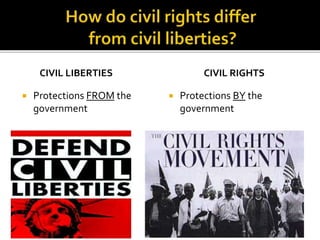
CIVIL LIBERTIES
 Protections FROM the
government
CIVIL RIGHTS
 Protections BY the
government
 1) Public Discrimination
 2) Private Discrimination
 3) Equality and Anti-Discrimination
 Equality has come through amendments
 Example: Nineteenth Amendment (1920)
 What is equality?
 How do we know when we’ve achieved it?
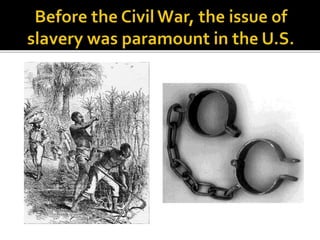
Rights of Blacks Before the Civil War: Issue of SlaveryRights of Blacks Before the Civil War: Issue of SlaveryRights of Blacks Before the Civil War: Issue of SlaveryRights of Blacks Before the Civil War: Issue of SlaveryRights of Blacks Before the Civil War: Issue of Slavery
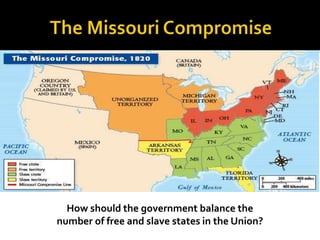
How should the government balance the
number of free and slave states in the Union?
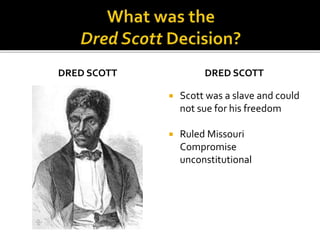
DRED SCOTT DRED SCOTT
 Scott was a slave and could
not sue for his freedom
 Ruled Missouri
Compromise
unconstitutional
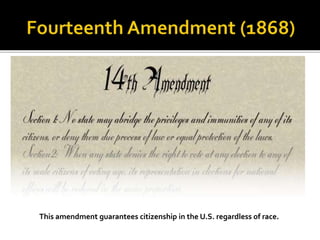
This amendment guarantees citizenship in the U.S. regardless of race.
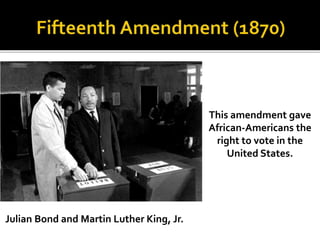
Julian Bond and Martin Luther King, Jr.
This amendment gave
African-Americans the
right to vote in the
United States.
 Laws that did not allow Blacks to vote in party
primaries, so whites were always elected
 Blacks ended up with no vote or voice
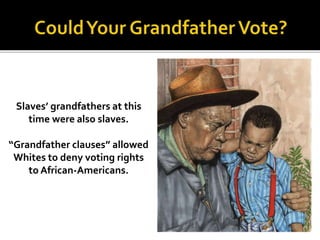
Slaves’ grandfathers at this
time were also slaves.
“Grandfather clauses” allowed
Whites to deny voting rights
to African-Americans.
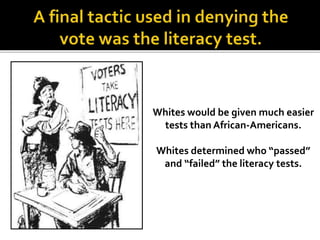
Whites would be given much easier
tests than African-Americans.
Whites determined who “passed”
and “failed” the literacy tests.
INSTRUCTIONS:
You are an eligible voter (by law) in Louisiana,
but you are being required to take a literacy test.
Complete this test as best you can in the time allotted.
After five minutes, form a small group and keep working.
 Laws establishing separation ofWhites and Blacks
 Included:
 Education (schools)
 Entertainment (pool)
 Housing, Libraries, andTransportation
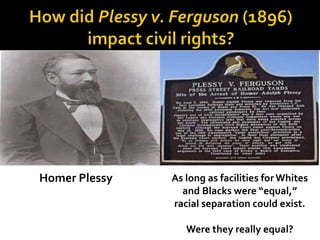
Homer Plessy As long as facilities forWhites
and Blacks were “equal,”
racial separation could exist.
Were they really equal?
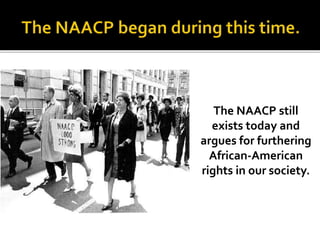
The NAACP still
exists today and
argues for furthering
African-American
rights in our society.
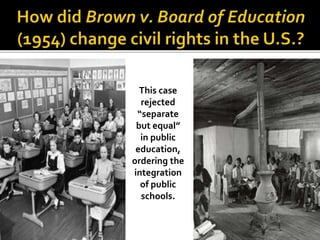
This case
rejected
“separate
but equal”
in public
education,
ordering the
integration
of public
schools.
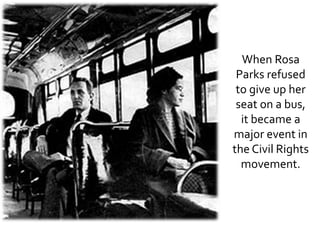
When Rosa
Parks refused
to give up her
seat on a bus,
it became a
major event in
the Civil Rights
movement.
DE JURE
 Discrimination by Law
 Treat people differently
due to race
 Faced by Blacks in South
 Eventually was defeated
through integration, etc.
DE FACTO
 Discrimination in Fact
 Occurred in North
 Much harder to eliminate
because segregation more
woven in society
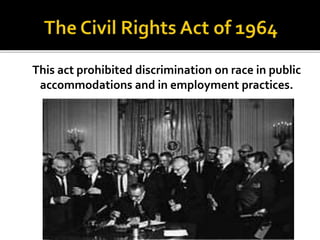
This act prohibited discrimination on race in public
accommodations and in employment practices.
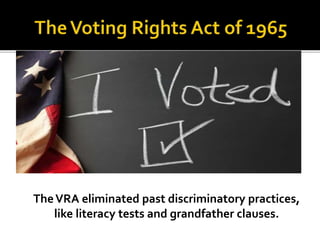
TheVRA eliminated past discriminatory practices,
like literacy tests and grandfather clauses.
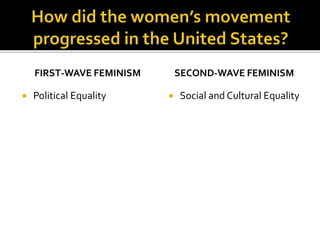
FIRST-WAVE FEMINISM
 Political Equality
SECOND-WAVE FEMINISM
 Social and Cultural Equality
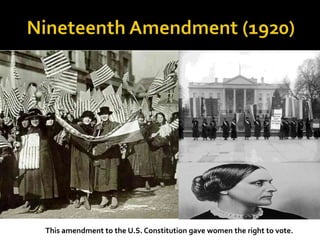
This amendment to the U.S. Constitution gave women the right to vote.
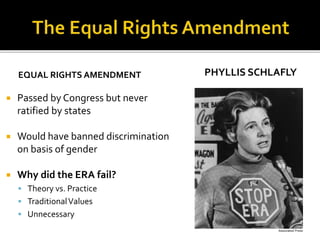
PHYLLIS SCHLAFLYEQUAL RIGHTS AMENDMENT
 Passed by Congress but never
ratified by states
 Would have banned discrimination
on basis of gender
 Why did the ERA fail?
 Theory vs. Practice
 TraditionalValues
 Unnecessary
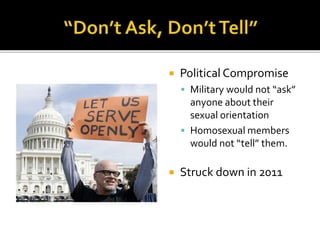
 Political Compromise
 Military would not “ask”
anyone about their
sexual orientation
 Homosexual members
would not “tell” them.
 Struck down in 2011
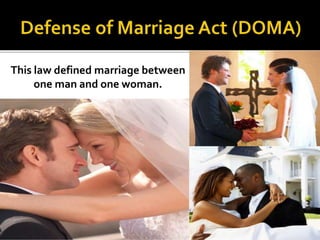
This law defined marriage between
one man and one woman.
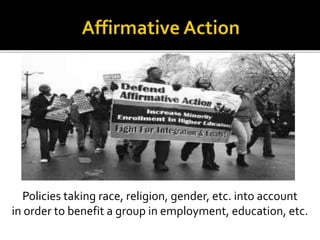
Policies taking race, religion, gender, etc. into account
in order to benefit a group in employment, education, etc.
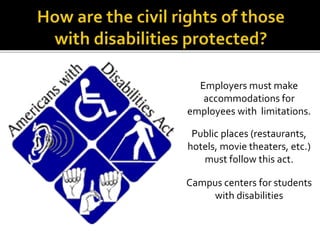
Employers must make
accommodations for
employees with limitations.
Public places (restaurants,
hotels, movie theaters, etc.)
must follow this act.
Campus centers for students
with disabilities

Lecture Slides Civil Rights

  • 1.
  • 4.
    CIVIL LIBERTIES  ProtectionsFROM the government CIVIL RIGHTS  Protections BY the government
  • 6.
     1) PublicDiscrimination  2) Private Discrimination  3) Equality and Anti-Discrimination
  • 8.
     Equality hascome through amendments  Example: Nineteenth Amendment (1920)  What is equality?  How do we know when we’ve achieved it?
  • 12.
    Rights of BlacksBefore the Civil War: Issue of SlaveryRights of Blacks Before the Civil War: Issue of SlaveryRights of Blacks Before the Civil War: Issue of SlaveryRights of Blacks Before the Civil War: Issue of SlaveryRights of Blacks Before the Civil War: Issue of Slavery How should the government balance the number of free and slave states in the Union?
  • 13.
    DRED SCOTT DREDSCOTT  Scott was a slave and could not sue for his freedom  Ruled Missouri Compromise unconstitutional
  • 16.
    This amendment guaranteescitizenship in the U.S. regardless of race.
  • 17.
    Julian Bond andMartin Luther King, Jr. This amendment gave African-Americans the right to vote in the United States.
  • 19.
     Laws thatdid not allow Blacks to vote in party primaries, so whites were always elected  Blacks ended up with no vote or voice
  • 20.
    Slaves’ grandfathers atthis time were also slaves. “Grandfather clauses” allowed Whites to deny voting rights to African-Americans.
  • 21.
    Whites would begiven much easier tests than African-Americans. Whites determined who “passed” and “failed” the literacy tests.
  • 22.
    INSTRUCTIONS: You are aneligible voter (by law) in Louisiana, but you are being required to take a literacy test. Complete this test as best you can in the time allotted. After five minutes, form a small group and keep working.
  • 23.
     Laws establishingseparation ofWhites and Blacks  Included:  Education (schools)  Entertainment (pool)  Housing, Libraries, andTransportation
  • 24.
    Homer Plessy Aslong as facilities forWhites and Blacks were “equal,” racial separation could exist. Were they really equal?
  • 26.
    The NAACP still existstoday and argues for furthering African-American rights in our society.
  • 27.
    This case rejected “separate but equal” inpublic education, ordering the integration of public schools.
  • 29.
    When Rosa Parks refused togive up her seat on a bus, it became a major event in the Civil Rights movement.
  • 30.
    DE JURE  Discriminationby Law  Treat people differently due to race  Faced by Blacks in South  Eventually was defeated through integration, etc. DE FACTO  Discrimination in Fact  Occurred in North  Much harder to eliminate because segregation more woven in society
  • 31.
    This act prohibiteddiscrimination on race in public accommodations and in employment practices.
  • 32.
    TheVRA eliminated pastdiscriminatory practices, like literacy tests and grandfather clauses.
  • 35.
    FIRST-WAVE FEMINISM  PoliticalEquality SECOND-WAVE FEMINISM  Social and Cultural Equality
  • 36.
    This amendment tothe U.S. Constitution gave women the right to vote.
  • 37.
    PHYLLIS SCHLAFLYEQUAL RIGHTSAMENDMENT  Passed by Congress but never ratified by states  Would have banned discrimination on basis of gender  Why did the ERA fail?  Theory vs. Practice  TraditionalValues  Unnecessary
  • 40.
     Political Compromise Military would not “ask” anyone about their sexual orientation  Homosexual members would not “tell” them.  Struck down in 2011
  • 41.
    This law definedmarriage between one man and one woman.
  • 44.
    Policies taking race,religion, gender, etc. into account in order to benefit a group in employment, education, etc.
  • 46.
    Employers must make accommodationsfor employees with limitations. Public places (restaurants, hotels, movie theaters, etc.) must follow this act. Campus centers for students with disabilities