Title Layout
Subtitle
By: Najma Abdullah and Hamdi Gure
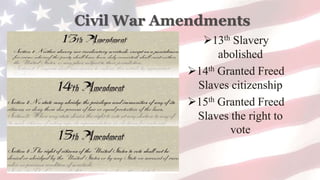
Civil War Amendments
13th Slavery
abolished
14th Granted Freed
Slaves citizenship
15th Granted Freed
Slaves the right to
vote
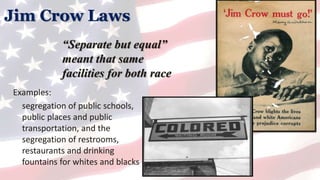
Jim Crow Laws
Examples:
segregation of public schools,
public places and public
transportation, and the
segregation of restrooms,
restaurants and drinking
fountains for whites and blacks
“Separate but equal”
meant that same
facilities for both race
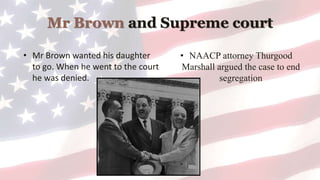
Mr Brown and Supreme court
• Mr Brown wanted his daughter
to go. When he went to the court
he was denied.
• NAACP attorney Thurgood
Marshall argued the case to end
segregation
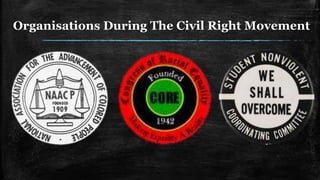
Organisations During The Civil Right Movement
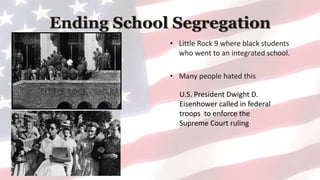
Ending School Segregation
• Little Rock 9 where black students
who went to an integrated school.
• Many people hated this
U.S. President Dwight D.
Eisenhower called in federal
troops to enforce the
Supreme Court ruling
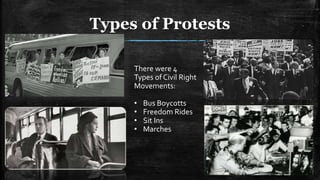
Types of Protests
There were 4
Types of Civil Right
Movements:
• Bus Boycotts
• Freedom Rides
• Sit Ins
• Marches
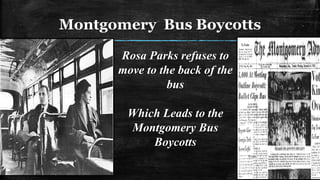
Montgomery Bus Boycotts
Rosa Parks refuses to
move to the back of the
bus
Which Leads to the
Montgomery Bus
Boycotts
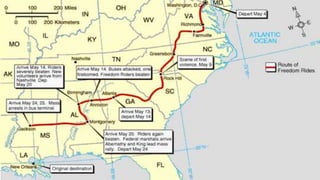
Freedom Rides
ToTest out Supreme Court ruling
on integrated buses
Although there's ruling people
don’t follow through
Blacks and whites travelled into
the South to draw attention to
the South’s segregation of bus
terminals
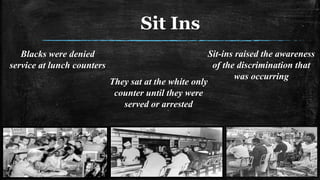
Sit Ins
Blacks were denied
service at lunch counters
They sat at the white only
counter until they were
served or arrested
Sit-ins raised the awareness
of the discrimination that
was occurring
Title and Content Layout with List
▪ Add your first bullet point here
▪ Add your second bullet point here
▪ Add your third bullet point here
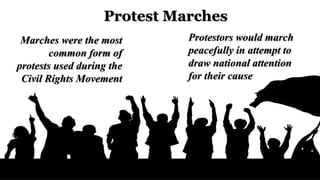
Protest Marches
Marches were the most
common form of
protests used during the
Civil Rights Movement
Protestors would march
peacefully in attempt to
draw national attention
for their cause
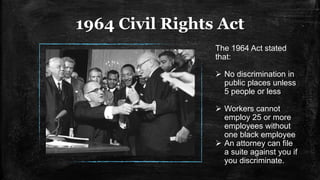
1964 Civil Rights Act
The 1964 Act stated
that:
 No discrimination in
public places unless
5 people or less
 Workers cannot
employ 25 or more
employees without
one black employee
 An attorney can file
a suite against you if
you discriminate.

Us civil rights movement.ppt

  • 1.
    Title Layout Subtitle By: NajmaAbdullah and Hamdi Gure
  • 2.
    Civil War Amendments 13thSlavery abolished 14th Granted Freed Slaves citizenship 15th Granted Freed Slaves the right to vote
  • 3.
    Jim Crow Laws Examples: segregationof public schools, public places and public transportation, and the segregation of restrooms, restaurants and drinking fountains for whites and blacks “Separate but equal” meant that same facilities for both race
  • 4.
    Mr Brown andSupreme court • Mr Brown wanted his daughter to go. When he went to the court he was denied. • NAACP attorney Thurgood Marshall argued the case to end segregation
  • 5.
    Organisations During TheCivil Right Movement
  • 6.
    Ending School Segregation •Little Rock 9 where black students who went to an integrated school. • Many people hated this U.S. President Dwight D. Eisenhower called in federal troops to enforce the Supreme Court ruling
  • 7.
    Types of Protests Therewere 4 Types of Civil Right Movements: • Bus Boycotts • Freedom Rides • Sit Ins • Marches
  • 8.
    Montgomery Bus Boycotts RosaParks refuses to move to the back of the bus Which Leads to the Montgomery Bus Boycotts
  • 9.
    Freedom Rides ToTest outSupreme Court ruling on integrated buses Although there's ruling people don’t follow through Blacks and whites travelled into the South to draw attention to the South’s segregation of bus terminals
  • 11.
    Sit Ins Blacks weredenied service at lunch counters They sat at the white only counter until they were served or arrested Sit-ins raised the awareness of the discrimination that was occurring
  • 12.
    Title and ContentLayout with List ▪ Add your first bullet point here ▪ Add your second bullet point here ▪ Add your third bullet point here Protest Marches Marches were the most common form of protests used during the Civil Rights Movement Protestors would march peacefully in attempt to draw national attention for their cause
  • 13.
    1964 Civil RightsAct The 1964 Act stated that:  No discrimination in public places unless 5 people or less  Workers cannot employ 25 or more employees without one black employee  An attorney can file a suite against you if you discriminate.