ITM 309     Enterprise Resource Planning and Collaboration Dr. Frederick Rodammer Michigan State University Eli Broad College of Business [email_address] November 17, 2008
Today’s Learning Objectives Review the four primary components found in extended enterprise resource planning systems Identify the different ways in which companies collaborate using technology Describe Alliances And Discuss Alliance Example
What is meant by Collaboration ?   What are examples of how two or more companies Collaborate together ?
What is meant by Outsourcing ?   Is Collaboration the same as Outsourcing  ?
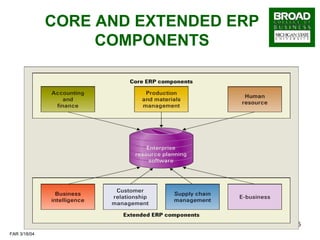
CORE AND EXTENDED ERP COMPONENTS
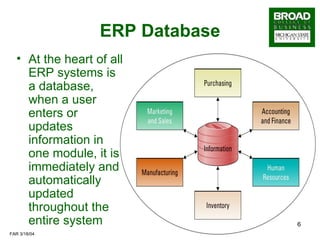
ERP Database At the heart of all ERP systems is a database, when a user enters or updates information in one module, it is immediately and automatically updated throughout the entire system
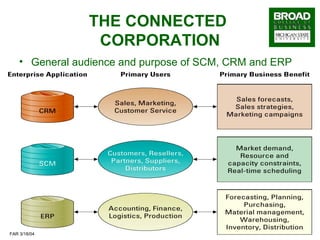
THE CONNECTED  CORPORATION General audience and purpose of SCM, CRM and ERP
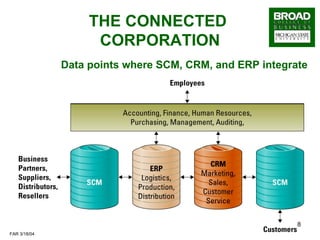
THE CONNECTED  CORPORATION Data points where SCM, CRM, and ERP integrate
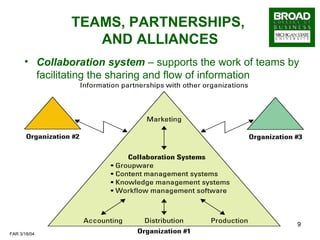
TEAMS, PARTNERSHIPS,  AND ALLIANCES Collaboration system  – supports the work of teams by facilitating the sharing and flow of information
TEAMS, PARTNERSHIPS,  AND ALLIANCES Organizations form alliances and partnerships with other organizations based on their core competency Core competency  – an organization’s key strength, a business function that it does better than any of its competitors Core competency strategy  – organization chooses to focus specifically on its core competency and forms partnerships with other organizations to handle nonstrategic business processes
TEAMS, PARTNERSHIPS,  AND ALLIANCES Organizations create and use teams, partnerships, and alliances to: Undertake new initiatives Address both minor and major problems Capitalize on significant opportunities Organizations create teams, partnerships, and alliances both internally with employees and externally with other organizations
TEAMS, PARTNERSHIPS,  AND ALLIANCES Information technology can make a business partnership easier to establish and manage Information partnership  – occurs when two or more organizations cooperate by integrating their IT systems, thereby providing customers with the best of what each can offer The Internet has dramatically increased the ease and availability for IT-enabled organizational alliances and partnerships
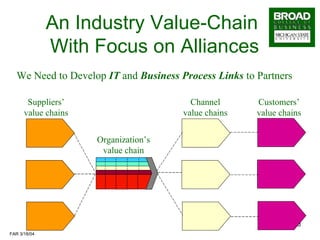
An Industry Value-Chain  With Focus on Alliances Suppliers’ value chains Organization’s value chain Channel value chains Customers’ value chains We Need to Develop  IT  and  Business Process Links  to Partners
Alliances Cross-Functional  Inter-Enterprise  System  Uses IT to Help Support and Manage the  Links  Between Some of a Company’s Key Business Processes and its Suppliers, Customers, and Business Partners Goal is to Create a Fast, Efficient, and Low-Cost Network of Business Relationships:  Minimize  Joint Costs  and Improve Service
Example: Distributor Alliances   We cannot make significant strides in supply chain management without some re-definition of our Supplier/Distributor/ End Use Customer relationship.
Alliances With Strategic Distributors Critical Business Issue Minimize the Cost to Serve of the Joint Supplier/Distributor Value Chain While Maintaining/Improving Customer Service; Focus on Optimizing the Value Chain Costs and Working Capital for Mutual Benefit to Both Companies. Goals Improve Service and Responsiveness Optimize Supply Chain Costs and Capital  Working Capital Transportation Capital Freight Administrative Packaging Desired Outcomes New, Improved Cross-Company Value Chain Process Roles/Responsibilities and Operating Discipline to Support New Process Process Measurements of Mutual Incentives to Support New Process
ITM 309 Homework Assignment #5 due November 19-20 Assignment #6 Insights During Lecture on Wednesday

Lecture Slides 11 17 08

  • 1.
    ITM 309 Enterprise Resource Planning and Collaboration Dr. Frederick Rodammer Michigan State University Eli Broad College of Business [email_address] November 17, 2008
  • 2.
    Today’s Learning ObjectivesReview the four primary components found in extended enterprise resource planning systems Identify the different ways in which companies collaborate using technology Describe Alliances And Discuss Alliance Example
  • 3.
    What is meantby Collaboration ? What are examples of how two or more companies Collaborate together ?
  • 4.
    What is meantby Outsourcing ? Is Collaboration the same as Outsourcing ?
  • 5.
    CORE AND EXTENDEDERP COMPONENTS
  • 6.
    ERP Database Atthe heart of all ERP systems is a database, when a user enters or updates information in one module, it is immediately and automatically updated throughout the entire system
  • 7.
    THE CONNECTED CORPORATION General audience and purpose of SCM, CRM and ERP
  • 8.
    THE CONNECTED CORPORATION Data points where SCM, CRM, and ERP integrate
  • 9.
    TEAMS, PARTNERSHIPS, AND ALLIANCES Collaboration system – supports the work of teams by facilitating the sharing and flow of information
  • 10.
    TEAMS, PARTNERSHIPS, AND ALLIANCES Organizations form alliances and partnerships with other organizations based on their core competency Core competency – an organization’s key strength, a business function that it does better than any of its competitors Core competency strategy – organization chooses to focus specifically on its core competency and forms partnerships with other organizations to handle nonstrategic business processes
  • 11.
    TEAMS, PARTNERSHIPS, AND ALLIANCES Organizations create and use teams, partnerships, and alliances to: Undertake new initiatives Address both minor and major problems Capitalize on significant opportunities Organizations create teams, partnerships, and alliances both internally with employees and externally with other organizations
  • 12.
    TEAMS, PARTNERSHIPS, AND ALLIANCES Information technology can make a business partnership easier to establish and manage Information partnership – occurs when two or more organizations cooperate by integrating their IT systems, thereby providing customers with the best of what each can offer The Internet has dramatically increased the ease and availability for IT-enabled organizational alliances and partnerships
  • 13.
    An Industry Value-Chain With Focus on Alliances Suppliers’ value chains Organization’s value chain Channel value chains Customers’ value chains We Need to Develop IT and Business Process Links to Partners
  • 14.
    Alliances Cross-Functional Inter-Enterprise System Uses IT to Help Support and Manage the Links Between Some of a Company’s Key Business Processes and its Suppliers, Customers, and Business Partners Goal is to Create a Fast, Efficient, and Low-Cost Network of Business Relationships: Minimize Joint Costs and Improve Service
  • 15.
    Example: Distributor Alliances We cannot make significant strides in supply chain management without some re-definition of our Supplier/Distributor/ End Use Customer relationship.
  • 16.
    Alliances With StrategicDistributors Critical Business Issue Minimize the Cost to Serve of the Joint Supplier/Distributor Value Chain While Maintaining/Improving Customer Service; Focus on Optimizing the Value Chain Costs and Working Capital for Mutual Benefit to Both Companies. Goals Improve Service and Responsiveness Optimize Supply Chain Costs and Capital Working Capital Transportation Capital Freight Administrative Packaging Desired Outcomes New, Improved Cross-Company Value Chain Process Roles/Responsibilities and Operating Discipline to Support New Process Process Measurements of Mutual Incentives to Support New Process
  • 17.
    ITM 309 HomeworkAssignment #5 due November 19-20 Assignment #6 Insights During Lecture on Wednesday