Lecture 4
Tariffs
Chapter 6
AGRB 360
Global Agri-food Trade
2
Topics to be Covered
 Types of Commercial Policies
 Tariffs and Types
 Consumer Surplus vs. Producer Surplus
 Effects of a Tariff
 Small Country vs. Large Country Case
 Deadweight Costs
 Optimal Tariff
 Effective Rate of Protection
3
Commercial Policy
 Actions taken by government to influence
the country’s volume and composition of
trade
 Types of Commercial Policy
 Tariff
 Quota
 Subsidy
 Non-tariff Barriers
4
Tariff
 A tax imposed by government on either
imports or exports
5
Quota
 A government-imposed limit on the value
or quantity of an import or export good
6
Subsidy
 A government payment to a domestic
industry to encourage exports or
discourage imports
7
Non-tariff Barriers
 A wide range of government policies other
than tariffs designed to affect the volume
or composition of a country’s international
trade
 These NTBs include:
 Health and safety standards
 Government procurement policy
8
Gains from Free Trade
 Economic Gains— increase in standard of living
and economic growth that result from a country’s
engaging in free international trade
 Political Gains— increases in well-being that
accrue to a country because expanded trade and
economic interdependency may increase the
likelihood of reduced international hostility
9
Relationship Between Trade and
Economic Growth
 Trade enhances economic growth through
imports of capital goods.
 Trade enhances international diffusion of
technology.
 Trade is pro-competition.
 Trade expands market size if economies of scale
exist.
 Trade can enlarge the pool of savings necessary
for investment spending.
10
Types of Tariffs
 Ad Valorem tariff— a tax equal to a
certain percentage of the good’s
selling price.
 Specific tariff— a tax equal to a fixed
amount of money per unit sold.
 Compound tariff— a tax with both ad
valorem and specific components.
11
Tools for Analyzing Tariff Effects
 Consumer Surplus
 Producer Surplus
12
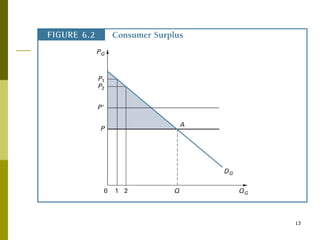
Consumer Surplus
 The difference between the amount
consumers are willing to pay to purchase a
given quantity of a good and the amount
they have to pay to purchase the good
13
14
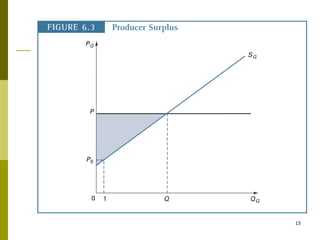
Producer Surplus
 The difference between the price paid in
the market for a good and the minimum
price required by the industry to produce
and market the good
15
16
Gains from Free Trade for a Small Country
 Imports Side
 Exports Side
17
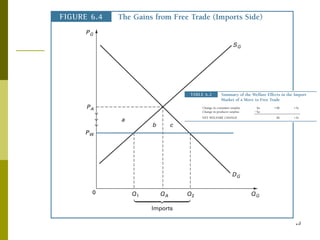
Effects of Free Trade on the Imports Side
 Price effect
 Consumption effect
 Production effect
 Imports effect
 Consumer surplus effect
 Producer surplus effect
18
19
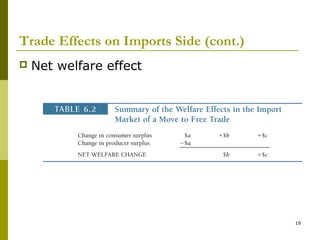
Trade Effects on Imports Side (cont.)
 Net welfare effect
20
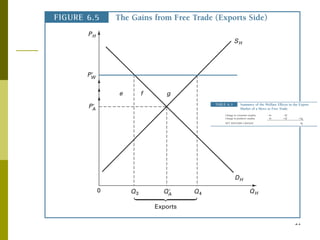
Effects of Free Trade on Exports Side
 Refer to Figure 6.5 Gains (Exports Side)
 Price effect
 Consumption effect
 Production effect
 Exports effect
 Consumer surplus effect
 Producer surplus effect
21
22
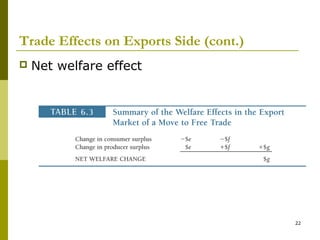
Trade Effects on Exports Side (cont.)
 Net welfare effect
23
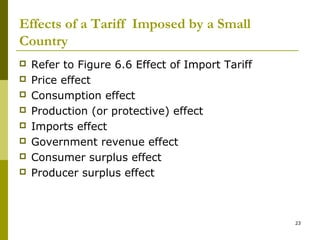
Effects of a Tariff Imposed by a Small
Country
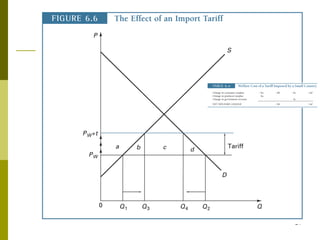
 Refer to Figure 6.6 Effect of Import Tariff
 Price effect
 Consumption effect
 Production (or protective) effect
 Imports effect
 Government revenue effect
 Consumer surplus effect
 Producer surplus effect
24
25
Welfare Cost of Tariff Imposed by a Small
Country
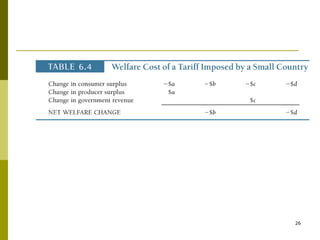
 Deadweight cost— value of wasted
resources devoted to expanded domestic
production and expenditures devoted to
less-desired substitutes brought about by
a tariff
26
27
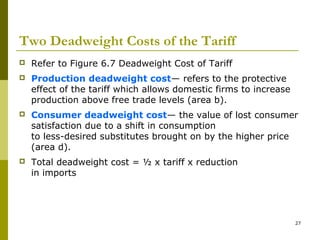
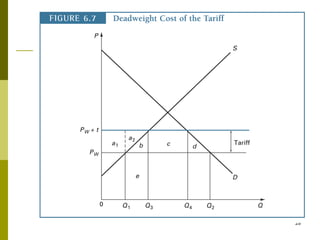
Two Deadweight Costs of the Tariff
 Refer to Figure 6.7 Deadweight Cost of Tariff
 Production deadweight cost— refers to the protective
effect of the tariff which allows domestic firms to increase
production above free trade levels (area b).
 Consumer deadweight cost— the value of lost consumer
satisfaction due to a shift in consumption
to less-desired substitutes brought on by the higher price
(area d).
 Total deadweight cost = ½ x tariff x reduction
in imports
28
29
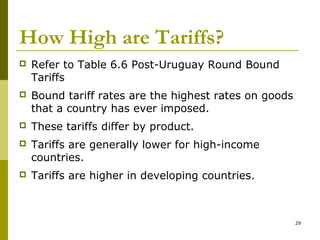
How High are Tariffs?
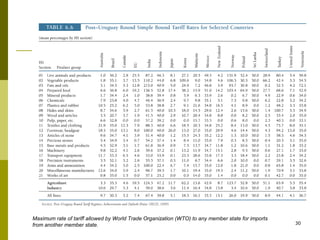
 Refer to Table 6.6 Post-Uruguay Round Bound
Tariffs
 Bound tariff rates are the highest rates on goods
that a country has ever imposed.
 These tariffs differ by product.
 Tariffs are generally lower for high-income
countries.
 Tariffs are higher in developing countries.
30
Maximum rate of tariff allowed by World Trade Organization (WTO) to any member state for imports
from another member state.

Lecture 4 tariff chapter 6

  • 1.
    Lecture 4 Tariffs Chapter 6 AGRB360 Global Agri-food Trade
  • 2.
    2 Topics to beCovered  Types of Commercial Policies  Tariffs and Types  Consumer Surplus vs. Producer Surplus  Effects of a Tariff  Small Country vs. Large Country Case  Deadweight Costs  Optimal Tariff  Effective Rate of Protection
  • 3.
    3 Commercial Policy  Actionstaken by government to influence the country’s volume and composition of trade  Types of Commercial Policy  Tariff  Quota  Subsidy  Non-tariff Barriers
  • 4.
    4 Tariff  A taximposed by government on either imports or exports
  • 5.
    5 Quota  A government-imposedlimit on the value or quantity of an import or export good
  • 6.
    6 Subsidy  A governmentpayment to a domestic industry to encourage exports or discourage imports
  • 7.
    7 Non-tariff Barriers  Awide range of government policies other than tariffs designed to affect the volume or composition of a country’s international trade  These NTBs include:  Health and safety standards  Government procurement policy
  • 8.
    8 Gains from FreeTrade  Economic Gains— increase in standard of living and economic growth that result from a country’s engaging in free international trade  Political Gains— increases in well-being that accrue to a country because expanded trade and economic interdependency may increase the likelihood of reduced international hostility
  • 9.
    9 Relationship Between Tradeand Economic Growth  Trade enhances economic growth through imports of capital goods.  Trade enhances international diffusion of technology.  Trade is pro-competition.  Trade expands market size if economies of scale exist.  Trade can enlarge the pool of savings necessary for investment spending.
  • 10.
    10 Types of Tariffs Ad Valorem tariff— a tax equal to a certain percentage of the good’s selling price.  Specific tariff— a tax equal to a fixed amount of money per unit sold.  Compound tariff— a tax with both ad valorem and specific components.
  • 11.
    11 Tools for AnalyzingTariff Effects  Consumer Surplus  Producer Surplus
  • 12.
    12 Consumer Surplus  Thedifference between the amount consumers are willing to pay to purchase a given quantity of a good and the amount they have to pay to purchase the good
  • 13.
  • 14.
    14 Producer Surplus  Thedifference between the price paid in the market for a good and the minimum price required by the industry to produce and market the good
  • 15.
  • 16.
    16 Gains from FreeTrade for a Small Country  Imports Side  Exports Side
  • 17.
    17 Effects of FreeTrade on the Imports Side  Price effect  Consumption effect  Production effect  Imports effect  Consumer surplus effect  Producer surplus effect
  • 18.
  • 19.
    19 Trade Effects onImports Side (cont.)  Net welfare effect
  • 20.
    20 Effects of FreeTrade on Exports Side  Refer to Figure 6.5 Gains (Exports Side)  Price effect  Consumption effect  Production effect  Exports effect  Consumer surplus effect  Producer surplus effect
  • 21.
  • 22.
    22 Trade Effects onExports Side (cont.)  Net welfare effect
  • 23.
    23 Effects of aTariff Imposed by a Small Country  Refer to Figure 6.6 Effect of Import Tariff  Price effect  Consumption effect  Production (or protective) effect  Imports effect  Government revenue effect  Consumer surplus effect  Producer surplus effect
  • 24.
  • 25.
    25 Welfare Cost ofTariff Imposed by a Small Country  Deadweight cost— value of wasted resources devoted to expanded domestic production and expenditures devoted to less-desired substitutes brought about by a tariff
  • 26.
  • 27.
    27 Two Deadweight Costsof the Tariff  Refer to Figure 6.7 Deadweight Cost of Tariff  Production deadweight cost— refers to the protective effect of the tariff which allows domestic firms to increase production above free trade levels (area b).  Consumer deadweight cost— the value of lost consumer satisfaction due to a shift in consumption to less-desired substitutes brought on by the higher price (area d).  Total deadweight cost = ½ x tariff x reduction in imports
  • 28.
  • 29.
    29 How High areTariffs?  Refer to Table 6.6 Post-Uruguay Round Bound Tariffs  Bound tariff rates are the highest rates on goods that a country has ever imposed.  These tariffs differ by product.  Tariffs are generally lower for high-income countries.  Tariffs are higher in developing countries.
  • 30.
    30 Maximum rate oftariff allowed by World Trade Organization (WTO) to any member state for imports from another member state.