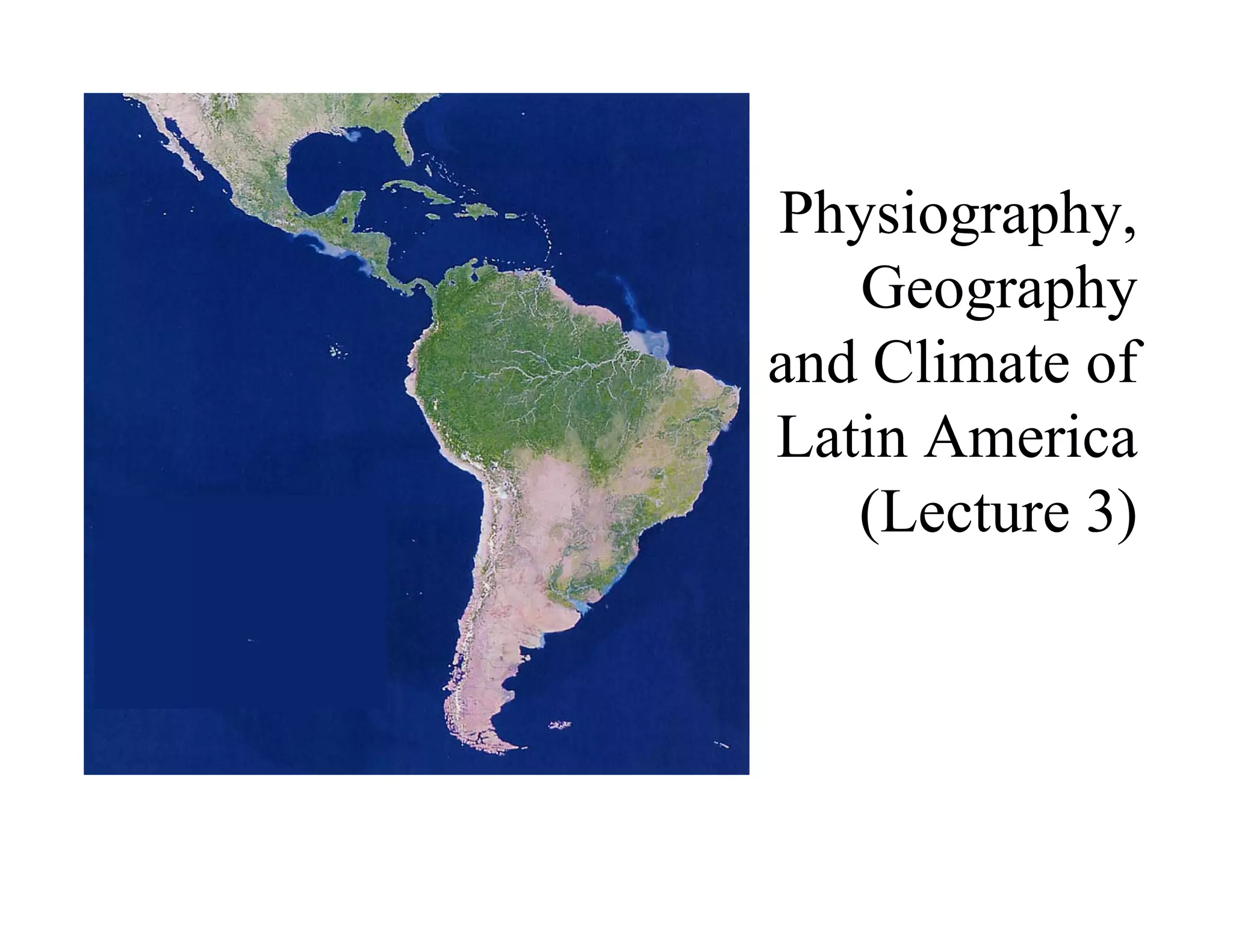
Physiography,
   Geography
and Climate of
Latin America
   (Lecture 3)
Natural Landmarks in Latin
America
 World's longest and second highest mountain
 range, and the world's highest active volcanoes.
 Biggest river in the world.
 World's driest desert.
 World's largest rainforest, and is the world's
 greatest storehouse of species
 World's greatest reserve of potential agricultural
 land.
 It is a great storehouse of minerals, with enormous
 potential production.
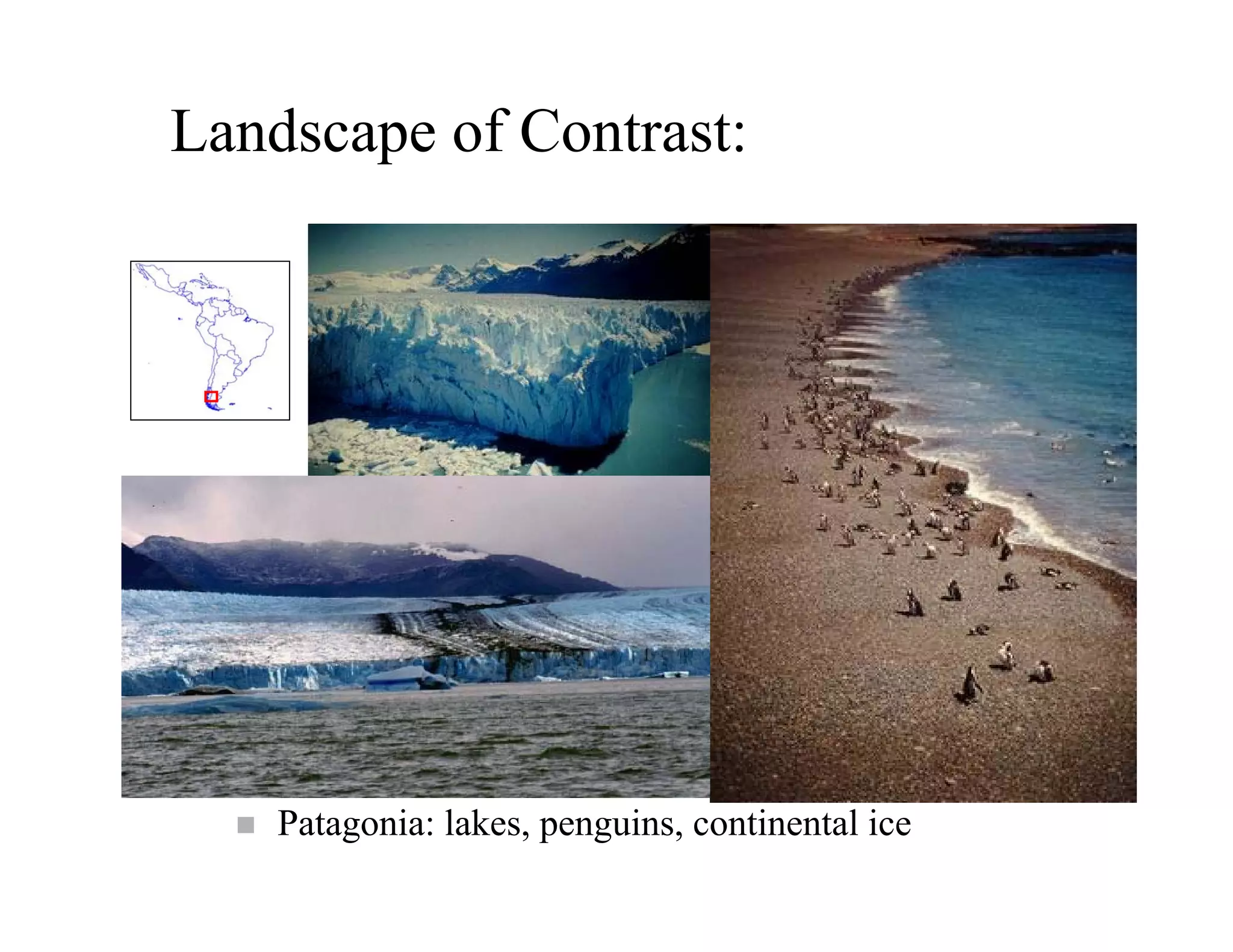
Landscape of Contrast:


    Patagonia: lakes, penguins, continental ice
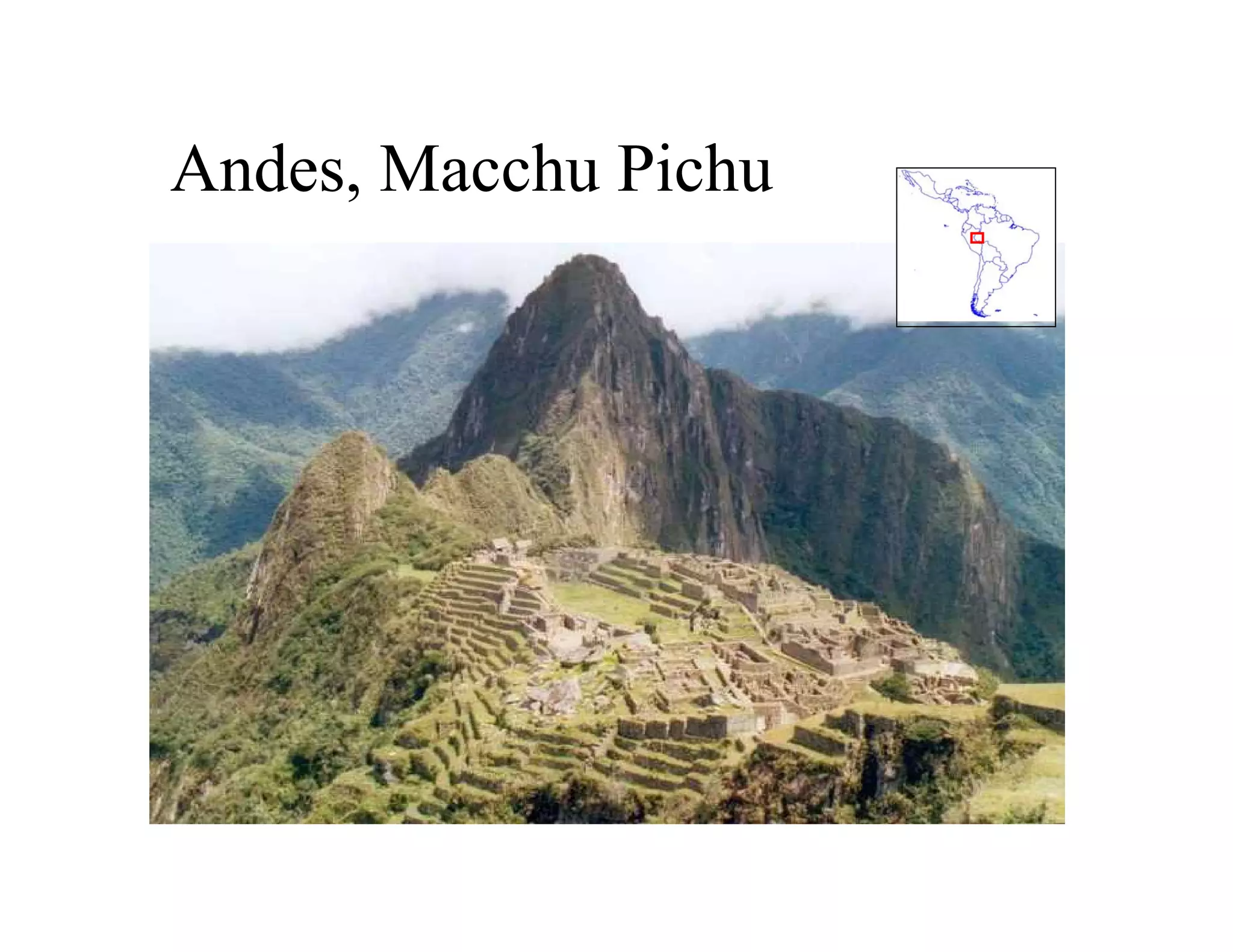
Andes, Macchu Pichu
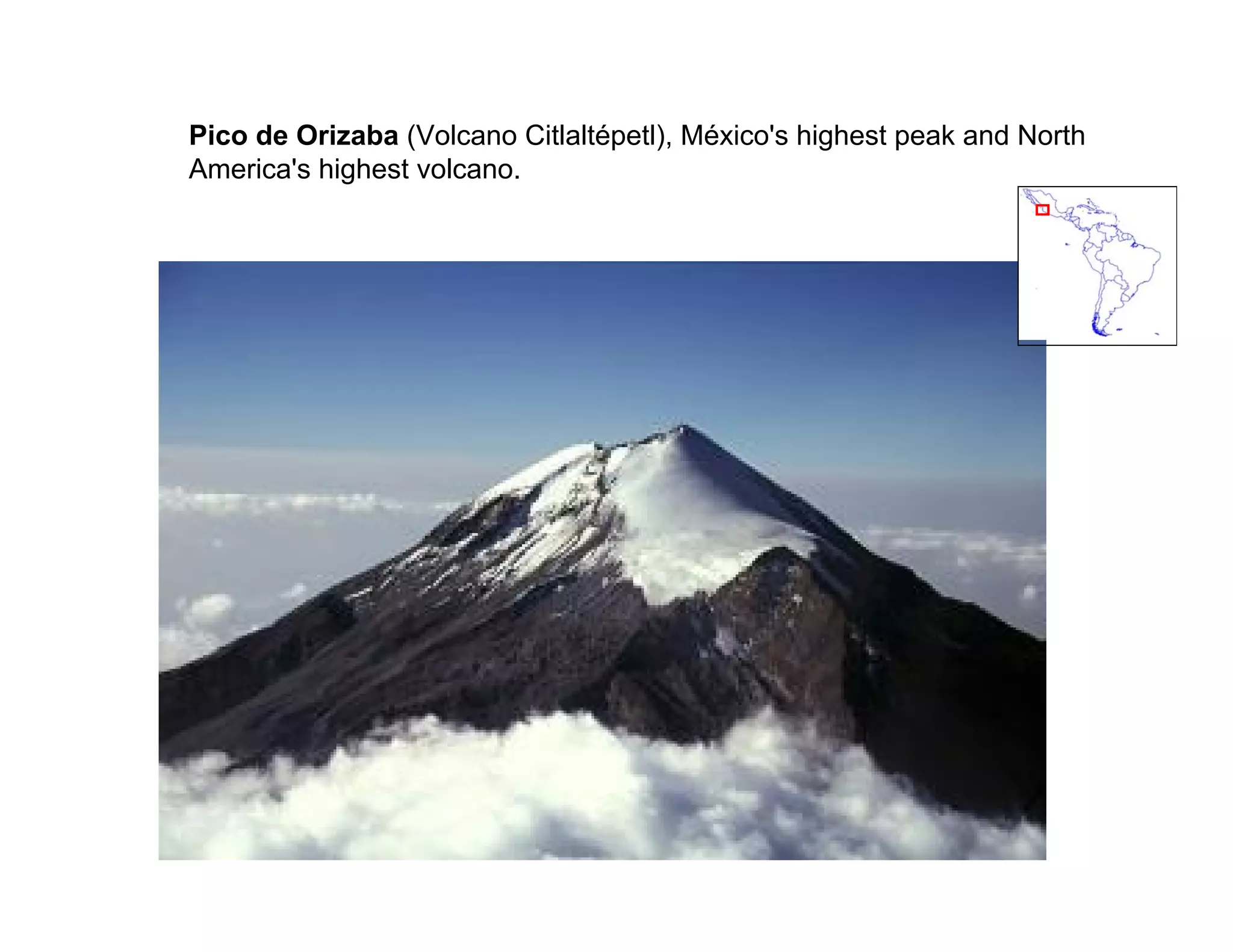
Pico de Orizaba (Volcano Citlaltépetl), México's highest peak and North
America's highest volcano.
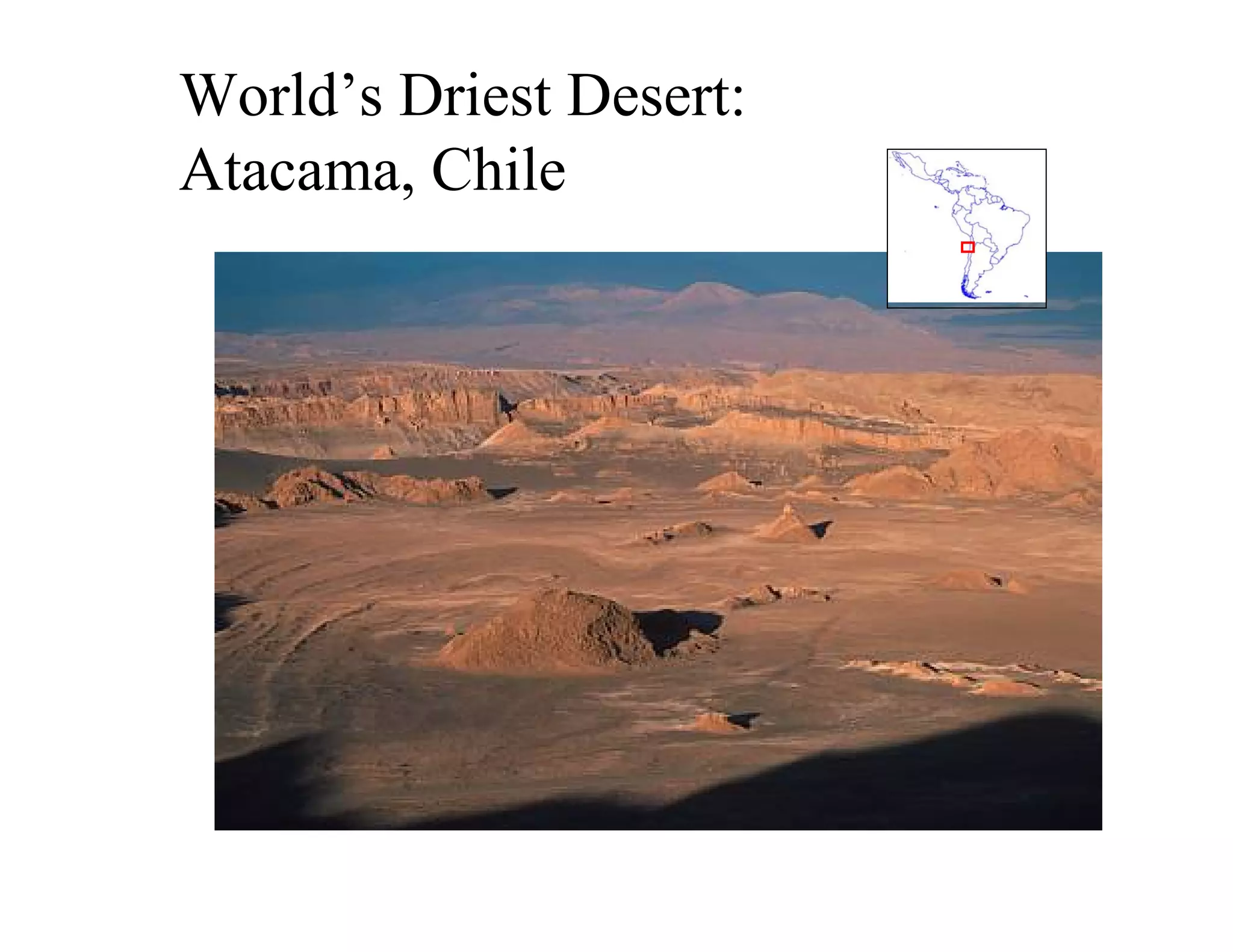
World’s Driest Desert:
Atacama, Chile
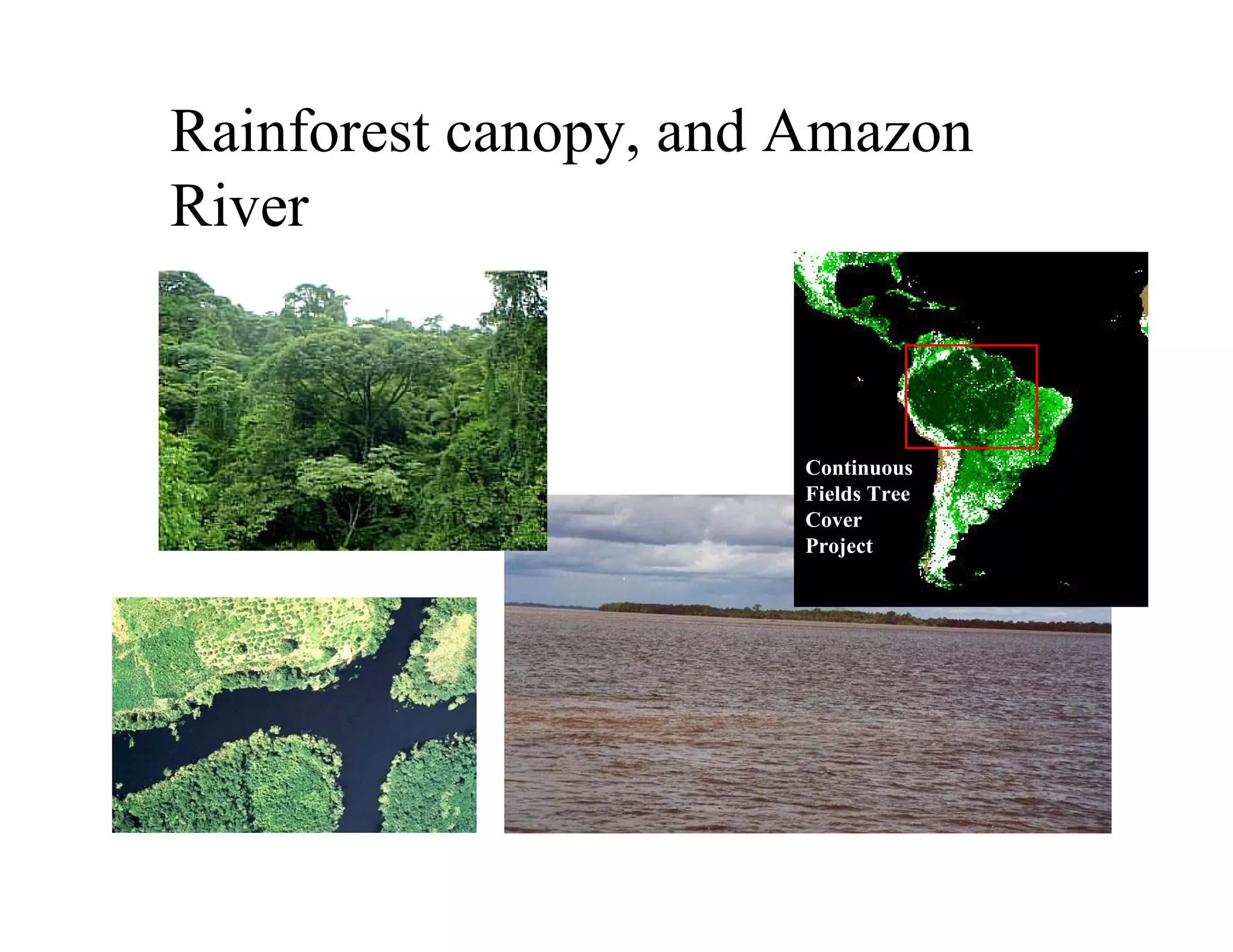
Rainforest canopy, and Amazon
River


                      Continuous
                      Fields Tree
                      Cover
                      Project
Climate
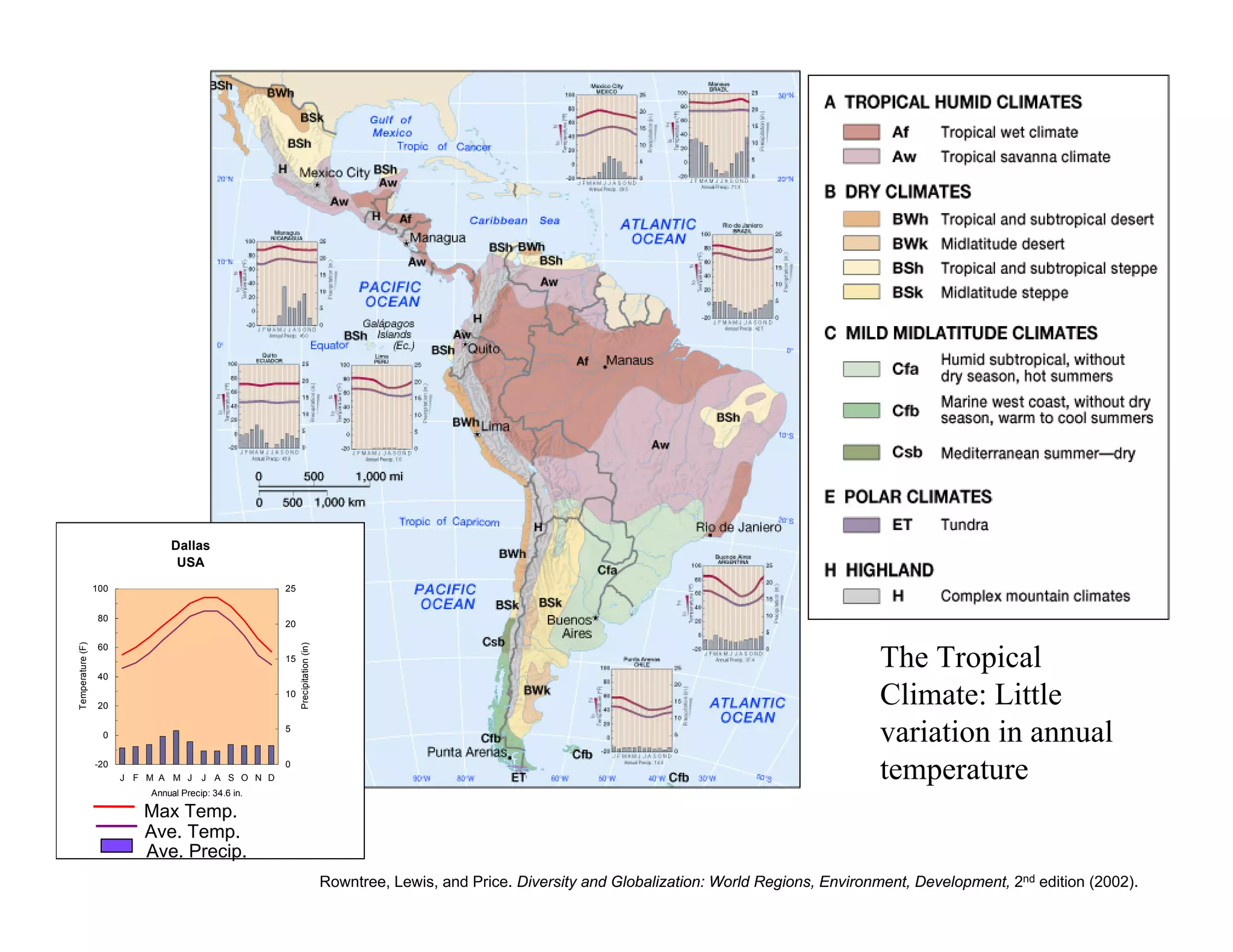
 Most of Latin America is located in the
 tropics
 –   Land located between the Tropic of Cancer
     (23.5o N) and the Tropic of Capricorn (23.5o S)
 –   In the tropics there is not much seasonal
     variation in temperature; seasonal differences
     are manifested in rainfall variations.
Dallas
                                 USA
                  100                                 25


                   80
                                                      20
Temperature (F)


                                                           Precipitation (in)


                   60


                   40
                                                      15
                                                                                                                                                                The Tropical
                   20
                                                      10
                                                                                                                                                                Climate: Little
                    0
                                                      5
                                                                                                                                                                variation in annual
                  -20
                        J F M A M J     J A S O N D
                                                      0
                                                                                                                                                                temperature
                            Annual Precip: 34.6 in.

                           Max Temp.
                           Ave. Temp.
                           Ave. Precip.
                                                                                Rowntree, Lewis, and Price. Diversity and Globalization: World Regions, Environment, Development, 2nd edition (2002).
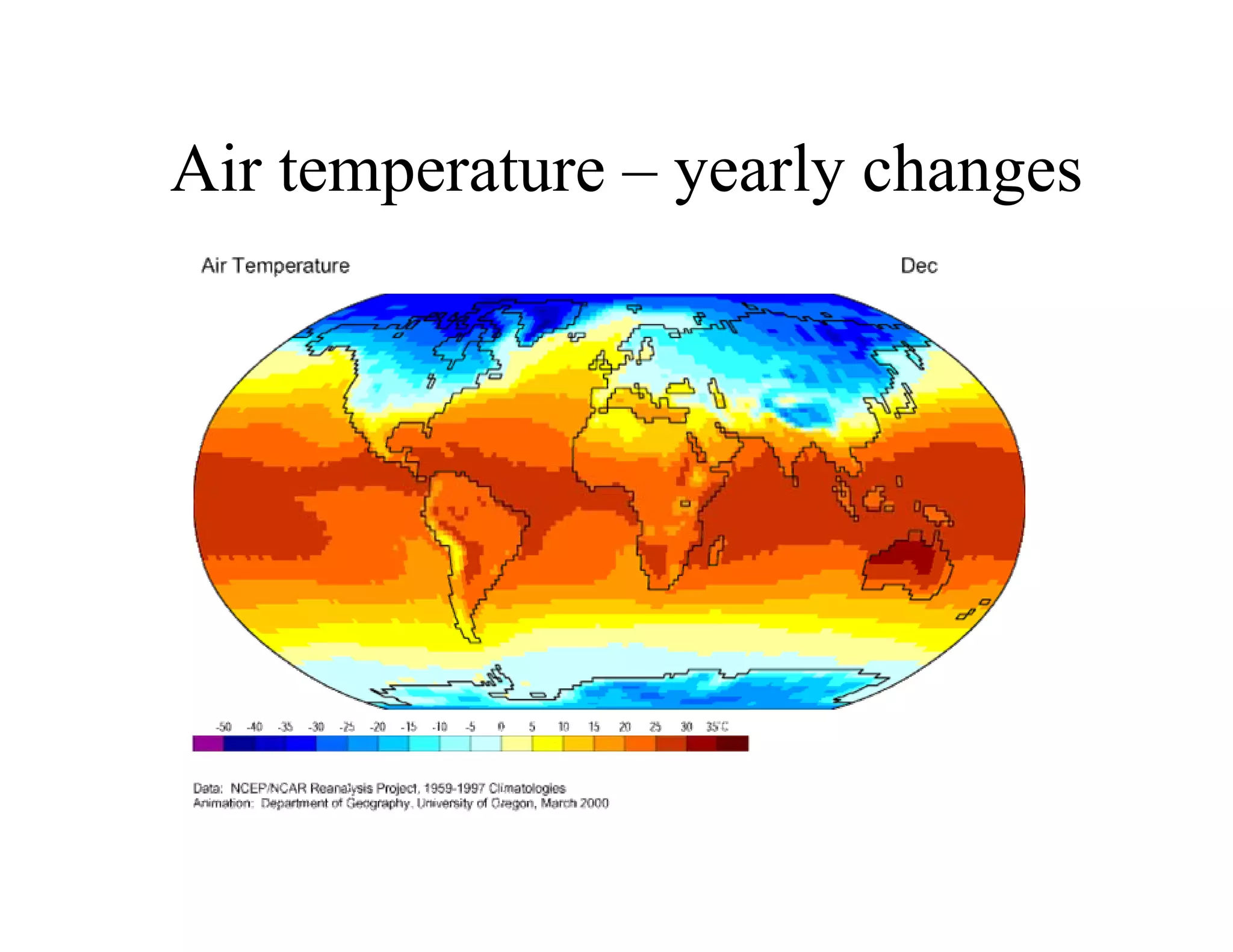
Air temperature – yearly changes
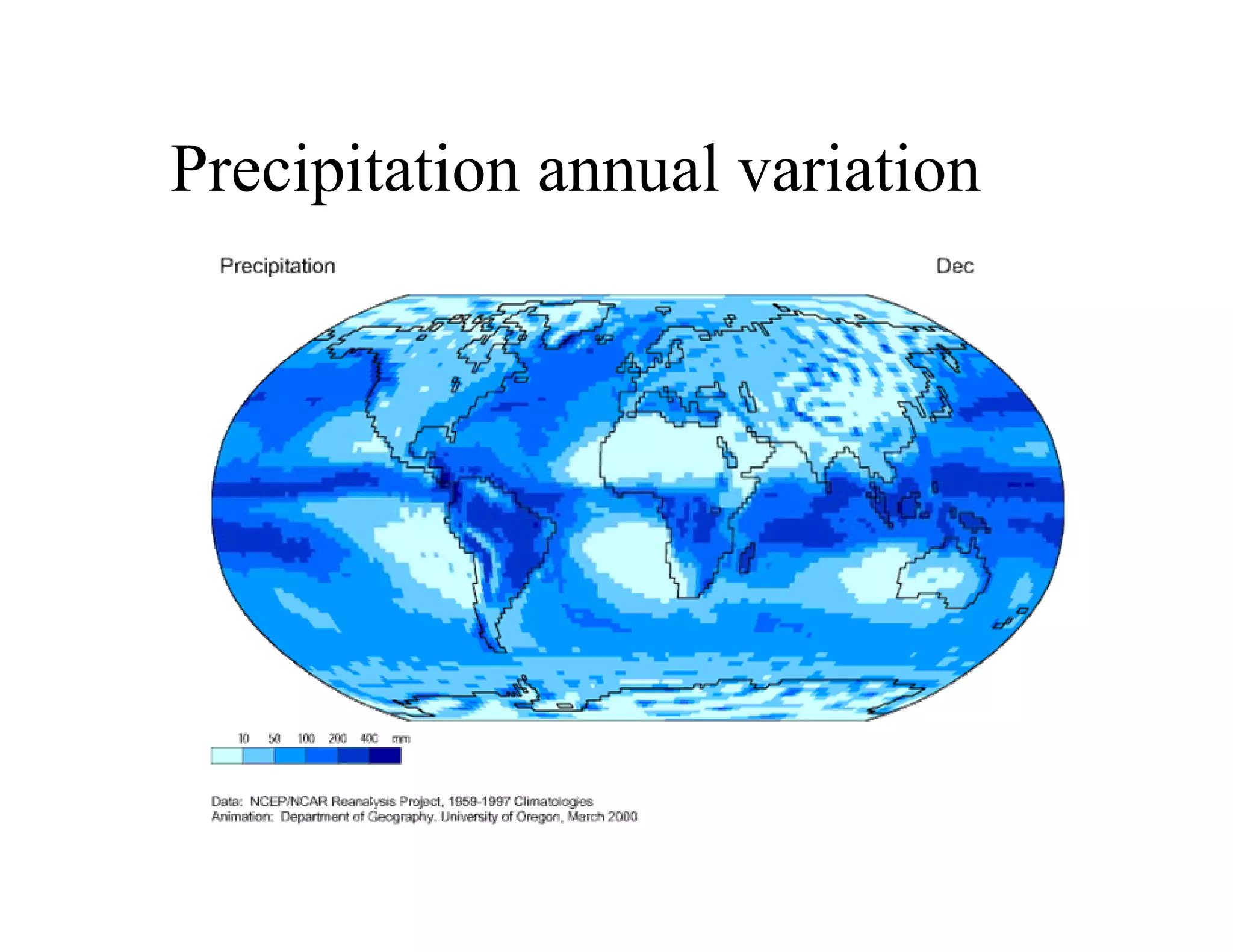
Precipitation annual variation
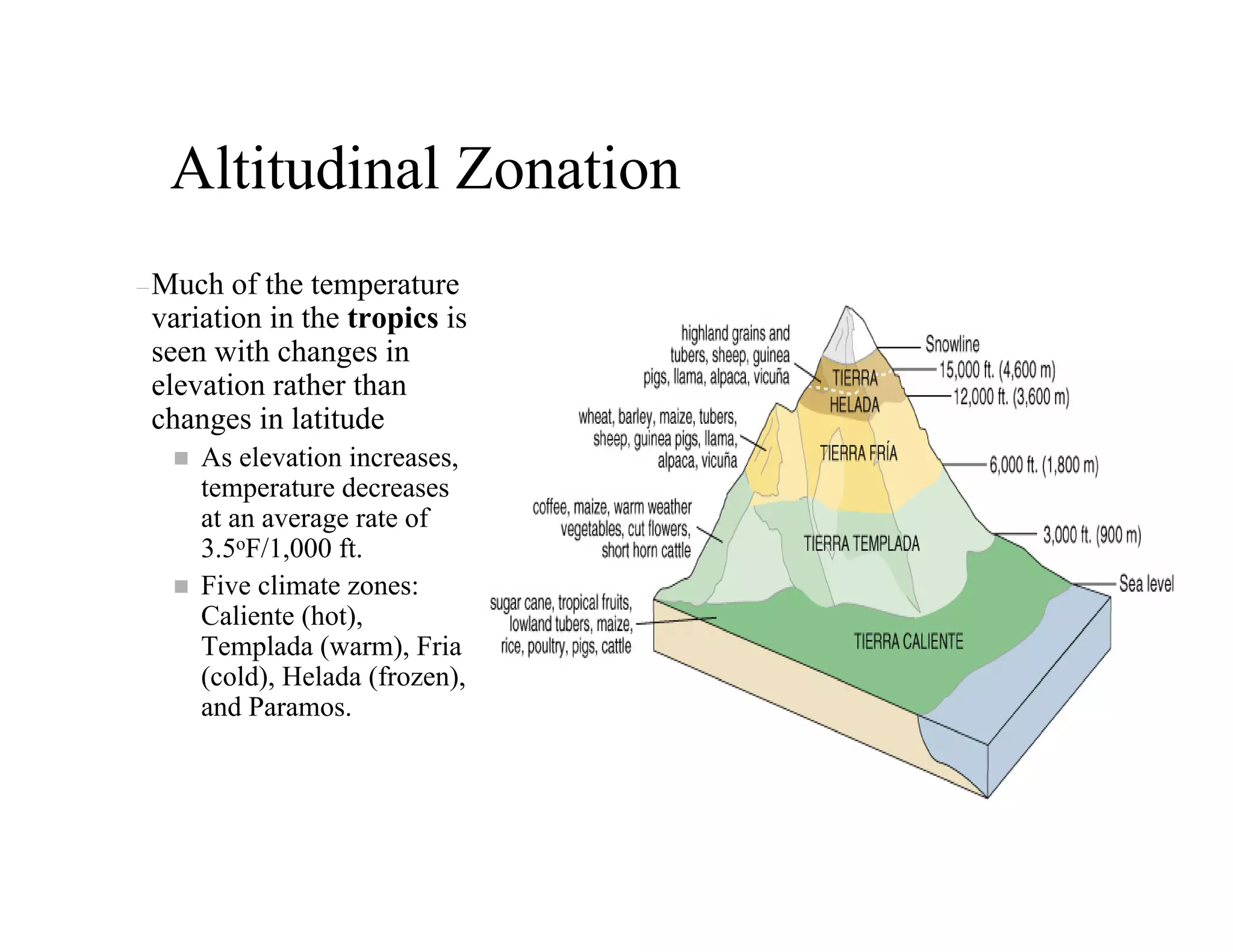
Altitudinal Zonation
– Much of the temperature
variation in the tropics is
seen with changes in
elevation rather than
changes in latitude
    As elevation increases,
    temperature decreases
    at an average rate of
    3.5oF/1,000 ft.
    Five climate zones:
    Caliente (hot),
    Templada (warm), Fria
    (cold), Helada (frozen),
    and Paramos.
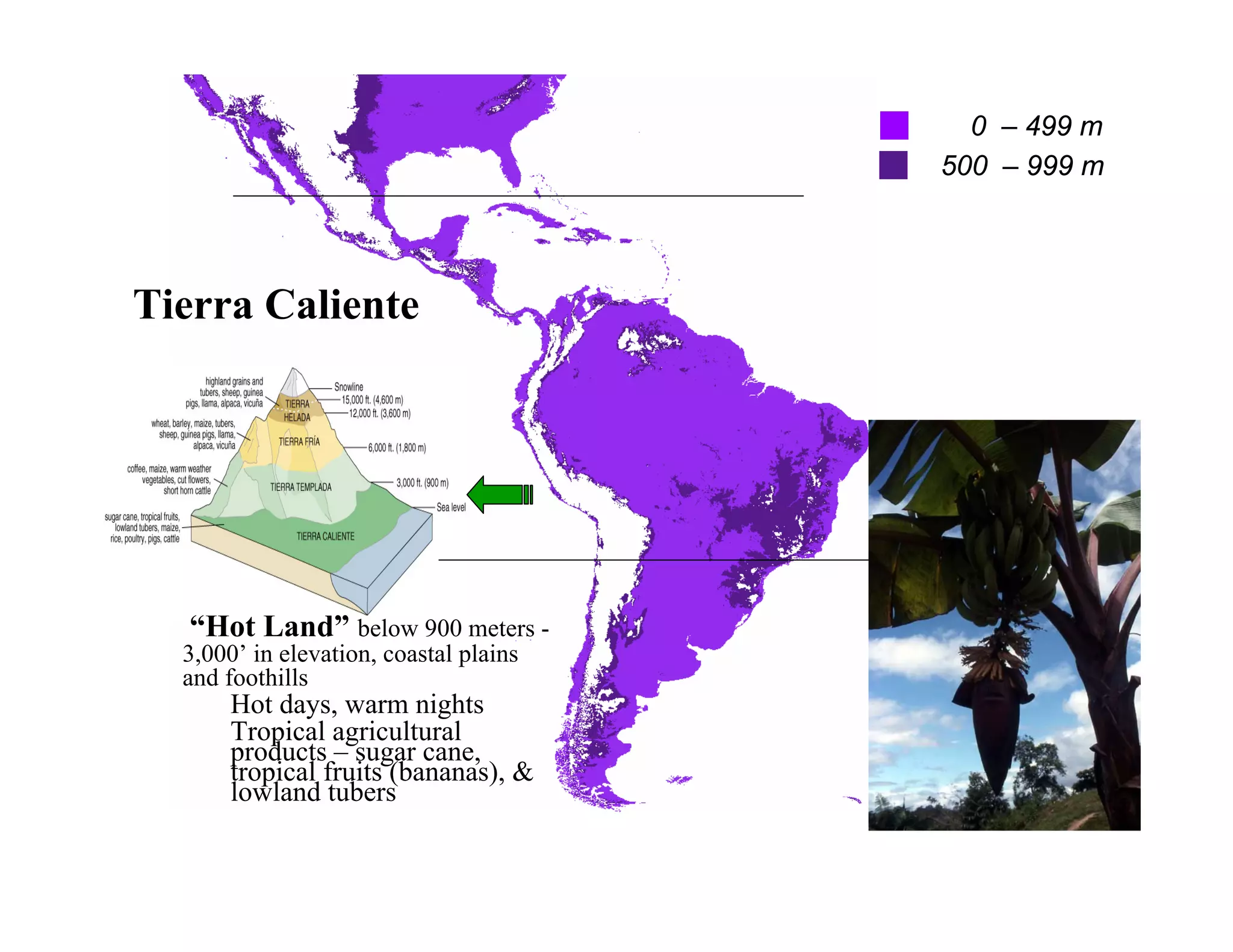
0 – 499 m
                                        500 – 999 m


Tierra Caliente


  “Hot Land” below 900 meters -
  3,000’ in elevation, coastal plains
  and foothills
      Hot days, warm nights
      Tropical agricultural
      products – sugar cane,
      tropical fruits (bananas), &
      lowland tubers
0 – 499 m
                                                500 – 999 m
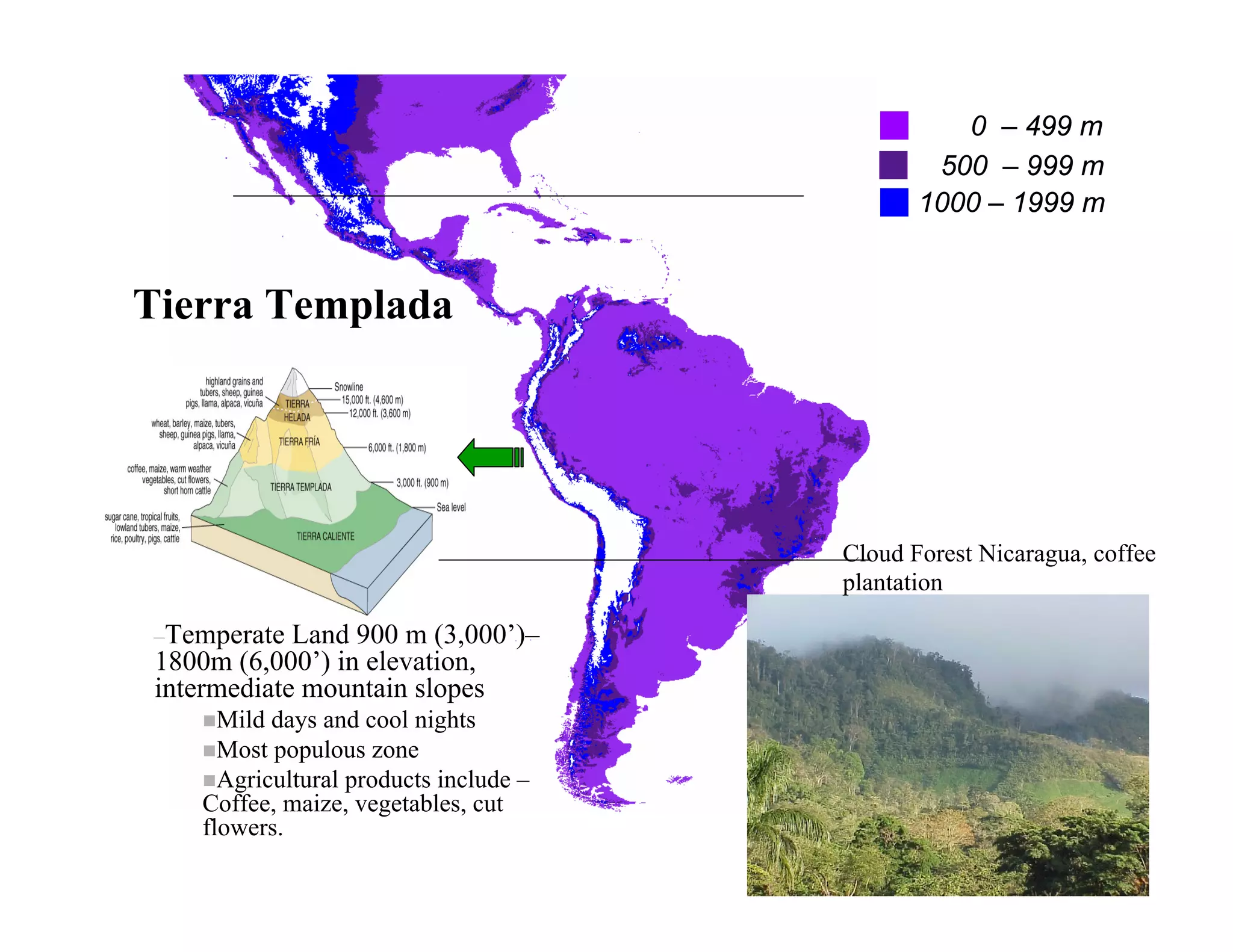
                                               1000 – 1999 m


Tierra Templada


                                        Cloud Forest Nicaragua, coffee
                                        plantation

–Temperate   Land 900 m (3,000’)–
 1800m (6,000’) in elevation,
 intermediate mountain slopes
      Mild days and cool nights
      Most populous zone
      Agricultural products include –
    Coffee, maize, vegetables, cut
    flowers.
0 – 499 m
                                             500 – 999 m
                                            1000 – 1999 m
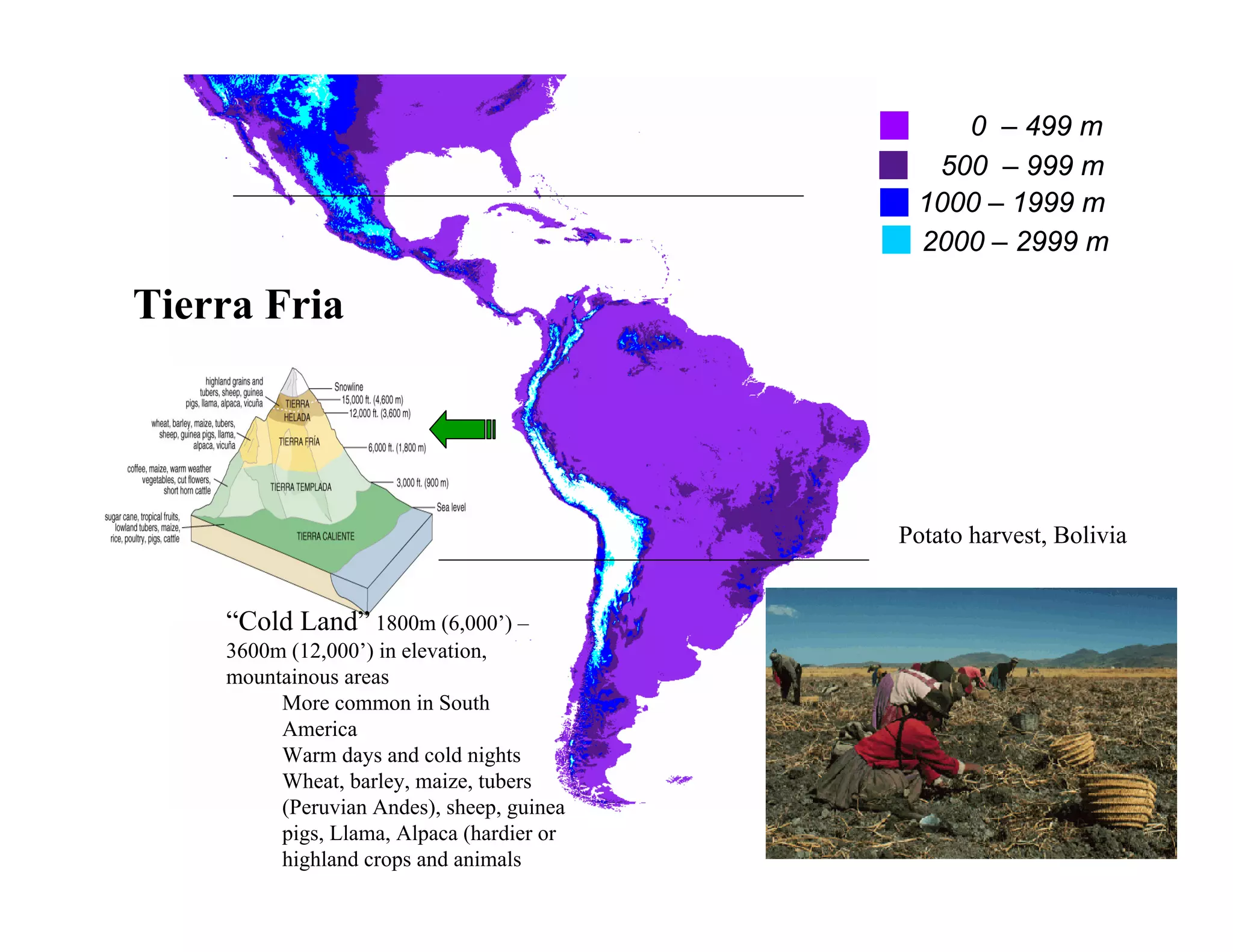
                                            2000 – 2999 m

Tierra Fria


                                           Potato harvest, Bolivia


    “Cold Land” 1800m (6,000’) –
    3600m (12,000’) in elevation,
    mountainous areas
         More common in South
         America
         Warm days and cold nights
         Wheat, barley, maize, tubers
         (Peruvian Andes), sheep, guinea
         pigs, Llama, Alpaca (hardier or
         highland crops and animals
0 – 499 m
                                       500 – 999 m
                                      1000 – 1999 m
                                      2000 – 2999 m
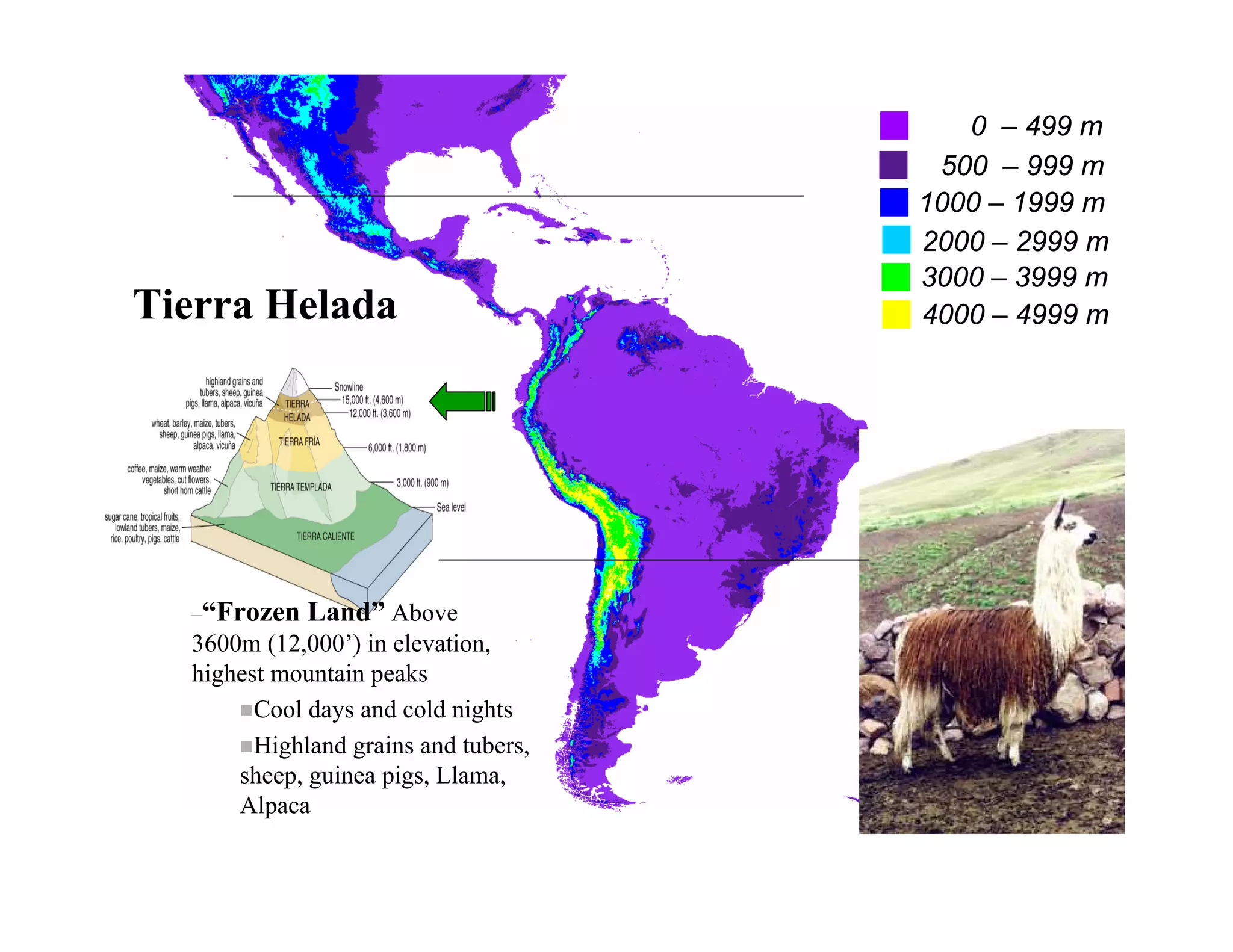
                                      3000 – 3999 m
Tierra Helada                         4000 – 4999 m


  –“Frozen   Land” Above
  3600m (12,000’) in elevation,
  highest mountain peaks
        Cool days and cold nights
        Highland grains and tubers,
      sheep, guinea pigs, Llama,
      Alpaca
0 – 499 m
                                       500 – 999 m
                                      1000 – 1999 m
                                      2000 – 2999 m
                                      3000 – 3999 m
Paramos                               4000 – 4999 m
                                      5000 – 5999 m


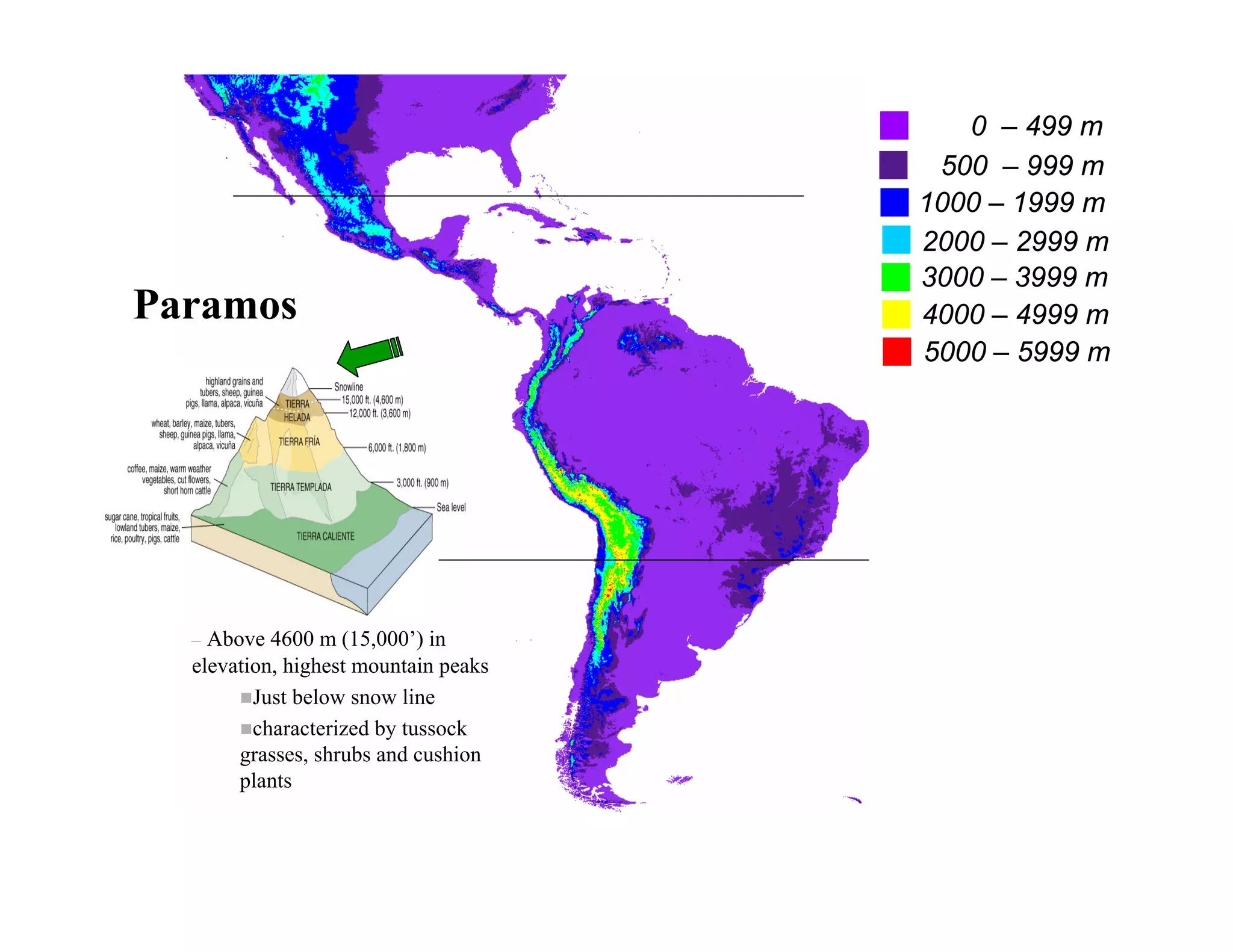
  – Above 4600 m (15,000’) in
  elevation, highest mountain peaks
         Just below snow line
         characterized by tussock
       grasses, shrubs and cushion
       plants
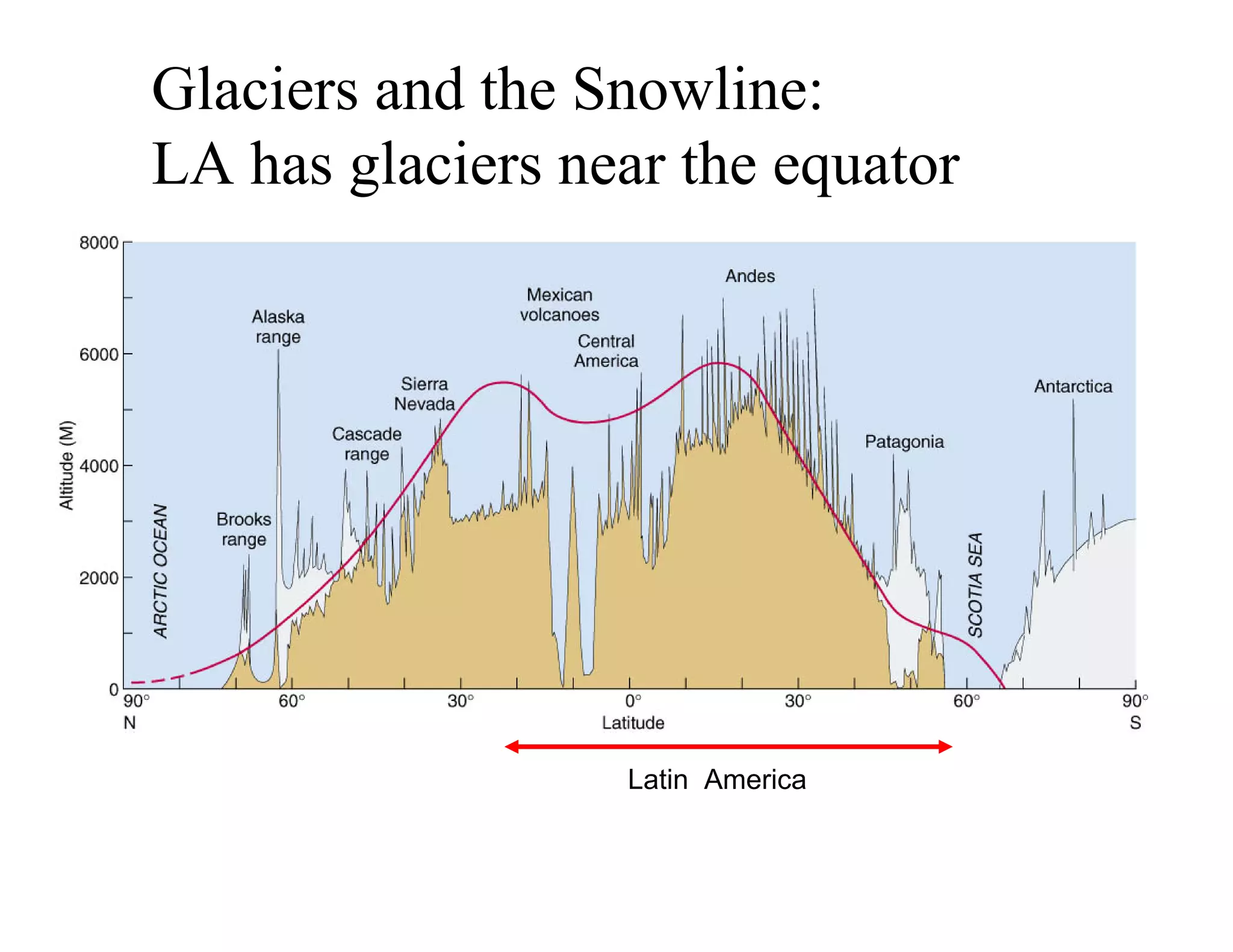
Glaciers and the Snowline:
LA has glaciers near the equator


                  Latin America
Physical Geography
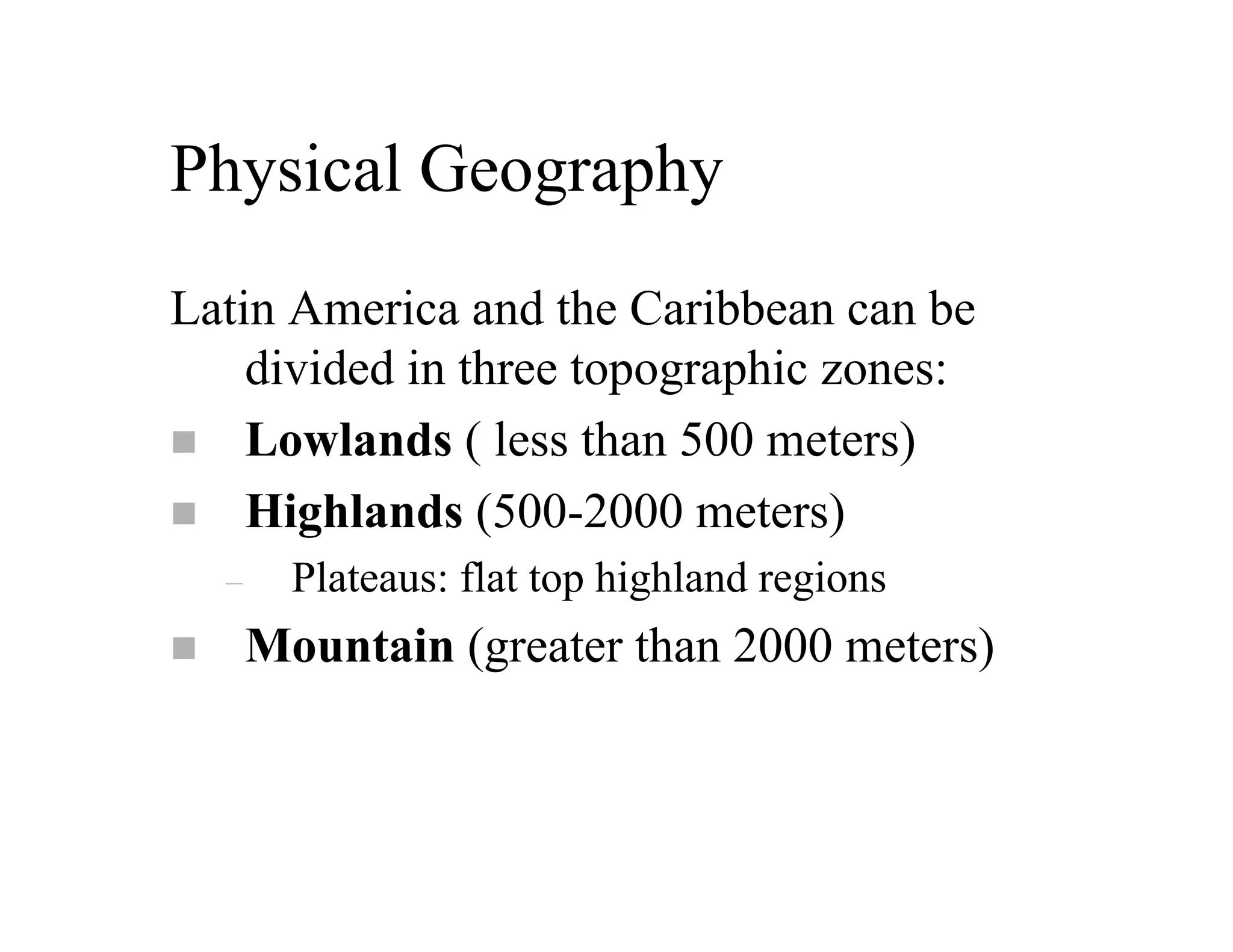
Latin America and the Caribbean can be
    divided in three topographic zones:
    Lowlands ( less than 500 meters)
    Highlands (500-2000 meters)
  –     Plateaus: flat top highland regions
      Mountain (greater than 2000 meters)
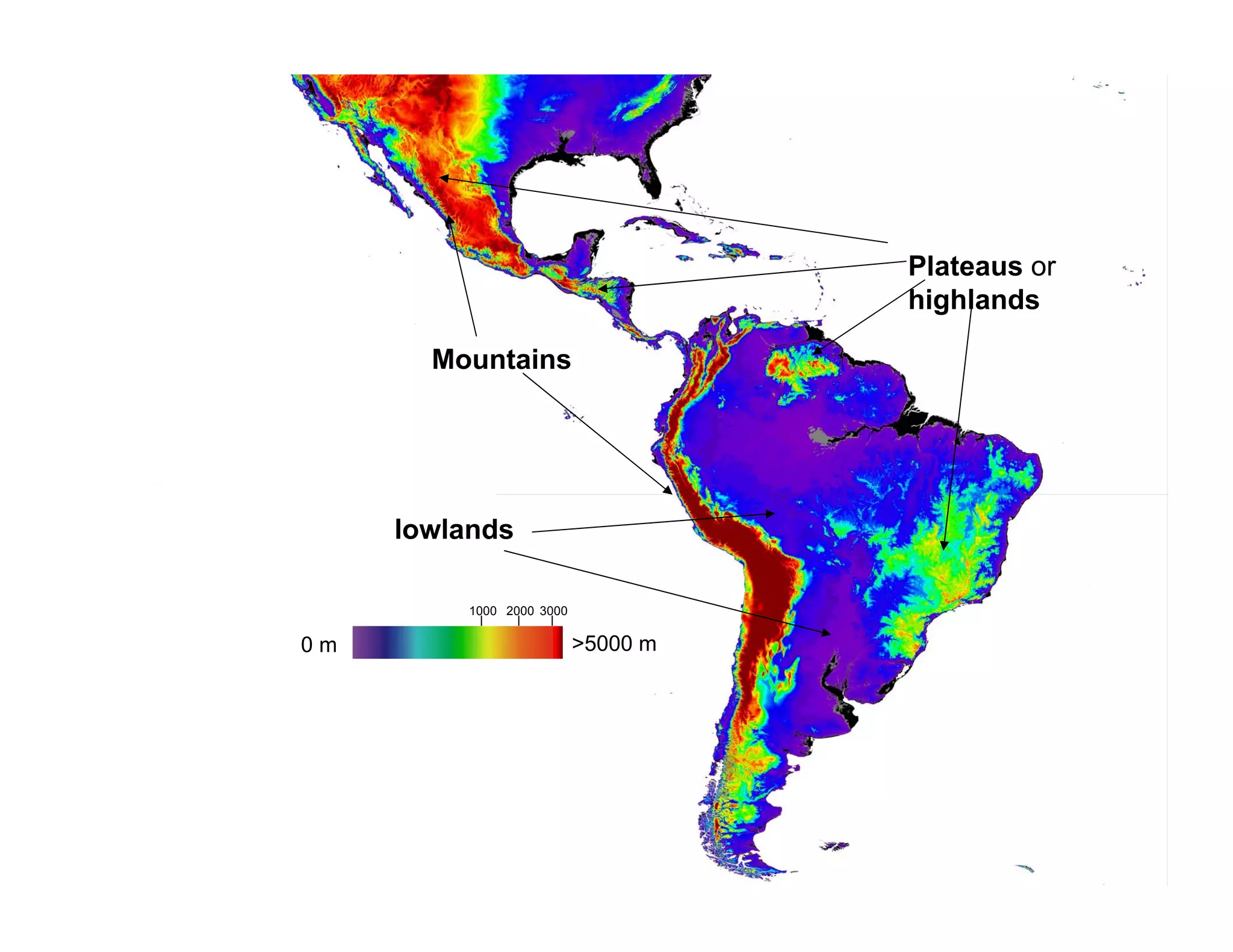
Plateaus or
                                    highlands

       Mountains


     lowlands

         1000 2000 3000

0m                        >5000 m
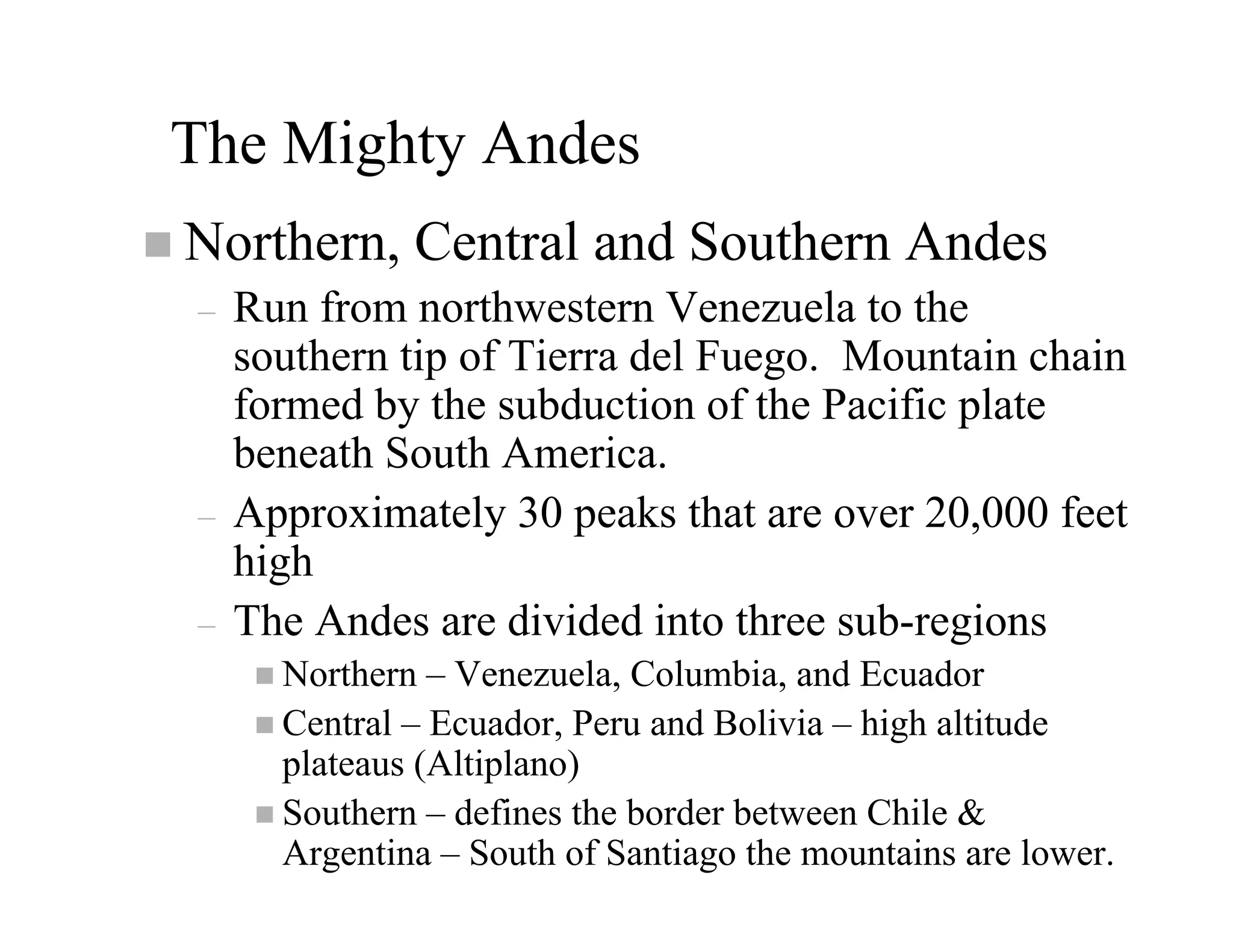
The Mighty Andes
Northern, Central and Southern Andes
–   Run from northwestern Venezuela to the
    southern tip of Tierra del Fuego. Mountain chain
    formed by the subduction of the Pacific plate
    beneath South America.
–   Approximately 30 peaks that are over 20,000 feet
    high
–   The Andes are divided into three sub-regions
      Northern – Venezuela, Columbia, and Ecuador
      Central – Ecuador, Peru and Bolivia – high altitude
      plateaus (Altiplano)
      Southern – defines the border between Chile &
      Argentina – South of Santiago the mountains are lower.
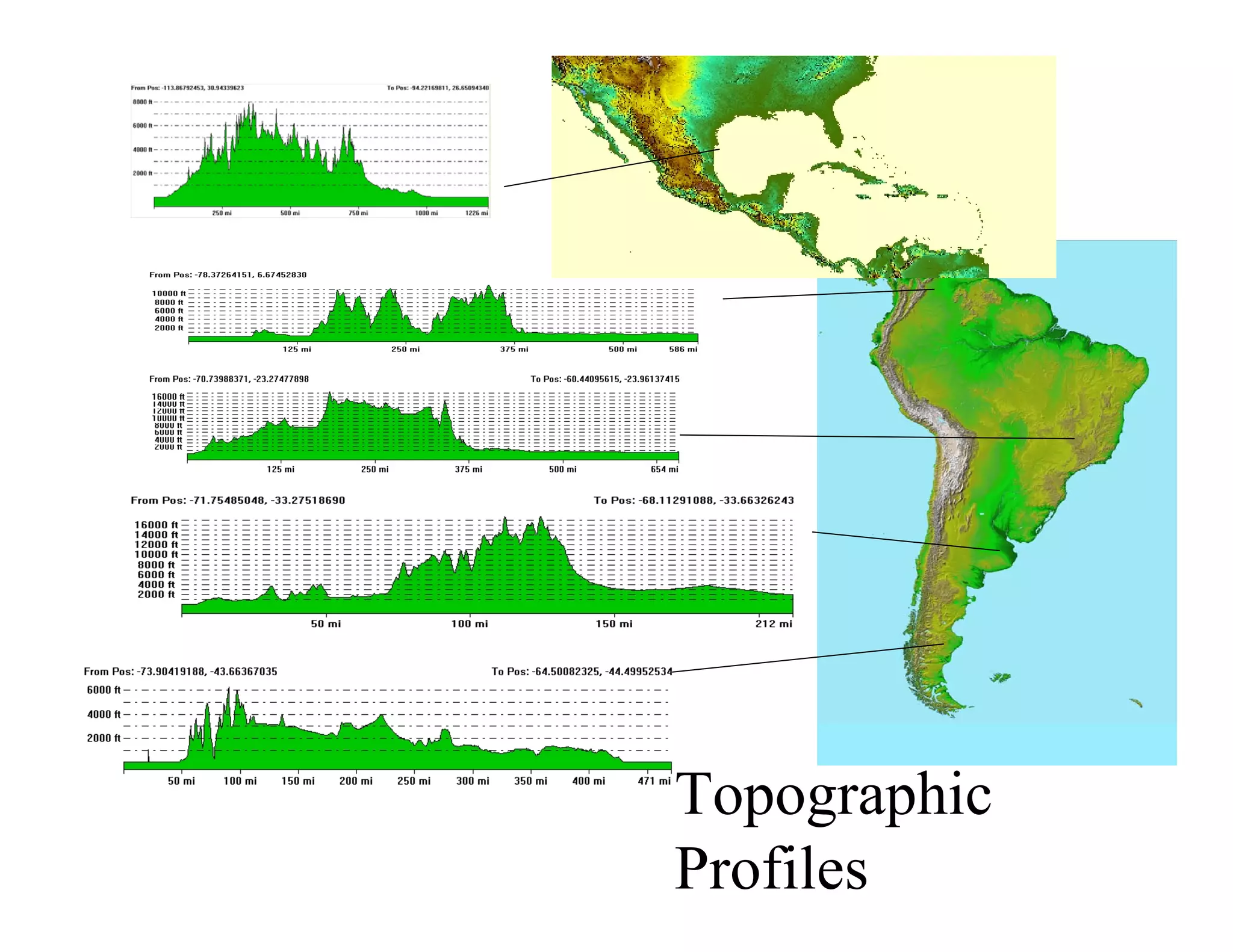
Topographic
Profiles
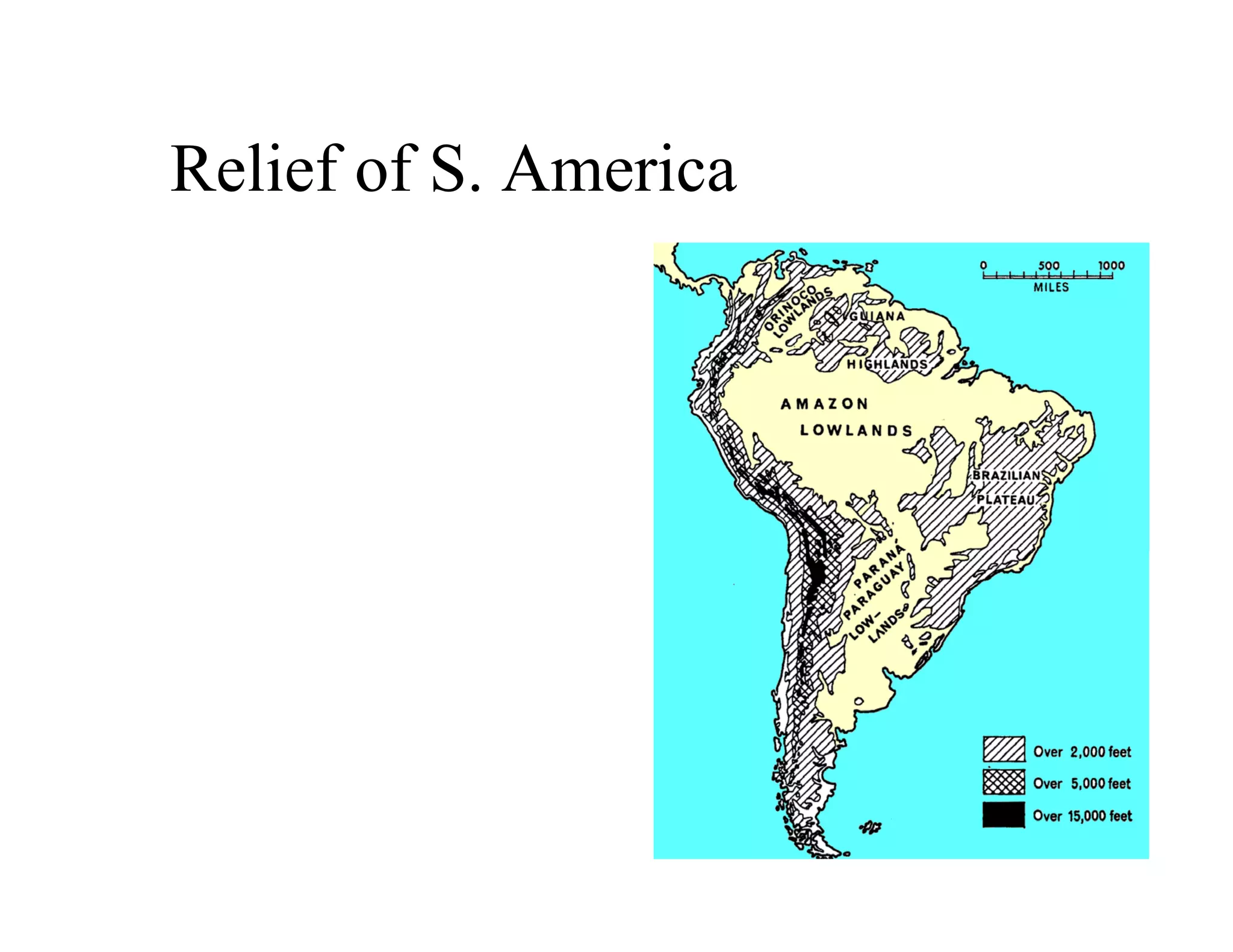
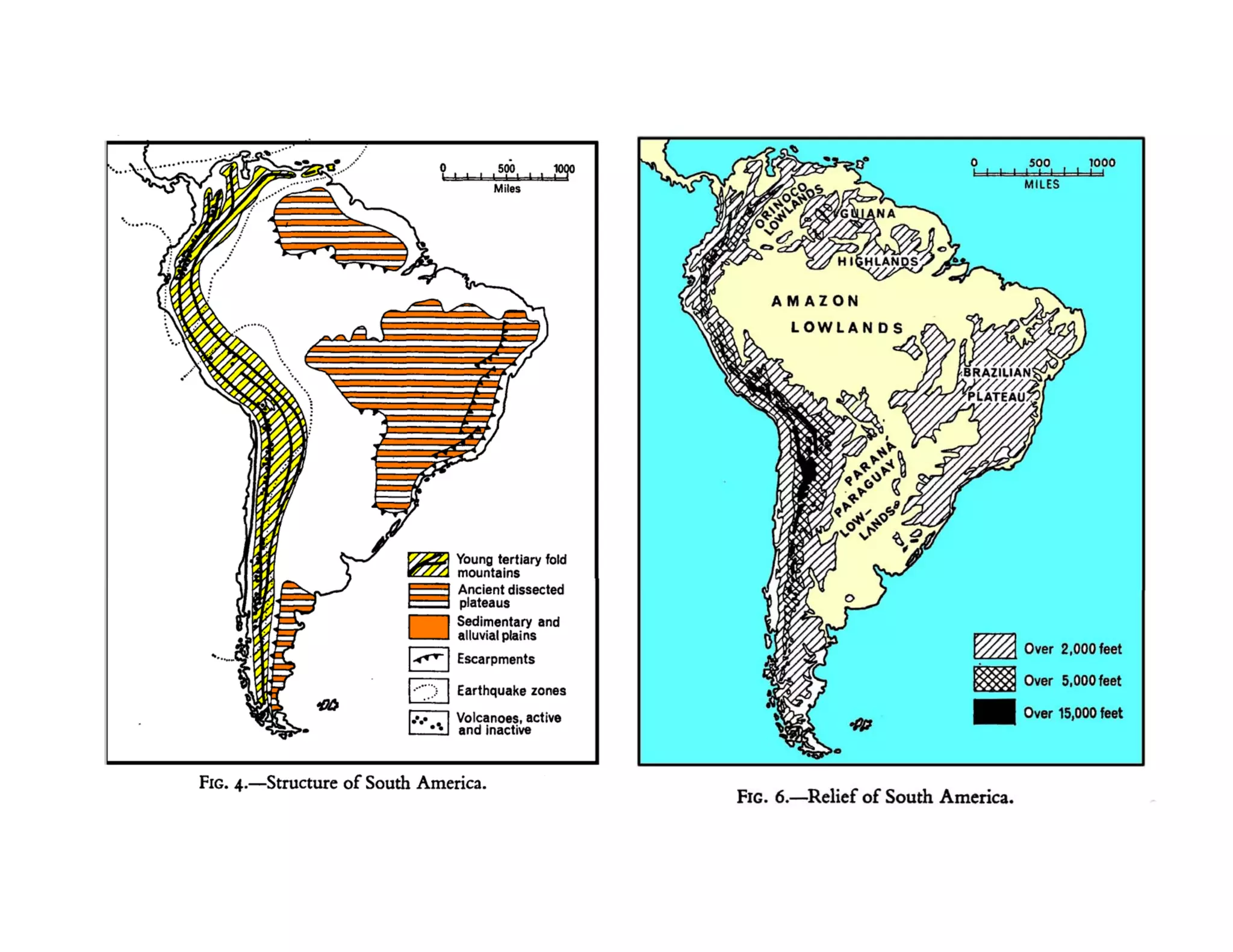
Relief of S. America
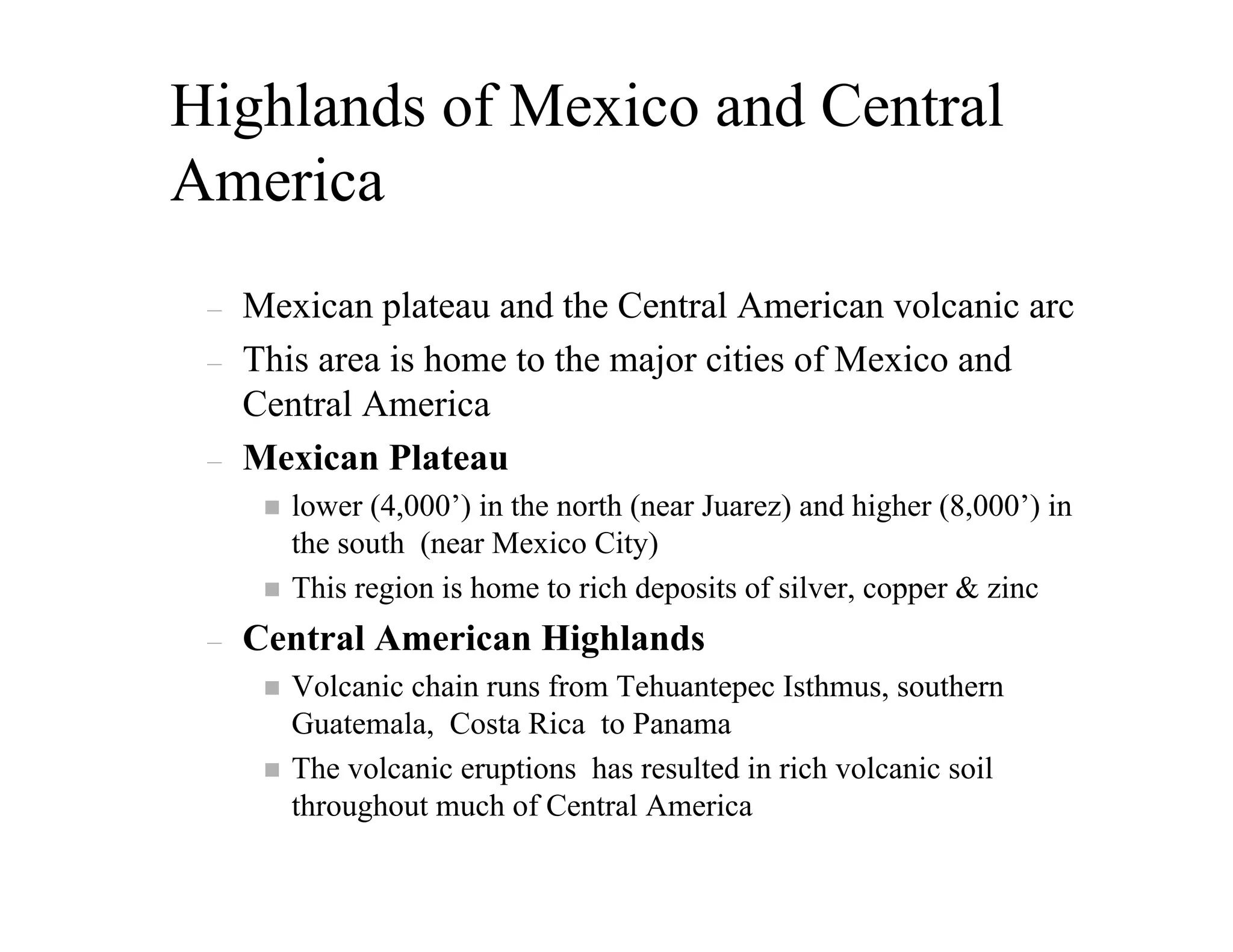
Highlands of Mexico and Central
America
 –   Mexican plateau and the Central American volcanic arc
 –   This area is home to the major cities of Mexico and
     Central America
 –   Mexican Plateau
        lower (4,000’) in the north (near Juarez) and higher (8,000’) in
        the south (near Mexico City)
        This region is home to rich deposits of silver, copper & zinc
 –   Central American Highlands
        Volcanic chain runs from Tehuantepec Isthmus, southern
        Guatemala, Costa Rica to Panama
        The volcanic eruptions has resulted in rich volcanic soil
        throughout much of Central America
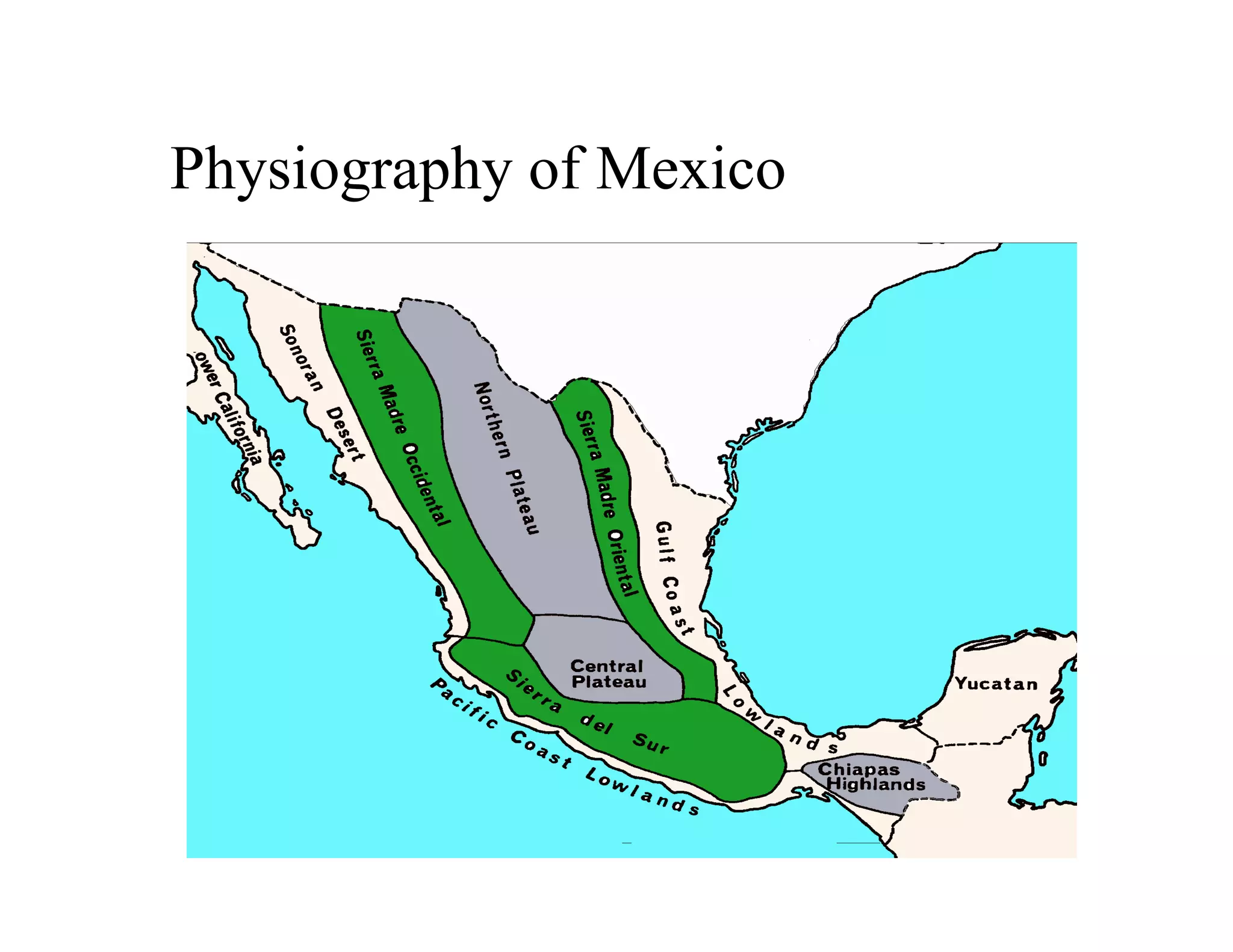
Physiography of Mexico
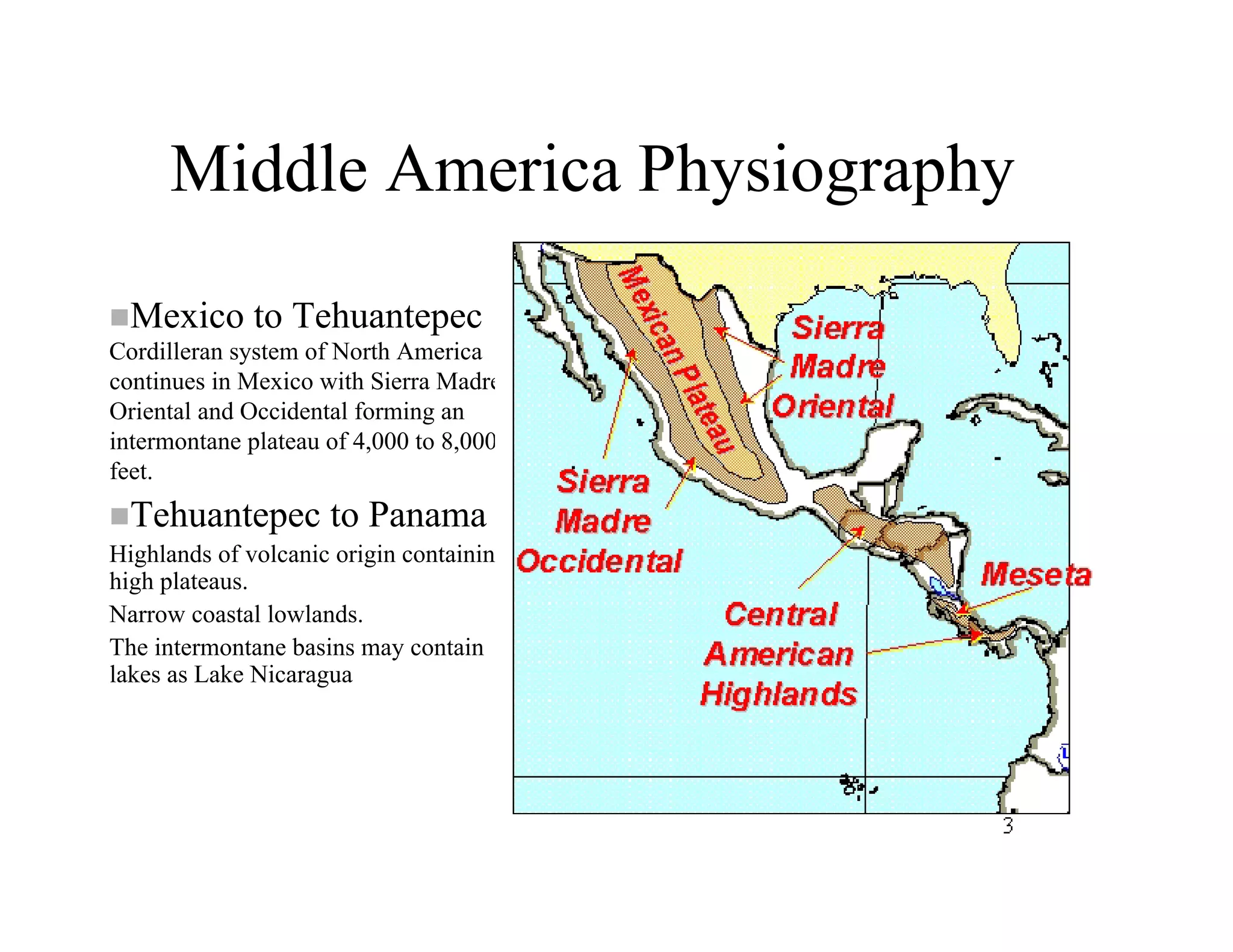
Middle America Physiography
  Mexico to Tehuantepec
Cordilleran system of North America
continues in Mexico with Sierra Madre
Oriental and Occidental forming an
intermontane plateau of 4,000 to 8,000
feet.
  Tehuantepec to Panama
Highlands of volcanic origin containing
high plateaus.
Narrow coastal lowlands.
The intermontane basins may contain
lakes as Lake Nicaragua
Andes Mountains Flyover Video


This computer animation simulates a high-
altitude flight along the Andes.
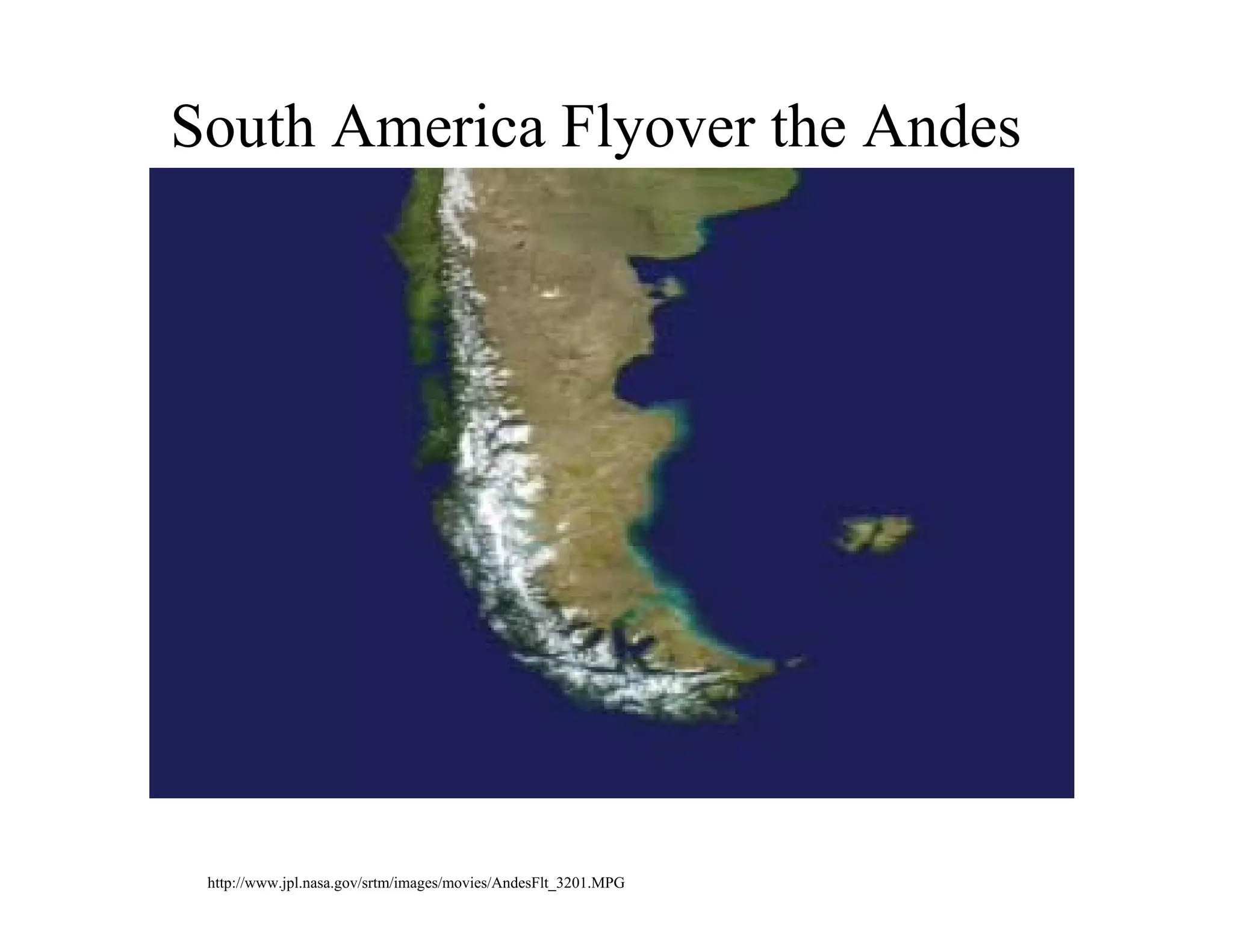
South America Flyover the Andes


 http://www.jpl.nasa.gov/srtm/images/movies/AndesFlt_3201.MPG
Plateaus of South America
   Brazilian Plateau
        Largest and more important in terms of natural resources and
        settlement
        Runs from the southern edge of the Amazon Basin to the Rio
        de la Plata
        Major population centers of Brazil are located along the coastal
        fringe of the Brazilian plateau.
  Patagonian Plateau
        Much of this area is steppe (dry grasslands)
  Guiana Plateau
        A sparsely settled region
River Basins and Lowlands
   Within the major river basins there
   are vast interior lowlands
   Most of these lowlands are sparsely
   settled and offer little agricultural
   activity, with the exception of
   grazing livestock
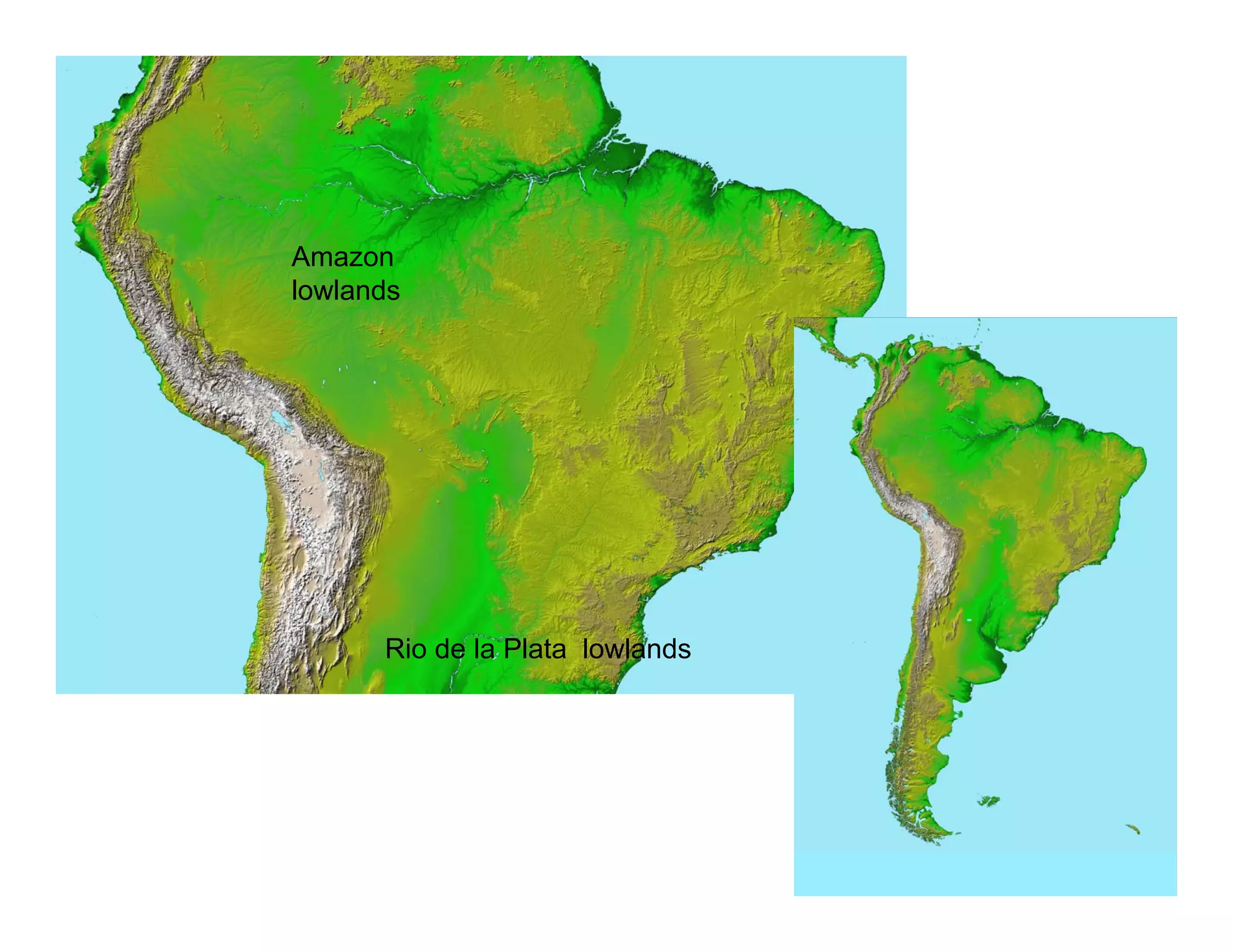
Amazon
lowlands


      Rio de la Plata lowlands
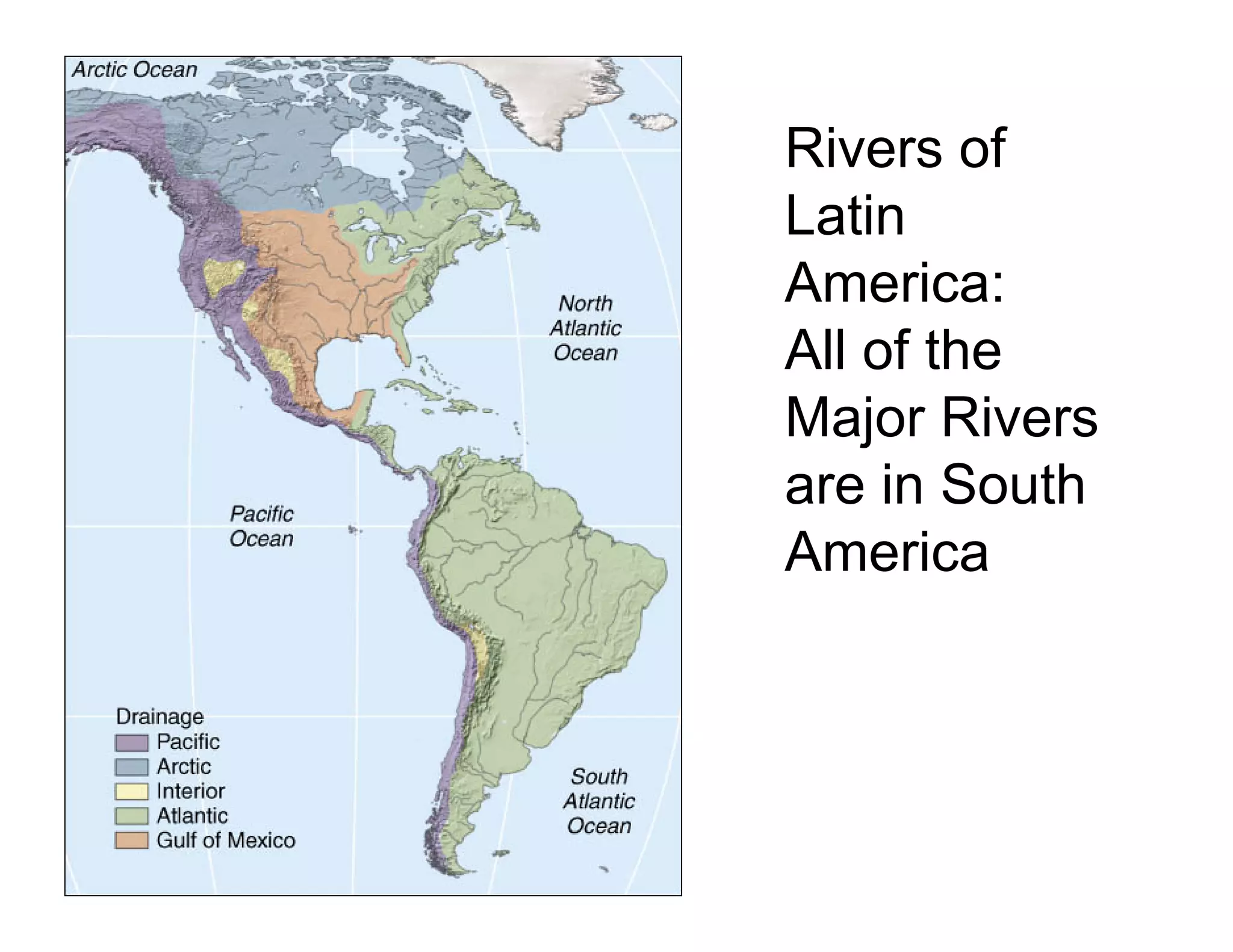
Rivers of
Latin
America:
All of the
Major Rivers
are in South
America
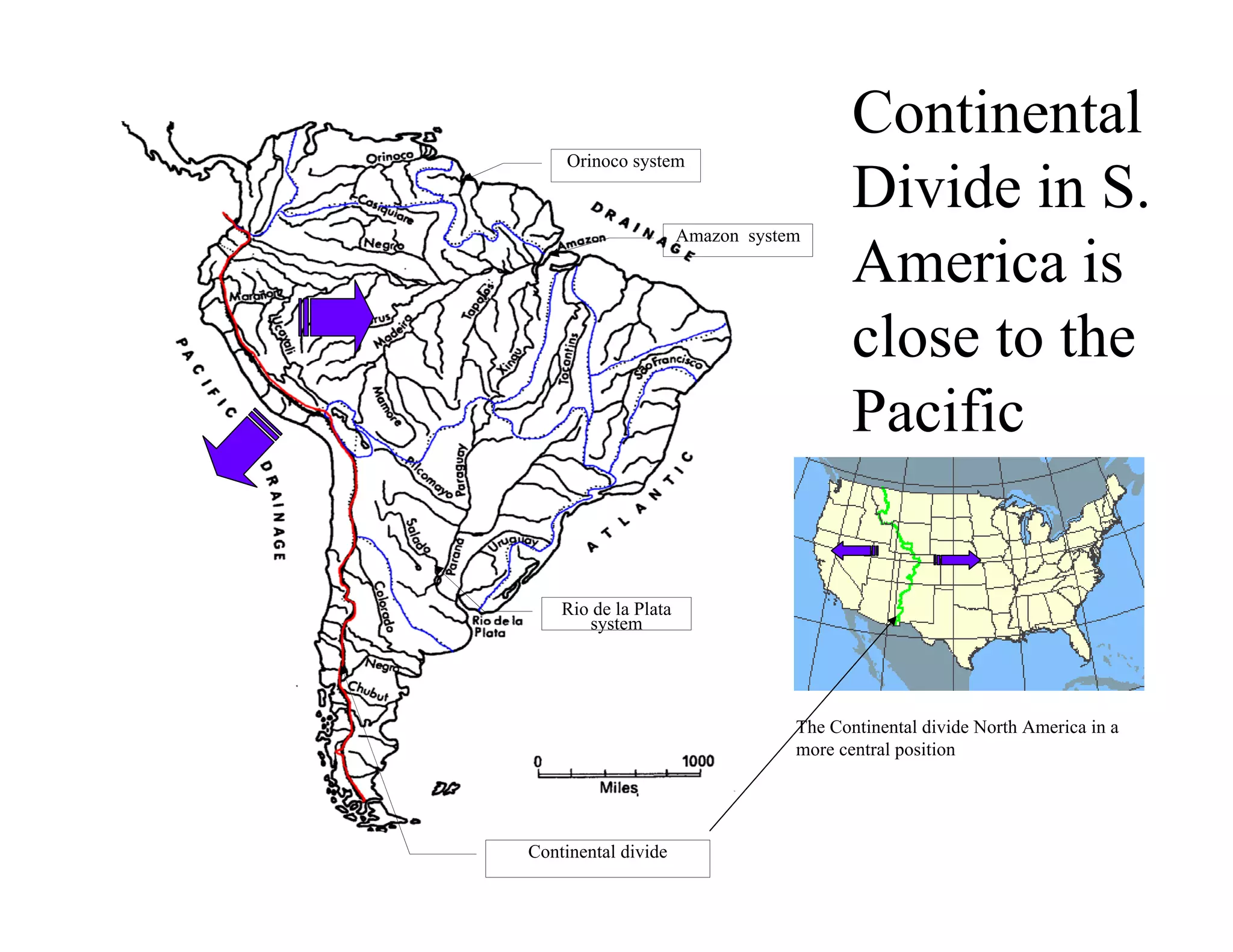
Continental
     Orinoco system

                                         Divide in S.
                      Amazon system

                                         America is
                                         close to the
                                         Pacific

    Rio de la Plata
       system


                                  The Continental divide North America in a
                                  more central position


Continental divide
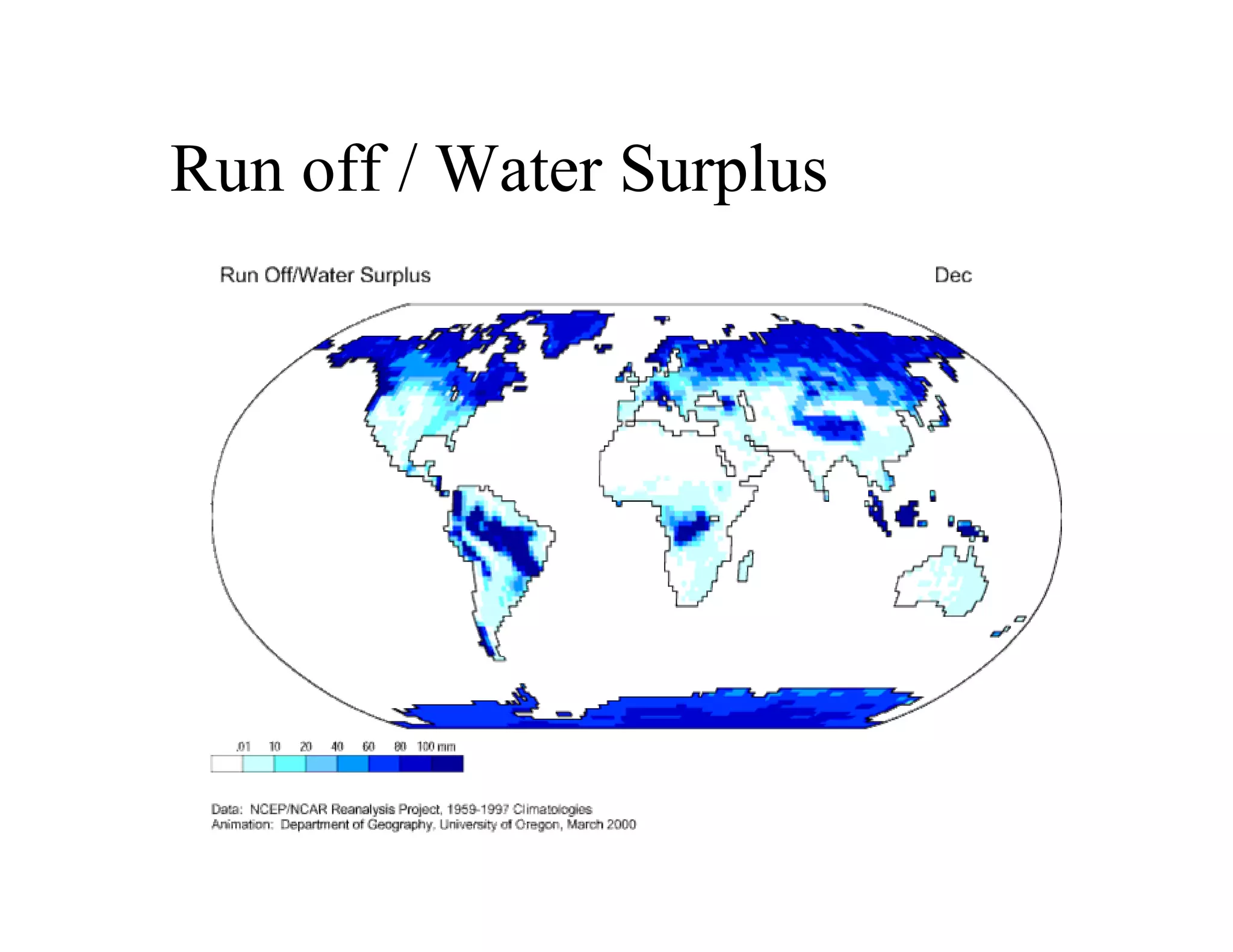
Run off / Water Surplus
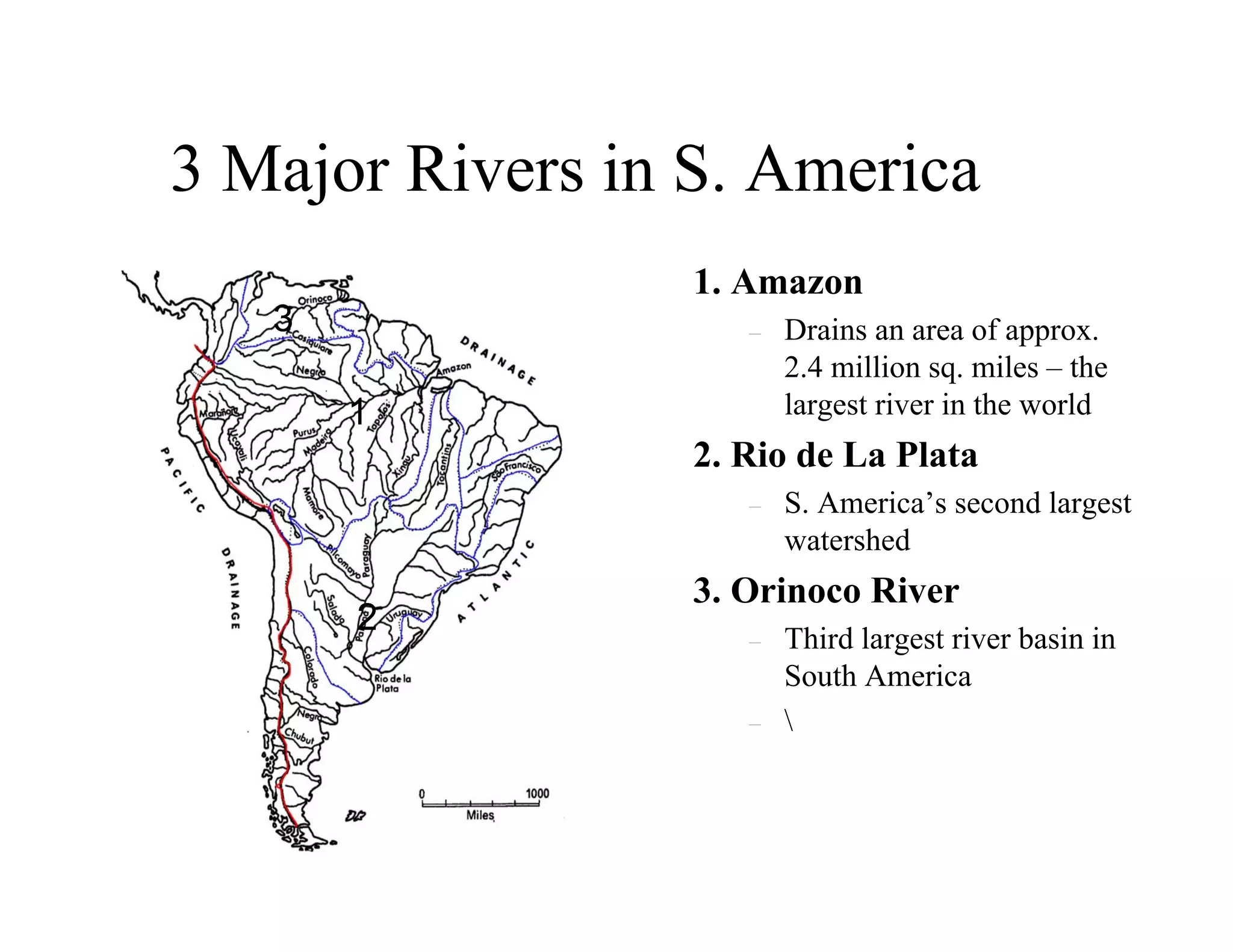
3 Major Rivers in S. America
                  1. Amazon
   3                 –   Drains an area of approx.
                         2.4 million sq. miles – the
       1                 largest river in the world
                  2. Rio de La Plata
                     –   S. America’s second largest
                         watershed
                  3. Orinoco River
       2             –   Third largest river basin in
                         South America
                     –
Natural Resources
 Because of its tropical location, there is a high
 degree of biodiversity in the region
 –   Many varieties of plants and animals found nowhere
     else on earth
 –   The region is home to the world’s largest rain forest
 There are also massive reserves of natural
 resources
 –   natural gas and oil (South America as well as Mexico)
 –   copper (Chile), silver (Mexico and Peru), Iron (Brazil).

Lecture 3 physiography, geography and climate of l.a

  • 1.
    Physiography, Geography and Climate of Latin America (Lecture 3)
  • 2.
    Natural Landmarks inLatin America World's longest and second highest mountain range, and the world's highest active volcanoes. Biggest river in the world. World's driest desert. World's largest rainforest, and is the world's greatest storehouse of species World's greatest reserve of potential agricultural land. It is a great storehouse of minerals, with enormous potential production.
  • 3.
    Landscape of Contrast: Patagonia: lakes, penguins, continental ice
  • 4.
  • 5.
    Pico de Orizaba(Volcano Citlaltépetl), México's highest peak and North America's highest volcano.
  • 6.
  • 7.
    Rainforest canopy, andAmazon River Continuous Fields Tree Cover Project
  • 8.
    Climate Most ofLatin America is located in the tropics – Land located between the Tropic of Cancer (23.5o N) and the Tropic of Capricorn (23.5o S) – In the tropics there is not much seasonal variation in temperature; seasonal differences are manifested in rainfall variations.
  • 9.
    Dallas USA 100 25 80 20 Temperature (F) Precipitation (in) 60 40 15 The Tropical 20 10 Climate: Little 0 5 variation in annual -20 J F M A M J J A S O N D 0 temperature Annual Precip: 34.6 in. Max Temp. Ave. Temp. Ave. Precip. Rowntree, Lewis, and Price. Diversity and Globalization: World Regions, Environment, Development, 2nd edition (2002).
  • 10.
    Air temperature –yearly changes
  • 11.
  • 12.
    Altitudinal Zonation – Muchof the temperature variation in the tropics is seen with changes in elevation rather than changes in latitude As elevation increases, temperature decreases at an average rate of 3.5oF/1,000 ft. Five climate zones: Caliente (hot), Templada (warm), Fria (cold), Helada (frozen), and Paramos.
  • 13.
    0 – 499m 500 – 999 m Tierra Caliente “Hot Land” below 900 meters - 3,000’ in elevation, coastal plains and foothills Hot days, warm nights Tropical agricultural products – sugar cane, tropical fruits (bananas), & lowland tubers
  • 14.
    0 – 499m 500 – 999 m 1000 – 1999 m Tierra Templada Cloud Forest Nicaragua, coffee plantation –Temperate Land 900 m (3,000’)– 1800m (6,000’) in elevation, intermediate mountain slopes Mild days and cool nights Most populous zone Agricultural products include – Coffee, maize, vegetables, cut flowers.
  • 15.
    0 – 499m 500 – 999 m 1000 – 1999 m 2000 – 2999 m Tierra Fria Potato harvest, Bolivia “Cold Land” 1800m (6,000’) – 3600m (12,000’) in elevation, mountainous areas More common in South America Warm days and cold nights Wheat, barley, maize, tubers (Peruvian Andes), sheep, guinea pigs, Llama, Alpaca (hardier or highland crops and animals
  • 16.
    0 – 499m 500 – 999 m 1000 – 1999 m 2000 – 2999 m 3000 – 3999 m Tierra Helada 4000 – 4999 m –“Frozen Land” Above 3600m (12,000’) in elevation, highest mountain peaks Cool days and cold nights Highland grains and tubers, sheep, guinea pigs, Llama, Alpaca
  • 17.
    0 – 499m 500 – 999 m 1000 – 1999 m 2000 – 2999 m 3000 – 3999 m Paramos 4000 – 4999 m 5000 – 5999 m – Above 4600 m (15,000’) in elevation, highest mountain peaks Just below snow line characterized by tussock grasses, shrubs and cushion plants
  • 18.
    Glaciers and theSnowline: LA has glaciers near the equator Latin America
  • 19.
    Physical Geography Latin Americaand the Caribbean can be divided in three topographic zones: Lowlands ( less than 500 meters) Highlands (500-2000 meters) – Plateaus: flat top highland regions Mountain (greater than 2000 meters)
  • 20.
    Plateaus or highlands Mountains lowlands 1000 2000 3000 0m >5000 m
  • 21.
    The Mighty Andes Northern,Central and Southern Andes – Run from northwestern Venezuela to the southern tip of Tierra del Fuego. Mountain chain formed by the subduction of the Pacific plate beneath South America. – Approximately 30 peaks that are over 20,000 feet high – The Andes are divided into three sub-regions Northern – Venezuela, Columbia, and Ecuador Central – Ecuador, Peru and Bolivia – high altitude plateaus (Altiplano) Southern – defines the border between Chile & Argentina – South of Santiago the mountains are lower.
  • 22.
  • 23.
    Relief of S.America
  • 24.
    Highlands of Mexicoand Central America – Mexican plateau and the Central American volcanic arc – This area is home to the major cities of Mexico and Central America – Mexican Plateau lower (4,000’) in the north (near Juarez) and higher (8,000’) in the south (near Mexico City) This region is home to rich deposits of silver, copper & zinc – Central American Highlands Volcanic chain runs from Tehuantepec Isthmus, southern Guatemala, Costa Rica to Panama The volcanic eruptions has resulted in rich volcanic soil throughout much of Central America
  • 25.
  • 26.
    Middle America Physiography Mexico to Tehuantepec Cordilleran system of North America continues in Mexico with Sierra Madre Oriental and Occidental forming an intermontane plateau of 4,000 to 8,000 feet. Tehuantepec to Panama Highlands of volcanic origin containing high plateaus. Narrow coastal lowlands. The intermontane basins may contain lakes as Lake Nicaragua
  • 27.
    Andes Mountains FlyoverVideo This computer animation simulates a high- altitude flight along the Andes.
  • 28.
    South America Flyoverthe Andes http://www.jpl.nasa.gov/srtm/images/movies/AndesFlt_3201.MPG
  • 29.
    Plateaus of SouthAmerica Brazilian Plateau Largest and more important in terms of natural resources and settlement Runs from the southern edge of the Amazon Basin to the Rio de la Plata Major population centers of Brazil are located along the coastal fringe of the Brazilian plateau. Patagonian Plateau Much of this area is steppe (dry grasslands) Guiana Plateau A sparsely settled region
  • 31.
    River Basins andLowlands Within the major river basins there are vast interior lowlands Most of these lowlands are sparsely settled and offer little agricultural activity, with the exception of grazing livestock
  • 32.
    Amazon lowlands Rio de la Plata lowlands
  • 33.
    Rivers of Latin America: All ofthe Major Rivers are in South America
  • 34.
    Continental Orinoco system Divide in S. Amazon system America is close to the Pacific Rio de la Plata system The Continental divide North America in a more central position Continental divide
  • 35.
    Run off /Water Surplus
  • 36.
    3 Major Riversin S. America 1. Amazon 3 – Drains an area of approx. 2.4 million sq. miles – the 1 largest river in the world 2. Rio de La Plata – S. America’s second largest watershed 3. Orinoco River 2 – Third largest river basin in South America –
  • 37.
    Natural Resources Becauseof its tropical location, there is a high degree of biodiversity in the region – Many varieties of plants and animals found nowhere else on earth – The region is home to the world’s largest rain forest There are also massive reserves of natural resources – natural gas and oil (South America as well as Mexico) – copper (Chile), silver (Mexico and Peru), Iron (Brazil).