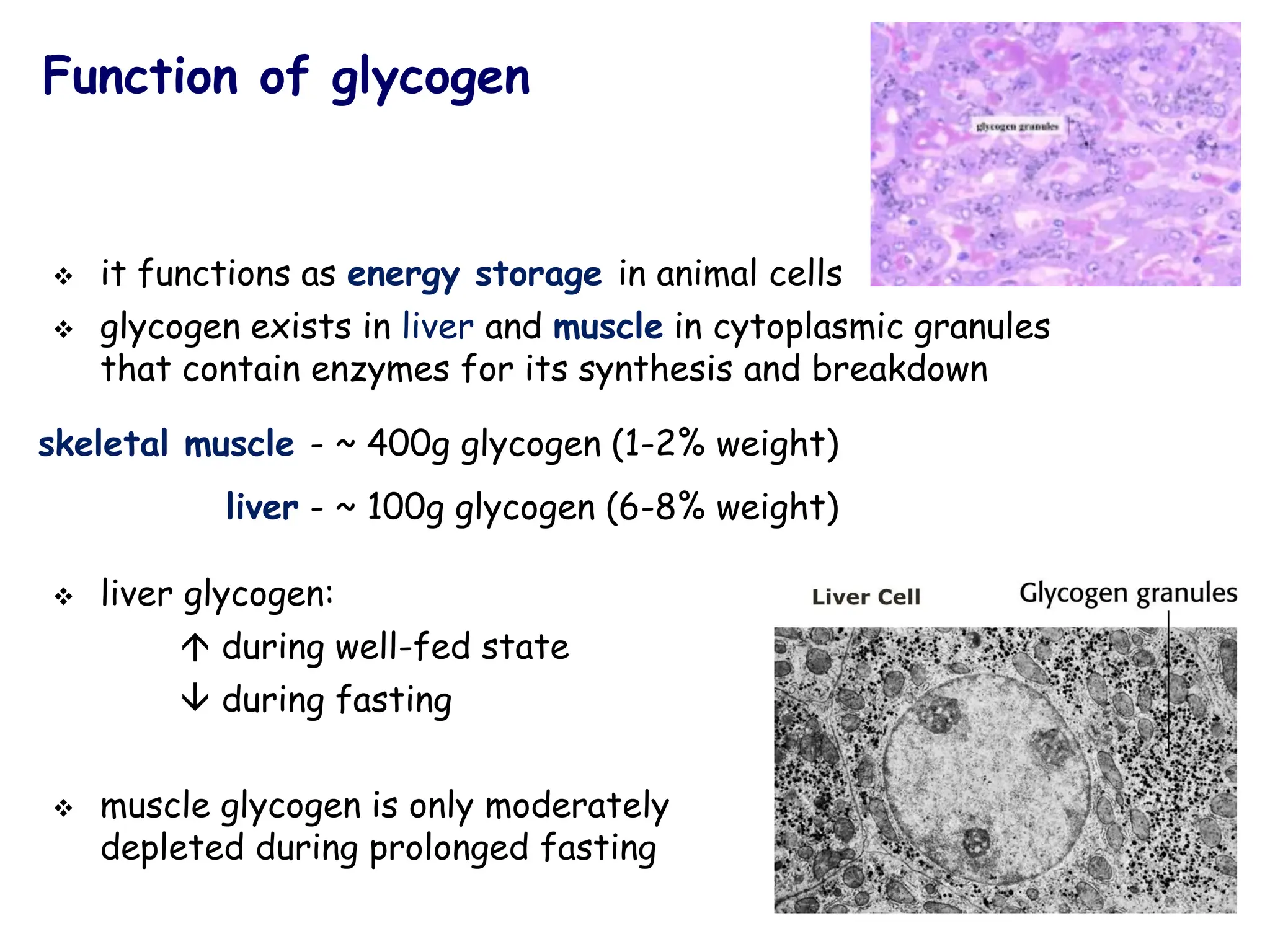
Function of glycogen
❖it functions as energy storage in animal cells
❖ glycogen exists in liver and muscle in cytoplasmic granules
that contain enzymes for its synthesis and breakdown
skeletal muscle - ~ 400g glycogen (1-2% weight)
liver - ~ 100g glycogen (6-8% weight)
❖ liver glycogen:
during well-fed state
during fasting
❖ muscle glycogen is only moderately
depleted during prolonged fasting
Glycogenogenesis
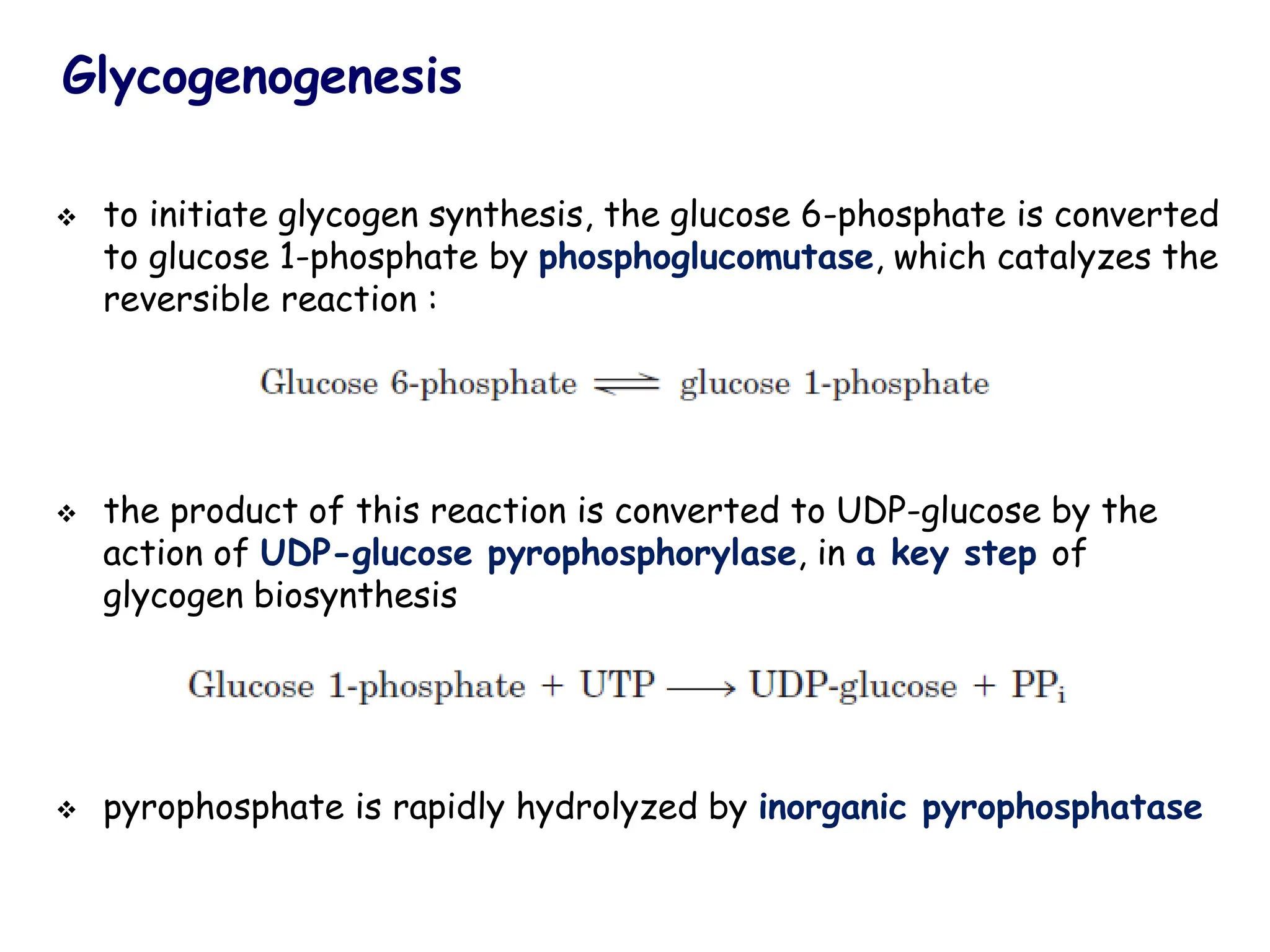
❖ to initiateglycogen synthesis, the glucose 6-phosphate is converted
to glucose 1-phosphate by phosphoglucomutase, which catalyzes the
reversible reaction :
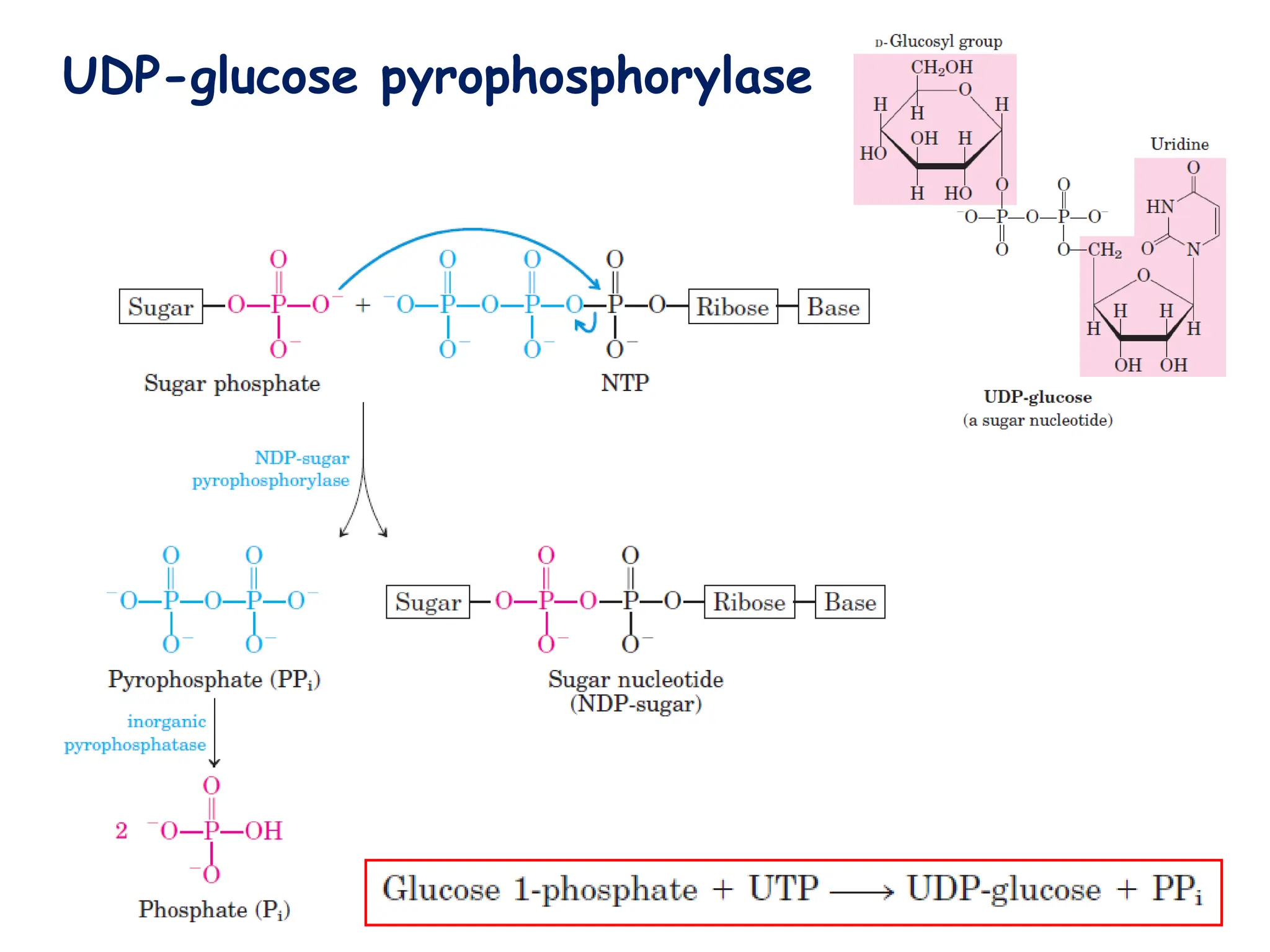
❖ the product of this reaction is converted to UDP-glucose by the
action of UDP-glucose pyrophosphorylase, in a key step of
glycogen biosynthesis
❖ pyrophosphate is rapidly hydrolyzed by inorganic pyrophosphatase
Synthesis of branchesin glycogen
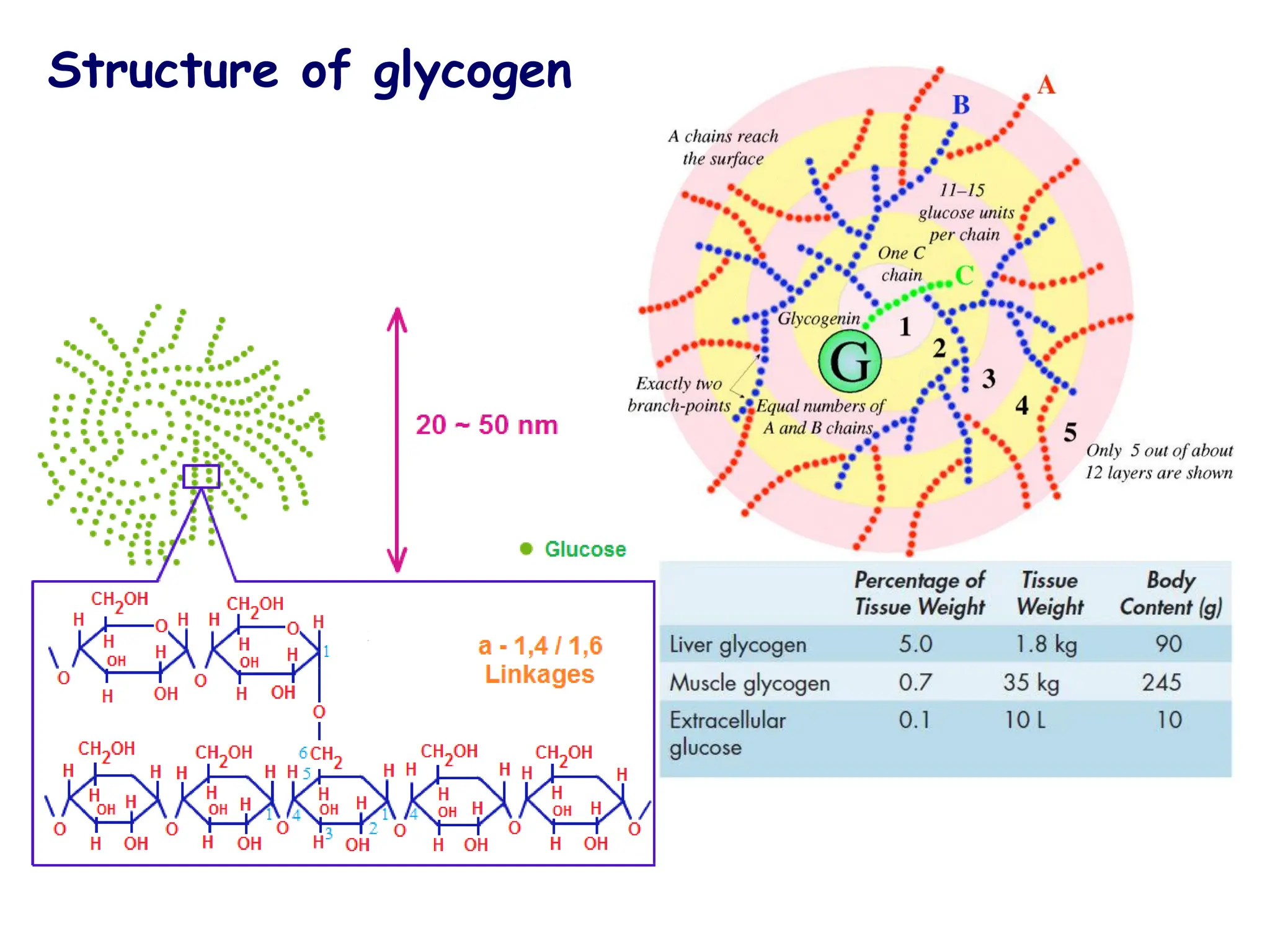
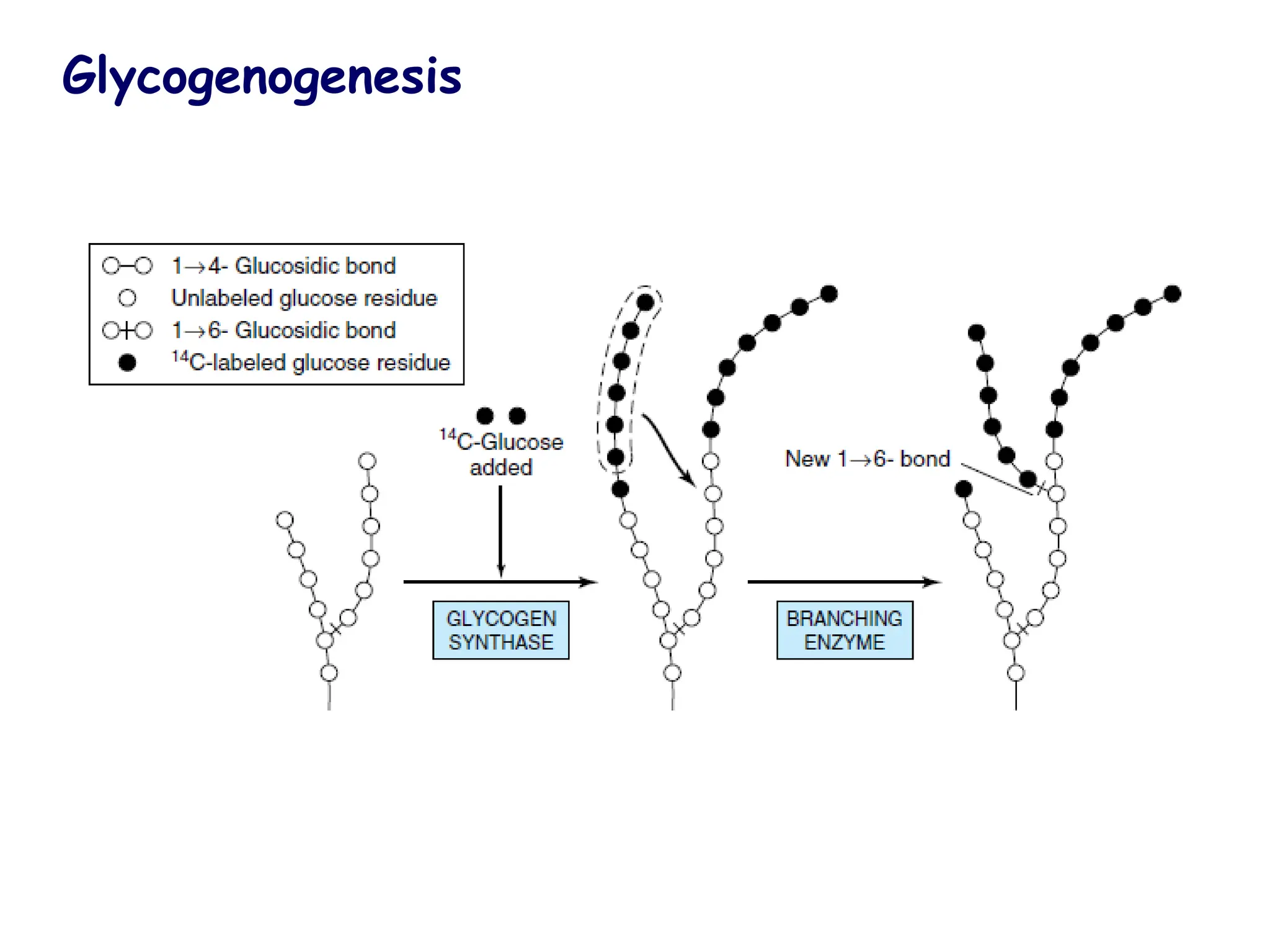
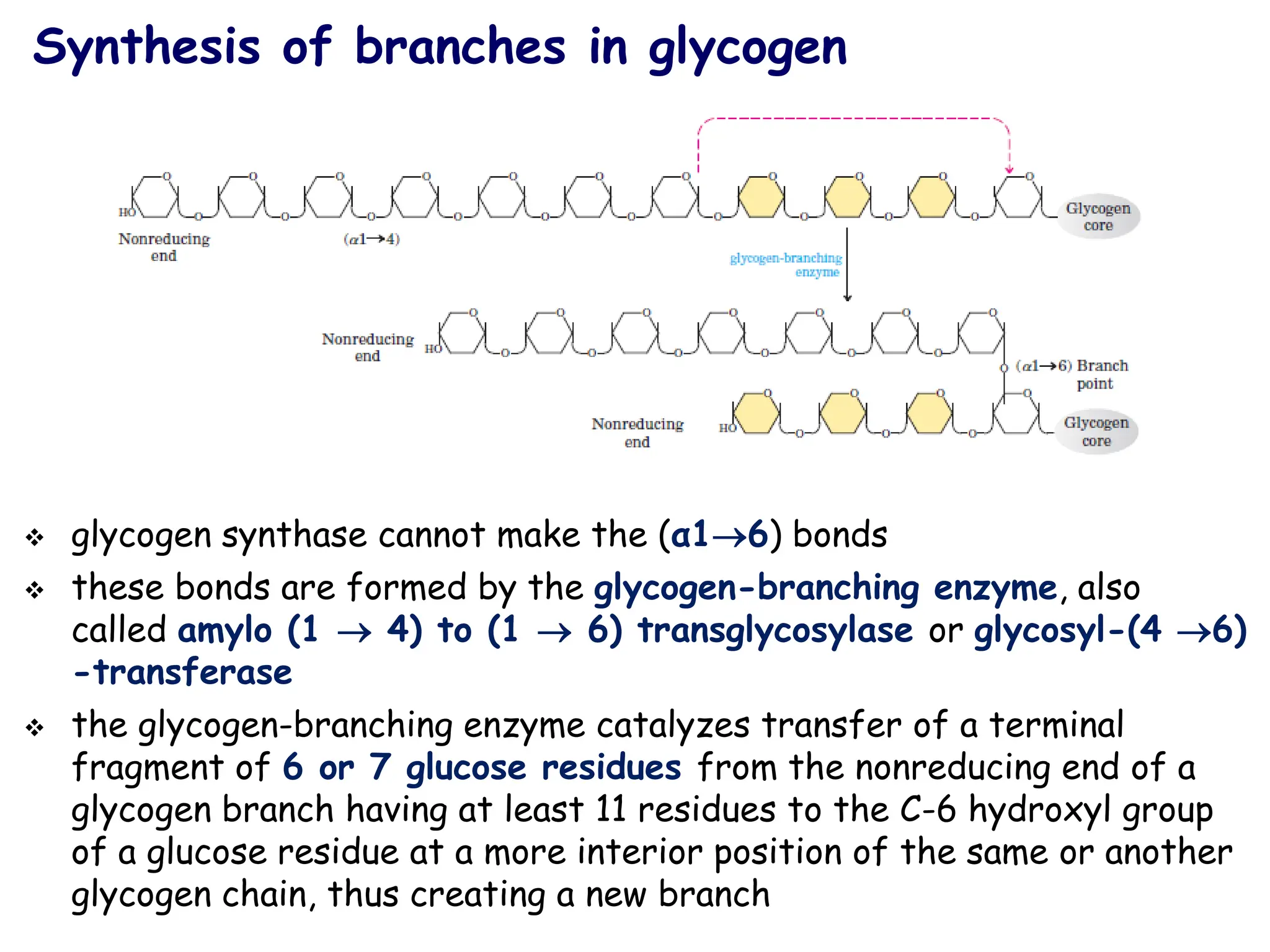
❖ glycogen synthase cannot make the (α1→6) bonds
❖ these bonds are formed by the glycogen-branching enzyme, also
called amylo (1 → 4) to (1 → 6) transglycosylase or glycosyl-(4 →6)
-transferase
❖ the glycogen-branching enzyme catalyzes transfer of a terminal
fragment of 6 or 7 glucose residues from the nonreducing end of a
glycogen branch having at least 11 residues to the C-6 hydroxyl group
of a glucose residue at a more interior position of the same or another
glycogen chain, thus creating a new branch
9.
Role of branching
inglycogen
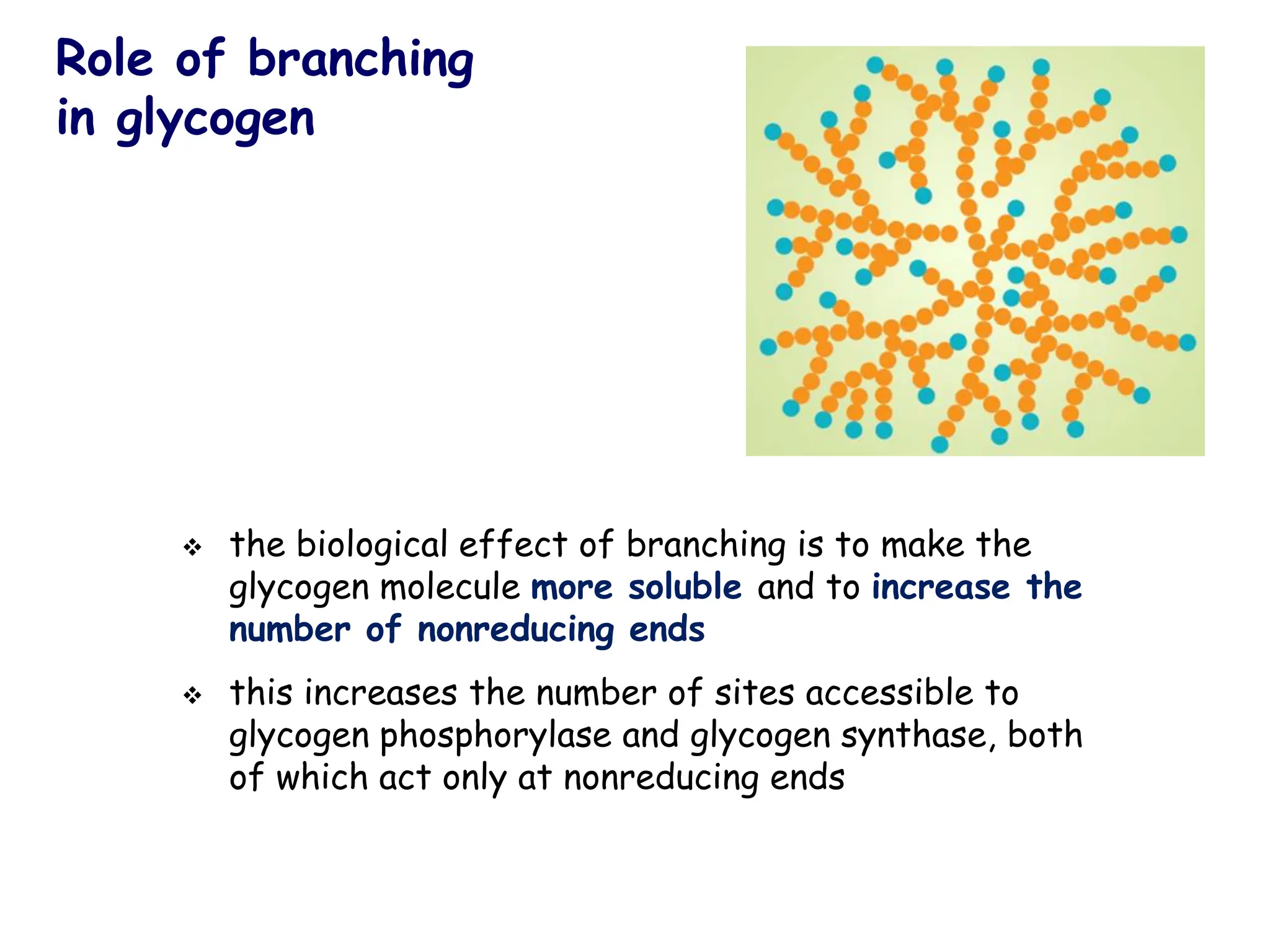
❖ the biological effect of branching is to make the
glycogen molecule more soluble and to increase the
number of nonreducing ends
❖ this increases the number of sites accessible to
glycogen phosphorylase and glycogen synthase, both
of which act only at nonreducing ends
10.
Role of glycogeninin glycogen synthesis
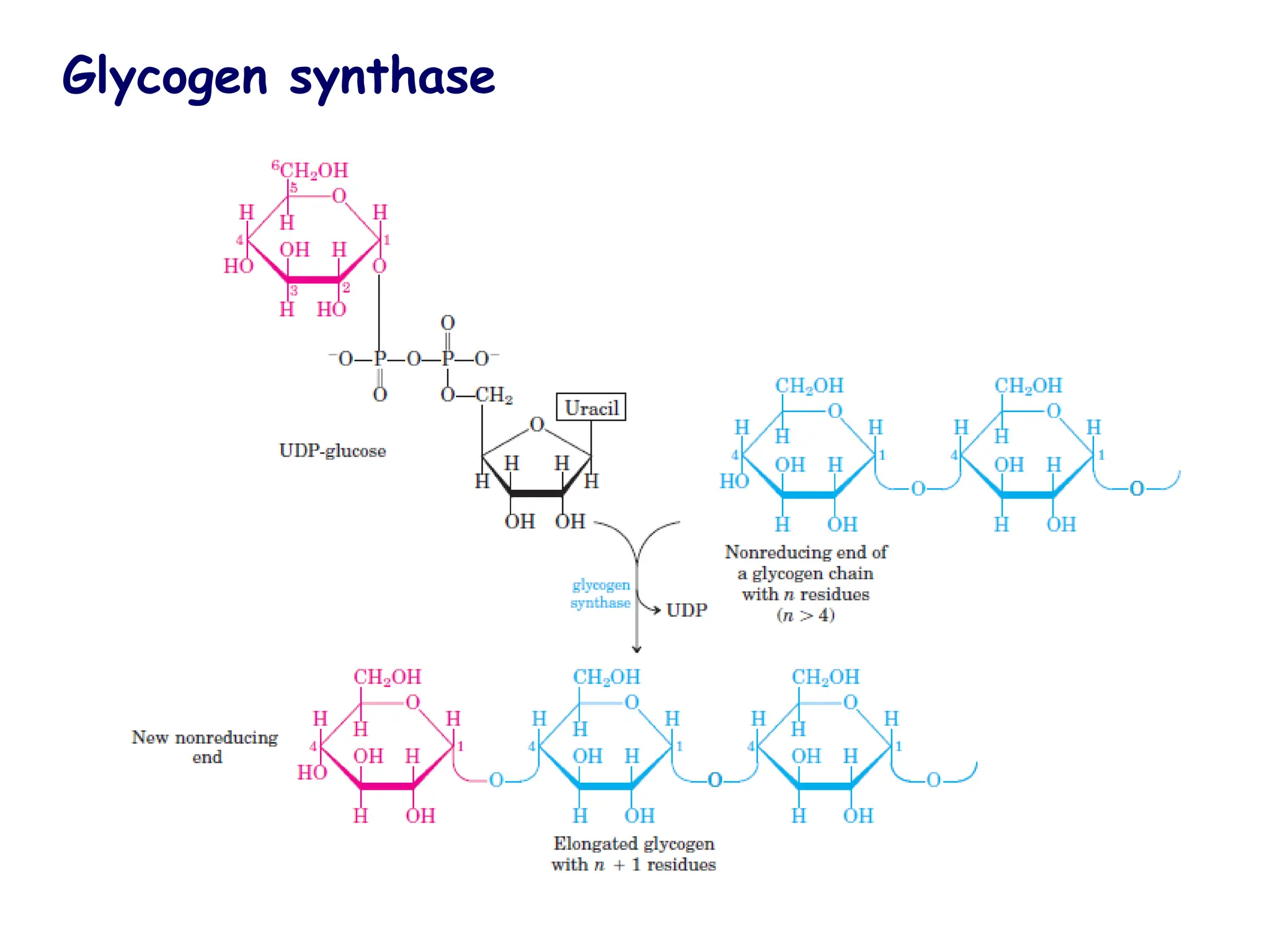
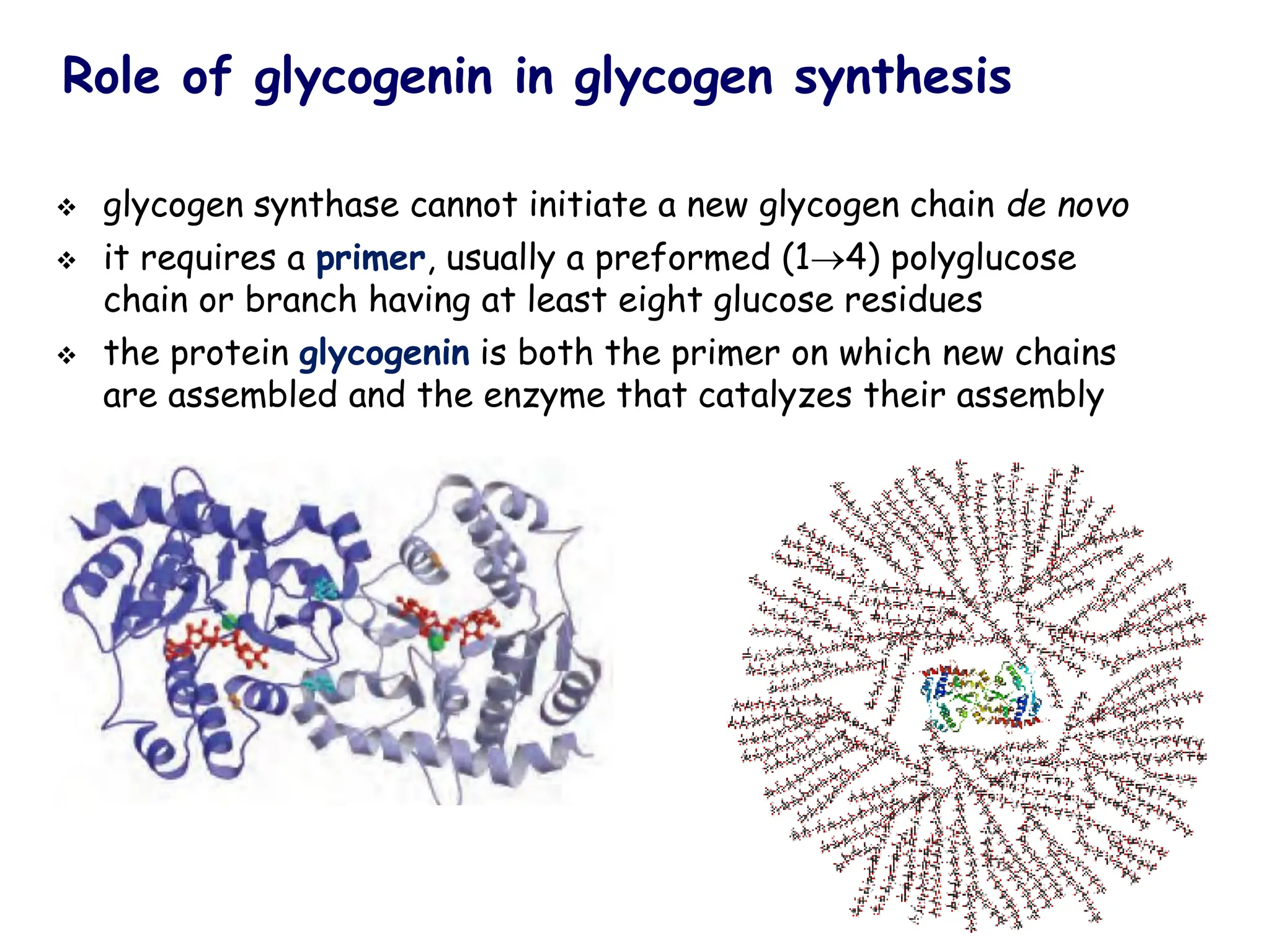
❖ glycogen synthase cannot initiate a new glycogen chain de novo
❖ it requires a primer, usually a preformed (1→4) polyglucose
chain or branch having at least eight glucose residues
❖ the protein glycogenin is both the primer on which new chains
are assembled and the enzyme that catalyzes their assembly
11.
Role of glycogeninin glycogen synthesis
❖ the first step in the synthesis of a new glycogen molecule is the
transfer of a glucose residue from UDP-glucose to the hydroxyl
group of Tyr194 of glycogenin, catalyzed by the protein’s
intrinsic glucosyltransferase activity
❖ the nascent chain is extended by the sequential addition of
seven more glucose residues, each derived from UDP-glucose
❖ the reactions are catalyzed by the chain-extending activity of
glycogenin
❖ then (when 8-glucose residue chain is ready), glycogen synthase
takes over, further extending the glycogen chain
❖ glycogenin remains buried within the particle, covalently
attached to the single reducing end of the glycogen molecule
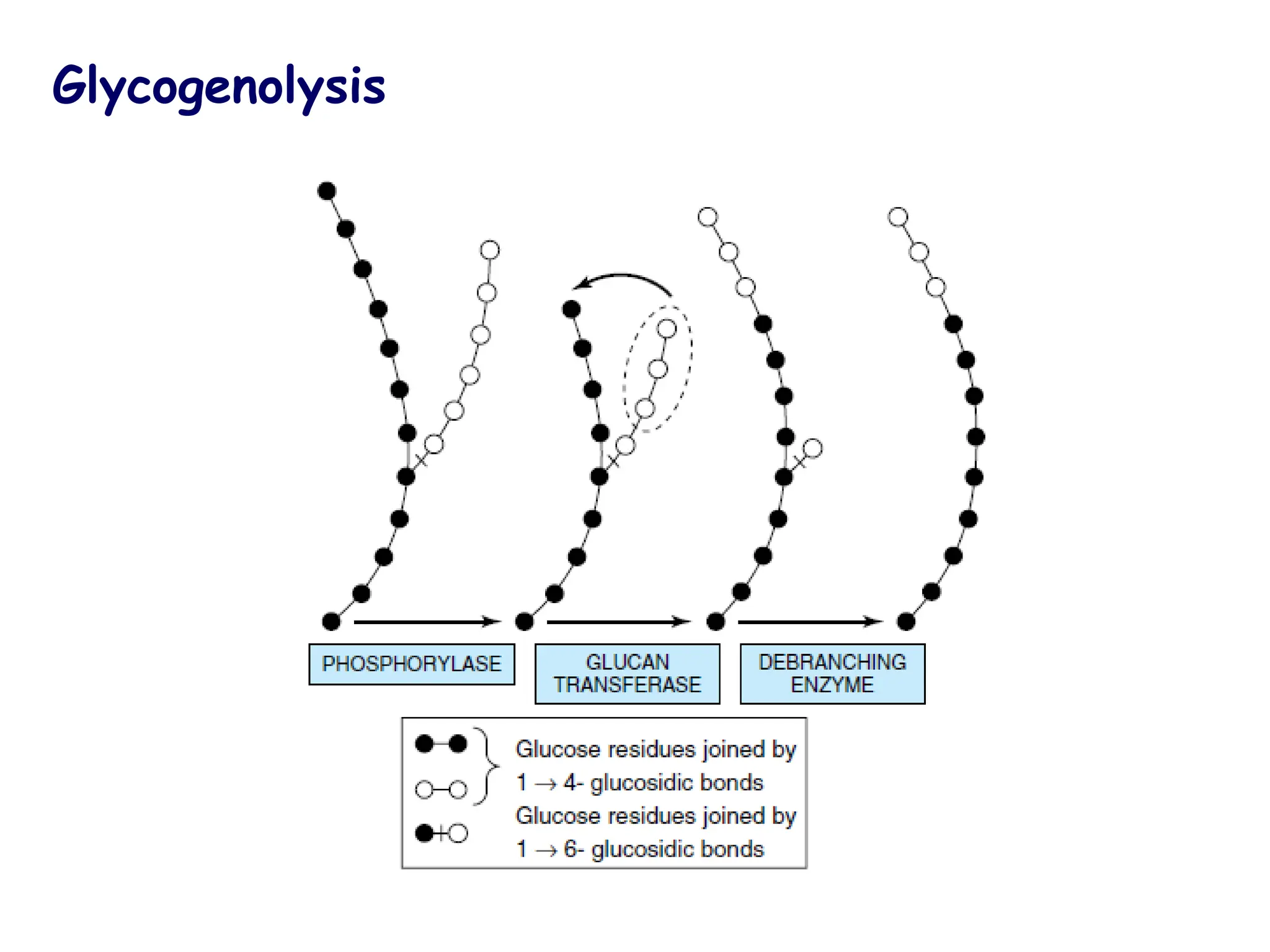
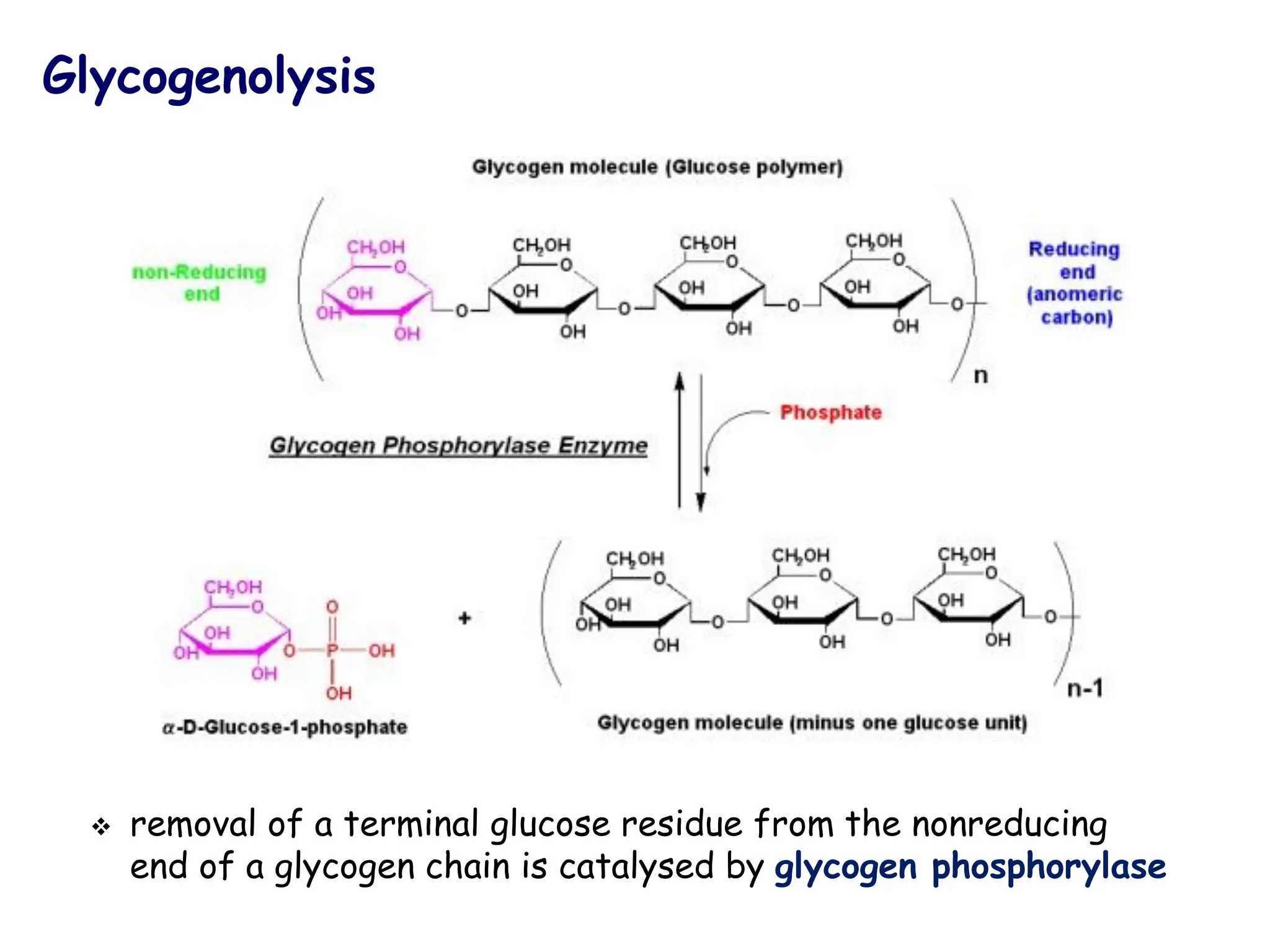
Glycogenolysis
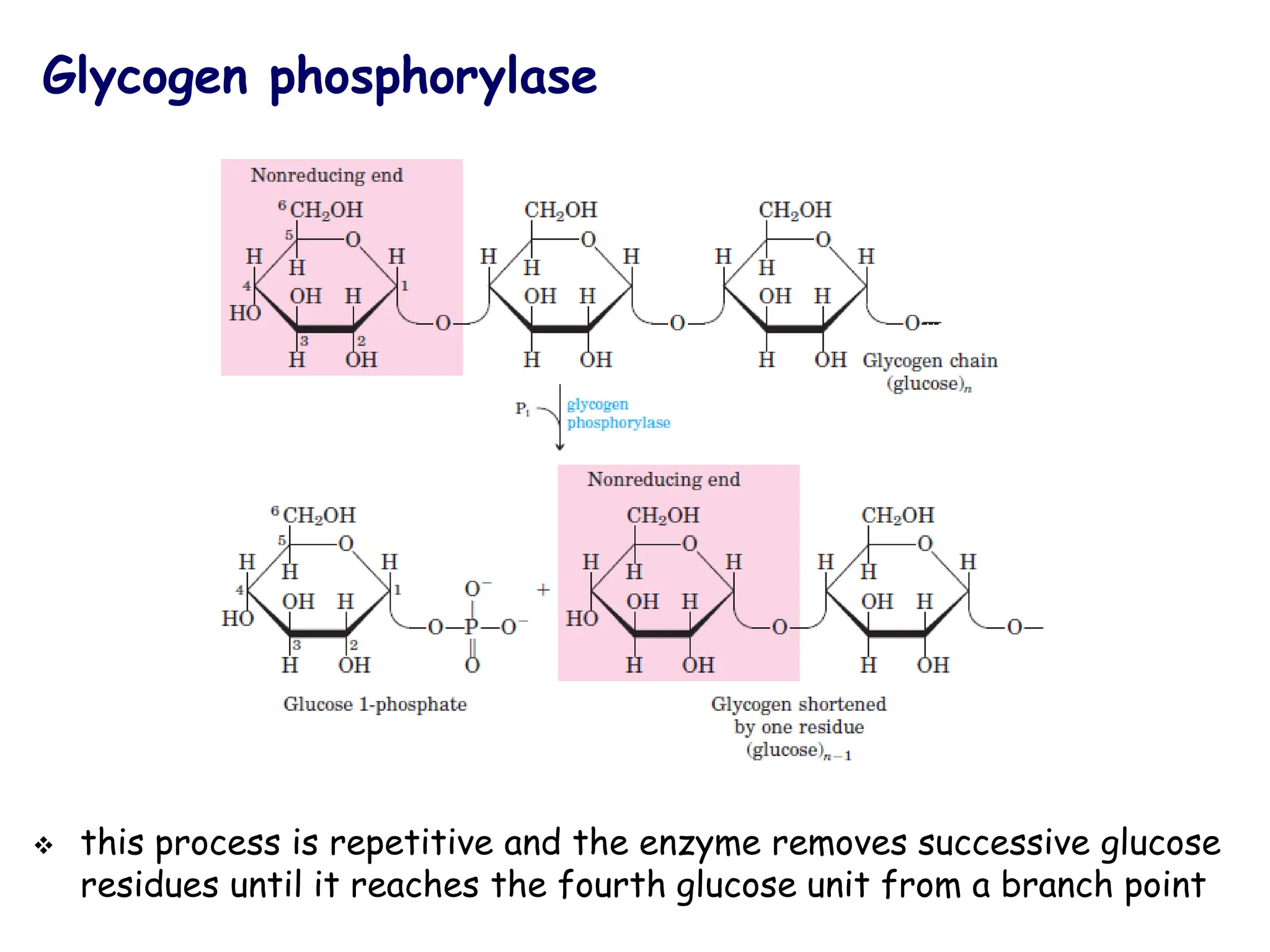
❖ removal ofa terminal glucose residue from the nonreducing
end of a glycogen chain is catalysed by glycogen phosphorylase
14.
Glycogen phosphorylase
❖ thisprocess is repetitive and the enzyme removes successive glucose
residues until it reaches the fourth glucose unit from a branch point
Phosphoglucomutase
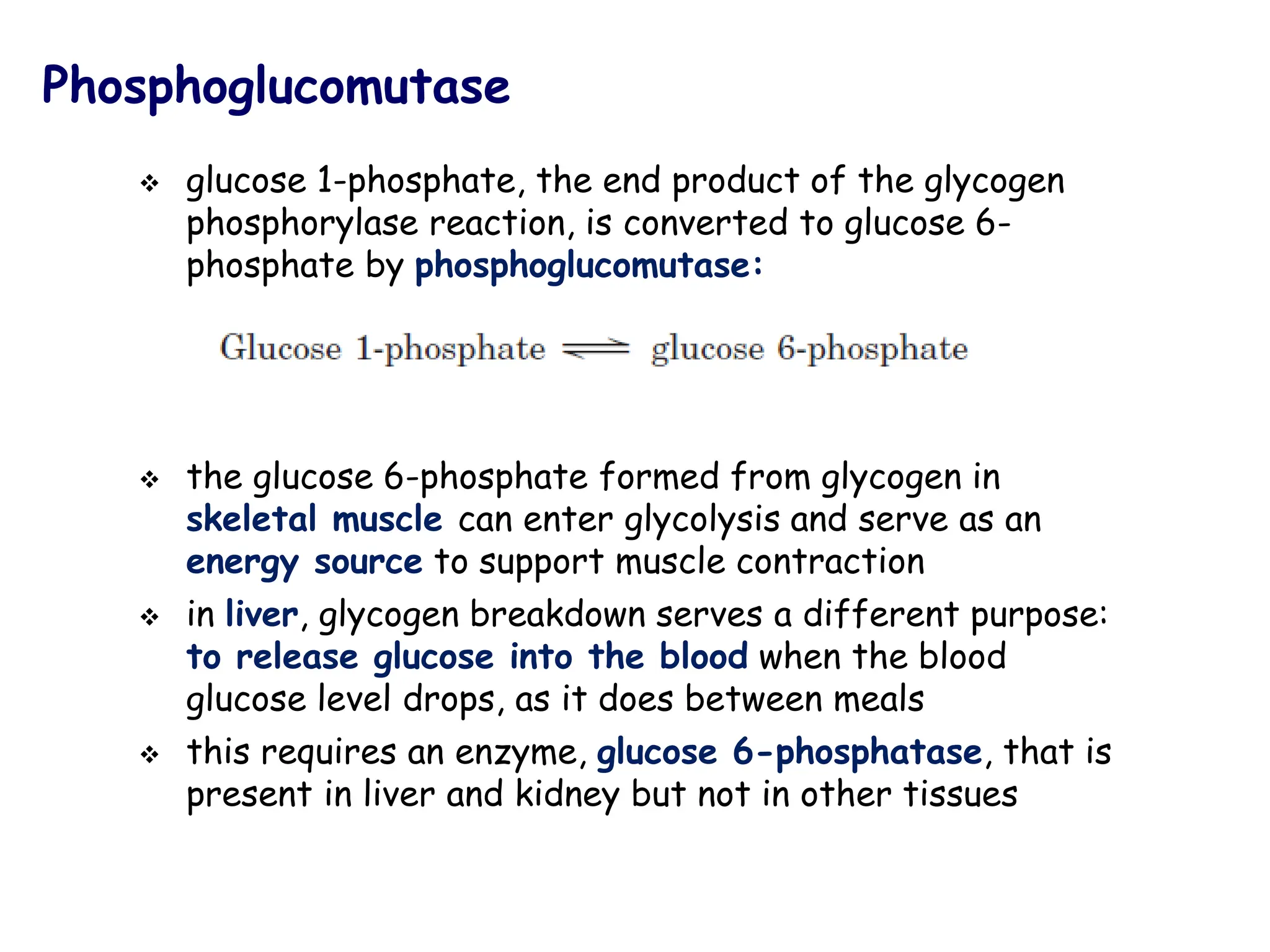
❖ glucose 1-phosphate,the end product of the glycogen
phosphorylase reaction, is converted to glucose 6-
phosphate by phosphoglucomutase:
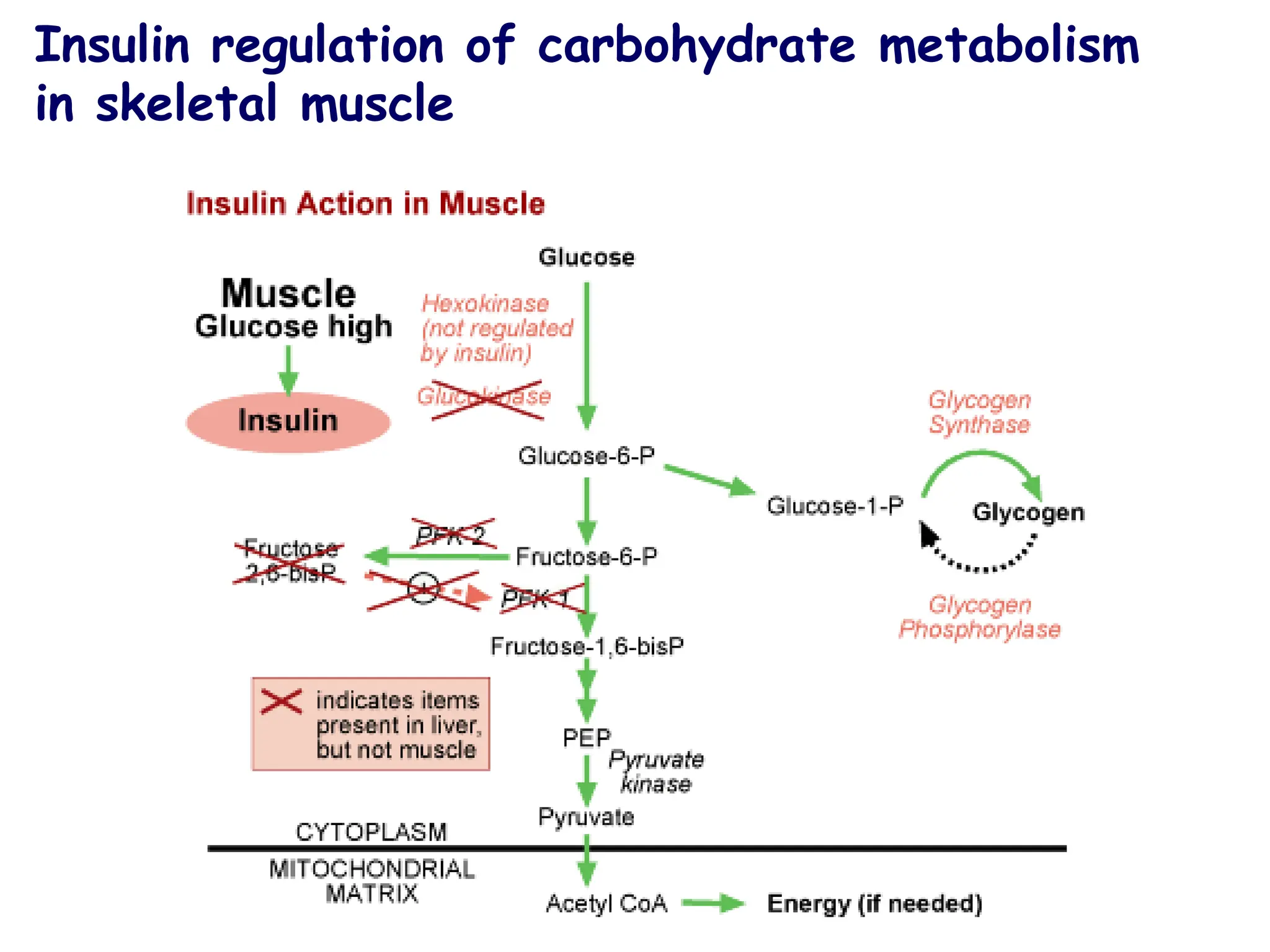
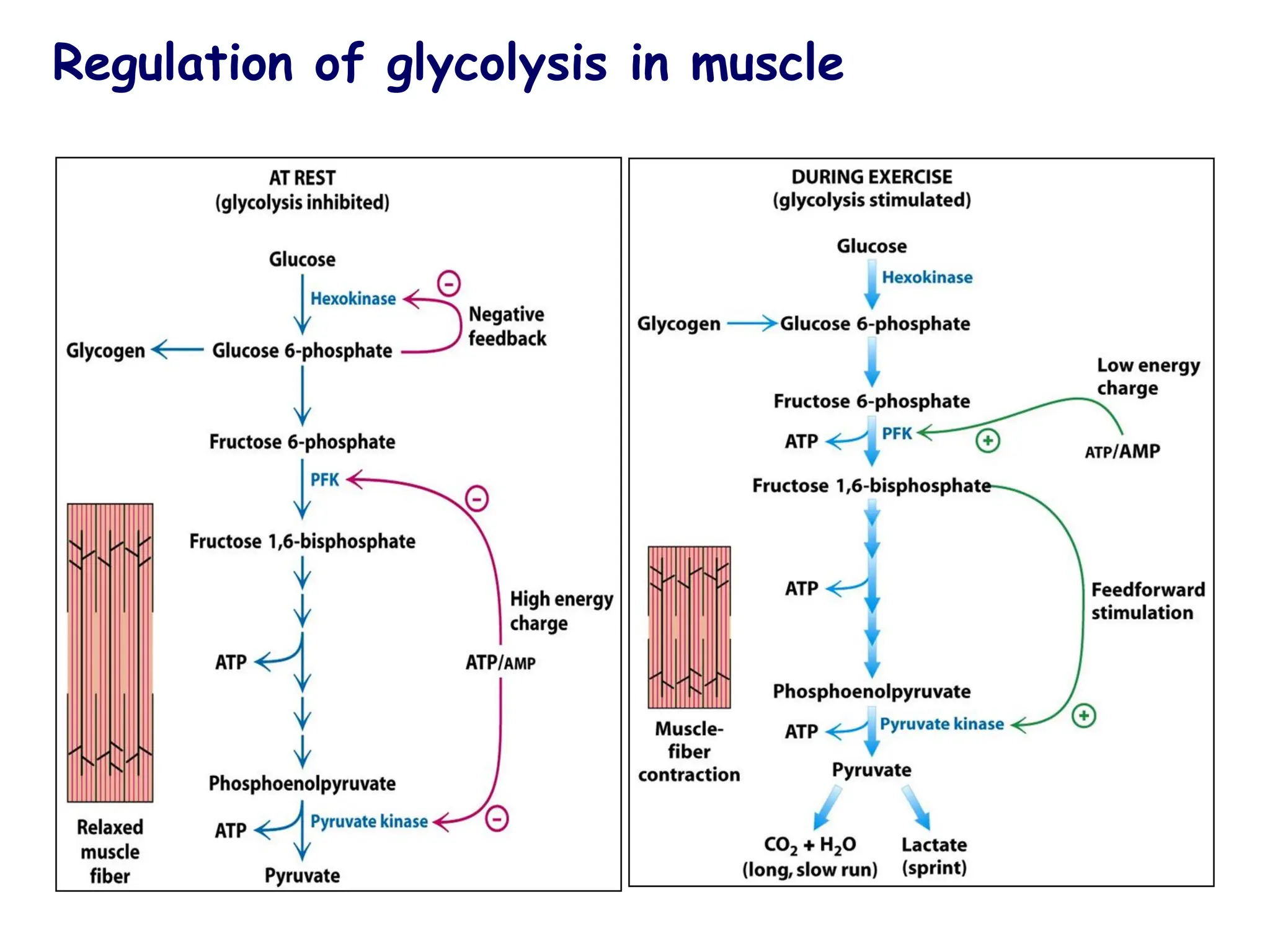
❖ the glucose 6-phosphate formed from glycogen in
skeletal muscle can enter glycolysis and serve as an
energy source to support muscle contraction
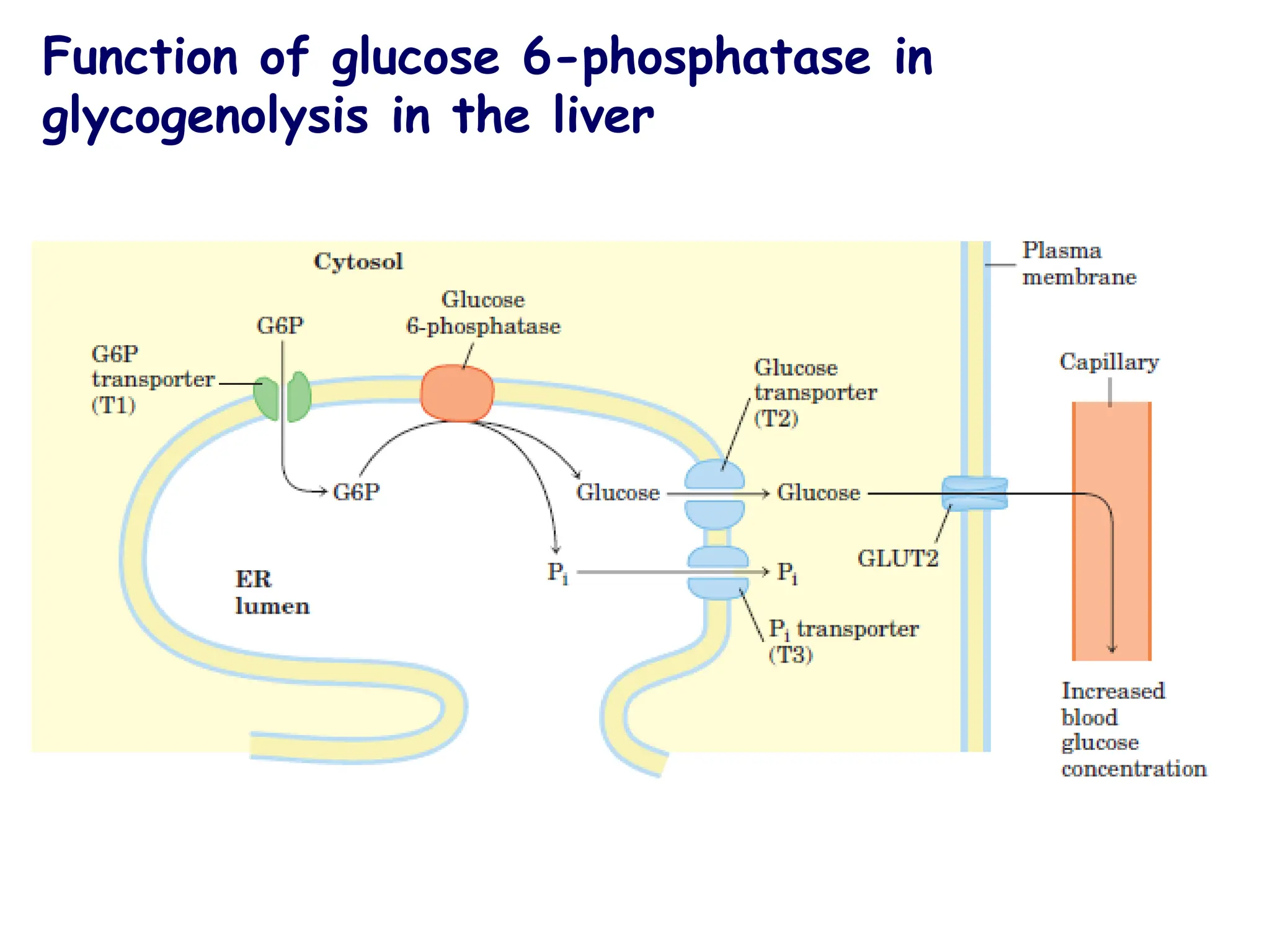
❖ in liver, glycogen breakdown serves a different purpose:
to release glucose into the blood when the blood
glucose level drops, as it does between meals
❖ this requires an enzyme, glucose 6-phosphatase, that is
present in liver and kidney but not in other tissues
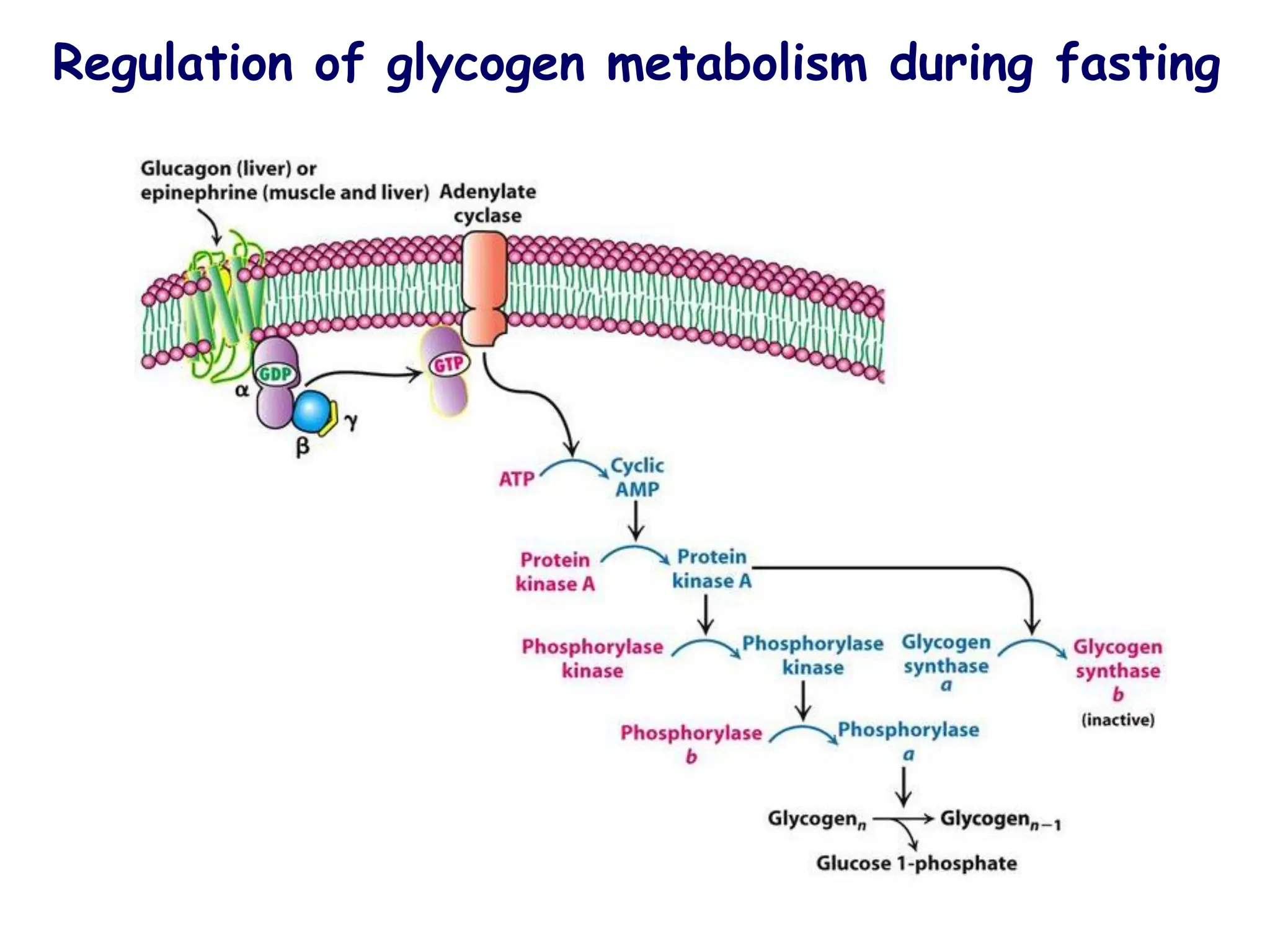
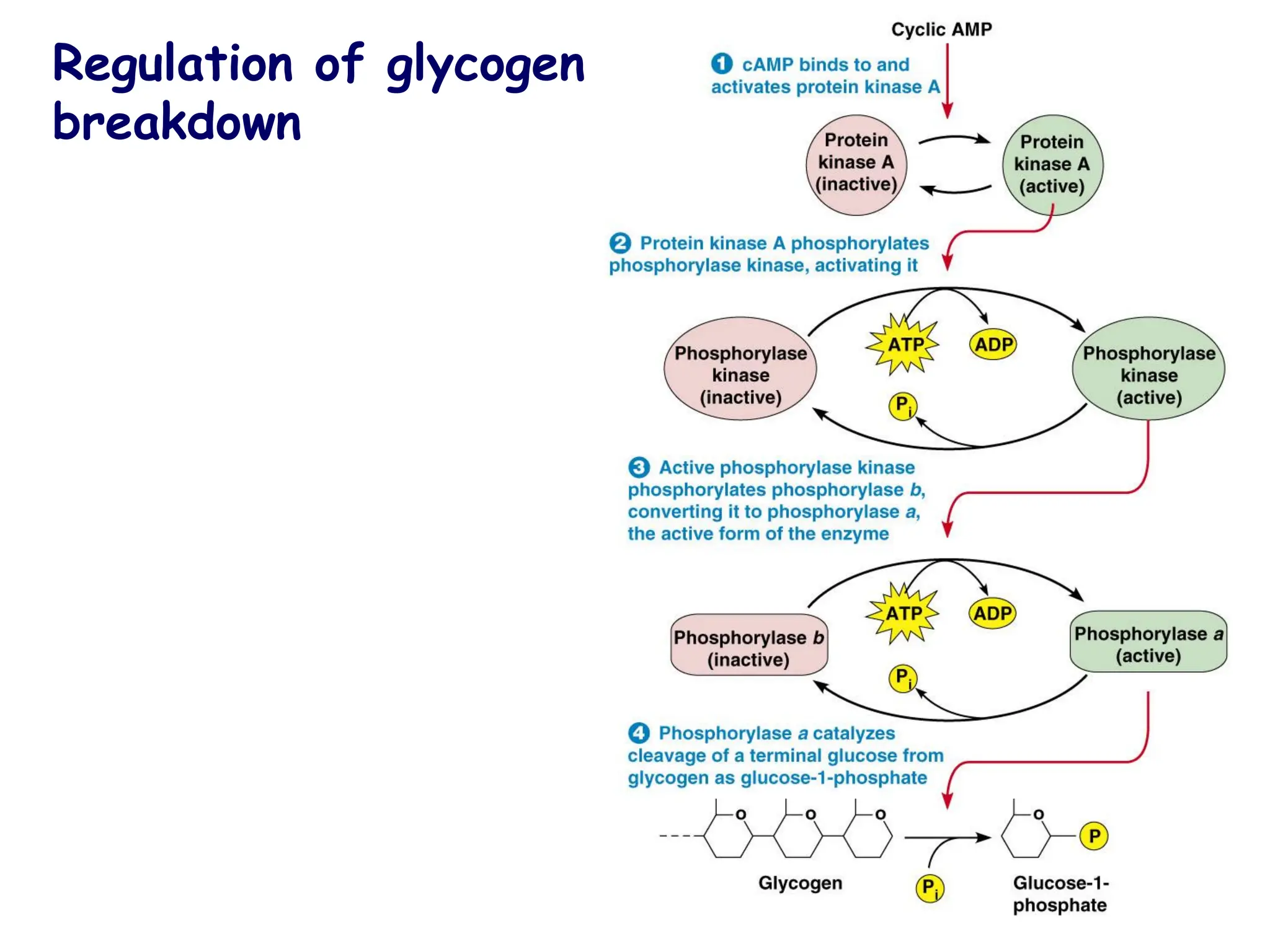
Glycogen phosphorylase regulationin the liver
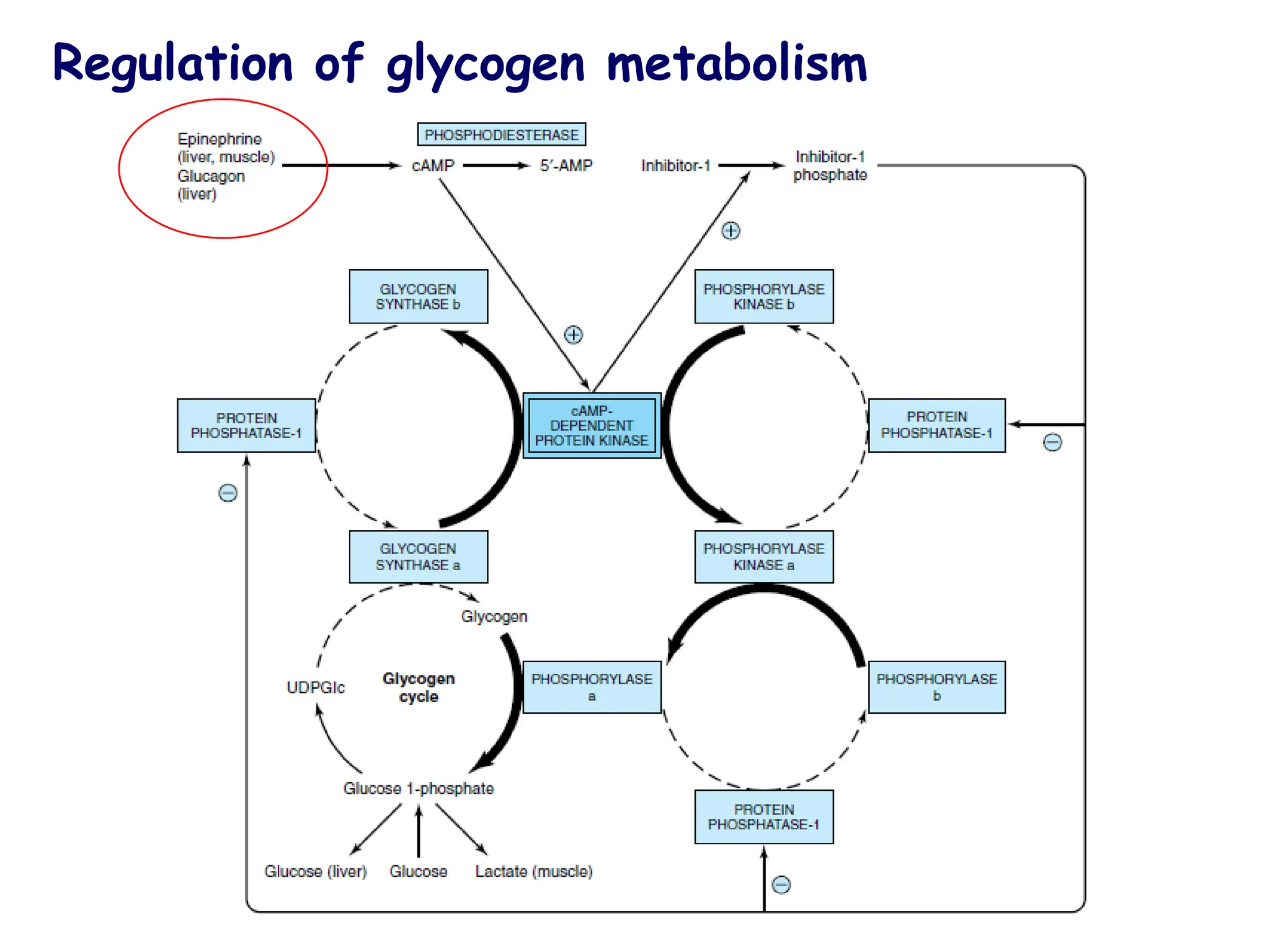
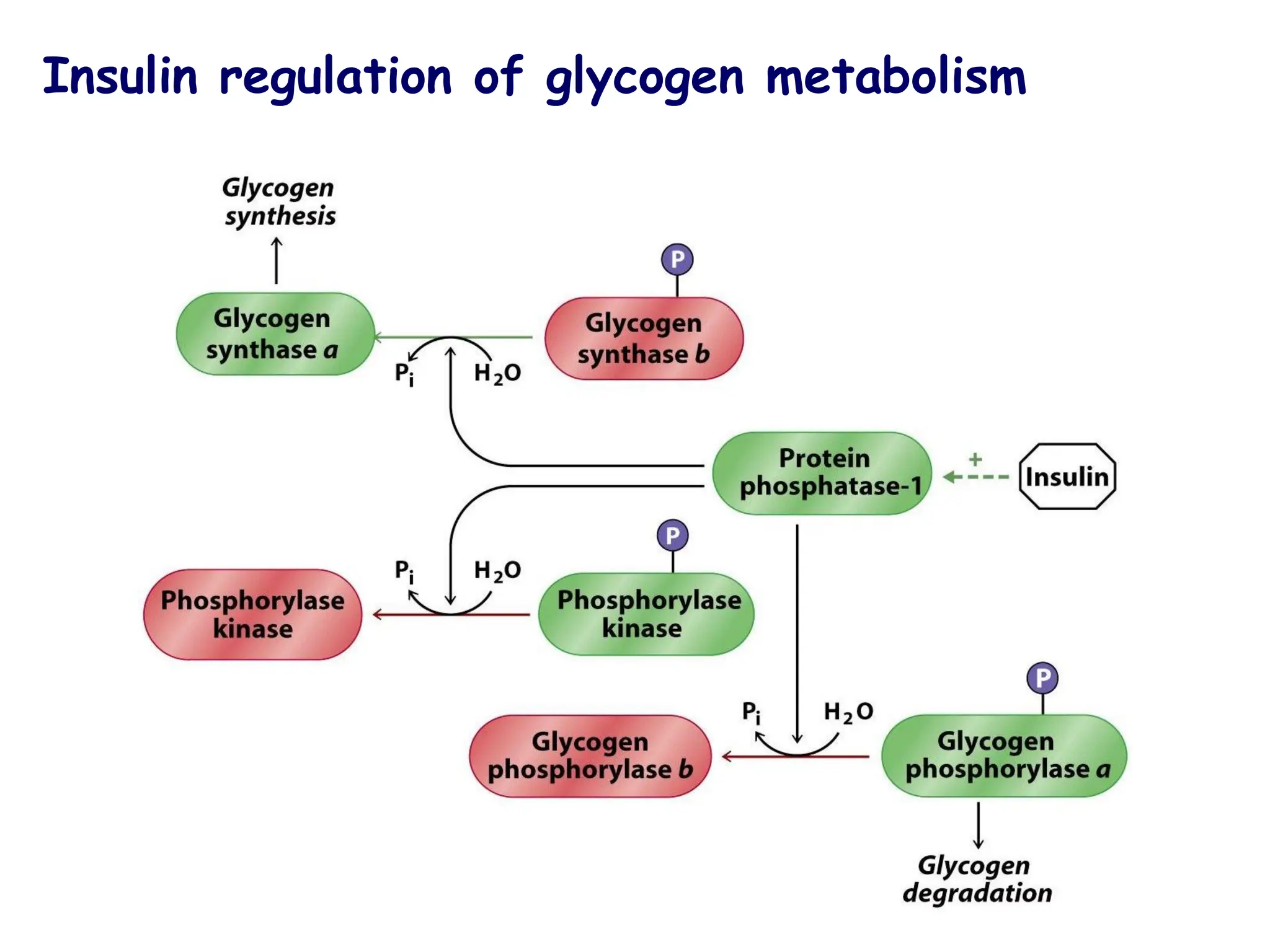
❖ in the liver, one of the serine hydroxyl groups of
active phosphorylase a is phosphorylated
❖ it is inactivated by hydrolytic removal of the
phosphate by protein phosphatase-1 to form
phosphorylase b
❖ reactivation requires rephosphorylation catalyzed
by phosphorylase kinase
20.
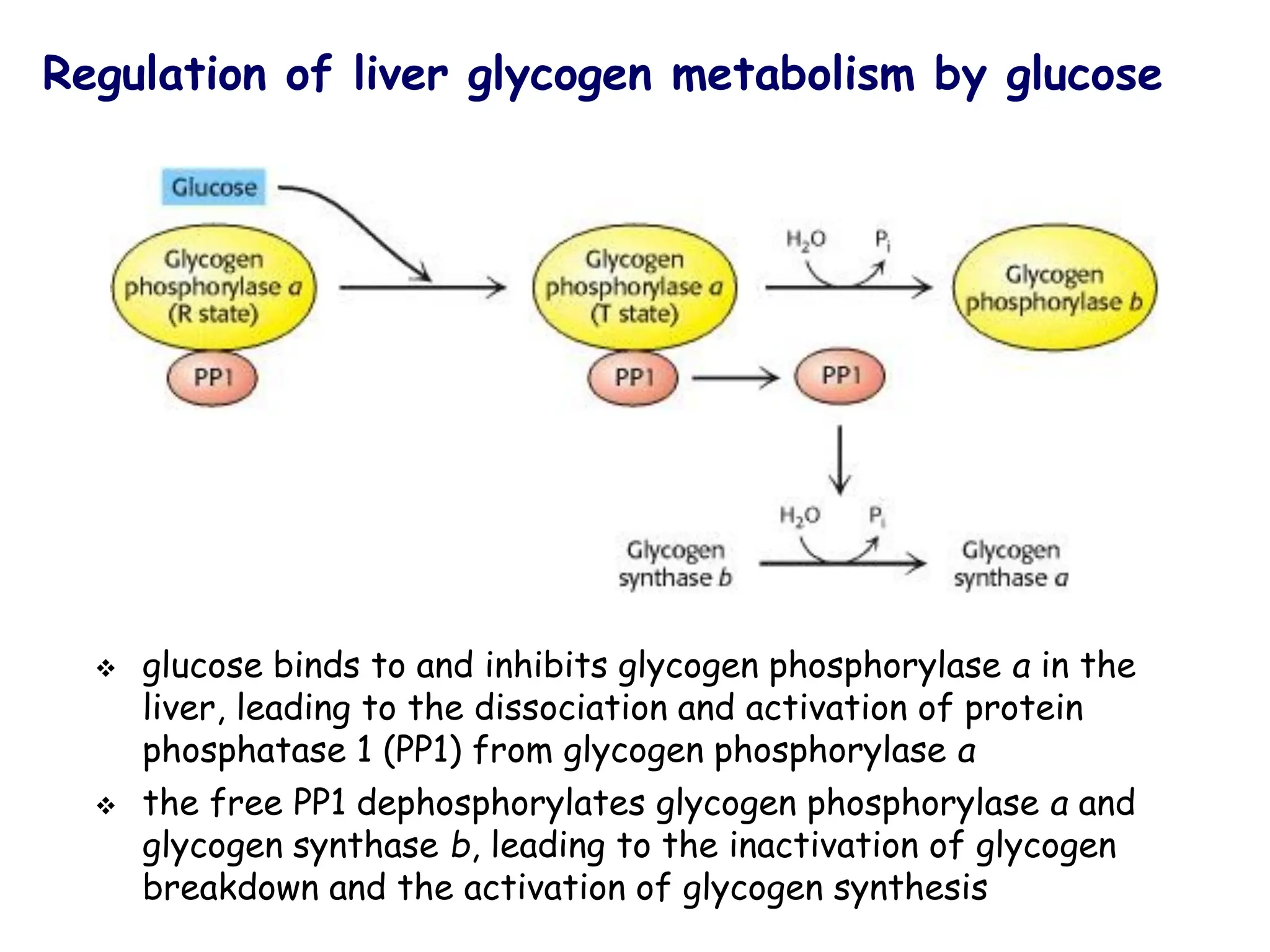
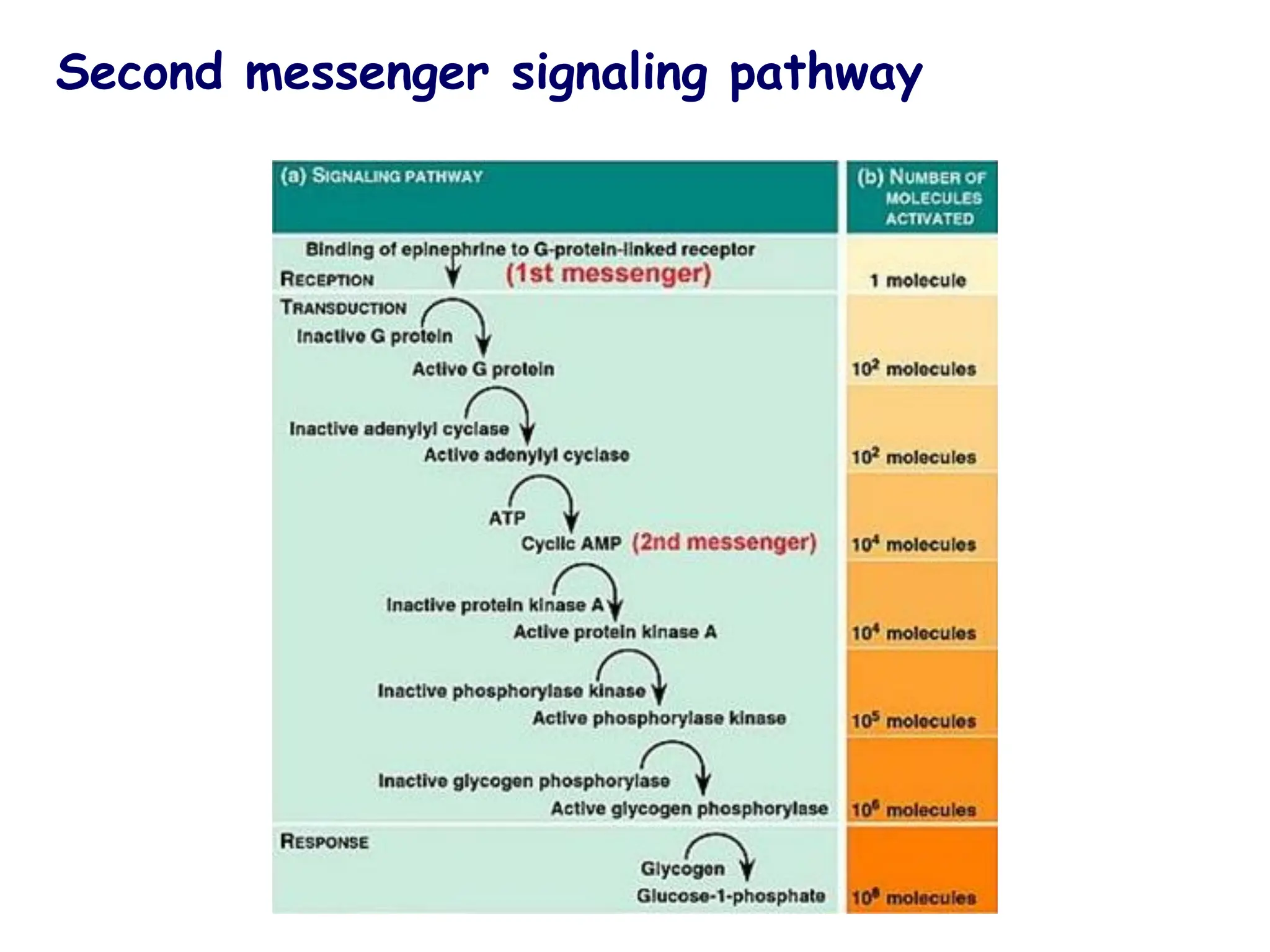
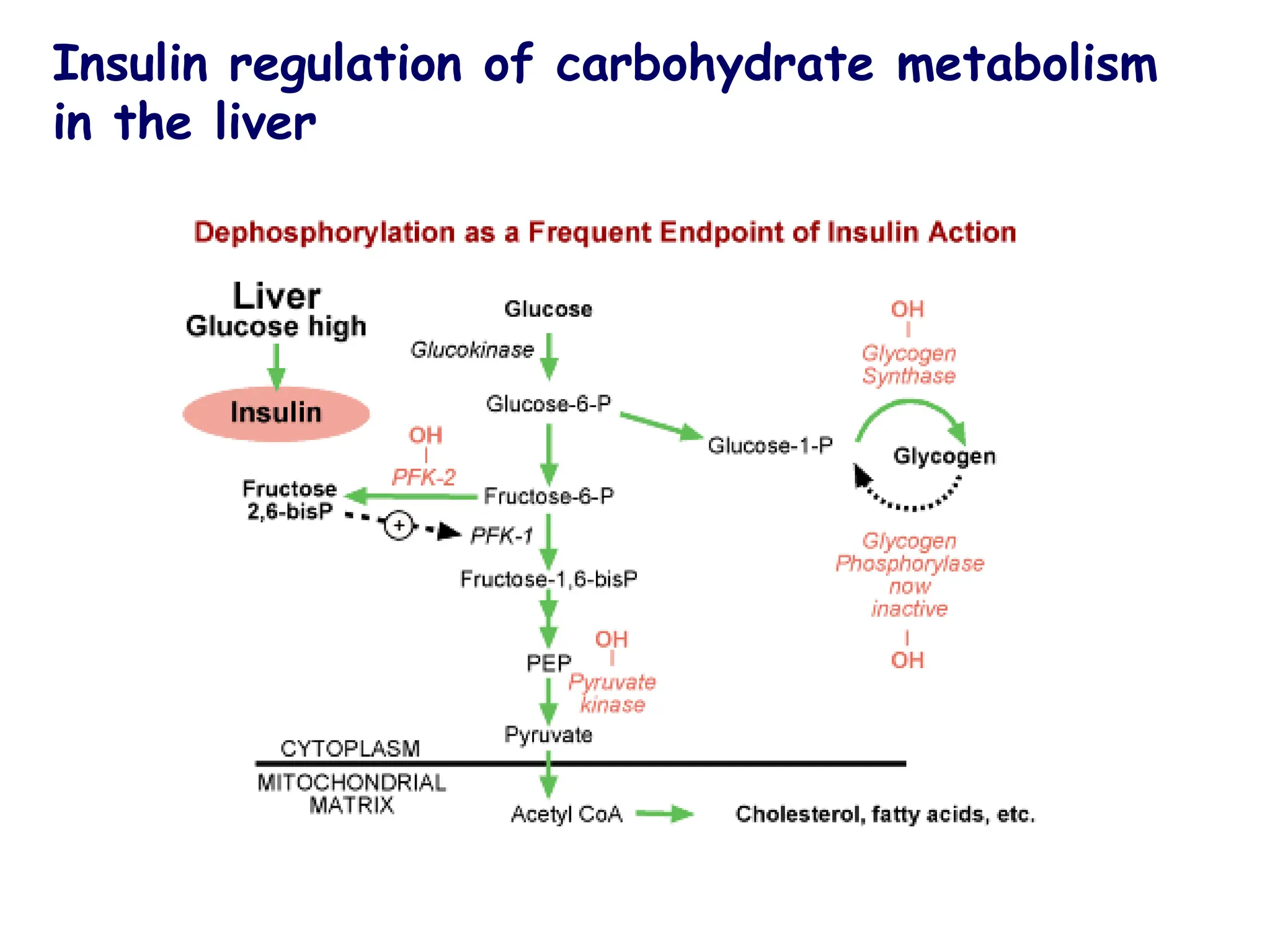
Regulation of liverglycogen metabolism by glucose
❖ glucose binds to and inhibits glycogen phosphorylase a in the
liver, leading to the dissociation and activation of protein
phosphatase 1 (PP1) from glycogen phosphorylase a
❖ the free PP1 dephosphorylates glycogen phosphorylase a and
glycogen synthase b, leading to the inactivation of glycogen
breakdown and the activation of glycogen synthesis
21.
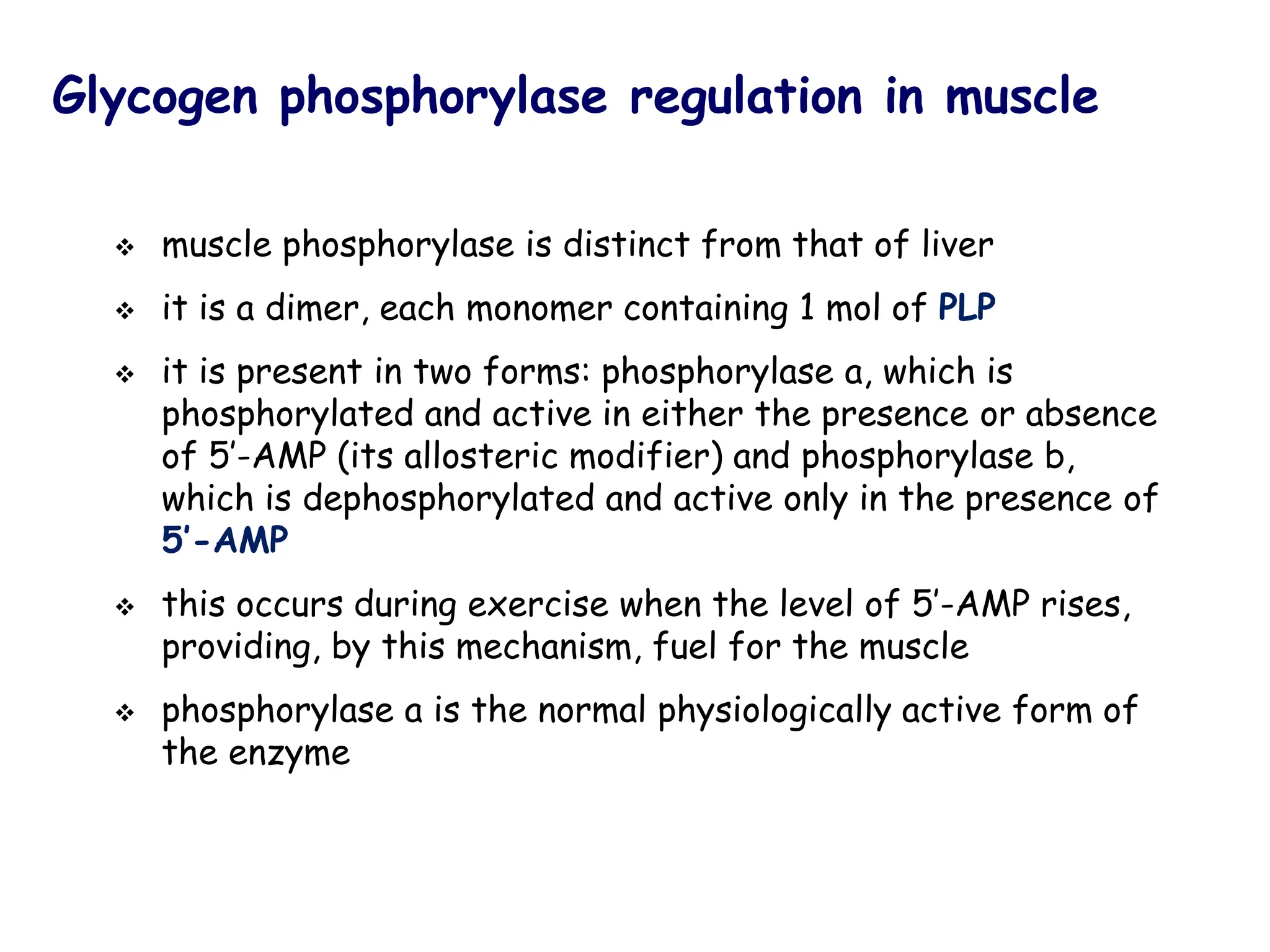
Glycogen phosphorylase regulationin muscle
❖ muscle phosphorylase is distinct from that of liver
❖ it is a dimer, each monomer containing 1 mol of PLP
❖ it is present in two forms: phosphorylase a, which is
phosphorylated and active in either the presence or absence
of 5′-AMP (its allosteric modifier) and phosphorylase b,
which is dephosphorylated and active only in the presence of
5′-AMP
❖ this occurs during exercise when the level of 5′-AMP rises,
providing, by this mechanism, fuel for the muscle
❖ phosphorylase a is the normal physiologically active form of
the enzyme
![Breakdown od glycogen
near a branch point
(α-[1→4] →α-
[1→4] glucan
transferase)](https://image.slidesharecdn.com/lecture2-250929052406-97f378c6/75/lecture-2-pdfhhhhhhhhhhhhhhhhhhhhhhhhhhhhhhhhhhhhhhh-15-2048.jpg)