Lecture 14: Farm Inventory
1
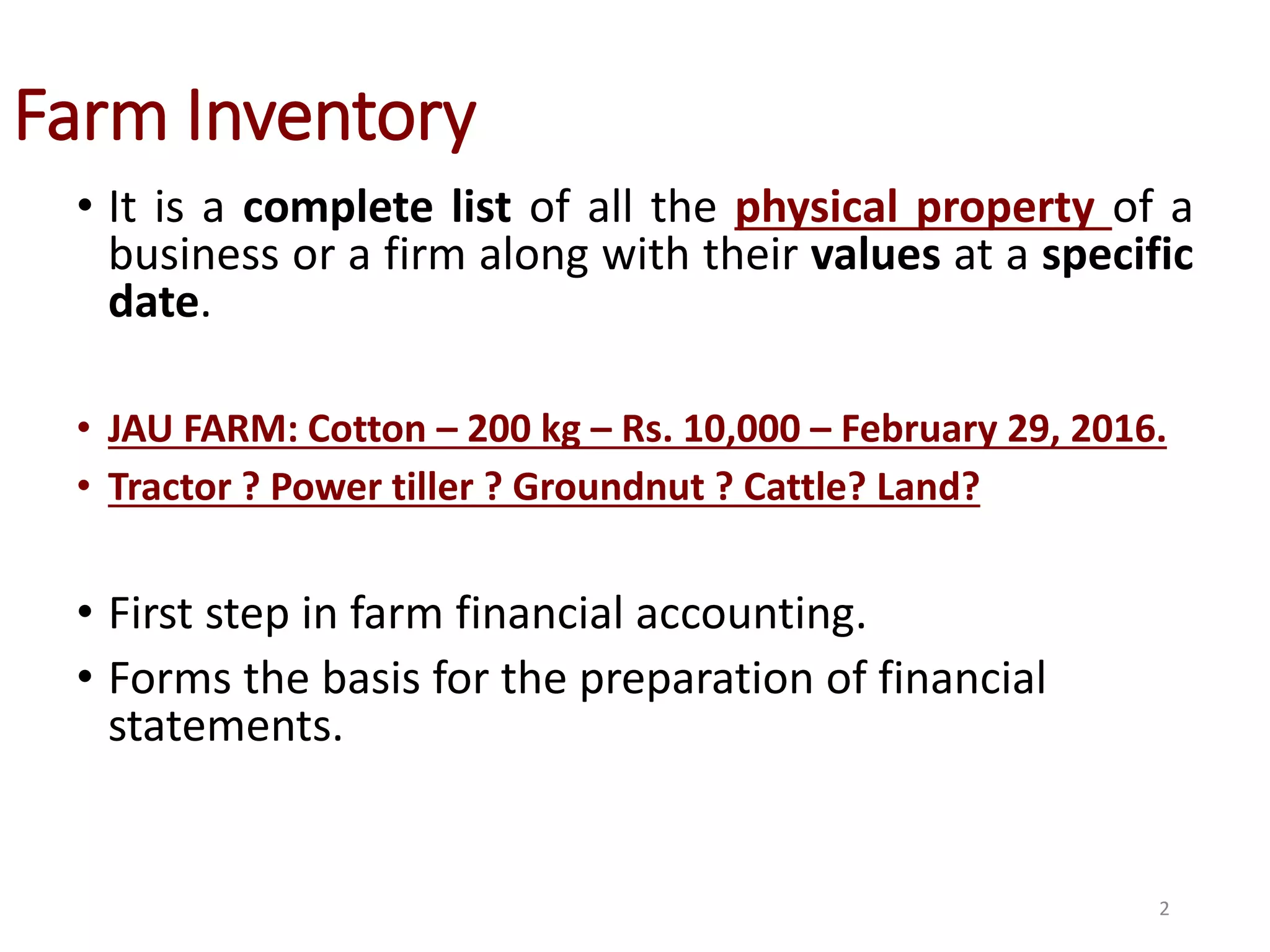
Farm Inventory
• It is a complete list of all the physical property of a
business or a firm along with their values at a specific
date.
• JAU FARM: Cotton – 200 kg – Rs. 10,000 – February 29, 2016.
• Tractor ? Power tiller ? Groundnut ? Cattle? Land?
• First step in farm financial accounting.
• Forms the basis for the preparation of financial
statements.
2
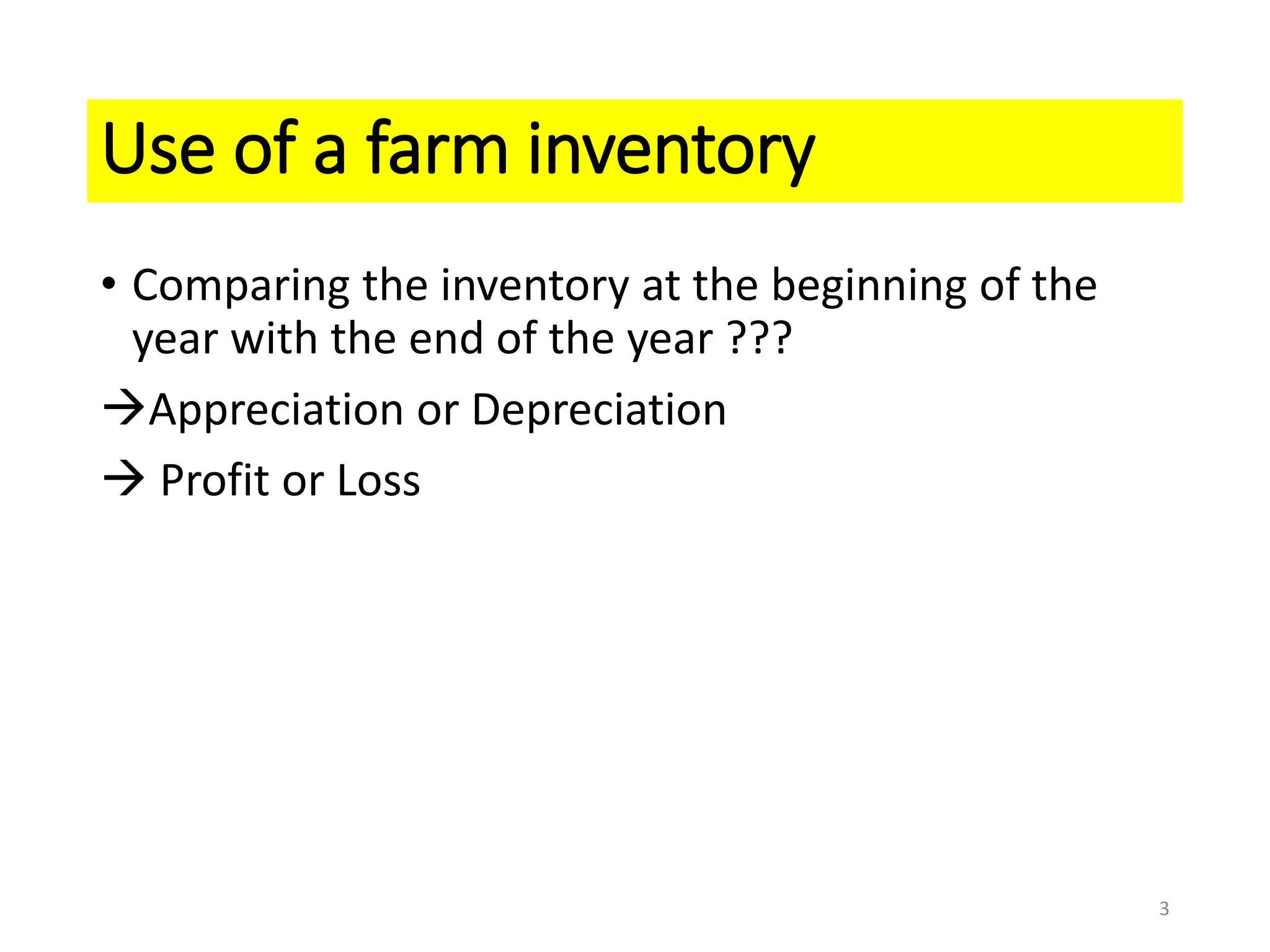
Use of a farm inventory
• Comparing the inventory at the beginning of the
year with the end of the year ???
Appreciation or Depreciation
 Profit or Loss
3
Procedure:
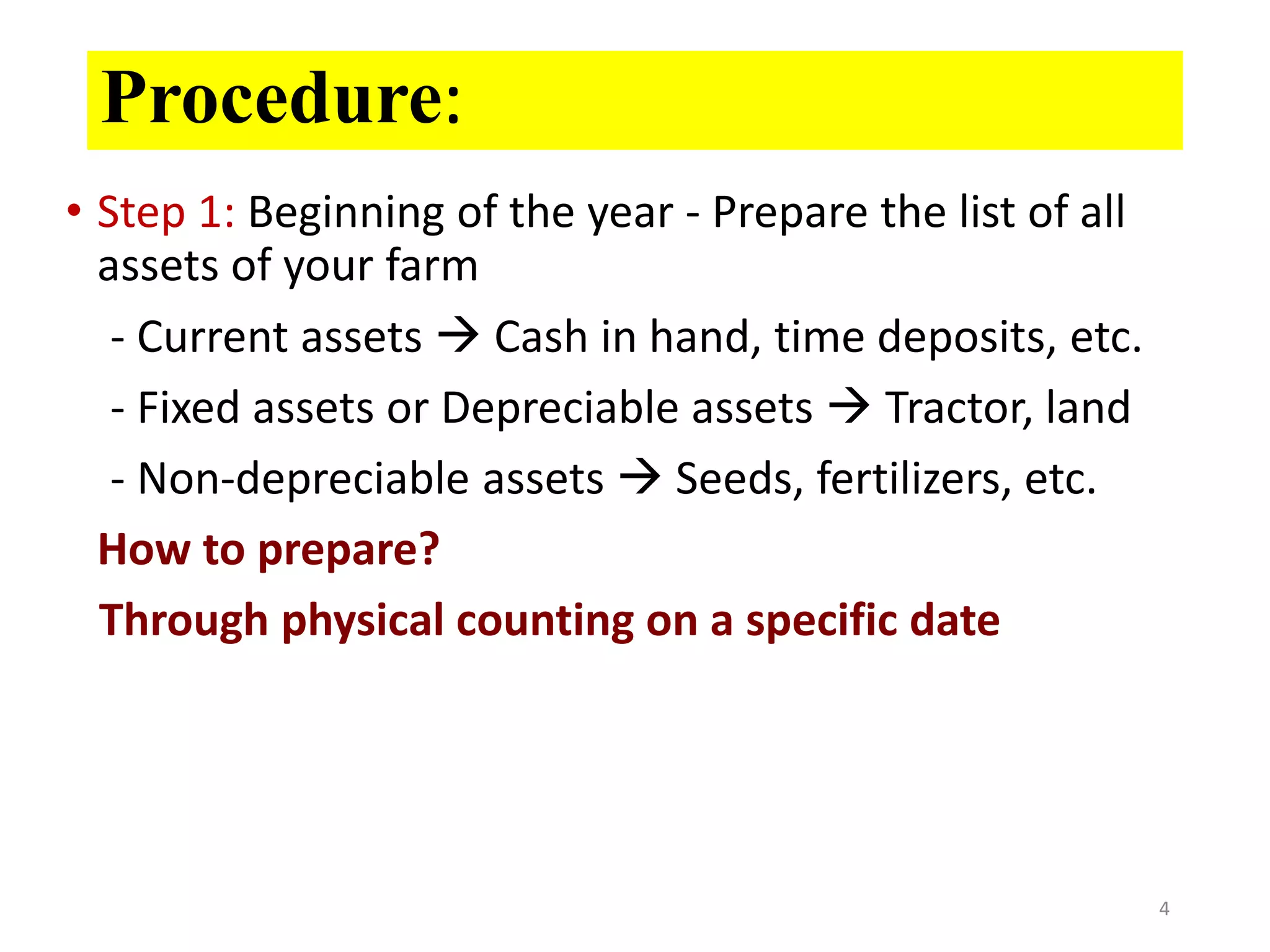
• Step 1: Beginning of the year - Prepare the list of all
assets of your farm
- Current assets  Cash in hand, time deposits, etc.
- Fixed assets or Depreciable assets  Tractor, land
- Non-depreciable assets  Seeds, fertilizers, etc.
How to prepare?
Through physical counting on a specific date
4
Procedure (Contd.)
• Step 2: Valuation of each item using an appropriate
valuation method.
• Step 3: Repeat Steps 1 and 2 at the end of the year.
• Step 4: Measure the difference at the inventory
(opening inventory) and at the end of the year
(Closing inventory).
5
Methods of Valuation
1. Net Selling Price Method
2. Market Price Method
3. Cost Method
4. (Original) Cost Less Depreciation Method
5. Replacement Cost Less Depreciation Method
6. Income Capitalization Method
6
When to use?
1. Net Selling Price Method: For those assets which
are primarily meant for sale and are sold within
the year.
NSP = Selling Price – Marketing Cost
E.g: Crop produce, livestock products
7
2. Market Price Method:
For valuing farm supplies that are purcahsed
E.g: Seed, fertilizer, pesticides.
3. Cost Method:
To estimate current value of farm produced inputs.
E.g: Compost, FYM and standing crop
8
4. Cost minus depreciation method:
For working cspital assets – e.g. machinery, new
farm buildings, farm equipments, livestock
How?
Estimate depreciation amount and deduct it from
the purchase price or original cost
9
10
5. Replacement Cost Minus Depreciation:
E.g: Old farm buildings
What is replacement cost?
Cost of constructing the same type of building at
the present price with the present technology
What is the difference b/w ‘original cost’ and
‘replacement cost’?
11
6. Income Capitalization Method:
For valuing those assets which yield income over an
infinite period of time.
E.g: Land
V = I/ r
Where,
I = Average annual income for a number of years;
r = Rate of interest
12

Lecture 14 Farm Inventory

  • 1.
    Lecture 14: FarmInventory 1
  • 2.
    Farm Inventory • Itis a complete list of all the physical property of a business or a firm along with their values at a specific date. • JAU FARM: Cotton – 200 kg – Rs. 10,000 – February 29, 2016. • Tractor ? Power tiller ? Groundnut ? Cattle? Land? • First step in farm financial accounting. • Forms the basis for the preparation of financial statements. 2
  • 3.
    Use of afarm inventory • Comparing the inventory at the beginning of the year with the end of the year ??? Appreciation or Depreciation  Profit or Loss 3
  • 4.
    Procedure: • Step 1:Beginning of the year - Prepare the list of all assets of your farm - Current assets  Cash in hand, time deposits, etc. - Fixed assets or Depreciable assets  Tractor, land - Non-depreciable assets  Seeds, fertilizers, etc. How to prepare? Through physical counting on a specific date 4
  • 5.
    Procedure (Contd.) • Step2: Valuation of each item using an appropriate valuation method. • Step 3: Repeat Steps 1 and 2 at the end of the year. • Step 4: Measure the difference at the inventory (opening inventory) and at the end of the year (Closing inventory). 5
  • 6.
    Methods of Valuation 1.Net Selling Price Method 2. Market Price Method 3. Cost Method 4. (Original) Cost Less Depreciation Method 5. Replacement Cost Less Depreciation Method 6. Income Capitalization Method 6
  • 7.
    When to use? 1.Net Selling Price Method: For those assets which are primarily meant for sale and are sold within the year. NSP = Selling Price – Marketing Cost E.g: Crop produce, livestock products 7
  • 8.
    2. Market PriceMethod: For valuing farm supplies that are purcahsed E.g: Seed, fertilizer, pesticides. 3. Cost Method: To estimate current value of farm produced inputs. E.g: Compost, FYM and standing crop 8
  • 9.
    4. Cost minusdepreciation method: For working cspital assets – e.g. machinery, new farm buildings, farm equipments, livestock How? Estimate depreciation amount and deduct it from the purchase price or original cost 9
  • 10.
  • 11.
    5. Replacement CostMinus Depreciation: E.g: Old farm buildings What is replacement cost? Cost of constructing the same type of building at the present price with the present technology What is the difference b/w ‘original cost’ and ‘replacement cost’? 11
  • 12.
    6. Income CapitalizationMethod: For valuing those assets which yield income over an infinite period of time. E.g: Land V = I/ r Where, I = Average annual income for a number of years; r = Rate of interest 12