Lecture 5 Database Design
In this chapter, you will learn: That successful database design must reflect the information system of which the database is a part That successful information systems are subject to frequent evaluation and revision within a framework known as the Systems Development Life Cycle (SDLC) That, within the information system, the most successful databases are subject to frequent evaluation and revision within a framework known as the Database Life Cycle (DBLC) How to conduct evaluation and revision within the SDLC and DBLC frameworks What database design strategies exist: top-down vs. bottom-up design and centralized vs. decentralized design
Data  Raw facts stored in databases Need additional processing to become useful Information Required by decision maker  Data processed and presented in a meaningful form Transformation Changing Data into Information
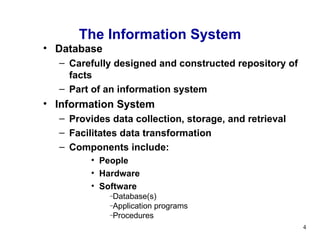
Database  Carefully designed and constructed repository of facts  Part of an information system Information System Provides data collection, storage, and retrieval Facilitates data transformation Components include: People Hardware Software The Information System Database(s) Application programs Procedures
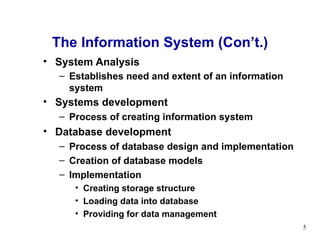
System Analysis Establishes need and extent of an information system   Systems development   Process of creating information system Database development Process of database design and implementation Creation of database models Implementation Creating storage structure Loading data into database Providing for data management The Information System (Con’t.)
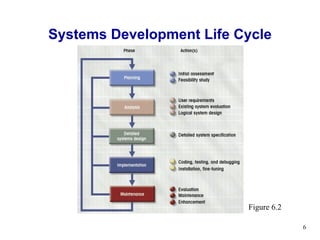
Systems Development Life Cycle Figure 6.2
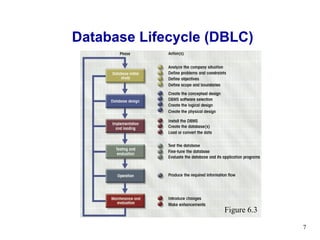
Database Lifecycle (DBLC) Figure 6.3
Phase 1: Database Initial Study Purposes Analyze company situation Operating environment Organizational structure Define problems and constraints Define objectives Define scope and boundaries
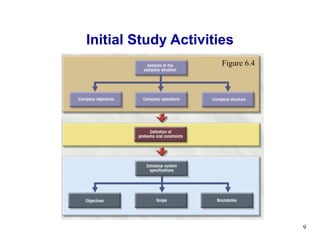
Initial Study Activities Figure 6.4
Phase 2: Database Design  Most Critical DBLC phase Makes sure final product meets requirements Focus on data requirements Subphases Create conceptual design DBMS software selection Create logical design Create physical design
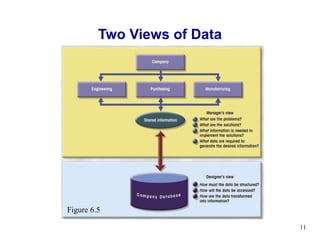
Two Views of Data Figure 6.5
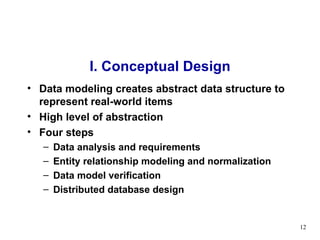
I. Conceptual Design Data modeling creates abstract data structure to represent real-world items High level of abstraction Four steps Data analysis and requirements Entity relationship modeling and normalization Data model verification Distributed database design
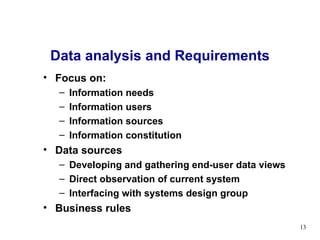
Data analysis and Requirements Focus on: Information needs Information users Information sources Information constitution Data sources Developing and gathering end-user data views Direct observation of current system Interfacing with systems design group Business rules
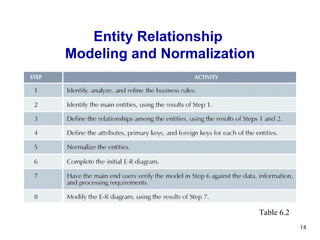
Entity Relationship  Modeling and Normalization Table 6.2
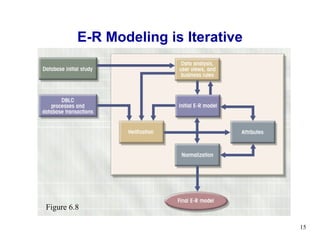
E-R Modeling is Iterative Figure 6.8
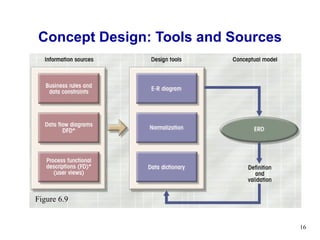
Concept Design: Tools and Sources Figure 6.9
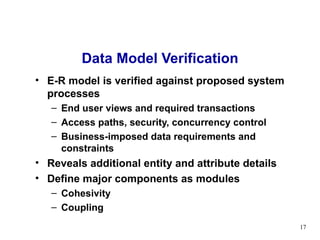
Data Model Verification E-R model is verified against proposed system processes End user views and required transactions Access paths, security, concurrency control Business-imposed data requirements and constraints Reveals additional entity and attribute details Define major components as modules Cohesivity Coupling
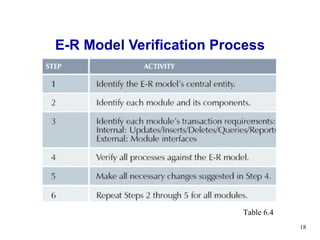
E-R Model Verification Process Table 6.4
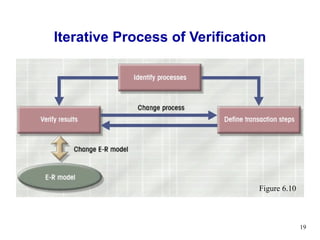
Iterative Process of Verification Figure 6.10
Distributed Database Design Design portions in different physical locations Development of data distribution and allocation strategies
II. DBMS Software Selection DBMS software selection is critical  Advantages and disadvantages need study Factors affecting purchasing decision Cost DBMS features and tools Underlying model Portability DBMS hardware requirements
III. Logical Design Translates conceptual design into internal model  Maps objects in model to specific DBMS constructs Design components Tables Indexes  Views Transactions Access authorities Others
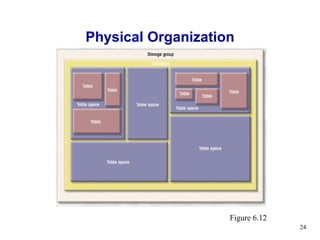
IV. Physical Design Selection of data storage and access characteristics Very technical More important in older hierarchical and network models Becomes more complex for distributed systems Designers favor software that hides physical details
Physical Organization Figure 6.12
Phase 3: Implementation and Loading Creation of special storage-related constructs to house end-user tables Data loaded into tables Other issues Performance Security Backup and recovery Integrity Company standards Concurrency controls
Phase 4: Testing and Evaluation Database is tested and fine-tuned for performance, integrity, concurrent access, and security constraints Done in parallel with application programming Actions taken if tests fail Fine-tuning based on reference manuals Modification of physical design Modification of logical design Upgrade or change DBMS software or hardware
Phase 5: Operation Database considered operational Starts process of system evaluation Unforeseen problems may surface Demand for change is constant
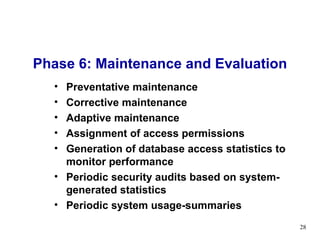
Phase 6: Maintenance and Evaluation Preventative maintenance Corrective maintenance  Adaptive maintenance Assignment of access permissions  Generation of database access statistics to monitor performance Periodic security audits based on system-generated statistics Periodic system usage-summaries
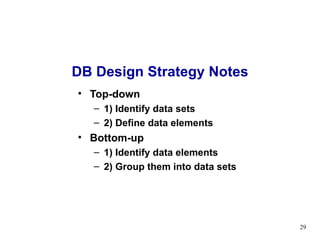
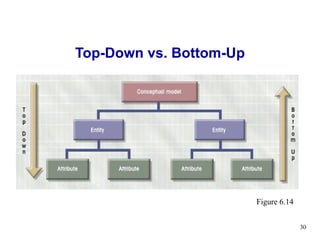
DB Design Strategy Notes Top-down 1) Identify data sets 2) Define data elements Bottom-up 1) Identify data elements 2) Group them into data sets
Top-Down vs. Bottom-Up Figure 6.14
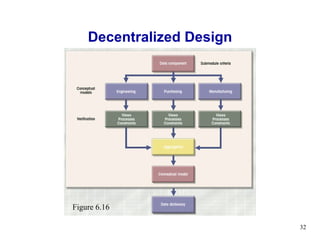
Centralized vs. Decentralized Design Centralized design Typical of simple databases Conducted by single person or small team Decentralized design Larger numbers of entities and complex relations Spread across multiple sites Developed by teams
Decentralized Design Figure 6.16

Lecture 05 dblc

  • 1.
  • 2.
    In this chapter,you will learn: That successful database design must reflect the information system of which the database is a part That successful information systems are subject to frequent evaluation and revision within a framework known as the Systems Development Life Cycle (SDLC) That, within the information system, the most successful databases are subject to frequent evaluation and revision within a framework known as the Database Life Cycle (DBLC) How to conduct evaluation and revision within the SDLC and DBLC frameworks What database design strategies exist: top-down vs. bottom-up design and centralized vs. decentralized design
  • 3.
    Data Rawfacts stored in databases Need additional processing to become useful Information Required by decision maker Data processed and presented in a meaningful form Transformation Changing Data into Information
  • 4.
    Database Carefullydesigned and constructed repository of facts Part of an information system Information System Provides data collection, storage, and retrieval Facilitates data transformation Components include: People Hardware Software The Information System Database(s) Application programs Procedures
  • 5.
    System Analysis Establishesneed and extent of an information system Systems development Process of creating information system Database development Process of database design and implementation Creation of database models Implementation Creating storage structure Loading data into database Providing for data management The Information System (Con’t.)
  • 6.
    Systems Development LifeCycle Figure 6.2
  • 7.
  • 8.
    Phase 1: DatabaseInitial Study Purposes Analyze company situation Operating environment Organizational structure Define problems and constraints Define objectives Define scope and boundaries
  • 9.
  • 10.
    Phase 2: DatabaseDesign Most Critical DBLC phase Makes sure final product meets requirements Focus on data requirements Subphases Create conceptual design DBMS software selection Create logical design Create physical design
  • 11.
    Two Views ofData Figure 6.5
  • 12.
    I. Conceptual DesignData modeling creates abstract data structure to represent real-world items High level of abstraction Four steps Data analysis and requirements Entity relationship modeling and normalization Data model verification Distributed database design
  • 13.
    Data analysis andRequirements Focus on: Information needs Information users Information sources Information constitution Data sources Developing and gathering end-user data views Direct observation of current system Interfacing with systems design group Business rules
  • 14.
    Entity Relationship Modeling and Normalization Table 6.2
  • 15.
    E-R Modeling isIterative Figure 6.8
  • 16.
    Concept Design: Toolsand Sources Figure 6.9
  • 17.
    Data Model VerificationE-R model is verified against proposed system processes End user views and required transactions Access paths, security, concurrency control Business-imposed data requirements and constraints Reveals additional entity and attribute details Define major components as modules Cohesivity Coupling
  • 18.
    E-R Model VerificationProcess Table 6.4
  • 19.
    Iterative Process ofVerification Figure 6.10
  • 20.
    Distributed Database DesignDesign portions in different physical locations Development of data distribution and allocation strategies
  • 21.
    II. DBMS SoftwareSelection DBMS software selection is critical Advantages and disadvantages need study Factors affecting purchasing decision Cost DBMS features and tools Underlying model Portability DBMS hardware requirements
  • 22.
    III. Logical DesignTranslates conceptual design into internal model Maps objects in model to specific DBMS constructs Design components Tables Indexes Views Transactions Access authorities Others
  • 23.
    IV. Physical DesignSelection of data storage and access characteristics Very technical More important in older hierarchical and network models Becomes more complex for distributed systems Designers favor software that hides physical details
  • 24.
  • 25.
    Phase 3: Implementationand Loading Creation of special storage-related constructs to house end-user tables Data loaded into tables Other issues Performance Security Backup and recovery Integrity Company standards Concurrency controls
  • 26.
    Phase 4: Testingand Evaluation Database is tested and fine-tuned for performance, integrity, concurrent access, and security constraints Done in parallel with application programming Actions taken if tests fail Fine-tuning based on reference manuals Modification of physical design Modification of logical design Upgrade or change DBMS software or hardware
  • 27.
    Phase 5: OperationDatabase considered operational Starts process of system evaluation Unforeseen problems may surface Demand for change is constant
  • 28.
    Phase 6: Maintenanceand Evaluation Preventative maintenance Corrective maintenance Adaptive maintenance Assignment of access permissions Generation of database access statistics to monitor performance Periodic security audits based on system-generated statistics Periodic system usage-summaries
  • 29.
    DB Design StrategyNotes Top-down 1) Identify data sets 2) Define data elements Bottom-up 1) Identify data elements 2) Group them into data sets
  • 30.
  • 31.
    Centralized vs. DecentralizedDesign Centralized design Typical of simple databases Conducted by single person or small team Decentralized design Larger numbers of entities and complex relations Spread across multiple sites Developed by teams
  • 32.