• Akangbe
Jamiu E.
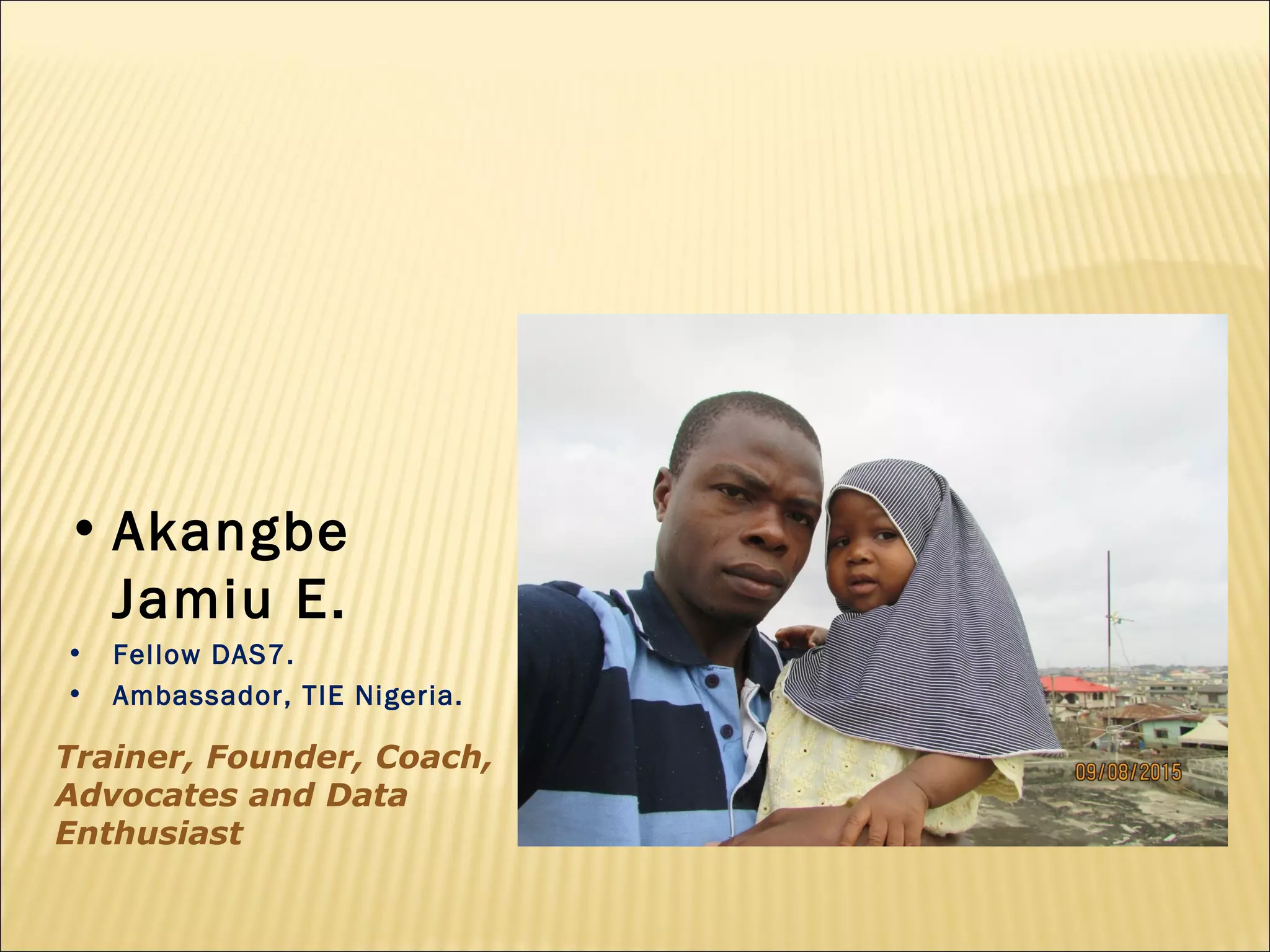
• Fellow DAS7.
• Ambassador, TIE Nigeria.
Trainer, Founder, Coach,
Advocates and Data
Enthusiast
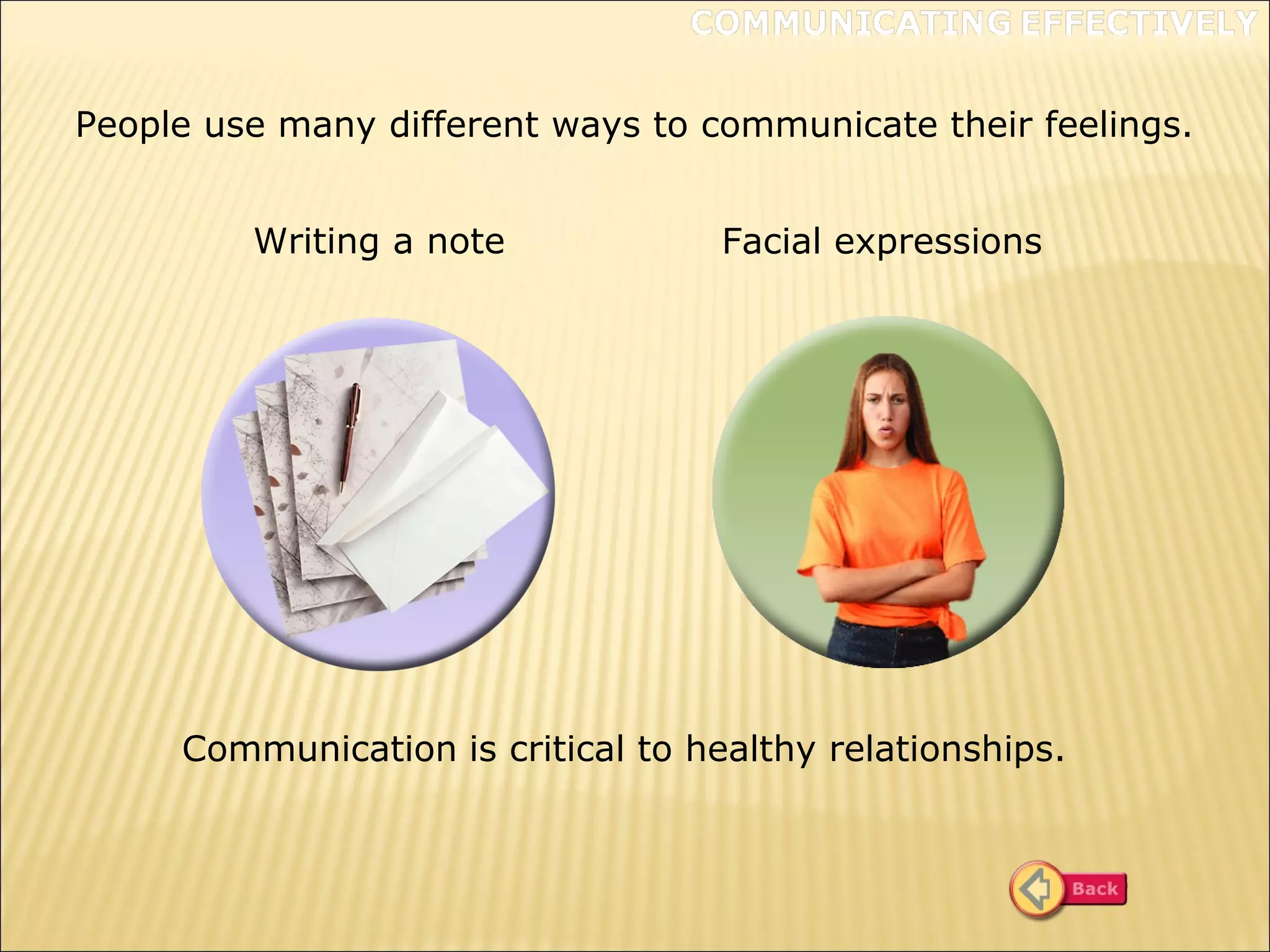
People use many different ways to communicate their feelings.
Writing a note Facial expressions
Communication is critical to healthy relationships.
• Compare the forms of communication, including passive,
aggressive, or assertive communication
• Develop the communication skills you need to build healthy
relationships with family, friends, peers, and others
• Demonstrate communication skills that show respect for
self, family, friends, and others
In this lesson, you will learn to:
Being an effective communicator means that you correctly
interpret the messages you receive and respond appropriately.
Basic Communication Skills
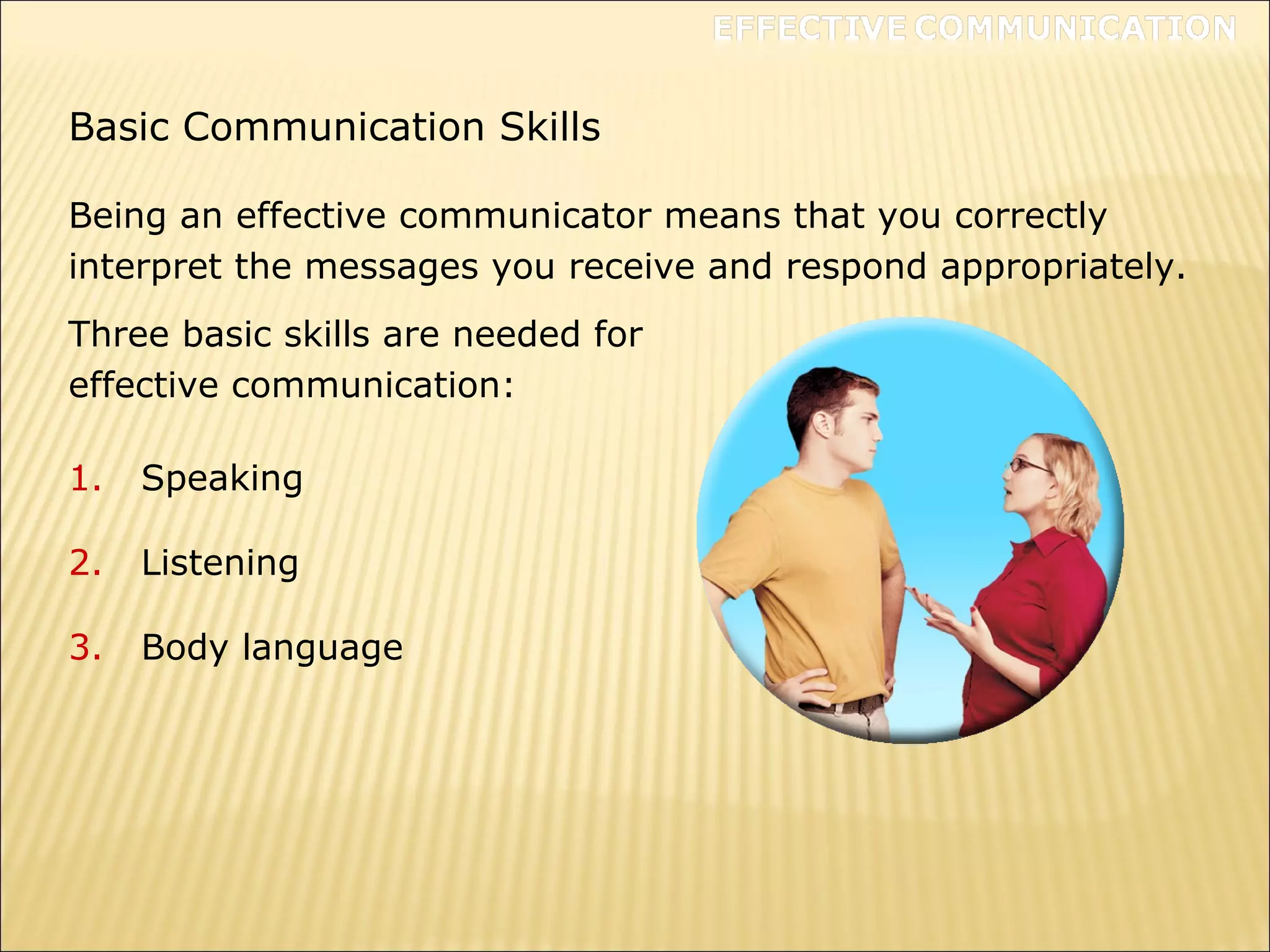
Three basic skills are needed for
effective communication:
1. Speaking
2. Listening
3. Body language
Communication Styles
• Passive communicators do not stand up for themselves or
defend their attitudes or beliefs.
• Aggressive communicators often try to get their way through
bullying and intimidation.
• Assertive communicators defend their attitudes and beliefs,
but they also respect the rights of others.
Effective Communication
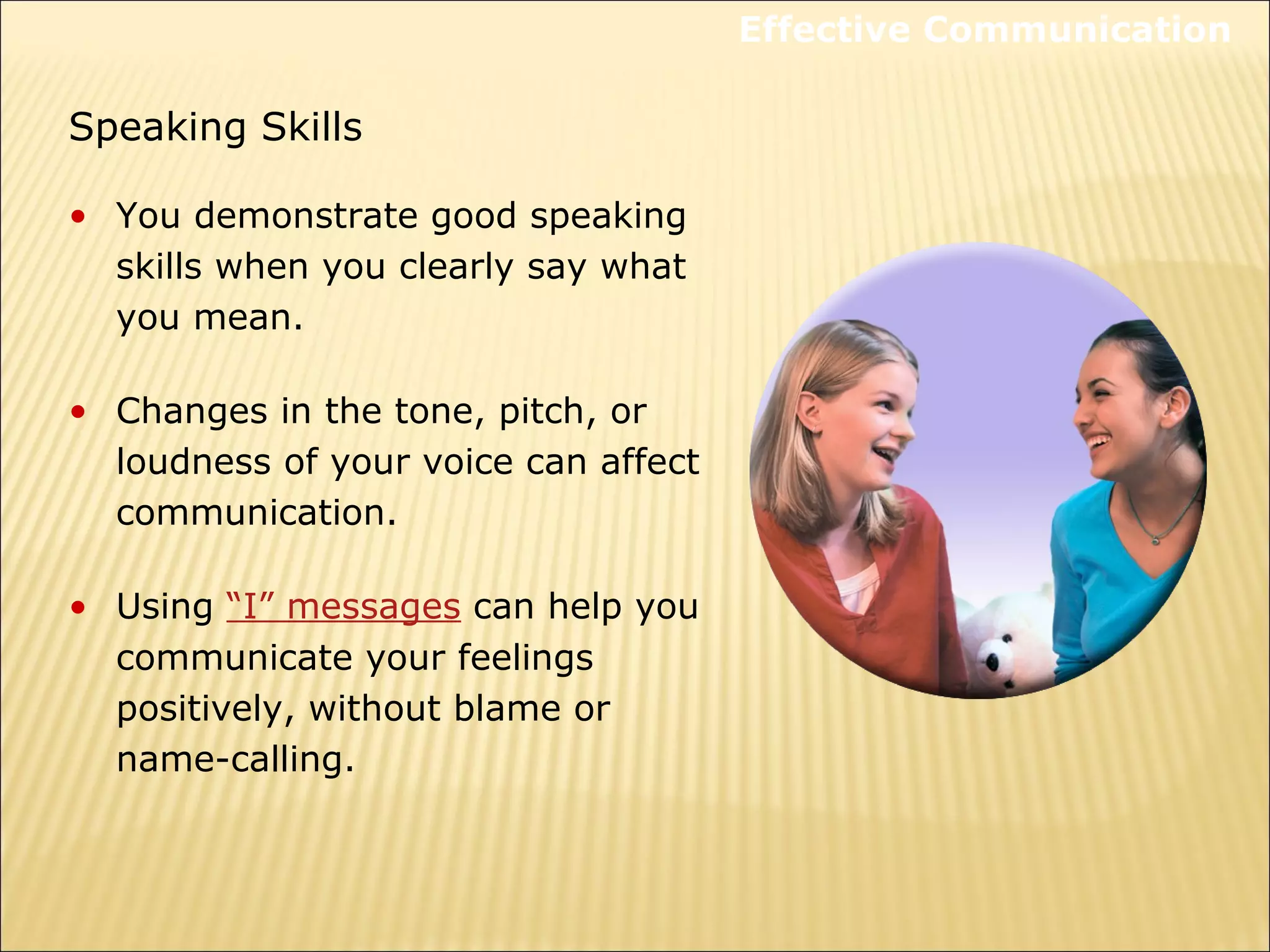
Speaking Skills
• You demonstrate good speaking
skills when you clearly say what
you mean.
• Changes in the tone, pitch, or
loudness of your voice can affect
communication.
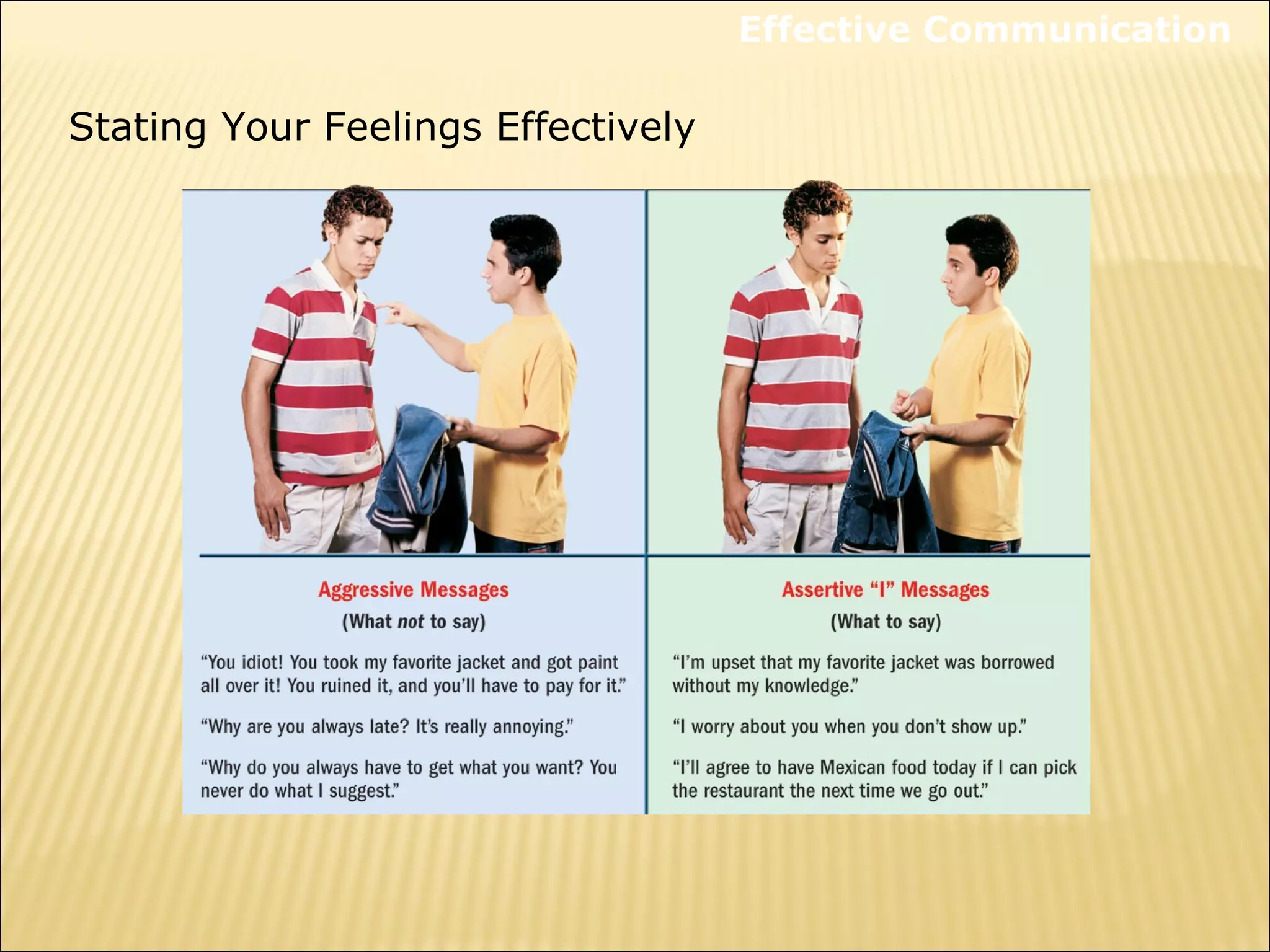
• Using “I” messages can help you
communicate your feelings
positively, without blame or
name-calling.
Effective Communication
Stating Your Feelings Effectively
Effective Communication
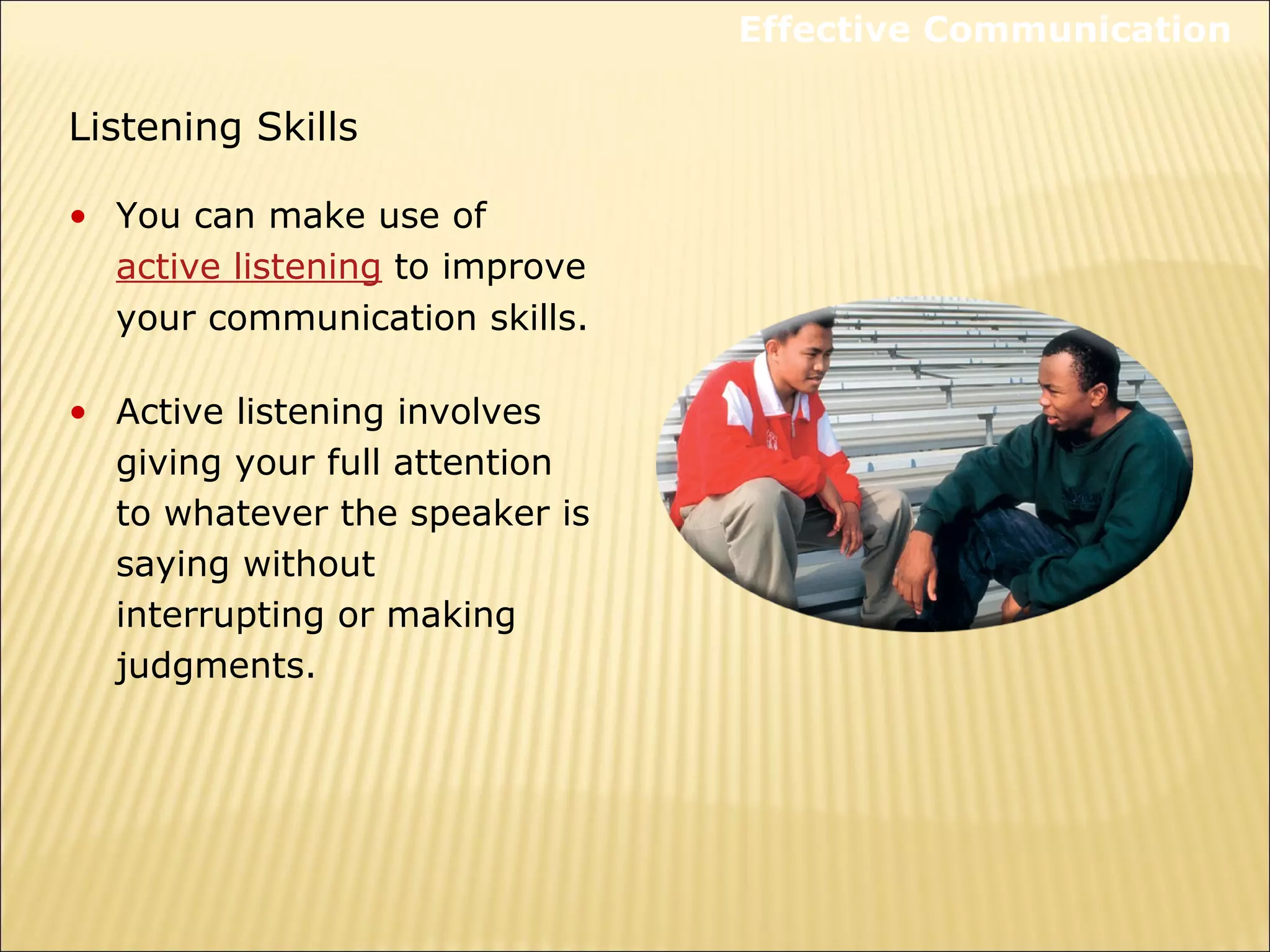
Listening Skills
• You can make use of
active listening to improve
your communication skills.
• Active listening involves
giving your full attention
to whatever the speaker is
saying without
interrupting or making
judgments.
Effective Communication
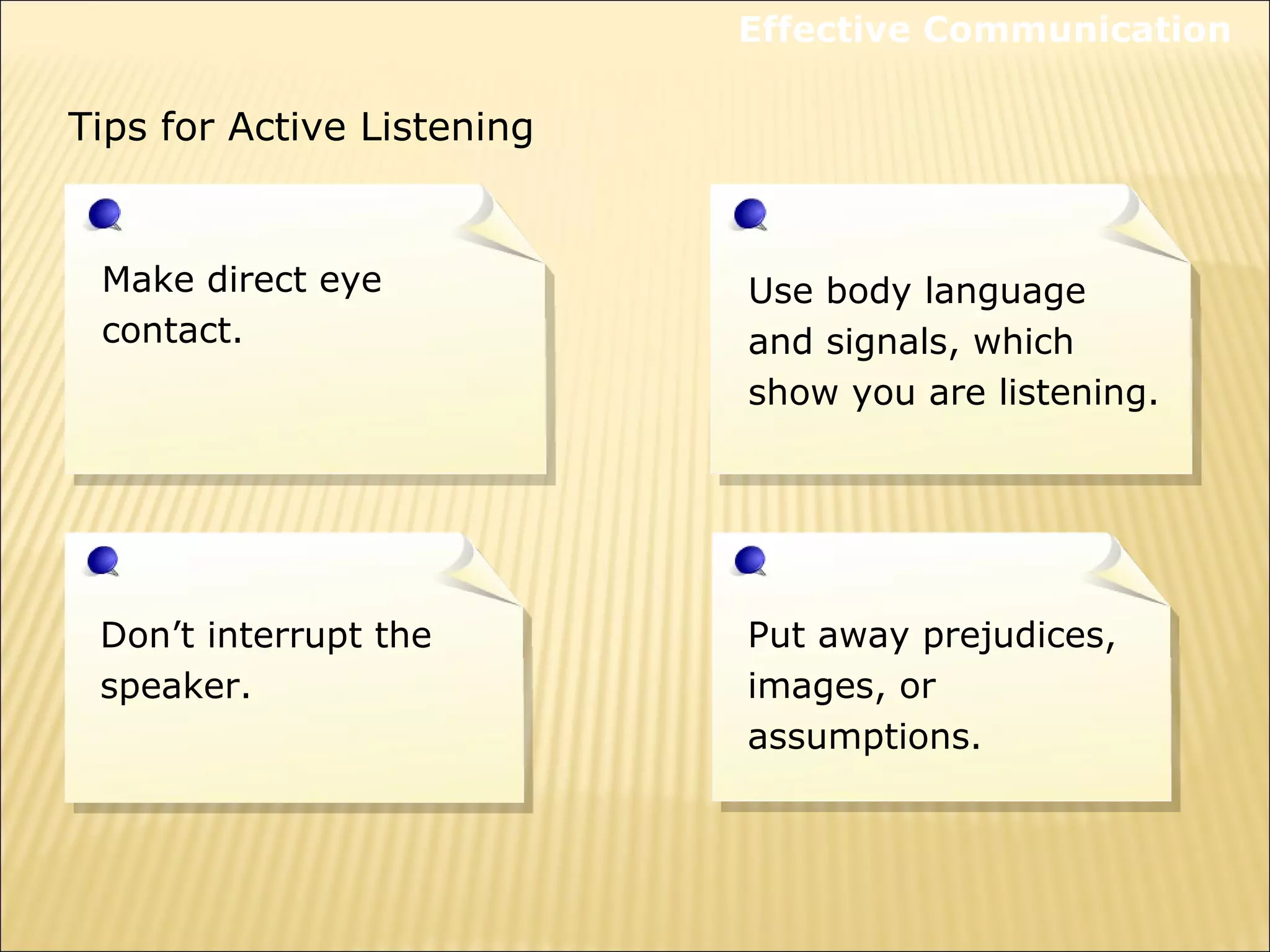
Tips for Active Listening
Make direct eye
contact.
Use body language
and signals, which
show you are listening.
Don’t interrupt the
speaker.
Put away prejudices,
images, or
assumptions.
Effective Communication
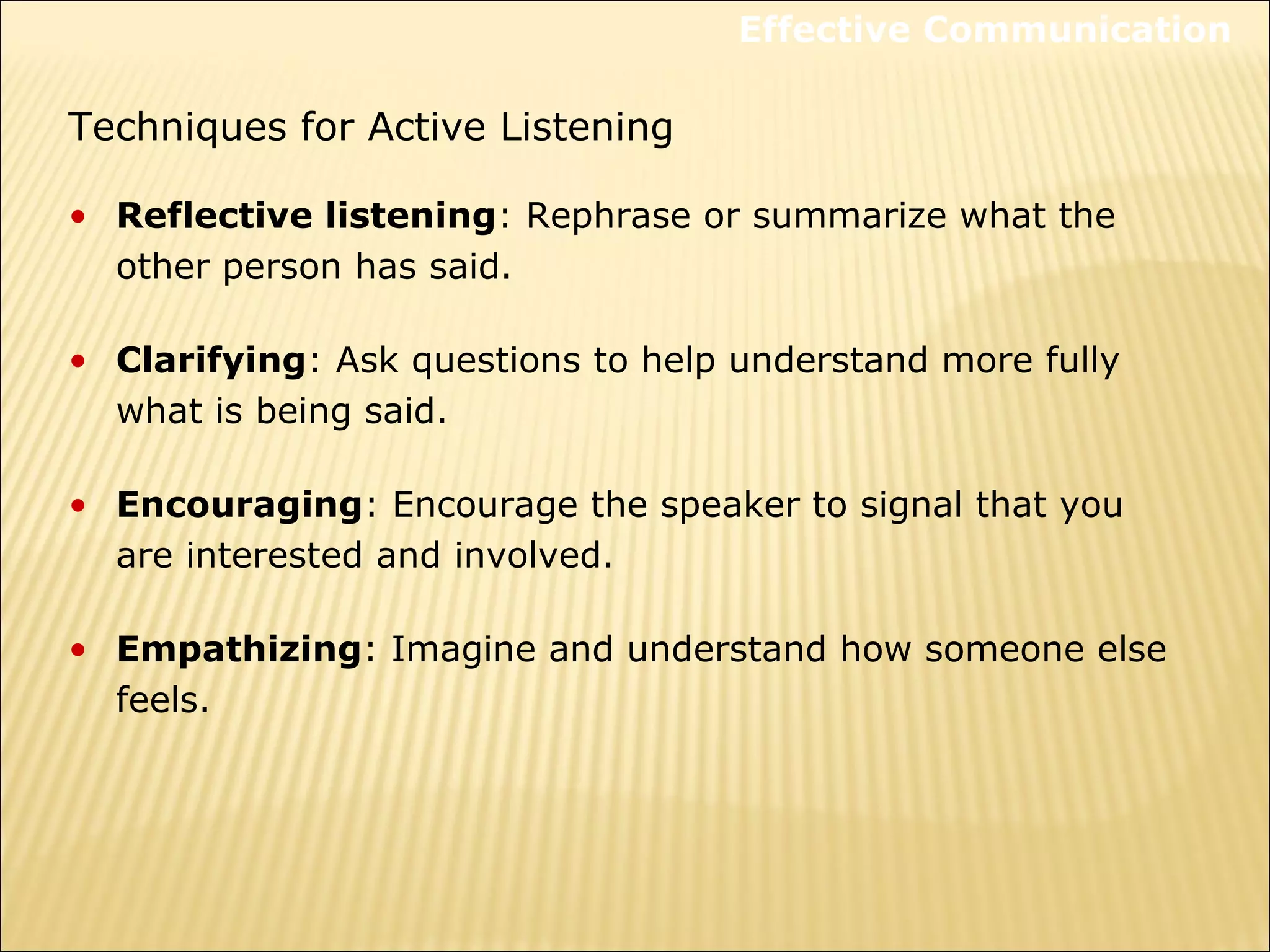
Techniques for Active Listening
• Reflective listening: Rephrase or summarize what the
other person has said.
• Clarifying: Ask questions to help understand more fully
what is being said.
• Encouraging: Encourage the speaker to signal that you
are interested and involved.
• Empathizing: Imagine and understand how someone else
feels.
Effective Communication
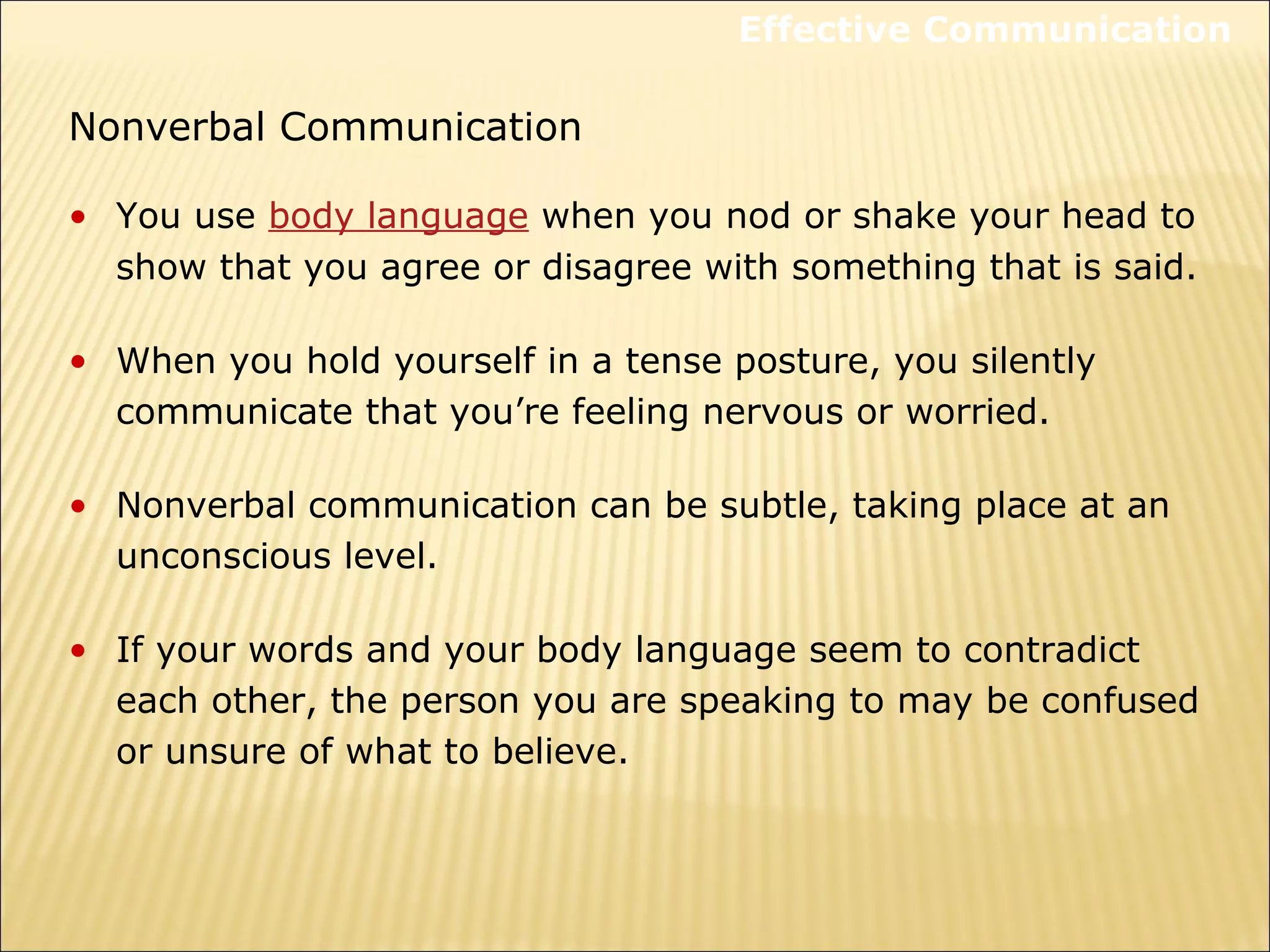
Nonverbal Communication
• You use body language when you nod or shake your head to
show that you agree or disagree with something that is said.
• When you hold yourself in a tense posture, you silently
communicate that you’re feeling nervous or worried.
• Nonverbal communication can be subtle, taking place at an
unconscious level.
• If your words and your body language seem to contradict
each other, the person you are speaking to may be confused
or unsure of what to believe.
Effective Communication
Obstacles to Clear Communication
• Image and identity issues
• Unrealistic expectations
• Lack of trust
• Prejudice
• Gender stereotyping
Image and Identity Issues
• Many teens spend at least part of their teen years searching
for an identity.
• If someone is unsure of his or her values, the uncertainty
can complicate the communication process.
Eliminating Communication Barriers
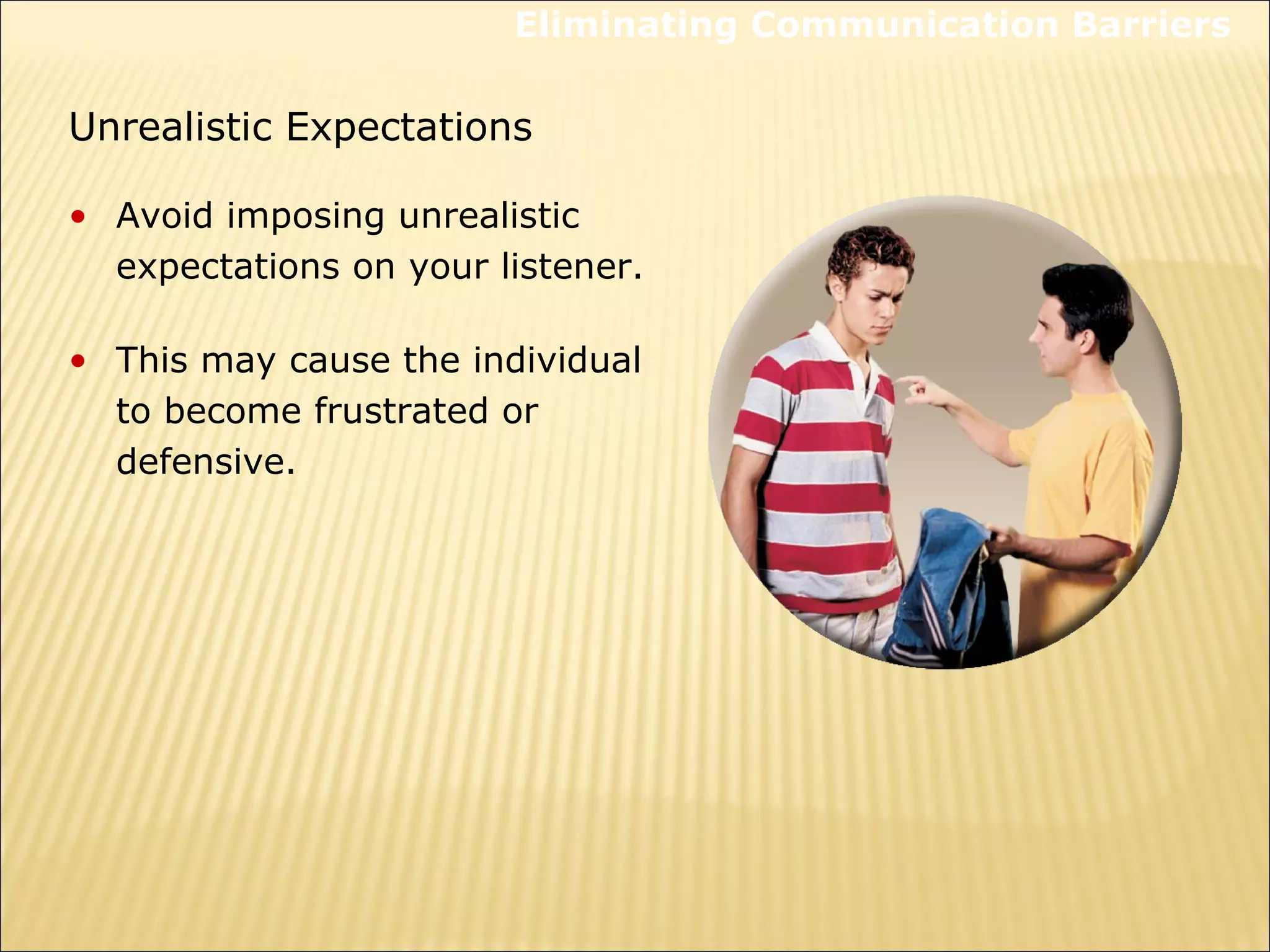
Unrealistic Expectations
• Avoid imposing unrealistic
expectations on your listener.
• This may cause the individual
to become frustrated or
defensive.
Eliminating Communication Barriers
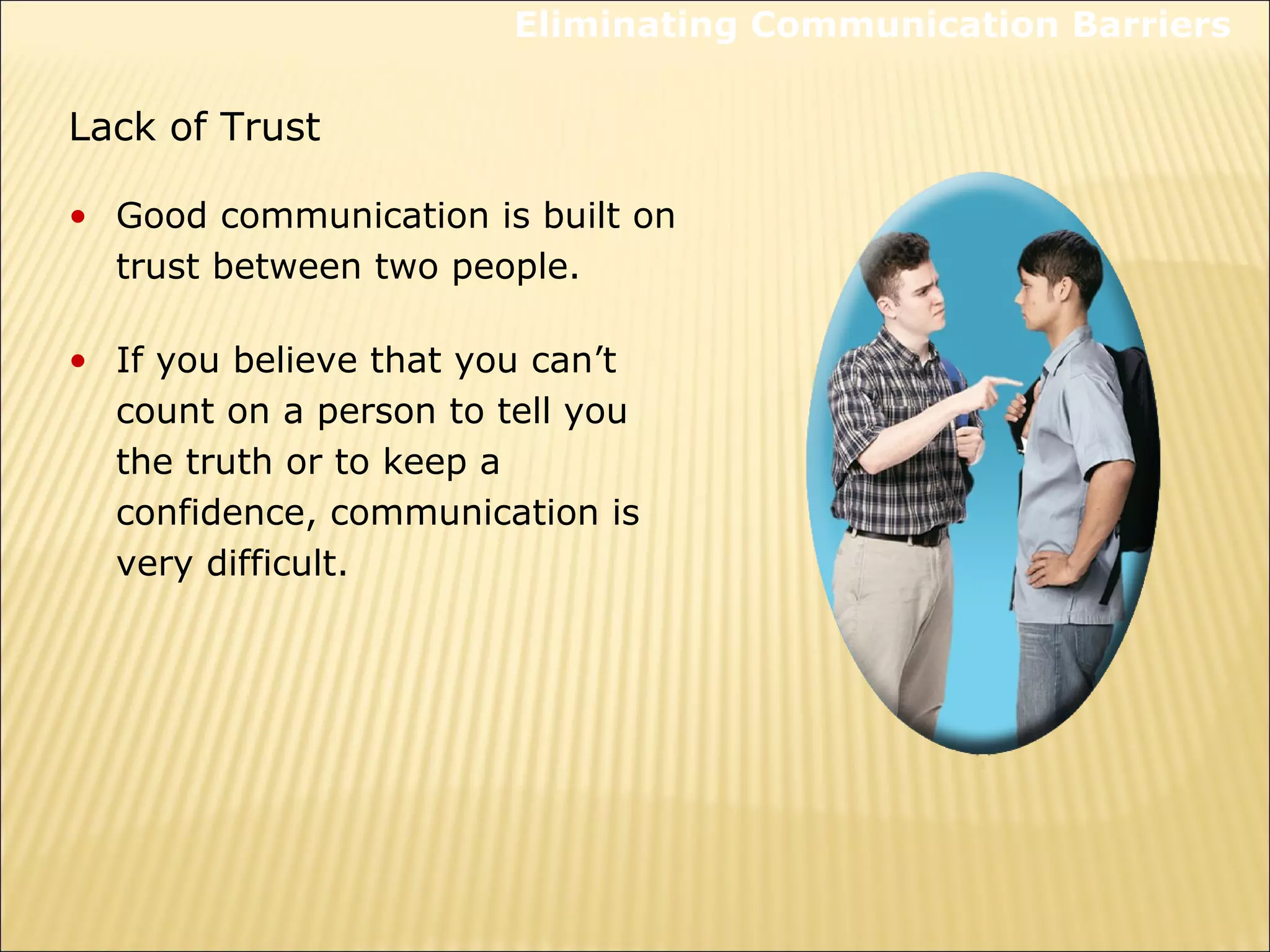
Lack of Trust
• Good communication is built on
trust between two people.
• If you believe that you can’t
count on a person to tell you
the truth or to keep a
confidence, communication is
very difficult.
Eliminating Communication Barriers
Prejudice
• Prejudice prevents a person from having an open mind and
listening to new information.
• To avoid developing prejudices, you can demonstrate
tolerance.
• Being tolerant helps you understand the differences among
people and recognize the value of diversity.
Eliminating Communication Barriers
• Gender stereotyping is a type of prejudice that involves
having an exaggerated or oversimplified belief about people
of a certain gender.
• Assuming that all males like sports and that all females
enjoy cooking are examples of gender stereotyping.
Gender Stereotyping
Eliminating Communication Barriers
Constructive Criticism
• Constructive criticism is intended to bring about positive
changes.
• You may find that giving the person feedback in a more
positive manner helps him or her and your relationship.
• It is very important to begin your discussion by using an “I”
message to explain how you feel.
• Point out what the person is doing or has done, and suggest
a better way to do it.
Constructive Feedback
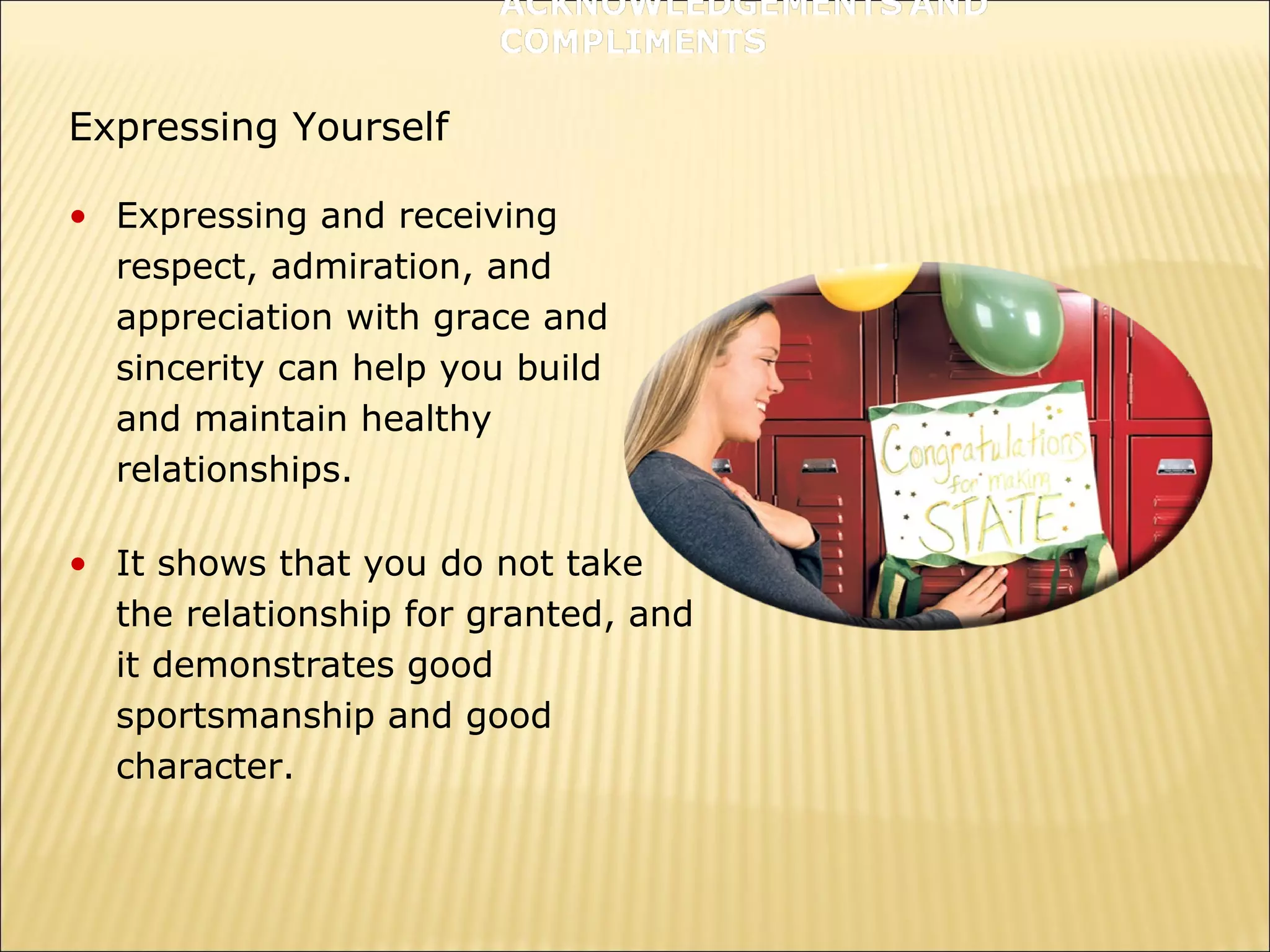
Expressing Yourself
• Expressing and receiving
respect, admiration, and
appreciation with grace and
sincerity can help you build
and maintain healthy
relationships.
• It shows that you do not take
the relationship for granted, and
it demonstrates good
sportsmanship and good
character.

Learning to communicate effectively

  • 2.
    • Akangbe Jamiu E. •Fellow DAS7. • Ambassador, TIE Nigeria. Trainer, Founder, Coach, Advocates and Data Enthusiast
  • 3.
    People use manydifferent ways to communicate their feelings. Writing a note Facial expressions Communication is critical to healthy relationships.
  • 4.
    • Compare theforms of communication, including passive, aggressive, or assertive communication • Develop the communication skills you need to build healthy relationships with family, friends, peers, and others • Demonstrate communication skills that show respect for self, family, friends, and others In this lesson, you will learn to:
  • 5.
    Being an effectivecommunicator means that you correctly interpret the messages you receive and respond appropriately. Basic Communication Skills Three basic skills are needed for effective communication: 1. Speaking 2. Listening 3. Body language
  • 6.
    Communication Styles • Passivecommunicators do not stand up for themselves or defend their attitudes or beliefs. • Aggressive communicators often try to get their way through bullying and intimidation. • Assertive communicators defend their attitudes and beliefs, but they also respect the rights of others. Effective Communication
  • 7.
    Speaking Skills • Youdemonstrate good speaking skills when you clearly say what you mean. • Changes in the tone, pitch, or loudness of your voice can affect communication. • Using “I” messages can help you communicate your feelings positively, without blame or name-calling. Effective Communication
  • 8.
    Stating Your FeelingsEffectively Effective Communication
  • 9.
    Listening Skills • Youcan make use of active listening to improve your communication skills. • Active listening involves giving your full attention to whatever the speaker is saying without interrupting or making judgments. Effective Communication
  • 10.
    Tips for ActiveListening Make direct eye contact. Use body language and signals, which show you are listening. Don’t interrupt the speaker. Put away prejudices, images, or assumptions. Effective Communication
  • 11.
    Techniques for ActiveListening • Reflective listening: Rephrase or summarize what the other person has said. • Clarifying: Ask questions to help understand more fully what is being said. • Encouraging: Encourage the speaker to signal that you are interested and involved. • Empathizing: Imagine and understand how someone else feels. Effective Communication
  • 12.
    Nonverbal Communication • Youuse body language when you nod or shake your head to show that you agree or disagree with something that is said. • When you hold yourself in a tense posture, you silently communicate that you’re feeling nervous or worried. • Nonverbal communication can be subtle, taking place at an unconscious level. • If your words and your body language seem to contradict each other, the person you are speaking to may be confused or unsure of what to believe. Effective Communication
  • 13.
    Obstacles to ClearCommunication • Image and identity issues • Unrealistic expectations • Lack of trust • Prejudice • Gender stereotyping
  • 14.
    Image and IdentityIssues • Many teens spend at least part of their teen years searching for an identity. • If someone is unsure of his or her values, the uncertainty can complicate the communication process. Eliminating Communication Barriers
  • 15.
    Unrealistic Expectations • Avoidimposing unrealistic expectations on your listener. • This may cause the individual to become frustrated or defensive. Eliminating Communication Barriers
  • 16.
    Lack of Trust •Good communication is built on trust between two people. • If you believe that you can’t count on a person to tell you the truth or to keep a confidence, communication is very difficult. Eliminating Communication Barriers
  • 17.
    Prejudice • Prejudice preventsa person from having an open mind and listening to new information. • To avoid developing prejudices, you can demonstrate tolerance. • Being tolerant helps you understand the differences among people and recognize the value of diversity. Eliminating Communication Barriers
  • 18.
    • Gender stereotypingis a type of prejudice that involves having an exaggerated or oversimplified belief about people of a certain gender. • Assuming that all males like sports and that all females enjoy cooking are examples of gender stereotyping. Gender Stereotyping Eliminating Communication Barriers
  • 19.
    Constructive Criticism • Constructivecriticism is intended to bring about positive changes. • You may find that giving the person feedback in a more positive manner helps him or her and your relationship. • It is very important to begin your discussion by using an “I” message to explain how you feel. • Point out what the person is doing or has done, and suggest a better way to do it. Constructive Feedback
  • 20.
    Expressing Yourself • Expressingand receiving respect, admiration, and appreciation with grace and sincerity can help you build and maintain healthy relationships. • It shows that you do not take the relationship for granted, and it demonstrates good sportsmanship and good character.