C H A P T E R

Individual
Behavior and
Learning in
business/
Organizations
McShane/ Von Glinow 2/e

Copyright © 2003 by The McGraw-Hill Companies, Inc. All rights reserved.
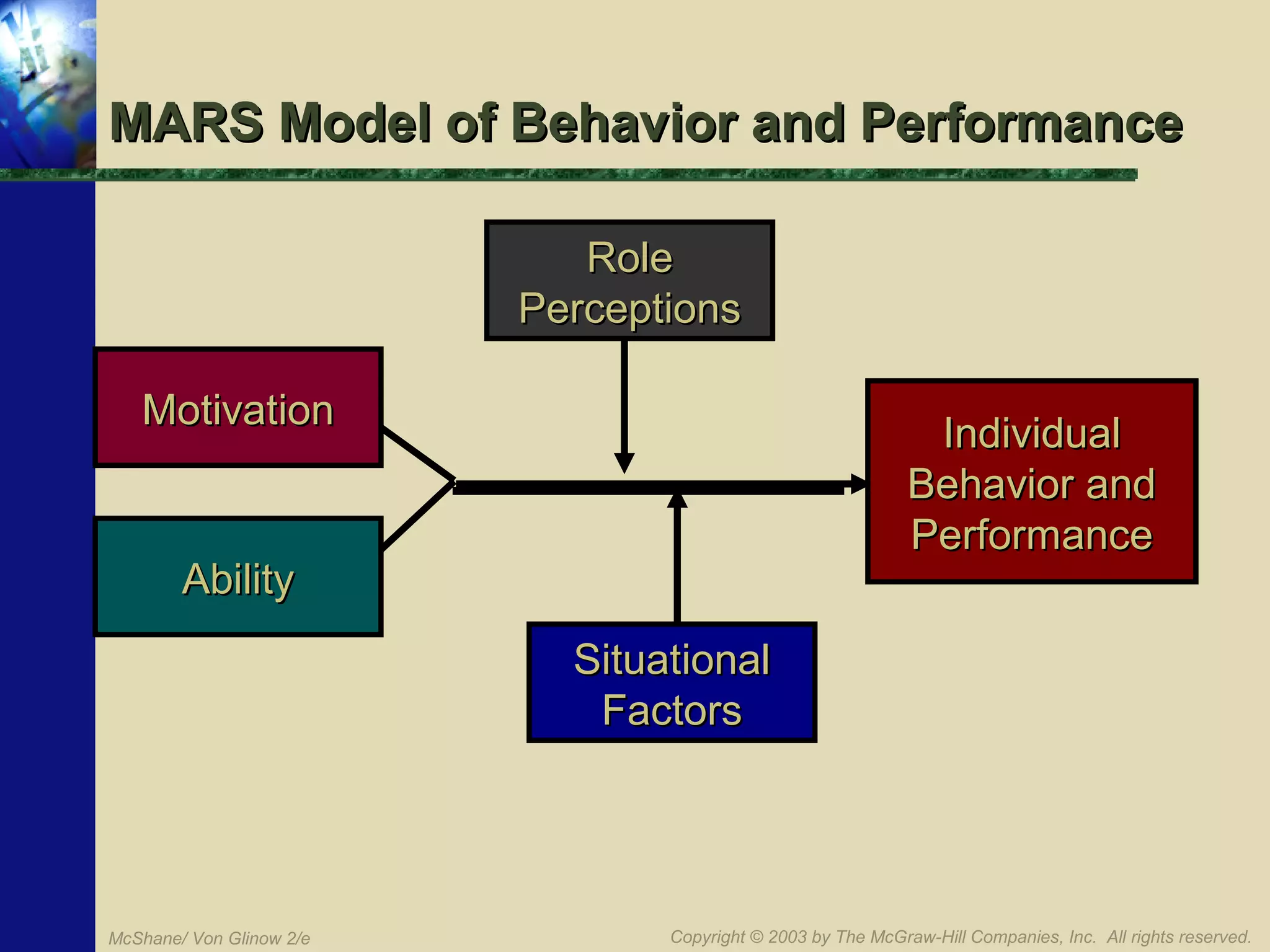
MARS Model of Behavior and Performance
Role
Perceptions
Motivation

Individual
Behavior and
Performance

Ability
Situational
Factors

McShane/ Von Glinow 2/e

Copyright © 2003 by The McGraw-Hill Companies, Inc. All rights reserved.
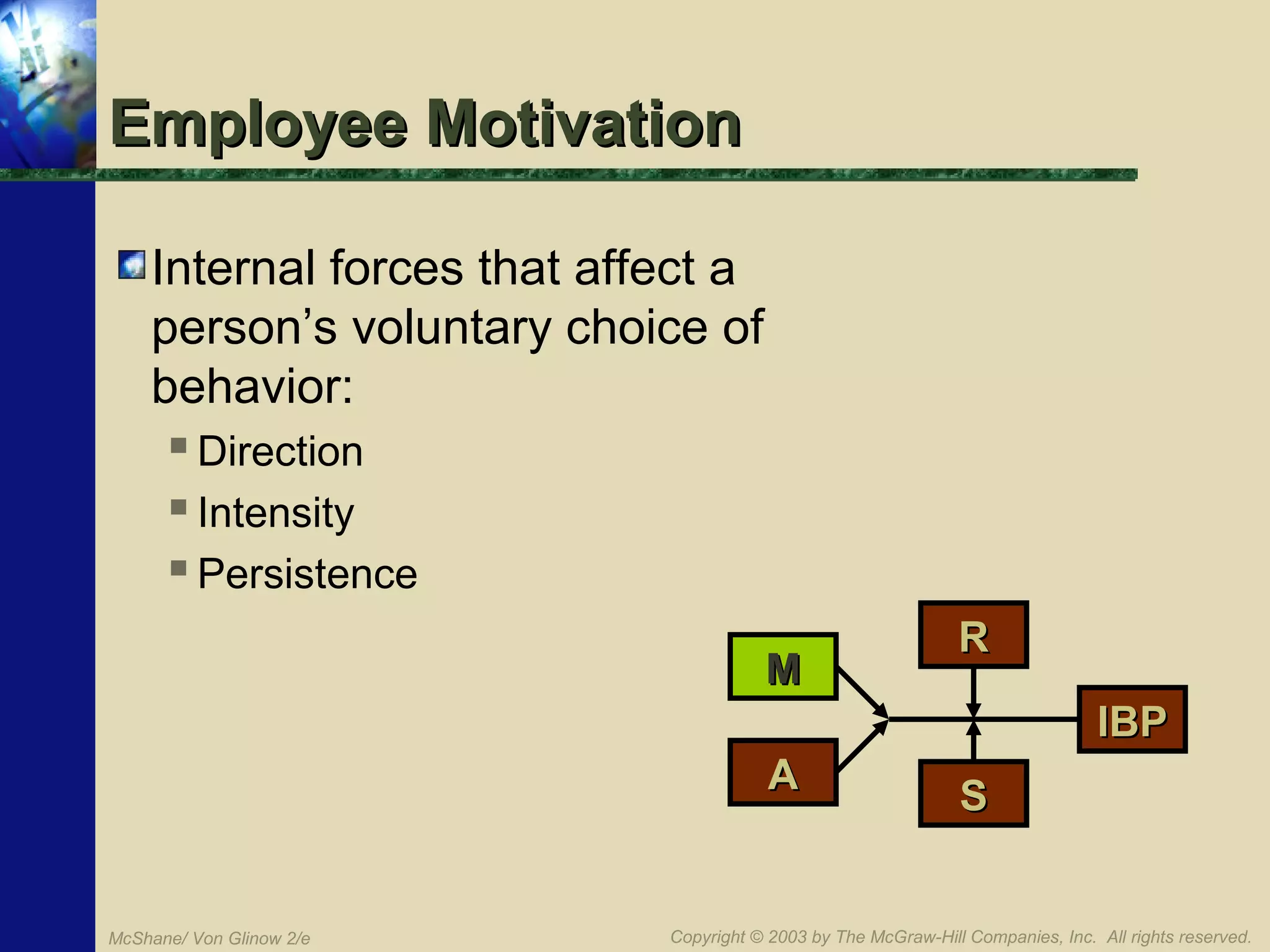
Employee Motivation
Internal forces that affect a
person’s voluntary choice of
behavior:
 Direction
 Intensity
 Persistence
M

R
IBP

A

McShane/ Von Glinow 2/e

S

Copyright © 2003 by The McGraw-Hill Companies, Inc. All rights reserved.
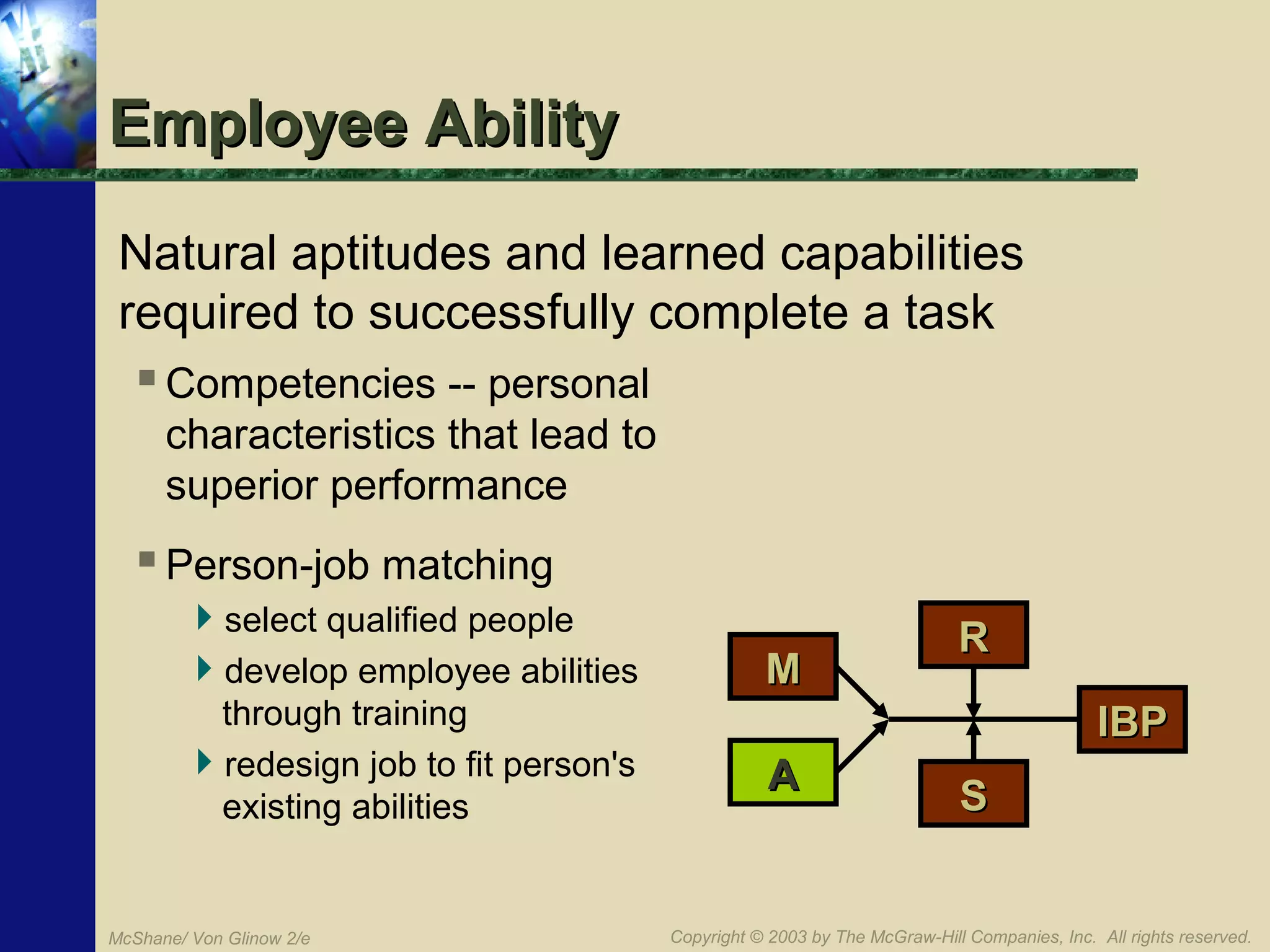
Employee Ability
Natural aptitudes and learned capabilities
required to successfully complete a task
 Competencies -- personal
characteristics that lead to
superior performance

 Person-job matching
select qualified people
develop employee abilities
through training
redesign job to fit person's
existing abilities

McShane/ Von Glinow 2/e

M

R
IBP

A

S

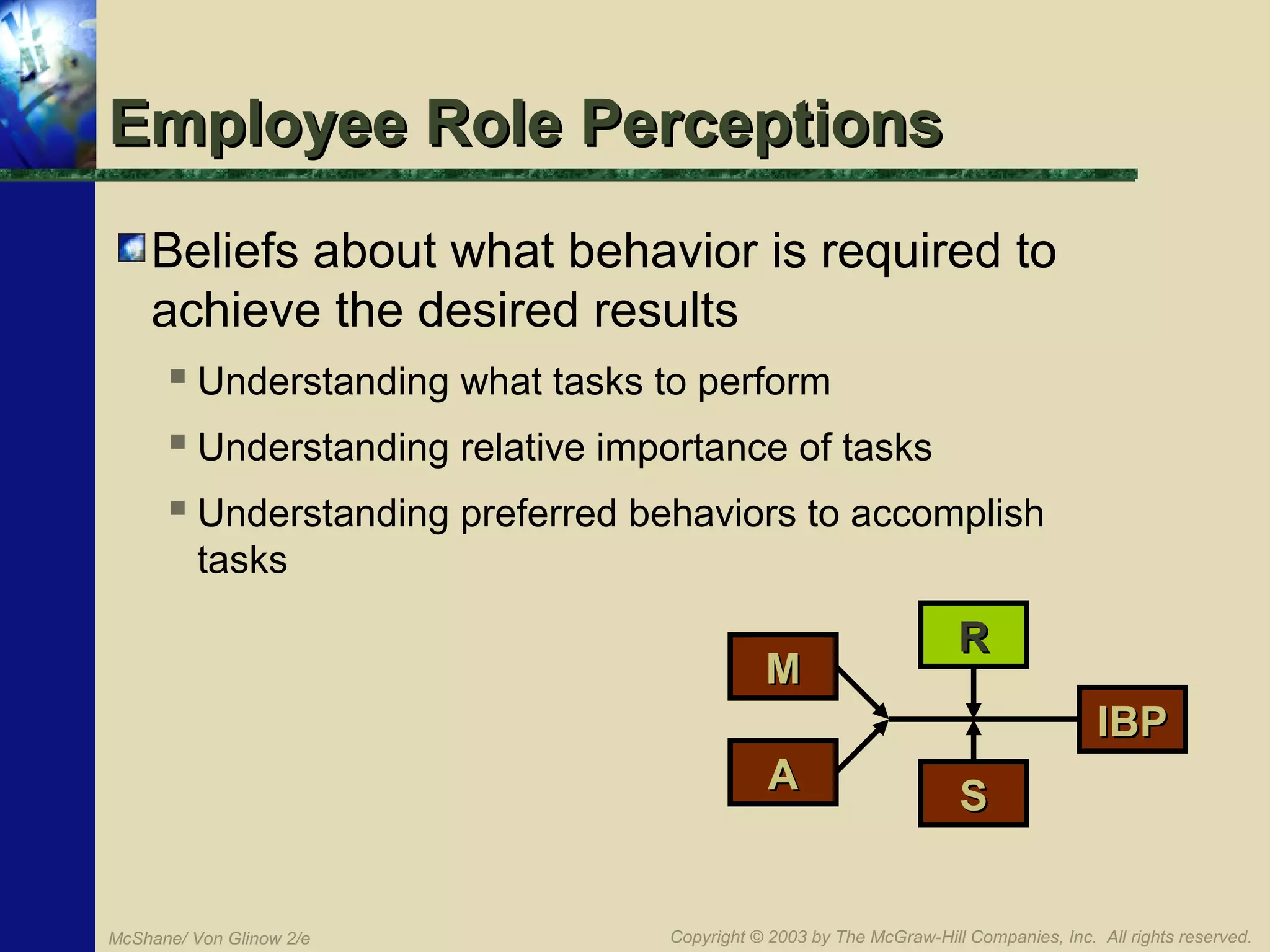
Copyright © 2003 by The McGraw-Hill Companies, Inc. All rights reserved.
Employee Role Perceptions
Beliefs about what behavior is required to
achieve the desired results
 Understanding what tasks to perform
 Understanding relative importance of tasks
 Understanding preferred behaviors to accomplish
tasks

M

R
IBP

A

McShane/ Von Glinow 2/e

S

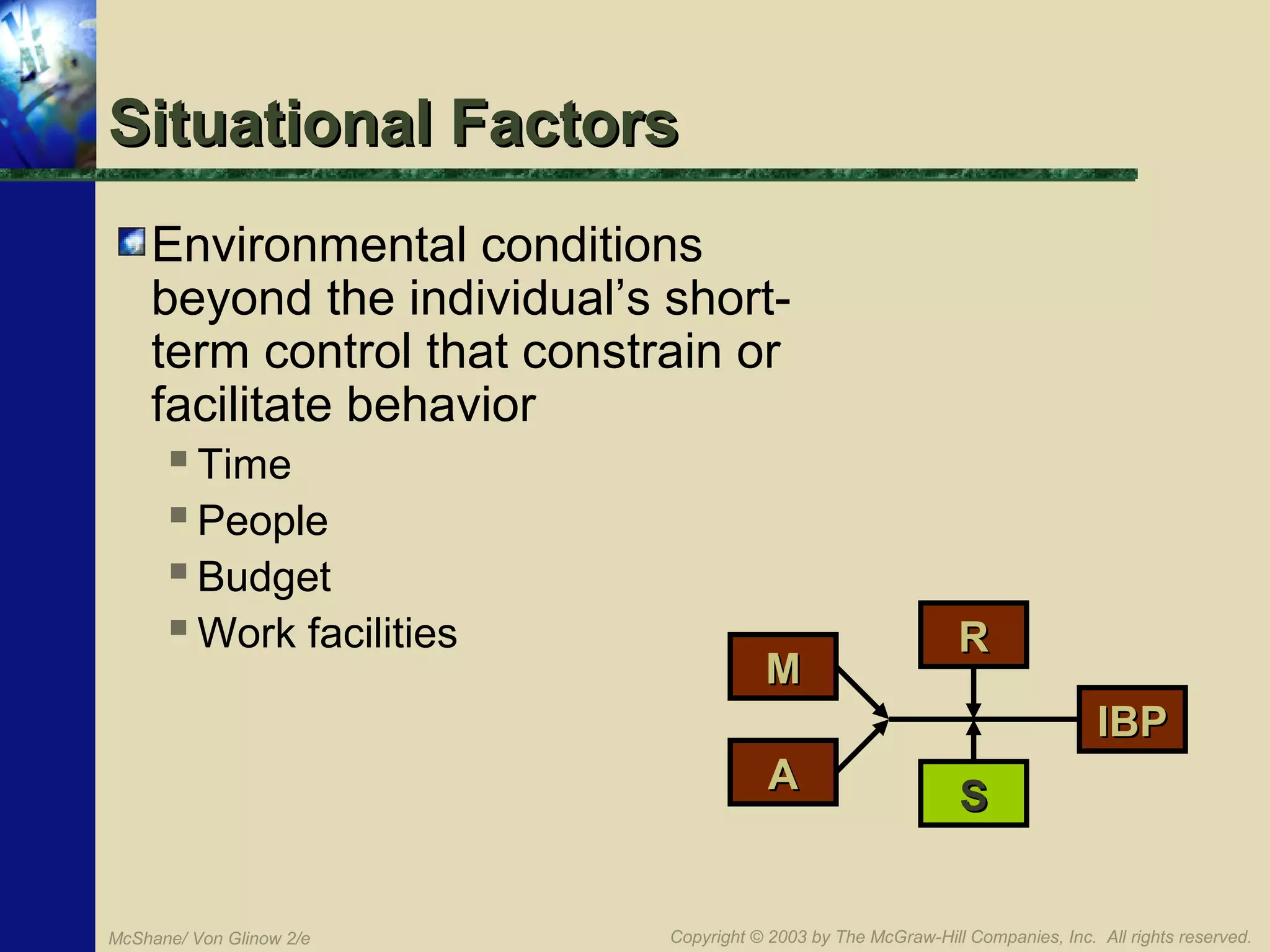
Copyright © 2003 by The McGraw-Hill Companies, Inc. All rights reserved.
Situational Factors
Environmental conditions
beyond the individual’s shortterm control that constrain or
facilitate behavior
 Time
 People
 Budget
 Work facilities

M

R
IBP

A

McShane/ Von Glinow 2/e

S

Copyright © 2003 by The McGraw-Hill Companies, Inc. All rights reserved.
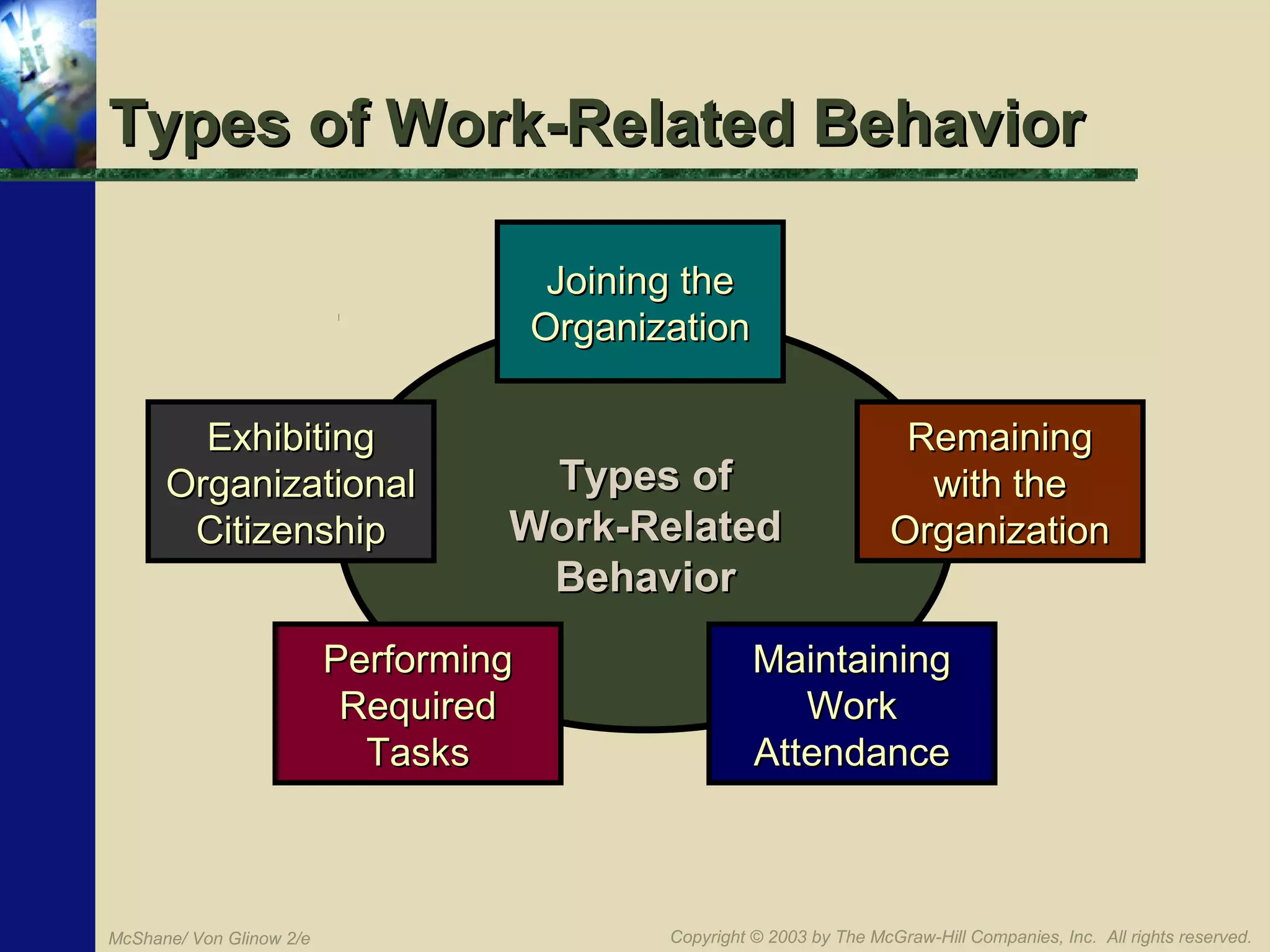
Types of Work-Related Behavior
Joining the
Organization
Exhibiting
Organizational
Citizenship

Types of
Work-Related
Behavior

Performing
Required
Tasks

McShane/ Von Glinow 2/e

Remaining
with the
Organization

Maintaining
Work
Attendance

Copyright © 2003 by The McGraw-Hill Companies, Inc. All rights reserved.
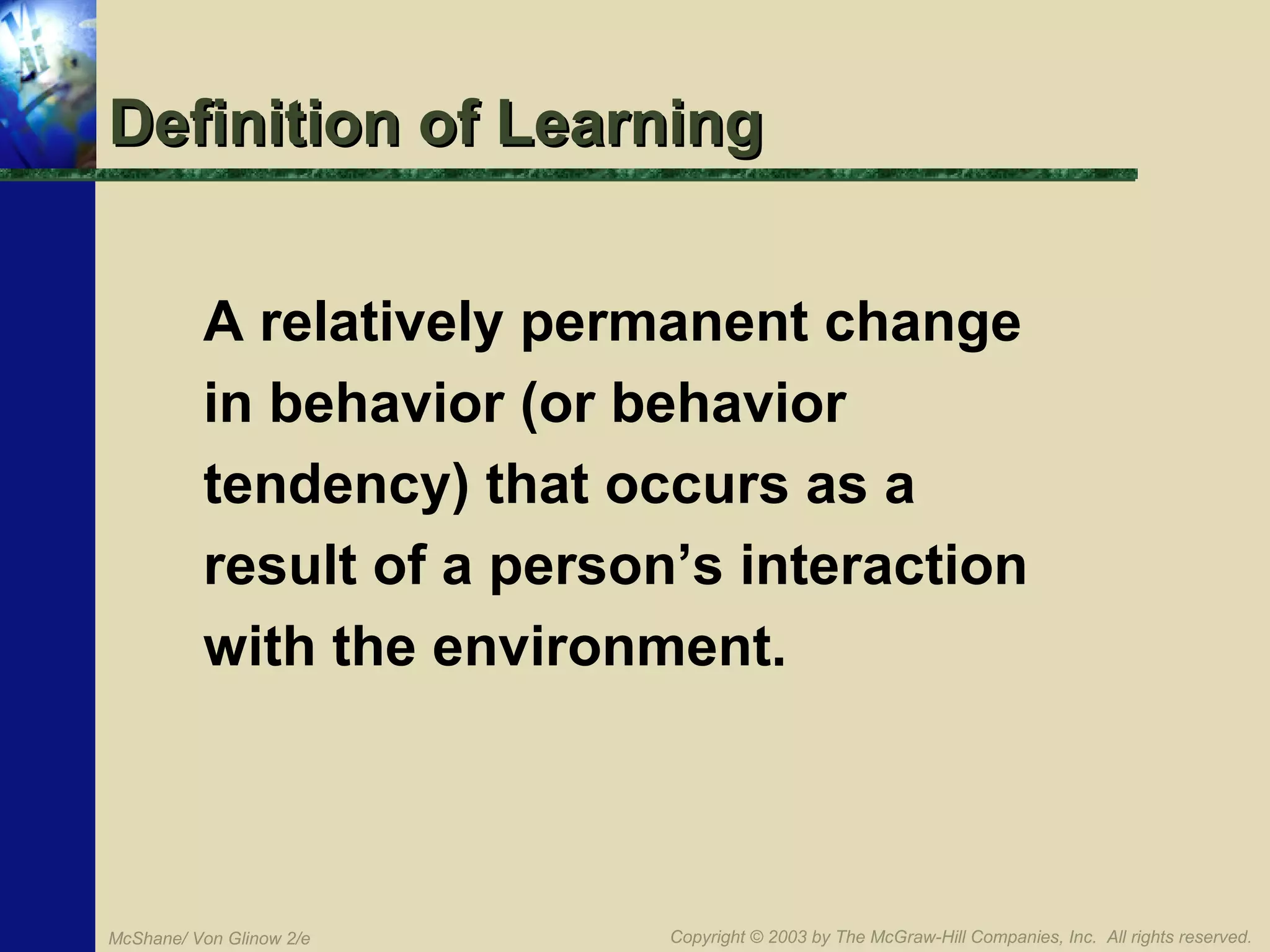
Definition of Learning
A relatively permanent change
in behavior (or behavior
tendency) that occurs as a
result of a person’s interaction
with the environment.

McShane/ Von Glinow 2/e

Copyright © 2003 by The McGraw-Hill Companies, Inc. All rights reserved.
Behavior Modification
We “operate” on the environment
 Alter behavior to maximize positive and minimize
adverse consequences.

Operant versus respondent behaviors
Law of effect
 Likelihood that an operant behavior will be
repeated depends on its consequences

McShane/ Von Glinow 2/e

Copyright © 2003 by The McGraw-Hill Companies, Inc. All rights reserved.
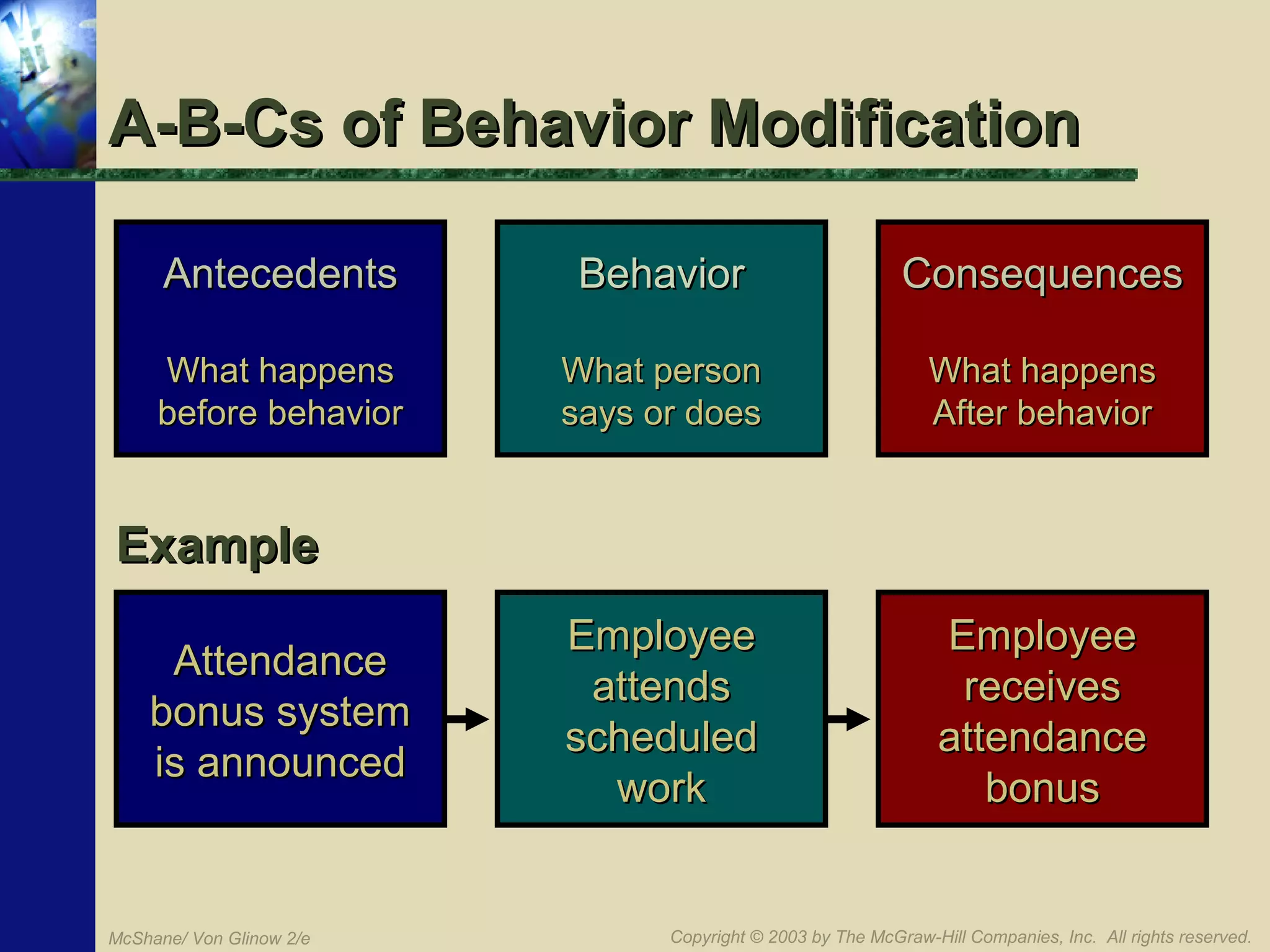
A-B-Cs of Behavior Modification
Antecedents

Behavior

Consequences

What happens
before behavior

What person
says or does

What happens
After behavior

Employee
attends
scheduled
work

Employee
receives
attendance
bonus

Example
Attendance
bonus system
is announced

McShane/ Von Glinow 2/e

Copyright © 2003 by The McGraw-Hill Companies, Inc. All rights reserved.
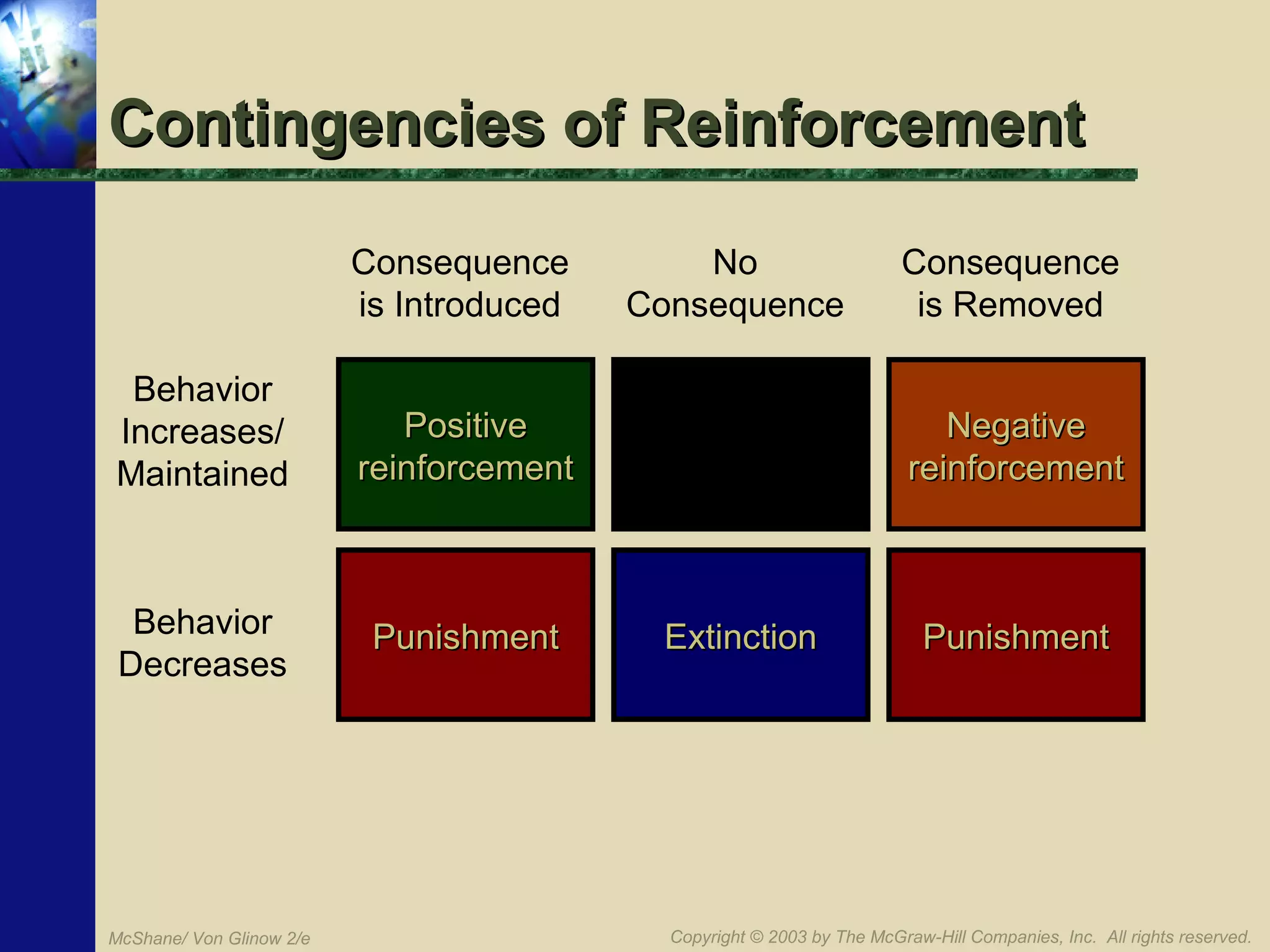
Contingencies of Reinforcement
Consequence
is Introduced
Behavior
Increases/
Maintained

Positive
reinforcement

Behavior
Decreases

Punishment

No
Consequence

McShane/ Von Glinow 2/e

Consequence
is Removed
Negative
reinforcement

Extinction

Punishment

Copyright © 2003 by The McGraw-Hill Companies, Inc. All rights reserved.
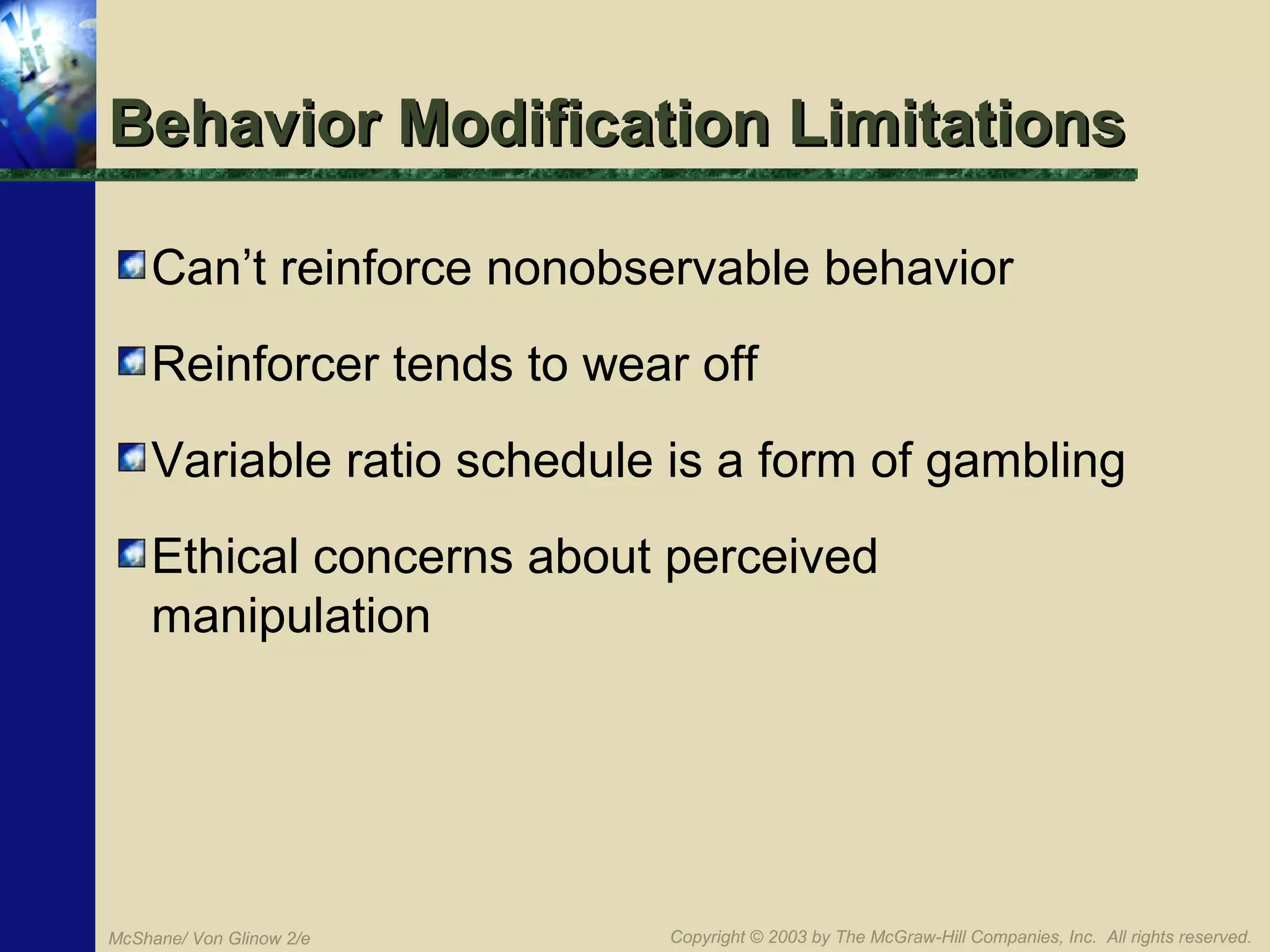
Behavior Modification Limitations
Can’t reinforce nonobservable behavior
Reinforcer tends to wear off
Variable ratio schedule is a form of gambling
Ethical concerns about perceived
manipulation

McShane/ Von Glinow 2/e

Copyright © 2003 by The McGraw-Hill Companies, Inc. All rights reserved.
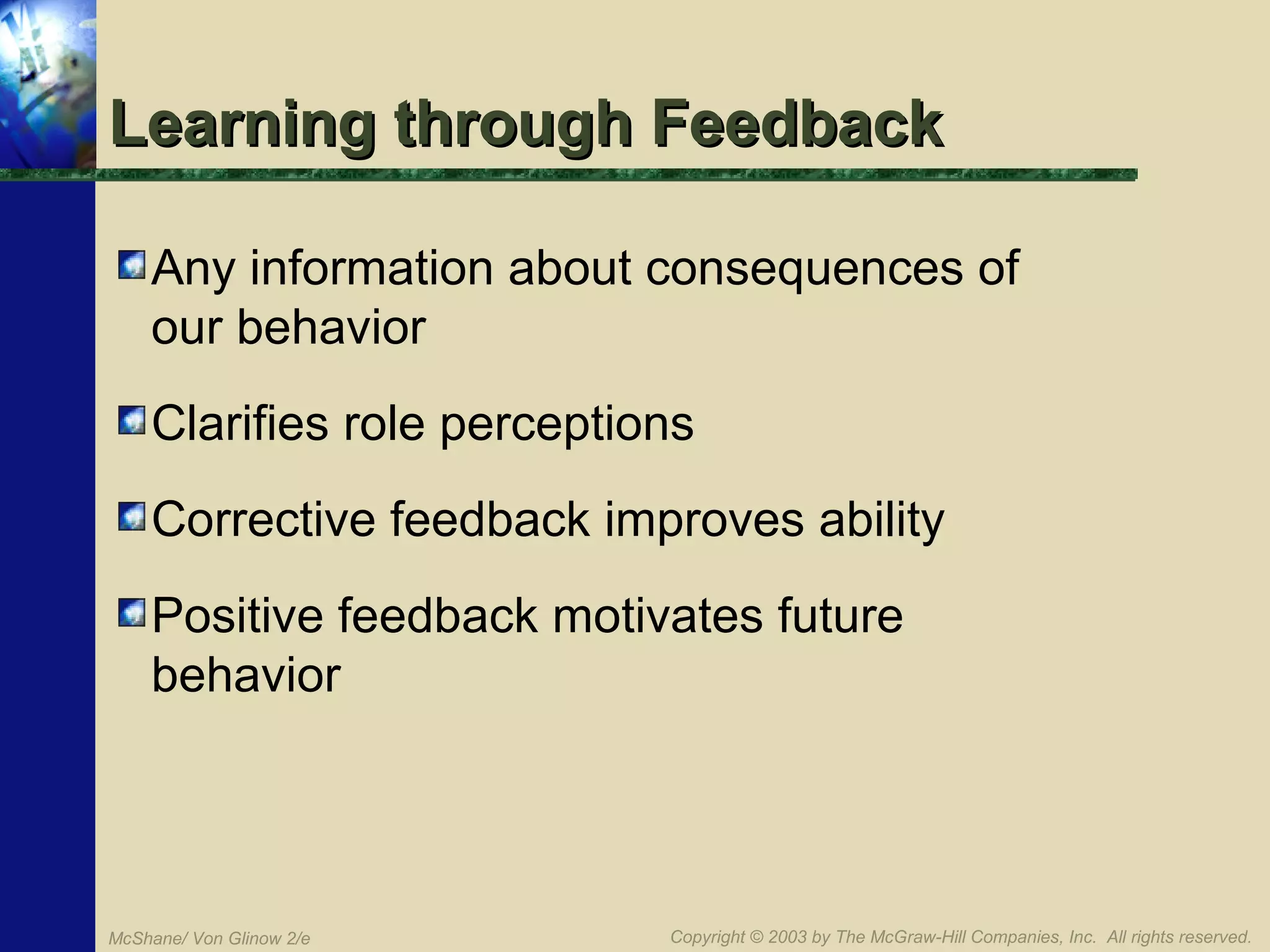
Learning through Feedback
Any information about consequences of
our behavior
Clarifies role perceptions
Corrective feedback improves ability
Positive feedback motivates future
behavior

McShane/ Von Glinow 2/e

Copyright © 2003 by The McGraw-Hill Companies, Inc. All rights reserved.
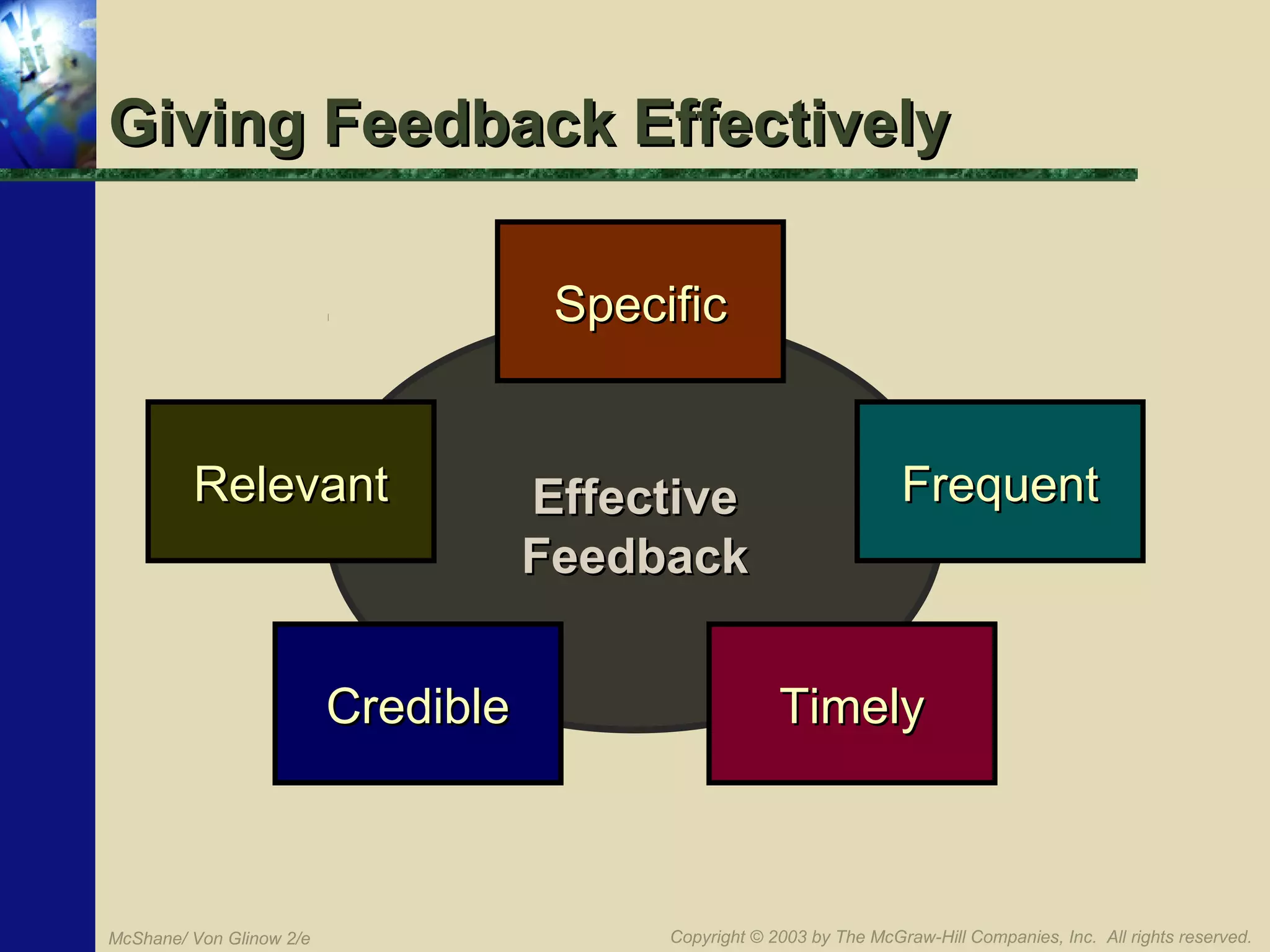
Giving Feedback Effectively
Specific
Relevant

Credible

McShane/ Von Glinow 2/e

Effective
Feedback

Frequent

Timely

Copyright © 2003 by The McGraw-Hill Companies, Inc. All rights reserved.
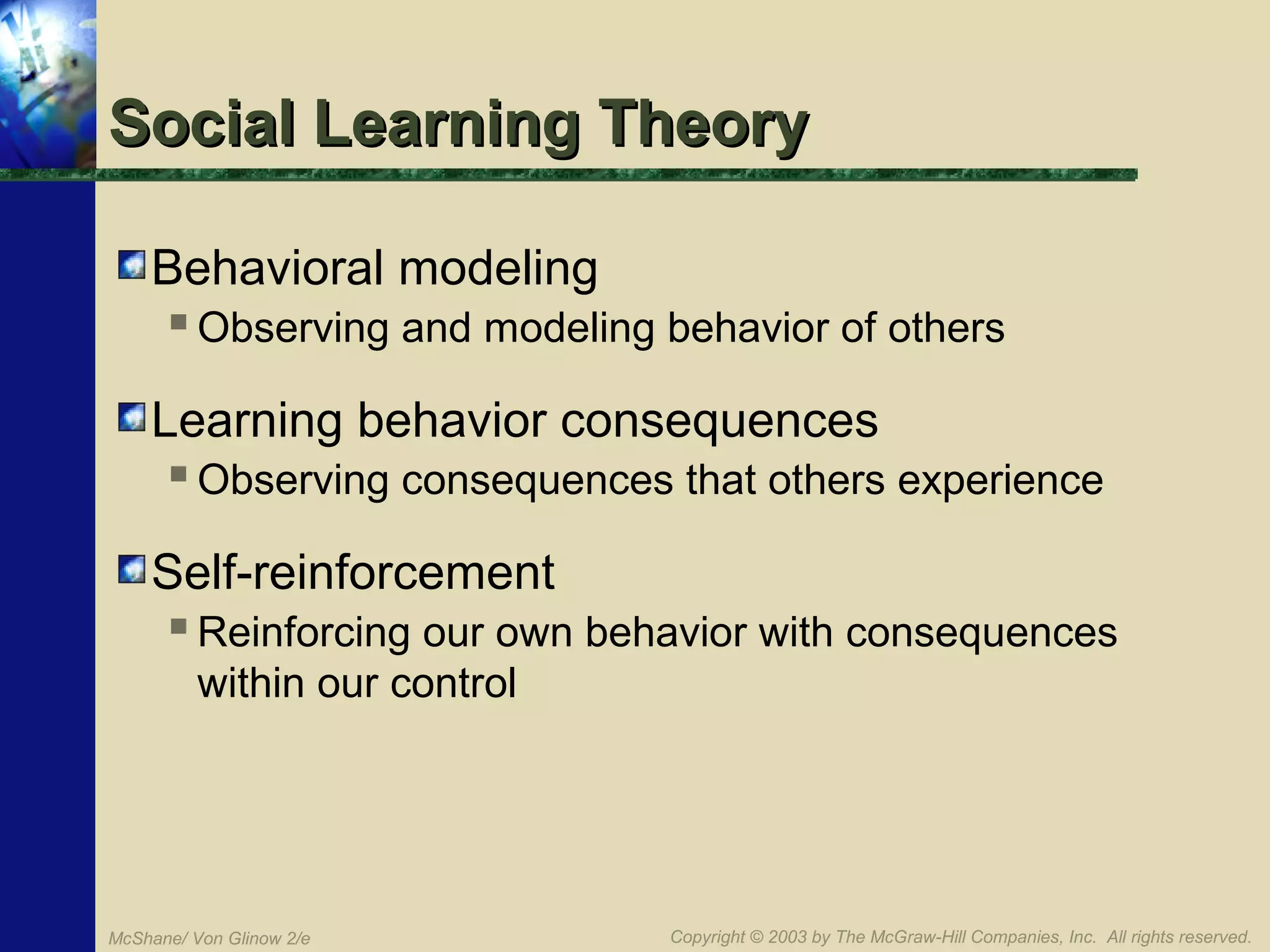
Social Learning Theory
Behavioral modeling
 Observing and modeling behavior of others
Learning behavior consequences
 Observing consequences that others experience
Self-reinforcement
 Reinforcing our own behavior with consequences
within our control

McShane/ Von Glinow 2/e

Copyright © 2003 by The McGraw-Hill Companies, Inc. All rights reserved.
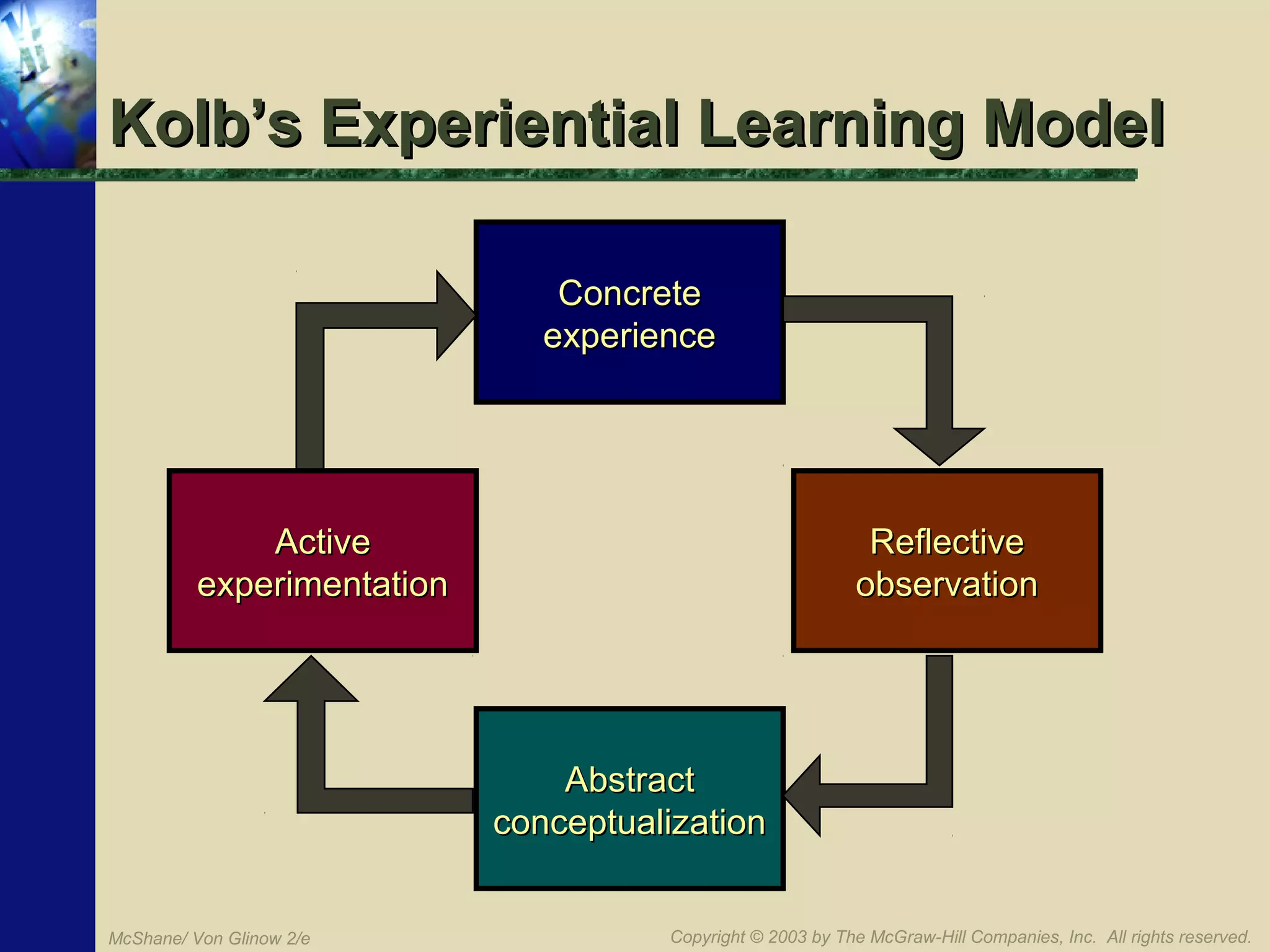
Kolb’s Experiential Learning Model
Concrete
experience

Active
experimentation

Reflective
observation

Abstract
conceptualization
McShane/ Von Glinow 2/e

Copyright © 2003 by The McGraw-Hill Companies, Inc. All rights reserved.
Developing a Learning Orientation
Value the generation of
new knowledge
Reward experimentation
Recognize mistakes as
part of learning process
Encourage employees
to take reasonable risks

McShane/ Von Glinow 2/e

Courtesy of CREST

Copyright © 2003 by The McGraw-Hill Companies, Inc. All rights reserved.
Action Learning
Experiential learning in which employees are
involved in a “real, complex, and stressful
problem,” usually in teams, with immediate
relevance to the company
 Concrete experience
 Learning meetings
 Team conceptualizes and applies a solution to a
problem

McShane/ Von Glinow 2/e

Copyright © 2003 by The McGraw-Hill Companies, Inc. All rights reserved.
C H A P T E R

Individual
Behavior and
Learning in
Organizations
McShane/ Von Glinow 2/e

Copyright © 2003 by The McGraw-Hill Companies, Inc. All rights reserved.

Individual Behavior and Learning in business/ Organizations

  • 1.
    C H AP T E R Individual Behavior and Learning in business/ Organizations McShane/ Von Glinow 2/e Copyright © 2003 by The McGraw-Hill Companies, Inc. All rights reserved.
  • 2.
    MARS Model ofBehavior and Performance Role Perceptions Motivation Individual Behavior and Performance Ability Situational Factors McShane/ Von Glinow 2/e Copyright © 2003 by The McGraw-Hill Companies, Inc. All rights reserved.
  • 3.
    Employee Motivation Internal forcesthat affect a person’s voluntary choice of behavior:  Direction  Intensity  Persistence M R IBP A McShane/ Von Glinow 2/e S Copyright © 2003 by The McGraw-Hill Companies, Inc. All rights reserved.
  • 4.
    Employee Ability Natural aptitudesand learned capabilities required to successfully complete a task  Competencies -- personal characteristics that lead to superior performance  Person-job matching select qualified people develop employee abilities through training redesign job to fit person's existing abilities McShane/ Von Glinow 2/e M R IBP A S Copyright © 2003 by The McGraw-Hill Companies, Inc. All rights reserved.
  • 5.
    Employee Role Perceptions Beliefsabout what behavior is required to achieve the desired results  Understanding what tasks to perform  Understanding relative importance of tasks  Understanding preferred behaviors to accomplish tasks M R IBP A McShane/ Von Glinow 2/e S Copyright © 2003 by The McGraw-Hill Companies, Inc. All rights reserved.
  • 6.
    Situational Factors Environmental conditions beyondthe individual’s shortterm control that constrain or facilitate behavior  Time  People  Budget  Work facilities M R IBP A McShane/ Von Glinow 2/e S Copyright © 2003 by The McGraw-Hill Companies, Inc. All rights reserved.
  • 7.
    Types of Work-RelatedBehavior Joining the Organization Exhibiting Organizational Citizenship Types of Work-Related Behavior Performing Required Tasks McShane/ Von Glinow 2/e Remaining with the Organization Maintaining Work Attendance Copyright © 2003 by The McGraw-Hill Companies, Inc. All rights reserved.
  • 8.
    Definition of Learning Arelatively permanent change in behavior (or behavior tendency) that occurs as a result of a person’s interaction with the environment. McShane/ Von Glinow 2/e Copyright © 2003 by The McGraw-Hill Companies, Inc. All rights reserved.
  • 9.
    Behavior Modification We “operate”on the environment  Alter behavior to maximize positive and minimize adverse consequences. Operant versus respondent behaviors Law of effect  Likelihood that an operant behavior will be repeated depends on its consequences McShane/ Von Glinow 2/e Copyright © 2003 by The McGraw-Hill Companies, Inc. All rights reserved.
  • 10.
    A-B-Cs of BehaviorModification Antecedents Behavior Consequences What happens before behavior What person says or does What happens After behavior Employee attends scheduled work Employee receives attendance bonus Example Attendance bonus system is announced McShane/ Von Glinow 2/e Copyright © 2003 by The McGraw-Hill Companies, Inc. All rights reserved.
  • 11.
    Contingencies of Reinforcement Consequence isIntroduced Behavior Increases/ Maintained Positive reinforcement Behavior Decreases Punishment No Consequence McShane/ Von Glinow 2/e Consequence is Removed Negative reinforcement Extinction Punishment Copyright © 2003 by The McGraw-Hill Companies, Inc. All rights reserved.
  • 12.
    Behavior Modification Limitations Can’treinforce nonobservable behavior Reinforcer tends to wear off Variable ratio schedule is a form of gambling Ethical concerns about perceived manipulation McShane/ Von Glinow 2/e Copyright © 2003 by The McGraw-Hill Companies, Inc. All rights reserved.
  • 13.
    Learning through Feedback Anyinformation about consequences of our behavior Clarifies role perceptions Corrective feedback improves ability Positive feedback motivates future behavior McShane/ Von Glinow 2/e Copyright © 2003 by The McGraw-Hill Companies, Inc. All rights reserved.
  • 14.
    Giving Feedback Effectively Specific Relevant Credible McShane/Von Glinow 2/e Effective Feedback Frequent Timely Copyright © 2003 by The McGraw-Hill Companies, Inc. All rights reserved.
  • 15.
    Social Learning Theory Behavioralmodeling  Observing and modeling behavior of others Learning behavior consequences  Observing consequences that others experience Self-reinforcement  Reinforcing our own behavior with consequences within our control McShane/ Von Glinow 2/e Copyright © 2003 by The McGraw-Hill Companies, Inc. All rights reserved.
  • 16.
    Kolb’s Experiential LearningModel Concrete experience Active experimentation Reflective observation Abstract conceptualization McShane/ Von Glinow 2/e Copyright © 2003 by The McGraw-Hill Companies, Inc. All rights reserved.
  • 17.
    Developing a LearningOrientation Value the generation of new knowledge Reward experimentation Recognize mistakes as part of learning process Encourage employees to take reasonable risks McShane/ Von Glinow 2/e Courtesy of CREST Copyright © 2003 by The McGraw-Hill Companies, Inc. All rights reserved.
  • 18.
    Action Learning Experiential learningin which employees are involved in a “real, complex, and stressful problem,” usually in teams, with immediate relevance to the company  Concrete experience  Learning meetings  Team conceptualizes and applies a solution to a problem McShane/ Von Glinow 2/e Copyright © 2003 by The McGraw-Hill Companies, Inc. All rights reserved.
  • 19.
    C H AP T E R Individual Behavior and Learning in Organizations McShane/ Von Glinow 2/e Copyright © 2003 by The McGraw-Hill Companies, Inc. All rights reserved.