learningconnections
 Multidisciplinary 26, 28 • Science 30 • Computer Science 32 • Geography 34 • Mathematics 36 • Tips and Tricks 36


The Adventures of the 109’ers
                     By Diane Randolph


W
          ireless computer labs, the
          Internet, and blogging allow
          students to connect with the
world, help foster curiosity, and create
real-time learning. Students are em-
powered to look beyond the familiar,
ask questions, and discover. This past
school year, my fifth grade students,
the 109’ers, were able to do just that.
We used technology to enrich their
study of geology, culture, language
arts, and mathematics.
   My students first researched the
Arctic region and spent a month
studying its geography, climate,
traditional cultures, and animals.
   We then met and discussed
our findings with a friend of mine,
Doug Clevenger, a.k.a. “Arctic Doug.”
Clevenger is a documentary photo-
journalist, and he helped us discover
how geography, language arts, sci-
ence, and mathematics connect to
the community far outside our door.                              learning through the use of ULead
We bombarded him with questions                                  video-editing software, Excel graph-
and developed a classroom blog                                   ing, Internet researching, and exposi-
we affectionately named Top of the                               tory writing. We used technology as
World (http://arcticdougand109.                                  a means for expression and as an il-
blogspot.com).                                                   lustration of concept mastery. As the
   He took us along on his assignments,                          project developed, we became acutely
and we had many cyberadventures. We                              aware that we live in a global commu-
met interesting people, played hockey,                           nity where people, cultures, and life
and went ice fishing. We witnessed a                             experiences are both alike and differ-
solar halo—known as a sun dog—and                                ent from ours.
saw huge mounds of earth-covered ice                                The ULead software allowed us to
called pingos. We learned the tradi-                             create multimedia presentations to
tions and norms of the Inuit people,                             illustrate what we were learning. We
compared climate, and met other fifth                            mastered animation, created mov-
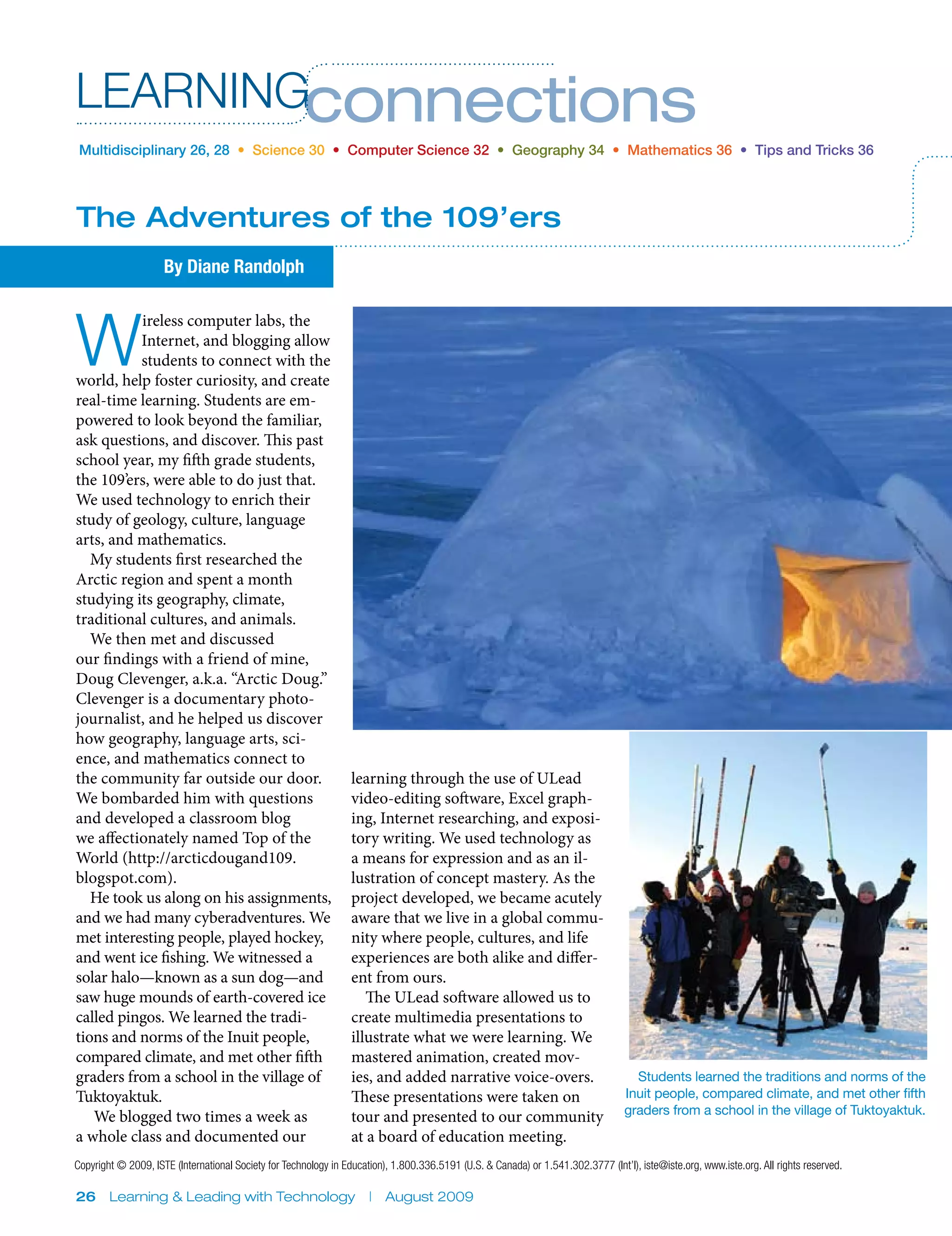
graders from a school in the village of                          ies, and added narrative voice-overs.                               Students learned the traditions and norms of the
Tuktoyaktuk.                                                     These presentations were taken on                                 Inuit people, compared climate, and met other fifth
                                                                                                                                   graders from a school in the village of Tuktoyaktuk.
   We blogged two times a week as                                tour and presented to our community
a whole class and documented our                                 at a board of education meeting.
Copyright © 2009, ISTE (International Society for Technology in Education), 1.800.336.5191 (U.S. & Canada) or 1.541.302.3777 (Int’l), iste@iste.org, www.iste.org. All rights reserved.

26      Learning & Leading with Technology |                              August 2009
LeArning connecTions                         |


                                                                                                                                                                    Multidisciplinary


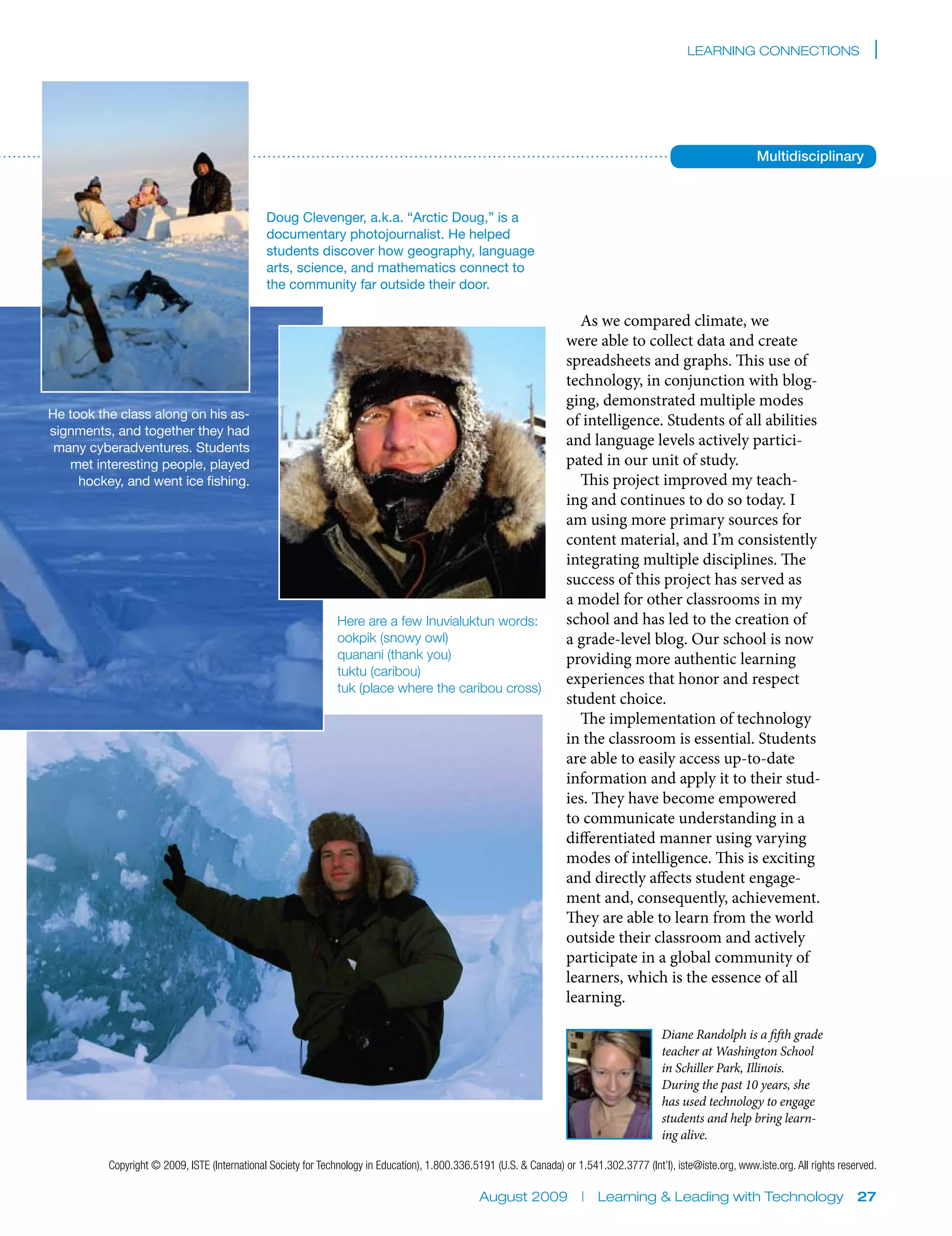
                                               Doug Clevenger, a.k.a. “Arctic Doug,” is a
                                               documentary photojournalist. He helped
                                               students discover how geography, language
                                               arts, science, and mathematics connect to
                                               the community far outside their door.

                                                                                                                         As we compared climate, we
                                                                                                                       were able to collect data and create
                                                                                                                       spreadsheets and graphs. This use of
                                                                                                                       technology, in conjunction with blog-
                                                                                                                       ging, demonstrated multiple modes
He took the class along on his as-                                                                                     of intelligence. Students of all abilities
signments, and together they had
 many cyberadventures. Students
                                                                                                                       and language levels actively partici-
   met interesting people, played                                                                                      pated in our unit of study.
     hockey, and went ice fishing.                                                                                       This project improved my teach-
                                                                                                                       ing and continues to do so today. I
                                                                                                                       am using more primary sources for
                                                                                                                       content material, and I’m consistently
                                                                                                                       integrating multiple disciplines. The
                                                                                                                       success of this project has served as
                                                                                                                       a model for other classrooms in my
                                                                Here are a few inuvialuktun words:                     school and has led to the creation of
                                                                ookpik (snowy owl)                                     a grade-level blog. Our school is now
                                                                quanani (thank you)                                    providing more authentic learning
                                                                tuktu (caribou)
                                                                                                                       experiences that honor and respect
                                                                tuk (place where the caribou cross)
                                                                                                                       student choice.
                                                                                                                         The implementation of technology
                                                                                                                       in the classroom is essential. Students
                                                                                                                       are able to easily access up-to-date
                                                                                                                       information and apply it to their stud-
                                                                                                                       ies. They have become empowered
                                                                                                                       to communicate understanding in a
                                                                                                                       differentiated manner using varying
                                                                                                                       modes of intelligence. This is exciting
                                                                                                                       and directly affects student engage-
                                                                                                                       ment and, consequently, achievement.
                                                                                                                       They are able to learn from the world
                                                                                                                       outside their classroom and actively
                                                                                                                       participate in a global community of
                                                                                                                       learners, which is the essence of all
                                                                                                                       learning.

                                                                                                                                             Diane Randolph is a fifth grade
                                                                                                                                             teacher at Washington School
                                                                                                                                             in Schiller Park, Illinois.
                                                                                                                                             During the past 10 years, she
                                                                                                                                             has used technology to engage
                                                                                                                                             students and help bring learn-
                                                                                                                                             ing alive.

          Copyright © 2009, ISTE (International Society for Technology in Education), 1.800.336.5191 (U.S. & Canada) or 1.541.302.3777 (Int’l), iste@iste.org, www.iste.org. All rights reserved.

                                                                                                  August 2009 | Learning & Leading with Technology 27

Learning Connections

  • 1.
    learningconnections Multidisciplinary 26,28 • Science 30 • Computer Science 32 • Geography 34 • Mathematics 36 • Tips and Tricks 36 The Adventures of the 109’ers By Diane Randolph W ireless computer labs, the Internet, and blogging allow students to connect with the world, help foster curiosity, and create real-time learning. Students are em- powered to look beyond the familiar, ask questions, and discover. This past school year, my fifth grade students, the 109’ers, were able to do just that. We used technology to enrich their study of geology, culture, language arts, and mathematics. My students first researched the Arctic region and spent a month studying its geography, climate, traditional cultures, and animals. We then met and discussed our findings with a friend of mine, Doug Clevenger, a.k.a. “Arctic Doug.” Clevenger is a documentary photo- journalist, and he helped us discover how geography, language arts, sci- ence, and mathematics connect to the community far outside our door. learning through the use of ULead We bombarded him with questions video-editing software, Excel graph- and developed a classroom blog ing, Internet researching, and exposi- we affectionately named Top of the tory writing. We used technology as World (http://arcticdougand109. a means for expression and as an il- blogspot.com). lustration of concept mastery. As the He took us along on his assignments, project developed, we became acutely and we had many cyberadventures. We aware that we live in a global commu- met interesting people, played hockey, nity where people, cultures, and life and went ice fishing. We witnessed a experiences are both alike and differ- solar halo—known as a sun dog—and ent from ours. saw huge mounds of earth-covered ice The ULead software allowed us to called pingos. We learned the tradi- create multimedia presentations to tions and norms of the Inuit people, illustrate what we were learning. We compared climate, and met other fifth mastered animation, created mov- graders from a school in the village of ies, and added narrative voice-overs. Students learned the traditions and norms of the Tuktoyaktuk. These presentations were taken on Inuit people, compared climate, and met other fifth graders from a school in the village of Tuktoyaktuk. We blogged two times a week as tour and presented to our community a whole class and documented our at a board of education meeting. Copyright © 2009, ISTE (International Society for Technology in Education), 1.800.336.5191 (U.S. & Canada) or 1.541.302.3777 (Int’l), iste@iste.org, www.iste.org. All rights reserved. 26 Learning & Leading with Technology | August 2009
  • 2.
    LeArning connecTions | Multidisciplinary Doug Clevenger, a.k.a. “Arctic Doug,” is a documentary photojournalist. He helped students discover how geography, language arts, science, and mathematics connect to the community far outside their door. As we compared climate, we were able to collect data and create spreadsheets and graphs. This use of technology, in conjunction with blog- ging, demonstrated multiple modes He took the class along on his as- of intelligence. Students of all abilities signments, and together they had many cyberadventures. Students and language levels actively partici- met interesting people, played pated in our unit of study. hockey, and went ice fishing. This project improved my teach- ing and continues to do so today. I am using more primary sources for content material, and I’m consistently integrating multiple disciplines. The success of this project has served as a model for other classrooms in my Here are a few inuvialuktun words: school and has led to the creation of ookpik (snowy owl) a grade-level blog. Our school is now quanani (thank you) providing more authentic learning tuktu (caribou) experiences that honor and respect tuk (place where the caribou cross) student choice. The implementation of technology in the classroom is essential. Students are able to easily access up-to-date information and apply it to their stud- ies. They have become empowered to communicate understanding in a differentiated manner using varying modes of intelligence. This is exciting and directly affects student engage- ment and, consequently, achievement. They are able to learn from the world outside their classroom and actively participate in a global community of learners, which is the essence of all learning. Diane Randolph is a fifth grade teacher at Washington School in Schiller Park, Illinois. During the past 10 years, she has used technology to engage students and help bring learn- ing alive. Copyright © 2009, ISTE (International Society for Technology in Education), 1.800.336.5191 (U.S. & Canada) or 1.541.302.3777 (Int’l), iste@iste.org, www.iste.org. All rights reserved. August 2009 | Learning & Leading with Technology 27