Cebu Normal University 
Osmeña Blvd., Cebu City 
Name: Cañada, Shara S. Yr. & Sec.: BSEd-TLE III 
Subject: Field Study 1 Class Schedule: MW (1:30-3:00 P.M.) 
Learning Act. #: 6 Social Dimensions of Education 
Observation 
Name of school observed: Abellana National School 
School Address: Osmeña Blvd., Cebu City 
Date of Visit: September 03, 2014 
Subject observed: Garments 
A. Pupil’s Socio-Cultural Characteristics 
Number of Students: 24 
Females: 24 Males: 0 
Age range of Students: 
Religious Affiliation: 23 Christian 1 Muslim 
Ethnic Groupings: Cebuano 
B. Distinct Feature of the learners observed 
 Physical 
They are all girls in Grade 7 major in Garments. 
 Social 
They have their peer group. They wants to mingle with their classmates as well 
as to their teacher. 
 Emotional 
Most of them are happy. 
 Intellectual 
Some are active participants of the discussions while others are just passive.
Analysis 
1. Describe how the teacher plays his/her role in allowing the learners interact with 
others in the classroom activities. 
She serves as the facilitator of learning process. She allows reporting in front of 
the class. After the reporting, she allows the students to ask questions and any 
clarifications regarding on the subject matter. 
2. Have you noticed anyone or group that do not join the group? Why don’t they 
join the others? 
No, each one them are belong to a peer group where they can share their 
opinions and beliefs. 
3. How does the teacher influence the class interaction considering the individual 
differences of the students? 
The teacher plays a vital role in influencing the class interaction between 
different kinds of learners. She let someone to act as a little teacher in a way 
students will participate more because their leader is their peer. 
4. Are there interactions of learners outside of the classroom? Describe it. 
Yes, some of the learners ate their snacks & lunch together. They also go by 
peers in travelling to their next respective classes. They also share their thoughts 
and ideas in the subject as well as non related topics. 
5. What factors may have influenced the grouping of learners outside of the 
classroom? 
Factors that influenced the groupings of the learners are similarities of interest, 
classmates of the next subject, and religious affiliation.
Reflections 
1. Based on your experience, do you see unity among the teachers and learners? 
Explain. 
Yes, teacher allows learning to be active process and she gave feedbacks, honor 
and compliment to the learners. 
2. Is there anything you would like to improve in the classroom interaction? How 
will you do it? 
Yes, by allowing the passive learners to participate in the class. Also, I would use 
variety of instructional materials that would cater the needs of each learner 
despite of their differences. 
3. How will you encourage all learners, regardless of religious, ethnic, or racial 
background interact and participate in the class activities? 
I will encourage them to mingle with each other with different beliefs so that 
they can share their differences and allowing acceptance with each other.

Learning act# 6 social dimensions of education

  • 1.
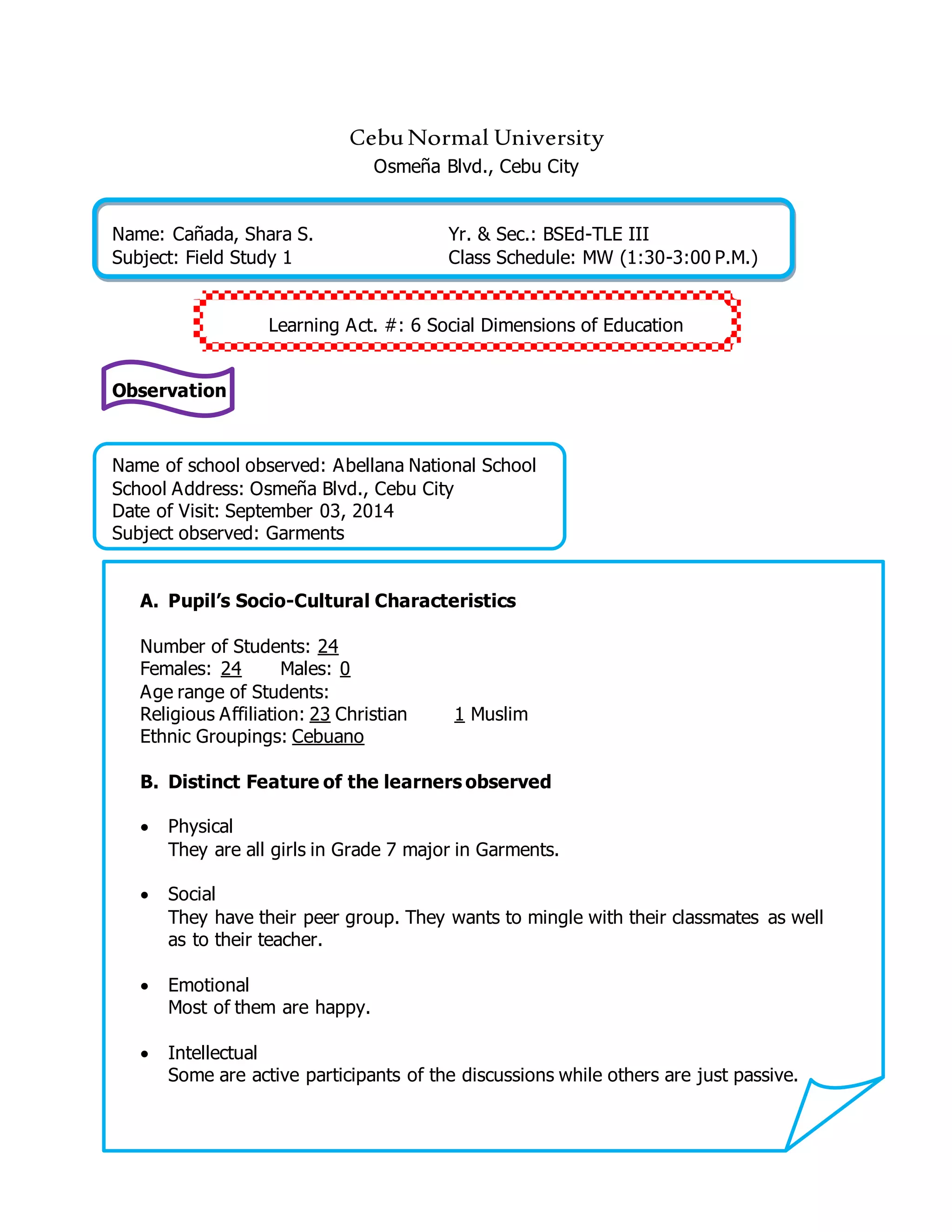
    Cebu Normal University Osmeña Blvd., Cebu City Name: Cañada, Shara S. Yr. & Sec.: BSEd-TLE III Subject: Field Study 1 Class Schedule: MW (1:30-3:00 P.M.) Learning Act. #: 6 Social Dimensions of Education Observation Name of school observed: Abellana National School School Address: Osmeña Blvd., Cebu City Date of Visit: September 03, 2014 Subject observed: Garments A. Pupil’s Socio-Cultural Characteristics Number of Students: 24 Females: 24 Males: 0 Age range of Students: Religious Affiliation: 23 Christian 1 Muslim Ethnic Groupings: Cebuano B. Distinct Feature of the learners observed  Physical They are all girls in Grade 7 major in Garments.  Social They have their peer group. They wants to mingle with their classmates as well as to their teacher.  Emotional Most of them are happy.  Intellectual Some are active participants of the discussions while others are just passive.
  • 2.
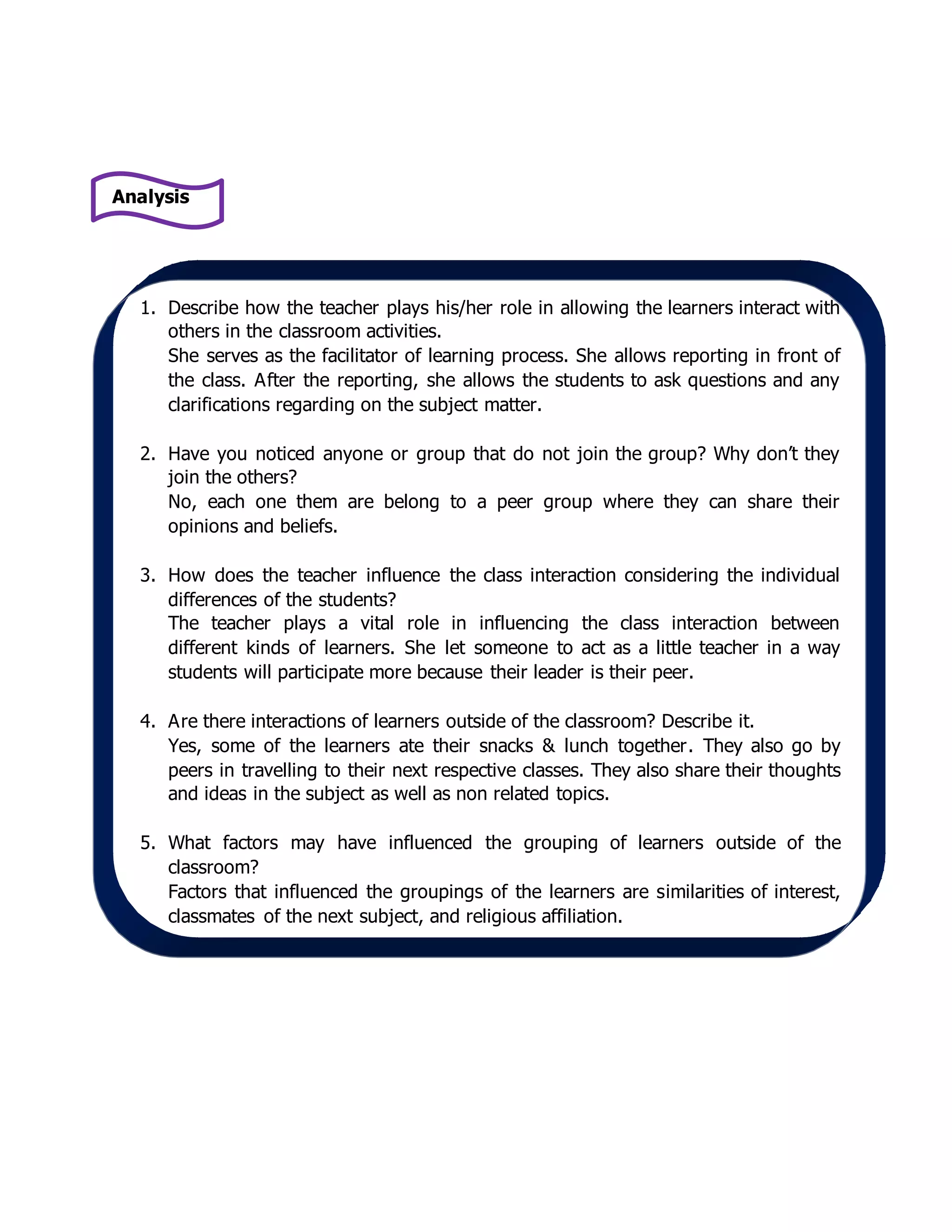
    Analysis 1. Describehow the teacher plays his/her role in allowing the learners interact with others in the classroom activities. She serves as the facilitator of learning process. She allows reporting in front of the class. After the reporting, she allows the students to ask questions and any clarifications regarding on the subject matter. 2. Have you noticed anyone or group that do not join the group? Why don’t they join the others? No, each one them are belong to a peer group where they can share their opinions and beliefs. 3. How does the teacher influence the class interaction considering the individual differences of the students? The teacher plays a vital role in influencing the class interaction between different kinds of learners. She let someone to act as a little teacher in a way students will participate more because their leader is their peer. 4. Are there interactions of learners outside of the classroom? Describe it. Yes, some of the learners ate their snacks & lunch together. They also go by peers in travelling to their next respective classes. They also share their thoughts and ideas in the subject as well as non related topics. 5. What factors may have influenced the grouping of learners outside of the classroom? Factors that influenced the groupings of the learners are similarities of interest, classmates of the next subject, and religious affiliation.
  • 3.
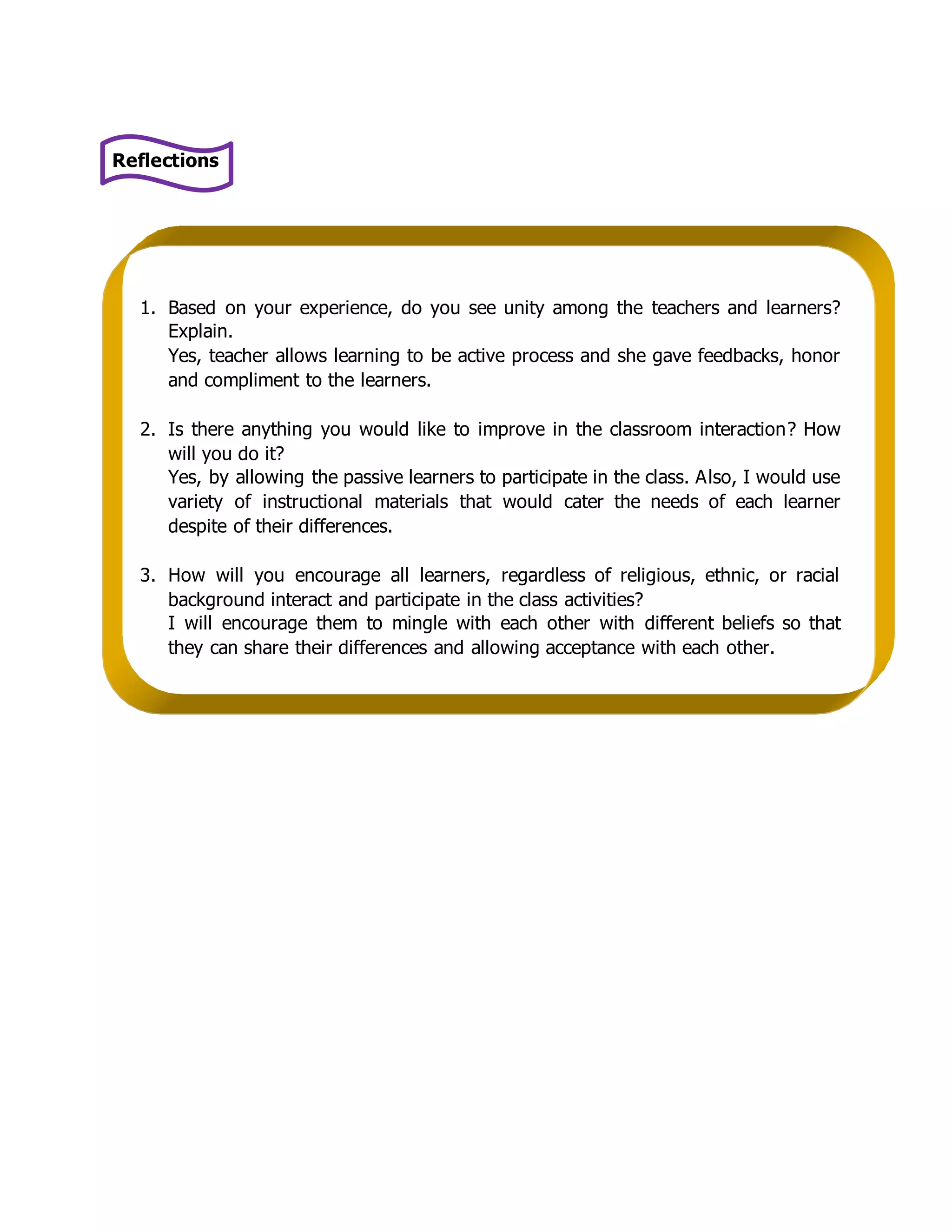
    Reflections 1. Basedon your experience, do you see unity among the teachers and learners? Explain. Yes, teacher allows learning to be active process and she gave feedbacks, honor and compliment to the learners. 2. Is there anything you would like to improve in the classroom interaction? How will you do it? Yes, by allowing the passive learners to participate in the class. Also, I would use variety of instructional materials that would cater the needs of each learner despite of their differences. 3. How will you encourage all learners, regardless of religious, ethnic, or racial background interact and participate in the class activities? I will encourage them to mingle with each other with different beliefs so that they can share their differences and allowing acceptance with each other.