What Is Lean In Design?
Six BIM Wastes
Phase Planning
Weekly Work Planning
Tips To Get Started With Lean BIM
1. What is Lean In Design?
2. Six BIM Wastes
3. Phase Planning
4. Weekly Work Planning
5. Tips To Get Started With Lean BIM
4
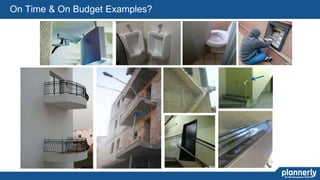
On Time & On Budget Examples?
5
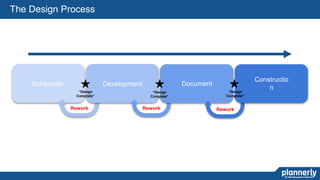
Schematic
Rework
Development
Rework
Document
Rework
Constructio
n“Design
Complete”
“Design
Complete”
“Design
Complete”
The Design Process
6
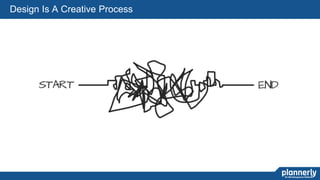
Design Is A Creative Process
7
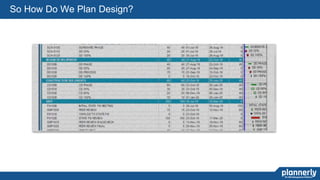
So How Do We Plan Design?
So What Is Lean
Design?
9
12
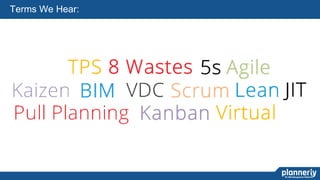
Terms We Hear:
13
Creating value for customers
while minimizing waste.
11
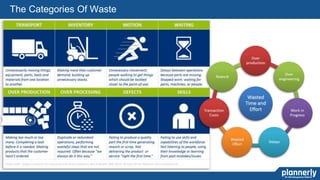
The Categories Of Waste
12
Are There Resources?
13
leancalifornia.com
16
Dan Fauchier - Lean California
Lean Construction Institute (LCI)
Is BIM Lean?
What Could Go Wrong?
2. The Six BIM Wastes
3. Phase Planning
4. Weekly Work Planning
5. Tips To Get Started With Lean BIM
1. What Is Lean In Design?
19
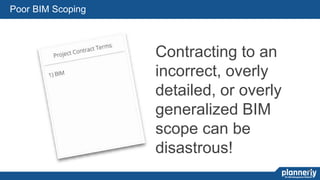
Contracting to an
incorrect, overly
detailed, or overly
generalized BIM
scope can be
disastrous!
22
Poor BIM Scoping
20
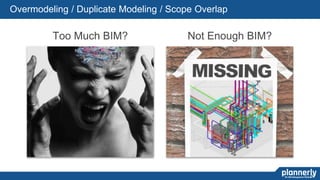
Not Enough BIM?Too Much BIM?
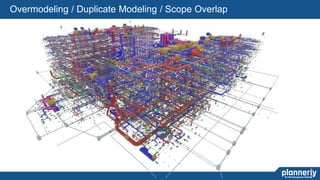
Overmodeling / Duplicate Modeling / Scope Overlap
21
24
Overmodeling / Duplicate Modeling / Scope Overlap
22
25
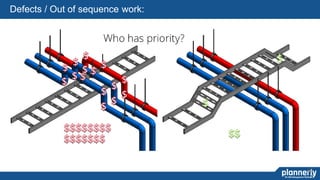
Defects / Out of sequence work:
23
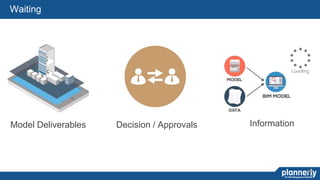
Decision / ApprovalsModel Deliverables Information
26
Waiting
24
27
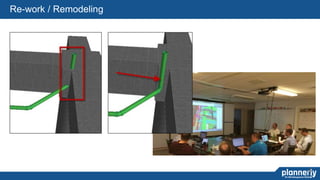
Re-work / Remodeling
25
28
BIM Admin
How Are Companies
Improving This?
3. Phase Planning
4. Weekly Work Planning
5. Tips To Get Started With Lean BIM
1. What Is Lean In Design?
2. Six BIM Wastes
28
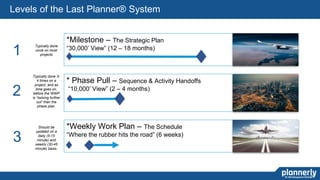
Levels of the Last Planner® System
*Milestone – The Strategic Plan
“30,000’ View” (12 – 18 months)Typically done
once on most
projects1
* Phase Pull – Sequence & Activity Handoffs
“10,000’ View” (2 – 4 months)
Typically done 3-
4 times on a
project, and as
time goes on,
before the WWP
is “looking further
out” than the
phase plan.
2
*Weekly Work Plan – The Schedule
“Where the rubber hits the road” (6 weeks)
Should be
updated on a
daily (5-15
minute) and
weekly (30-45
minute) basis.
3
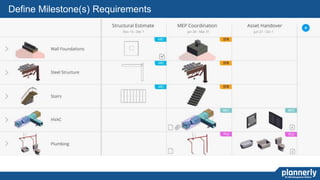
Define Milestone(s) Requirements
What If All Teams Start
Modeling At The Same
Time?
31
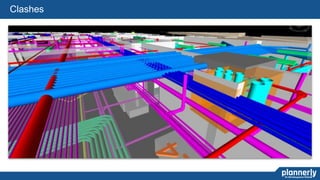
Clashes
32
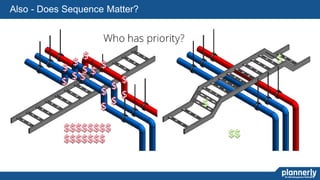
Also - Does Sequence Matter?
33
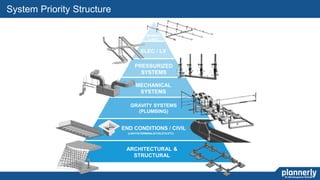
GRAVITY SYSTEMS
(PLUMBING)
MECHANICAL
SYSTEMS
PRESSURIZED
SYSTEMS
ELEC / LV
BRANCH
LINES
END CONDITIONS / CIVIL
ARCHITECTURAL &
STRUCTURAL
(LIGHTS/TERMINALS/TOILETS ETC)
System Priority Structure
34
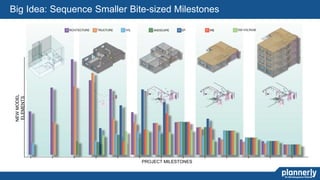
PROJECT MILESTONES
NEWMODEL
ELEMENTS
Big Idea: Sequence Smaller Bite-sized Milestones
How Can Pull
Planning Help Us?
36
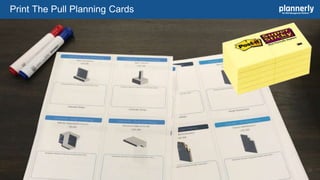
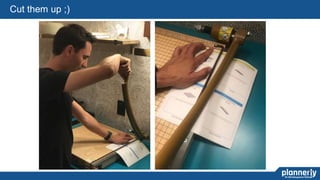
Print The Pull Planning Cards
37
40
Cut them up ;)
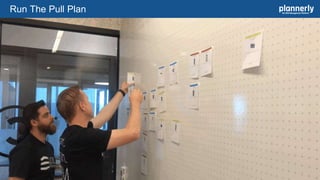
Run The Pull Plan
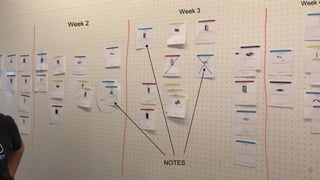
NOTES
39
40
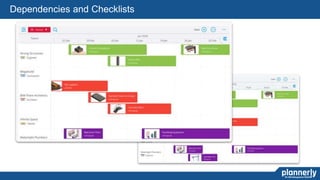
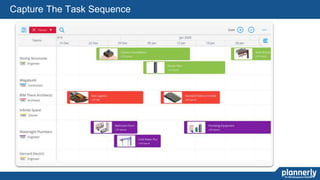
Capture The Task Sequence
41
Dependencies and Checklists
4. Weekly Work Planning
1. What Is Lean In Design?
2. Six BIM Wastes
3. Phase Planning
5. Tips To Get Started With Lean BIM
43
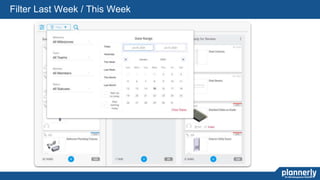
Filter Last Week / This Week
44
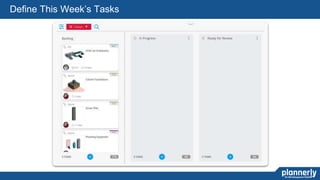
Define This Week’s Tasks
45
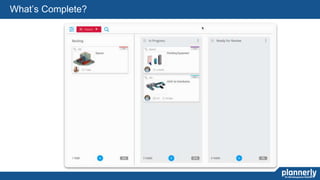
What’s Complete?
What Are The Results?:
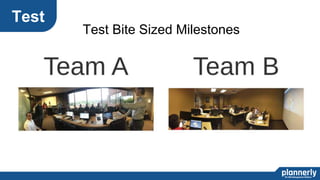
1. Lab Test
Two Teams
Test Bite Sized Milestones
Test
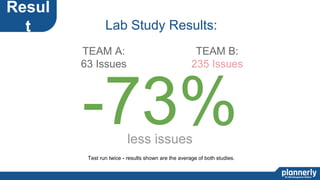
-73%less issues
TEAM A:
63 Issues
TEAM B:
235 Issues
Test run twice - results shown are the average of both studies.
Lab Study Results:
Resul
t
What Are The Results?:
2. Case Study
A multifamily mixed-use design-build project
50
Case Study Thesis
● “Traditional design management follows a large batching
process through SD, DD and CD (Schematic Design,
Design Development, Construction Documentation).
● “Such large batching causes information buildup and
multiple assumptions are made on out of date
information.
● “Misunderstandings are a root cause for the most waste
in design and construction.
● “This results in incomplete and late design.”
51
● Finished 2 months early – 17% time savings
● Better quality product – 53% fewer design
issues
Results:
1. What Is Lean In Design?
2. Six BIM Wastes
3. Phase Planning
4. Weekly Work Planning
5. Tips To Get Started With Lean BIM
How do we start?
54
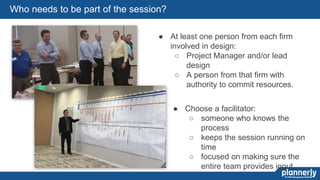
Who needs to be part of the session?
● At least one person from each firm
involved in design:
○ Project Manager and/or lead
design
○ A person from that firm with
authority to commit resources.
● Choose a facilitator:
○ someone who knows the
process
○ keeps the session running on
time
○ focused on making sure the
entire team provides input.
55
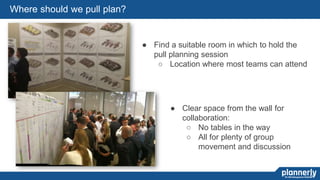
Where should we pull plan?
● Find a suitable room in which to hold the
pull planning session
○ Location where most teams can attend
● Clear space from the wall for
collaboration:
○ No tables in the way
○ All for plenty of group
movement and discussion
56
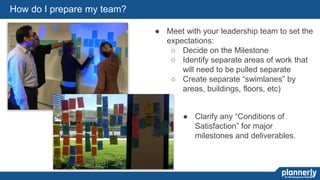
How do I prepare my team?
● Meet with your leadership team to set the
expectations:
○ Decide on the Milestone
○ Identify separate areas of work that
will need to be pulled separate
○ Create separate “swimlanes” by
areas, buildings, floors, etc)
● Clarify any “Conditions of
Satisfaction” for major
milestones and deliverables.
57
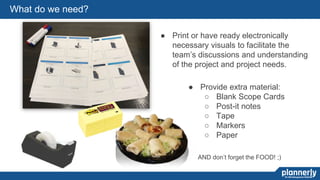
What do we need?
● Print or have ready electronically
necessary visuals to facilitate the
team’s discussions and understanding
of the project and project needs.
● Provide extra material:
○ Blank Scope Cards
○ Post-it notes
○ Tape
○ Markers
○ Paper
AND don’t forget the FOOD! ;)
In conclusion - to reduce BIM waste:
- Identify your BIM customers
- Identify non-value add (waste)
- Sequence your virtual build
- Implement Pull Planning
- Cultivate the right environment
- Get food
1. Five Steps To Better BIM Management
2. BEPs 101 - BIM Execution Planning
3. How do you contract for the right BIM at the right
time?
4. Lean BIM Management 101
5. Did You Get The BIM You Paid For?
6. Agile Standards Management
7. Building Lean BIM Standards
8. Protecting Against BIM Risk
9. BIM Management Across Multiple Companies
10. Win More Work With Practical BIM
20 Minute
BIM Management Webinar Series
Find out more: www.plannerly.com
Thank you!

Lean BIM Management 101 (Episode 4)

Editor's Notes

  • #8 Often Boiled Down To A Single Line On The Gantt Chart
  • #55 At least one person from each firm involved in design, preferably the one doing the design, and for the initial planning session, a person from that firm with authority to commit resources. Choose the Pull Planning facilitator: someone who knows the process, keeps the session running on time, and is focused on making sure the entire team provides input. It’s probably not the lead designer, but it could be. Call or text all attendees to assure their participation. If your team has critical persons missing during the session, the planning will be more tentative and less complete.
  • #56 Find a suitable room in which to hold the pull planning session. You’ll need lots of uninterrupted wall space, preferably one or two walls of 16’-20’ on which you can affix two rows of 36” plotter paper. There should be at least 8’-10’ of clear space from the wall – no tables in the way. This allows plenty of group movement and discussion as the pull session gets under way. Arrange the room properly ensuring 8-10’ of open space in front of the wall. Print out the tags and position them on a table 8-10’ away from the wall. Set several dispensers of tape near the tags. Hang the 16’-20’ of plotter paper.
  • #57 Recommended - Meet with your leadership team to set the expectations (at least 10 days before session Decide which Milestone from which to pull Identify what separate areas of work will need to be pulled separate in what we call “swim lanes”, which might be different areas, buildings, floors, etc Clarify any “Conditions of Satisfaction” for major milestones and deliverables. (You will revisit each of these during the session to make needed adjustments and gain consensus.)
  • #58 Print or have ready electronically necessary visuals to facilitate the team’s discussions and understanding of the project and project needs. Confirm with them that they already have entered (or will enter before the session) information about their tasks and ready to print out before the session. The day of the session: Make reservations for breakfast/lunch/snacks as needed. Something with some protein and lighter on the carbs is best to keep people from getting sluggish. For example, breakfast burritos instead of sugary pastries and sandwiches as opposed to pizza or pasta. Coffee for afternoon sessions is also highly recommended.