
Leading People Through Change
Change Is Frequent, Change Is Global Change is Frequently Unsuccessful People and Change
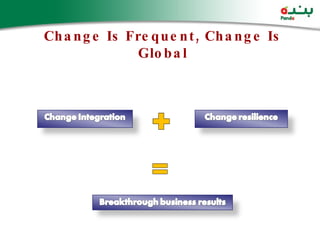
Change Is Frequent, Change Is Global
Change is Frequently Unsuccessful 4  “too’s” that cause change failure: too linear too top-down too big-picture too insular.
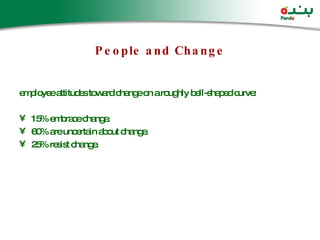
People and Change employee attitudes toward change on a roughly bell-shaped curve: 15% embrace change. 60% are uncertain about change. 25% resist change.
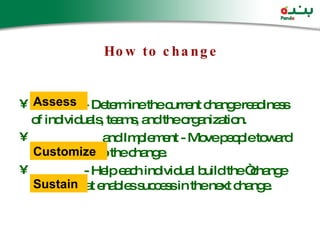
How to change - Determine the current change readiness of individuals, teams, and the organization. and Implement - Move people toward commitment to the change. - Help each individual build the “change muscle” that enables success in the next change. Assess  Customize  Sustain
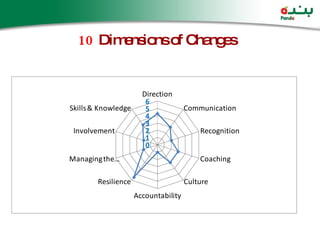
10  Dimensions of Changes
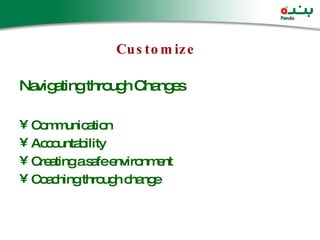
Navigating through Changes Communication Accountability Creating a safe environment Coaching through change Customize
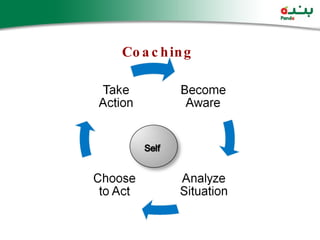
Coaching
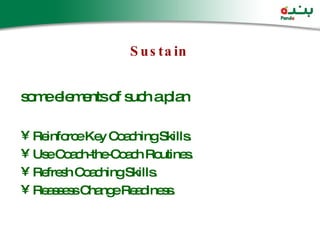
Sustain some elements of such a plan Reinforce Key Coaching Skills.  Use Coach-the-Coach Routines.  Refresh Coaching Skills.  Reassess Change Readiness.
Questions & Answers
Thank You

Leading People Through Change

  • 1.
    LeadingPeople Through Change
  • 2.
    Change Is Frequent,Change Is Global Change is Frequently Unsuccessful People and Change
  • 3.
    Change Is Frequent,Change Is Global
  • 4.
    Change is FrequentlyUnsuccessful 4 “too’s” that cause change failure: too linear too top-down too big-picture too insular.
  • 5.
    People and Changeemployee attitudes toward change on a roughly bell-shaped curve: 15% embrace change. 60% are uncertain about change. 25% resist change.
  • 6.
    How to change- Determine the current change readiness of individuals, teams, and the organization. and Implement - Move people toward commitment to the change. - Help each individual build the “change muscle” that enables success in the next change. Assess Customize Sustain
  • 7.
    10 Dimensionsof Changes
  • 8.
    Navigating through ChangesCommunication Accountability Creating a safe environment Coaching through change Customize
  • 9.
  • 10.
    Sustain some elementsof such a plan Reinforce Key Coaching Skills. Use Coach-the-Coach Routines. Refresh Coaching Skills. Reassess Change Readiness.
  • 11.
  • 12.

Editor's Notes

  • #2 The big idea The essential guide for building your change resilience, coaching your people to commitment, and enhancing business results Leading People Through Change By Connie Hritz
  • #3 قال روبرت جالير ” التغيير أمر حتمى ماعدا فى مكائن البيع اذا اقتنعت تماما بضرورة التغيير ستنجح فى احداث تغيير لشخص واحد فى كل مرة , وهذا سيؤدى الى تغيير المنظمة بنجاح . التغيير يكون اسهل فى الخدمات المالية , أنجح المنافسين فى الصناعة هو من يعلم تماما انه ليس كافيا ادارة التغيير الحالى ولكن عليهم الاعداد للتغيير التالى وان عليها اعتماد اسلوب التكييف كأساس للعمل . وهذا يسمى ”تغيير عضله“ وذلك بتغير المهارات وتكيفها مع التغير التالى .
  • #4 معادلة التغير تبين مدى تقارب المؤسسة من التغير المطلوب
  • #5 اذا كان كل شخص يبدو انه فهم الاهمية من ادارة التغير فلماذا يكون معدل الاخفاق عالى؟ لماذا لاتستطيع التنظيمات أن تنجح فى التغيير ؟ يتضح لنا ان سبب الاخفاق وعدم النجاح يرجع الى 4 too’s : Too Linear غالبا تريد الادارة اجراء التغير من البداية الى النهاية وتتعامل مع التغير كما لو كان عملية بناء منزل فالنموذج الخطى يشبه الى حد كبير عملية بناء منزل خطوة بخطوة . مع الاسف من الناحية العملية هذا الاسلوب لن يمكن المؤسسة من تغيير النقاط الضرورية التى لابد من تغييرها وهذا سيأخذ وقت أطول وهنا يجب علينا الاستعداد لاي شىء فى اى وقت . Too top-down : اى تغير ناجح لابد ان يكون له راعى رئيسي ومالك فى قمة الهرم التنظيمى . وهو غالبا يعتقد انه يمكن نقل المسئولية الى الادارة الوسطى التى غالبا تكون فى مأزق بين الادارة العليا التى توكل اليها مهام التغير وبين الالمساعدين التى ترجع لهم . نتيجة هذا الضغط يكون توتر , نزاع وغضب وفشل فى التغير . Too big-picture : عادة ترغب الادارة العليا فى رؤية العديد من المساهمات المنظورة لكن لايمكن اجاء التغير بالرؤيا فقط بل يتم تغير الموظفين عن طريق الاتصال والتدريب . Too insular : غالبا تحاول المنظمات انجاز التغير داخلها وهذا يظهر المشكلة فتحتاج الى النظرة الواقعية والمعلومات عن كيفية اجراء التغير . 41% من الشركات تلجأ الى بيوت الخبرة فى هذا المجال تجنبا للفشل .