



Leadership 
by Toronto Training and HR 
November 2014 
1
CONTENTS 
3-4 Introduction 
5-6 Qualities which successful leaders possess 
7-8 Where should an effective board focus 
9-10 Principles of survival 
11-12 Steps for a launch platform 
13-14 Active listening 
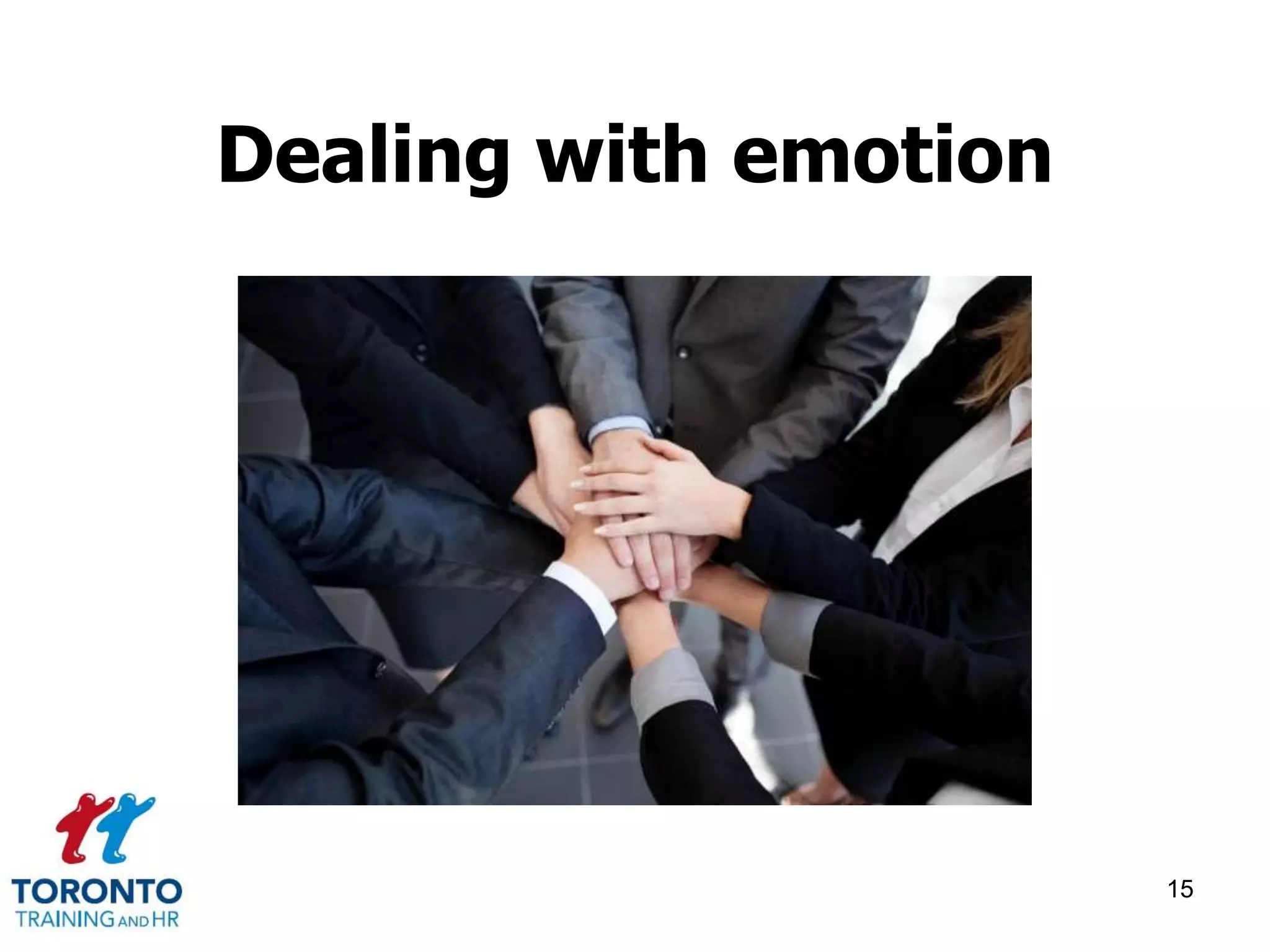
15-16 Dealing with emotion 
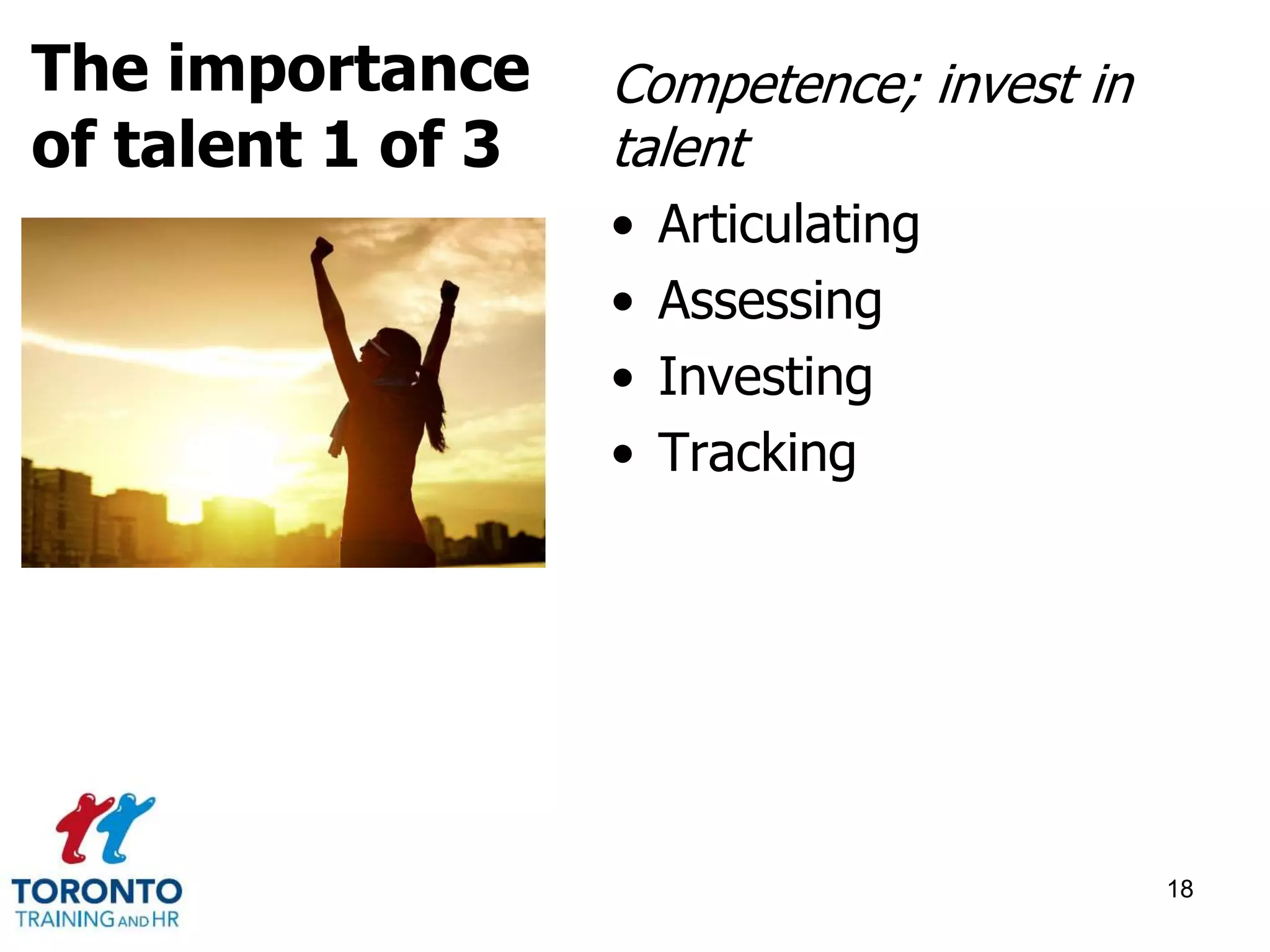
17-20 The importance of talent 
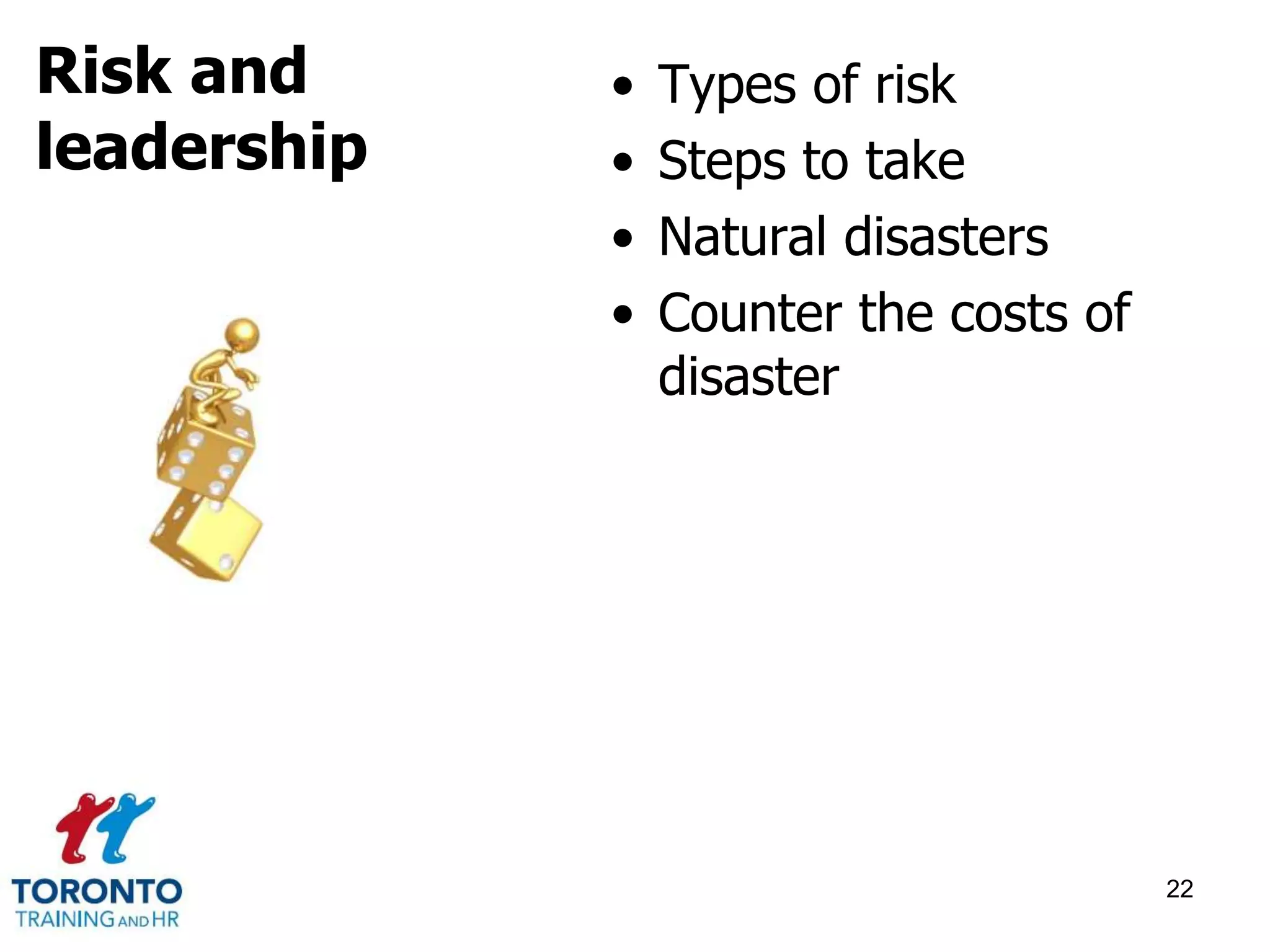
21-22 Risk and leadership 
23-24 Things leaders can do to boost performance 
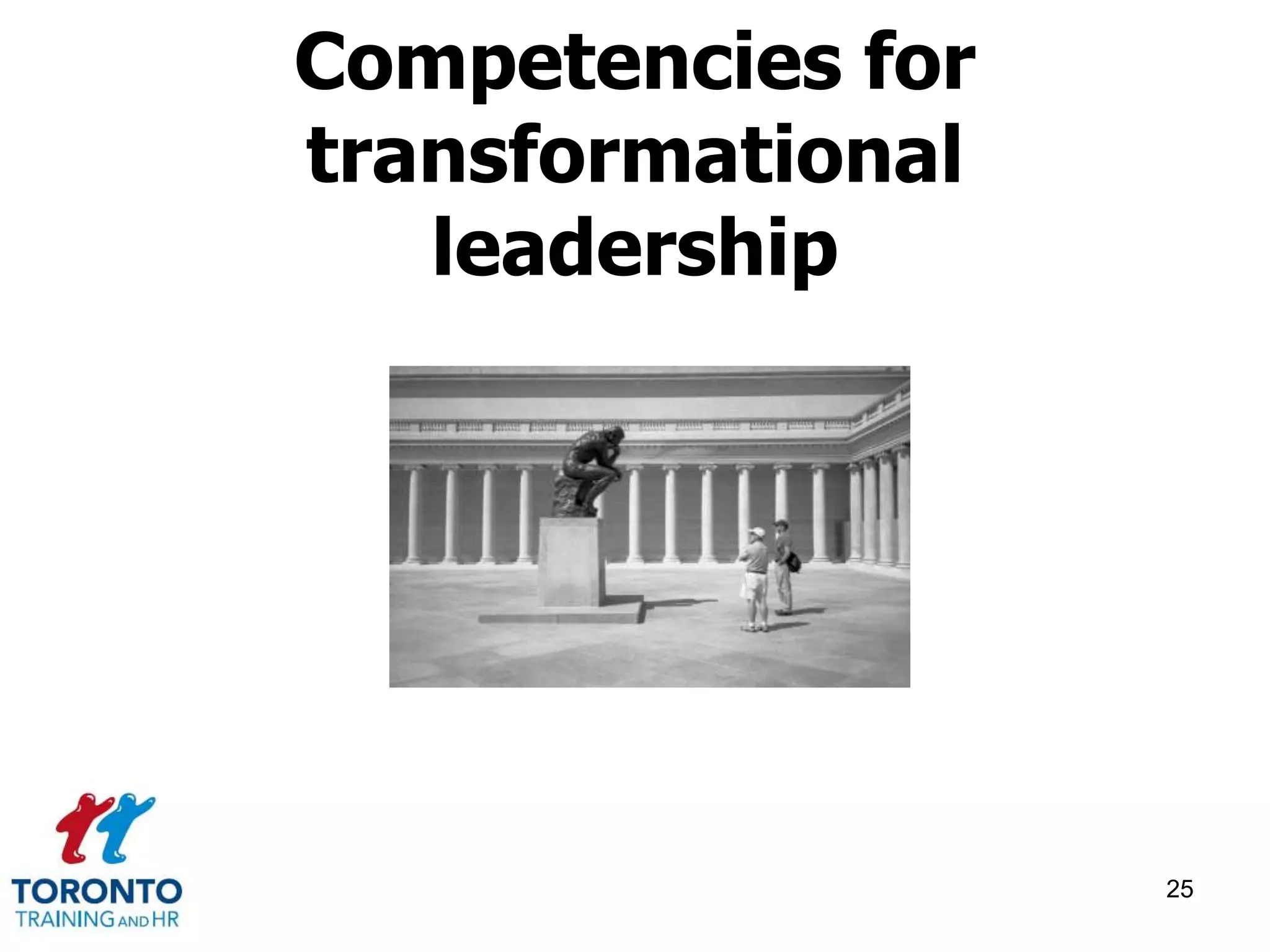
25-26 Competencies for transformational leadership 
27-28 Techniques to develop leaders 
29-32 Building leadership 
33-34 Errors made by leaders when setting goals 
35-36 Critical factors for organizational health 
37-38 Leadership strategies to improve engagement 
39-41 Recruitment and leaders 
42-45 Characteristics of a servant leader 
46-48 Insights for leaders 
49-50 Attributes for leaders of tomorrow 
51-52 Conclusion, summary and questions 
2
Introduction 
3
Introduction to Toronto Training 
and HR 
Toronto Training and HR is a specialist training and 
human resources consultancy headed by Timothy Holden 
10 years in banking 
15 years in training and human resources 
Freelance practitioner since 2006 
The core services provided by Toronto Training and HR 
are: 
Training event design 
Training event delivery 
HR support with an emphasis on reducing 
costs, saving time plus improving employee 
engagement and morale 
Services for job seekers 
4
Qualities which successful 
leaders possess 
5
• Being open to others 
• Investing time in others 
• Listening to others 
• Offering 
encouragement to 
others 
• Expressing appreciation 
for others’ abilities 
6 
Qualities which 
successful 
leaders possess
Where should an effective 
board focus? 
7
• Strategy and talent 
oversight 
• Board composition 
• Quality of discussion 
• Relationship with the 
President or CEO 
8 
Where should an 
effective board 
focus?
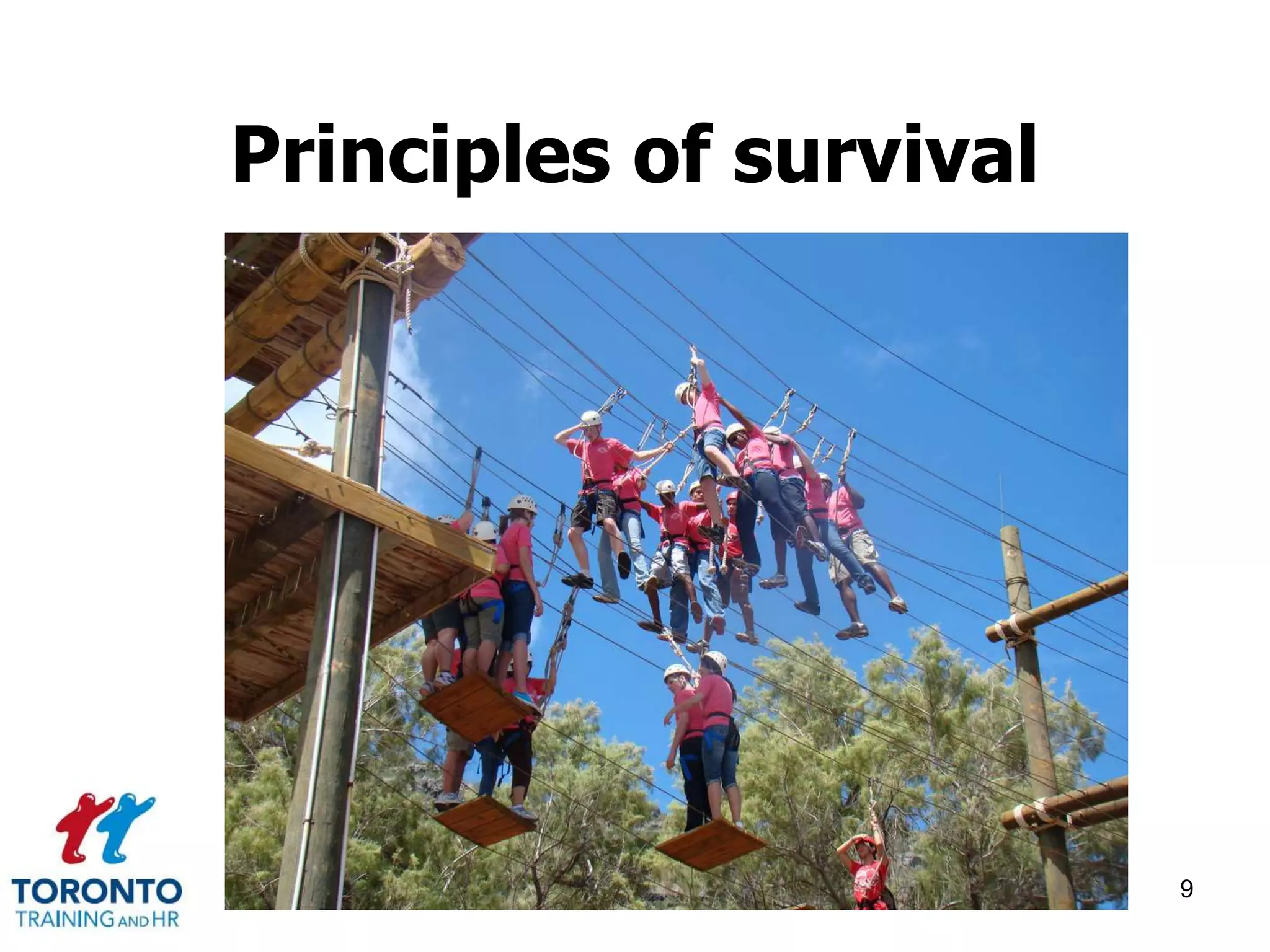
Principles of survival 
9
• Shift everyone’s 
thinking 
• Increase employee 
efficiency 
• Upgrade your 
organizational chart 
• Leaders need to lead 
• Eliminate stress 
10 
Principles of 
survival
Steps for a launch 
platform 
11
• Acquire; core 
skills 
• Accomplish; 
initiatives 
• Achieve; 
credibility 
• Nurture and 
leverage; 
relationships 
12 
Steps for a 
launch platform
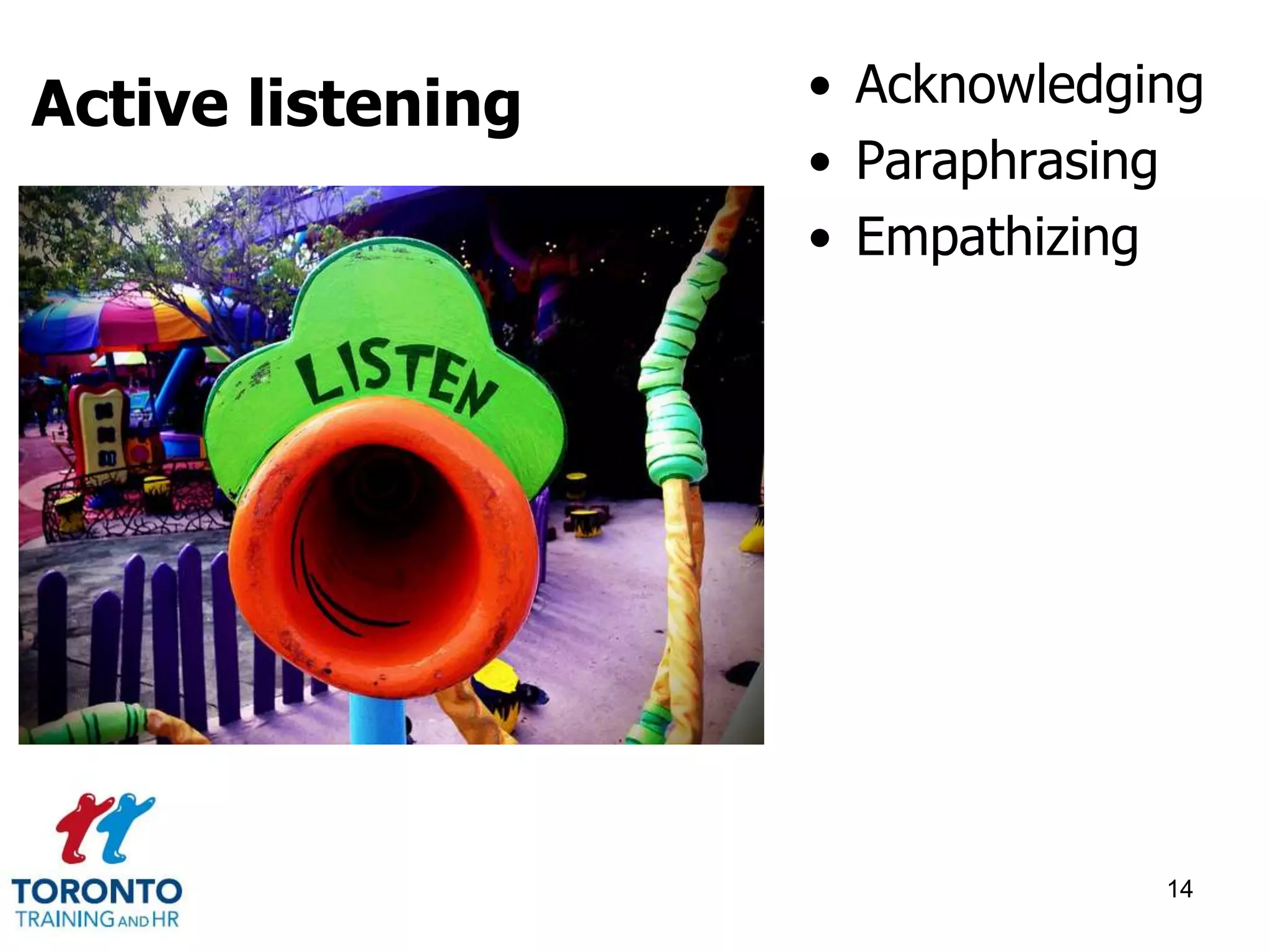
Active listening 
13
• Acknowledging 
• Paraphrasing 
• Empathizing 
14 
Active listening
Dealing with emotion 
15
• Offer data, information 
and research to 
balance the 
thought/emotion cycle 
• Learn how to read 
emotional cues 
• Talk about feelings in a 
productive way 
• Ask powerful questions 
• Provide support to 
employees in ways that 
boost their confidence 
16 
Dealing with 
emotion
The importance of talent 
17
Competence; invest in 
talent 
• Articulating 
• Assessing 
• Investing 
• Tracking 
18 
The importance 
of talent 1 of 3
Commitment; build an 
employee value 
proposition that motivates 
employees to give their 
discretionary effort to the 
organization 
• Vision 
• Opportunity 
• Incentives 
• Impact 
• Community 
• Communication 
• Flexibility 19 
The importance 
of talent 2 of 3
Contribution; meaning 
making makes money 
• Identity 
• Purpose 
• Relationships 
• Work environment 
• Work challenge 
• Learning 
• Delight 
20 
The importance 
of talent 3 of 3
Risk and leadership 
21
• Types of risk 
• Steps to take 
• Natural disasters 
• Counter the costs of 
disaster 
22 
Risk and 
leadership
Things leaders can do to 
boost performance 
23
• Training 
• Support 
• Coaching and feedback 
• Role model 
24 
Things leaders 
can do to boost 
performance
Competencies for 
transformational 
leadership 
25
• Contextual intelligence 
• Strategic intelligence 
26 
Competencies 
for 
transformational 
leadership
Techniques to develop 
leaders 
27
• Building trust 
• Encouraging risk-taking 
• Communication 
• Engaging 
stakeholders 
• Allowing for 
feedback and 
reflection 
• Supporting social 
learning 
28 
Techniques to 
develop leaders
Building leadership 
29
Why of leadership; 
create a case for 
effective leadership 
• What does an 
effective leader 
achieve? 
30 
Building 
leadership 
1 of 3
How of leadership; 
ensure that leaders 
do what they know 
they should 
• Simplicity 
• Time 
• Accountable 
• Resources 
• Track 
• Perseverance 
• Emotion 
31 
Building 
leadership 
2 of 3
What of leadership; 
define what makes an 
effective leader 
• Strategy 
• Execution 
• Talent management 
• Human capital 
development 
• Personal proficiency 
32 
Building 
leadership 
3 of 3
Errors made by leaders 
when setting goals 
33
• Backing away from tough 
expectations 
• Engaging in charades 
• Accepting seesaw trades 
• Setting vague or distant 
goals 
• Not establishing 
consequences 
• Setting too many goals 
• Allowing deflection to 
preparations, studies and 
research 
34 
Errors made by 
leaders when 
setting goals
Critical factors for 
organizational health 
35
• Accountability 
• Capabilities 
• Coordination and 
control 
• Culture and climate 
• Direction 
• External orientation 
• Innovation and 
learning 
• Motivation 
36 
Critical factors 
for 
organizational 
health
Leadership strategies to 
improve engagement 
37
• Cultivate high trust 
• Model core values 
• Encourage debate 
and risk taking 
• Listen closely 
• Leverage strengths 
and mitigate 
weaknesses 
• Be savvy about 
organizational 
nuances 
• Imagine the future 
38 
Leadership 
strategies to 
improve 
engagement
Recruitment and leaders 
39
• Seek intelligent, driven 
people 
• Seek evangelistic ‘believers’ 
• Hire ethical, high integrity 
players 
• Check references 
• Trust your intuition 
• Be decisive 
40 
Recruitment 
and leaders 
1 of 2
• Compare the prospective 
candidate’s credentials 
against your management 
team 
• Don’t assume the candidate 
will accept 
• Integrate and transition the 
new hire 
• Seek referrals from your best 
hires 
41 
Recruitment 
and leaders 
2 of 2
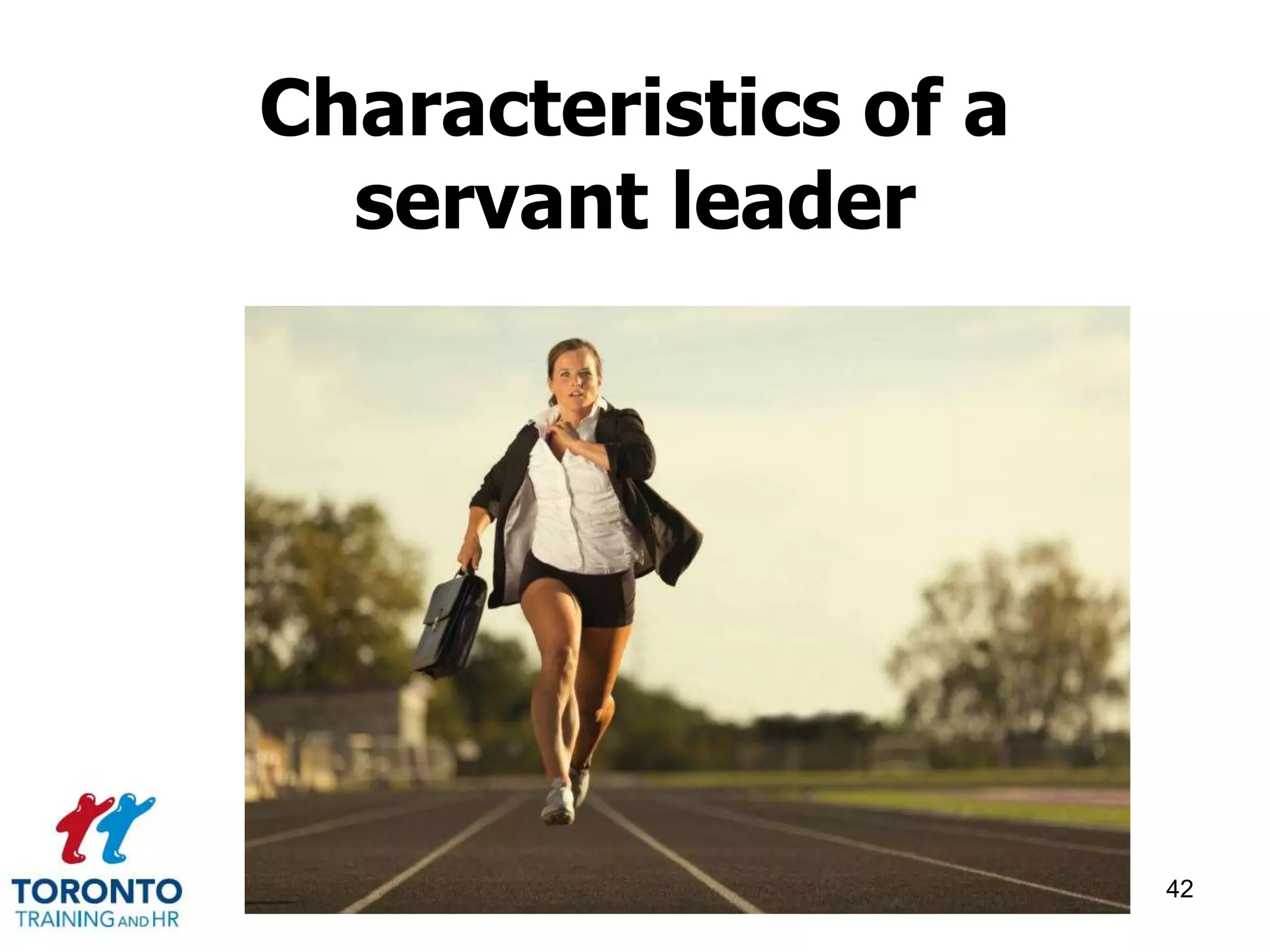
Characteristics of a 
servant leader 
42
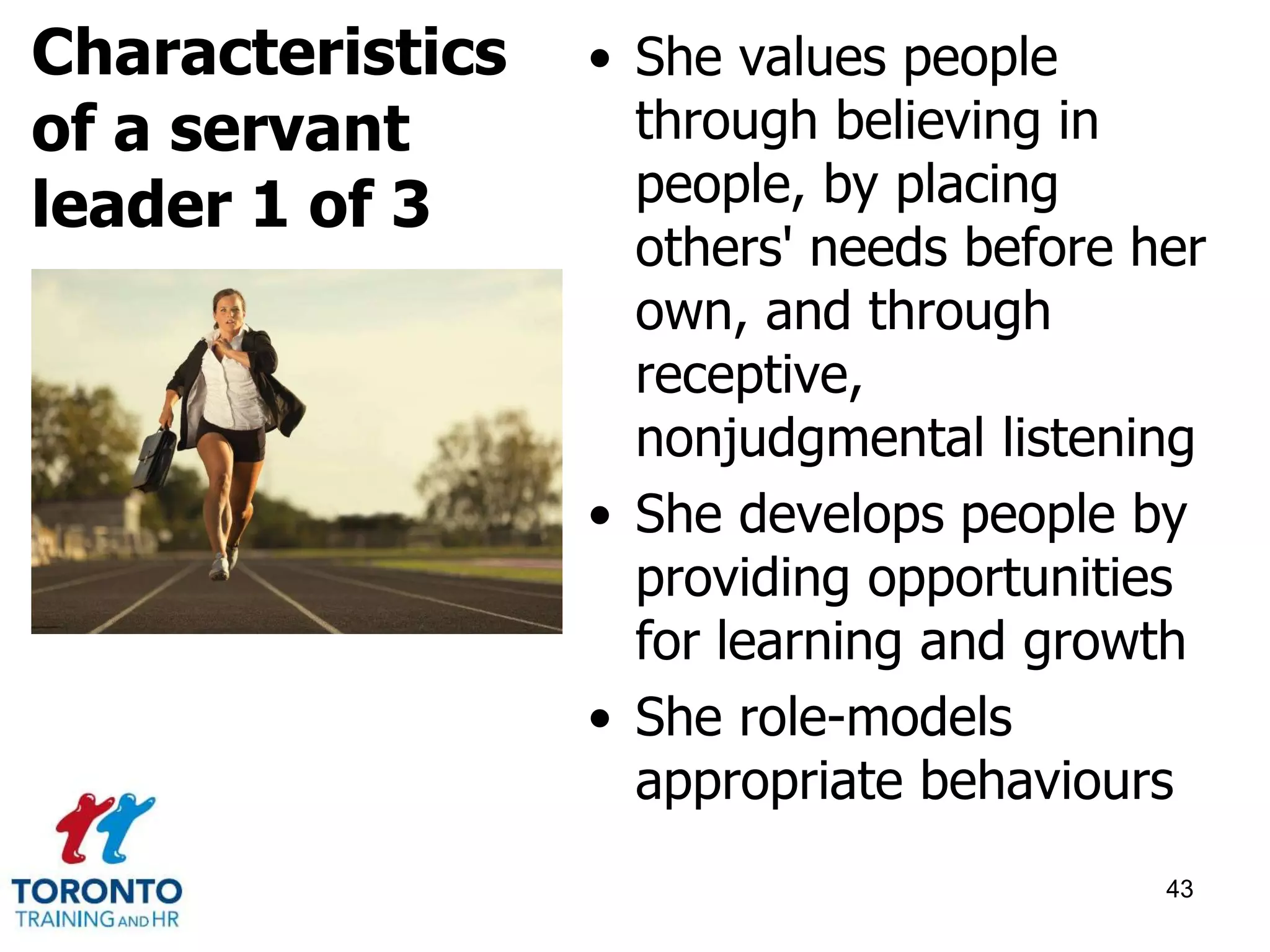
• She values people 
through believing in 
people, by placing 
others' needs before her 
own, and through 
receptive, 
nonjudgmental listening 
• She develops people by 
providing opportunities 
for learning and growth 
• She role-models 
appropriate behaviours 
43 
Characteristics 
of a servant 
leader 1 of 3
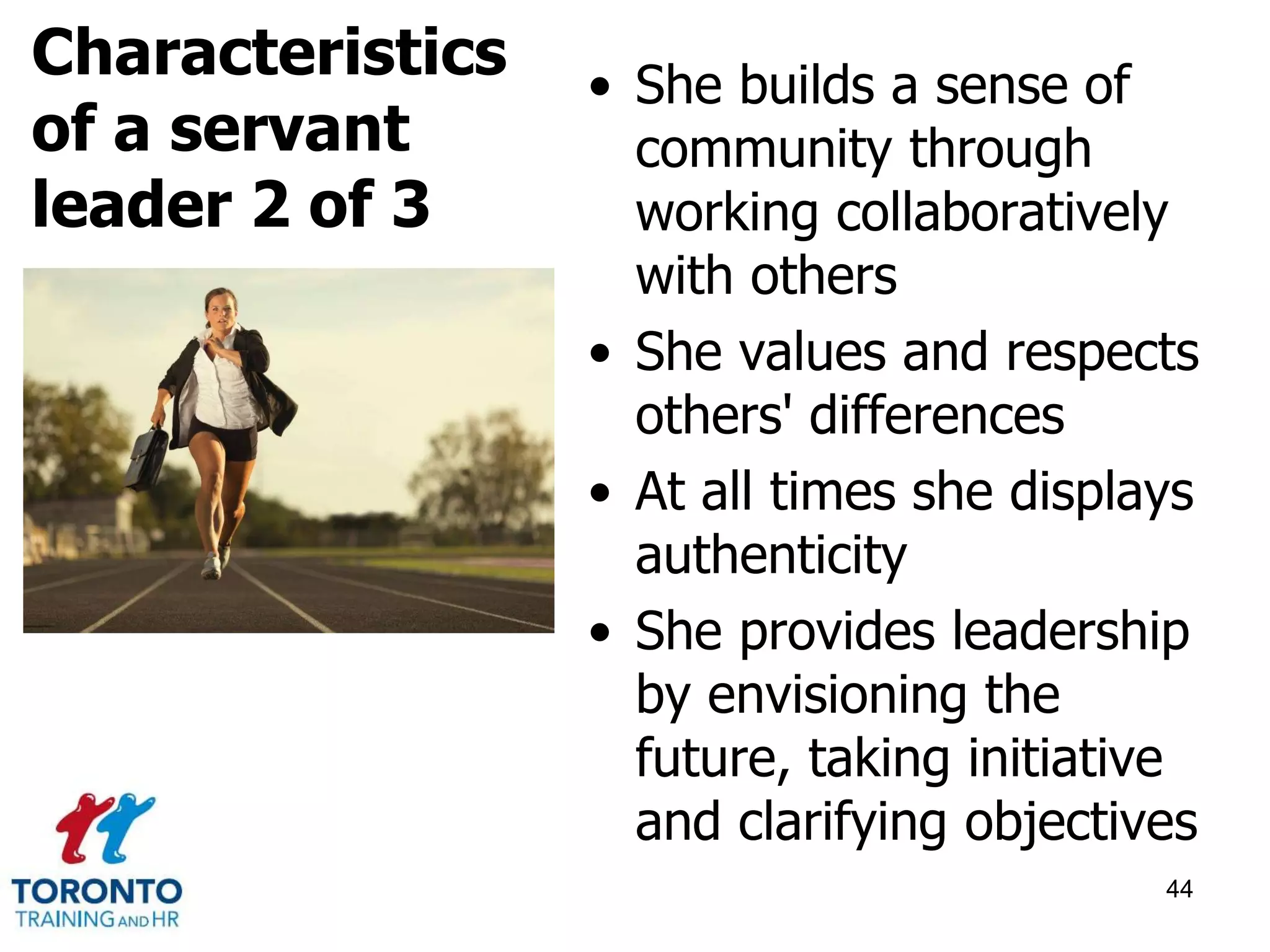
• She builds a sense of 
community through 
working collaboratively 
with others 
• She values and respects 
others' differences 
• At all times she displays 
authenticity 
• She provides leadership 
by envisioning the 
future, taking initiative 
and clarifying objectives 
44 
Characteristics 
of a servant 
leader 2 of 3
• She shares leadership by 
facilitating a shared 
vision; she shares power 
and releases control 
45 
Characteristics 
of a servant 
leader 3 of 3
Insights for leaders 
46
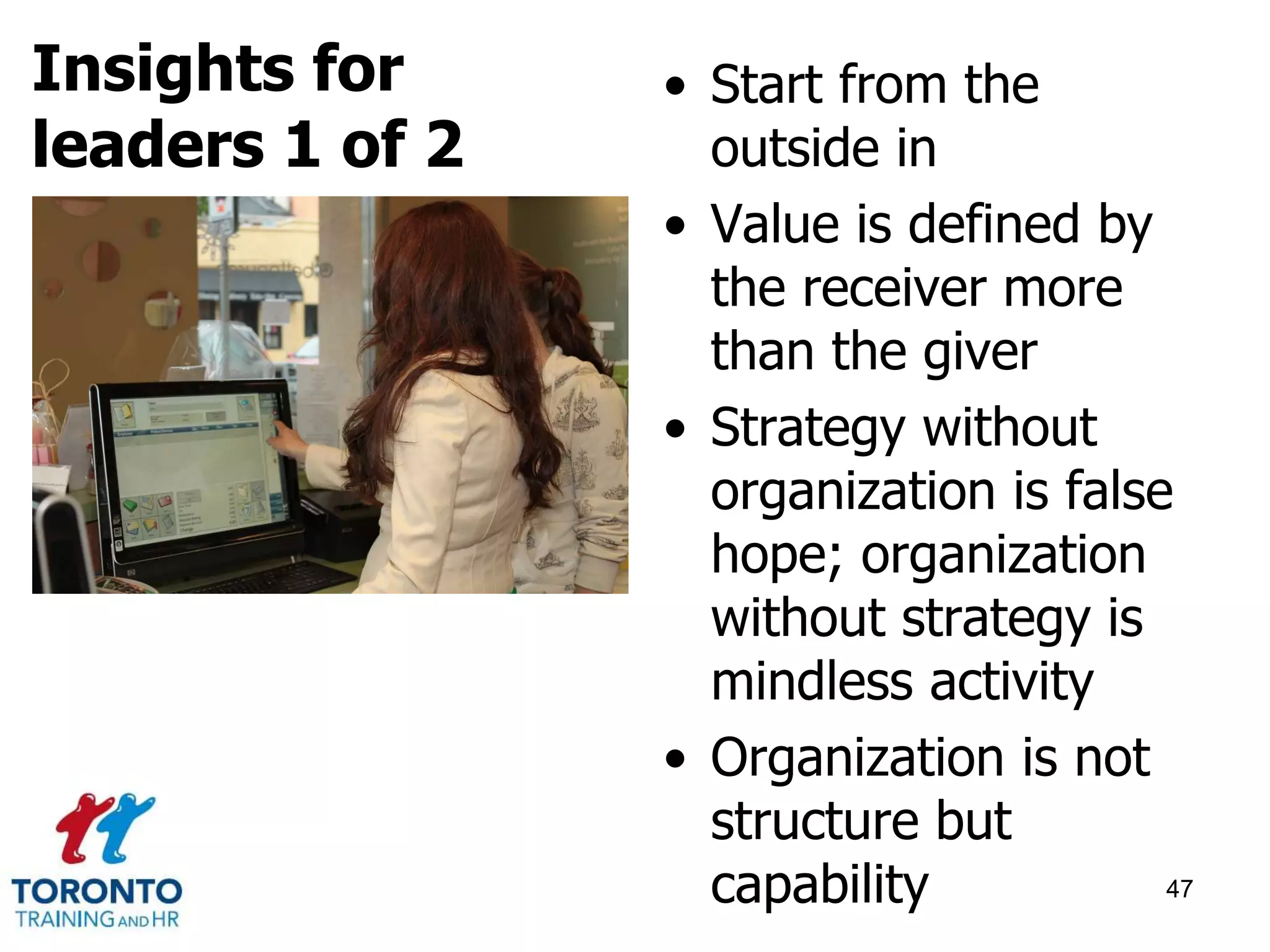
• Start from the 
outside in 
• Value is defined by 
the receiver more 
than the giver 
• Strategy without 
organization is false 
hope; organization 
without strategy is 
mindless activity 
• Organization is not 
structure but 
capability 47 
Insights for 
leaders 1 of 2
• Leadership matters 
more than leader 
• Culture from the 
outside in shifts from 
event to pattern to 
identity 
• Culture may be 
embedded through an 
intellectual, 
behavioural and 
process agenda 
48 
Insights for 
leaders 2 of 2
Attributes for leaders of 
tomorrow 
49
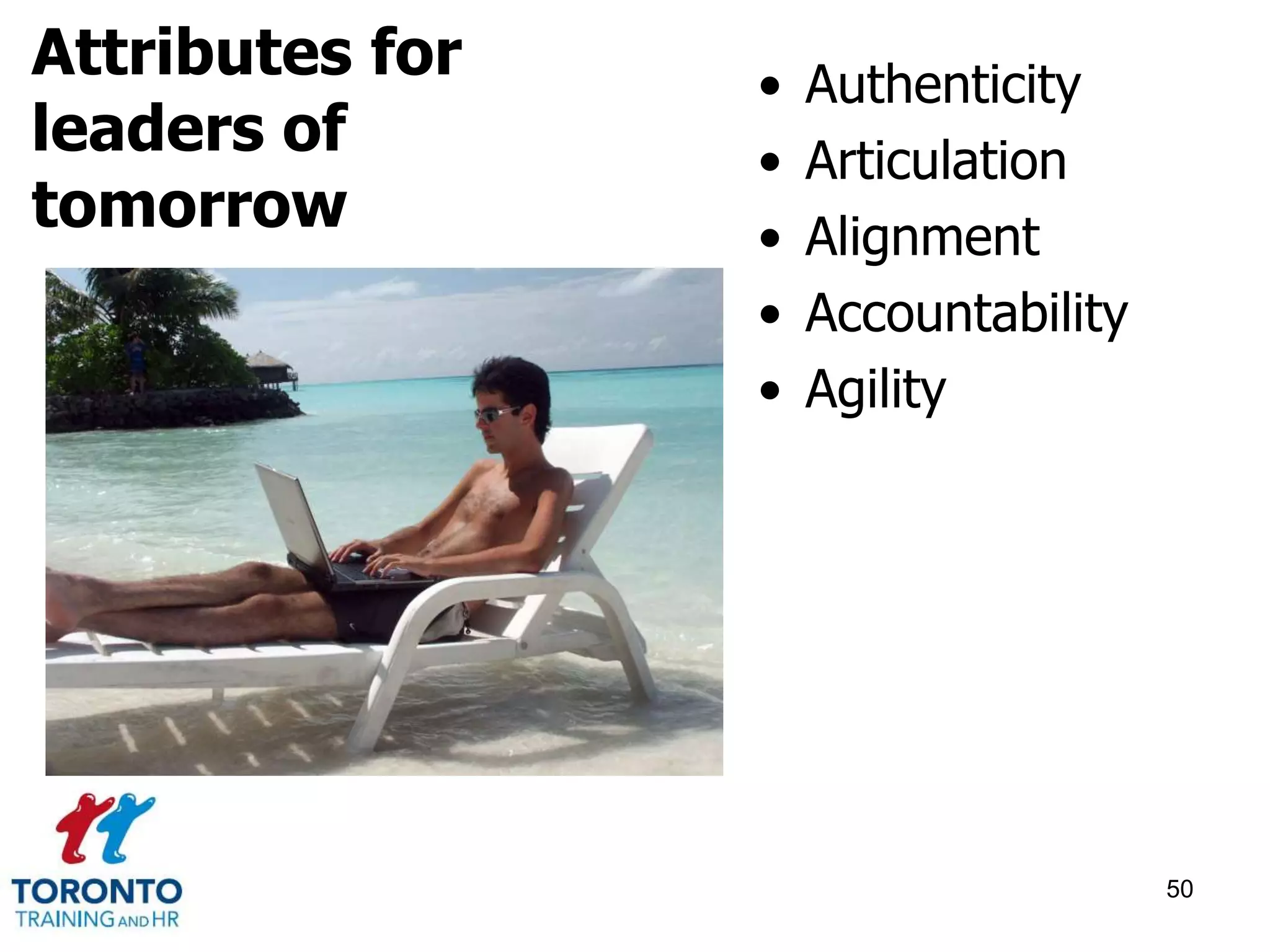
• Authenticity 
• Articulation 
• Alignment 
• Accountability 
• Agility 
50 
Attributes for 
leaders of 
tomorrow
Conclusion, summary and 
questions 
51
Conclusion, summary and 
questions 
Conclusion 
Summary 
Videos 
Questions 
52

Leadership November 2014

  • 1.
    Leadership by TorontoTraining and HR November 2014 1
  • 2.
    CONTENTS 3-4 Introduction 5-6 Qualities which successful leaders possess 7-8 Where should an effective board focus 9-10 Principles of survival 11-12 Steps for a launch platform 13-14 Active listening 15-16 Dealing with emotion 17-20 The importance of talent 21-22 Risk and leadership 23-24 Things leaders can do to boost performance 25-26 Competencies for transformational leadership 27-28 Techniques to develop leaders 29-32 Building leadership 33-34 Errors made by leaders when setting goals 35-36 Critical factors for organizational health 37-38 Leadership strategies to improve engagement 39-41 Recruitment and leaders 42-45 Characteristics of a servant leader 46-48 Insights for leaders 49-50 Attributes for leaders of tomorrow 51-52 Conclusion, summary and questions 2
  • 3.
  • 4.
    Introduction to TorontoTraining and HR Toronto Training and HR is a specialist training and human resources consultancy headed by Timothy Holden 10 years in banking 15 years in training and human resources Freelance practitioner since 2006 The core services provided by Toronto Training and HR are: Training event design Training event delivery HR support with an emphasis on reducing costs, saving time plus improving employee engagement and morale Services for job seekers 4
  • 5.
    Qualities which successful leaders possess 5
  • 6.
    • Being opento others • Investing time in others • Listening to others • Offering encouragement to others • Expressing appreciation for others’ abilities 6 Qualities which successful leaders possess
  • 7.
    Where should aneffective board focus? 7
  • 8.
    • Strategy andtalent oversight • Board composition • Quality of discussion • Relationship with the President or CEO 8 Where should an effective board focus?
  • 9.
  • 10.
    • Shift everyone’s thinking • Increase employee efficiency • Upgrade your organizational chart • Leaders need to lead • Eliminate stress 10 Principles of survival
  • 11.
    Steps for alaunch platform 11
  • 12.
    • Acquire; core skills • Accomplish; initiatives • Achieve; credibility • Nurture and leverage; relationships 12 Steps for a launch platform
  • 13.
  • 14.
    • Acknowledging •Paraphrasing • Empathizing 14 Active listening
  • 15.
  • 16.
    • Offer data,information and research to balance the thought/emotion cycle • Learn how to read emotional cues • Talk about feelings in a productive way • Ask powerful questions • Provide support to employees in ways that boost their confidence 16 Dealing with emotion
  • 17.
  • 18.
    Competence; invest in talent • Articulating • Assessing • Investing • Tracking 18 The importance of talent 1 of 3
  • 19.
    Commitment; build an employee value proposition that motivates employees to give their discretionary effort to the organization • Vision • Opportunity • Incentives • Impact • Community • Communication • Flexibility 19 The importance of talent 2 of 3
  • 20.
    Contribution; meaning makingmakes money • Identity • Purpose • Relationships • Work environment • Work challenge • Learning • Delight 20 The importance of talent 3 of 3
  • 21.
  • 22.
    • Types ofrisk • Steps to take • Natural disasters • Counter the costs of disaster 22 Risk and leadership
  • 23.
    Things leaders cando to boost performance 23
  • 24.
    • Training •Support • Coaching and feedback • Role model 24 Things leaders can do to boost performance
  • 25.
  • 26.
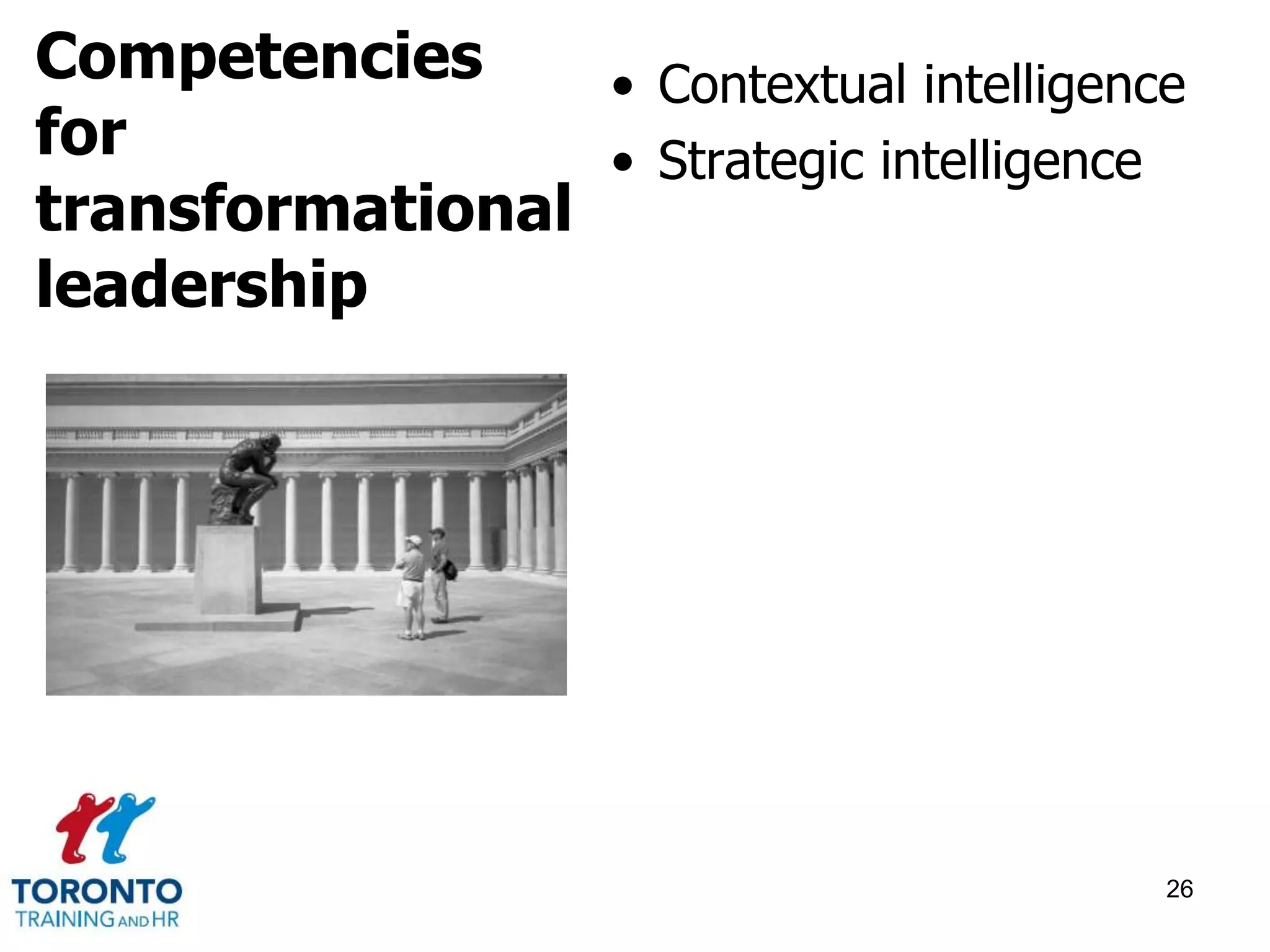
    • Contextual intelligence • Strategic intelligence 26 Competencies for transformational leadership
  • 27.
  • 28.
    • Building trust • Encouraging risk-taking • Communication • Engaging stakeholders • Allowing for feedback and reflection • Supporting social learning 28 Techniques to develop leaders
  • 29.
  • 30.
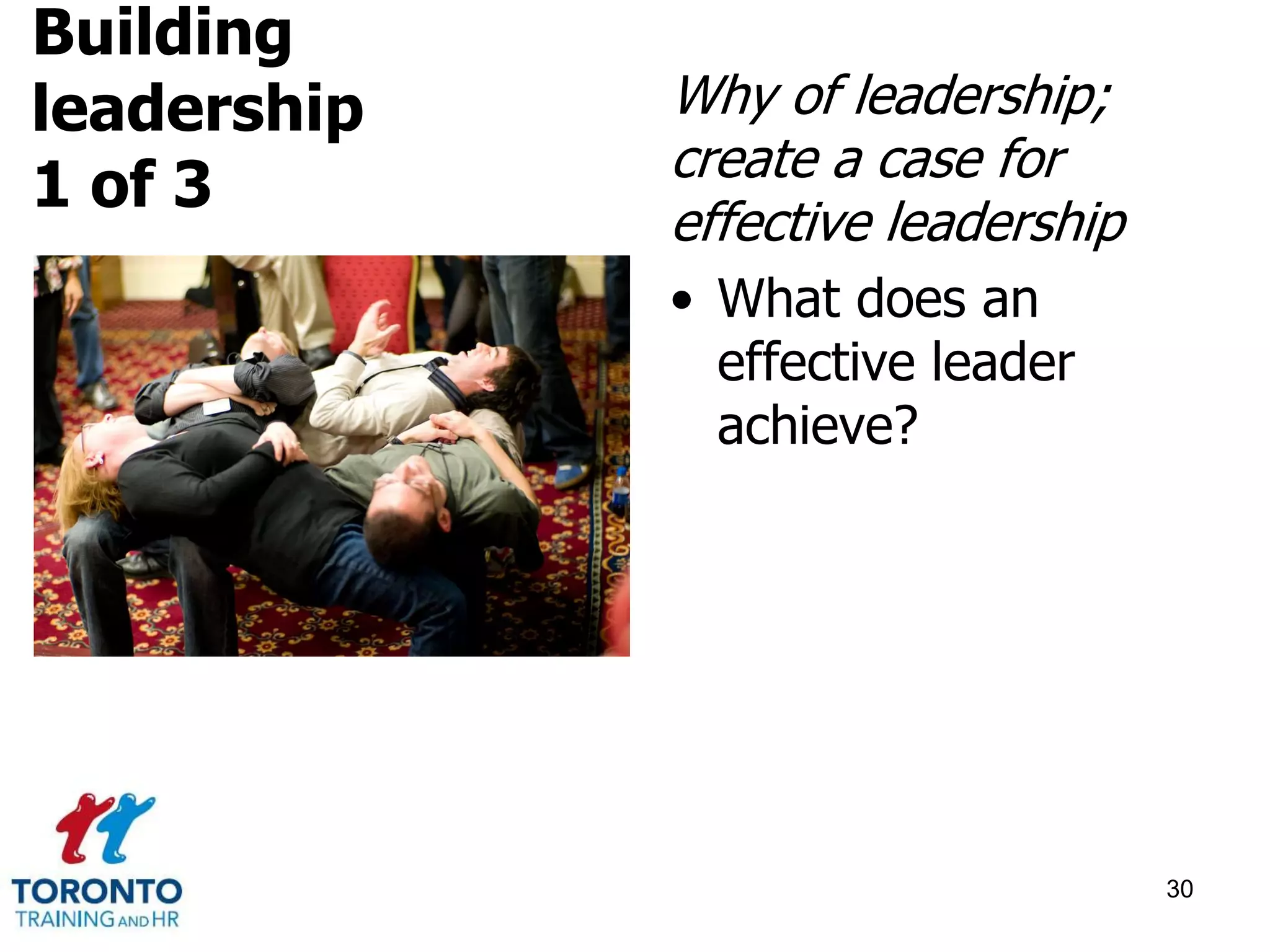
    Why of leadership; create a case for effective leadership • What does an effective leader achieve? 30 Building leadership 1 of 3
  • 31.
    How of leadership; ensure that leaders do what they know they should • Simplicity • Time • Accountable • Resources • Track • Perseverance • Emotion 31 Building leadership 2 of 3
  • 32.
    What of leadership; define what makes an effective leader • Strategy • Execution • Talent management • Human capital development • Personal proficiency 32 Building leadership 3 of 3
  • 33.
    Errors made byleaders when setting goals 33
  • 34.
    • Backing awayfrom tough expectations • Engaging in charades • Accepting seesaw trades • Setting vague or distant goals • Not establishing consequences • Setting too many goals • Allowing deflection to preparations, studies and research 34 Errors made by leaders when setting goals
  • 35.
    Critical factors for organizational health 35
  • 36.
    • Accountability •Capabilities • Coordination and control • Culture and climate • Direction • External orientation • Innovation and learning • Motivation 36 Critical factors for organizational health
  • 37.
    Leadership strategies to improve engagement 37
  • 38.
    • Cultivate hightrust • Model core values • Encourage debate and risk taking • Listen closely • Leverage strengths and mitigate weaknesses • Be savvy about organizational nuances • Imagine the future 38 Leadership strategies to improve engagement
  • 39.
  • 40.
    • Seek intelligent,driven people • Seek evangelistic ‘believers’ • Hire ethical, high integrity players • Check references • Trust your intuition • Be decisive 40 Recruitment and leaders 1 of 2
  • 41.
    • Compare theprospective candidate’s credentials against your management team • Don’t assume the candidate will accept • Integrate and transition the new hire • Seek referrals from your best hires 41 Recruitment and leaders 2 of 2
  • 42.
    Characteristics of a servant leader 42
  • 43.
    • She valuespeople through believing in people, by placing others' needs before her own, and through receptive, nonjudgmental listening • She develops people by providing opportunities for learning and growth • She role-models appropriate behaviours 43 Characteristics of a servant leader 1 of 3
  • 44.
    • She buildsa sense of community through working collaboratively with others • She values and respects others' differences • At all times she displays authenticity • She provides leadership by envisioning the future, taking initiative and clarifying objectives 44 Characteristics of a servant leader 2 of 3
  • 45.
    • She sharesleadership by facilitating a shared vision; she shares power and releases control 45 Characteristics of a servant leader 3 of 3
  • 46.
  • 47.
    • Start fromthe outside in • Value is defined by the receiver more than the giver • Strategy without organization is false hope; organization without strategy is mindless activity • Organization is not structure but capability 47 Insights for leaders 1 of 2
  • 48.
    • Leadership matters more than leader • Culture from the outside in shifts from event to pattern to identity • Culture may be embedded through an intellectual, behavioural and process agenda 48 Insights for leaders 2 of 2
  • 49.
    Attributes for leadersof tomorrow 49
  • 50.
    • Authenticity •Articulation • Alignment • Accountability • Agility 50 Attributes for leaders of tomorrow
  • 51.
  • 52.
    Conclusion, summary and questions Conclusion Summary Videos Questions 52