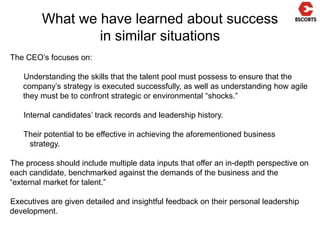
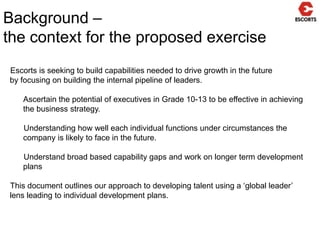
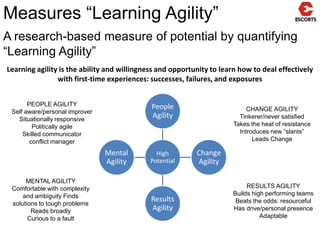
BUILDING CAPABILITYFOR FUTURE GROWTH
What really is the problem?Carefully crafted strategies will help you build leader-readiness
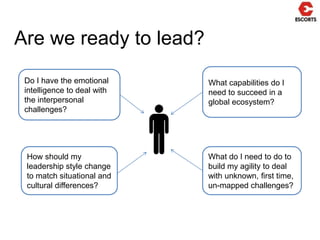
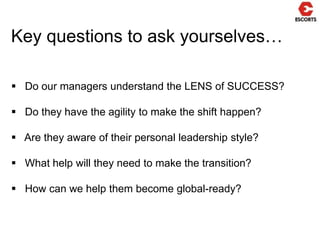
Are we ready to lead?What capabilities do I need to succeed in a global ecosystem?Do I have the emotionalintelligence to deal with the interpersonalchallenges?What do I need to do tobuild my agility to deal with unknown, first time,un-mapped challenges?How should my leadership style change to match situational and cultural differences?
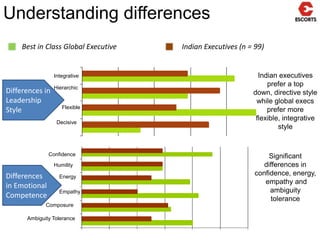
Understanding differences	Best in Class Global Executive	 		Indian Executives (n = 99)Indian executives prefer a top down, directive stylewhile global execs prefer more flexible, integrative styleIntegrativeDifferences in Leadership StyleHierarchicFlexibleDecisiveConfidenceSignificant differences in confidence, energy, empathy and ambiguitytoleranceHumilityDifferences in Emotional CompetenceEnergyEmpathyComposureAmbiguity Tolerance
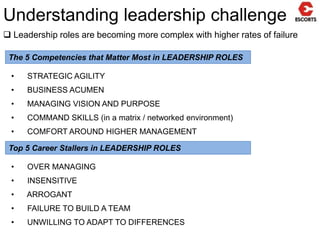
Understanding leadership challenge Leadership roles are becoming more complex with higher rates of failureThe 5 Competencies that Matter Most in LEADERSHIP ROLES      STRATEGIC AGILITY
      BUSINESS ACUMEN
      MANAGING VISION AND PURPOSEย 
      COMMAND SKILLS (in a matrix / networked environment)
      COMFORT AROUND HIGHER MANAGEMENTTop 5 Career Stallers in LEADERSHIP ROLES      OVER MANAGING
      INSENSITIVE
ย      ARROGANT ย 
      FAILURE TO BUILD A TEAM
      UNWILLING TO ADAPT TO DIFFERENCESFrom Manager to LeaderUnderstanding the lens of Success
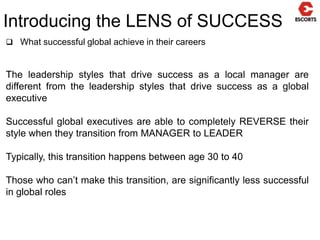
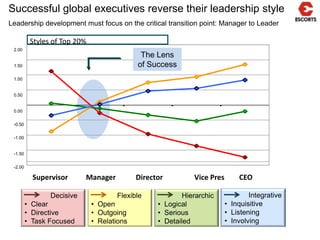
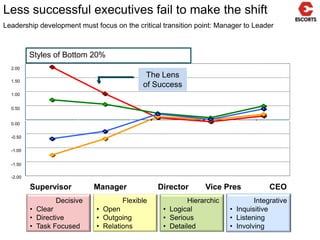
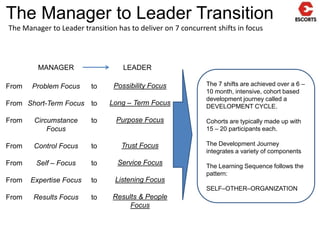
Introducing the LENS of SUCCESSWhat successful global achieve in their careersThe leadership styles that drive success as a local manager are different from the leadership styles that drive success as a global executiveย Successful global executives are able to completely REVERSE their style when they transition from MANAGER to LEADERย Typically, this transition happens between age 30 to 40ย ย Those who canโ€™t make this transition, are significantly less successful in global rolesย 
Successful global executives reverse their leadership styleLeadership development must focus on the critical transition point: Manager to LeaderStyles of Top 20%2.00The Lens of Success1.501.000.500.00-0.50-1.00-1.50-2.00Supervisor          Manager    Director Vice Pres	        CEO            Integrative  Inquisitive
  Listening
  Involving             Decisive  Clear
  Directive
  Task Focused             Flexible  Open
  Outgoing
  Relations            Hierarchic  Logical
  Serious
  DetailedLess successful executives fail to make the shiftLeadership development must focus on the critical transition point: Manager to LeaderStyles of Bottom 20%2.00The Lens of Success1.501.000.500.00-0.50-1.00-1.50-2.00Supervisor          Manager	Director       Vice Pres	       CEO             Decisive  Clear
  Directive

Building capability for future growth

  • 1.
  • 2.
    What really isthe problem?Carefully crafted strategies will help you build leader-readiness
  • 3.
    Are we readyto lead?What capabilities do I need to succeed in a global ecosystem?Do I have the emotionalintelligence to deal with the interpersonalchallenges?What do I need to do tobuild my agility to deal with unknown, first time,un-mapped challenges?How should my leadership style change to match situational and cultural differences?
  • 4.
    Understanding differences Best inClass Global Executive Indian Executives (n = 99)Indian executives prefer a top down, directive stylewhile global execs prefer more flexible, integrative styleIntegrativeDifferences in Leadership StyleHierarchicFlexibleDecisiveConfidenceSignificant differences in confidence, energy, empathy and ambiguitytoleranceHumilityDifferences in Emotional CompetenceEnergyEmpathyComposureAmbiguity Tolerance
  • 5.
    Understanding leadership challengeLeadership roles are becoming more complex with higher rates of failureThe 5 Competencies that Matter Most in LEADERSHIP ROLES STRATEGIC AGILITY
  • 6.
    BUSINESS ACUMEN
  • 7.
    MANAGING VISION AND PURPOSEย 
  • 8.
    COMMAND SKILLS (in a matrix / networked environment)
  • 9.
    COMFORT AROUND HIGHER MANAGEMENTTop 5 Career Stallers in LEADERSHIP ROLES OVER MANAGING
  • 10.
    INSENSITIVE
  • 11.
    ย  ARROGANT ย 
  • 12.
    FAILURE TO BUILD A TEAM
  • 13.
    UNWILLING TO ADAPT TO DIFFERENCESFrom Manager to LeaderUnderstanding the lens of Success
  • 14.
    Introducing the LENSof SUCCESSWhat successful global achieve in their careersThe leadership styles that drive success as a local manager are different from the leadership styles that drive success as a global executiveย Successful global executives are able to completely REVERSE their style when they transition from MANAGER to LEADERย Typically, this transition happens between age 30 to 40ย ย Those who canโ€™t make this transition, are significantly less successful in global rolesย 
  • 15.
    Successful global executivesreverse their leadership styleLeadership development must focus on the critical transition point: Manager to LeaderStyles of Top 20%2.00The Lens of Success1.501.000.500.00-0.50-1.00-1.50-2.00Supervisor Manager Director Vice Pres CEO Integrative Inquisitive
  • 16.
  • 17.
    Involving Decisive Clear
  • 18.
  • 19.
    TaskFocused Flexible Open
  • 20.
  • 21.
    Relations Hierarchic Logical
  • 22.
  • 23.
    DetailedLesssuccessful executives fail to make the shiftLeadership development must focus on the critical transition point: Manager to LeaderStyles of Bottom 20%2.00The Lens of Success1.501.000.500.00-0.50-1.00-1.50-2.00Supervisor Manager Director Vice Pres CEO Decisive Clear
  • 24.