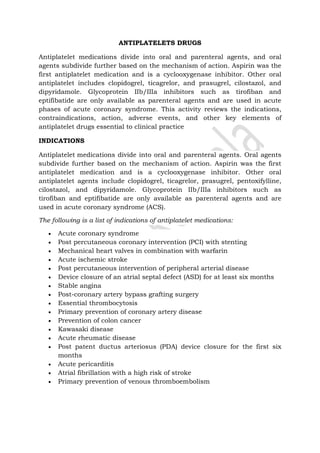
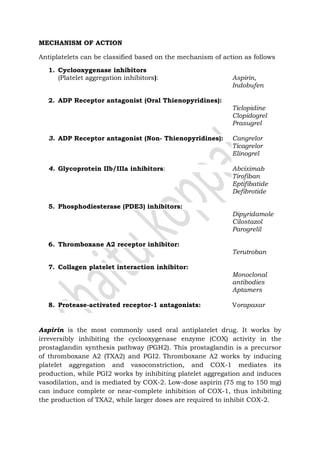
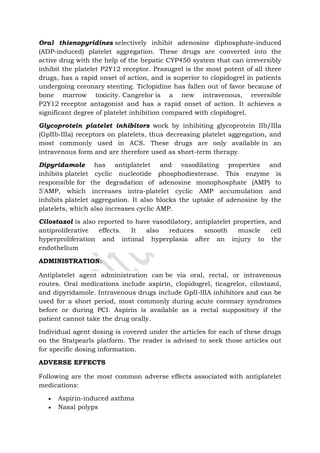
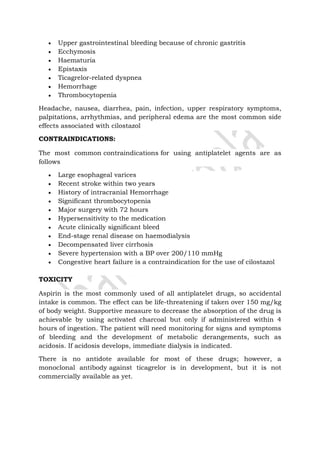
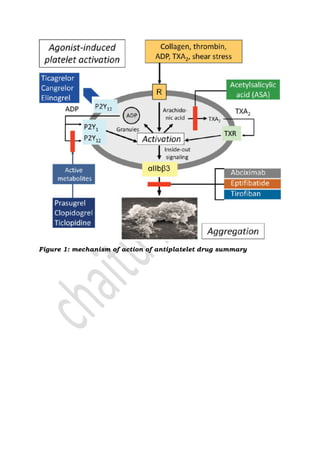
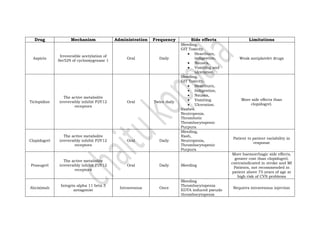
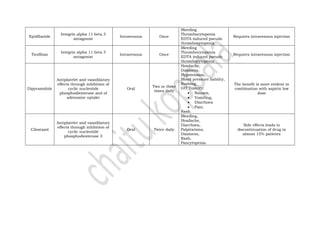

This document discusses antiplatelet drugs, including their indications, mechanisms of action, administration, adverse effects, and limitations. Antiplatelet drugs are classified as oral or parenteral agents and can include aspirin, clopidogrel, ticagrelor, prasugrel, cilostazol, dipyridamole, tirofiban, and eptifibatide. They work by various mechanisms including inhibiting platelet aggregation and receptor antagonism. Common indications are acute coronary syndrome, stenting and other cardiovascular procedures. Adverse effects include bleeding risks, while limitations include variable patient responses, administration methods, and side effect profiles.


