Lathe machine
Department of Mechanical Engineering
Introduction
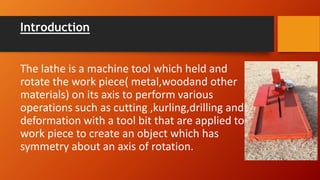
The lathe is a machine tool which held and
rotate the work piece( metal,woodand other
materials) on its axis to perform various
operations such as cutting ,kurling,drilling and
deformation with a tool bit that are applied to
work piece to create an object which has
symmetry about an axis of rotation.
History
The lathe is an ancient tool . The first fully
documented all metal slide rest lathe was
invented by Jacques de Vaucanson around
1751. The lathe was very important to the
industrial revaluation. It is known as the
mother of machine tools.
Purpose
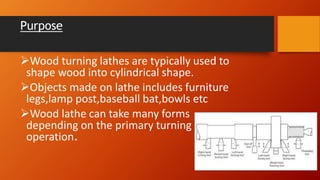
Wood turning lathes are typically used to
shape wood into cylindrical shape.
Objects made on lathe includes furniture
legs,lamp post,baseball bat,bowls etc
Wood lathe can take many forms
depending on the primary turning
operation.
Operations
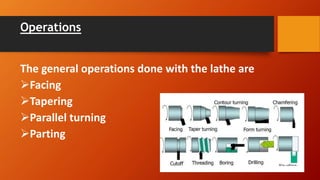
The general operations done with the lathe are
Facing
Tapering
Parallel turning
Parting
Facing
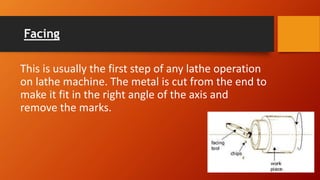
This is usually the first step of any lathe operation
on lathe machine. The metal is cut from the end to
make it fit in the right angle of the axis and
remove the marks.
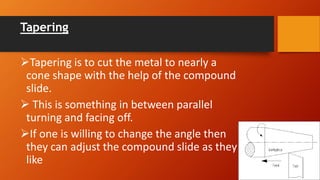
Tapering
Tapering is to cut the metal to nearly a
cone shape with the help of the compound
slide.
 This is something in between parallel
turning and facing off.
If one is willing to change the angle then
they can adjust the compound slide as they
like
Parallel Turning
This operation is adopted in order to cut the
metal Parallel to the axis.
Parallel turning is done to decrease the diameter
of the metal.
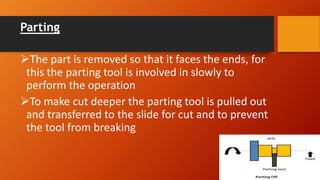
Parting
The part is removed so that it faces the ends, for
this the parting tool is involved in slowly to
perform the operation
To make cut deeper the parting tool is pulled out
and transferred to the slide for cut and to prevent
the tool from breaking
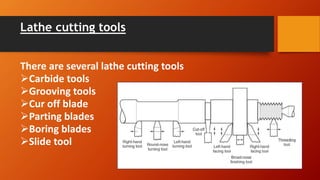
Lathe cutting tools
There are several lathe cutting tools
Carbide tools
Grooving tools
Cur off blade
Parting blades
Boring blades
Slide tool
0bjectives
The main objectives of the project are
To use available local materials in fabrication.
To achieve a reduction in the cost of production of the machine.
To reduce labour cost and time spend on using hand tools for wood
dressing.
To create awareness for and encouragement of indigenous
technology.
Increase productivity band creativity.
Dimensions and specifications
Below are the dimensions and specifications of mini wood lathe machine
Base length 3ft
Base width 1ft
Base height 3 inches
Chuck column height 10 inches from base top
Tail stock die 14mm and it is in centre of base.
Motor 180 watt
Bearing 28mm
Pully inner die 16mm
Tail stock height 7 inches
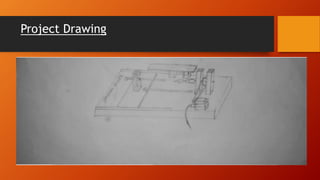
Project Drawing
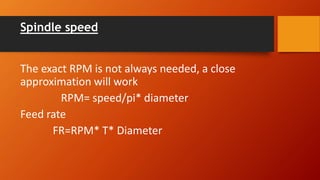
Spindle speed
The exact RPM is not always needed, a close
approximation will work
RPM= speed/pi* diameter
Feed rate
FR=RPM* T* Diameter
Safety precautions
Keep a balance stance at a lathe so you do not
fall or lean against the centers, workpiece or
other moving parts.
Do not overreach or use excessive force ton
perform any machine operation.
Turn off the lathe before cleaning.
Use a brush to remove chips or debris, do not
use your hands.
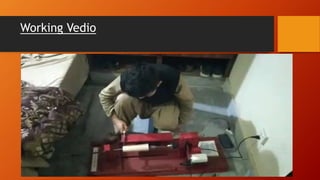
Working Vedio

Handmade Lathe Machine Presentation

  • 2.
    Lathe machine Department ofMechanical Engineering
  • 3.
    Introduction The lathe isa machine tool which held and rotate the work piece( metal,woodand other materials) on its axis to perform various operations such as cutting ,kurling,drilling and deformation with a tool bit that are applied to work piece to create an object which has symmetry about an axis of rotation.
  • 4.
    History The lathe isan ancient tool . The first fully documented all metal slide rest lathe was invented by Jacques de Vaucanson around 1751. The lathe was very important to the industrial revaluation. It is known as the mother of machine tools.
  • 5.
    Purpose Wood turning lathesare typically used to shape wood into cylindrical shape. Objects made on lathe includes furniture legs,lamp post,baseball bat,bowls etc Wood lathe can take many forms depending on the primary turning operation.
  • 6.
    Operations The general operationsdone with the lathe are Facing Tapering Parallel turning Parting
  • 7.
    Facing This is usuallythe first step of any lathe operation on lathe machine. The metal is cut from the end to make it fit in the right angle of the axis and remove the marks.
  • 8.
    Tapering Tapering is tocut the metal to nearly a cone shape with the help of the compound slide.  This is something in between parallel turning and facing off. If one is willing to change the angle then they can adjust the compound slide as they like
  • 9.
    Parallel Turning This operationis adopted in order to cut the metal Parallel to the axis. Parallel turning is done to decrease the diameter of the metal.
  • 10.
    Parting The part isremoved so that it faces the ends, for this the parting tool is involved in slowly to perform the operation To make cut deeper the parting tool is pulled out and transferred to the slide for cut and to prevent the tool from breaking
  • 11.
    Lathe cutting tools Thereare several lathe cutting tools Carbide tools Grooving tools Cur off blade Parting blades Boring blades Slide tool
  • 12.
    0bjectives The main objectivesof the project are To use available local materials in fabrication. To achieve a reduction in the cost of production of the machine. To reduce labour cost and time spend on using hand tools for wood dressing. To create awareness for and encouragement of indigenous technology. Increase productivity band creativity.
  • 13.
    Dimensions and specifications Beloware the dimensions and specifications of mini wood lathe machine Base length 3ft Base width 1ft Base height 3 inches Chuck column height 10 inches from base top Tail stock die 14mm and it is in centre of base. Motor 180 watt Bearing 28mm Pully inner die 16mm Tail stock height 7 inches
  • 14.
  • 15.
    Spindle speed The exactRPM is not always needed, a close approximation will work RPM= speed/pi* diameter Feed rate FR=RPM* T* Diameter
  • 16.
    Safety precautions Keep abalance stance at a lathe so you do not fall or lean against the centers, workpiece or other moving parts. Do not overreach or use excessive force ton perform any machine operation. Turn off the lathe before cleaning. Use a brush to remove chips or debris, do not use your hands.
  • 17.