Language
What is language?
• Language is a code system used to represent concepts
• Words are the symbols for the code
• Each language has rules of how words can be combined
We cannot say: Teacher a Mary is
• Language is used to communicate through speech, writing and
reading.
• Language does not exist in a vacuum – it is a social tool to
communicate our ideas. Without language we cannot think.
Rules of language
• Phonological rules – to combine individual sounds into words for
example – ph – sound ? Df ? Fz?
• Morphological rules – the smallest unit of a word is called a
morpheme for example ‘happy’ – unhappy, happily
• Syntax rules – Rules that tell us the word order in a sentence
• Semantic rules – the meaning of words
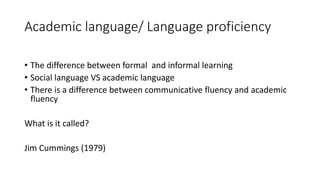
Academic language/ Language proficiency
• The difference between formal and informal learning
• Social language VS academic language
• There is a difference between communicative fluency and academic
fluency
What is it called?
Jim Cummings (1979)
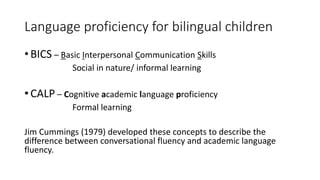
Language proficiency for bilingual children
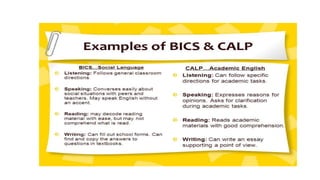
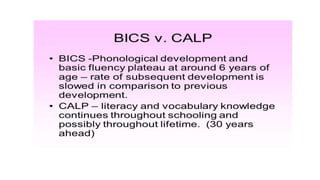
• BICS – Basic Interpersonal Communication Skills
Social in nature/ informal learning
• CALP – Cognitive academic language proficiency
Formal learning
Jim Cummings (1979) developed these concepts to describe the
difference between conversational fluency and academic language
fluency.
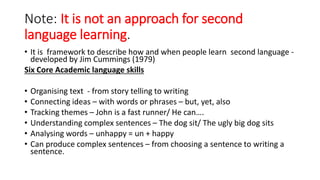
Note: It is not an approach for second
language learning.
• It is framework to describe how and when people learn second language -
developed by Jim Cummings (1979)
Six Core Academic language skills
• Organising text - from story telling to writing
• Connecting ideas – with words or phrases – but, yet, also
• Tracking themes – John is a fast runner/ He can….
• Understanding complex sentences – The dog sit/ The ugly big dog sits
• Analysing words – unhappy = un + happy
• Can produce complex sentences – from choosing a sentence to writing a
sentence.
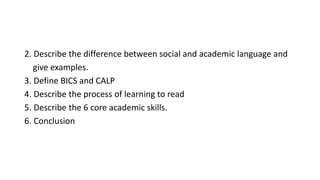
2. Describe the difference between social and academic language and
give examples.
3. Define BICS and CALP
4. Describe the process of learning to read
5. Describe the 6 core academic skills.
6. Conclusion
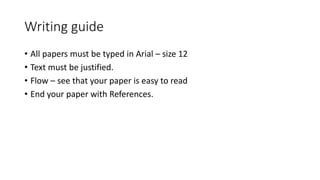
Writing guide
• All papers must be typed in Arial – size 12
• Text must be justified.
• Flow – see that your paper is easy to read
• End your paper with References.

Language bics calp

  • 1.
  • 2.
    What is language? •Language is a code system used to represent concepts • Words are the symbols for the code • Each language has rules of how words can be combined We cannot say: Teacher a Mary is • Language is used to communicate through speech, writing and reading. • Language does not exist in a vacuum – it is a social tool to communicate our ideas. Without language we cannot think.
  • 3.
    Rules of language •Phonological rules – to combine individual sounds into words for example – ph – sound ? Df ? Fz? • Morphological rules – the smallest unit of a word is called a morpheme for example ‘happy’ – unhappy, happily • Syntax rules – Rules that tell us the word order in a sentence • Semantic rules – the meaning of words
  • 4.
    Academic language/ Languageproficiency • The difference between formal and informal learning • Social language VS academic language • There is a difference between communicative fluency and academic fluency What is it called? Jim Cummings (1979)
  • 5.
    Language proficiency forbilingual children • BICS – Basic Interpersonal Communication Skills Social in nature/ informal learning • CALP – Cognitive academic language proficiency Formal learning Jim Cummings (1979) developed these concepts to describe the difference between conversational fluency and academic language fluency.
  • 6.
    Note: It isnot an approach for second language learning. • It is framework to describe how and when people learn second language - developed by Jim Cummings (1979) Six Core Academic language skills • Organising text - from story telling to writing • Connecting ideas – with words or phrases – but, yet, also • Tracking themes – John is a fast runner/ He can…. • Understanding complex sentences – The dog sit/ The ugly big dog sits • Analysing words – unhappy = un + happy • Can produce complex sentences – from choosing a sentence to writing a sentence.
  • 9.
    2. Describe thedifference between social and academic language and give examples. 3. Define BICS and CALP 4. Describe the process of learning to read 5. Describe the 6 core academic skills. 6. Conclusion
  • 10.
    Writing guide • Allpapers must be typed in Arial – size 12 • Text must be justified. • Flow – see that your paper is easy to read • End your paper with References.