Various Definitions of Earnings
(EBITDA, Operating Income, Net
Income)
Operating earnings can be measured by earnings before

interest and taxes (EBITDA), operating income and operating
profit.
Operating earnings excludes the effects of financing taxes.
Earnings before extraordinary and nonrecurring items is
known as income from continuing operations.
The “bottom line” of the income statement is net income.
It includes revenues, expenses, gains, losses and below the
line items.
Study Session 7, Reading 22
Reliability of Cash Flow Trends and
Trends in Earnings
When a company has earnings growth greater than the

industry and economy over the long run, a sceptical view in
evaluation should be taken.
Growth in operating cash flow is important for a sustainable
growth in the earnings of a company.
Over the long run, there should be no difference in the growth
rate of operating cash flows and the operating income.

Study Session 7, Reading 22
Accounting Treatment of Fair Value Hedge
Derivative and hedged assets and liabilities are reported at

fair value on the balance sheet.
Unrealized gains or losses are recognized in the income
statement
The ineffective portion of the hedge is recognized in the
income statement.

Study Session 7, Reading 22
Accounting Treatment of a Cash Flow Hedge
This hedge is used to cover for the changes in the variable

cash flows.
The derivative is reported in the balance sheet at its fair value.
Unrealized gains/losses on a derivative are recognized in other
comprehensive income.
Unrealized gains and losses are recognized in the income
statement eventually when the transaction impacts earnings.
Ineffective hedge is recognized in the income statement.

Study Session 7, Reading 22
Accounting Treatment for Foreign
Currency exposure
Derivative reported at fair value.
Gains and losses are recognized in other comprehensive

income.
The ineffective hedge is recognized in the income statement.

Study Session 7, Reading 22
Cash vs Accrual Basis Accounting
earnings management - Opportunistic use of the accruals
system
Under a cash basis system, the revenues are recorded when

the cash is collected and expenses are recognized when the
cash is paid for the expenses.
Revenue is recognized when earned under the accruals
system.

Study Session 7, Reading 23
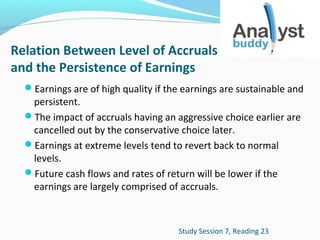
Relation Between Level of Accruals
and the Persistence of Earnings
Earnings are of high quality if the earnings are sustainable and

persistent.
The impact of accruals having an aggressive choice earlier are
cancelled out by the conservative choice later.
Earnings at extreme levels tend to revert back to normal
levels.
Future cash flows and rates of return will be lower if the
earnings are largely comprised of accruals.

Study Session 7, Reading 23
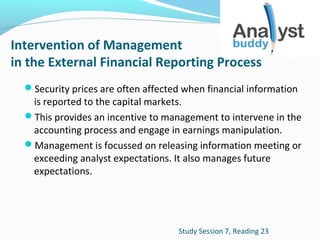
Intervention of Management
in the External Financial Reporting Process
Security prices are often affected when financial information

is reported to the capital markets.
This provides an incentive to management to intervene in the
accounting process and engage in earnings manipulation.
Management is focussed on releasing information meeting or
exceeding analyst expectations. It also manages future
expectations.

Study Session 7, Reading 23
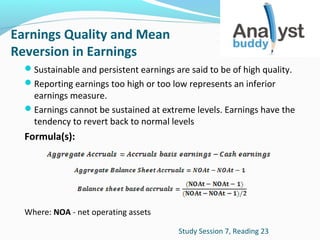
Earnings Quality and Mean
Reversion in Earnings
Sustainable and persistent earnings are said to be of high quality.
Reporting earnings too high or too low represents an inferior

earnings measure.
Earnings cannot be sustained at extreme levels. Earnings have the
tendency to revert back to normal levels

Formula(s):

Where: NOA - net operating assets
Study Session 7, Reading 23
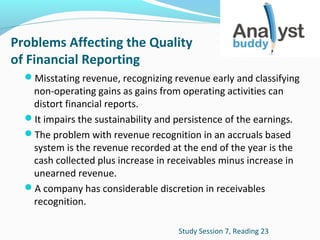
Problems Affecting the Quality
of Financial Reporting
Misstating revenue, recognizing revenue early and classifying

non-operating gains as gains from operating activities can
distort financial reports.
It impairs the sustainability and persistence of the earnings.
The problem with revenue recognition in an accruals based
system is the revenue recorded at the end of the year is the
cash collected plus increase in receivables minus increase in
unearned revenue.
A company has considerable discretion in receivables
recognition.
Study Session 7, Reading 23
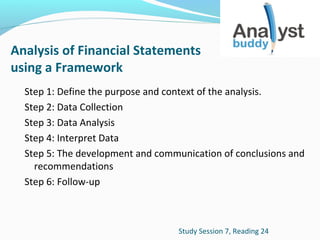
Analysis of Financial Statements
using a Framework
Step 1: Define the purpose and context of the analysis.
Step 2: Data Collection
Step 3: Data Analysis
Step 4: Interpret Data
Step 5: The development and communication of conclusions and
recommendations
Step 6: Follow-up

Study Session 7, Reading 24
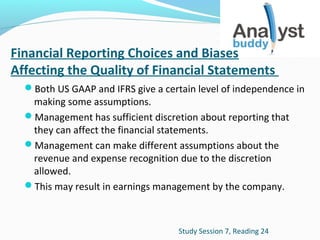
Financial Reporting Choices and Biases
Affecting the Quality of Financial Statements
Both US GAAP and IFRS give a certain level of independence in

making some assumptions.
Management has sufficient discretion about reporting that
they can affect the financial statements.
Management can make different assumptions about the
revenue and expense recognition due to the discretion
allowed.
This may result in earnings management by the company.

Study Session 7, Reading 24
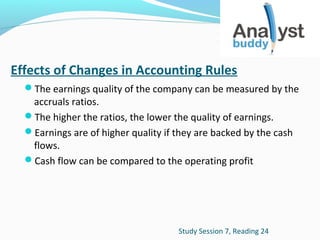
Effects of Changes in Accounting Rules
The earnings quality of the company can be measured by the

accruals ratios.
The higher the ratios, the lower the quality of earnings.
Earnings are of higher quality if they are backed by the cash
flows.
Cash flow can be compared to the operating profit

Study Session 7, Reading 24

L2 flash cards financial reporting - SS 7

  • 1.
    Various Definitions ofEarnings (EBITDA, Operating Income, Net Income) Operating earnings can be measured by earnings before interest and taxes (EBITDA), operating income and operating profit. Operating earnings excludes the effects of financing taxes. Earnings before extraordinary and nonrecurring items is known as income from continuing operations. The “bottom line” of the income statement is net income. It includes revenues, expenses, gains, losses and below the line items. Study Session 7, Reading 22
  • 2.
    Reliability of CashFlow Trends and Trends in Earnings When a company has earnings growth greater than the industry and economy over the long run, a sceptical view in evaluation should be taken. Growth in operating cash flow is important for a sustainable growth in the earnings of a company. Over the long run, there should be no difference in the growth rate of operating cash flows and the operating income. Study Session 7, Reading 22
  • 3.
    Accounting Treatment ofFair Value Hedge Derivative and hedged assets and liabilities are reported at fair value on the balance sheet. Unrealized gains or losses are recognized in the income statement The ineffective portion of the hedge is recognized in the income statement. Study Session 7, Reading 22
  • 4.
    Accounting Treatment ofa Cash Flow Hedge This hedge is used to cover for the changes in the variable cash flows. The derivative is reported in the balance sheet at its fair value. Unrealized gains/losses on a derivative are recognized in other comprehensive income. Unrealized gains and losses are recognized in the income statement eventually when the transaction impacts earnings. Ineffective hedge is recognized in the income statement. Study Session 7, Reading 22
  • 5.
    Accounting Treatment forForeign Currency exposure Derivative reported at fair value. Gains and losses are recognized in other comprehensive income. The ineffective hedge is recognized in the income statement. Study Session 7, Reading 22
  • 6.
    Cash vs AccrualBasis Accounting earnings management - Opportunistic use of the accruals system Under a cash basis system, the revenues are recorded when the cash is collected and expenses are recognized when the cash is paid for the expenses. Revenue is recognized when earned under the accruals system. Study Session 7, Reading 23
  • 7.
    Relation Between Levelof Accruals and the Persistence of Earnings Earnings are of high quality if the earnings are sustainable and persistent. The impact of accruals having an aggressive choice earlier are cancelled out by the conservative choice later. Earnings at extreme levels tend to revert back to normal levels. Future cash flows and rates of return will be lower if the earnings are largely comprised of accruals. Study Session 7, Reading 23
  • 8.
    Intervention of Management inthe External Financial Reporting Process Security prices are often affected when financial information is reported to the capital markets. This provides an incentive to management to intervene in the accounting process and engage in earnings manipulation. Management is focussed on releasing information meeting or exceeding analyst expectations. It also manages future expectations. Study Session 7, Reading 23
  • 9.
    Earnings Quality andMean Reversion in Earnings Sustainable and persistent earnings are said to be of high quality. Reporting earnings too high or too low represents an inferior earnings measure. Earnings cannot be sustained at extreme levels. Earnings have the tendency to revert back to normal levels Formula(s): Where: NOA - net operating assets Study Session 7, Reading 23
  • 10.
    Problems Affecting theQuality of Financial Reporting Misstating revenue, recognizing revenue early and classifying non-operating gains as gains from operating activities can distort financial reports. It impairs the sustainability and persistence of the earnings. The problem with revenue recognition in an accruals based system is the revenue recorded at the end of the year is the cash collected plus increase in receivables minus increase in unearned revenue. A company has considerable discretion in receivables recognition. Study Session 7, Reading 23
  • 11.
    Analysis of FinancialStatements using a Framework Step 1: Define the purpose and context of the analysis. Step 2: Data Collection Step 3: Data Analysis Step 4: Interpret Data Step 5: The development and communication of conclusions and recommendations Step 6: Follow-up Study Session 7, Reading 24
  • 12.
    Financial Reporting Choicesand Biases Affecting the Quality of Financial Statements Both US GAAP and IFRS give a certain level of independence in making some assumptions. Management has sufficient discretion about reporting that they can affect the financial statements. Management can make different assumptions about the revenue and expense recognition due to the discretion allowed. This may result in earnings management by the company. Study Session 7, Reading 24
  • 13.
    Effects of Changesin Accounting Rules The earnings quality of the company can be measured by the accruals ratios. The higher the ratios, the lower the quality of earnings. Earnings are of higher quality if they are backed by the cash flows. Cash flow can be compared to the operating profit Study Session 7, Reading 24