Energy Systemsfor ExerciseBIOENERGETICS
Cells don’t get Energy directly from food, it must be broken down into:ATP-Adensosine TRIphosphateATP = a form of energy one can immediately use, it is needed for cells to function & muscles to contract
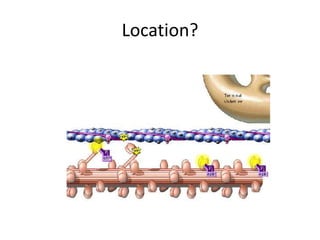
Location?
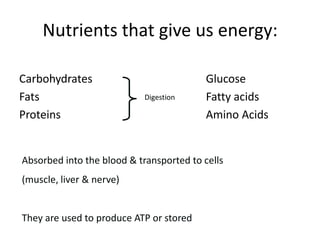
Nutrients that give us energy:CarbohydratesFatsProteinsGlucoseFatty acidsAmino AcidsDigestionAbsorbed into the blood & transported to cells (muscle, liver & nerve)They are used to produce ATP or stored
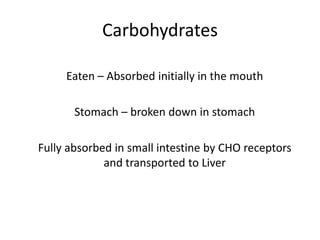
Carbohydrates	Eaten – Absorbed initially in the mouth	Stomach – broken down in stomach	Fully absorbed in small intestine by CHO receptors and transported to Liver
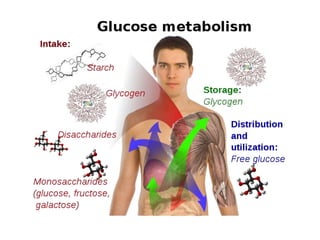
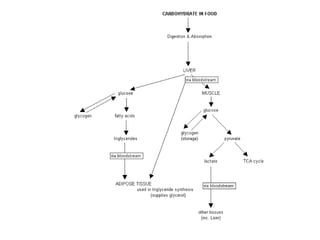
Glucose or GlycogenGlycogen is stored glucose.Initially by the liver then sent in blood to muscles, so stored in bloodLiver releases glucose when needed [Glucogenosis via Cori Cycle]
Conversion of excess glucose to fat Sustained high glucose intake in the diet leads to increased fat synthesis. If glucose intake continues after muscle and liver glycogen stores are saturated, the glucose is not excreted or wasted. It is converted to a fuel storage form which has an unlimited capacity i.e. triglycerides stored in adipose tissue. Glucose is converted to pyruvate by glycolysis.
Blood SugarThe blood sugar level is the amount of glucose (sugar) in the blood. It is also known as plasma glucose level. It is expressed as millimoles per litre (mmol/l).Normally blood glucose levels stay within narrow limits throughout the day: 4 to 8mmol/l. But they are higher after meals and usually lowest in the morning.
ATP is stored in small amounts, therefore the rest is stored as:Glucose = Glycogen (muscle & liver)
Fatty Acids = Body fat
Amino Acids = Growth, repair or excreted as wasteCells in the body need energy to functionFOOD=ENERGY (E)
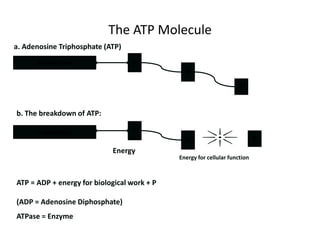
The ATP Moleculea. Adenosine Triphosphate (ATP)PAdenosinePPb. The breakdown of ATP:PAdenosinePPEnergyEnergy for cellular functionATP = ADP + energy for biological work + P(ADP = Adenosine Diphosphate)ATPase = Enzyme
The human body is made to move in many ways:Quick and powerful
Graceful & coordinated
Sustained for many hoursAnd is dependent upon the capacity to produce energy
We have a great amount of diversityQuick movements-lasts a few seconds
Reduced speed-lasts for several minutes
Reduced intensity(50%)-lasts for several hoursThe body uses different energy systems for each activity
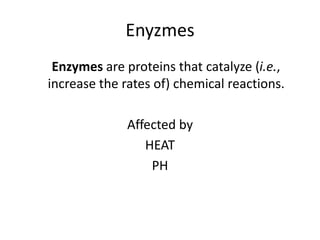
Enyzmes	Enzymes are proteins that catalyze (i.e., increase the rates of) chemical reactions.Affected by HEATPH
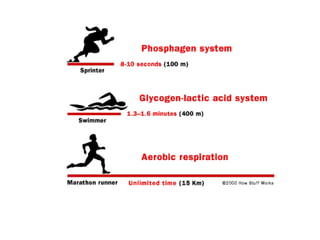
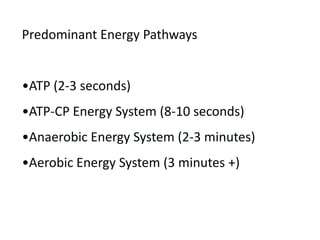
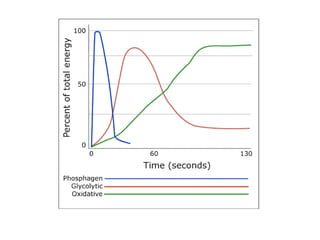
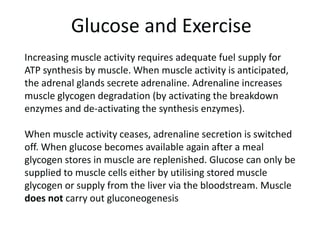
Predominant Energy PathwaysATP (2-3 seconds)
ATP-CP Energy System (8-10 seconds)
Anaerobic Energy System (2-3 minutes)
Aerobic Energy System (3 minutes +)
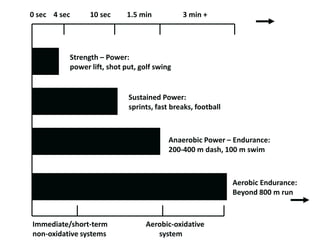
0 sec    4 sec           10 sec         1.5 min                 3 min +Strength – Power:power lift, shot put, golf swingSustained Power:sprints, fast breaks, footballAnaerobic Power – Endurance:200-400 m dash, 100 m swimAerobic Endurance:Beyond 800 m runImmediate/short-term                     Aerobic-oxidativenon-oxidative systems                             system
Anaerobic Energy SystemWithout oxygen = Activities that require a large burst of energy over a short period of time
ATP/System
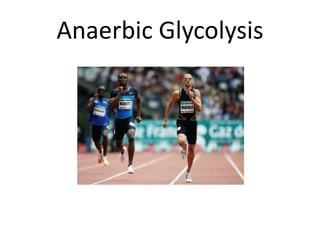
Anaerobic Glycolysis= Production of ATP from Carbohydrates without oxygen   (breakdown of glucose)
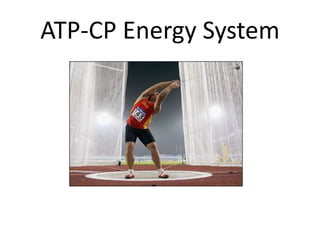
ATP-CP Energy System
ATP-CP Energy SystemATP is stored in the muscle & liver for “Quick Energy”Nerve impulses trigger breakdown of ATP into ADP
ADP = Adenosine Diphosphate & 1 Phosphate
The splitting of the Phosphate bond = Energy for workEx.  Muscle Contraction, Moving hand from a hot stove, Jumping & Throwing
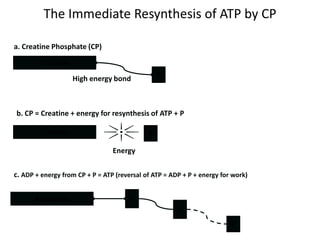
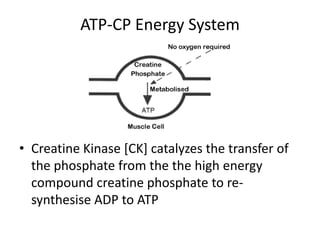
The Immediate Resynthesis of ATP by CPa. Creatine Phosphate (CP)CreatinePHigh energy bondb. CP = Creatine + energy for resynthesis of ATP +PCreatinePEnergyc. ADP + energy from CP + P = ATP (reversal of ATP = ADP + P + energy for work)PAdenosinePP
ATP-CP Energy SystemCreatineKinase [CK] catalyzes the transfer of the phosphate from the the high energy compound creatine phosphate to re-synthesise ADP to ATP
For contractions to continue… ATP must be REBUILTThis comes from the splitting of CP (Creatine Phosphate a Hi energy source, automatic) When ATP is used – it is rebuilt – as long as there is CPEnergy released from CP breaking down, resynthesizes the ADP & P
REMEMBER – only small amounts of ATP are stored = only 2-3 sec. of EnergyATP-CP = 8-10 sec. of EnergyThe usefulness isn’t the AMOUNT of Energy but the QUICK & POWERFUL movementsFor longer periods of work = The Aerobic & Anaerobic Energy System must be utilized
AnaerbicGlycolysis
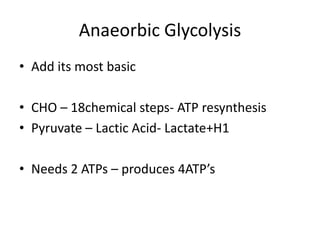
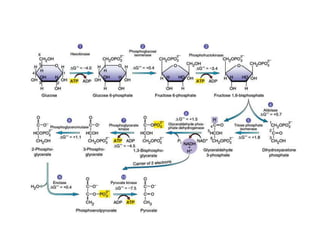
AnaeorbicGlycolysisAdd its most basic CHO – 18chemical steps- ATP resynthesisPyruvate – Lactic Acid- Lactate+H1Needs 2 ATPs – produces 4ATP’s
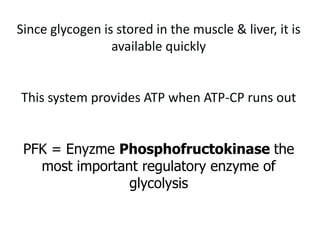
Since glycogen is stored in the muscle & liver, it is available quicklyThis system provides ATP when ATP-CP runs outPFK = EnyzmePhosphofructokinasethe most important regulatory enzyme of glycolysis
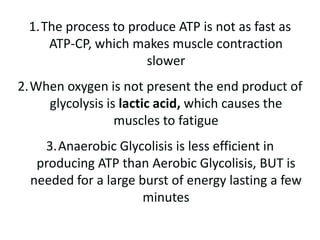
The process to produce ATP is not as fast as ATP-CP, which makes muscle contraction slowerWhen oxygen is not present the end product of glycolysisis lactic acid, which causes the muscles to fatigueAnaerobic Glycolisis is less efficient in producing ATP than Aerobic Glycolisis, BUT is needed for a large burst of energy lasting a few minutes
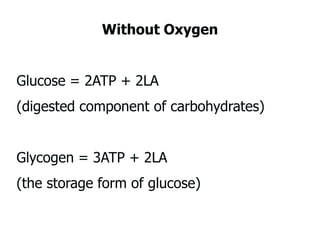
Without OxygenGlucose = 2ATP + 2LA  (digested component of carbohydrates)Glycogen = 3ATP + 2LA (the storage form of glucose)
ATP/PC and Anaerobic Glycolysis takes place in the Cytoplasm. Cytoplasm is basically the substance that fills the cell
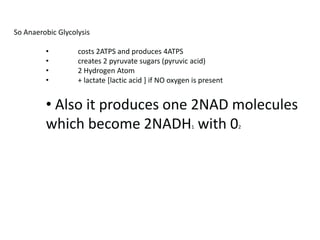
So Anaerobic Glycolysis 	costs 2ATPS and produces 4ATPS
 	creates 2 pyruvate sugars (pyruvic acid)
  	2 Hydrogen Atom
 	+ lactate [lactic acid ] if NO oxygen is present
 Also it produces one 2NAD moleculeswhich become 2NADH1 with 02
NAD and FADNicotinamide adenine dinucleotide (NAD) and flavin adenine dinucleotide (FAD) are coenymes which carry H1 to 02 into the ECTNAD = Niacin [B3]FAD = Riboflavin [B2]
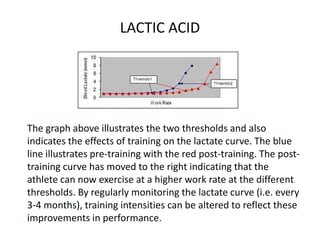
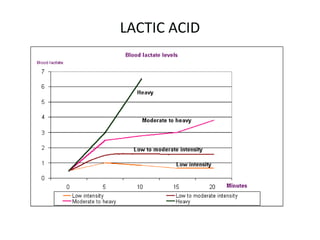
LACTIC ACIDThe graph above illustrates the two thresholds and also indicates the effects of training on the lactate curve. The blue line illustrates pre-training with the red post-training. The post-training curve has moved to the right indicating that the athlete can now exercise at a higher work rate at the different thresholds. By regularly monitoring the lactate curve (i.e. every 3-4 months), training intensities can be altered to reflect these improvements in performance.
LACTIC ACID
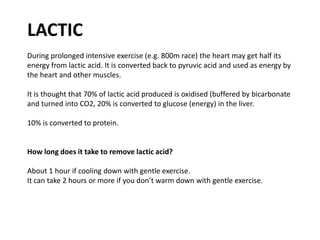
LACTIC During prolonged intensive exercise (e.g. 800m race) the heart may get half its energy from lactic acid. It is converted back to pyruvic acid and used as energy by the heart and other muscles. It is thought that 70% of lactic acid produced is oxidised (buffered by bicarbonate and turned into CO2, 20% is converted to glucose (energy) in the liver. 10% is converted to protein. How long does it take to remove lactic acid?About 1 hour if cooling down with gentle exercise. It can take 2 hours or more if you don’t warm down with gentle exercise.
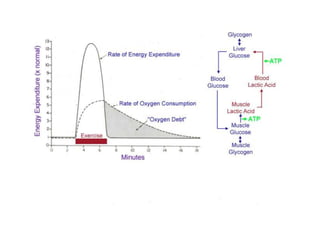
EPOCExcess post-exercise oxygen consumption (EPOC) is a measurably increased oxygen intake following strenuous activity rate of intended to erase the body's "oxygen debt."
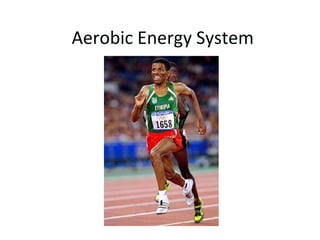
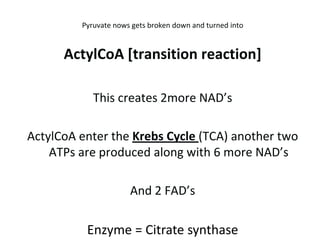
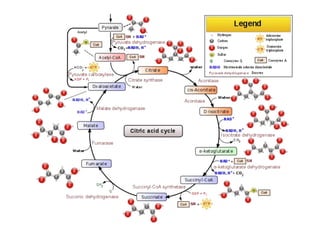
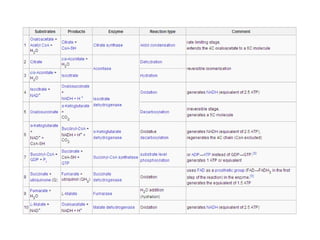
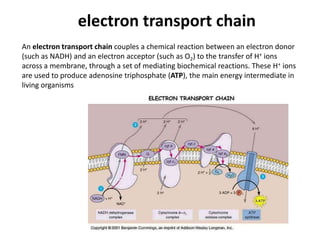
Aerobic Energy System
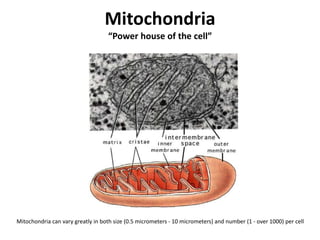
Mitochondria“Power house of the cell”Mitochondria can vary greatly in both size (0.5 micrometers - 10 micrometers) and number (1 - over 1000) per cell

L10 Energy Systems

  • 1.
  • 2.
    Cells don’t getEnergy directly from food, it must be broken down into:ATP-Adensosine TRIphosphateATP = a form of energy one can immediately use, it is needed for cells to function & muscles to contract
  • 3.
  • 4.
    Nutrients that giveus energy:CarbohydratesFatsProteinsGlucoseFatty acidsAmino AcidsDigestionAbsorbed into the blood & transported to cells (muscle, liver & nerve)They are used to produce ATP or stored
  • 5.
    Carbohydrates Eaten – Absorbedinitially in the mouth Stomach – broken down in stomach Fully absorbed in small intestine by CHO receptors and transported to Liver
  • 6.
    Glucose or GlycogenGlycogenis stored glucose.Initially by the liver then sent in blood to muscles, so stored in bloodLiver releases glucose when needed [Glucogenosis via Cori Cycle]
  • 9.
    Conversion of excessglucose to fat Sustained high glucose intake in the diet leads to increased fat synthesis. If glucose intake continues after muscle and liver glycogen stores are saturated, the glucose is not excreted or wasted. It is converted to a fuel storage form which has an unlimited capacity i.e. triglycerides stored in adipose tissue. Glucose is converted to pyruvate by glycolysis.
  • 10.
    Blood SugarThe bloodsugar level is the amount of glucose (sugar) in the blood. It is also known as plasma glucose level. It is expressed as millimoles per litre (mmol/l).Normally blood glucose levels stay within narrow limits throughout the day: 4 to 8mmol/l. But they are higher after meals and usually lowest in the morning.
  • 11.
    ATP is storedin small amounts, therefore the rest is stored as:Glucose = Glycogen (muscle & liver)
  • 12.
  • 13.
    Amino Acids =Growth, repair or excreted as wasteCells in the body need energy to functionFOOD=ENERGY (E)
  • 14.
    The ATP Moleculea.Adenosine Triphosphate (ATP)PAdenosinePPb. The breakdown of ATP:PAdenosinePPEnergyEnergy for cellular functionATP = ADP + energy for biological work + P(ADP = Adenosine Diphosphate)ATPase = Enzyme
  • 15.
    The human bodyis made to move in many ways:Quick and powerful
  • 16.
  • 17.
    Sustained for manyhoursAnd is dependent upon the capacity to produce energy
  • 18.
    We have agreat amount of diversityQuick movements-lasts a few seconds
  • 19.
  • 20.
    Reduced intensity(50%)-lasts forseveral hoursThe body uses different energy systems for each activity
  • 22.
    Enyzmes Enzymes are proteinsthat catalyze (i.e., increase the rates of) chemical reactions.Affected by HEATPH
  • 23.
  • 24.
    ATP-CP Energy System(8-10 seconds)
  • 25.
  • 26.
  • 27.
    0 sec 4 sec 10 sec 1.5 min 3 min +Strength – Power:power lift, shot put, golf swingSustained Power:sprints, fast breaks, footballAnaerobic Power – Endurance:200-400 m dash, 100 m swimAerobic Endurance:Beyond 800 m runImmediate/short-term Aerobic-oxidativenon-oxidative systems system
  • 28.
    Anaerobic Energy SystemWithoutoxygen = Activities that require a large burst of energy over a short period of time
  • 29.
  • 30.
    Anaerobic Glycolysis= Productionof ATP from Carbohydrates without oxygen (breakdown of glucose)
  • 31.
  • 32.
    ATP-CP Energy SystemATPis stored in the muscle & liver for “Quick Energy”Nerve impulses trigger breakdown of ATP into ADP
  • 33.
    ADP = AdenosineDiphosphate & 1 Phosphate
  • 34.
    The splitting ofthe Phosphate bond = Energy for workEx. Muscle Contraction, Moving hand from a hot stove, Jumping & Throwing
  • 35.
    The Immediate Resynthesisof ATP by CPa. Creatine Phosphate (CP)CreatinePHigh energy bondb. CP = Creatine + energy for resynthesis of ATP +PCreatinePEnergyc. ADP + energy from CP + P = ATP (reversal of ATP = ADP + P + energy for work)PAdenosinePP
  • 36.
    ATP-CP Energy SystemCreatineKinase[CK] catalyzes the transfer of the phosphate from the the high energy compound creatine phosphate to re-synthesise ADP to ATP
  • 37.
    For contractions tocontinue… ATP must be REBUILTThis comes from the splitting of CP (Creatine Phosphate a Hi energy source, automatic) When ATP is used – it is rebuilt – as long as there is CPEnergy released from CP breaking down, resynthesizes the ADP & P
  • 38.
    REMEMBER – onlysmall amounts of ATP are stored = only 2-3 sec. of EnergyATP-CP = 8-10 sec. of EnergyThe usefulness isn’t the AMOUNT of Energy but the QUICK & POWERFUL movementsFor longer periods of work = The Aerobic & Anaerobic Energy System must be utilized
  • 39.
  • 40.
    AnaeorbicGlycolysisAdd its mostbasic CHO – 18chemical steps- ATP resynthesisPyruvate – Lactic Acid- Lactate+H1Needs 2 ATPs – produces 4ATP’s
  • 42.
    Since glycogen isstored in the muscle & liver, it is available quicklyThis system provides ATP when ATP-CP runs outPFK = EnyzmePhosphofructokinasethe most important regulatory enzyme of glycolysis
  • 43.
    The process toproduce ATP is not as fast as ATP-CP, which makes muscle contraction slowerWhen oxygen is not present the end product of glycolysisis lactic acid, which causes the muscles to fatigueAnaerobic Glycolisis is less efficient in producing ATP than Aerobic Glycolisis, BUT is needed for a large burst of energy lasting a few minutes
  • 44.
    Without OxygenGlucose =2ATP + 2LA (digested component of carbohydrates)Glycogen = 3ATP + 2LA (the storage form of glucose)
  • 45.
    ATP/PC and AnaerobicGlycolysis takes place in the Cytoplasm. Cytoplasm is basically the substance that fills the cell
  • 46.
    So Anaerobic Glycolysis costs 2ATPS and produces 4ATPS
  • 47.
    creates 2pyruvate sugars (pyruvic acid)
  • 48.
    2Hydrogen Atom
  • 49.
    + lactate[lactic acid ] if NO oxygen is present
  • 50.
    Also itproduces one 2NAD moleculeswhich become 2NADH1 with 02
  • 51.
    NAD and FADNicotinamideadenine dinucleotide (NAD) and flavin adenine dinucleotide (FAD) are coenymes which carry H1 to 02 into the ECTNAD = Niacin [B3]FAD = Riboflavin [B2]
  • 52.
    LACTIC ACIDThe graphabove illustrates the two thresholds and also indicates the effects of training on the lactate curve. The blue line illustrates pre-training with the red post-training. The post-training curve has moved to the right indicating that the athlete can now exercise at a higher work rate at the different thresholds. By regularly monitoring the lactate curve (i.e. every 3-4 months), training intensities can be altered to reflect these improvements in performance.
  • 53.
  • 54.
    LACTIC During prolongedintensive exercise (e.g. 800m race) the heart may get half its energy from lactic acid. It is converted back to pyruvic acid and used as energy by the heart and other muscles. It is thought that 70% of lactic acid produced is oxidised (buffered by bicarbonate and turned into CO2, 20% is converted to glucose (energy) in the liver. 10% is converted to protein. How long does it take to remove lactic acid?About 1 hour if cooling down with gentle exercise. It can take 2 hours or more if you don’t warm down with gentle exercise.
  • 55.
    EPOCExcess post-exercise oxygenconsumption (EPOC) is a measurably increased oxygen intake following strenuous activity rate of intended to erase the body's "oxygen debt."
  • 57.
  • 58.
    Mitochondria“Power house ofthe cell”Mitochondria can vary greatly in both size (0.5 micrometers - 10 micrometers) and number (1 - over 1000) per cell