Minireview
The bacterium, Lysinibacillussphaericus, as an insect pathogen
Colin Berry
Cardiff School of Biosciences, Cardiff University, Park Place, Cardiff CF10 3AT, UK
a r t i c l e i n f o
Article history:
Received 16 August 2011
Accepted 12 October 2011
Available online 23 November 2011
Keywords:
Lysinibacillus sphaericus
Bacillus sphaericus
Insecticidal toxin
Bin toxin
Cry toxin
a b s t r a c t
Since the first bacteria with insecticidal activity against mosquito larvae were reported in the 1960s,
many have been described, with the most potent being isolates of Bacillus thuringiensis or Lysinibacillus
sphaericus (formerly and best known as Bacillus sphaericus). Given environmental concerns over the
use of broad spectrum synthetic chemical insecticides and the evolution of resistance to these, industry
placed emphasis on the development of bacteria as alternative control agents. To date, numerous com-
mercial formulations of B. thuringiensis subsp. israelensis (Bti) are available in many countries for control
of nuisance and vector mosquitoes. Within the past few years, commercial formulations of L. sphaericus
(Ls) have become available. Because Bti has been in use for more than 30 years, its properties are well
know, more so than those of Ls. Thus, the purpose of this review is to summarise the most critical aspects
of Ls and the various proteins that account for its insecticidal properties, especially the mosquitocidal
activity of the most common isolates studied. Data are reviewed for the binary toxin, which accounts
for the activity of sporulated cells, as well as for other toxins produced during vegetative growth, includ-
ing sphaericolysin (active against cockroaches and caterpillars) and the different mosquitocidal Mtx and
Cry toxins. Future studies of these could well lead to novel potent and environmentally compatible insec-
ticidal products for controlling a range of insect pests and vectors of disease.
Ó 2011 Elsevier Inc. All rights reserved.
Contents
1. Introduction and taxonomy. . . . . . . . . . . . . . . . . . . . . . . . . . . . . . . . . . . . . . . . . . . . . . . . . . . . . . . . . . . . . . . . . . . . . . . . . . . . . . . . . . . . . . . . . . . . . . . 1
1.1. Taxonomy . . . . . . . . . . . . . . . . . . . . . . . . . . . . . . . . . . . . . . . . . . . . . . . . . . . . . . . . . . . . . . . . . . . . . . . . . . . . . . . . . . . . . . . . . . . . . . . . . . . . . . . 2
2. Insecticidal activity . . . . . . . . . . . . . . . . . . . . . . . . . . . . . . . . . . . . . . . . . . . . . . . . . . . . . . . . . . . . . . . . . . . . . . . . . . . . . . . . . . . . . . . . . . . . . . . . . . . . . 2
3. The toxins of L. sphaericus . . . . . . . . . . . . . . . . . . . . . . . . . . . . . . . . . . . . . . . . . . . . . . . . . . . . . . . . . . . . . . . . . . . . . . . . . . . . . . . . . . . . . . . . . . . . . . . . 2
3.1. Sphaericolysin . . . . . . . . . . . . . . . . . . . . . . . . . . . . . . . . . . . . . . . . . . . . . . . . . . . . . . . . . . . . . . . . . . . . . . . . . . . . . . . . . . . . . . . . . . . . . . . . . . . . 2
3.2. Vegetative mosquitocidal toxins . . . . . . . . . . . . . . . . . . . . . . . . . . . . . . . . . . . . . . . . . . . . . . . . . . . . . . . . . . . . . . . . . . . . . . . . . . . . . . . . . . . . . 3
3.2.1. Mtx1 . . . . . . . . . . . . . . . . . . . . . . . . . . . . . . . . . . . . . . . . . . . . . . . . . . . . . . . . . . . . . . . . . . . . . . . . . . . . . . . . . . . . . . . . . . . . . . . . . . . . . 3
3.2.2. Mtx2 family toxins . . . . . . . . . . . . . . . . . . . . . . . . . . . . . . . . . . . . . . . . . . . . . . . . . . . . . . . . . . . . . . . . . . . . . . . . . . . . . . . . . . . . . . . . . . 4
3.3. Bin toxins. . . . . . . . . . . . . . . . . . . . . . . . . . . . . . . . . . . . . . . . . . . . . . . . . . . . . . . . . . . . . . . . . . . . . . . . . . . . . . . . . . . . . . . . . . . . . . . . . . . . . . . . 4
3.3.1. Bin structure . . . . . . . . . . . . . . . . . . . . . . . . . . . . . . . . . . . . . . . . . . . . . . . . . . . . . . . . . . . . . . . . . . . . . . . . . . . . . . . . . . . . . . . . . . . . . . . 5
3.3.2. Mechanism of action . . . . . . . . . . . . . . . . . . . . . . . . . . . . . . . . . . . . . . . . . . . . . . . . . . . . . . . . . . . . . . . . . . . . . . . . . . . . . . . . . . . . . . . . 5
3.3.3. Resistance . . . . . . . . . . . . . . . . . . . . . . . . . . . . . . . . . . . . . . . . . . . . . . . . . . . . . . . . . . . . . . . . . . . . . . . . . . . . . . . . . . . . . . . . . . . . . . . . . 5
3.4. Cry48/Cry49 toxin . . . . . . . . . . . . . . . . . . . . . . . . . . . . . . . . . . . . . . . . . . . . . . . . . . . . . . . . . . . . . . . . . . . . . . . . . . . . . . . . . . . . . . . . . . . . . . . . . 6
4. Toxin synergy . . . . . . . . . . . . . . . . . . . . . . . . . . . . . . . . . . . . . . . . . . . . . . . . . . . . . . . . . . . . . . . . . . . . . . . . . . . . . . . . . . . . . . . . . . . . . . . . . . . . . . . . . . 6
5. Field use of L. sphaericus in mosquito control programmes . . . . . . . . . . . . . . . . . . . . . . . . . . . . . . . . . . . . . . . . . . . . . . . . . . . . . . . . . . . . . . . . . . . . . 6
6. Genomic analysis . . . . . . . . . . . . . . . . . . . . . . . . . . . . . . . . . . . . . . . . . . . . . . . . . . . . . . . . . . . . . . . . . . . . . . . . . . . . . . . . . . . . . . . . . . . . . . . . . . . . . . . 7
7. Future perspectives . . . . . . . . . . . . . . . . . . . . . . . . . . . . . . . . . . . . . . . . . . . . . . . . . . . . . . . . . . . . . . . . . . . . . . . . . . . . . . . . . . . . . . . . . . . . . . . . . . . . . 7
References . . . . . . . . . . . . . . . . . . . . . . . . . . . . . . . . . . . . . . . . . . . . . . . . . . . . . . . . . . . . . . . . . . . . . . . . . . . . . . . . . . . . . . . . . . . . . . . . . . . . . . . . . . . . 8
1. Introduction and taxonomy
Many species of bacterial pathogens have been isolated from in-
sects over the past century, and by far the most widely studied and
known is Bacillus thuringiensis. There are now over 70 subspecies of
B. thuringiensis, with the most well known being those that pro-
duce insecticidal endotoxins toxic to the larvae of lepidopteran,
coleopteran, or dipteran insects. The subspecies insecticidal for
dipteran insects, such as B. thuringiensis subsp. israelensis, are
0022-2011/$ - see front matter Ó 2011 Elsevier Inc. All rights reserved.
doi:10.1016/j.jip.2011.11.008
E-mail address: Berry@cf.ac.uk
Journal of Invertebrate Pathology 109 (2012) 1–10
Contents lists available at SciVerse ScienceDirect
Journal of Invertebrate Pathology
journal homepage: www.elsevier.com/locate/jip
2.
typically most toxicto members of the suborder Nematoceran, the
so-called long-horned flies, insects such as mosquitoes, blackflies,
and the non-biting chironomid midges. These bacteria have proven
very efficacious and as a result there are now over one hundred
commercial products on the market for controlling various agricul-
tural pests and vectors of human diseases. Moreover, several Cry
proteins, the principal insecticidal components of most isolates of
B. thuringiensis, have been engineered into crop plants such as cot-
ton and maize, making the crops tolerant to insect attack.
Another insecticidal bacterium that is increasing in importance,
and which has been commercialised over the past decade, is Bacil-
lus sphaericus, many isolates of which have proven active against
the larvae of mosquitoes. It is almost 50 years since Kellen et al.
(1965) first described strains of B. sphaericus as insect pathogens.
Although this discovery prompted further investigation of the bac-
terium, it was not until 1973 that strains with the potential for use
in insect control programmes were discovered (Singer, 1973). Since
that time there have been significant advances in our understand-
ing of this bacterium, its taxonomy and the mechanisms by which
pathogenic strains exert their activity. This review will explore our
current understanding of this organism, now renamed Lysinibacil-
lus sphaericus, with a focus on pathogenic strains and the toxins
that they produce.
1.1. Taxonomy
Formerly known as Bacillus sphaericus, the species was defined
as having a spherical terminal spore and by its inability to ferment
sugars (White and Lotay, 1980). It was reassigned to the new genus
Lysinibacillus on the basis of phenotypic characteristics including
the fact that members of this new genus differed from other group
2 bacilli in producing peptidoglycans containing lysine and aspar-
tic acid (Ahmed et al., 2007).
It has long been recognised that within the species L. sphaericus
there is a great deal of variation. Strains of L. sphaericus can be di-
vided into 5 DNA homology groups (I–V) with group II further divis-
ible into subgroups IIA and IIB (Krych et al., 1980). The relatively low
levels of homology between groups led to the suggestion that each
might represent a distinct species but as a result of the lack of con-
venient tests to distinguish them, all remain designated as L. sphae-
ricus. Phenotypic analysis does allow some subgroups of L.
sphaericus to be distinguished (Alexander and Priest, 1990). How-
ever, correlation between phenotype and DNA homology group is
insufficient (Carboulec and Priest, 1989). Nonetheless, phenotypic
traits such as a high likelihood to be resistant to the antibiotics
chloramphenicol, streptomycin and tetracycline (Alexander and
Priest, 1990), combined with the ability to use arginine as a sole car-
bon source, have been used to develop a medium to enrich for mos-
quito pathogenic strains (Yousten et al., 1985). Further phenotypes
of potential importance for this bacterium include the production by
many strains of restriction endonucleases (Zahner and Priest, 1997)
as this could produce a barrier to genetic manipulation. However,
strains such as 2297 are naturally restriction negative and the pro-
duction of restriction deficient derivatives of other strains is also
possible (Taylor and Burke, 1990). All mosquito pathogenic strains
that have been tested, fall within DNA homology subgroup IIA
(Alexander and Priest, 1990; Krych et al., 1980) although not all
strains in this group are insect pathogens (Rippere et al., 1997) so
this feature is not sufficient to distinguish subgroup members. Fur-
ther attempts to subdivide strains have employed H-flagellar anti-
gen serotyping (de Barjac et al., 1980) and phage typing (Yousten,
1984) and there is some correlation between groups assigned by
these typing systems and insect pathogenicity. It is interesting to
note that a recent multi-locus sequence typing study (Ge et al.,
2011) has indicated that there is considerably more heterogeneity
amongst non-toxic strains than amongst toxin ones, with the toxic
strains tested appearing near-clonal. This confirms previous obser-
vations that serotype H5a,5b appears to be a major clone of L. sphae-
ricus amongst the mosquito pathogenic isolates (Zahner et al.,
1998). This serotype contains the strains commercialised for mos-
quito control such as strains 2362 and C3-41.
2. Insecticidal activity
Since the initial discovery of L. sphaericus insect pathogenicity in
1965 (Kellen et al., 1965), studies have shown mosquitoes to be the
major targets of this bacterium. Reports of activity against other
species include lethal effects on eggs of the nematode Trichostron-
gus colubriformis (Bone and Tinelli, 1987) and effects on the grass
shrimp Palaemonetes pugio (Key and Scott, 1992). In addition, indi-
vidual toxins have been shown to have effects on other species.
Such toxins include the Mtx1 toxin, which has shown activity
against Chironomus riparius larvae (Partridge and Berry, 2002)
and sphaericolysin, which is lethal by injection to the German
cockroach Blattela germanica and the common cutworm Spodoptera
litura (Nishiwaki et al., 2007). Subtoxic effects of L. sphaericus,
including retarded growth and decreased fecundity, have also been
reported against the hemipteran water scorpion Laccotrephes gris-
eus, which is a predator of mosquito larvae and some activity at
high doses has been reported for other aquatic organisms
(Mathavan et al., 1987). L. sphaericus has no adverse effects on a
range of other organisms (Brown et al., 2004; Lacey, 2007;
Mulligan et al., 1978) including beneficial insects such as honey
bees (Davidson et al., 1977) and eukaryotic microorganisms (Tietze
et al., 1993). None of the wider target effects are considered to
compromise the use of L. sphaericus, which has an excellent safety
record (Lacey, 2007).
The individual toxins produced by insecticidal L. sphaericus
strains and their characteristics will be explored in detail below.
3. The toxins of L. sphaericus
Many L. sphaericus strains produce bacteriocins, protein antibi-
otics that are effective against other strains of the same species
(Cokmus and Yousten, 1993) and these could be viewed as antibac-
terial toxins. The focus of the following sections, however, will be
the insecticidal protein toxins produced by insect pathogenic
strains of this bacterium as described below.
3.1. Sphaericolysin
Sphaericolysin shows injection toxicity to the German cock-
roach Blattela germanica and the common cutworm Spodoptera lit-
ura and was discovered in a DNA subgroup IIA L. sphaericus strain
A3-2, lacking bin, mtx1 and mtx2 genes (Nishiwaki et al., 2007).
Interestingly, a protein with a high level of sequence identity to
sphaericolysin has also been reported in a DNA homology group
V L. sphaericus strain as a cholesterol-dependent cytolysin (From
et al., 2008) and sphaericolysin is also encoded in the genome-
sequenced L. sphaericus strain C3-41 (Hu et al., 2008) so it appears
that the gene encoding this protein may be widespread. Sphaeric-
olysin is secreted into the culture medium, following the cleavage
of its N-terminal signal sequence, as a 53 kDa protein (Nishiwaki
et al., 2007). The protein is a member of the Thiol cytolysin super-
family of toxins (pfam 01289) that includes perfringolysin O and
alveolysin from B. thuringiensis. It contains a motif seen in the cho-
lesterol dependent cytolysins and its insecticidal activity has been
shown to be significantly reduced by co-administration with cho-
lesterol. Transmission electron microscopy showed that the toxin
was able to produce many pores of around 35 nm diameter in
erythrocytes, consistent with a perfringolysin O-like mechanism
2 C. Berry / Journal of Invertebrate Pathology 109 (2012) 1–10
3.
of action. TheA3-2 strain was isolated from the insect Myrmeleon
bore that injects its prey with gut fluid. It is possible, therefore, that
the L. sphaericus strain is able to assist in prey killing by toxin pro-
duction and secretion of sphaericolysin by the bacteria growing in
S. litura has been demonstrated in vivo (Nishiwaki et al., 2007).
3.2. Vegetative mosquitocidal toxins
L. sphaericus strains may begin to produce insecticidal toxins
during the vegetative phase of growth. Two classes of vegetative
mosquitocidal toxins (Mtx) have been identified. These can be cat-
egorised into two mechanistic groups as follows:
3.2.1. Mtx1
The Mtx1 protein was first identified in the low toxicity strain
SSII-1 but was found to be widespread in high- and low-toxicity
strains (Thanabalu et al., 1991) although in at least one of these
strains it appears to be present as a pseudogene (Hu et al., 2008).
Its transcription appears to be active in early exponential growth
(Ahmed et al., 1995) and the level of production of beta-galactosi-
dase, driven by the mtx1 promoter, is lower in L. sphaericus than in
Bacillus subtilis, suggesting the action of a regulatory element in the
natural host (Ahmed et al., 1995). An inverted repeat sequence up-
stream of the initiation codon of the mtx1 gene was initially
thought to be a regulator binding region (Thanabalu et al., 1991).
Analysis of the region immediately upstream of the mtx1 gene in
the L. sphaericus C3-41 genome (Hu et al., 2008) reveals a sensory
box protein (often involved in detection of external conditions
and signaling), preceded by a BglG anti-terminator family protein.
Inspection of the inverted repeat upstream of mtx1 and regulatory
inverted repeat sequences in the bgl operon of E. coli (Houman
et al., 1990) reveal similarities in location and length. In the bgl op-
eron there is a similar arrangement of genes with the BglG anti-
terminator encoded upstream of the BglF regulator, followed by
the gene that, together, they regulate. Further similarity lies in
the fact that in the bgl operon there is a second stem loop between
the anti-terminator gene and the regulator gene and an inverted
repeat sequence is also present in the mtx region between the
two upstream operons. Hence, it is possible that mtx1 gene expres-
sion is regulated in a similar manner involving anti-termination
but the nature of the signal to which this system may respond is
currently unknown. In addition to a low level of toxin synthesis
in L. sphaericus, Mtx1 is also unstable in this bacterium (Myers
and Yousten, 1978) through degradation by a subtilisin-family ser-
ine proteinase named sphaericase (or sfericase) (Wati et al., 1997).
This enzyme (Almog et al., 2003) and its action against Mtx1 has
been the subject of further analysis (Yang et al., 2007) and expres-
sion of Mtx1 in a DNA homology group IV L. sphaericus strain has
been reported to increase the stability of the protein (Thanabalu
and Porter, 1995).
Mtx1 is produced as a 100 kDa protein with an N-terminus that
has features characteristic of a signal sequence although there is no
evidence that Mtx1 is secreted into the culture medium (Thanab-
alu et al., 1991). Removal of this sequence is required for efficient
expression of the protein in recombinant form and allows produc-
tion of a 97 kDa toxin in Escherichia coli (Thanabalu et al., 1992a) or
other bacteria (Thanabalu et al., 1992b). The region downstream of
the signal peptide-like sequence shows similarities to ADP-ribosyl
transferase bacterial toxins (Thanabalu et al., 1991). Proteolytic
processing of Mtx1 by enzymes in the mosquito gut or by trypsin
or chymotrypsin, produces a product of 27 kDa containing the
ADP-ribosyl transferase sequences and a product of 70 kDa with
internal repeat sequences (Schirmer et al., 2002a; Thanabalu et al.,
1992a). These repeat sequences represent lectin-like motifs (Hazes
and Read, 1995) that may have a role in binding to sugar groups
and, thus, in determining the specificity of the toxin. The crystal
structure of the toxin has been elucidated and shows four ri-
cin B-like lectin domains surrounding the ADP-ribosyl transferase
domain in a way that is likely to cause allosteric inhibition of its
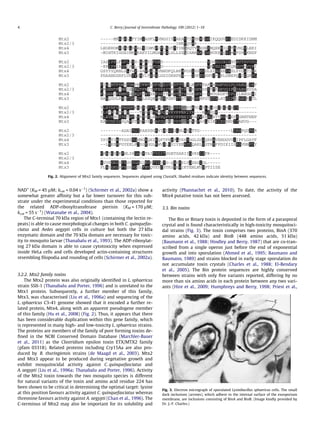
enzyme activity (Treiber et al., 2008) (Fig. 1). The lectin domains
are related to pierisin cytotoxin, which is known to bind glycolip-
ids and the authors proposed that Mtx1 might utilise a similar
receptor. The activation loop in the crystal structure is exposed
and would allow proteolytic cleavage to allow the lectin domain
to mediate uptake of the catalytic domain into the target cell in a
manner typical of this class of toxin. Although the target(s) of
Mtx1 in mosquito cells are unknown, Mtx1 modifies unknown tar-
get proteins in Culex quinquefasciatus (Thanabalu et al., 1993), sev-
eral proteins in HeLa cells, EF-Tu in E. coli (Schirmer et al., 2002b)
and soybean trypsin inhibitor, apparently targeting arginine
residues for modification (Carpusca et al., 2006; Schirmer et al.,
2002a). However, the kinetics of this reaction with respect to
Fig. 1. Structure of the Mtx1 toxin. Mtx1 structure from PDB accession number 2VSE (Treiber et al., 2008). The N-terminal ADP-ribosyl transferase domain (Red) has the four
ricin-like domains (shades of green and blue) wrapped around it. The loop that is cleaved to activate the toxin and liberate the ADP-ribosyl transferase region is not visible in
the structure, indicating its flexibility and accessibility to its environment. The residues either side of this activation loop are marked with spheres (red and green). The region
C-terminal to the activation region (yellow) binds to the putative NAD+
binding site leading to autoinhibition of activity. The ADP-ribosylating-turn-turn motif that is likely to
determine specificity for the target molecule is also partly missing, indicating flexibility. Those parts visible in the structure are coloured violet and the catalytically important
glutamate residues 195 and 197 are shown in spacefill form.
C. Berry / Journal of Invertebrate Pathology 109 (2012) 1–10 3
4.
NAD+
(KM = 45lM; kcat = 0.04 s 1
) (Schirmer et al., 2002a) show a
somewhat greater affinity but a far lower turnover for this sub-
strate under the experimental conditions than those reported for
the related ADP-ribosyltransferase pierisin (KM = 170 lM;
kcat = 55 s 1
) (Watanabe et al., 2004).
The C-terminal 70 kDa region of Mtx1 (containing the lectin re-
peats) is able to cause morphological changes in both C. quinquefas-
ciatus and Aedes aegypti cells in culture but both the 27 kDa
enzymatic domain and the 70 kDa domain are necessary for toxic-
ity to mosquito larvae (Thanabalu et al., 1993). The ADP-ribosylat-
ing 27 kDa domain is able to cause cytotoxicity when expressed
inside HeLa cells and cells developed actin-containing structures
resembling filopodia and rounding of cells (Schirmer et al., 2002a).
3.2.2. Mtx2 family toxins
The Mtx2 protein was also originally identified in L. sphaericus
strain SSII-1 (Thanabalu and Porter, 1996) and is unrelated to the
Mtx1 protein. Subsequently, a further member of this family,
Mtx3, was characterised (Liu et al., 1996a) and sequencing of the
L. sphaericus C3-41 genome showed that it encoded a further re-
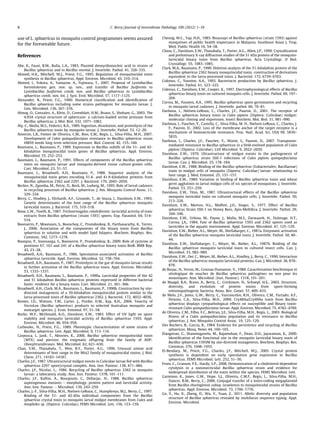
lated protein, Mtx4, along with an apparent pseudogene member
of this family (Hu et al., 2008) (Fig. 2). Thus, it appears that there
has been considerable duplication within this gene family, which
is represented in many high- and low-toxicity L. sphaericus strains.
The proteins are members of the family of pore forming toxins de-
fined in the NCBI Conserved Domain Database (Marchler-Bauer
et al., 2011) as the Clostridium epsilon toxin ETX/MTX2 family
(pfam 03318). Related proteins including Cry15Aa are also pro-
duced by B. thuringiensis strains (de Maagd et al., 2003). Mtx2
and Mtx3 appear to be produced during vegetative growth and
exhibit mosquitocidal activity against C. quinquefasciatus and
A. aegypti (Liu et al., 1996a; Thanabalu and Porter, 1996). Activity
of the Mtx2 toxin towards the two mosquito species is different
for natural variants of the toxin and amino acid residue 224 has
been shown to be critical in determining the optimal target: lysine
at this position favours activity against C. quinquefasciatus whereas
threonine favours activity against A. aegypti (Chan et al., 1996). The
C-terminus of Mtx2 may also be important for its solubility and
activity (Phannachet et al., 2010). To date, the activity of the
Mtx4 putative toxin has not been assessed.
3.3. Bin toxins
The Bin or Binary toxin is deposited in the form of a parasporal
crystal and is found characteristically in high-toxicity mosquitoci-
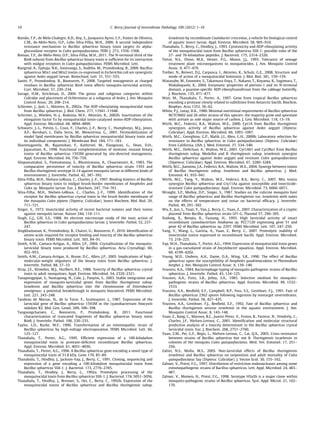
dal strains (Fig. 3). The toxin comprises two proteins, BinA (370
amino acids, 42 kDa) and BinB (448 amino acids, 51 kDa)
(Baumann et al., 1988; Hindley and Berry, 1987) that are co-tran-
scribed from a single operon just before the end of exponential
growth and into sporulation (Ahmed et al., 1995; Baumann and
Baumann, 1989) and strains blocked in early stage sporulation do
not accumulate toxin crystals (Charles et al., 1988; El-Bendary
et al., 2005). The Bin protein sequences are highly conserved
between strains with only five variants reported, differing by no
more than six amino acids in each protein between any two vari-
ants (Hire et al., 2009; Humphreys and Berry, 1998; Priest et al.,
Fig. 2. Alignment of Mtx2 family sequences. Sequences aligned using ClustalX. Shaded residues indicate identity between sequences.
Fig. 3. Electron micrograph of sporulated Lysinibacillus sphaericus cells. The small
dark inclusions (arrows), which adhere to the internal surface of the exosporium
membrane, are inclusions consisting of BinA and BinB. (Image kindly provided by
Dr. J.-F. Charles.)
4 C. Berry / Journal of Invertebrate Pathology 109 (2012) 1–10
5.
1997). The twoproteins share regions of identity and appear to
have evolved from a common ancestor (Baumann et al., 1988).
Other members of the Bin toxin family (pfam 05431) include the
Cry49 protein from L. sphaericus (see below); the B. thuringiensis
toxins Cry35 and Cry36; and a putative protein from Chlorobium
phaeobacteriodes (Jones et al., 2007).
On ingestion by larvae, the Bin toxin crystal is solubilised in the
alkaline environment of the gut and the proteins undergo limited
proteolysis to lower molecular weight derivatives (Aly et al.,
1989; Broadwell and Baumann, 1987; Davidson et al., 1987a;
Davidson et al., 1990) with an increased toxicity (Broadwell and
Baumann, 1987) and this proteolysis occurs in both susceptible
and non-susceptible insects (Nicolas et al., 1990). Consistent with
the processing of the toxin, deletion experiments have shown that
17 amino acids can be removed from both the N- and C-terminus
of BinA and that 34 residues can be removed from the N-terminus
and 53 from the C-terminus of BinB, without abolishing toxicity
(Broadwell et al., 1990b; Clark and Baumann, 1990; Oei et al.,
1990).
3.3.1. Bin structure
Secondary structure analysis of BinA from its circular dichroism
spectrum suggests a composition of 49.3% beta strand and 3.1% al-
pha helix (Hire et al., 2009) whereas BinB is reported to contain a
high percentage of alpha helix (Tangsongcharoen et al., 2011).
Interaction of BinA and BinB in solution is reported to increase beta
sheet composition and further structural changes occur on interac-
tion with lipid membranes (Boonserm et al., 2006). Oligomeri-
sation of BinA and BinB occurs in solution to give a BinA2BinB2
tetramer (Smith et al., 2005). Some progress towards elucidating
a 3-dimensional structure for the Bin proteins has been made with
the crystallisation of the BinB protein alone (Chiou et al., 1999) and
a BinA/BinB co-crystal (Smith et al., 2004) but, to date, no crystal
structure is available. The availability of such a structure will aid
in understanding receptor binding, mechanism of action and the
structural importance of residues shown to influence toxicity and
target range of the Bin toxin.
Several amino acids have been identified with importance in
maintaining the activity of the Bin proteins (Boonyos et al., 2009;
Elangovan et al., 2000; Promdonkoy et al., 2008; Sanitt et al.,
2008; Shanmugavelu et al., 1998; Yuan et al., 2001) and determin-
ing its level of activity against A. aegypti (Berry et al., 1993). Resi-
due 150 was suggested to be important in receptor binding by
BinB (Singkhamanan et al., 2010) and further, recent work has
identified the region from residues 33–158 to be important for
receptor binding, with residues 147–149 being critical to binding
(Romao et al., 2011). In another study, mutants in the N- and C-ter-
mini of each protein that alone were found to eliminate toxicity
were found to complement each other to restore toxicity when
mixed (Shanmugavelu et al., 1998). This was taken to suggest olig-
omerisation of the toxin subunits and this phenomenon was subse-
quently shown experimentally (Smith et al., 2005) (see above).
3.3.2. Mechanism of action
The Bin toxin is generally considered a binary toxin since both
components are necessary for full toxicity (Broadwell et al.,
1990a; Oei et al., 1990) with optimum potency produced at a
1:1 M ratio of the two proteins. However, activity of the BinA pro-
tein alone expressed in B. thuringiensis has been observed
(Baumann and Baumann, 1991; Nicolas et al., 1993). The primary
site of action of the toxin is the insect gut after ingestion by filter
feeding larvae but intoxicated larvae also show damage to nervous
and muscle tissues (Singh and Gill, 1988).
3.3.2.1. Receptor binding. Following solubilisation and activation in
the mosquito gut, toxin binds to epithelial cells in the gastric
caecum and posterior midgut in Culex mosquitoes, less regionally
in Anopheles and not at all in Aedes aegypti (Davidson, 1988,
1989; Oei et al., 1992). The binding in Culex is mediated by the BinB
protein, which can bind alone to the distinct regions of the gut (Oei
et al., 1992) and this protein associates specifically with a single
receptor (Charles et al., 1997) subsequently identified as a GPI-
anchored maltase, Cpm1 (Culex pipiens maltase 1) (Darboux et al.,
2001; Silva-Filha et al., 1999). Toxin binding to brush border mem-
brane fractions from Anopheles larvae has also been shown
(Silva-Filha et al., 1997) but in Anopheles gambiae, BinA appears
to be able to bind independently of BinB although the binding of
both components seems to be cooperative with maximum binding
observed at a 1:1 molar ratio of BinA and BinB (Charles et al.,
1997). The receptor in this species appears also to be a maltase
ortholog of the Cpm1 protein and has been named Agm1 (Opota
et al., 2008). A further ortholog from Aedes aegypti, a mosquito
showing little or no sensitivity to Bin toxins, shows a high degree
of conservation with Cpm1 and Agm1, indicating that specificity
may be determined by the high affinity recognition of a relatively
small region that is less highly conserved between species (Opota
et al., 2008). Expression of the Cpm1 receptor in mammalian cells
showed that it was polarised to the apical surface and was associ-
ated with lipid rafts (Pauchet et al., 2005).
The sequence of events following receptor binding that lead to
cell death are less clear. Patch clamping experiments on Culex quin-
quefasciatus cells showed pore formation by the toxin components
(Cokmus et al., 1997). Studies using artificial membranes have
shown similar results although studies differ with regard to which
component may be most important for this activity (Boonserm
et al., 2006; Schwartz et al., 2001). It is, therefore, possible that
the mode of action of the Bin toxin derives from its pore forming
ability. Within the intoxicated cells, mitochondrial cristae along
with the endoplasmic reticulum are seen to dilate while the mito-
chondria themselves condense, there is a marked reduction in
intracellular ATP and a gradual loss of integrity in the cell mem-
brane (Broadwell and Baumann, 1986; Charles, 1987; Davidson
and Titus, 1987). However, intoxication by Bin shows other inter-
esting features: internalisation of the toxin and vacuolation of
the target cell (Davidson, 1989; Davidson et al., 1987b; Davidson
and Titus, 1987; Oei et al., 1992). Cloning of the Cpm1 receptor
gene into mammalian cells leads to the opening of pores and the
appearance of vacuoles on addition of Bin toxin although cell lysis
does not occur (Pauchet et al., 2005). A detailed study of the action
of Bin toxin on these cells showed the induction of cationic pores,
internalisation of both toxin components along with their receptor
and the production of large vacuoles (Opota et al., 2011). These
vacuoles, however, are not the location of the internalised toxins.
The toxin-receptor complex is endocytosed and trafficked into
recycling endosomes, whereas the distinct vacuoles are autophagic
in character. One hypothesis is that pore formation may be sensed
by p38 mitogen-activated protein kinase, the activity of which
might induce autophagy. The vacuoles are transient but were ob-
served to reform in cells following cell division, a phenomenon that
was termed post-mitotic vacuolation. Bin toxin thus causes vacuo-
lation but its own trafficking is distinct and avoids targeting to deg-
radative organelles. The significance for the toxicity of Bin proteins
of each of the individual responses it elicits, at present, remains un-
clear. It has been speculated that the trafficking of Bin toxin may
allow it to gain access to deeper tissues (Opota et al., 2011), a factor
that could explain muscle and nerve damage following larval expo-
sure to the toxins (Singh and Gill, 1988).
3.3.3. Resistance
The fact that most L. sphaericus strains produce only one spore
associated toxin (Bin) and that spores are the agent utilised in mos-
quito control programmes, means that it may be relatively easy for
C. Berry / Journal of Invertebrate Pathology 109 (2012) 1–10 5
6.
insects to evolvehigh-level resistance (Nielsen-Leroux et al., 1995;
Wirth et al., 2000b). However, reductions in fecundity and fertility
may arise (de Oliveira et al., 2003; Rodcharoen and Mulla, 1997)
and resistance is recessive (Oliveira et al., 2004; Wirth et al.,
2000b) so strategies for controlling resistance in the field are viable
(Mulla et al., 2003).
Apocrine secretions by mosquito gut cells have been proposed
as possible mechanisms by which the insects may seek to defend
themselves against L. sphaericus (Oliveira et al., 2009). However,
most cases of resistance to this bacterium and the Bin toxin that
have been reported to date, involve changes to its receptor in the
gut, which abolish toxin localisation to host cell membranes. The
mechanisms of resistance include a variety of mis-sense mutations
that remove the GPI anchor sequence from the receptor and inser-
tion of a transposable element into the receptor gene to cause al-
tered splicing leading to the production of a protein that contains
the GPI anchor sequence but carries an internal deletion of 66 ami-
no acids (Darboux et al., 2002, 2007; Romão et al., 2006). A further
resistant mosquito collected from field treatment areas in France
exhibited high level resistance (10,000 fold) but with no loss of
receptor binding (Nielsen-Leroux et al., 1997). Strains resistant to
one Bin variant are cross-resistant to all other variants (Nielsen-
LeRoux et al., 2001; Yuan et al., 2003) and this renders most strains
of L. sphaericus ineffective against these resistant Culex larvae.
Some strains, however, remain able to kill Bin resistant larvae
(Nielsen-LeRoux et al., 2001; Pei et al., 2002; Yuan et al., 2003)
and this led to the discovery of a further toxin in some L. sphaericus
strains.
3.4. Cry48/Cry49 toxin
Those strains able to overcome Bin resistance or against which
resistance is slower to develop, produce extra crystal proteins on
sporulation (Pei et al., 2002; Yuan et al., 2003). Analysis of these
strains led to the discovery of a new, two component toxin (Jones
et al., 2007). One component is the Cry48 protein, which is closely
related to the mosquitocidal Cry toxins of B. thuringiensis, and is
clearly a member of the 3-domain Cry toxin family. The second
is the Cry49 protein, which is a member of the Bin family toxins
(see above). Neither component shows toxicity alone but, in com-
bination, the purified proteins exhibit high-level toxicity to Culex
larvae although their known target range is highly restricted to this
genus of insects (Jones et al., 2008). This co-dependence of a Bin-
like and a 3-domain Cry toxin is novel (although synergy between
Bin and B. thuringiensis Cry toxins has been reported (Wirth et al.,
2004)). Analysis of the effects of the Cry48/Cry49 toxin on Culex
larvae showed morphological changes in target cells that mim-
icked the synergistic interaction of Bin and Cry11 toxins with some
changes typical of Bin intoxication (e.g. cytoplasmic vacuolization,
fragmentation of endoplasmic reticulum) and some typical of
3-domain Cry toxin activity (e.g. mitochondrial swelling) (de Melo
et al., 2009). Thus, the combination appears to show aspects to its
toxicity with features of both toxin classes. To date, the roles of
each component in the processes of receptor binding and toxicity
are still to be determined.
The toxicity of the combined proteins to Culex larvae is high but,
in the host L. sphaericus strains, toxicity is limited by the low-level
production of the Cry48 component. The arrangement of the cry48
and cry49 genes as convergent transcripts, along with the low lev-
els of production has led to speculation that this combination may
be a relatively recent event (Jones et al., 2007). Mosquitoes with
resistance to strains producing both Bin and Cry48/Cry49 (such
as strain IAB59) can be produced by selection but require longer-
term pressure and resistance arises more slowly (Amorim et al.,
2007). As a result, to control Culex larvae, strains producing both
Bin and Cry48/Cry49 may be valuable to reduce problems of
resistance and screening for strains with higher-level production
of this new toxin may be worthwhile.
4. Toxin synergy
Both the vegetative toxins Mtx1 and Mtx2 are able to act in syn-
ergism against Aedes aegypti (Rungrod et al., 2009) and each acts
synergistically with the Bin toxin (Wirth et al., 2007) and may be
valuable in enhancing the effectiveness of L. sphaericus spore prep-
arations. Although the Mtx proteins are produced during vegeta-
tive growth and Bin proteins are associated with the spores, it
has been shown that, in intoxicated insects, most L. sphaericus have
entered vegetative growth by the time that the larvae die (Charles,
1987). Thus, it is possible that the production of vegetative toxins
and their synergism with Bin may be physiologically relevant in
the natural progression of a L. sphaericus infection. Although
Mtx1, Mtx2 and Mtx3 are associated with the vegetative cells
and do not appear to be secreted, early experiments with strain
SSII-1, which does not produce Bin toxins, suggested that digestion
of the bacteria in the gut might serve to release toxins (Davidson,
1979). Synergistic actions of L. sphaericus toxins and B. thuringiensis
insecticidal toxins have also been reported (Mtx1 with Cry11A;
Mtx2 with Cry11A and Cyt1A (Wirth et al., 2007): Bin with Cry4A,
Cry4B and Cry11A (Wirth et al., 2004): Bin with Cyt proteins
(Wirth et al., 2001, 2000a): and possible interactions between
Cry49 and Cry4A (Jones et al., 2008)). The distinct mechanisms of
action of B. thuringiensis toxins and those of L. sphaericus has led
several groups to experiment with combinations of toxins, ex-
pressed in both bacteria (Gammon et al., 2006; Park et al., 2003;
Poncet et al., 1994, 1997; Yang et al., 2007) and in other microor-
ganisms (Liu et al., 1996b; Tanapongpipat et al., 2003; Tandeau
de Marsac et al., 1987; Thanabalu et al., 1992b; Xudong et al.,
1993; Yap et al., 1994). None of these recombinants are currently
used in the field.
5. Field use of L. sphaericus in mosquito control programmes
L. sphaericus preparations are produced commercially for use in
vector control programmes (e.g. GriselESF from Labiofam, Cuba;
Sphaerus from Bthek Ltda, Brazil; VectoLex and VectoMax -a mix-
ture of L. sphaericus with B. thuringiensis, from Valent Biosciences
Corporation, USA). The bacterium is applied as a spore preparation
that also contains the associated Bin toxin crystals. It is recom-
mended for use against Culex and Anopheles mosquitoes but while
it has little or no activity against Aedes aegypti, it provides good
control for Aedes vexans, Ochlerotatus atropalpus, Ochlerotatus fitch-
ii, Ochlerotatus intrudens, Ochlerotatus nigromaculis and Ochlerotatus
stimulans (Mulligan et al., 1978; Wraight et al., 1987). Ochlerotatus
has been proposed both as a relatively new genus, members of
which were formerly included in the genus Aedes (Reinert, 2000)
and as a subgenus of Aedes (Savage and Strickman, 2004). Thus,
the generality that L. sphaericus is not a good control agent for
Aedes mosquitoes does not hold true for all Aedes species, particu-
larly those in the genus/subgenus Ochlerotatus (although there are
conflicting reports concerning activity against Ochlerotatus taenio-
rhynchus (Hayes et al., 2011; Ramoska et al., 1977)). The bacteria
also exhibit toxicity to Mansonia and Psorophora mosquitoes
(Cheong and Yap, 1985; Ramoska et al., 1977) but have little or
no activity against most Toxorhynchites species, the larvae of which
may be predators of other mosquito larvae (Lacey, 1983; Lacey
et al., 1988; Thanabalu et al., 1992a).
In addition to the well-known toxicity of L. sphaericus to mos-
quito larvae, a reduction in oviposition and the death of adult Culex
quinquefasciatus mosquitoes has also been reported (Zahiri and
Mulla, 2005) and this may be an important effect in helping to
6 C. Berry / Journal of Invertebrate Pathology 109 (2012) 1–10
7.
reduce disease transmission.The mechanism of adult killing has
not been determined but adult sensitivity in some circumstances
has been reported although L. sphaericus did not appear orally ac-
tive in adults (Stray et al., 1988). Further effects on adult mosqui-
toes may include a decrease in the potential to transmit malarial
parasites as shown with the rodent malaria parasite Plasmodium
berghei and the mosquito Anopheles quadrimaculatus following lar-
val exposure to the spores (Young et al., 1990).
Advantages of L. sphaericus in control programmes include gen-
erally good persistence, particularly in polluted waters, which are
good breeding sites for Culex mosquitoes (Des Rochers and Garcia,
1984; Karch et al., 1988; Nicolas et al., 1987) and this persistence is
higher than that of B. thuringiensis subsp. israelensis (Sil-
apanuntakul et al., 1983). There was no significant difference be-
tween the stability of Bin toxins in varying temperatures and
water quality when produced in L. sphaericus or in recombinant
B. thuringiensis where they are deposited inside or outside of the
exosporium respectively. This indicates that the exosporium does
not play a role in stabilizing the toxin (Nicolas et al., 1994). How-
ever, toxins produced in either bacterium showed decreased stabil-
ity as temperature increased and water quality declined.
Persistence may be related to UV resistance and sensitivity to
UV-B for both the spore and the toxin have been reported (Hada-
pad et al., 2008). However, insecticidal activity shows persistence
even after spore viability has declined (Burke et al., 1983) and sta-
bility of both spore and crystal components can be enhanced to
some extent by the addition of UV protectants (Hadapad et al.,
2009). L. sphaericus spores also show a lower tendency than B. thur-
ingiensis spores to stick to and sediment with other particulates in
the water column, perhaps increasing their persistence in the lar-
val feeding zones (Yousten et al., 1992). However, sedimentation
of spores does generally remove them from feeding zones (David-
son et al., 1984) although larvae grazing on shallow muds may still
be exposed (Matanmi et al., 1990) and this may be important for
persistence.
There is also evidence that L. sphaericus recycles in the environ-
ment. The bacteria do not recycle in the water in treated ponds and
there is no evidence of persistence in pools that dry out and are
subsequently re-flooded (Davidson et al., 1984). Spores ingested
by invertebrates other than mosquitoes remain viable although
they do not appear to reproduce. There is also evidence that mid-
ges emerging from treated water might serve to carry spores to
new locations (Yousten et al., 1991). Bacterial growth does occur
in mosquito larval cadavers and bacteria are released when these
breakup (Becker et al., 1995; Des Rochers and Garcia, 1984). The
recycling ability seems to be a feature of high toxicity, Bin produc-
ing strains that are able to germinate rapidly in the insect and the
final L. sphaericus cell counts in cadavers have been estimated in
the range of approximately 1–1000 times the number of spores
originally ingested (Charles and Nicolas, 1986; Correa and Yousten,
1995; Davidson et al., 1984). Spores produced in the dead insect
are associated with Bin crystals and show the same level of toxicity
as cultures grown in artificial media. This production in larvae may
contribute to the persistence of the control in the field but only if
the cadavers remain in the larval feeding zone in the upper water
layers (Charles and Nicolas, 1986) or in shallow waters (Kramer,
1990).
6. Genomic analysis
Analysis of the genome of the high toxicity L. sphaericus strain
C3-41 reveals a sequence of 4.6 Mb (Hu et al., 2008). The bacterium
lacks genes encoding sugar transporters (with the exception of
N-acetyl glucosamine) and proteins involved in sugar metabolism,
explaining the inability of L. sphaericus to grow on many sugars
(Han et al., 2007; Hu et al., 2008). Some toxin genes are closely lo-
cated with respect to others (bin with mtx4; mtx1 with mtx2; mtx3
with the mtx2/3-like pseudogene) but there is no single ‘‘pathoge-
nicity island’’. Toxin genes frequently have nearby transposase
genes and, in the case of the bin/mtx4x genes, nearby phage integr-
ase-like sequences, perhaps indicating mechanisms by which toxin
genes may have been acquired and explaining the distribution of
genes in different strains. The mtx1 gene in this strain, in contrast
to the SSII-1 strain, appears to be a pseudogene. In addition, the po-
tential control region upstream of the mtx1 gene (see above) is al-
tered in strain C3-41 so that it no longer represents an exact
inverted repeat. This may also be a sign that the mtx1 gene in this
strain is no longer active.
Strain C3-41 also contains a major extrachromosomal element,
the 177 kb pBsph plasmid. This plasmid contains a 30.5 kb duplica-
tion of the genome and this region includes the bin and mtx4 genes.
Duplication of the bin genes in strain 2297 has also been suggested
previously (Poncet et al., 1997). The pBsph plasmid was the only
extrachromosomal element characterised during the genome
sequencing of strain C3-41 but L. sphaericus strains may contain a
range of plasmids of unknown function (Abe et al., 1983; Wu
et al., 2007). Since the Cy48/Cry49 toxin is not produced by strain
C3-41, at present, the location of the cry48/cry49 genes in L. sphae-
ricus strains has not been determined.
7. Future perspectives
L. sphaericus has proved to be a highly effective mosquito con-
trol agent in the field despite the fact that resistance can occur.
Management of this potential problem, for instance by use in com-
bination or rotation with other agents such as B. thuringiensis, is
likely to maintain the utility of L. sphaericus pesticides. Our under-
standing of this organism and its insect pathogenicity has in-
creased greatly in recent years but a number of issues remain to
be clarified. While we are able to use this bacterium in our control
programmes by the application of high densities of spores in the
field, much less is known of the natural ecology of this organism.
Its persistence and recycling may be important under natural con-
ditions to allow the lower doses of bacteria normally available in
the environment to initiate infections in a population of insects.
This may be an interesting subject for further study.
At the molecular level, although important information on the
mechanism of action of the toxins has been elucidated, a detailed
understanding is still elusive. The evidence suggests that the Bin
toxin can form pores and we have begun to understand the process
by which vacuolization of the target cell occurs but the significance
of these phenomena in the actual progress of toxicity must be clar-
ified. In the Cry48/Cry49 system, the role played by each compo-
nent in receptor binding and toxicity should be investigated
further. Progress in the structural analyses of the toxins may allow
a better understanding of the receptor specificities and mecha-
nisms of action. The 3-dimensional structure of Mtx1 is well stud-
ied but for the other toxins, there is still much to be discovered.
Receptors for Mtx1 and Mtx2-family proteins have yet to be iden-
tified and the molecular target for ADP-ribosylation by Mtx1 in
mosquito cells requires further investigation.
The future development of recombinant L. sphaericus or other
organisms carrying its toxins may allow production of strains with
higher potency, that are better able to delay resistance and/or with
longer persistence in the field. Such developments will be driven
by our increasing understanding of the bacterium and its toxins
but will also be mediated by the attitudes of the regulatory bodies
and the willingness of the public at large to accept field use of re-
combinant organisms. Whatever form it may take, the continued
C. Berry / Journal of Invertebrate Pathology 109 (2012) 1–10 7
8.
use of L.sphaericus in mosquito control programmes seems assured
for the foreseeable future.
References
Abe, K., Faust, R.M., Bulla, L.A., 1983. Plasmid deoxyribonucleic acid in strains of
Bacillus sphaericus and in Bacillus moritai. J. Invertebr. Pathol. 41, 328–335.
Ahmed, H.K., Mitchell, W.J., Priest, F.G., 1995. Regulation of mosquitocidal toxin
synthesis in Bacillus sphaericus. Appl. Environ. Microbiol. 43, 310–314.
Ahmed, I., Yokota, A., Yamazoe, A., Fujiwara, T., 2007. Proposal of Lysinibacillus
boronitolerans gen. nov. sp. nov., and transfer of Bacillus fusiformis to
Lysinibacillus fusiformis comb. nov. and Bacillus sphaericus to Lysinibacillus
sphaericus comb. nov. Int. J. Syst. Evol. Microbiol. 57, 1117–1125.
Alexander, B., Priest, F.G., 1990. Numerical classification and identification of
Bacillus sphaericus including some strains pathogenic for mosquito larvae. J.
Gen. Microbiol. 136, 367–376.
Almog, O., Gonzalez, A., Klein, D., Greenblatt, H.M., Braun, S., Shoham, G., 2003. The
0.93A crystal structure of sphericase: a calcium-loaded serine protease from
Bacillus sphaericus. J. Mol. Biol. 332, 1071–1082.
Aly, C., Mulla, M.S., Federici, B.A., 1989. Ingestion, dissolution, and proteolysis of the
Bacillus sphaericus toxin by mosquito larvae. J. Invertebr. Pathol. 53, 12–20.
Amorim, L.B., Fontes de Oliveira, C.M., Rios, E.M., Regis, L., Silva-Filha, M.H., 2007.
Development of Culex quinquefasciatus resistance to Bacillus sphaericus strain
IAB59 needs long term selection pressure. Biol. Control. 42, 155–160.
Baumann, L., Baumann, P., 1989. Expression in Bacillus subtilis of the 51- and 42-
kilodalton mosquitocidal toxin genes of Bacillus sphaericus. Appl. Environ.
Microbiol. 55, 252–253.
Baumann, L., Baumann, P., 1991. Effects of components of the Bacillus sphaericus
toxin on mosquito larvae and mosquito-derived tissue culture-grown cells.
Curr. Microbiol. 23, 51–57.
Baumann, L., Broadwell, A.H., Baumann, P., 1988. Sequence analysis of the
mosquitocidal toxin genes encoding 51.4- and 41.9-kilodalton proteins from
Bacillus sphaericus 2362 and 2297. J. Bacteriol. 170, 2045–2050.
Becker, N., Zgomba, M., Petric, D., Beck, M., Ludwig, M., 1995. Role of larval cadavers
in recycling processes of Bacillus sphaericus. J. Am. Mosquito Control Assoc. 11,
329–334.
Berry, C., Hindley, J., Ehrhardt, A.F., Grounds, T., de Souza, I., Davidson, E.W., 1993.
Genetic determinants of the host range of the Bacillus sphaericus mosquito
larvicidal toxins. J. Bacteriol. 175, 510–518.
Bone, L.W., Tinelli, R., 1987. Trichostrongylus colubriformis: larvicidal activity of toxic
extracts from Bacillus sphaericus (strain 1593) spores. Exp. Parasitol. 64, 514–
516.
Boonserm, P., Moonsom, S., Boonchoy, C., Promdonkoy, B., Parthasarathy, K., Torres,
J., 2006. Association of the components of the binary toxin from Bacillus
sphaericus in solution and with model lipid bilayers. Biochem. Biophys. Res.
Commun. 342, 1273–1278.
Boonyos, P., Soonsanga, S., Boonserm, P., Promdonkoy, B., 2009. Role of cysteine at
positions 67, 161 and 241 of a Bacillus sphaericus binary toxin BinB. BMB Rep.
43, 23–28.
Broadwell, A.H., Baumann, P., 1986. Sporulation-associated activation of Bacillus
sphaericus larvicide. Appl. Environ. Microbiol. 52, 758–764.
Broadwell, A.H., Baumann, P., 1987. Proteolysis in the gut of mosquito larvae results
in further activation of the Bacillus sphaericus toxin. Appl. Environ. Microbiol.
53, 1333–1337.
Broadwell, A.H., Baumann, L., Baumann, P., 1990a. Larvicidal properties of the 42
and 51 kilodalton Bacillus sphaericus proteins expressed in different bacterial
hosts: evidence for a binary toxin. Curr. Microbiol. 21, 361–366.
Broadwell, A.H., Clark, M.A., Baumann, L., Baumann, P., 1990b. Construction by site-
directed mutagenesis of a 39-kilodalton mosquitocidal protein similar to the
larva-processed toxin of Bacillus sphaericus 2362. J. Bacteriol. 172, 4032–4036.
Brown, I.D., Watson, T.M., Carter, J., Purdie, D.M., Kay, B.H., 2004. Toxicity of
VectoLex (Bacillus sphaericus) products to selected Australian mosquito and
nontarget species. J. Econ. Entomol. 97, 51–58.
Burke, W.F., McDonald, K.O., Davidson, E.W., 1983. Effect of UV light on spore
viability and mosquito larvicidal activity of Bacillus sphaericus 1593. Appl.
Environ. Microbiol. 46, 954–956.
Carboulec, N., Priest, F.G., 1989. Phenotypic characterisation of some strains of
Bacillus sphaericus. Lett. Appl. Microbiol. 9, 113–116.
Carpusca, I., Jank, T., Aktories, K., 2006. Bacillus sphaericus mosquitocidal toxin
(MTX) and pierisin: the enigmatic offspring from the family of ADP-
ribosyltransferases. Mol. Microbiol. 62, 621–630.
Chan, S.W., Thanabalu, T., Wee, B.Y., Porter, A.G., 1996. Unusual amino acid
determinants of host range in the Mtx2 family of mosquitocidal toxins. J. Biol.
Chem. 271, 14183–14187.
Charles, J.F., 1987. Ultrastructural midgut events in Culicidae larvae fed with Bacillus
sphaericus 2297 spore/crystal complex. Ann. Inst. Pasteur. 138, 471–484.
Charles, J.F., Nicolas, L., 1986. Recycling of Bacillus sphaericus 2362 in mosquito
larvae: a laboratory study. Ann. Inst. Pasteur. 137B, 101–111.
Charles, J.F., Kalfon, A., Bourgouin, C., Debarjac, H., 1988. Bacillus sphaericus
asporogenous mutants – morphology, protein pattern and larvicidal activity.
Ann. Inst. Pasteur. – Microbiol. 139, 243–259.
Charles, J.-F., Silva-Filha, M.H., Nielsen-LeRoux, C., Humphreys, M.J., Berry, C., 1997.
Binding of the 51- and 42-kDa individual components from the Bacillus
sphaericus crystal toxin to mosquito larval midgut membranes from Culex and
Anopheles sp. (Diptera: Culicidae). FEMS Microbiol. Lett. 156, 153–159.
Cheong, W.C., Yap, H.H., 1985. Bioassays of Bacillus sphaericus (strain 1593) against
mosquitoes of public health importance in Malaysia. Southeast Asian J. Trop.
Med. Public Health 16, 54–58.
Chiou, C., Davidson, E.W., Thanabalu, T., Porter, A.G., Allen, J.P., 1999. Crystallization
and preliminary X-ray diffraction studies of the 51 kDa protein of the mosquito-
larvicidal binary toxin from Bacillus sphaericus. Acta Crystallogr. D Biol.
Crystallogr. 55, 1083–1085.
Clark, M.A., Baumann, P., 1990. Deletion analysis of the 51-kilodalton protein of the
Bacillus sphaericus 2362 binary mosquitocidal toxin: construction of derivatives
equivalent to the larva-processed toxin. J. Bacteriol. 172, 6759–6763.
Cokmus, C., Yousten, A.A., 1993. Bacteriocin production by Bacillus sphaericus. J.
Invertebr. Pathol. 61, 323–325.
Cokmus, C., Davidson, E.W., Cooper, K., 1997. Electrophysiological effects of Bacillus
sphaericus binary toxin on cultured mosquito cells. J. Invertebr. Pathol. 69, 197–
204.
Correa, M., Yousten, A.A., 1995. Bacillus sphaericus spore germination and recycling
in mosquito larval cadavers. J. Invertebr. pathol. 66, 76–81.
Darboux, I., Nielsen-LeRoux, C., Charles, J.F., Pauron, D., 2001. The receptor of
Bacillus sphaericus binary toxin in Culex pipiens (Diptera: Culicidae) midgut:
molecular cloning and expression. Insect Biochem. Mol. Biol. 31, 981–990.
Darboux, I., Pauchet, Y., Castella, C., Silva-Filha, M. H., Nielsen-LeRoux, C., Charles, J.
F., Pauron, D., 2002. Loss of the membrane anchor of the target receptor is a
mechanism of bioinsecticide resistance. Proc. Natl. Acad. Sci. USA 99, 5830–
5835.
Darboux, I., Charles, J.F., Pauchet, Y., Warot, S., Pauron, D., 2007. Transposon-
mediated resistance to Bacillus sphaericus in a field-evolved population of Culex
pipiens (Diptera: Culicidae). Cell Microbiol. 9, 2022–2029.
Davidson, E.W., 1979. Ultrastructure of midgut events in the pathogenesis of
Bacillus sphaericus strain SSII-1 infections of Culex pipiens quinquefasciatus
larvae. Can. J. Microbiol. 25, 178–184.
Davidson, E.W., 1988. Binding of the Bacillus sphaericus (Eubacteriales: Bacillaceae)
toxin to midgut cells of mosquito (Diptera: Culicidae) larvae: relationship to
host range. J. Med. Entomol. 25, 151–157.
Davidson, E.W., 1989. Variation in binding of Bacillus sphaericus toxin and wheat
germ agglutinin to larval midgut cells of six species of mosquitoes. J. Invertebr.
Pathol. 53, 251–259.
Davidson, E.W., Titus, M., 1987. Ultrastructural effects of the Bacillus sphaericus
mosquito larvicidal toxin on cultured mosquito cells. J. Invertebr. Pathol. 50,
213–220.
Davidson, E.W., Morton, H.L., Moffett, J.O., Singer, S., 1977. Effect of Bacillus
sphaericus Strain SSII-1 on Honey Bees, Apis-Mellifera. J. Invertebr. Pathol. 29,
344–346.
Davidson, E.W., Urbina, M., Payne, J., Mulla, M.S., Darwazeh, H., Dulmage, H.T.,
Correa, J.A., 1984. Fate of Bacillus sphaericus 1593 and 2362 spores used as
larvicides in the aquatic environment. Appl. Environ. Microbiol. 47, 125–129.
Davidson, E.W., Bieber, A.L., Meyer, M., Shellabarger, C., 1987a. Enzymatic activation
of the Bacillus sphaericus mosquito larvicidal toxin. J. Invertebr. Pathol. 50, 40–
44.
Davidson, E.W., Shellabarger, C., Meyer, M., Bieber, A.L., 1987b. Binding of the
Bacillus sphaericus mosquito larvicidal toxin to cultured insect cells. Can. J.
Microbiol. 33, 982–989.
Davidson, E.W., Oei, C., Meyer, M., Bieber, A.L., Hindley, J., Berry, C., 1990. Interaction
of the Bacillus sphaericus mosquito larvicidal proteins. Can. J. Microbiol. 36, 870–
878.
de Barjac, H., Veron, M., Cosmao Dumanoir, V., 1980. Caractérisation biochimique et
sérologique de souches de Bacillus sphaericus pathogènes ou non pour les
moustiques. Ann. Microbiol. (Inst. Pasteur). 131B, 191–201.
de Maagd, R.A., Bravo, A., Berry, C., Crickmore, N., Schnepf, H.E., 2003. Structure,
diversity, and evolution of protein toxins from spore-forming
entomopathogenic bacteria. Annu. Rev. Genet. 37, 409–433.
de Melo, J.V., Jones, G.W., Berry, C., Vasconcelos, R.H., Oliveira, C.M., Furtado, A.F.,
Peixoto, C.A., Silva-Filha, M.H., 2009. Cry48Aa/Cry49Aa toxin from Bacillus
sphaericus displays cytopathological effects on susceptible and Binary toxin-
resistant Culex quinquefasciatus larvae. Appl. Environ. Microbiol. 75, 4782–4789.
de Oliveira, C.M., Filho, F.C., Beltran, J.E., Silva-Filha, M.H., Regis, L., 2003. Biological
fitness of a Culex quinquefasciatus population and its resistance to Bacillus
sphaericus. J. Am. Mosquito Control Assoc. 19, 125–129.
Des Rochers, B., Garcia, R., 1984. Evidence for persistence and recycling of Bacillus
sphaericus. Mosq. News 44, 160–165.
Elangovan, G., Shanmugavelu, M., Rajamohan, F., Dean, D.H., Jayaraman, K., 2000.
Identification of the functional site in the mosquito larvicidal binary toxin of
Bacillus sphaericus 1593M by site-directed mutagenesis. Biochem. Biophys. Res.
Commun. 276, 1048–1055.
El-Bendary, M., Priest, F.G., Charles, J.F., Mitchell, W.J., 2005. Crystal protein
synthesis is dependent on early sporulation gene expression in Bacillus
sphaericus. FEMS Microbiol. Lett. 252, 51–56.
From, C., Granum, P.E., Hardy, S.P., 2008. Demonstration of a cholesterol-dependent
cytolysin in a noninsecticidal Bacillus sphaericus strain and evidence for
widespread distribution of the toxin within the species. FEMS Microbiol. Lett.
Gammon, K., Jones, G.W., Hope, S.J., Oliveira, C.M.F., Regis, L., Silva-Filha, M.H.,
Dancer, B.M., Berry, C., 2006. Conjugal transfer of a toxin-coding megaplasmid
from Bacillus thuringiensis subsp. israelensis to mosquitocidal strains of Bacillus
sphaericus. Appl. Environ. Microbiol. 73, 1766–1770.
Ge, Y., Hu, X., Zheng, D., Wu, Y., Yuan, Z., 2011. Allelic diversity and population
structure of Bacillus sphaericus revealed by multilocus sequence typing. Appl.
Environ. Microbiol.
8 C. Berry / Journal of Invertebrate Pathology 109 (2012) 1–10
9.
Hadapad, A.B., Vijayalakshmi,N., Hire, R.S., Dongre, T.K., 2008. Effect of ultraviolet
radiation on spore viability and mosquitocidal activity of an indigenous ISPC-8
Bacillus sphaericus Neide strain. Acta Trop. 107, 113–116.
Hadapad, A.B., Hire, R.S., Vijayalakshmi, N., Dongre, T.K., 2009. UV protectants for
the biopesticide based on Bacillus sphaericus Neide and their role in protecting
the binary toxins from UV radiation. J. Invertebr. Pathol. 100, 147–152.
Han, B., Liu, H., Hu, X., Cai, Y., Zheng, D., Yuan, Z., 2007. Molecular characterization of
a glucokinase with broad hexose specificity from Bacillus sphaericus strain C3–
41. Appl. Environ. Microbiol. 73, 3581–3586.
Hayes, S.R., Hudon, M., Park, H.W., 2011. Isolation of novel Bacillus species showing
high mosquitocidal activity against several mosquito species. J. Invertebr.
Pathol. 107, 79–81.
Hazes, B., Read, R.J., 1995. A mosquitocidal toxin with a ricin-like cell-binding
domain. Struct. Biol. 2, 358–359.
Hindley, J., Berry, C., 1987. Identification, cloning and sequence analysis of the
Bacillus sphaericus 1593 41.9kD larvicidal toxin gene. Mol. Microbiol. 1, 187–
194.
Hire, R.S., Hadapad, A.B., Dongre, T.K., Kumar, V., 2009. Purification and
characterization of mosquitocidal Bacillus sphaericus BinA protein. J. Invertebr.
Pathol. 101, 106–111.
Houman, F., Diaz-Torres, M.R., Wright, A., 1990. Transcriptional antitermination in
the bgl operon of E. Coli is modulated by a specific RNA binding protein. Cell 62,
1153–1163.
Hu, X., Fan, W., Han, B., Liu, H., Zheng, D., Li, Q., Dong, W., Yan, J., Gao, M., Berry, C.,
Yuan, Z., 2008. Complete genome sequences of the mosquitocidal bacterium
Bacillus sphaericus C3–41 and comparisons with closely related Bacillus species. J.
Bacteriol. 190, 2892–2902.
Humphreys, M.J., Berry, C., 1998. Variants of the Bacillus sphaericus binary toxins:
implications for differential toxicity of strains. J. Invertebr. Pathol. 71, 184–185.
Jones, G.W., Nielsen-Leroux, C., Yang, Y., Yuan, Z., Dumas, V.F., Monnerat, R.G., Berry,
C., 2007. A new Cry toxin with a unique two-component dependency from
Bacillus sphaericus. FASEB J. 21, 4112–4120.
Jones, G.W., Wirth, M.C., Monnerat, R.G., Berry, C., 2008. The Cry48Aa-Cry49Aa
binary toxin from Bacillus sphaericus exhibits highly-restricted target specificity.
Environ. Microbiol. 10, 2418–2424.
Karch, S., Monteny, N., Coz, J., 1988. Persistance of Bacillus sphaericus in a mosquito
breeding site 4 years after its introduction for microbial control. CR Acad. Sci.
Ser. II – Sci. Vie-Life Sci. 307, 289–292.
Kellen, W.R., Clark, T.B., Lindegren, J.E., Ho, B.C., Rogoff, M.H., Singer, S., 1965.
Bacillus sphaericus Neide as a pathogen of mosquitoes. J. Invertebr. Pathol. 7,
442–448.
Key, P.B., Scott, G.I., 1992. Acute toxicity of the mosquito larvicide, Bacillus
sphaericus, to the grass shrimp, Palaemonetes pugio, and mummichog,
Fundulus heteroclitus. Bull. Environ. Contam. Toxicol. 49, 425–430.
Kramer, V.L., 1990. Efficacy and persistence of Bacillus sphaericus, Bacillus
thuringiensis var. Israelensis, and methoprene against Culiseta incidens
(Diptera: Culicidae) in tires. J. Econ. Entomol. 83, 1280–1285.
Krych, V.K., Johnson, J.L., Yousten, A.A., 1980. Deoxyribonucleic acid homologies
among strains of Bacillus sphaericus. Int. J. Syst. Bacteriol. 30, 476–484.
Lacey, L.A., 1983. Larvicidal Activity of Bacillus Pathogens against Toxorhynchites
Mosquitos (Diptera, Culicidae). J. Med. Entomol. 20, 620–624.
Lacey, L.A., 2007. Bacillus thuringiensis serovariety israelensis and Bacillus sphaericus
for mosquito control. J. Am. Mosquito Control Assoc. 23, 133–163.
Lacey, L.A., Lacey, C.M., Peacock, B., Thiery, I., 1988. Mosquito host range and field
activity of Bacillus sphaericus isolate 2297 (serotype 25). J. Am. Mosquito Control
Assoc. 4, 51–56.
Liu, J.-W., Porter, A.G., Wee, B.Y., Thanabalu, T., 1996a. New gene from nine Bacillus
sphaericus strains encoding highly conserved 35.8-kilodalton mosquitocidal
toxins. Appl. Environ. Microbiol. 62, 2174–2176.
Liu, J.W., Yap, W.H., Thanabalu, T., Porter, A.G., 1996b. Efficient synthesis of
mosquitocidal toxins in Asticcacaulis excentricus demonstrates potential of
gram-negative bacteria in mosquito control. Nat. Biotechnol. 14, 343–347.
Marchler-Bauer, A., Lu, S., Anderson, J.B., Chitsaz, F., Derbyshire, M.K., DeWeese-
Scott, C., Fong, J.H., Geer, L.Y., Geer, R.C., Gonzales, N.R., Gwadz, M., Hurwitz, D.I.,
Jackson, J.D., Ke, Z., Lanczycki, C.J., Lu, F., Marchler, G.H., Mullokandov, M.,
Omelchenko, M.V., Robertson, C.L., Song, J.S., Thanki, N., Yamashita, R.A., Zhang,
D., Zhang, N., Zheng, C., Bryant, S.H., 2011. CDD: a conserved domain database
for the functional annotation of proteins. Nucl. Acids Res. 39, D225–D229.
Matanmi, B.A., Federici, B.A., Mulla, M.S., 1990. Fate and persistence of Bacillus
sphaericus used as a mosquito larvicide in dairy wastewater lagoons. J. Am.
Mosquito Control Assoc. 6, 384–389.
Mathavan, S., Velpandi, A., Johnson, J.C., 1987. Sub-toxic effects of Bacillus sphaericus
1593 M on feeding growth and reproduction of Laccotrephes griseus (Hemiptera:
Nepidae). Exp. Biol. 46, 149–153.
Mulla, M.S., Thavara, U., Tawatsin, A., Chomposri, J., Su, T., 2003. Emergence of
resistance and resistance management in field populations of tropical Culex
quinquefasciatus to the microbial control agent Bacillus sphaericus. J. Am.
Mosquito Control Assoc. 19, 39–46.
Mulligan, F.S., Schaefer, C.H., Miura, T., 1978. Laboratory and field evaluation of
Bacillus sphaericus as a mosquito (Diptera-Culicidae) control agent. J. Econ.
Entomol. 71, 774–777.
Myers, P., Yousten, A., 1978. Toxic activity of Bacillus sphaericus SSII-1 for mosquito
larvae. Infect. Immun. 19, 1047–1053.
Nicolas, L., Dossou-Yovo, J., Hougard, J.-M., 1987. Persistence and recycling of
Bacillus sphaericus 2362 spores in Culex quinquefasciatus breeding sites in West
Africa. Appl. Microbiol. Biotechnol. 25, 341–345.
Nicolas, L., Lecroisey, A., Charles, J.F., 1990. Role of the gut proteinases from
mosquito larvae in the mechanism of action and the specificity of the Bacillus
sphaericus toxin. Can. J. Microbiol. 36, 804–807.
Nicolas, L., Nielsen-Leroux, C., Charles, J.F., Delecluse, A., 1993. Respective role of the
42- and 51-kDa components of the Bacillus sphaericus toxin overexpressed in
Bacillus thuringiensis. FEMS Microbiol. Lett. 106, 275–280.
Nicolas, L., Regis, L.N., Rios, E.M., 1994. Role of the exosporium in the stability of the
Bacillus sphaericus binary toxin. FEMS Microbiol. Lett. 124, 271–275.
Nielsen-Leroux, C., Charles, J.-F., Thiéry, I., Georghiou, G.P., 1995. Resistance in a
laboratory population of Culex quinquefasciatus (Diptera: Culicidae) to Bacillus
sphaericus binary toxin is due to a change in the receptor on midgut brush-
border membranes. Eur. J. Biochem. 228, 206–210.
Nielsen-Leroux, C., Pasquier, F., Charles, J.-F., Sinègre, G., Gaven, B., Pasteur, N., 1997.
Resistance to Bacillus sphaericus involves different mechanisms in Culex pipiens
(Diptera: Culicidae) larvae. J. Med. Entomol. 34, 321–327.
Nielsen-LeRoux, C., Rao, D.R., Murphy, J.R., Carron, A., Mani, T.R., Hamon, S., Mulla,
M.S., 2001. Various levels of cross-resistance to Bacillus sphaericus strains in
Culex pipiens (Diptera: Culicidae) colonies resistant to B. sphaericus strain 2362.
Appl. Environ. Microbiol. 67, 5049–5054.
Nishiwaki, H., Nakashima, K., Ishida, C., Kawamura, T., Matsuda, K., 2007. Cloning,
functional characterization, and mode of action of a novel insecticidal pore-
forming toxin, Sphaericolysin, produced by Bacillus sphaericus. Appl. Environ.
Microbiol. 73, 3404–3411.
Oei, C., Hindley, J., Berry, C., 1990. An analysis of the genes encoding the 51.4- and
41.9-kDa toxins of Bacillus sphaericus 2297 by deletion mutagenesis: the
construction of fusion proteins. FEMS Microbiol. Lett. 72, 265–274.
Oei, C., Hindley, J., Berry, C., 1992. Binding of purified Bacillus sphaericus binary toxin
and its deletion derivatives to Culex quinquefasciatus gut: elucidation of
functional binding domains. J. Gen. Microbiol. 138, 1515–1526.
Oliveira, C.M., Silva-Filha, M.H., Nielsen-Leroux, C., Pei, G., Yuan, Z., Regis, L., 2004.
Inheritance and mechanism of resistance to Bacillus sphaericus in Culex
quinquefasciatus (Diptera: Culicidae) from China and Brazil. J. Med. Entomol.
41, 58–64.
Oliveira, C.D., Tadei, W.P., Abdalla, F.C., 2009. Occurrence of apocrine secretion in
the larval gut epithelial cells of Aedes aegypti L., Anopheles albitarsis Lynch-
Arribalzaga and Culex quinquefasciatus say (Diptera: Culicidae): a defense
strategy against infection by Bacillus sphaericus Neide? Neotrop. Entomol. 38,
624–631.
Opota, O., Charles, J.F., Warot, S., Pauron, D., Darboux, I., 2008. Identification and
characterization of the receptor for the Bacillus sphaericus binary toxin in the
malaria vector mosquito, Anopheles gambiae. Comp. Biochem. Physiol. B –
Biochem. Mol. Biol. 149, 419–427.
Opota, O., Gauthier, N.C., Doye, A., Berry, C., Gounon, P., Lemichez, E., Pauron, D.,
2011. Bacillus sphaericus binary toxin elicits host cell autophagy as a response to
intoxication. PLoS One 6, e14682.
Park, H.-W., Bideshi, D., Federici, B.A., 2003. Recombinant strain of Bacillus
thuringiensis producing Cyt1A, Cry11B, and the Bacillus sphaericus binary
toxin. Appl. Environ. Microbiol. 69, 1331–1334.
Partridge, M.R., Berry, C., 2002. Insecticidal activity of the Bacillus sphaericus Mtx1
toxin against Chironomus riparus. J. Invertebr. Pathol. 79, 135–136.
Pauchet, Y., Luton, F., Castella, C., Charles, J.F., Romey, G., Pauron, D., 2005. Effects of
a mosquitocidal toxin on a mammalian epithelial cell line expressing its target
receptor. Cell. Microbiol. 7, 1335–1344.
Pei, G., Oliveira, C.M.F., Yuan, Z., Nielsen-Leroux, C., Silva-Filha, M.H., Yan, J., Regis, L.,
2002. A strain of Bacillus sphaericus causes a slower development of resistance
in Culex quinquefasciatus. Appl. Environ. Microbiol. 68, 3003–3009.
Phannachet, K., Raksat, P., Limvuttegrijeerat, T., Promdonkoy, B., 2010. Production
and characterization of N- and C-terminally truncated Mtx2: a mosquitocidal
toxin from Bacillus sphaericus. Curr. Microbiol. 61, 549–553.
Poncet, S., Delécluse, A., Anello, G., Klier, A., Rapoport, G., 1994. Transfer and
expression of the cryIVB and cryIVD genes of Bacillus thuringiensis subsp.
israelensis in Bacillus sphaericus 2297. FEMS Microbiol. Lett. 117, 91–95.
Poncet, S., Bernard, C., Dervyn, E., Caylet, J., Klier, A., Rapoport, G., 1997.
Improvement of Bacillus sphaericus toxicity against dipteran larvae by
integration, via homologous recombination, of the Cry11A toxin gene from
Bacillus thuringiensis subsp. israelensis. Appl. Environ. Microbiol. 63, 4413–
4420.
Priest, F.G., Ebdrup, L., Zahner, V., Carter, P.E., 1997. Distribution and
characterization of mosquitocidal toxin genes in some strains of Bacillus
sphaericus. Appl. Environ. Microbiol. 63, 1195–1198.
Promdonkoy, B., Promdonkoy, P., Wongtawan, B., Boonserm, P., Panyim, S., 2008.
Cys31, Cys47, and Cys195 in BinA are essential for toxicity of a binary toxin
from Bacillus sphaericus. Curr. Microbiol. 56, 334–338.
Ramoska, W.A., Singer, S., Levy, R., 1977. Bioassay of three strains of Bacillus
sphaericus on field-collected mosquito larvae. J. Invertebr. Pathol. 30, 151–
154.
Reinert, J.F., 2000. New classification for the composite genus Aedes (Diptera:
Culicidae: Aedini), elevation of subgenus Ochlerotatus to generic rank,
reclassification of the other subgenera, and notes on certain subgenera and
species. J. Am. Mosquito Control Assoc. 16, 175–188.
Rippere, K.E., Johnson, J.L., Yousten, A.A., 1997. DNA similarities among mosquito-
pathogenic and nonpathogenic strains of Bacillus sphaericus. Int. J. Syst.
Bacteriol. 47, 214–216.
Rodcharoen, J., Mulla, M.S., 1997. Biological fitness of Culex quinquefasciatus
(Diptera:Culicidae) susceptible and resistant to Bacillus sphaericus. J. Med.
Entomol. 34, 5–10.
C. Berry / Journal of Invertebrate Pathology 109 (2012) 1–10 9
10.
Romão, T.P., deMelo Chalegre, K.D., Key, S., Junqueira Ayres, C.F., Fontes de Oliveira,
C.M., de-Melo-Neto, O.P., Lobo Silva-Filha, M.H., 2006. A second independent
resistance mechanism to Bacillus sphaericus binary toxin targets its alpha-
glucosidase receptor in Culex quinquefasciatus. FEBS J. 273, 1556–1568.
Romao, T.P., de-Melo-Neto, O.P., Silva-Filha, M.H., 2011. The N-terminal third of the
BinB subunit from Bacillus sphaericus binary toxin is sufficient for its interaction
with midgut receptors in Culex quinquefasciatus. FEMS Microbiol. Lett.
Rungrod, A., Tjahaja, N.K., Soonsanga, S., Audtho, M., Promdonkoy, B., 2009. Bacillus
sphaericus Mtx1 and Mtx2 toxins co-expressed in Escherichia coli are synergistic
against Aedes aegypti larvae. Biotechnol. Lett. 31, 551–555.
Sanitt, P., Promdonkoy, B., Boonserm, P., 2008. Targeted mutagenesis at charged
residues in Bacillus sphaericus BinA toxin affects mosquito-larvicidal activity.
Curr. Microbiol. 57, 230–234.
Savage, H.M., Strickman, D., 2004. The genus and subgenus categories within
Culicidae and placement of Ochlerotatus as a subgenus of Aedes. J. Am. Mosquito
Control Assoc. 20, 208–214.
Schirmer, J., Just, I., Aktories, K., 2002a. The ADP-ribosylating mosquitocidal toxin
from Bacillus sphaericus. J. Biol. Chem. 277, 11941–11948.
Schirmer, J., Wieden, H.-J., Rodnina, M.V., Aktories, K., 2002b. Inactivation of the
elongation factor Tu by mosquitocidal toxin-catalysed mono-ADP-ribosylation.
Appl. Environ. Microbiol. 68, 4894–4899.
Schwartz, J.-L., Potvin, L., Coux, F., Charles, J.-F., Berry, C., Humphreys, M.J., Jones,
A.F., Bernhart, I., Dalla Serra, M., Menestrina, G., 2001. Permeabilization of
model lipid membranes by Bacillus sphaericus mosquitocidal binary toxin and
its individual components. J. Membrane Biol. 184, 171–183.
Shanmugavelu, M., Rajamohan, F., Kathirvel, M., Elangovan, G., Dean, D.H.,
Jayaraman, K., 1998. Functional complementation of nontoxic mutant binary
toxins of Bacillus sphaericus 1593M generated by site-directed mutagenesis.
Appl. Environ. Microbiol. 64, 756–759.
Silapanuntakul, S., Pantuwatana, S., Bhumiratana, A., Chaaroensiri, K., 1983. The
comparative persistence of toxicity of Bacillus sphaericus strain 1593 and
Bacillus thuringiensis serotype H-14 against mosquito larvae in different kinds of
environments. J. Invertebr. Pathol. 42, 387–392.
Silva-Filha, M.H., Nielsen-LeRoux, C., Charles, J.-F., 1997. Binding kinetics of Bacillus
sphaericus binary toxin to midgut brush-border membranes of Anopheles and
Culex sp. Mosquito larvae. Eur. J. Biochem. 247, 754–761.
Silva-Filha, M.H., Nielsen-LeRoux, C., Charles, J.-F., 1999. Identification of the
receptor for Bacillus sphaericus crystal toxin in the brush border membrane of
the mosquito Culex pipiens (Diptera: Culicidae). Insect Biochem. Mol. Biol. 29,
711–721.
Singer, S., 1973. Insecticidal activity of recent bacterial isolates and their toxins
against mosquito larvae. Nature 244, 110–111.
Singh, G.J., Gill, S.S., 1988. An electron microscope study of the toxic action of
Bacillus sphaericus in Culex quinquefasciatus larvae. J. Invertebr. Pathol. 52, 237–
247.
Singkhamanan, K., Promdonkoy, B., Chaisri, U., Boonserm, P., 2010. Identification of
amino acids required for receptor binding and toxicity of the Bacillus sphaericus
binary toxin. FEMS Microbiol. Lett. 303, 84–91.
Smith, A.W., Camara-Artigas, A., Allen, J.P., 2004. Crystallization of the mosquito-
larvicidal binary toxin produced by Bacillus sphaericus. Acta Crystallogr. 60,
952–953.
Smith, A.W., Camara-Artigas, A., Brune, D.C., Allen, J.P., 2005. Implications of high-
molecular-weight oligomers of the binary toxin from Bacillus sphaericus. J.
Invertebr. Pathol. 88, 27–33.
Stray, J.E., Klowden, M.J., Hurlbert, R.E., 1988. Toxicity of Bacillus sphaericus crystal
toxin to adult mosquitoes. Appl. Environ. Microbiol. 54, 2320–2321.
Tanapongpipat, S., Nantapong, N., Cole, J., Panyim, S., 2003. Stable integration and
expression of mosquito-larvicidal genes from Bacillus thuringiensis subsp.
Israelensis and Bacillus sphaericus into the chromosome of Enterobacter
amnigenus: a potential breakthrough in mosquito biocontrol. FEMS Microbiol.
Lett. 221, 243–248.
Tandeau de Marsac, N., de la Torre, F., Szulmajster, J., 1987. Expression of the
larvicidal gene of Bacillus sphaericus 1593M in the cyanobacterium Anacystis
nidulans R2. Mol. Gen. Genet. 209, 396–398.
Tangsongcharoen, C., Boonserm, P., Promdonkoy, B., 2011. Functional
characterization of truncated fragments of Bacillus sphaericus binary toxin
BinB. J. Invertebr. Pathol. 106, 230–235.
Taylor, L.D., Burke, W.F., 1990. Transformation of an entomopathic strain of
Bacillus sphaericus by high-voltage electroporation. FEMS Microbiol. Lett. 66,
125–127.
Thanabalu, T., Porter, A.G., 1995. Efficient expression of a 100-kilodalton
mosquitocidal toxin in protease-deficient recombinant Bacillus sphaericus.
Appl. Environ. Microbiol. 61, 4031–4036.
Thanabalu, T., Porter, A.G., 1996. A Bacillus sphaericus gene encoding a novel type of
mosquitocidal toxin of 31.8 kDa. Gene 170, 85–89.
Thanabalu, T., Hindley, J., Jackson-Yap, J., Berry, C., 1991. Cloning, sequencing and
expression of a gene encoding a 100-kilodalton mosquitocidal toxin from
Bacillus sphaericus SSII-1. J. Bacteriol. 173, 2776–2785.
Thanabalu, T., Hindley, J., Berry, C., 1992a. Proteolytic processing of the
mosquitocidal toxin from Bacillus sphaericus SSII-1. J. Bacteriol. 174, 5051–5056.
Thanabalu, T., Hindley, J., Brenner, S., Oei, C., Berry, C., 1992b. Expression of the
mosquitocidal toxins of Bacillus sphaericus and Bacillus thuringiensis subsp.
Israelensis by recombinant Caulobacter crescentus, a vehicle for biological control
of aquatic insect larvae. Appl. Environ. Microbiol. 58, 905–910.
Thanabalu, T., Berry, C., Hindley, J., 1993. Cytotoxicity and ADP-ribosylating activity
of the mosquitocidal toxin from Bacillus sphaericus SSII-1: possible roles of the
27- and 70-kilodalton peptides. J. Bacteriol. 175, 2314–2320.
Tietze, N.S., Olson, M.A., Hester, P.G., Moore, J.J., 1993. Tolerance of sewage
treatment plant microorganisms to mosquitocides. J. Am. Mosquito Control
Assoc. 9, 477–479.
Treiber, N., Reinert, D.J., Carpusca, I., Aktories, K., Schulz, G.E., 2008. Structure and
mode of action of a mosquitocidal holotoxin. J. Mol. Biol. 381, 150–159.
Watanabe, M., Enomoto, S., Takamura-Enya, T., Nakano, T., Koyama, K., Sugimura, T.,
Wakabayashi, K., 2004. Enzymatic properties of pierisin-1 and its N-terminal
domain, a guanine-specific ADP-ribosyltransferase from the cabbage butterfly.
J. Biochem. 135, 471–477.
Wati, M., Thanabalu, T., Porter, A., 1997. Gene from tropical Bacillus sphaericus
encoding a protease closely related to subtilisins from Antarctic bacilli. Biochim.
Biophys. Acta 1352, 56–62.
White, P.J., Lotay, H.K., 1980. Minimal nutritional requirements of Bacillus sphaericus
NCTC9602 and 26 other strains of this species: the majority grow and sporulate
with acetate as sole major source of carbon. J. Gen. Microbiol. 118, 13–19.
Wirth, M.C., Federici, B.A., Walton, W.E., 2000. Cyt1A from Bacillus thuringiensis
synergizes activity of Bacillus sphaericus against Aedes aegypti (Diptera:
Culicidae). Appl. Environ. Microbiol. 66, 1093–1097.
Wirth, M.C., Georghiou, G.P., Malik, J.I., Abro, G.H., 2000b. Laboratory selection for
resistance to Bacillus sphaericus in Culex quinquefasciatus (Diptera: Culicidae)
from California, USA. J. Med. Entomol. 37, 534–540.
Wirth, M.C., Delécluse, A., Walton, W.E., 2001. Cyt1Ab1 and Cyt2Ba1 from Bacillus
thuringiensis subsp. Medellin and B. thuringiensis subsp. israelensis synergize
Bacillus sphaericus against Aedes aegypti and resistant Culex quinquefasciatus
(Dipetera: Culicidae). Appl. Environ. Microbiol. 67, 3280–3284.
Wirth, M.C., Jiannino, J.A., Federici, B.A., Walton, W.E., 2004. Synergy between toxins
of Bacillus thuringiensis subsp. Israelensis and Bacillus sphaericus. J. Med.
Entomol. 41, 935–941.
Wirth, M.C., Yang, Y., Walton, W.E., Federici, B.A., Berry, C., 2007. Mtx toxins
synergize Bacillus sphaericus and Cry11Aa against susceptible and insecticide-
resistant Culex quinquefasciatus. Appl. Environ. Microbiol. 73, 6066–6071.
Wraight, S.P., Molloy, D.P., Singer, S., 1987. Studies on the culicine mosquito host
range of Bacillus sphaericus and Bacillus thuringiensis var. Israelensis with notes
on the effects of temperature and instar on bacterial efficacy. J. Invertebr.
Pathol. 49, 291–302.
Wu, E., Jun, L., Yuan, Y., Yan, J., Berry, C., Yuan, Z., 2007. Characterization of a cryptic
plasmid from Bacillus sphaericus strain LP1-G. Plasmid 57, 296–305.
Xudong, X., Renqiu, K., Yuxiang, H., 1993. High larvicidal activity of intact
recombinant cyanobacterium Anabaena sp. PCC7120 expressing gene 51 and
gene 42 of Bacillus sphaericus sp. 2297. FEMS Microbiol. Lett. 107, 247–250.
Yang, Y., Wang, L., Gaviria, A., Yuan, Z., Berry, C., 2007. Proteolytic stability of
insecticidal toxins expressed in recombinant bacilli. Appl. Environ. Microbiol.
73, 218–225.
Yap, W.H., Thanabalu, T., Porter, A.G., 1994. Expression of mosquitocidal toxin genes
in a gas-vacuolated strain of Ancylobacter aquaticus. Appl. Environ. Microbiol.
60, 4199–4202.
Young, M.D., Undeen, A.H., Dame, D.A., Wing, S.R., 1990. The effect of Bacillus
sphaericus upon the susceptibility of Anopheles quadrimaculatus to Plasmodium
berghei. J. Am. Mosquito Control Assoc. 6, 139–140.
Yousten, A.A., 1984. Bacteriophage typing of mosquito pathogenic strains of Bacillus
sphaericus. J. Invertebr. Pathol. 43, 124–125.
Yousten, A.A., Fretz, S.B., Jelley, S.A., 1985. Selective medium for mosquito-
pathogenic strains of Bacillus sphaericus. Appl. Environ. Microbiol. 49, 1532–
1533.
Yousten, A.A., Benfield, E.F., Campbell, R.P., Foss, S.S., Genthner, F.J., 1991. Fate of
Bacillus sphaericus 2362 spores following ingestion by nontarget invertebrates.
J. Invertebr. Pathol. 58, 427–435.
Yousten, A.A., Genthner, F.J., Benfield, E.F., 1992. Fate of Bacillus sphaericus and
Bacillus thuringiensis serovar israelensis in the aquatic environment. J. Am.
Mosquito Control Assoc. 8, 143–148.
Yuan, Z., Rang, C., Maroun, R.C., Juarez-Perez, V., Frutos, R., Pasteur, N., Vendrely, C.,
Charles, J.F., Nielsen-Leroux, C., 2001. Identification and molecular structural
prediction analysis of a toxicity determinant in the Bacillus sphaericus crystal
larvicidal toxin. Eur. J. Biochem. 268, 2751–2760.
Yuan, Z.M., Pei, G.F., Regis, L., Nielsen-Leroux, C., Cai, Q.X., 2003. Cross-resistance
between strains of Bacillus sphaericus but not B. Thuringiensis israelensis in
colonies of the mosquito Culex quinquefasciatus. Med. Vet. Entomol. 17, 251–
256.
Zahiri, N.S., Mulla, M.S., 2005. Non-larvicidal effects of Bacillus thuringiensis
israelensis and Bacillus sphaericus on oviposition and adult mortality of Culex
quinquefasciatus Say (Diptera: Culicidae). J. Vector Ecol. 30, 155–162.
Zahner, V., Priest, F.G., 1997. Distribution of restriction endonucleases among some
entomopathogenic strains of Bacillus sphaericus. Lett. Appl. Microbiol. 24, 483–
487.
Zahner, V., Momen, H., Priest, F.G., 1998. Serotype H5a5b is a major clone within
mosquito-pathogenic strains of Bacillus sphaericus. Syst. Appl. Microl. 21, 162–
170.
10 C. Berry / Journal of Invertebrate Pathology 109 (2012) 1–10