HARM
REDUCTION AND
THE COMMUNITY
THE PROBLEM: OPIATES
• Currently our country is experiencing a national health crisis of opiate
use and opiate related overdoses, with the corona virus causing these
problems to only get worse. In 2019 the number of drug overdoses in
the United States rose by 4.6% , for a total of 70,980, with 50,042
involving opioids (American Hospital Association, 2020)
• It is estimated around 130 people die each day due to overdose and
since 2010 a total of 400,000 deaths have occurred (DrugAbuse.Gov)
• Following national trends New Mexico has seen an increase in
reported overdoses since the early 2000s and in 2018 63.0% of drug
overdose deaths involved opioids with a total of more than 338
fatalities.(DrugAbuse.Gov)
• Transmission of bloodborne diseases such as HIV and Hepatitis C is
also an issue among the population who use intravenously.
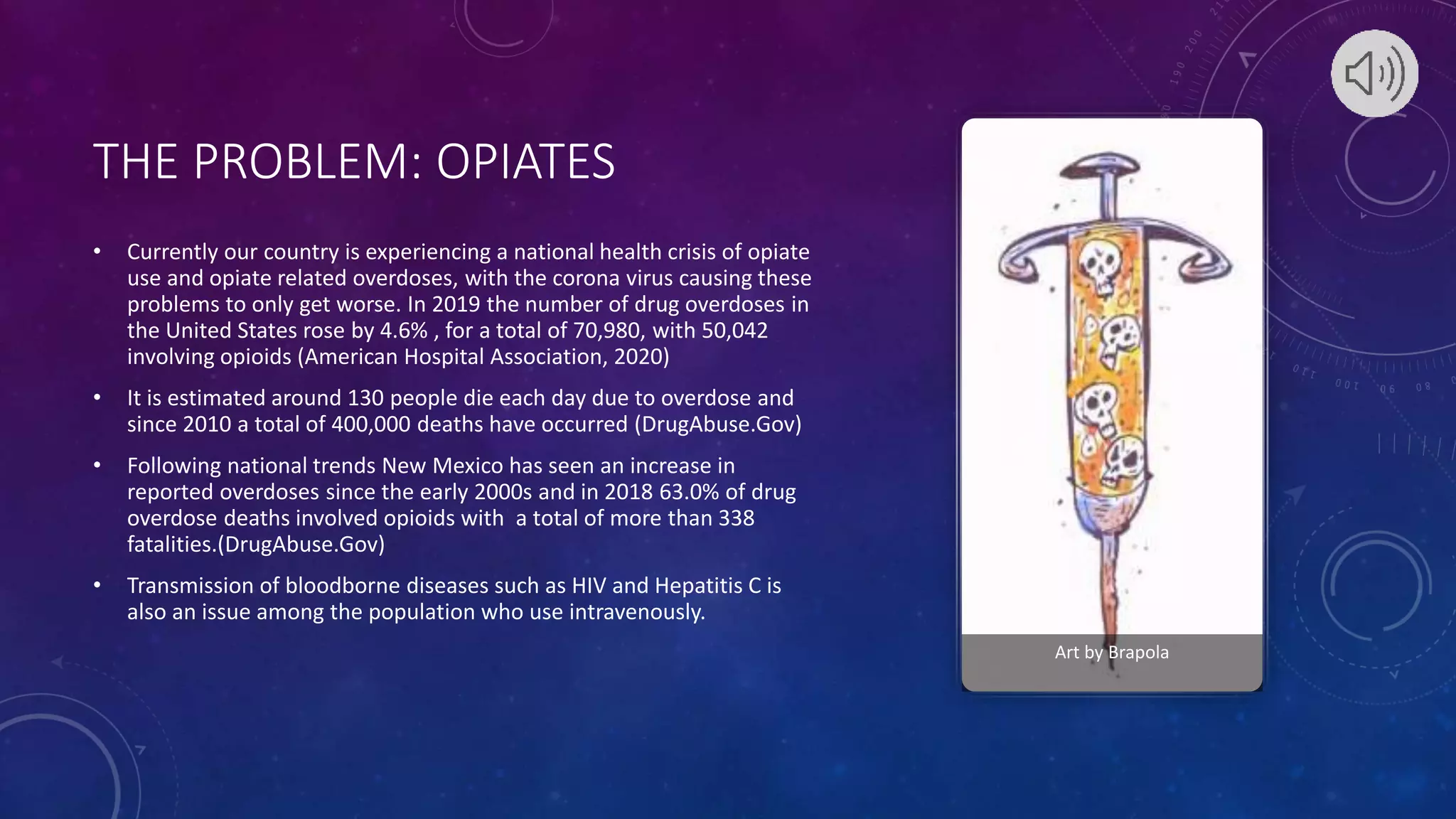
Art by Brapola
BRINGING HOPE:
HARM REDUCTION
• It is my belief that in order to address the
problem of opiate use within our community we
must first accept that this is an issue, and that the
consumption of these drugs is going to occur
regardless of their legality.
• With that in mind I believe a community's
commitment to harm reduction can be a big step
in bringing down the total number of fatal
overdoses.
• One such form of harm reduction would be the
allowance of supervised consumption clinics to
open and operate within neighborhoods that are
affected the most by the ongoing opiate crisis.
WHAT IS A
SUPERVISED
CONSUMPTION
FACILITY?
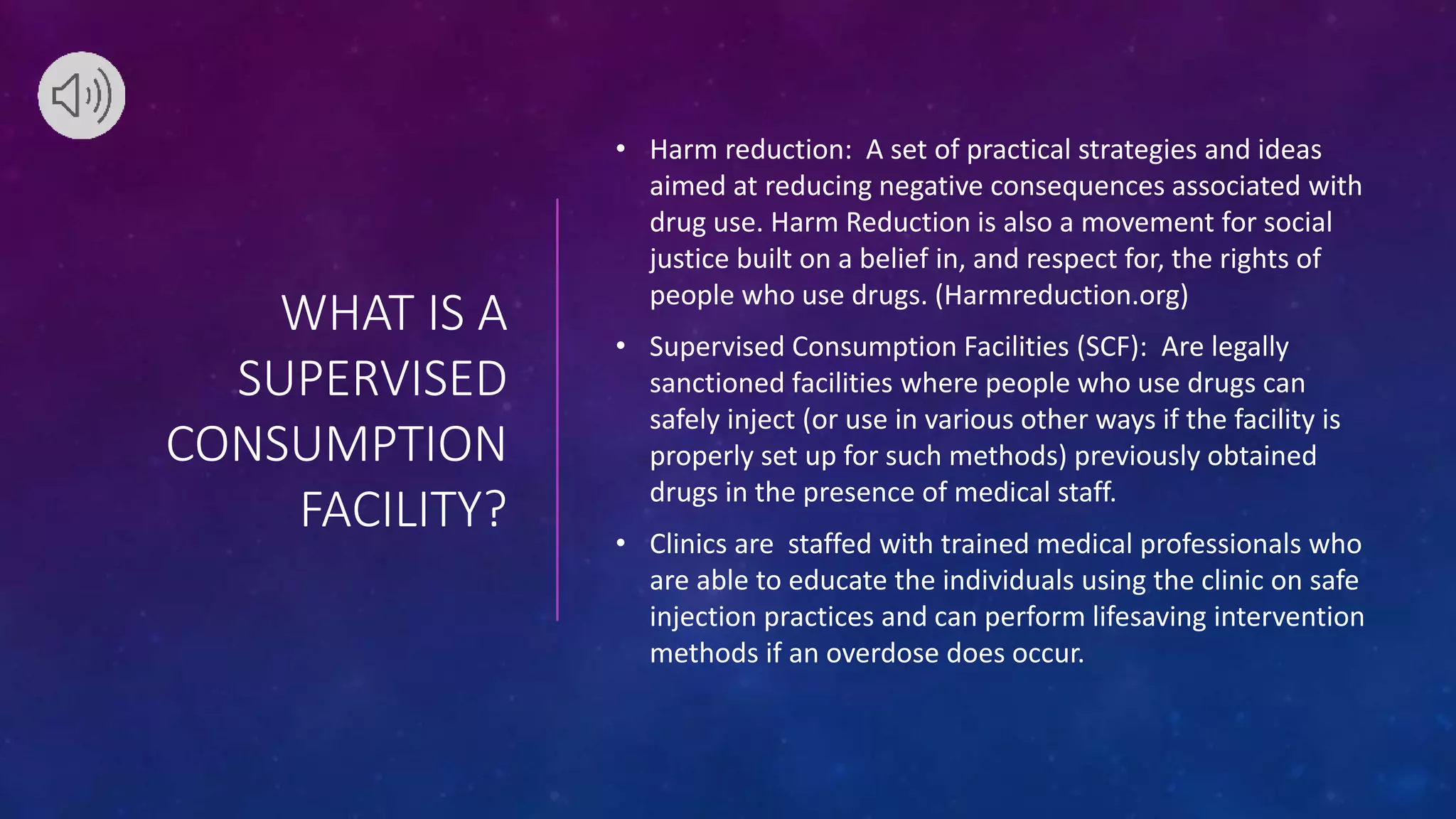
• Harm reduction: A set of practical strategies and ideas
aimed at reducing negative consequences associated with
drug use. Harm Reduction is also a movement for social
justice built on a belief in, and respect for, the rights of
people who use drugs. (Harmreduction.org)
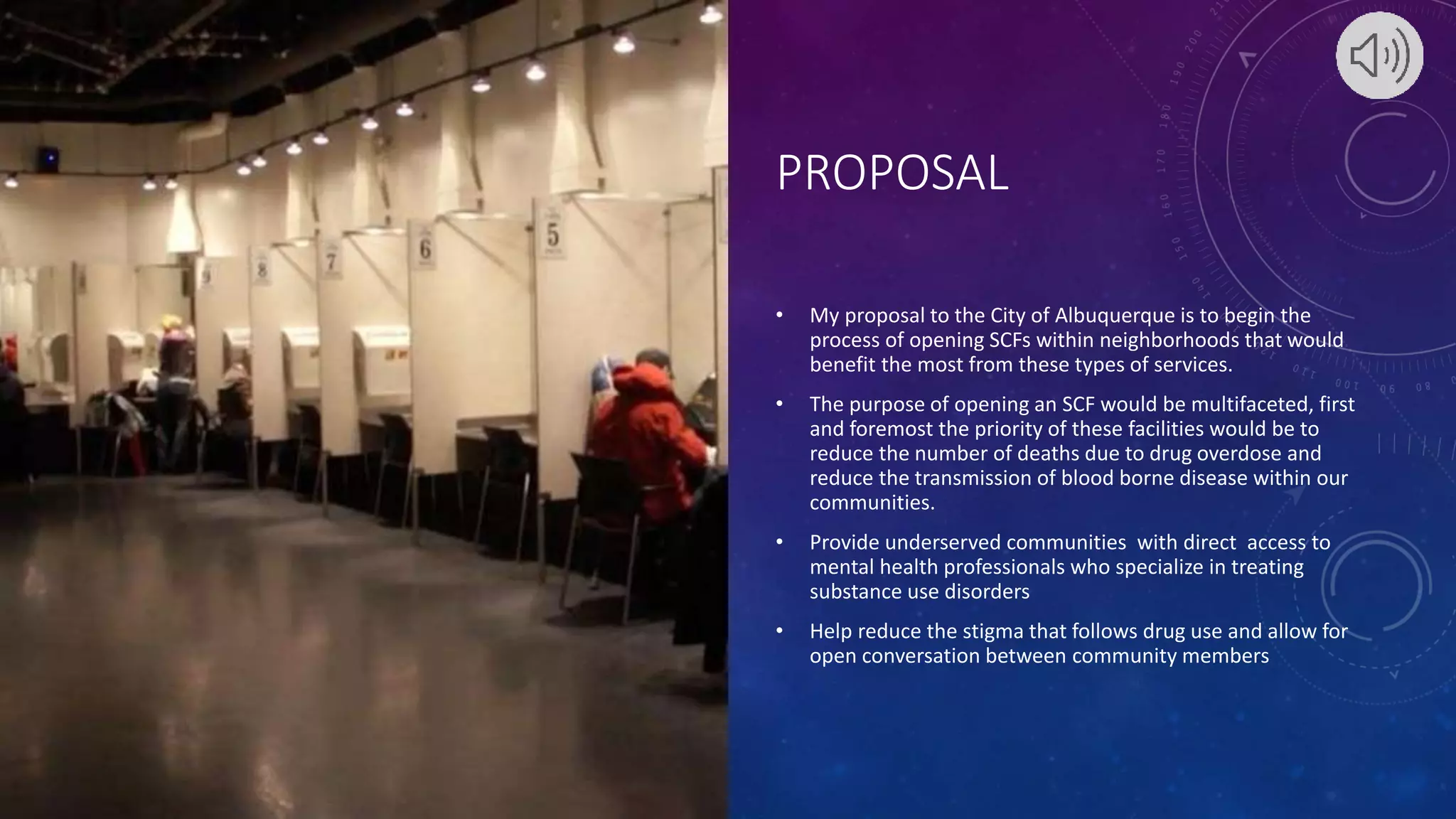
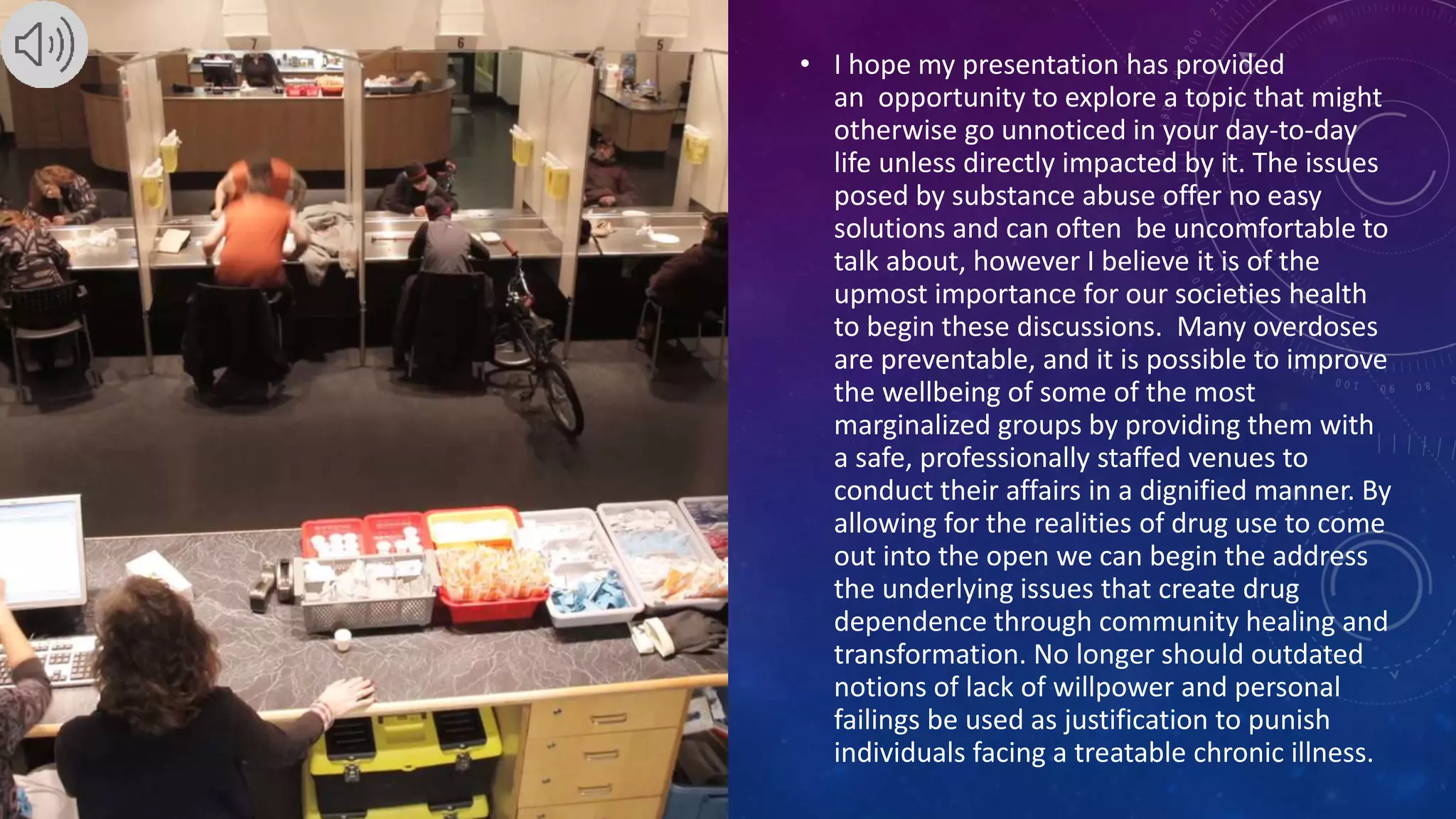
• Supervised Consumption Facilities (SCF): Are legally
sanctioned facilities where people who use drugs can
safely inject (or use in various other ways if the facility is
properly set up for such methods) previously obtained
drugs in the presence of medical staff.
• Clinics are staffed with trained medical professionals who
are able to educate the individuals using the clinic on safe
injection practices and can perform lifesaving intervention
methods if an overdose does occur.
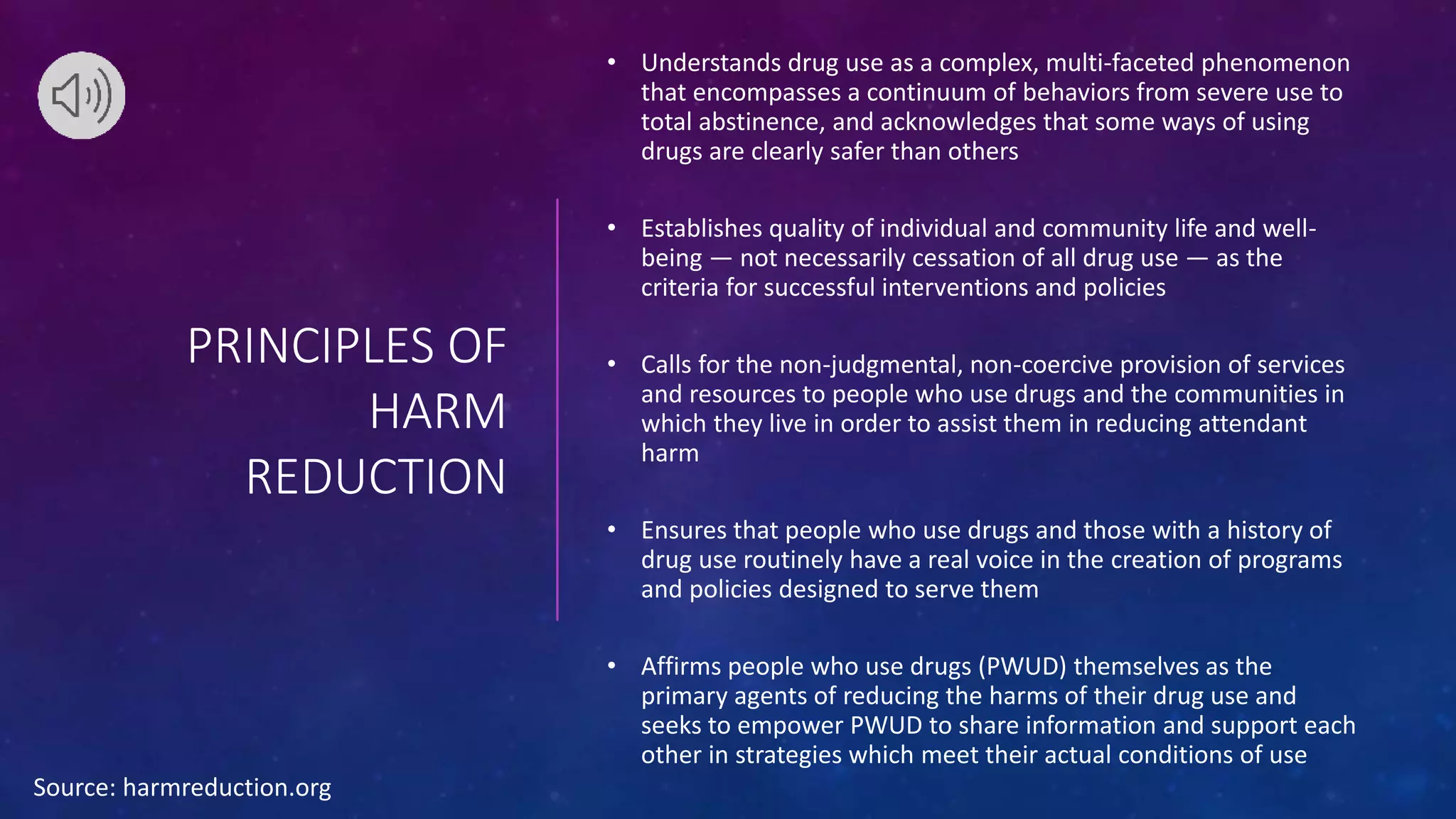
PRINCIPLES OF
HARM
REDUCTION
• Understands drug use as a complex, multi-faceted phenomenon
that encompasses a continuum of behaviors from severe use to
total abstinence, and acknowledges that some ways of using
drugs are clearly safer than others
• Establishes quality of individual and community life and well-
being — not necessarily cessation of all drug use — as the
criteria for successful interventions and policies
• Calls for the non-judgmental, non-coercive provision of services
and resources to people who use drugs and the communities in
which they live in order to assist them in reducing attendant
harm
• Ensures that people who use drugs and those with a history of
drug use routinely have a real voice in the creation of programs
and policies designed to serve them
• Affirms people who use drugs (PWUD) themselves as the
primary agents of reducing the harms of their drug use and
seeks to empower PWUD to share information and support each
other in strategies which meet their actual conditions of use
Source: harmreduction.org
BENEFITS
• While no SCF currently operates within the borders of
the United States, there are examples in other areas of
the world such as Europe, Australia, and Canada, which
can be used as sources of information to determine
positive and negative factors of their use.
• Studies have shown fetal overdose rates do decrease in
the areas that these facilities operate. (Marshall,2011)
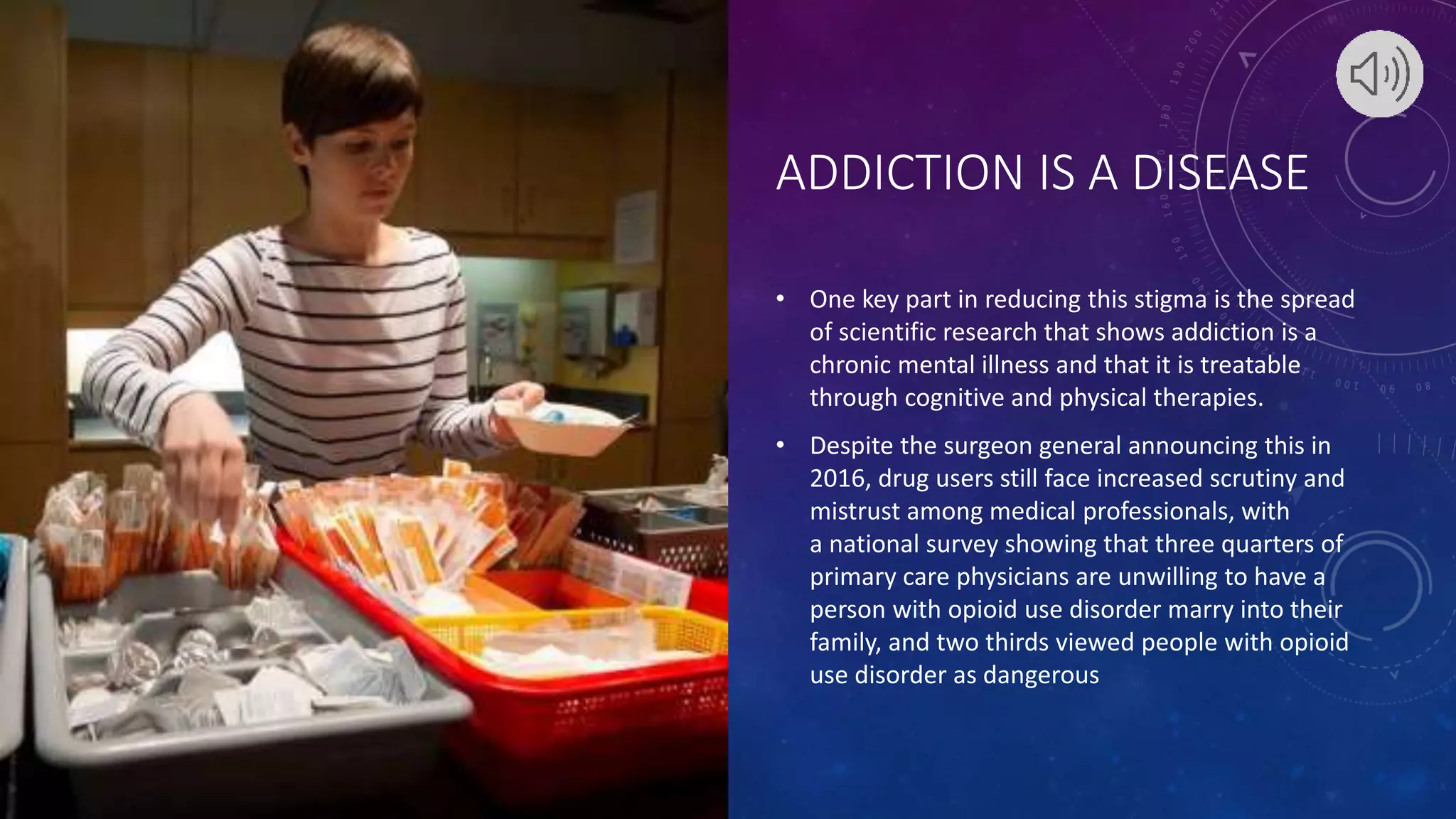
• Needle Exchange programs that are run out of these
facilities decrease the amount of drug related
paraphernalia that ends up discarded on the street.
• Provide narcan (life saving medication that can reverse
overdose effects) for use outside of the SCF
• Individuals with substance use disorders have direct
contact with staff who can set them up with
detoxification units, rehabilitation facilities, Intensive
Out-Patient Programs, and therapists.
PROPOSAL
• My proposal to the City of Albuquerque is to begin the
process of opening SCFs within neighborhoods that would
benefit the most from these types of services.
• The purpose of opening an SCF would be multifaceted, first
and foremost the priority of these facilities would be to
reduce the number of deaths due to drug overdose and
reduce the transmission of blood borne disease within our
communities.
• Provide underserved communities with direct access to
mental health professionals who specialize in treating
substance use disorders
• Help reduce the stigma that follows drug use and allow for
open conversation between community members
TEARING DOWN
WALLS
• I believe an evaluation of how we as a community treat
drug use and drug addiction needs to occur
• Currently our society views drug addiction as a personal
choice and a failure of willpower
• This stigma creates an environment that promotes
individuals hiding the problems they face with substance
abuse and can prevent them from finding and taking part
in treatment
• This stigma can cause communities to prevent the
opening of facilities aimed at harm reduction and
rehabilitation
ADDICTION IS A DISEASE
• One key part in reducing this stigma is the spread
of scientific research that shows addiction is a
chronic mental illness and that it is treatable
through cognitive and physical therapies.
• Despite the surgeon general announcing this in
2016, drug users still face increased scrutiny and
mistrust among medical professionals, with
a national survey showing that three quarters of
primary care physicians are unwilling to have a
person with opioid use disorder marry into their
family, and two thirds viewed people with opioid
use disorder as dangerous
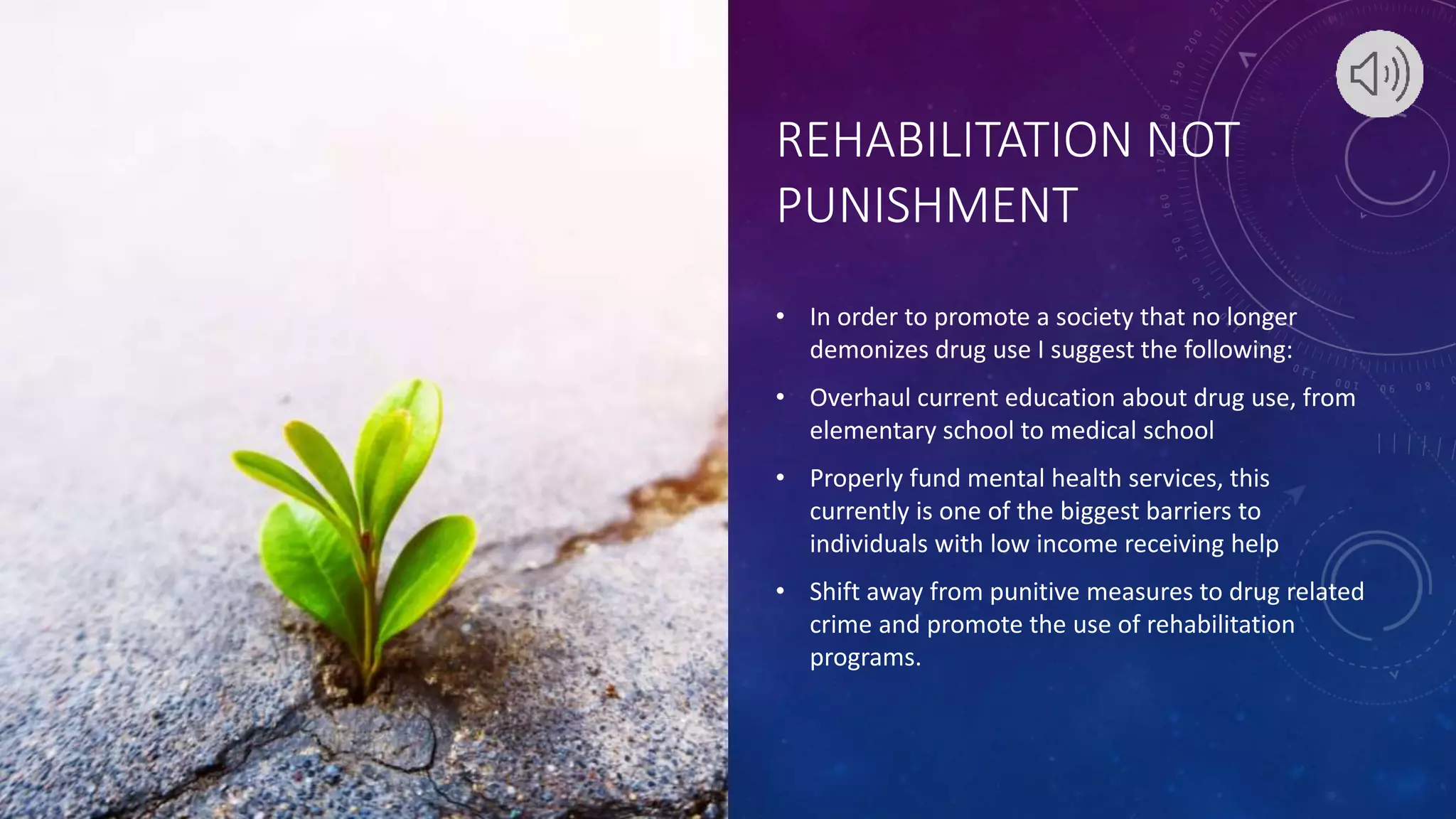
REHABILITATION NOT
PUNISHMENT
• In order to promote a society that no longer
demonizes drug use I suggest the following:
• Overhaul current education about drug use, from
elementary school to medical school
• Properly fund mental health services, this
currently is one of the biggest barriers to
individuals with low income receiving help
• Shift away from punitive measures to drug related
crime and promote the use of rehabilitation
programs.
TEARING DOWN
WALLS: THE
FUTURE
• It is my hope that opening supervised consumption facilities
can be one of the first of many steps in reducing the negative
stigma surrounding drug addiction and can begin the process
of treating individuals struggling with substance abuse with
the humanity they deserve
• With the problems of substance abuse disorders entering the
public consciousness this would allow for a shift in support for
politicians who can create policy that protect and fund the
growth and wellbeing of these public health services instead
of promoting punitive measures that punish instead of
rehabilitate
• Presents an opportunity to provide the community at
multiple levels with unbiased education which is important
for individuals who wish to enter professional fields involving
medicine, mental health, and crisis management
• I hope my presentation has provided
an opportunity to explore a topic that might
otherwise go unnoticed in your day-to-day
life unless directly impacted by it. The issues
posed by substance abuse offer no easy
solutions and can often be uncomfortable to
talk about, however I believe it is of the
upmost importance for our societies health
to begin these discussions. Many overdoses
are preventable, and it is possible to improve
the wellbeing of some of the most
marginalized groups by providing them with
a safe, professionally staffed venues to
conduct their affairs in a dignified manner. By
allowing for the realities of drug use to come
out into the open we can begin the address
the underlying issues that create drug
dependence through community healing and
transformation. No longer should outdated
notions of lack of willpower and personal
failings be used as justification to punish
individuals facing a treatable chronic illness.
A THANK YOU
• I would like to thank you the audience for spending the time to learn and interact with a topic that
has been shunned and kept from mainstream conversation for too long.
• The community I found in Taos that helped begin this journey
• All those who still suffer from active addiction
ONLINE
RESOURCES
• National Harm Reduction Coalition- Harmreduction.org
• Cost benefit analysis of Insite (at the time Canadas only SCF): The
cost-effectiveness of Vancouver's supervised injection facility
(nih.gov)
• Current Harm Reduction Services provided by the New Mexico
Department of Health: Harm Reduction (nmhealth.org)
REFERENCES
• American Medical Association. (2020, October 31). Issue Brief: Reports of Increases in Opioid- and Other Drug-
Related Overdose and Other Concerns During COVID Pandemic. Retrieved from Issue-brief_-Reports-of-
increases-in-opioid-related-overdose-and-other-concerns-during-COVID-pandemic.pdf (asapnys.org)
• Department of Nursing USC. (2020, August 24). Supervised Injection Sites Are Coming to the United States:
Here’s What You Should Know. Retrieved from https://nursing.usc.edu/blog/supervised-injection-
sites/. University of Southern California.
• Irwin,A., Jazaghi,E., Bluthenthal, R.N., Karl, A.H. (2016). A Cost-Benefit Analysis of a Potential Supervised
Injection Facility in San Francisco, California, USA. Journal of Drug Issues. 1-21. DOI:10
• Larson, S., Padron, N., Mason, J., Bogaczyk, T. (2017). Supervised Consumption Facilities - Review of the
Evidence. Main Line Health System, Thomas Jefferson University.
• Marshall, B.D., Millow, M.J., Wood, E., Montaner, J.S.G., Kerr, T. (2011). Reduction in Overdose Mortality After
the Opening of North America’s First Medically Supervised Safer Injecting Facility: A Retrospective Population-
Based Study. Lancet. DOI: 10.1016/S0140-6736(10)62353-7
REFERENCES
• New Mexico: Opioid-Involved Deaths and Related Harms. (2020, July 2). National Institute on Drug Abuse.
https://www.drugabuse.gov/drug-topics/opioids/opioid-summaries-by-state/new-mexico-opioid-involved-deaths-
related-harms
• Sam Rolfe. (2020, September 28). Harm Reduction Coalition. https://harmreduction.org
• iBayoumi,A. Zaric,G.The cost-effectiveness of Vancouver’s supervised injection facility. (2008, November 18). NCBI.
https://www.ncbi.nlm.nih.gov/pmc/articles/PMC2582765/
• McGinty, E. E., & Barry, C. L. (2020). Stigma Reduction to Combat the Addiction Crisis — Developing an Evidence Base.
New England Journal of Medicine, 382(14), 1291–1292. https://doi.org/10.1056/nejmp2000227
• 2018, October 1). Is Addiction a Disease? Science Says Yes. University of Michigan Health.
https://healthblog.uofmhealth.org/brain-health/science-says-addiction-a-chronic-disease-not-a-moral-failing

Kyle molina harm reduction midterm project unm crp 275 community change in a global era

  • 1.
  • 2.
    THE PROBLEM: OPIATES •Currently our country is experiencing a national health crisis of opiate use and opiate related overdoses, with the corona virus causing these problems to only get worse. In 2019 the number of drug overdoses in the United States rose by 4.6% , for a total of 70,980, with 50,042 involving opioids (American Hospital Association, 2020) • It is estimated around 130 people die each day due to overdose and since 2010 a total of 400,000 deaths have occurred (DrugAbuse.Gov) • Following national trends New Mexico has seen an increase in reported overdoses since the early 2000s and in 2018 63.0% of drug overdose deaths involved opioids with a total of more than 338 fatalities.(DrugAbuse.Gov) • Transmission of bloodborne diseases such as HIV and Hepatitis C is also an issue among the population who use intravenously. Art by Brapola
  • 3.
    BRINGING HOPE: HARM REDUCTION •It is my belief that in order to address the problem of opiate use within our community we must first accept that this is an issue, and that the consumption of these drugs is going to occur regardless of their legality. • With that in mind I believe a community's commitment to harm reduction can be a big step in bringing down the total number of fatal overdoses. • One such form of harm reduction would be the allowance of supervised consumption clinics to open and operate within neighborhoods that are affected the most by the ongoing opiate crisis.
  • 4.
    WHAT IS A SUPERVISED CONSUMPTION FACILITY? •Harm reduction: A set of practical strategies and ideas aimed at reducing negative consequences associated with drug use. Harm Reduction is also a movement for social justice built on a belief in, and respect for, the rights of people who use drugs. (Harmreduction.org) • Supervised Consumption Facilities (SCF): Are legally sanctioned facilities where people who use drugs can safely inject (or use in various other ways if the facility is properly set up for such methods) previously obtained drugs in the presence of medical staff. • Clinics are staffed with trained medical professionals who are able to educate the individuals using the clinic on safe injection practices and can perform lifesaving intervention methods if an overdose does occur.
  • 5.
    PRINCIPLES OF HARM REDUCTION • Understandsdrug use as a complex, multi-faceted phenomenon that encompasses a continuum of behaviors from severe use to total abstinence, and acknowledges that some ways of using drugs are clearly safer than others • Establishes quality of individual and community life and well- being — not necessarily cessation of all drug use — as the criteria for successful interventions and policies • Calls for the non-judgmental, non-coercive provision of services and resources to people who use drugs and the communities in which they live in order to assist them in reducing attendant harm • Ensures that people who use drugs and those with a history of drug use routinely have a real voice in the creation of programs and policies designed to serve them • Affirms people who use drugs (PWUD) themselves as the primary agents of reducing the harms of their drug use and seeks to empower PWUD to share information and support each other in strategies which meet their actual conditions of use Source: harmreduction.org
  • 6.
    BENEFITS • While noSCF currently operates within the borders of the United States, there are examples in other areas of the world such as Europe, Australia, and Canada, which can be used as sources of information to determine positive and negative factors of their use. • Studies have shown fetal overdose rates do decrease in the areas that these facilities operate. (Marshall,2011) • Needle Exchange programs that are run out of these facilities decrease the amount of drug related paraphernalia that ends up discarded on the street. • Provide narcan (life saving medication that can reverse overdose effects) for use outside of the SCF • Individuals with substance use disorders have direct contact with staff who can set them up with detoxification units, rehabilitation facilities, Intensive Out-Patient Programs, and therapists.
  • 7.
    PROPOSAL • My proposalto the City of Albuquerque is to begin the process of opening SCFs within neighborhoods that would benefit the most from these types of services. • The purpose of opening an SCF would be multifaceted, first and foremost the priority of these facilities would be to reduce the number of deaths due to drug overdose and reduce the transmission of blood borne disease within our communities. • Provide underserved communities with direct access to mental health professionals who specialize in treating substance use disorders • Help reduce the stigma that follows drug use and allow for open conversation between community members
  • 8.
    TEARING DOWN WALLS • Ibelieve an evaluation of how we as a community treat drug use and drug addiction needs to occur • Currently our society views drug addiction as a personal choice and a failure of willpower • This stigma creates an environment that promotes individuals hiding the problems they face with substance abuse and can prevent them from finding and taking part in treatment • This stigma can cause communities to prevent the opening of facilities aimed at harm reduction and rehabilitation
  • 9.
    ADDICTION IS ADISEASE • One key part in reducing this stigma is the spread of scientific research that shows addiction is a chronic mental illness and that it is treatable through cognitive and physical therapies. • Despite the surgeon general announcing this in 2016, drug users still face increased scrutiny and mistrust among medical professionals, with a national survey showing that three quarters of primary care physicians are unwilling to have a person with opioid use disorder marry into their family, and two thirds viewed people with opioid use disorder as dangerous
  • 10.
    REHABILITATION NOT PUNISHMENT • Inorder to promote a society that no longer demonizes drug use I suggest the following: • Overhaul current education about drug use, from elementary school to medical school • Properly fund mental health services, this currently is one of the biggest barriers to individuals with low income receiving help • Shift away from punitive measures to drug related crime and promote the use of rehabilitation programs.
  • 11.
    TEARING DOWN WALLS: THE FUTURE •It is my hope that opening supervised consumption facilities can be one of the first of many steps in reducing the negative stigma surrounding drug addiction and can begin the process of treating individuals struggling with substance abuse with the humanity they deserve • With the problems of substance abuse disorders entering the public consciousness this would allow for a shift in support for politicians who can create policy that protect and fund the growth and wellbeing of these public health services instead of promoting punitive measures that punish instead of rehabilitate • Presents an opportunity to provide the community at multiple levels with unbiased education which is important for individuals who wish to enter professional fields involving medicine, mental health, and crisis management
  • 12.
    • I hopemy presentation has provided an opportunity to explore a topic that might otherwise go unnoticed in your day-to-day life unless directly impacted by it. The issues posed by substance abuse offer no easy solutions and can often be uncomfortable to talk about, however I believe it is of the upmost importance for our societies health to begin these discussions. Many overdoses are preventable, and it is possible to improve the wellbeing of some of the most marginalized groups by providing them with a safe, professionally staffed venues to conduct their affairs in a dignified manner. By allowing for the realities of drug use to come out into the open we can begin the address the underlying issues that create drug dependence through community healing and transformation. No longer should outdated notions of lack of willpower and personal failings be used as justification to punish individuals facing a treatable chronic illness.
  • 13.
    A THANK YOU •I would like to thank you the audience for spending the time to learn and interact with a topic that has been shunned and kept from mainstream conversation for too long. • The community I found in Taos that helped begin this journey • All those who still suffer from active addiction
  • 14.
    ONLINE RESOURCES • National HarmReduction Coalition- Harmreduction.org • Cost benefit analysis of Insite (at the time Canadas only SCF): The cost-effectiveness of Vancouver's supervised injection facility (nih.gov) • Current Harm Reduction Services provided by the New Mexico Department of Health: Harm Reduction (nmhealth.org)
  • 15.
    REFERENCES • American MedicalAssociation. (2020, October 31). Issue Brief: Reports of Increases in Opioid- and Other Drug- Related Overdose and Other Concerns During COVID Pandemic. Retrieved from Issue-brief_-Reports-of- increases-in-opioid-related-overdose-and-other-concerns-during-COVID-pandemic.pdf (asapnys.org) • Department of Nursing USC. (2020, August 24). Supervised Injection Sites Are Coming to the United States: Here’s What You Should Know. Retrieved from https://nursing.usc.edu/blog/supervised-injection- sites/. University of Southern California. • Irwin,A., Jazaghi,E., Bluthenthal, R.N., Karl, A.H. (2016). A Cost-Benefit Analysis of a Potential Supervised Injection Facility in San Francisco, California, USA. Journal of Drug Issues. 1-21. DOI:10 • Larson, S., Padron, N., Mason, J., Bogaczyk, T. (2017). Supervised Consumption Facilities - Review of the Evidence. Main Line Health System, Thomas Jefferson University. • Marshall, B.D., Millow, M.J., Wood, E., Montaner, J.S.G., Kerr, T. (2011). Reduction in Overdose Mortality After the Opening of North America’s First Medically Supervised Safer Injecting Facility: A Retrospective Population- Based Study. Lancet. DOI: 10.1016/S0140-6736(10)62353-7
  • 16.
    REFERENCES • New Mexico:Opioid-Involved Deaths and Related Harms. (2020, July 2). National Institute on Drug Abuse. https://www.drugabuse.gov/drug-topics/opioids/opioid-summaries-by-state/new-mexico-opioid-involved-deaths- related-harms • Sam Rolfe. (2020, September 28). Harm Reduction Coalition. https://harmreduction.org • iBayoumi,A. Zaric,G.The cost-effectiveness of Vancouver’s supervised injection facility. (2008, November 18). NCBI. https://www.ncbi.nlm.nih.gov/pmc/articles/PMC2582765/ • McGinty, E. E., & Barry, C. L. (2020). Stigma Reduction to Combat the Addiction Crisis — Developing an Evidence Base. New England Journal of Medicine, 382(14), 1291–1292. https://doi.org/10.1056/nejmp2000227 • 2018, October 1). Is Addiction a Disease? Science Says Yes. University of Michigan Health. https://healthblog.uofmhealth.org/brain-health/science-says-addiction-a-chronic-disease-not-a-moral-failing