Using Digital and Social Media
to Influence the #RxProblem
Presenters:
• Rosemary Bretthauer-Mueller, Digital and Social Marketing
Lead, National Center for Injury Prevention and Control, CDC
• Erin Connelly, MPA, Associate Director of Communication,
National Center for Injury Prevention and Control, CDC
• Cassie Strawn, MA, Health Communication Specialist, National
Center for Injury Prevention and Control, CDC
A Centers for Disease Control and Prevention Training:
Disclosures
Erin Connelly, MPAff; Cassie Strawn, MA; and
Rosie Bretthauer-Mueller have disclosed no
relevant, real or apparent personal or
professional financial relationships with
proprietary entities that produce health care
goods and services
Disclosures
• All planners/managers hereby state that they or
their spouse/life partner do not have any financial
relationships or relationships to products or
devices with any commercial interest related to
the content of this activity of any amount during
the past 12 months.
• The following planners/managers have the
following to disclose:
– John J. Dreyzehner, MD, MPH, FACOEM – Ownership
interest: Starfish Health (spouse)
– Robert DuPont – Employment: Bensinger, DuPont &
Associates-Prescription Drug Research Center
Learning Objectives
1. Explain the value and use of general
communication principles, planning and tactics.
2. Demonstrate the basic processes of establishing,
maintaining and using social media channels.
3. Identify social media best practices, with
potential opportunities to expand knowledge
and refine use of channels.
4. Describe the application of social media to help
address public health issues.
5. Explain how to prepare to use social media to
impact the #RxProblem.
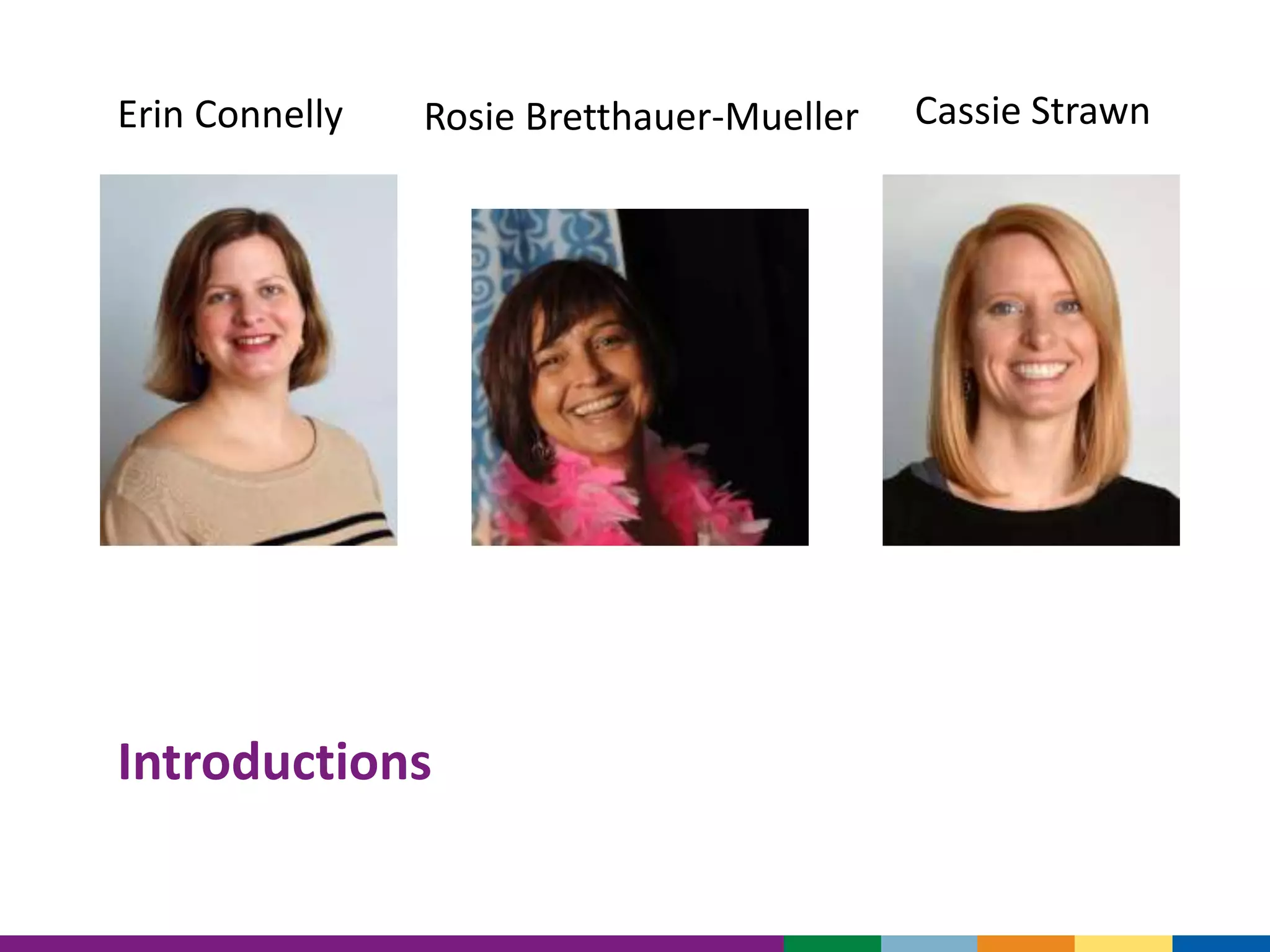
Erin Connelly Rosie Bretthauer-Mueller Cassie Strawn
Introductions
Agenda
2:00 pm: Surveys; Introductions; Opioid Overdose Epidemic
Overview; Health Communication Basics; Discussion &
Questions
2:50 pm: Break
3:00 pm: Survey results; Social Media: Basics to Best Practices;
Case Study: #RxProblem; Discussion & Questions
3:50 pm: Break
4:00 pm: Small group exercise; Discussion & Questions
4:50 pm: Wrap up
OPIOID OVERDOSE EPIDEMIC
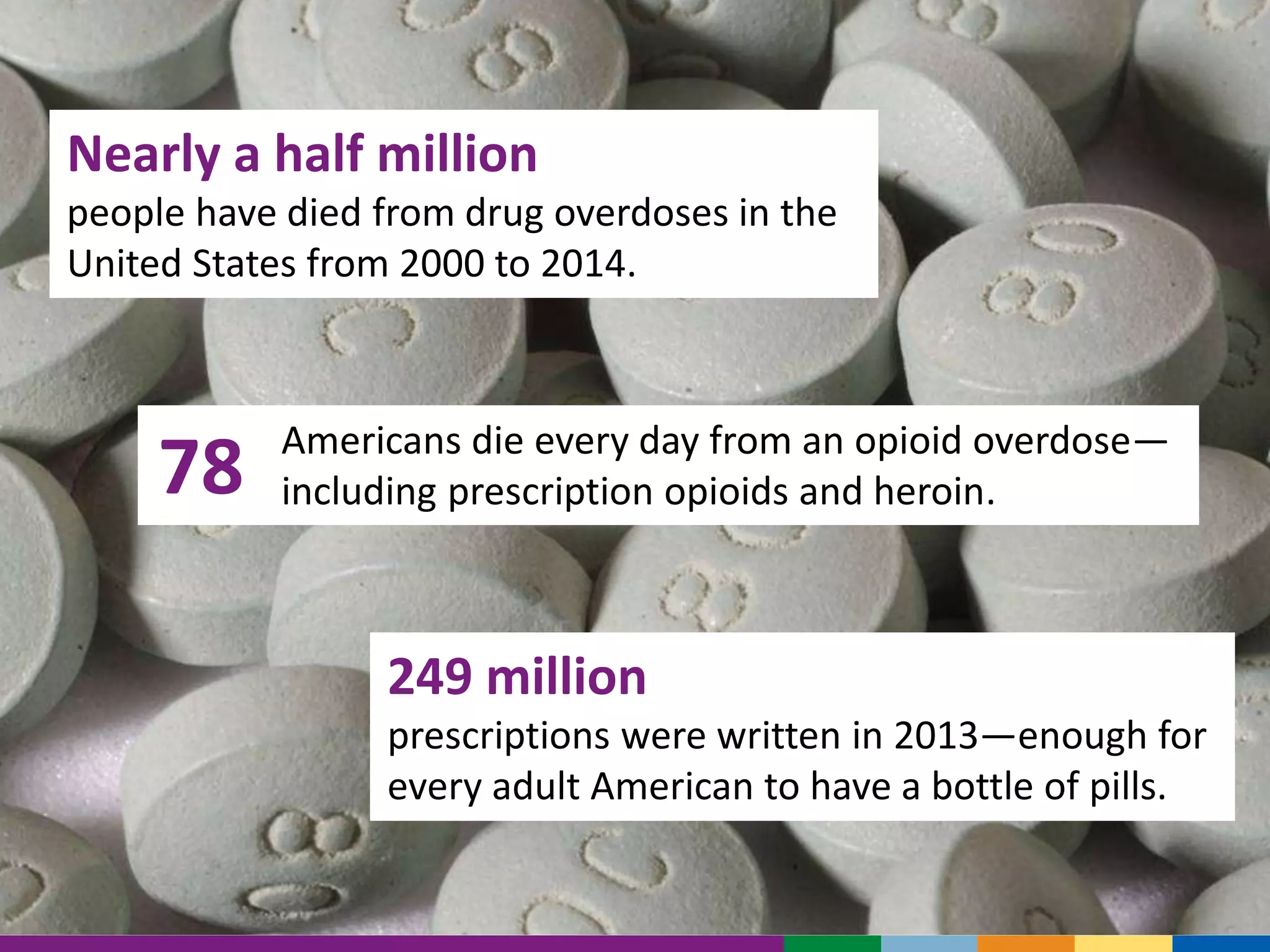
Nearly a half million
people have died from drug overdoses in the
United States from 2000 to 2014.
Americans die every day from an opioid overdose—
including prescription opioids and heroin.78
249 million
prescriptions were written in 2013—enough for
every adult American to have a bottle of pills.
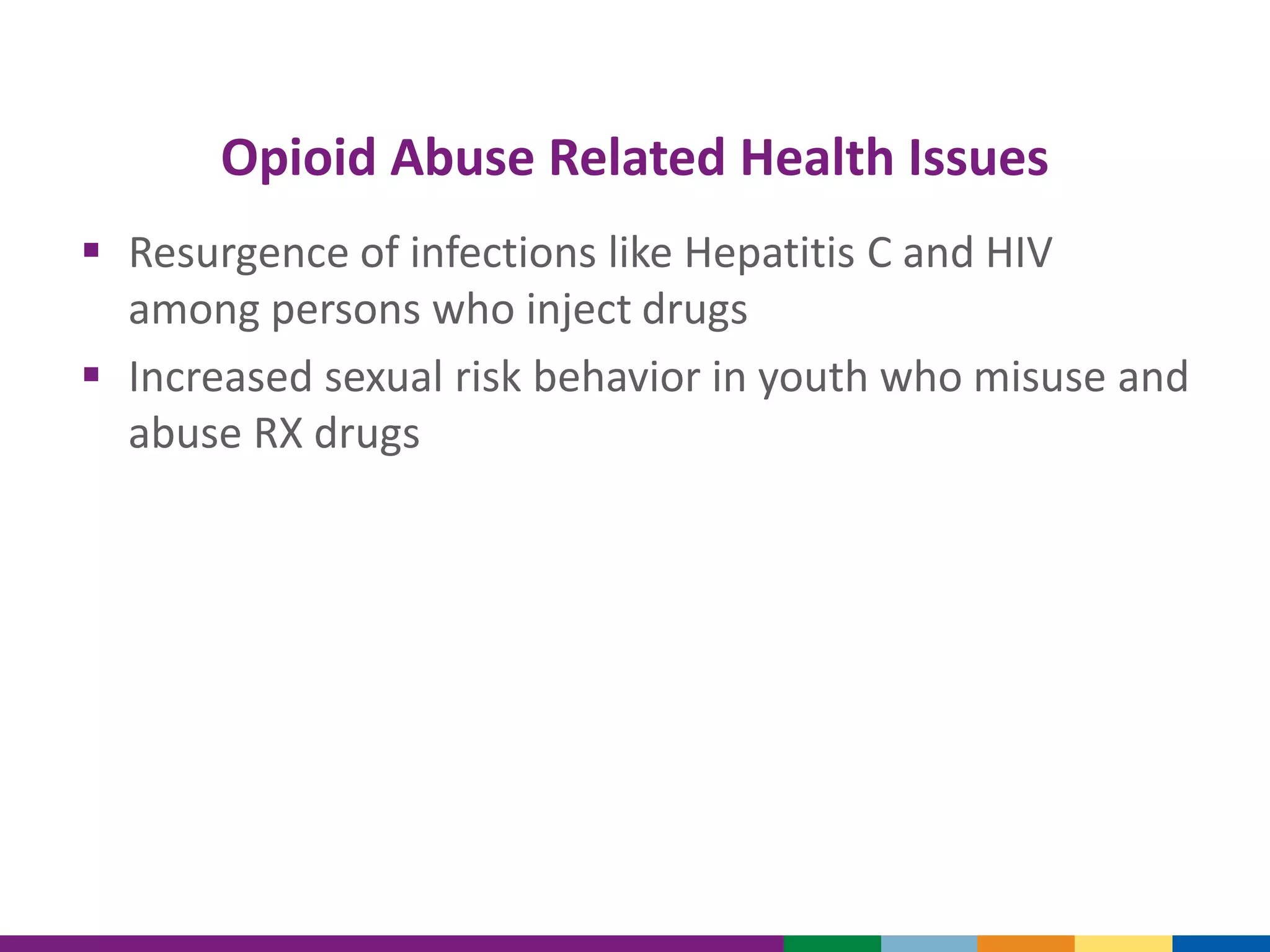
Opioid Abuse Related Health Issues
 Resurgence of infections like Hepatitis C and HIV
among persons who inject drugs
 Increased sexual risk behavior in youth who misuse and
abuse RX drugs
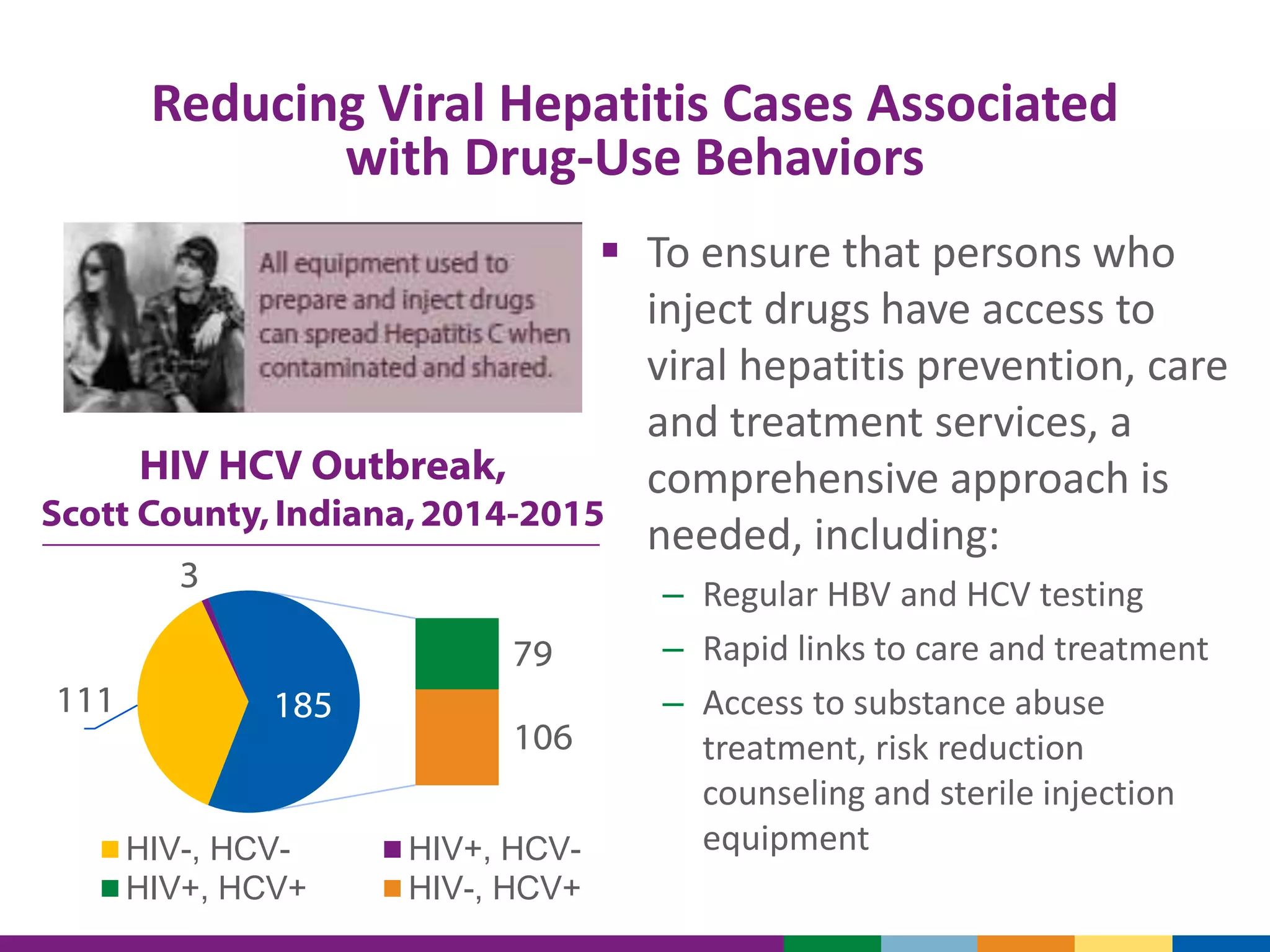
Reducing Viral Hepatitis Cases Associated
with Drug-Use Behaviors
 To ensure that persons who
inject drugs have access to
viral hepatitis prevention, care
and treatment services, a
comprehensive approach is
needed, including:
– Regular HBV and HCV testing
– Rapid links to care and treatment
– Access to substance abuse
treatment, risk reduction
counseling and sterile injection
equipment
111
3
79
106
185
HIV-, HCV- HIV+, HCV-
HIV+, HCV+ HIV-, HCV+
HIV HCV Outbreak,
Scott County,Indiana,2014-2015
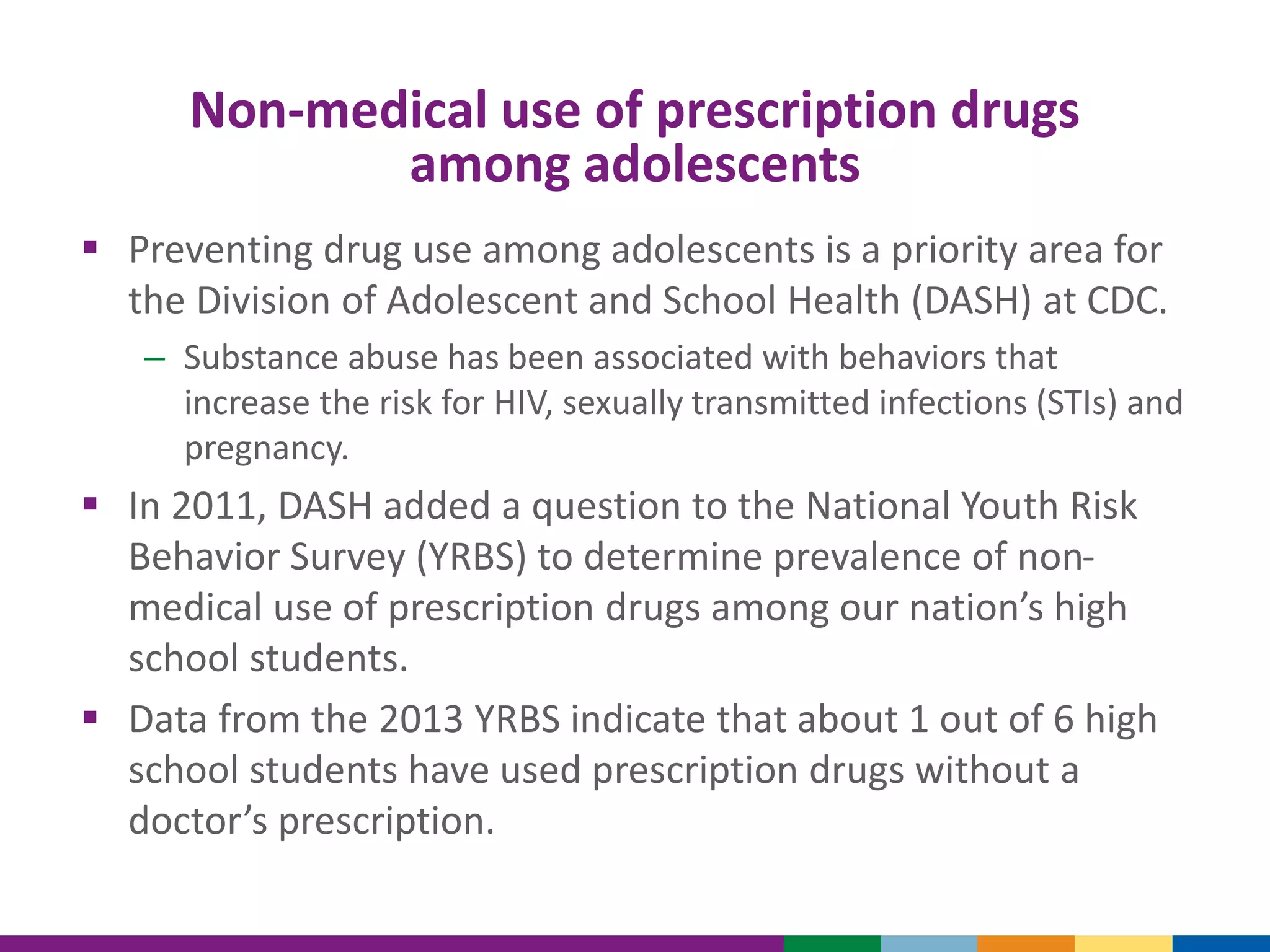
Non-medical use of prescription drugs
among adolescents
 Preventing drug use among adolescents is a priority area for
the Division of Adolescent and School Health (DASH) at CDC.
– Substance abuse has been associated with behaviors that
increase the risk for HIV, sexually transmitted infections (STIs) and
pregnancy.
 In 2011, DASH added a question to the National Youth Risk
Behavior Survey (YRBS) to determine prevalence of non-
medical use of prescription drugs among our nation’s high
school students.
 Data from the 2013 YRBS indicate that about 1 out of 6 high
school students have used prescription drugs without a
doctor’s prescription.
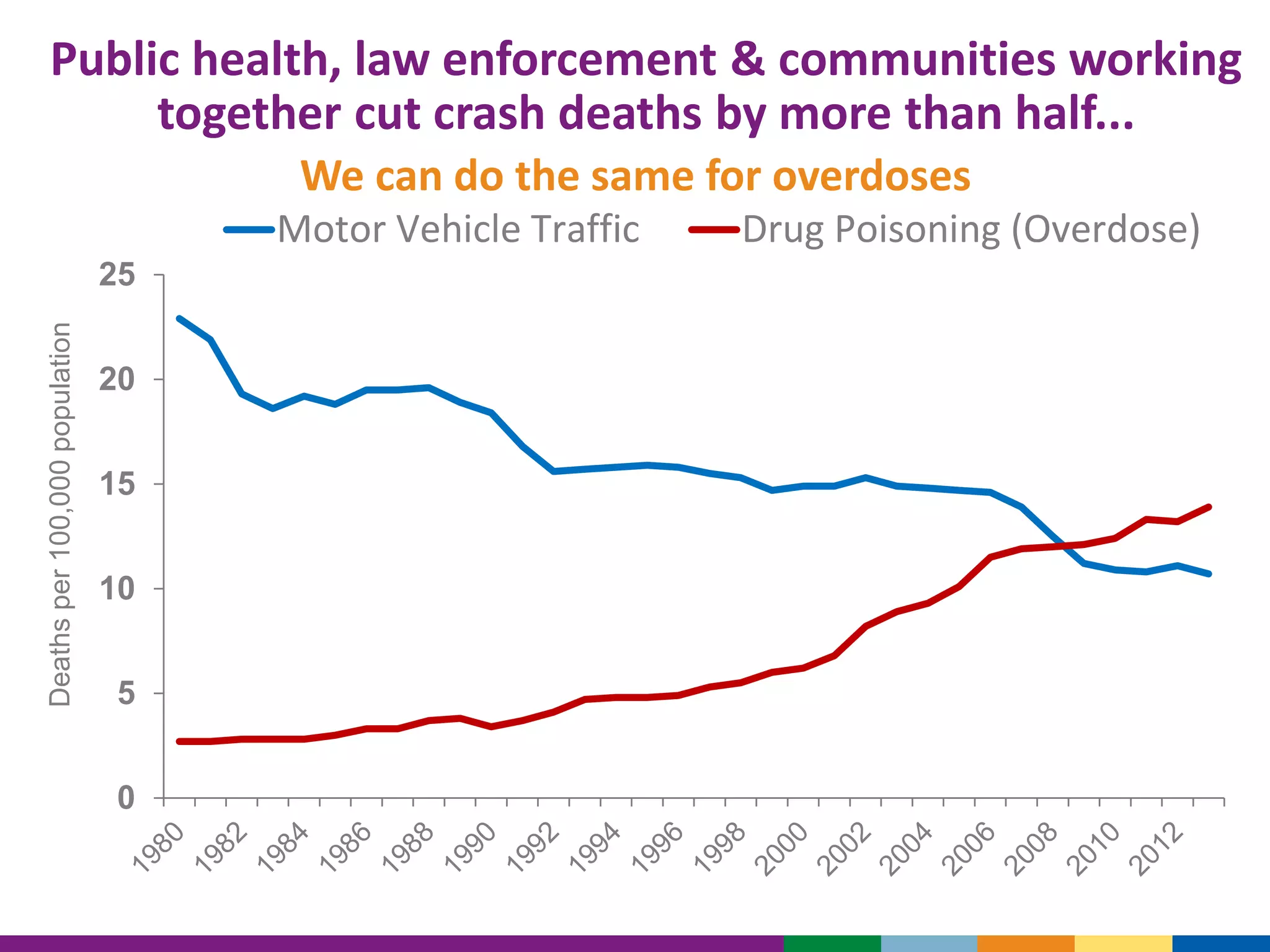
Public health, law enforcement & communities working
together cut crash deaths by more than half...
We can do the same for overdoses
0
5
10
15
20
25
Deathsper100,000population
Motor Vehicle Traffic Drug Poisoning (Overdose)
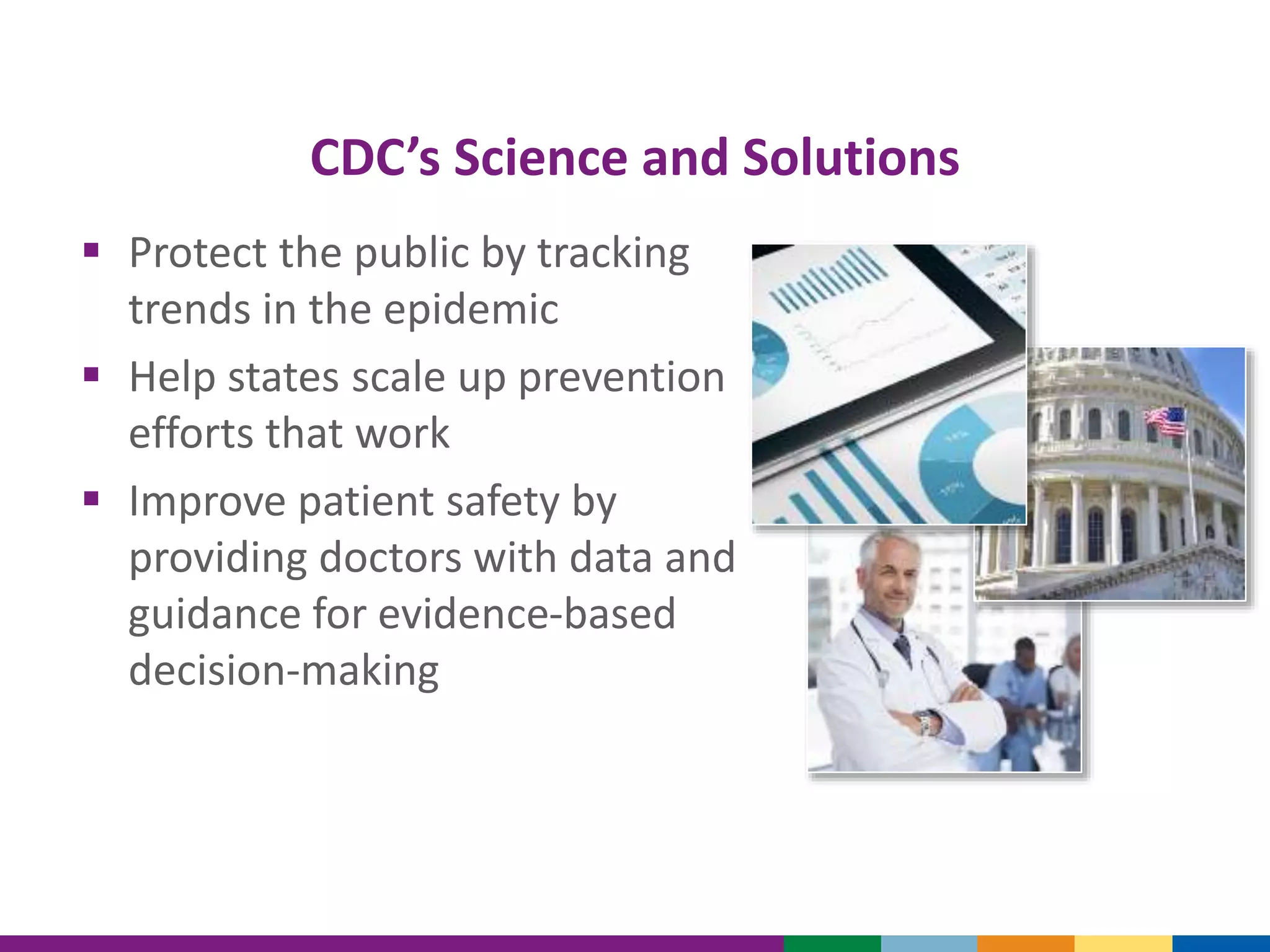
CDC’s Science and Solutions
 Protect the public by tracking
trends in the epidemic
 Help states scale up prevention
efforts that work
 Improve patient safety by
providing doctors with data and
guidance for evidence-based
decision-making
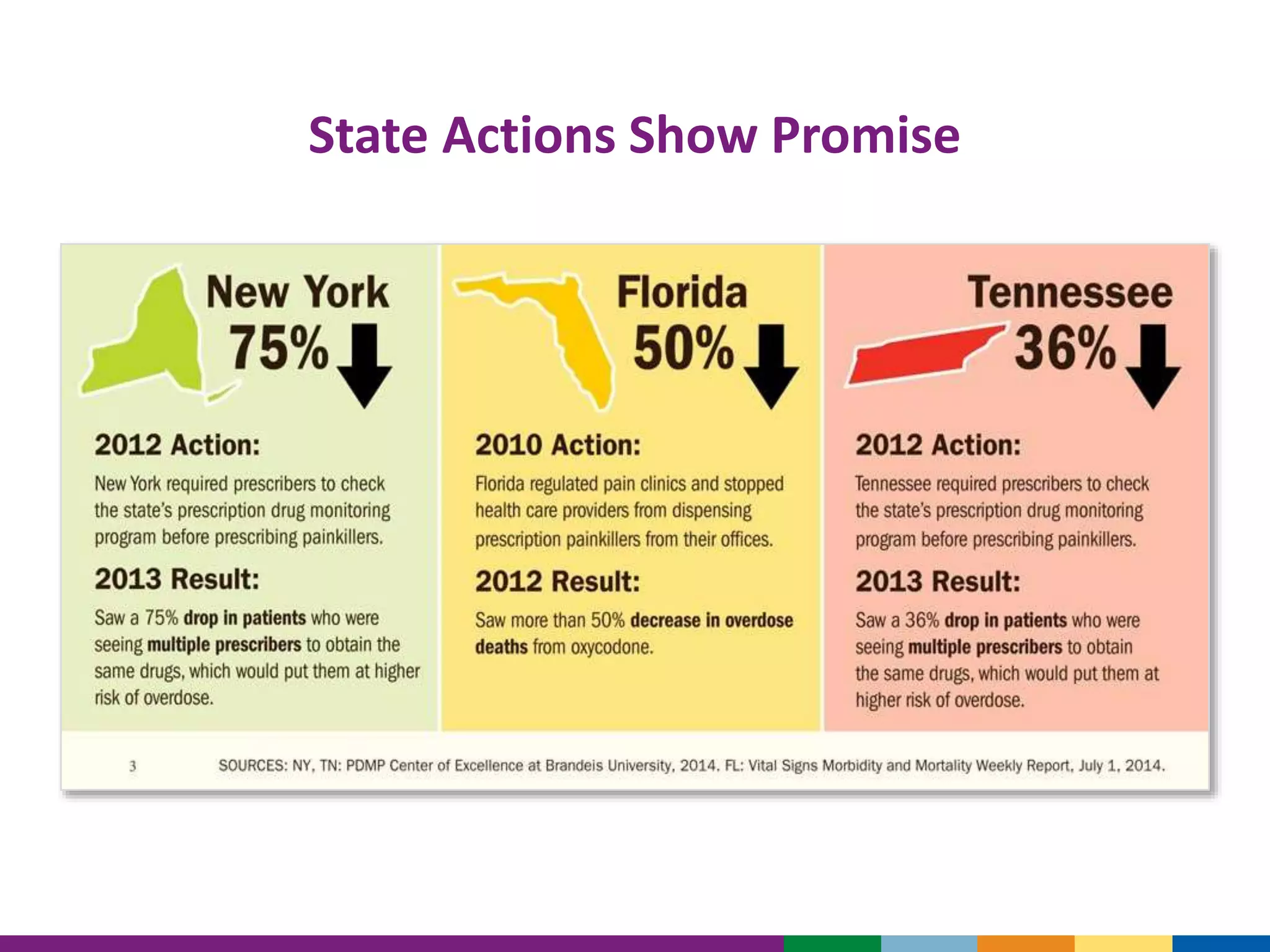
State Actions Show Promise
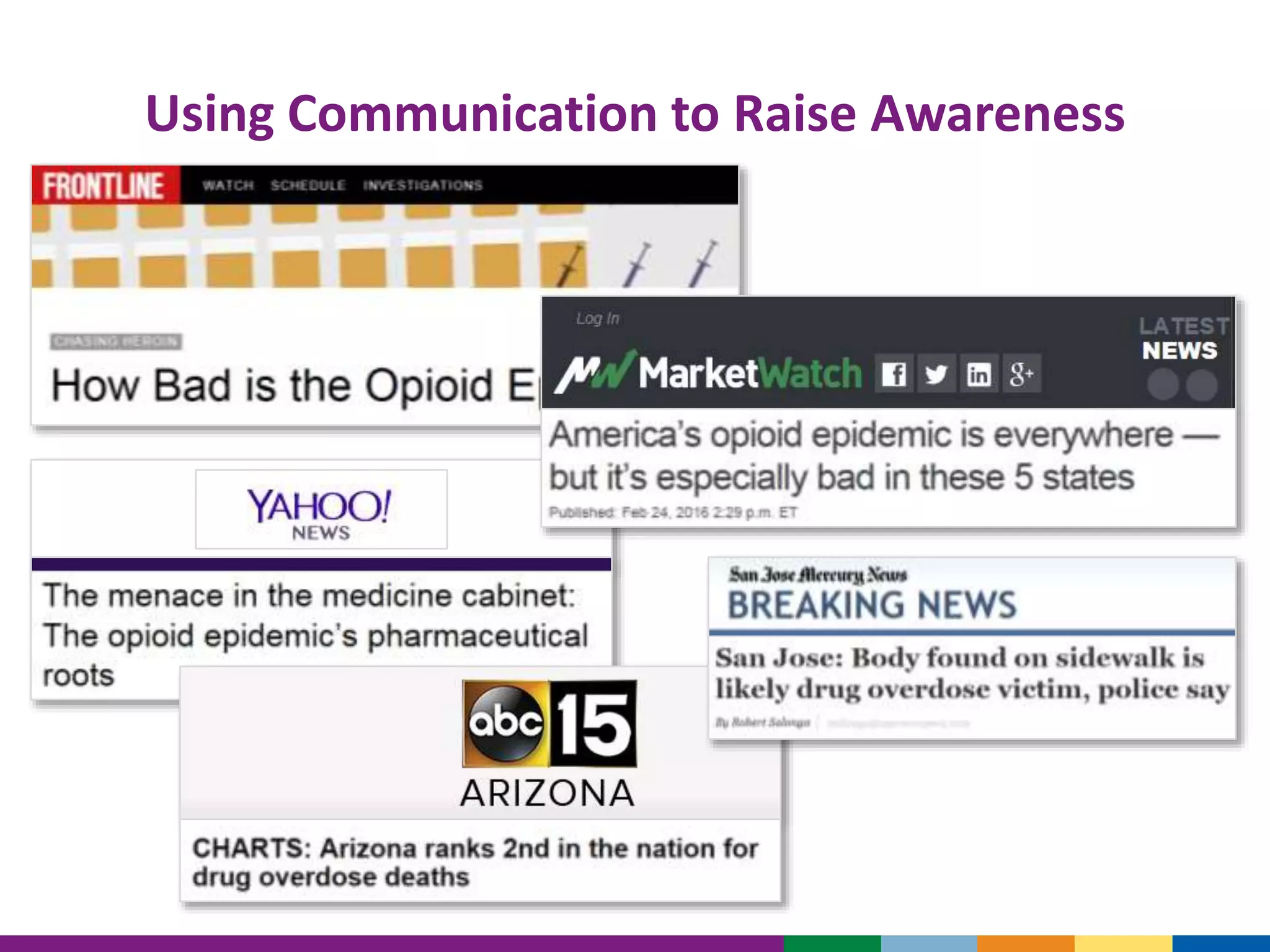
Using Communication to Raise Awareness
And to Promote Solutions
www.cdc.gov/drugoverdose
HEALTH COMMUNICATION BASICS
Health Communication Workshop Objectives:
 Define health communication and convey its value
 Understand where health communication fits as an
organizational strategy and as a public health
intervention
 Discuss basic steps involved with executing a health
communication strategy
 Identify the benefits of starting with social media
activities
What is Health Communication?
Using integrated strategies to design and deliver
messages to inform and influence individual and
community decisions that enhance health.
Health communication helps us confront
overwhelming public health challenges.
Health communication is more than just PSAs,
brochures, and presentations.
Information is giving out.
Communication is getting through.
– Sydney J. Harris
Setting the context: where does health
communication fit internally?
Think about your vision, mission and values.
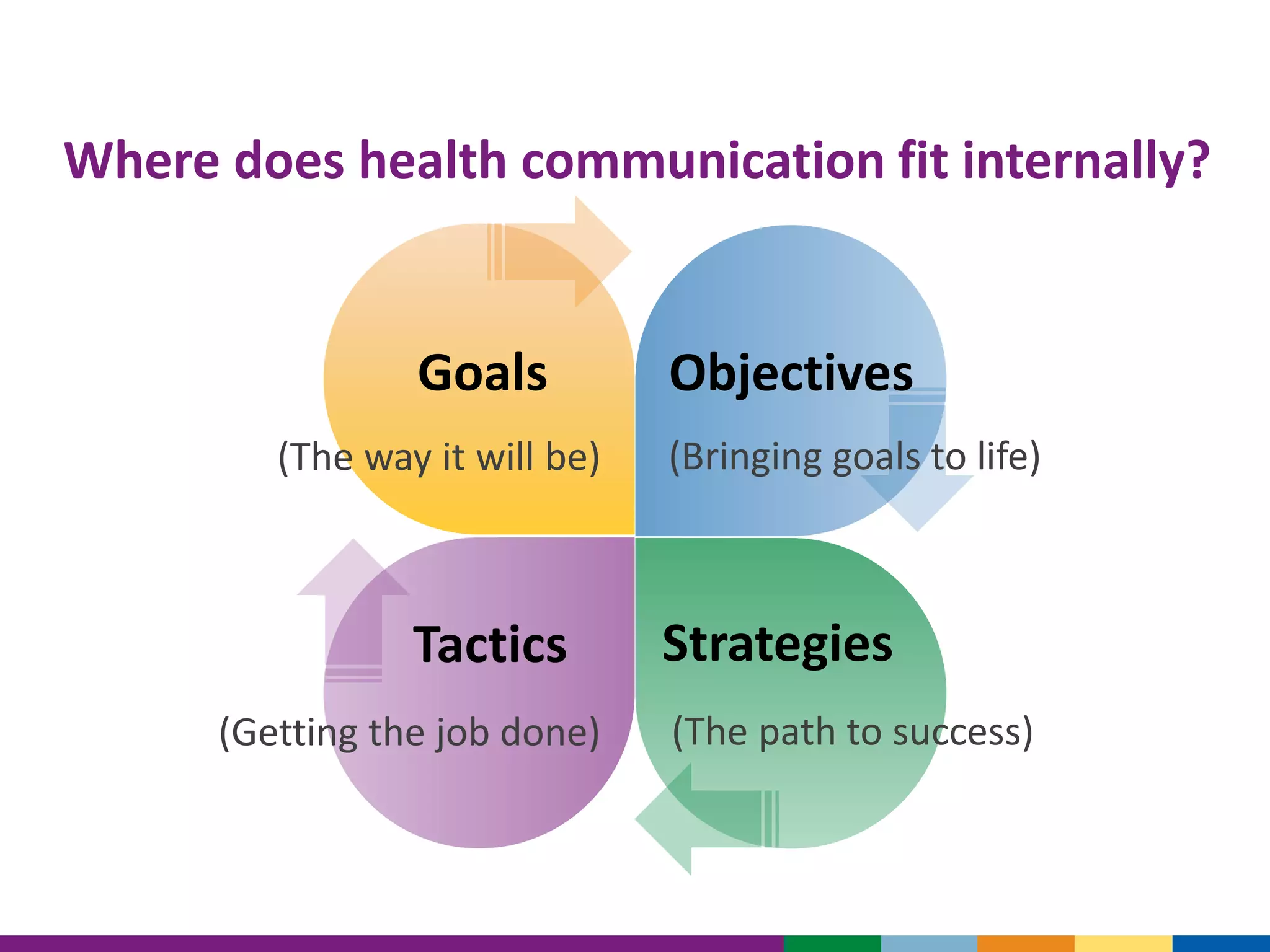
Where does health communication fit internally?
Objectives
Strategies
Goals
Tactics
(The way it will be) (Bringing goals to life)
(Getting the job done) (The path to success)
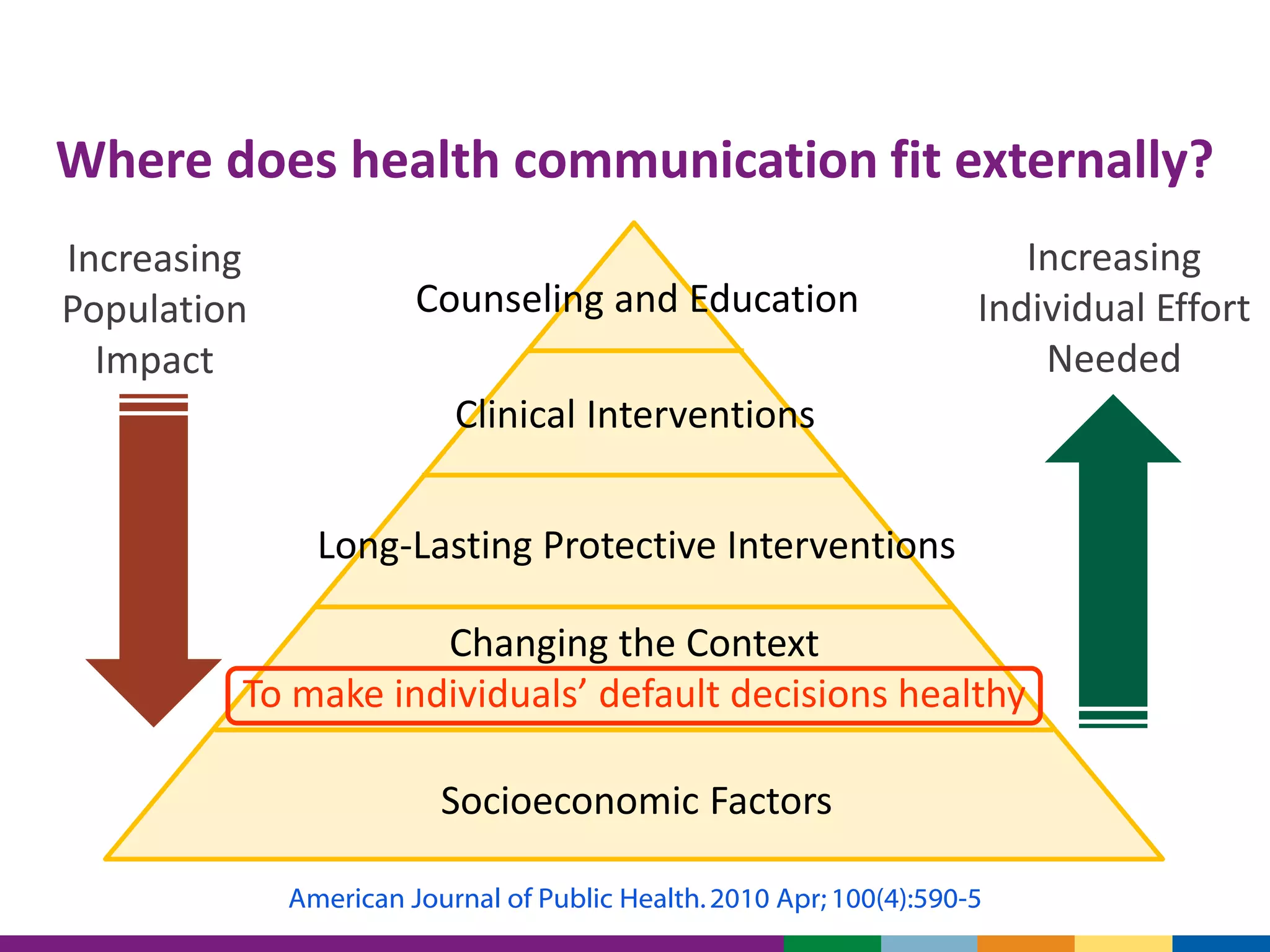
Where does health communication fit externally?
American Journal of Public Health.2010 Apr; 100(4):590-5
Counseling and Education
Clinical Interventions
Long-Lasting Protective Interventions
Changing the Context
To make individuals’ default decisions healthy
Socioeconomic Factors
Increasing
Population
Impact
Increasing
Individual Effort
Needed
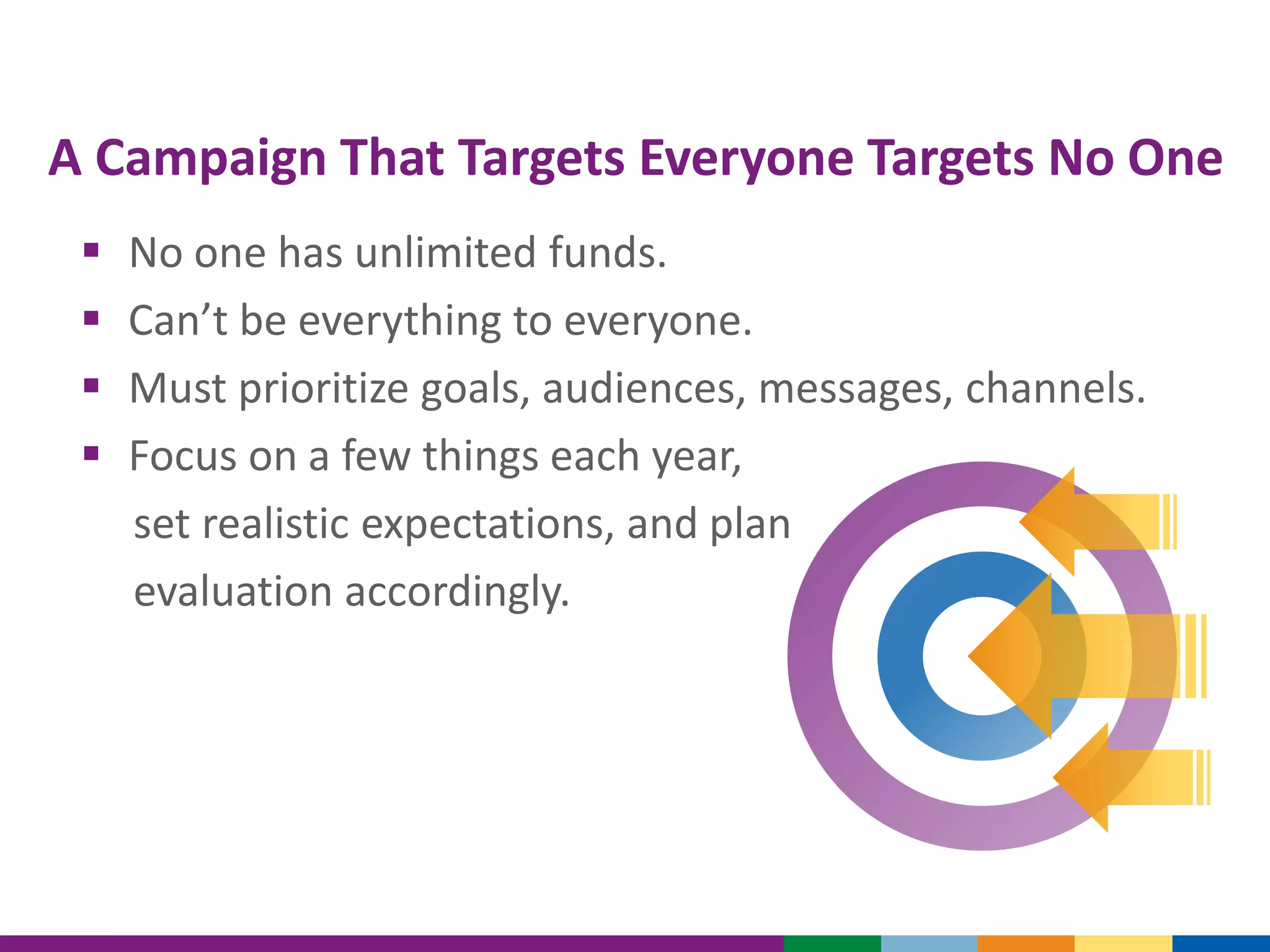
A Campaign That Targets Everyone Targets No One
 No one has unlimited funds.
 Can’t be everything to everyone.
 Must prioritize goals, audiences, messages, channels.
 Focus on a few things each year,
set realistic expectations, and plan
evaluation accordingly.
Now that we have a solid definition and
some valuable context…
Let’s get started.
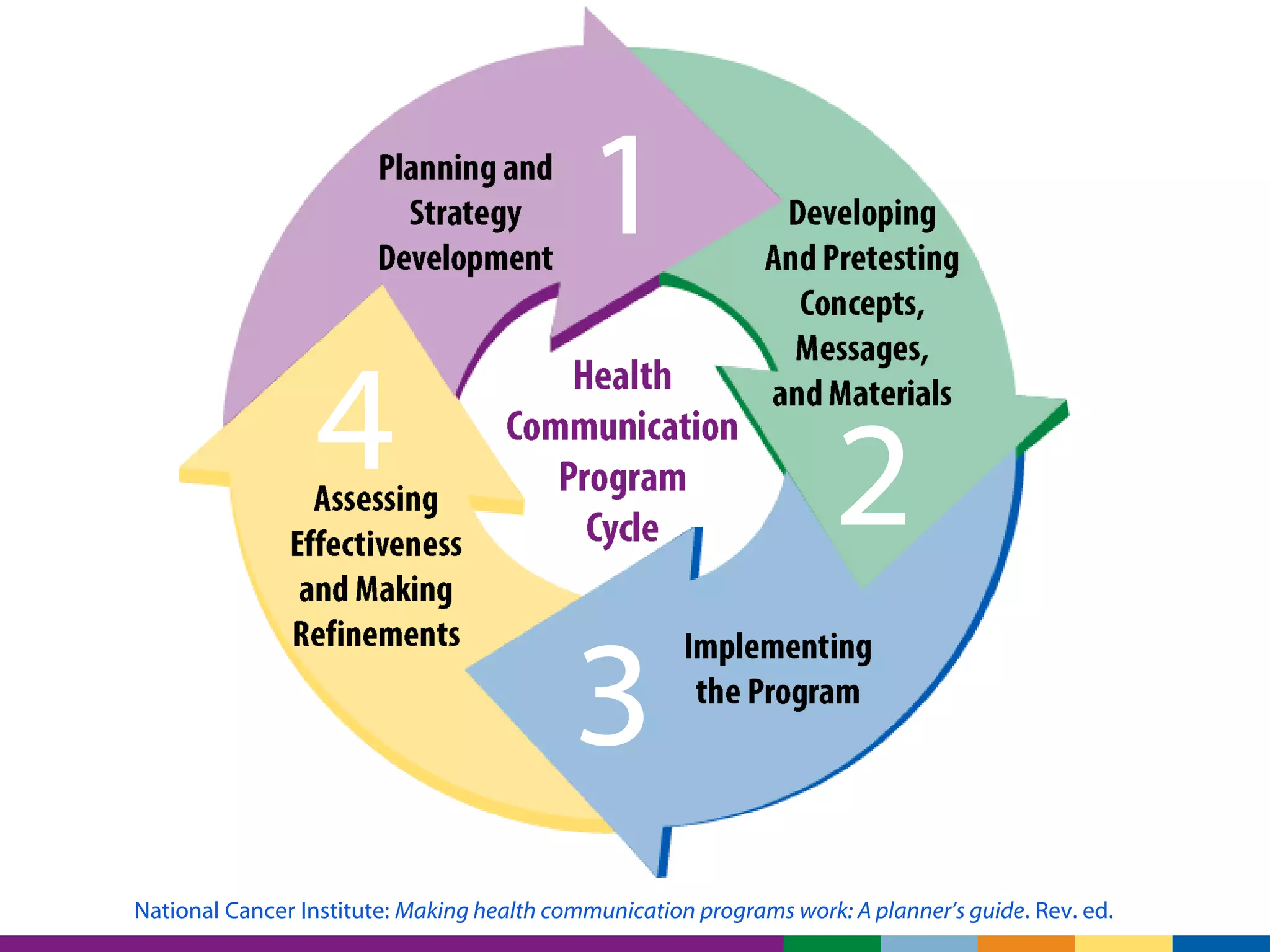
National Cancer Institute: Making health communication programs work: A planner’s guide. Rev. ed.
1
2
3
4
Planning and Strategy Development
 Review background information to define the problem:
what’s out there?
 Set communication objectives: what do you want to
accomplish?
 Identify primary (and secondary) target audiences: who
do you want to reach?
Developing and Pre-testing Concepts,
Messages and Materials
 Develop and pretest message concepts: what do you
want to say?
 Select communication channels: where do you want to
say it?
 Select, create and pretest messages and products: how
do you want to say it?
Implement the Program
 Develop a promotion and production plan: how do you
get it used?
 Implement communication strategies: get it out there.
Assess Effectiveness and Make Refinements
 Conduct process evaluation: tweak and refine.
 Conduct outcome and impact evaluation: how well did
we do?
In Summary, Communication Efforts
Work Best When They:
 Are integrated into a comprehensive program
 Are based on audience research and pretesting
 Achieve adequate message exposure
 Make strategic use of earned and
social media
 Leverage the power of good storytelling
Why focus on social media?
 It’s accessible
 It can be inexpensive
 It has the potential for large viral reach with the right
content
 It is not going away
Questions?
SOCIAL MEDIA: basics to best practices
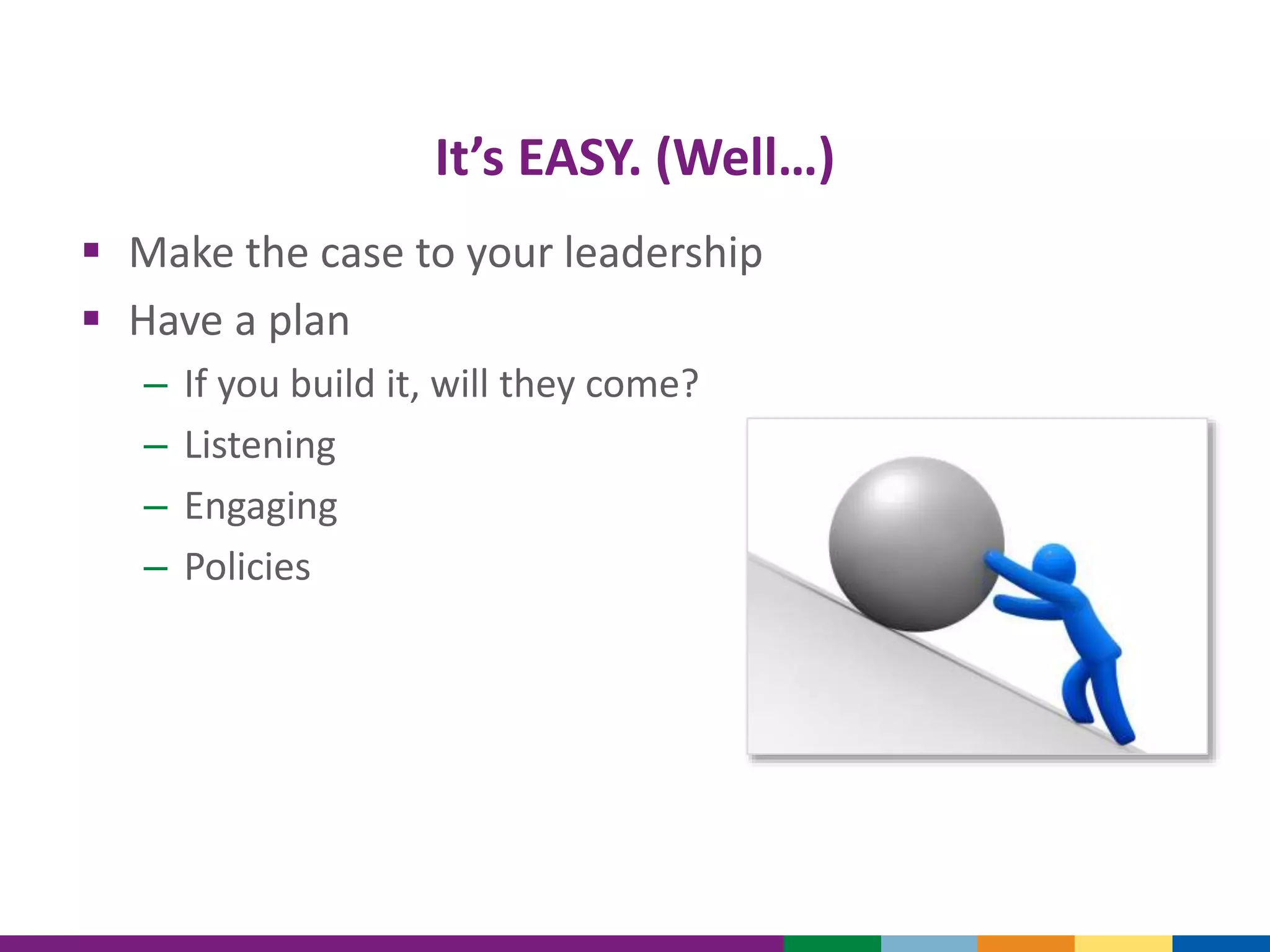
Why Social Media for the #RxProblem?
 It’s EASY. (Well…)
 It’s FREE. (Or is it?)
 You have the capacity to do it (Hmm…?)
It’s EASY. (Well…)
 Make the case to your leadership
 Have a plan
– If you build it, will they come?
– Listening
– Engaging
– Policies
Make the case: Who is using social media?
Everybody
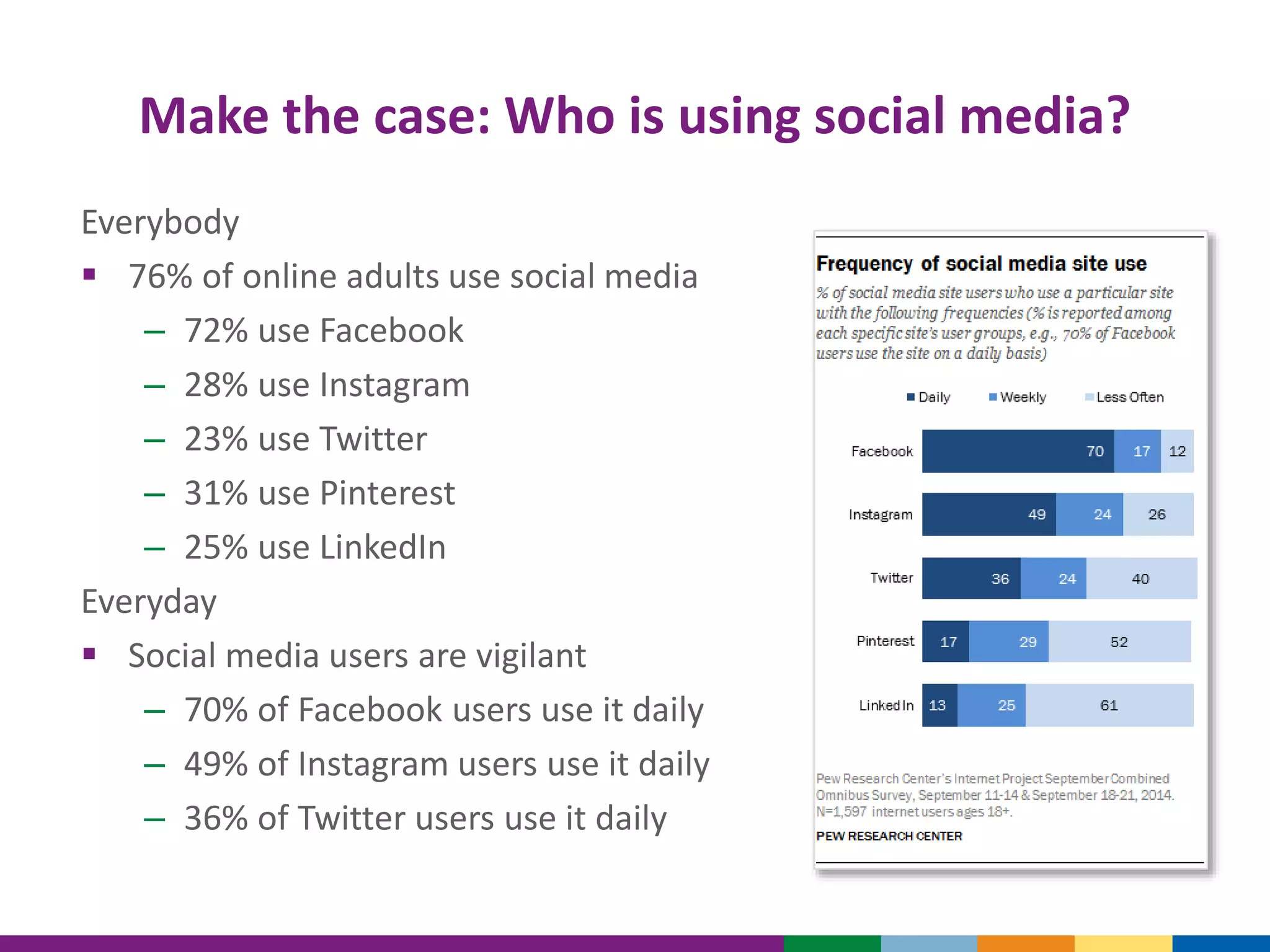
 76% of online adults use social media
– 72% use Facebook
– 28% use Instagram
– 23% use Twitter
– 31% use Pinterest
– 25% use LinkedIn
Everyday
 Social media users are vigilant
– 70% of Facebook users use it daily
– 49% of Instagram users use it daily
– 36% of Twitter users use it daily
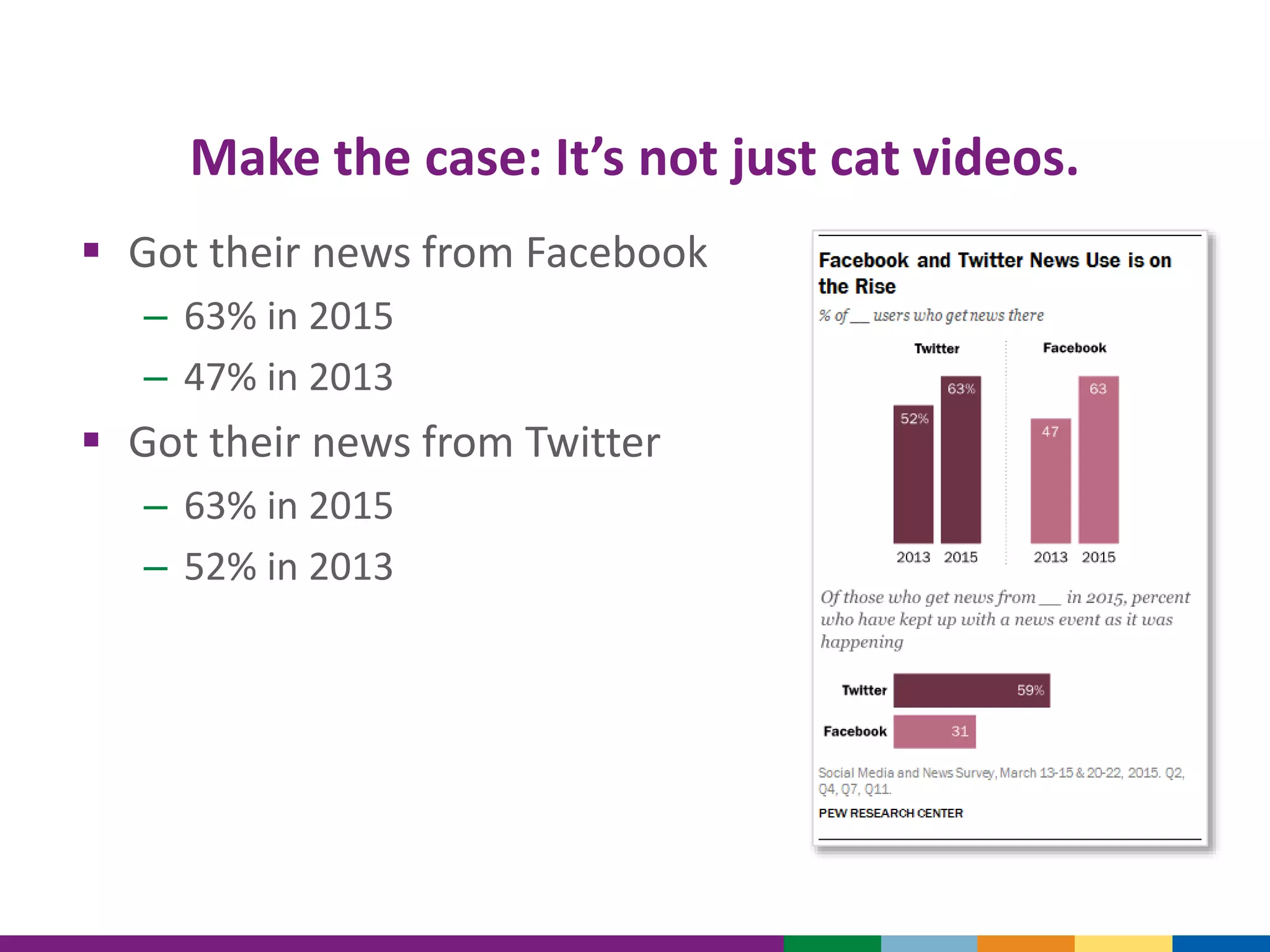
Make the case: It’s not just cat videos.
 Got their news from Facebook
– 63% in 2015
– 47% in 2013
 Got their news from Twitter
– 63% in 2015
– 52% in 2013
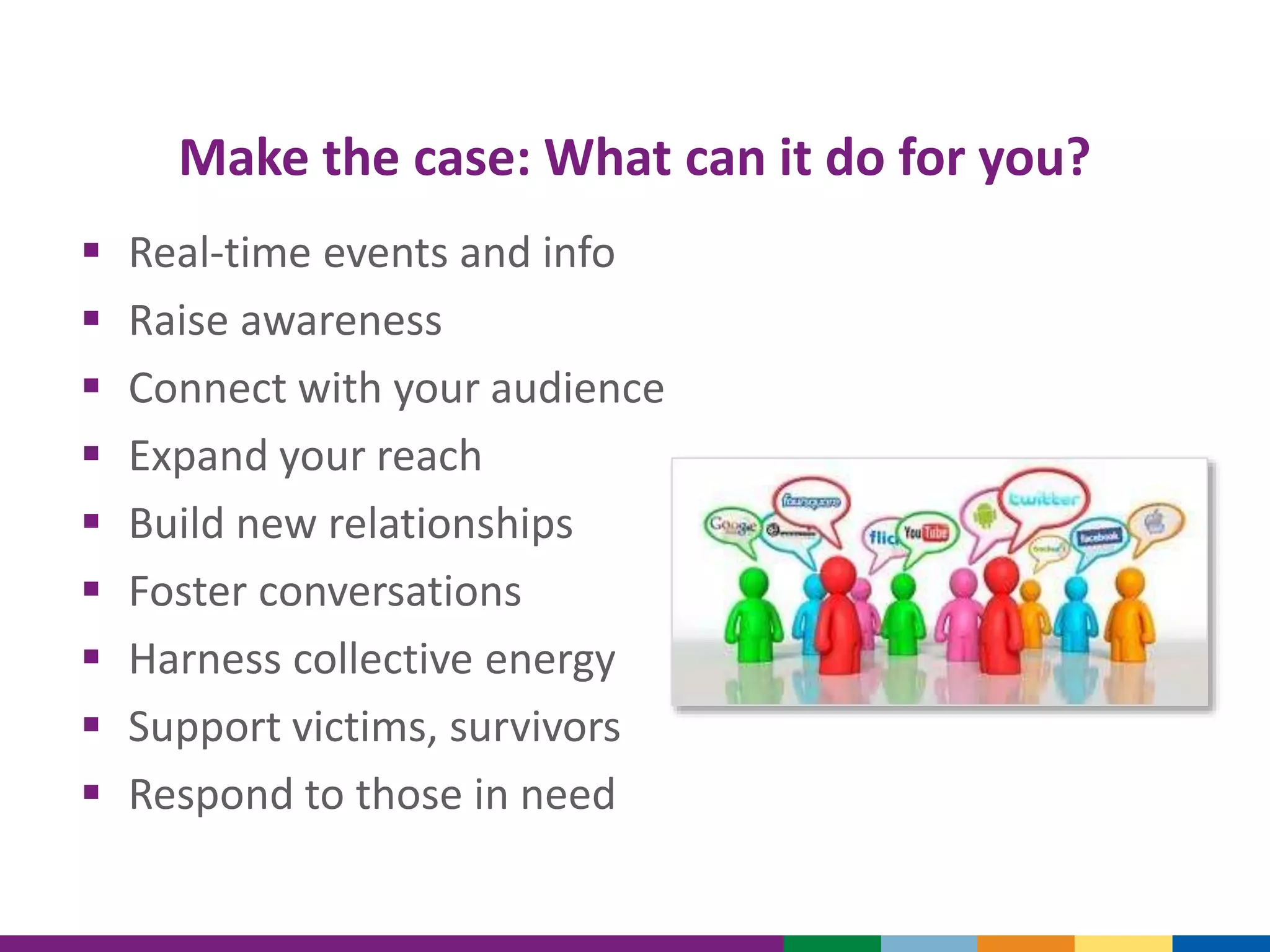
Make the case: What can it do for you?
 Real-time events and info
 Raise awareness
 Connect with your audience
 Expand your reach
 Build new relationships
 Foster conversations
 Harness collective energy
 Support victims, survivors
 Respond to those in need
Have a plan: What do you want to accomplish?
 First, which kind of social media
account is right for you?
– Who is your audience?
– What sort of information do they
want?
– What is their preferred social media
channel?
– What social media channel(s) can you
reasonably launch and maintain?
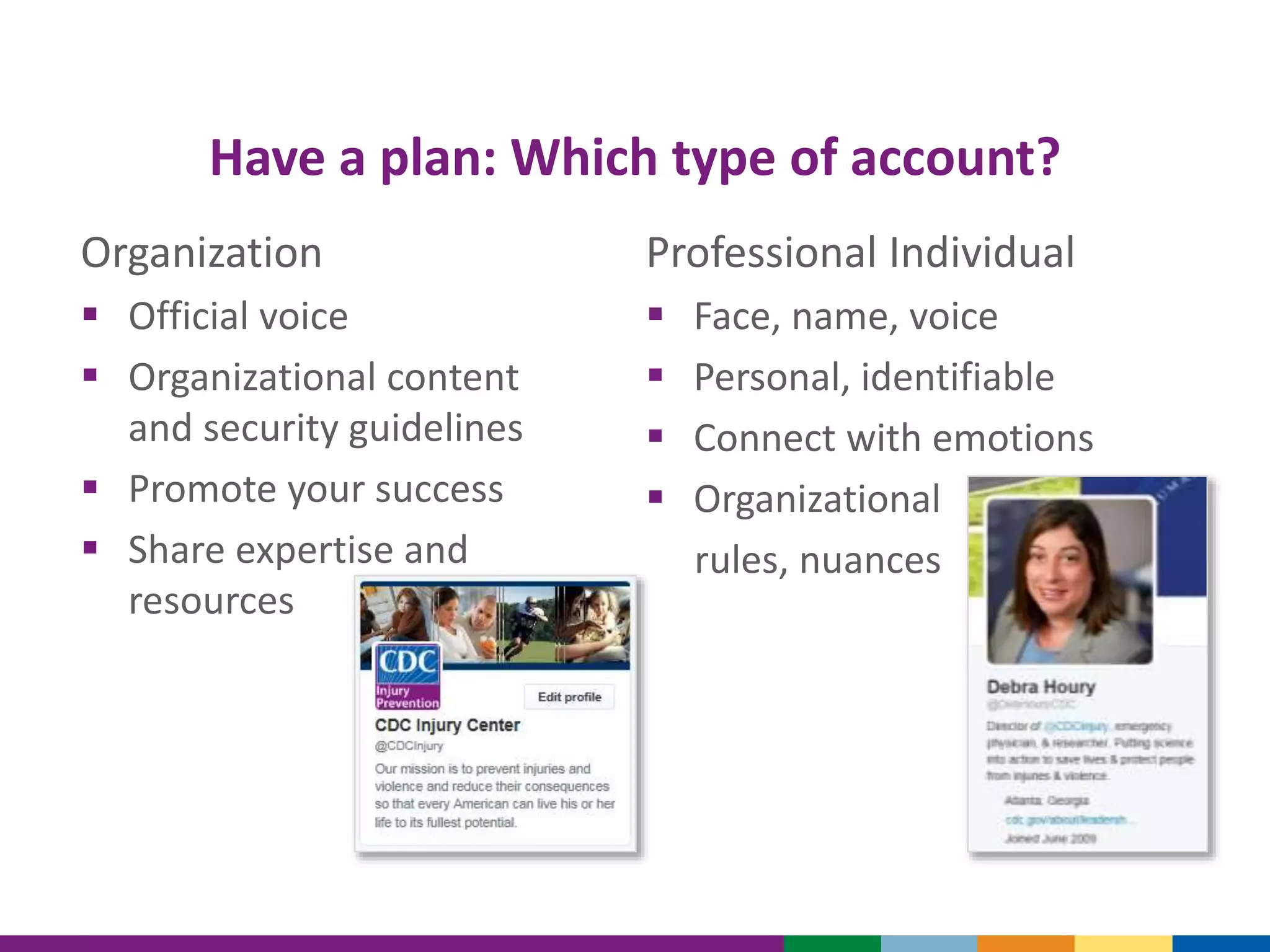
Have a plan: Which type of account?
Organization
 Official voice
 Organizational content
and security guidelines
 Promote your success
 Share expertise and
resources
Professional Individual
 Face, name, voice
 Personal, identifiable
 Connect with emotions
 Organizational
rules, nuances
Building Followers
 Let your partners know where you will soon be on
social media
 Pair the launch of your social media channel with a
major campaign, meeting, conference
 Use other forms of communication to amplify your new
channel
– Email signature blocks
– Presentations
– Email / newsletters
Listen, Before You Speak
 Find out who else uses your chosen
social media channel
 Like and/or follow them
 Who is already using social media
for the #RxProblem?
Listen, Before You Speak
 Watch conversations about your organization/topics
– Note the questions, opinions, misinformation for content
opportunities
 Subscribe to Lists from trusted
partners
 Search relevant topics through
keywords and hashtags
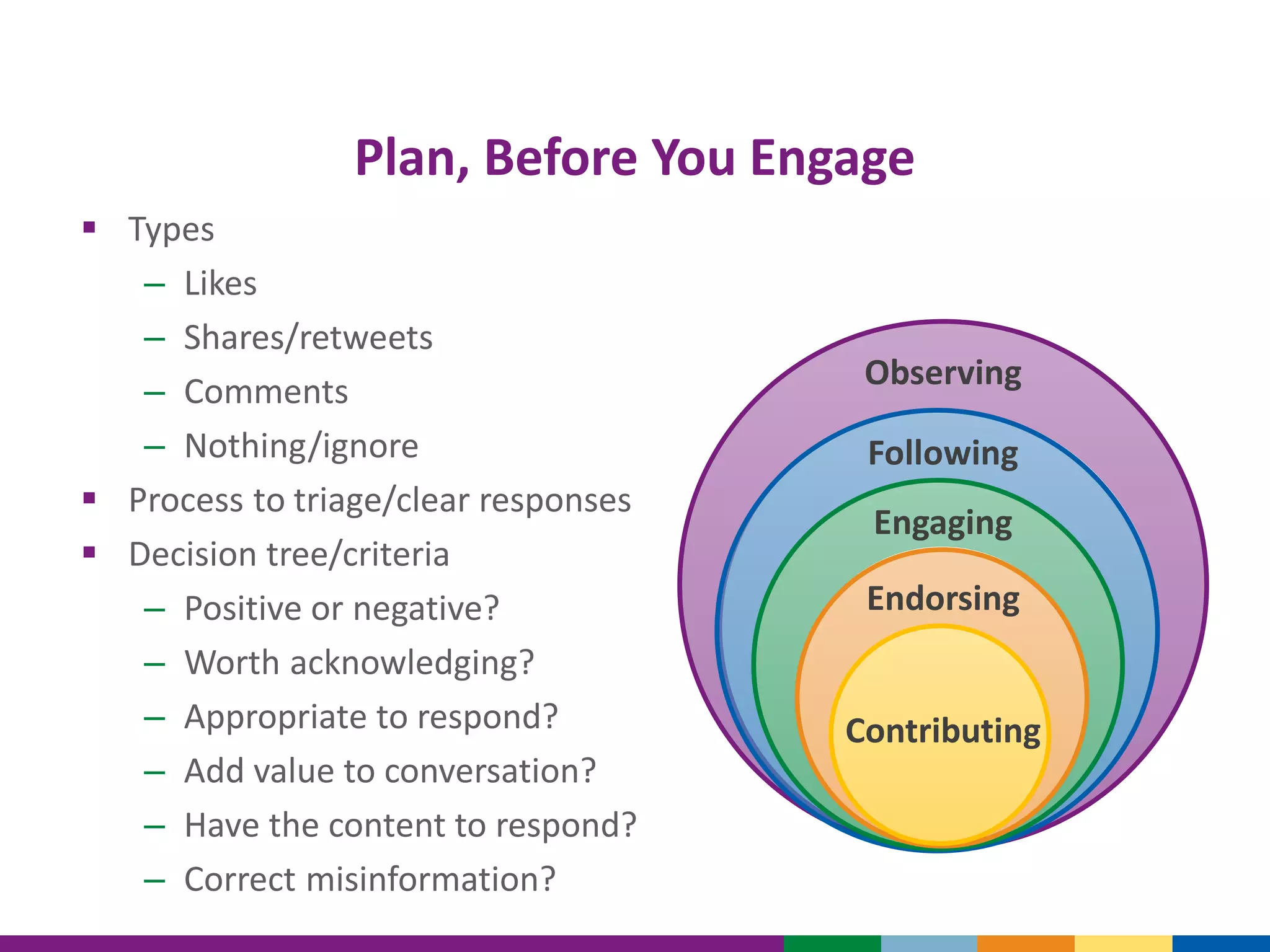
Plan, Before You Engage
 Types
– Likes
– Shares/retweets
– Comments
– Nothing/ignore
 Process to triage/clear responses
 Decision tree/criteria
– Positive or negative?
– Worth acknowledging?
– Appropriate to respond?
– Add value to conversation?
– Have the content to respond?
– Correct misinformation?
Observing
Following
Engaging
Endorsing
Contributing
Policies Are Part of Your Plan
 Disclaimers
– External comments do not represent you
– Shares do not equal endorsements
 Subject to FOIA notices
 Maintain respectful environment by removing
– Hate speech
– Profanity, obscenity or vulgarity
– Defamation
– Name calling and/or personal attacks
– Comments whose main purpose is to sell a product
– Comments that infringe on copyrights
It’s FREE. (Or is it?)
 Content development
 Monitoring tools
 Advertising
 Staff resources
Content
 It has to be compelling to build a following
 People share when it makes them look:
– Funny
– First-to-know
– Smart…very smart
Content
 If people are looking at Facebook or Twitter every day,
you need content every day.
 You need more content than you think.
 More than that even.
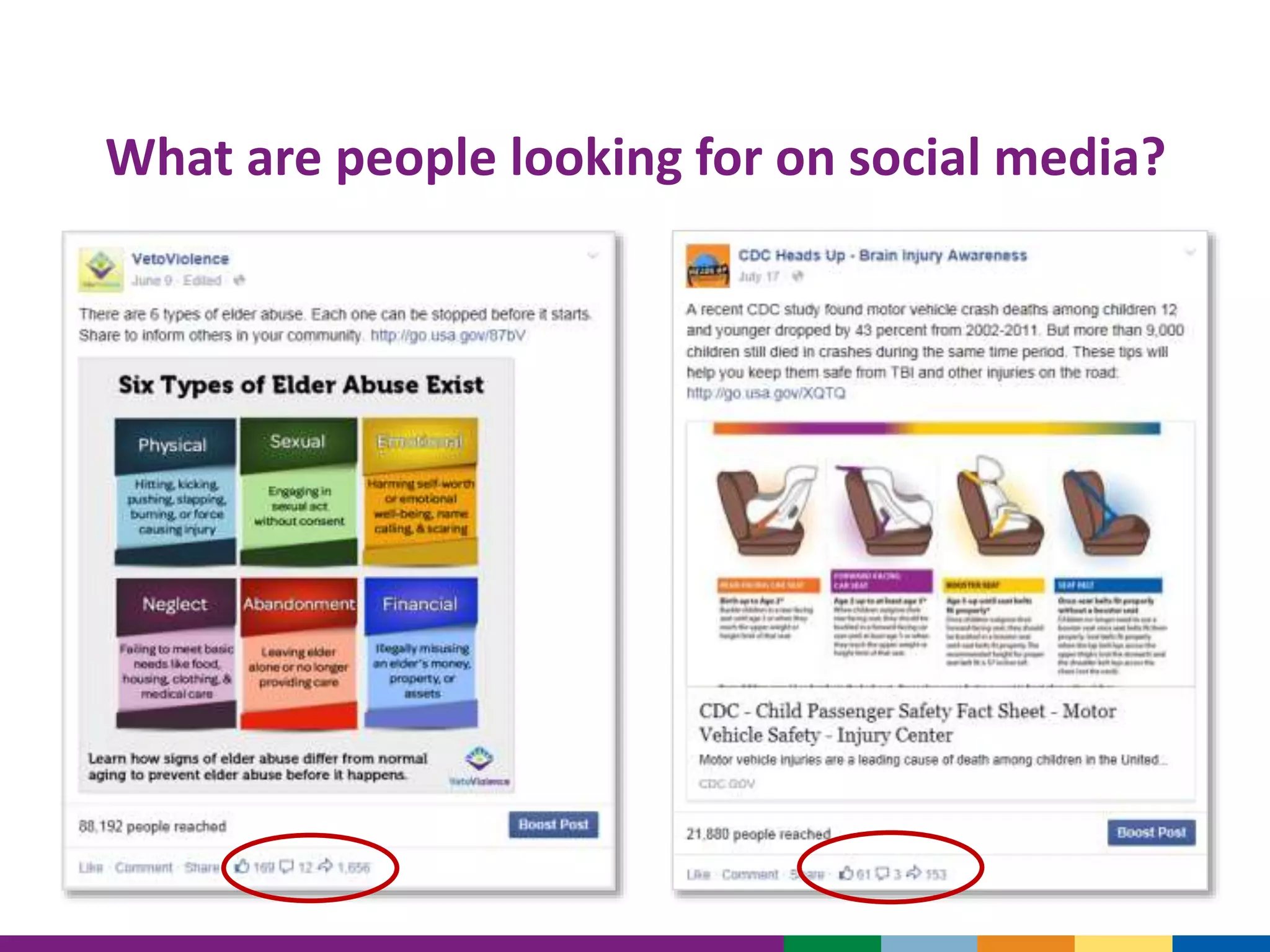
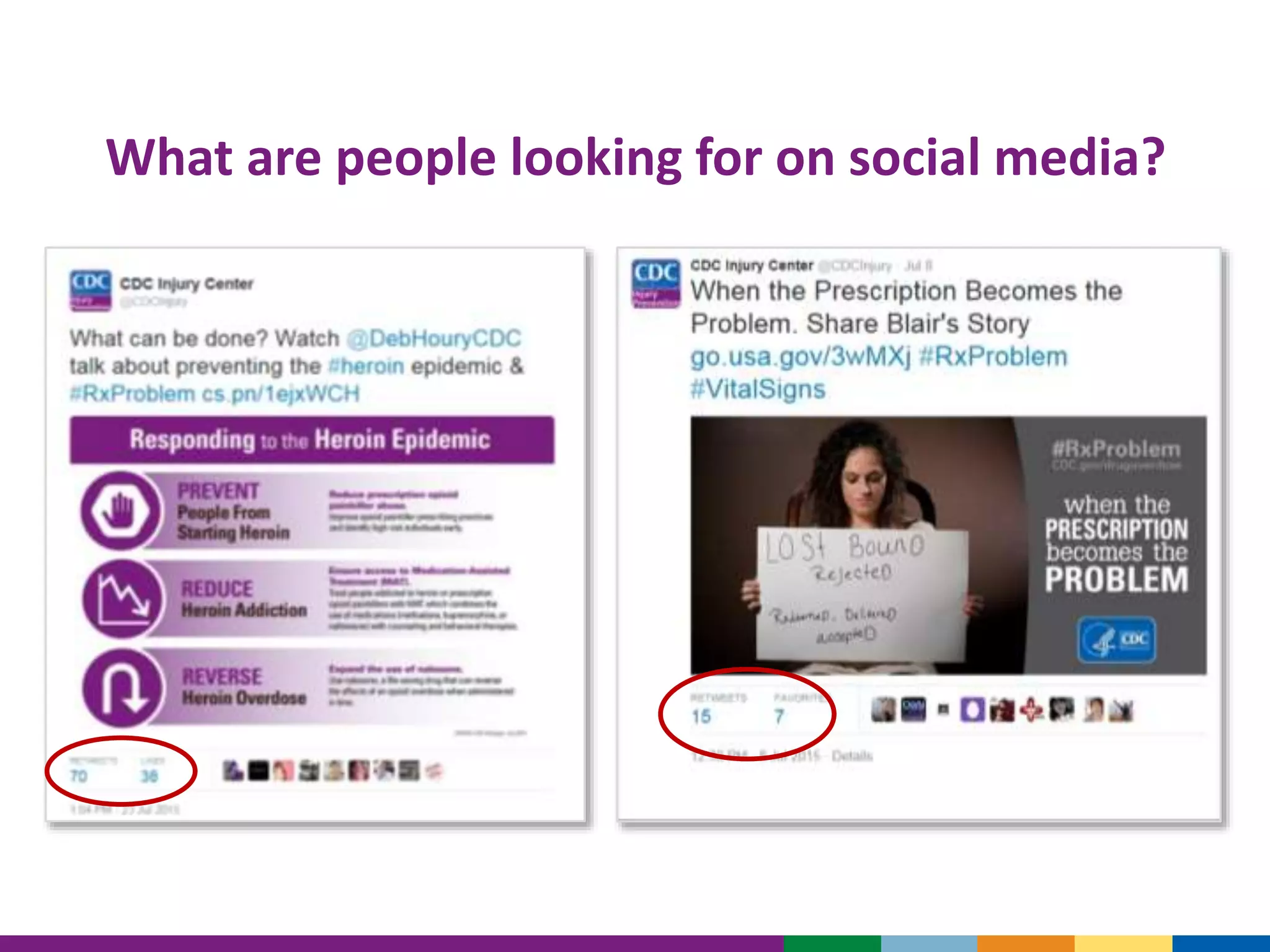
What are people looking for on social media?
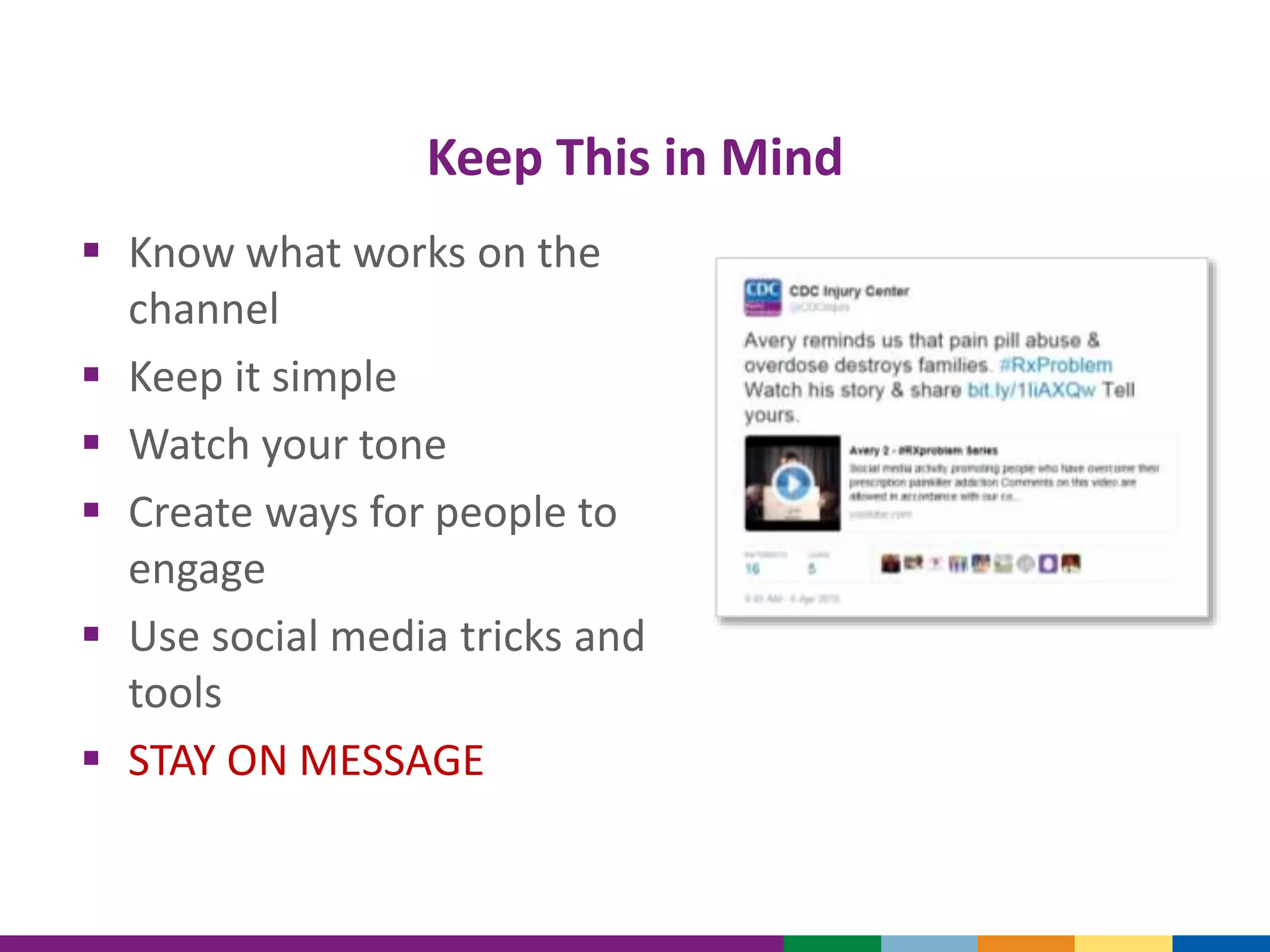
Keep This in Mind
 Know what works on the
channel
 Keep it simple
 Watch your tone
 Create ways for people to
engage
 Use social media tricks and
tools
 STAY ON MESSAGE
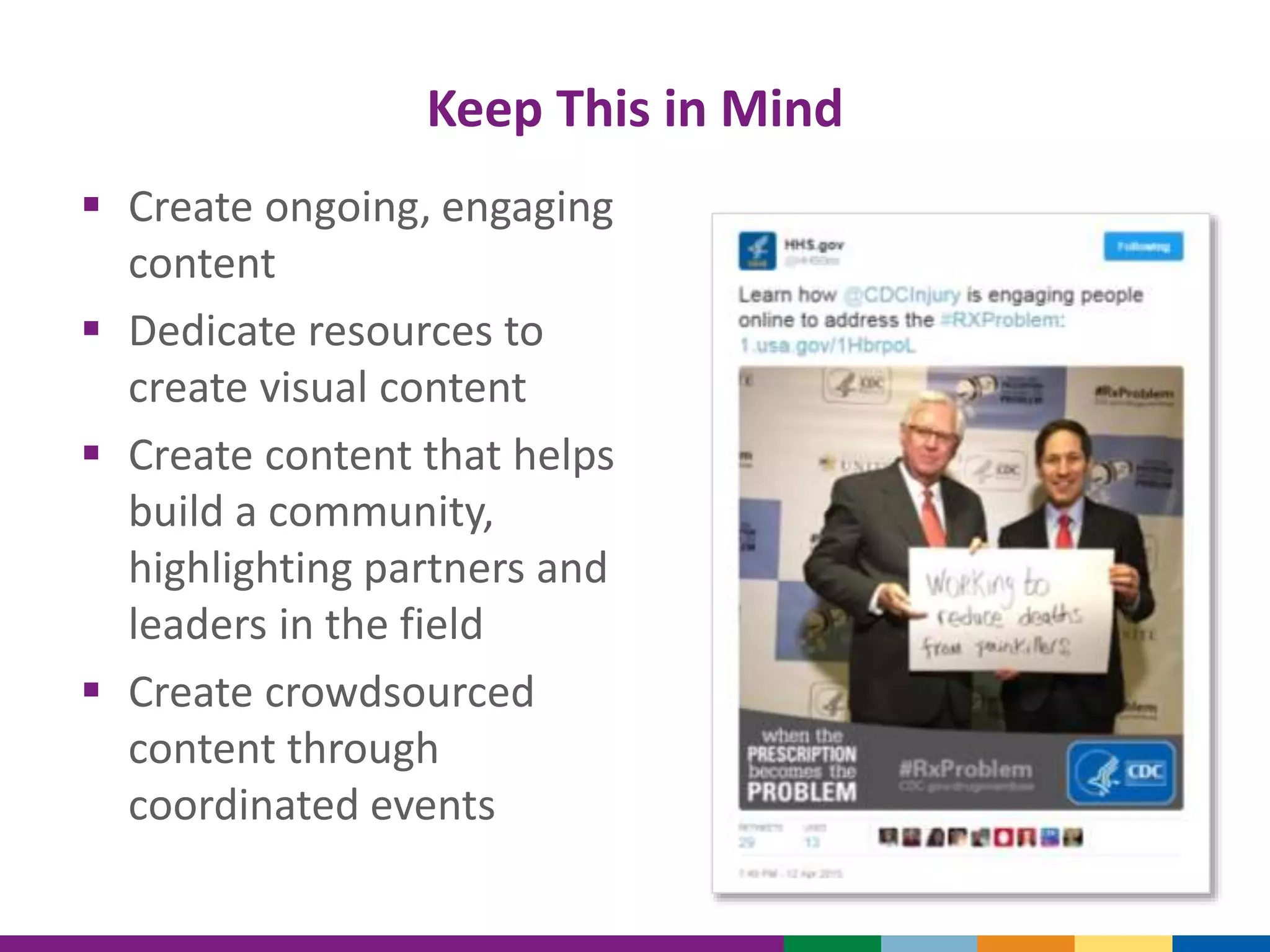
Keep This in Mind
 Create ongoing, engaging
content
 Dedicate resources to
create visual content
 Create content that helps
build a community,
highlighting partners and
leaders in the field
 Create crowdsourced
content through
coordinated events
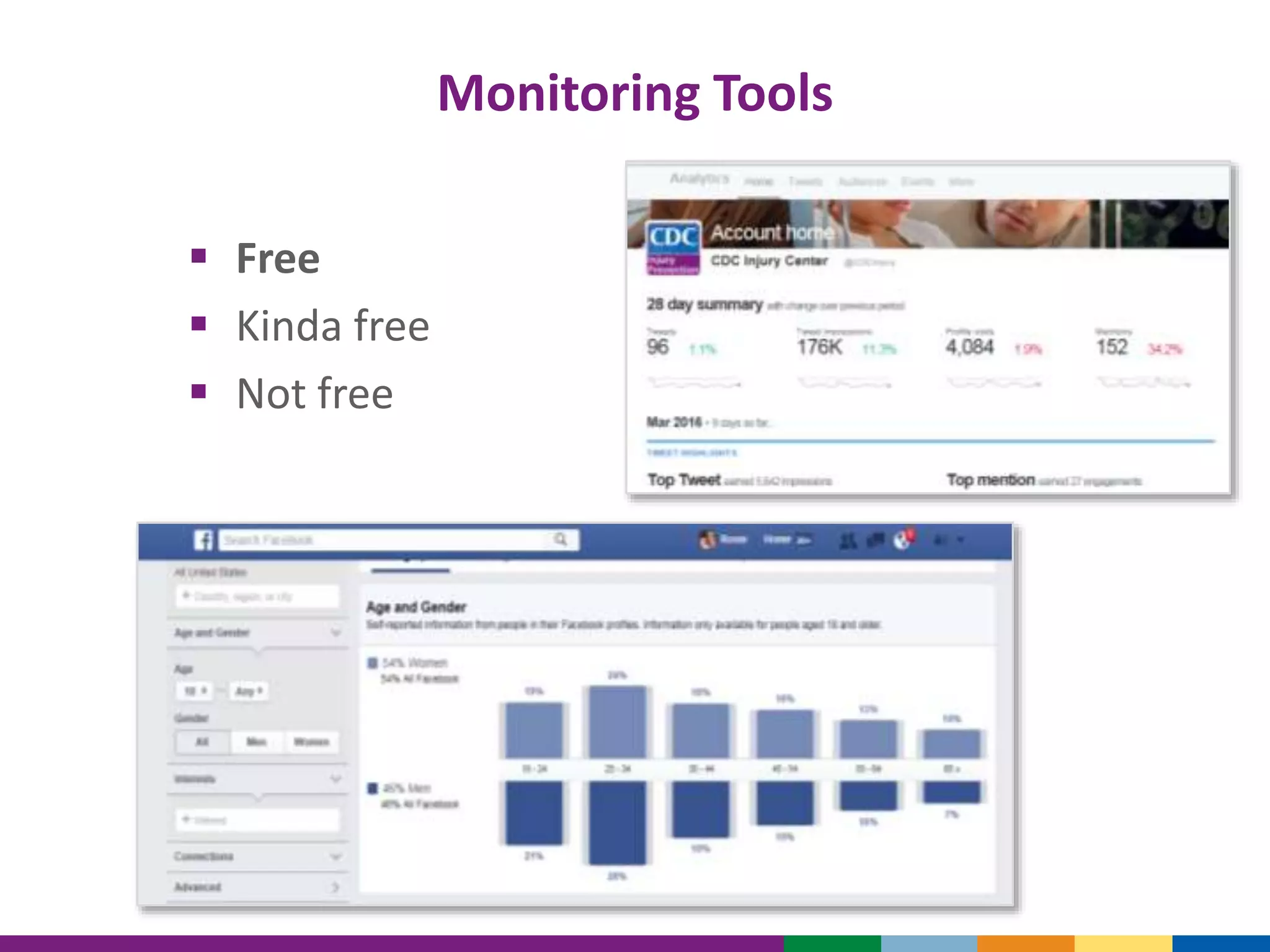
Monitoring Tools
 Free
 Kinda free
 Not free
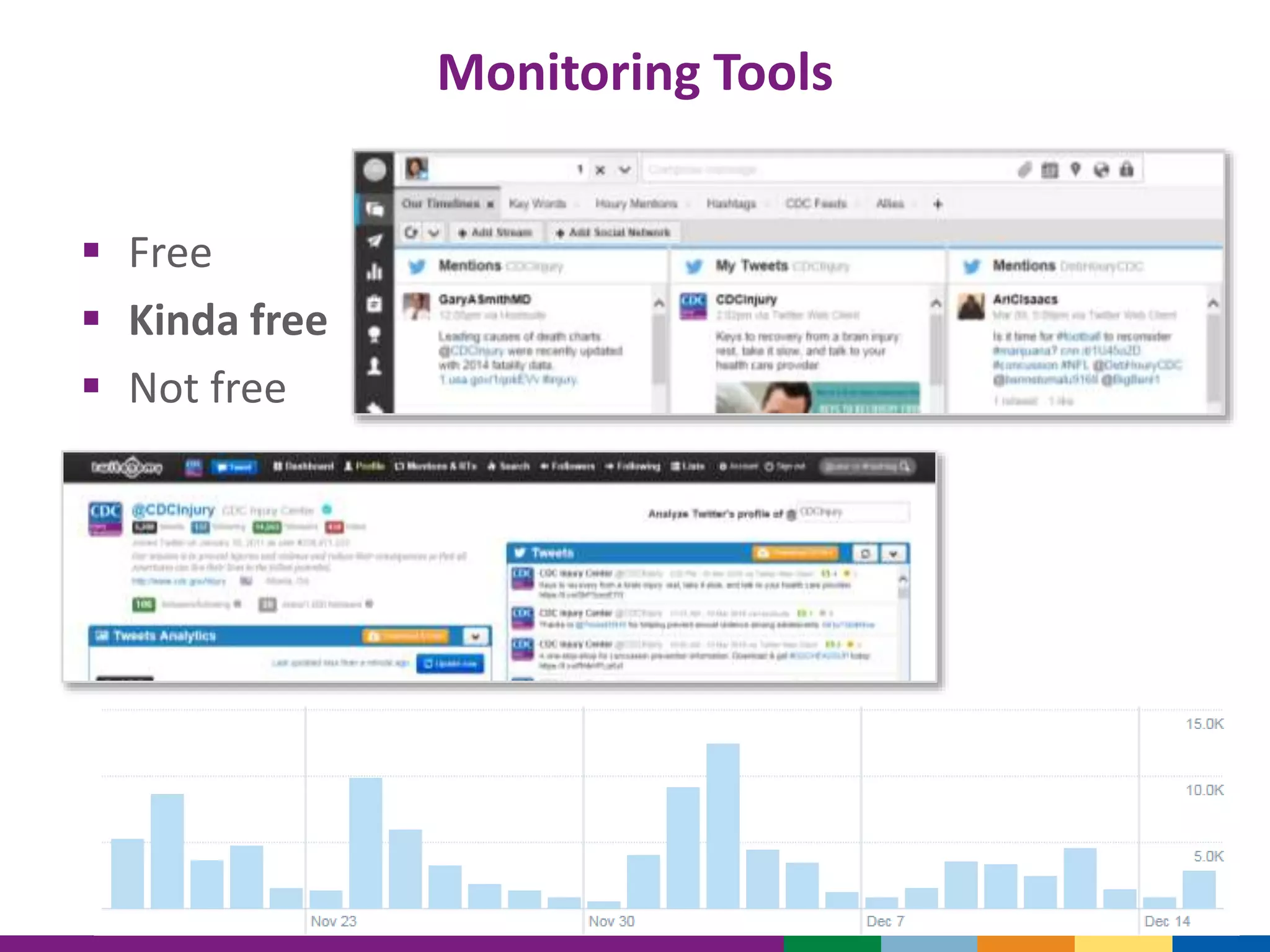
Monitoring Tools
 Free
 Kinda free
 Not free
Monitoring Tools
 Free
 Kinda free
 Not free
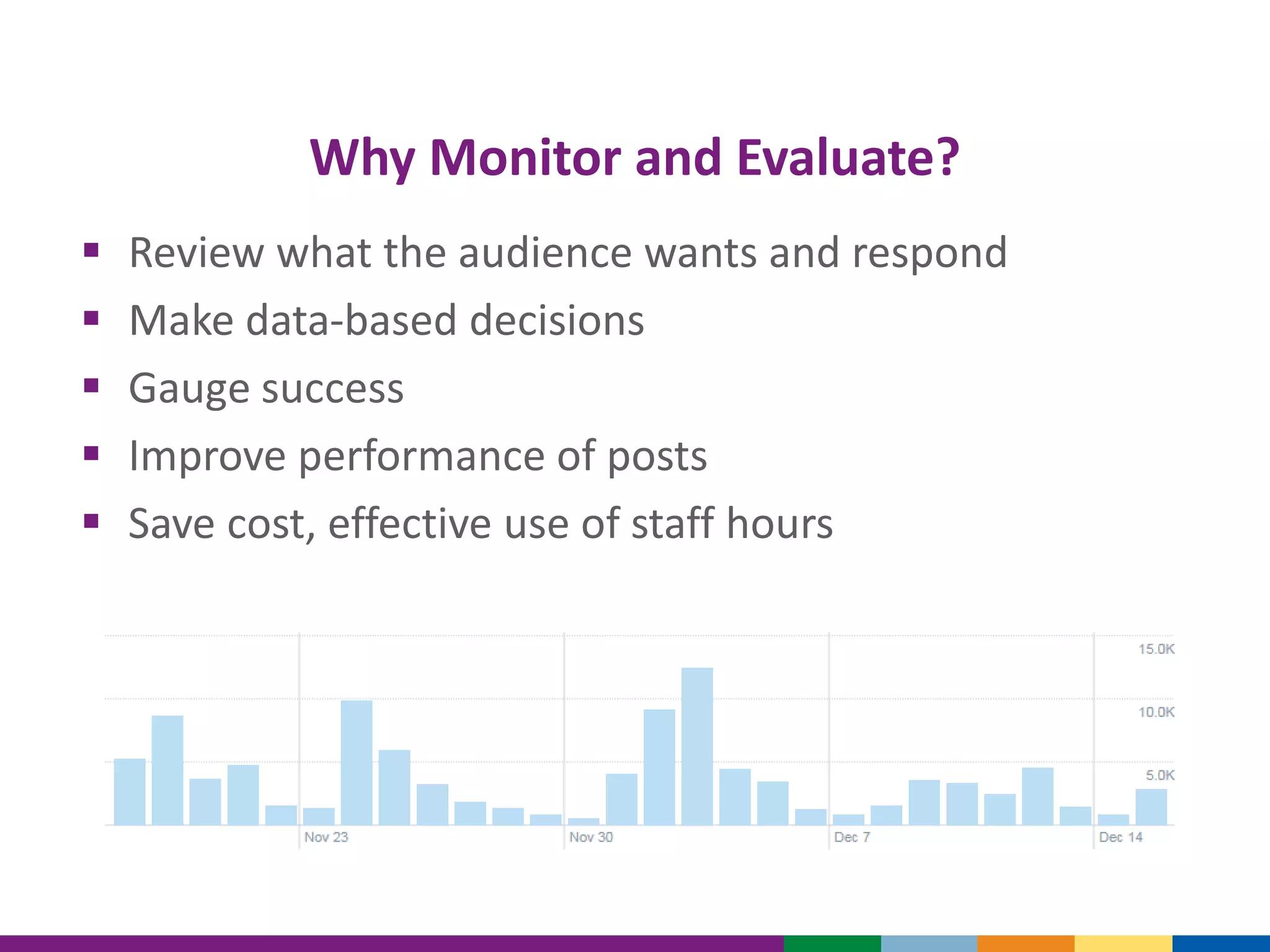
Why Monitor and Evaluate?
 Review what the audience wants and respond
 Make data-based decisions
 Gauge success
 Improve performance of posts
 Save cost, effective use of staff hours
What are we really measuring?
 Exposure: Visits, views, followers, fans, subscribers,
brand mentions
 Engagement: Clicks, retweets, shares, replies,
messages, posts, comments
 Actions: Downloads, attendees, success stories, leads
 Influence: Share of voice, sentiment, other influencers
Monitor to Know your Audience
 Who are your followers and what do they want?
 What brings in your audiences?
 How much has your audience grown?
 How do they respond to your content?
You have the capacity.
 Get started in social media to your comfort level
 Participate in your organization’s social media process
 Follow your partners/professionals in the field
 Follow/use professional events’ hashtags
 Learn how you can benefit from tying your social media
presence your prevention
 Assess your social media persona before reaching out
to a professional audience
#RXPROBLEM: getting started
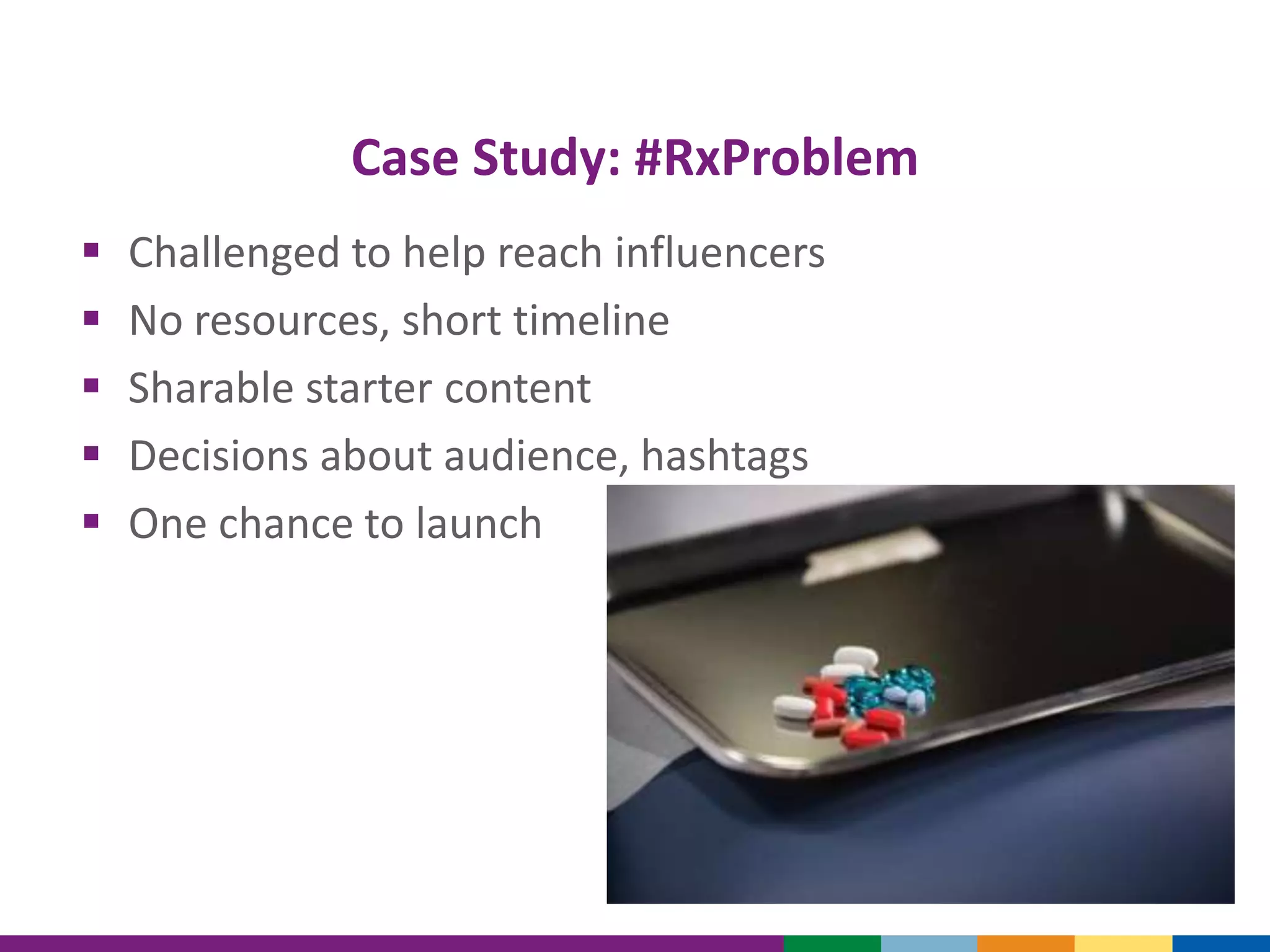
Case Study: #RxProblem
 Challenged to help reach influencers
 No resources, short timeline
 Sharable starter content
 Decisions about audience, hashtags
 One chance to launch
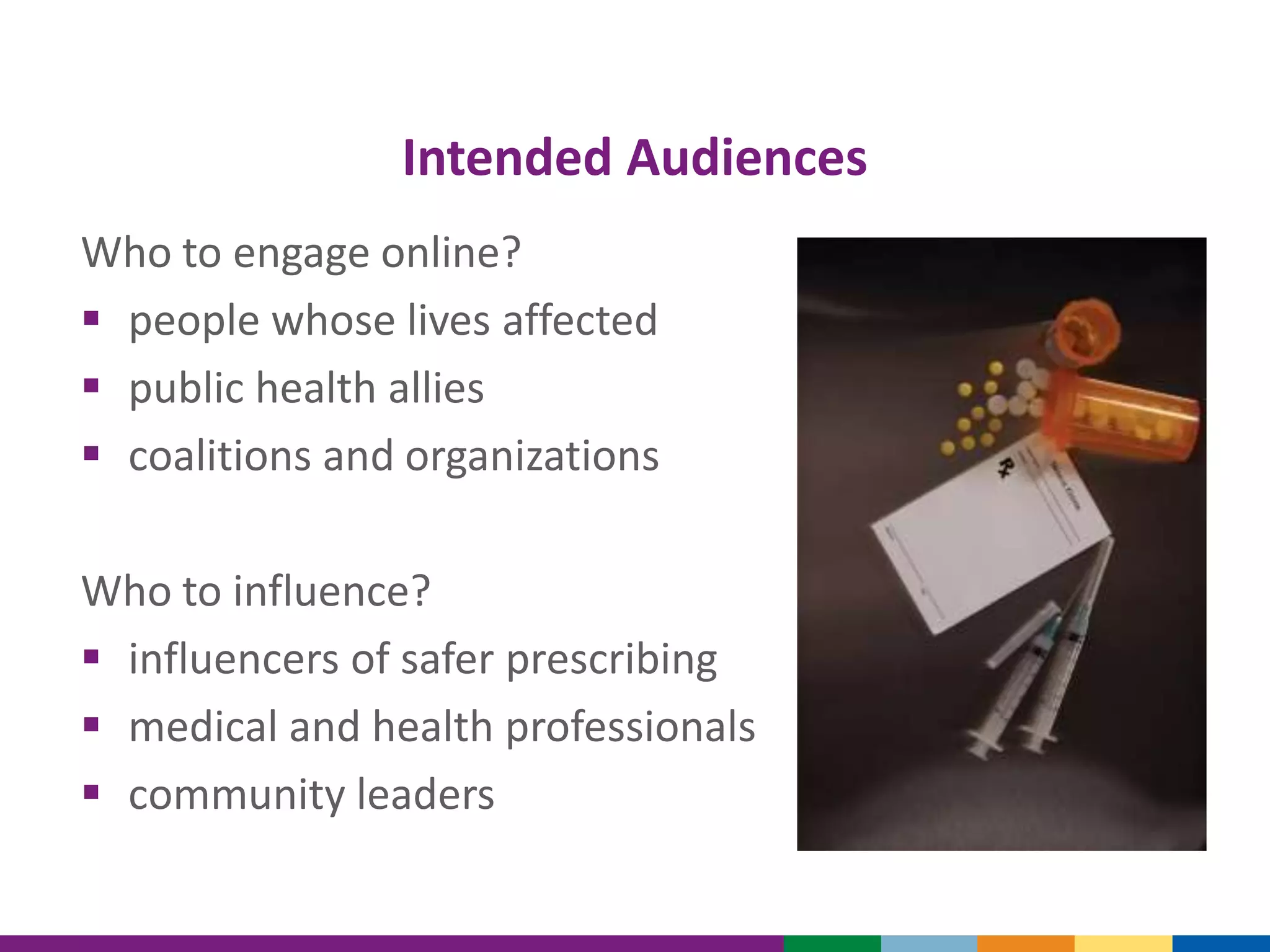
Intended Audiences
Who to engage online?
 people whose lives affected
 public health allies
 coalitions and organizations
Who to influence?
 influencers of safer prescribing
 medical and health professionals
 community leaders
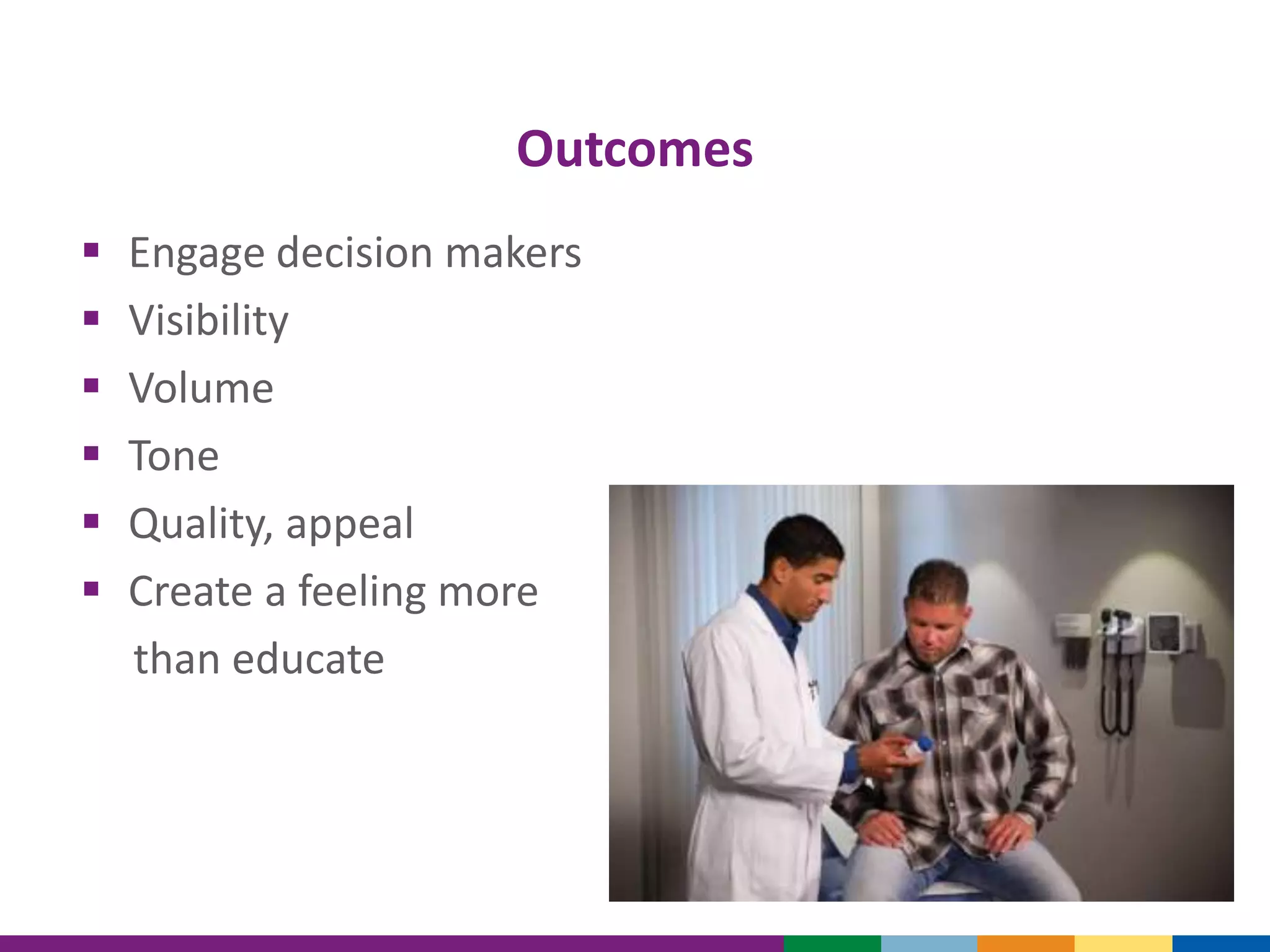
Outcomes
 Engage decision makers
 Visibility
 Volume
 Tone
 Quality, appeal
 Create a feeling more
than educate
Questions?
SMALL GROUP EXERCISE
THANK YOU
#RxProblem
@CDCInjury
@DebHouryCDC
CDC.gov/DrugOverdose
CDC’s Injury Center Office of Communication
The findings and conclusions in this presentation are those of the authors and do not necessarily represent the views of the U.S. Department of
Health and Human Services, or the U.S. Centers for Disease Control and Prevention. Use of trade names and commercial sources is for
identification only and does not constitute endorsement by the U.S. Department of Health and Human Services, or the U.S. Centers for Disease
Control and Prevention.
Using Digital and Social Media
to Influence the #RxProblem
Presenters:
• Rosemary Bretthauer-Mueller, Digital and Social Marketing
Lead, National Center for Injury Prevention and Control, CDC
• Erin Connelly, MPA, Associate Director of Communication,
National Center for Injury Prevention and Control, CDC
• Cassie Strawn, MA, Health Communication Specialist, National
Center for Injury Prevention and Control, CDC
A Centers for Disease Control and Prevention Training:

Rx16 workshop 200_group_ppt

  • 1.
    Using Digital andSocial Media to Influence the #RxProblem Presenters: • Rosemary Bretthauer-Mueller, Digital and Social Marketing Lead, National Center for Injury Prevention and Control, CDC • Erin Connelly, MPA, Associate Director of Communication, National Center for Injury Prevention and Control, CDC • Cassie Strawn, MA, Health Communication Specialist, National Center for Injury Prevention and Control, CDC A Centers for Disease Control and Prevention Training:
  • 2.
    Disclosures Erin Connelly, MPAff;Cassie Strawn, MA; and Rosie Bretthauer-Mueller have disclosed no relevant, real or apparent personal or professional financial relationships with proprietary entities that produce health care goods and services
  • 3.
    Disclosures • All planners/managershereby state that they or their spouse/life partner do not have any financial relationships or relationships to products or devices with any commercial interest related to the content of this activity of any amount during the past 12 months. • The following planners/managers have the following to disclose: – John J. Dreyzehner, MD, MPH, FACOEM – Ownership interest: Starfish Health (spouse) – Robert DuPont – Employment: Bensinger, DuPont & Associates-Prescription Drug Research Center
  • 4.
    Learning Objectives 1. Explainthe value and use of general communication principles, planning and tactics. 2. Demonstrate the basic processes of establishing, maintaining and using social media channels. 3. Identify social media best practices, with potential opportunities to expand knowledge and refine use of channels. 4. Describe the application of social media to help address public health issues. 5. Explain how to prepare to use social media to impact the #RxProblem.
  • 5.
    Erin Connelly RosieBretthauer-Mueller Cassie Strawn Introductions
  • 6.
    Agenda 2:00 pm: Surveys;Introductions; Opioid Overdose Epidemic Overview; Health Communication Basics; Discussion & Questions 2:50 pm: Break 3:00 pm: Survey results; Social Media: Basics to Best Practices; Case Study: #RxProblem; Discussion & Questions 3:50 pm: Break 4:00 pm: Small group exercise; Discussion & Questions 4:50 pm: Wrap up
  • 7.
  • 8.
    Nearly a halfmillion people have died from drug overdoses in the United States from 2000 to 2014. Americans die every day from an opioid overdose— including prescription opioids and heroin.78 249 million prescriptions were written in 2013—enough for every adult American to have a bottle of pills.
  • 10.
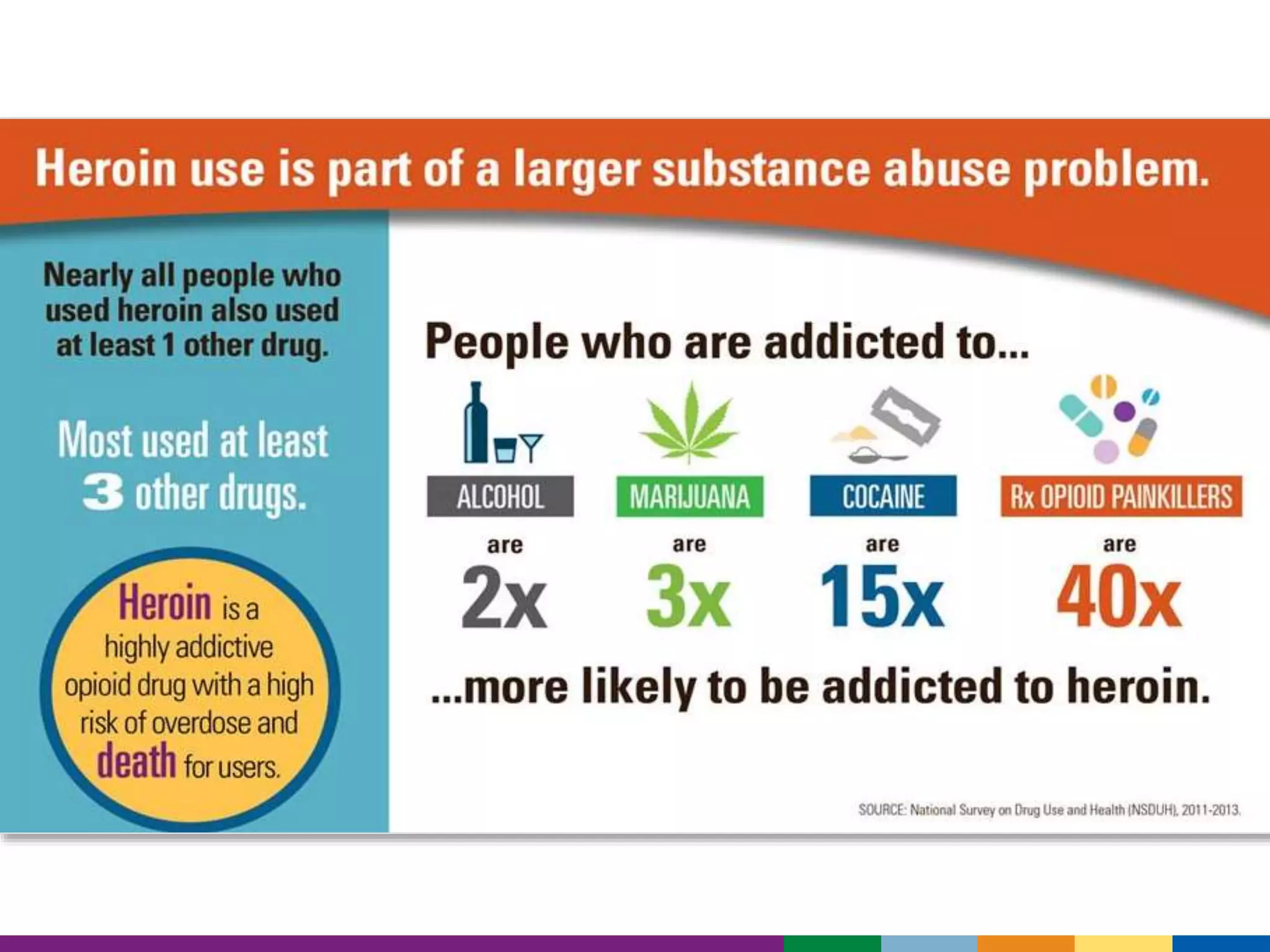
    Opioid Abuse RelatedHealth Issues  Resurgence of infections like Hepatitis C and HIV among persons who inject drugs  Increased sexual risk behavior in youth who misuse and abuse RX drugs
  • 11.
    Reducing Viral HepatitisCases Associated with Drug-Use Behaviors  To ensure that persons who inject drugs have access to viral hepatitis prevention, care and treatment services, a comprehensive approach is needed, including: – Regular HBV and HCV testing – Rapid links to care and treatment – Access to substance abuse treatment, risk reduction counseling and sterile injection equipment 111 3 79 106 185 HIV-, HCV- HIV+, HCV- HIV+, HCV+ HIV-, HCV+ HIV HCV Outbreak, Scott County,Indiana,2014-2015
  • 12.
    Non-medical use ofprescription drugs among adolescents  Preventing drug use among adolescents is a priority area for the Division of Adolescent and School Health (DASH) at CDC. – Substance abuse has been associated with behaviors that increase the risk for HIV, sexually transmitted infections (STIs) and pregnancy.  In 2011, DASH added a question to the National Youth Risk Behavior Survey (YRBS) to determine prevalence of non- medical use of prescription drugs among our nation’s high school students.  Data from the 2013 YRBS indicate that about 1 out of 6 high school students have used prescription drugs without a doctor’s prescription.
  • 13.
    Public health, lawenforcement & communities working together cut crash deaths by more than half... We can do the same for overdoses 0 5 10 15 20 25 Deathsper100,000population Motor Vehicle Traffic Drug Poisoning (Overdose)
  • 14.
    CDC’s Science andSolutions  Protect the public by tracking trends in the epidemic  Help states scale up prevention efforts that work  Improve patient safety by providing doctors with data and guidance for evidence-based decision-making
  • 15.
  • 16.
    Using Communication toRaise Awareness
  • 17.
    And to PromoteSolutions www.cdc.gov/drugoverdose
  • 18.
  • 19.
    Health Communication WorkshopObjectives:  Define health communication and convey its value  Understand where health communication fits as an organizational strategy and as a public health intervention  Discuss basic steps involved with executing a health communication strategy  Identify the benefits of starting with social media activities
  • 20.
    What is HealthCommunication? Using integrated strategies to design and deliver messages to inform and influence individual and community decisions that enhance health.
  • 21.
    Health communication helpsus confront overwhelming public health challenges.
  • 22.
    Health communication ismore than just PSAs, brochures, and presentations. Information is giving out. Communication is getting through. – Sydney J. Harris
  • 23.
    Setting the context:where does health communication fit internally? Think about your vision, mission and values.
  • 24.
    Where does healthcommunication fit internally? Objectives Strategies Goals Tactics (The way it will be) (Bringing goals to life) (Getting the job done) (The path to success)
  • 25.
    Where does healthcommunication fit externally? American Journal of Public Health.2010 Apr; 100(4):590-5 Counseling and Education Clinical Interventions Long-Lasting Protective Interventions Changing the Context To make individuals’ default decisions healthy Socioeconomic Factors Increasing Population Impact Increasing Individual Effort Needed
  • 26.
    A Campaign ThatTargets Everyone Targets No One  No one has unlimited funds.  Can’t be everything to everyone.  Must prioritize goals, audiences, messages, channels.  Focus on a few things each year, set realistic expectations, and plan evaluation accordingly.
  • 27.
    Now that wehave a solid definition and some valuable context… Let’s get started.
  • 28.
    National Cancer Institute:Making health communication programs work: A planner’s guide. Rev. ed. 1 2 3 4
  • 29.
    Planning and StrategyDevelopment  Review background information to define the problem: what’s out there?  Set communication objectives: what do you want to accomplish?  Identify primary (and secondary) target audiences: who do you want to reach?
  • 30.
    Developing and Pre-testingConcepts, Messages and Materials  Develop and pretest message concepts: what do you want to say?  Select communication channels: where do you want to say it?  Select, create and pretest messages and products: how do you want to say it?
  • 31.
    Implement the Program Develop a promotion and production plan: how do you get it used?  Implement communication strategies: get it out there.
  • 32.
    Assess Effectiveness andMake Refinements  Conduct process evaluation: tweak and refine.  Conduct outcome and impact evaluation: how well did we do?
  • 33.
    In Summary, CommunicationEfforts Work Best When They:  Are integrated into a comprehensive program  Are based on audience research and pretesting  Achieve adequate message exposure  Make strategic use of earned and social media  Leverage the power of good storytelling
  • 34.
    Why focus onsocial media?  It’s accessible  It can be inexpensive  It has the potential for large viral reach with the right content  It is not going away
  • 35.
  • 36.
    SOCIAL MEDIA: basicsto best practices
  • 37.
    Why Social Mediafor the #RxProblem?  It’s EASY. (Well…)  It’s FREE. (Or is it?)  You have the capacity to do it (Hmm…?)
  • 38.
    It’s EASY. (Well…) Make the case to your leadership  Have a plan – If you build it, will they come? – Listening – Engaging – Policies
  • 39.
    Make the case:Who is using social media? Everybody  76% of online adults use social media – 72% use Facebook – 28% use Instagram – 23% use Twitter – 31% use Pinterest – 25% use LinkedIn Everyday  Social media users are vigilant – 70% of Facebook users use it daily – 49% of Instagram users use it daily – 36% of Twitter users use it daily
  • 40.
    Make the case:It’s not just cat videos.  Got their news from Facebook – 63% in 2015 – 47% in 2013  Got their news from Twitter – 63% in 2015 – 52% in 2013
  • 41.
    Make the case:What can it do for you?  Real-time events and info  Raise awareness  Connect with your audience  Expand your reach  Build new relationships  Foster conversations  Harness collective energy  Support victims, survivors  Respond to those in need
  • 42.
    Have a plan:What do you want to accomplish?  First, which kind of social media account is right for you? – Who is your audience? – What sort of information do they want? – What is their preferred social media channel? – What social media channel(s) can you reasonably launch and maintain?
  • 43.
    Have a plan:Which type of account? Organization  Official voice  Organizational content and security guidelines  Promote your success  Share expertise and resources Professional Individual  Face, name, voice  Personal, identifiable  Connect with emotions  Organizational rules, nuances
  • 44.
    Building Followers  Letyour partners know where you will soon be on social media  Pair the launch of your social media channel with a major campaign, meeting, conference  Use other forms of communication to amplify your new channel – Email signature blocks – Presentations – Email / newsletters
  • 45.
    Listen, Before YouSpeak  Find out who else uses your chosen social media channel  Like and/or follow them  Who is already using social media for the #RxProblem?
  • 46.
    Listen, Before YouSpeak  Watch conversations about your organization/topics – Note the questions, opinions, misinformation for content opportunities  Subscribe to Lists from trusted partners  Search relevant topics through keywords and hashtags
  • 47.
    Plan, Before YouEngage  Types – Likes – Shares/retweets – Comments – Nothing/ignore  Process to triage/clear responses  Decision tree/criteria – Positive or negative? – Worth acknowledging? – Appropriate to respond? – Add value to conversation? – Have the content to respond? – Correct misinformation? Observing Following Engaging Endorsing Contributing
  • 48.
    Policies Are Partof Your Plan  Disclaimers – External comments do not represent you – Shares do not equal endorsements  Subject to FOIA notices  Maintain respectful environment by removing – Hate speech – Profanity, obscenity or vulgarity – Defamation – Name calling and/or personal attacks – Comments whose main purpose is to sell a product – Comments that infringe on copyrights
  • 49.
    It’s FREE. (Oris it?)  Content development  Monitoring tools  Advertising  Staff resources
  • 50.
    Content  It hasto be compelling to build a following  People share when it makes them look: – Funny – First-to-know – Smart…very smart
  • 51.
    Content  If peopleare looking at Facebook or Twitter every day, you need content every day.  You need more content than you think.  More than that even.
  • 52.
    What are peoplelooking for on social media?
  • 53.
    What are peoplelooking for on social media?
  • 54.
    Keep This inMind  Know what works on the channel  Keep it simple  Watch your tone  Create ways for people to engage  Use social media tricks and tools  STAY ON MESSAGE
  • 55.
    Keep This inMind  Create ongoing, engaging content  Dedicate resources to create visual content  Create content that helps build a community, highlighting partners and leaders in the field  Create crowdsourced content through coordinated events
  • 56.
    Monitoring Tools  Free Kinda free  Not free
  • 57.
    Monitoring Tools  Free Kinda free  Not free
  • 58.
    Monitoring Tools  Free Kinda free  Not free
  • 59.
    Why Monitor andEvaluate?  Review what the audience wants and respond  Make data-based decisions  Gauge success  Improve performance of posts  Save cost, effective use of staff hours
  • 60.
    What are wereally measuring?  Exposure: Visits, views, followers, fans, subscribers, brand mentions  Engagement: Clicks, retweets, shares, replies, messages, posts, comments  Actions: Downloads, attendees, success stories, leads  Influence: Share of voice, sentiment, other influencers
  • 61.
    Monitor to Knowyour Audience  Who are your followers and what do they want?  What brings in your audiences?  How much has your audience grown?  How do they respond to your content?
  • 62.
    You have thecapacity.  Get started in social media to your comfort level  Participate in your organization’s social media process  Follow your partners/professionals in the field  Follow/use professional events’ hashtags  Learn how you can benefit from tying your social media presence your prevention  Assess your social media persona before reaching out to a professional audience
  • 63.
  • 64.
    Case Study: #RxProblem Challenged to help reach influencers  No resources, short timeline  Sharable starter content  Decisions about audience, hashtags  One chance to launch
  • 65.
    Intended Audiences Who toengage online?  people whose lives affected  public health allies  coalitions and organizations Who to influence?  influencers of safer prescribing  medical and health professionals  community leaders
  • 66.
    Outcomes  Engage decisionmakers  Visibility  Volume  Tone  Quality, appeal  Create a feeling more than educate
  • 67.
  • 68.
  • 69.
    THANK YOU #RxProblem @CDCInjury @DebHouryCDC CDC.gov/DrugOverdose CDC’s InjuryCenter Office of Communication The findings and conclusions in this presentation are those of the authors and do not necessarily represent the views of the U.S. Department of Health and Human Services, or the U.S. Centers for Disease Control and Prevention. Use of trade names and commercial sources is for identification only and does not constitute endorsement by the U.S. Department of Health and Human Services, or the U.S. Centers for Disease Control and Prevention.
  • 70.
    Using Digital andSocial Media to Influence the #RxProblem Presenters: • Rosemary Bretthauer-Mueller, Digital and Social Marketing Lead, National Center for Injury Prevention and Control, CDC • Erin Connelly, MPA, Associate Director of Communication, National Center for Injury Prevention and Control, CDC • Cassie Strawn, MA, Health Communication Specialist, National Center for Injury Prevention and Control, CDC A Centers for Disease Control and Prevention Training: