My 15 Best Ideas for Teaching
New Literacies and Common
Core State Standards
Donald J. Leu
Neag Endowed Chair in Literacy and Technology
Neag School of Education
University of Connecticut
donald.leu@uconn.edu


Defines how we read online when we
conduct informal and formal research to
learn and develop new knowledge.






Identify the problem/question
Locate
Evaluate
Castek, 2008; Coiro & Dobler, 2007;
Synthesize
Henry, 2007; Leu, Castek, Hartman,
Communicate
Coiro, Henry, Kulikowich, & Lyver, 2005;

Leu, O’Byrne, Zawilinski, McVerry,
& Everett-Cacopardo, 2009; Leu, Kinzer,
Coiro, Castek, & Henry, 2013
What Can I Do In My Classroom
to Prepare Students for CCSS
With Digital Technologies?

3
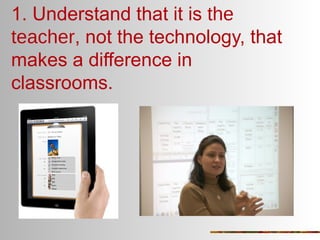
1. Understand that it is the
teacher, not the technology, that
makes a difference in
classrooms.
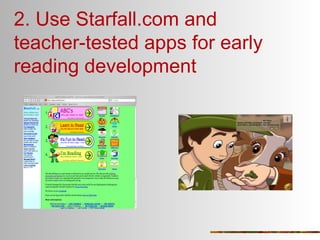
2. Use Starfall.com and
teacher-tested apps for early
reading development
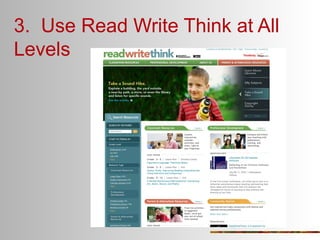
3. Use Read Write Think at All
Levels
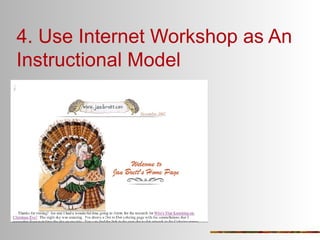
4. Use Internet Workshop as An
Instructional Model
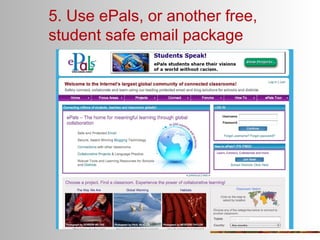
5. Use ePals, or another free,
student safe email package
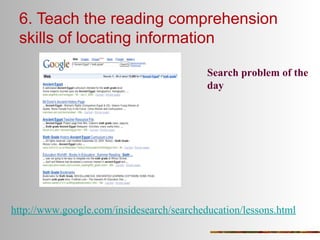
6. Teach the reading comprehension
skills of locating information
Search problem of the
day

http://www.google.com/insidesearch/searcheducation/lessons.html
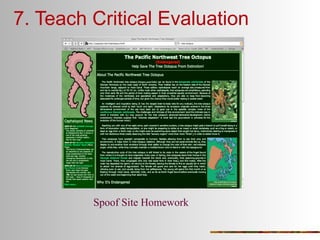
7. Teach Critical Evaluation

Spoof Site Homework
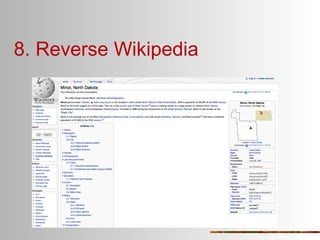
8. Reverse Wikipedia
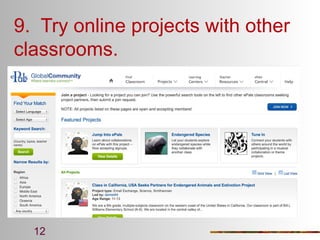
9. Try online projects with other
classrooms.

12
10. Require References That
Include an Explanation of Why
The Source Was Reliable


Patricia Polacco. www.patriciapolacco.com
This is the author’s own site so, if she is
telling the truth, it must be reliable.

13
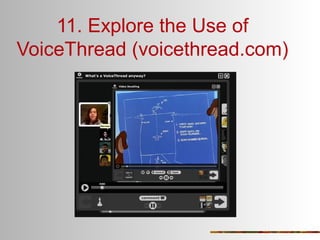
11. Explore the Use of
VoiceThread (voicethread.com)
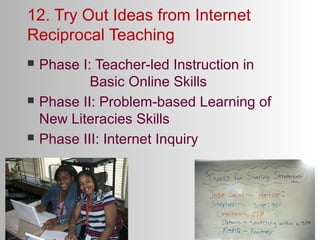
12. Try Out Ideas from Internet
Reciprocal Teaching






Phase I: Teacher-led Instruction in
Basic Online Skills
Phase II: Problem-based Learning of
New Literacies Skills
Phase III: Internet Inquiry
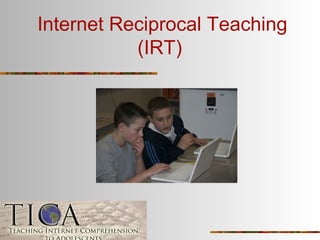
Internet Reciprocal Teaching
(IRT)
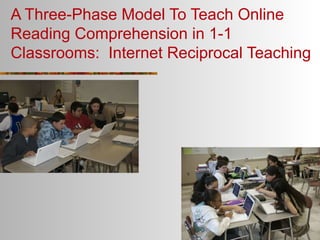
A Three-Phase Model To Teach Online
Reading Comprehension in 1-1
Classrooms: Internet Reciprocal Teaching
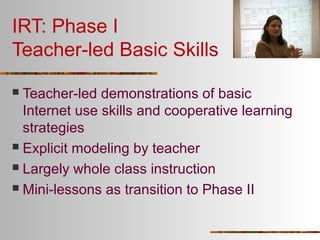
IRT: Phase I
Teacher-led Basic Skills
Teacher-led demonstrations of basic
Internet use skills and cooperative learning
strategies
 Explicit modeling by teacher
 Largely whole class instruction
 Mini-lessons as transition to Phase II

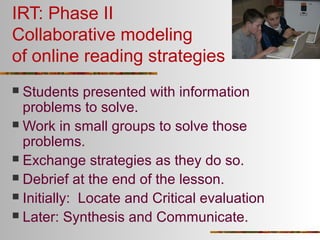
IRT: Phase II
Collaborative modeling
of online reading strategies
Students presented with information
problems to solve.
 Work in small groups to solve those
problems.
 Exchange strategies as they do so.
 Debrief at the end of the lesson.
 Initially: Locate and Critical evaluation
 Later: Synthesis and Communicate.

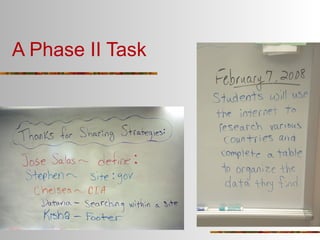
A Phase II Task
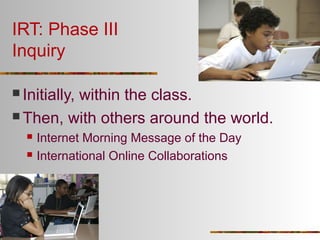
IRT: Phase III
Inquiry
 Initially,

within the class.
 Then, with others around the world.



Internet Morning Message of the Day
International Online Collaborations
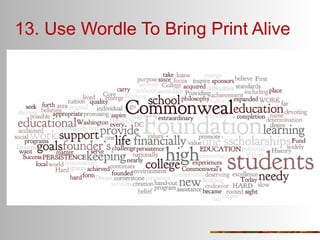
13. Use Wordle To Bring Print Alive
14. Use a Blog in Your
Classroom
HOT blogging: A framework for blogging to promote higher order
thinking
Lisa Zawilinski
The Reading Teacher, 62 (8), 650-661

http://holyfamilycatholicschool.com/survey/Article_Wikis_
and_Blogs_Zawilinski_2009_HOTBlogging%20to
%20promote%20higherorderthinking.pdf
23
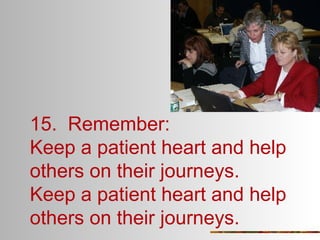
15. Remember:
Keep a patient heart and help
others on their journeys.
Keep a patient heart and help
others on their journeys.

KRA: My 15 best ideas

  • 1.
    My 15 BestIdeas for Teaching New Literacies and Common Core State Standards Donald J. Leu Neag Endowed Chair in Literacy and Technology Neag School of Education University of Connecticut donald.leu@uconn.edu
  • 2.
     Defines how weread online when we conduct informal and formal research to learn and develop new knowledge.      Identify the problem/question Locate Evaluate Castek, 2008; Coiro & Dobler, 2007; Synthesize Henry, 2007; Leu, Castek, Hartman, Communicate Coiro, Henry, Kulikowich, & Lyver, 2005; Leu, O’Byrne, Zawilinski, McVerry, & Everett-Cacopardo, 2009; Leu, Kinzer, Coiro, Castek, & Henry, 2013
  • 3.
    What Can IDo In My Classroom to Prepare Students for CCSS With Digital Technologies? 3
  • 4.
    1. Understand thatit is the teacher, not the technology, that makes a difference in classrooms.
  • 5.
    2. Use Starfall.comand teacher-tested apps for early reading development
  • 6.
    3. Use ReadWrite Think at All Levels
  • 7.
    4. Use InternetWorkshop as An Instructional Model
  • 8.
    5. Use ePals,or another free, student safe email package
  • 9.
    6. Teach thereading comprehension skills of locating information Search problem of the day http://www.google.com/insidesearch/searcheducation/lessons.html
  • 10.
    7. Teach CriticalEvaluation Spoof Site Homework
  • 11.
  • 12.
    9. Try onlineprojects with other classrooms. 12
  • 13.
    10. Require ReferencesThat Include an Explanation of Why The Source Was Reliable  Patricia Polacco. www.patriciapolacco.com This is the author’s own site so, if she is telling the truth, it must be reliable. 13
  • 14.
    11. Explore theUse of VoiceThread (voicethread.com)
  • 15.
    12. Try OutIdeas from Internet Reciprocal Teaching    Phase I: Teacher-led Instruction in Basic Online Skills Phase II: Problem-based Learning of New Literacies Skills Phase III: Internet Inquiry
  • 16.
  • 17.
    A Three-Phase ModelTo Teach Online Reading Comprehension in 1-1 Classrooms: Internet Reciprocal Teaching
  • 18.
    IRT: Phase I Teacher-ledBasic Skills Teacher-led demonstrations of basic Internet use skills and cooperative learning strategies  Explicit modeling by teacher  Largely whole class instruction  Mini-lessons as transition to Phase II 
  • 19.
    IRT: Phase II Collaborativemodeling of online reading strategies Students presented with information problems to solve.  Work in small groups to solve those problems.  Exchange strategies as they do so.  Debrief at the end of the lesson.  Initially: Locate and Critical evaluation  Later: Synthesis and Communicate. 
  • 20.
  • 21.
    IRT: Phase III Inquiry Initially, within the class.  Then, with others around the world.   Internet Morning Message of the Day International Online Collaborations
  • 22.
    13. Use WordleTo Bring Print Alive
  • 23.
    14. Use aBlog in Your Classroom HOT blogging: A framework for blogging to promote higher order thinking Lisa Zawilinski The Reading Teacher, 62 (8), 650-661 http://holyfamilycatholicschool.com/survey/Article_Wikis_ and_Blogs_Zawilinski_2009_HOTBlogging%20to %20promote%20higherorderthinking.pdf 23
  • 24.
    15. Remember: Keep apatient heart and help others on their journeys. Keep a patient heart and help others on their journeys.