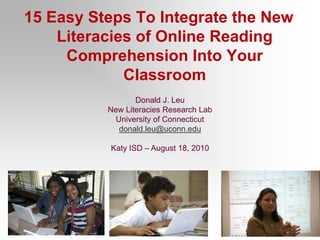
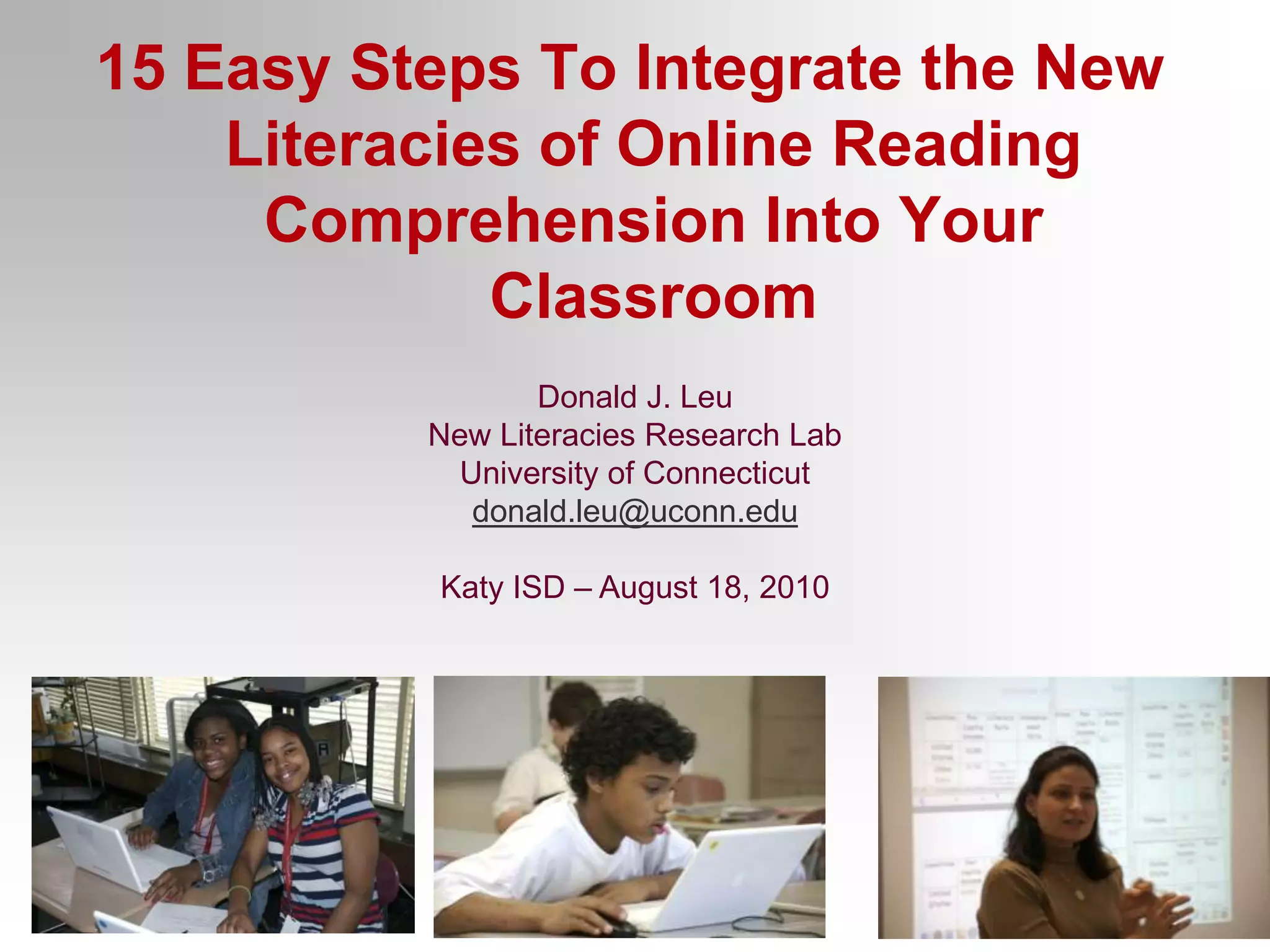
15 Easy Steps To Integrate the New Literacies of Online Reading Comprehension Into Your ClassroomDonald J. LeuNew Literacies Research LabUniversity of Connecticutdonald.leu@uconn.eduKaty ISD – August 18, 2010
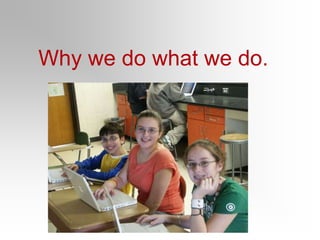
Why we do what we do.
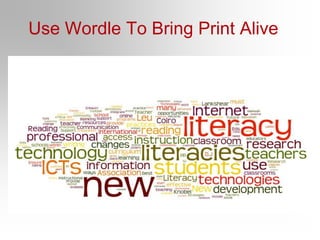
Use Wordle To Bring Print Alive
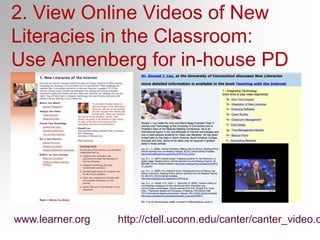
1. “Borrow” good ideas and pass them alongGoogle these key words: 	4th grade classroom home page	1st grade classroom home pageGet connected to online resources.2. View Online Videos of New Literacies in the Classroom: Use Annenberg for in-house PDwww.learner.orghttp://ctell.uconn.edu/canter/canter_video.cfm
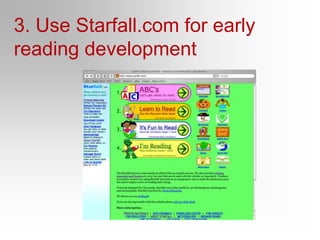
3. Use Starfall.com for early reading development
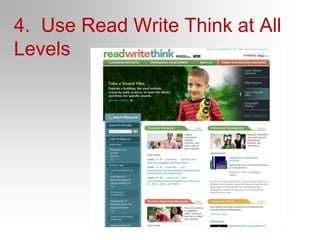
4.  Use Read Write Think at All Levels
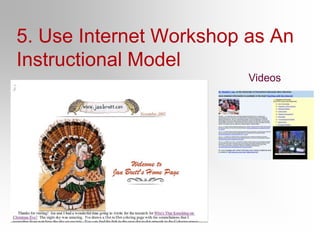
5. Use Internet Workshop as An Instructional ModelVideos
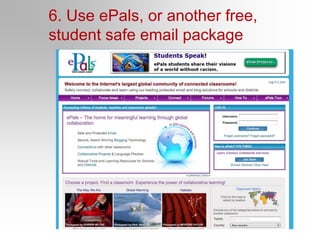
6. Use ePals, or another free, student safe email package
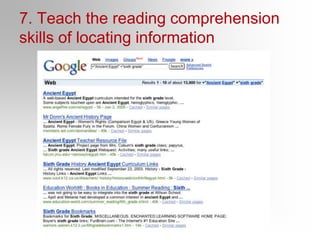
7. Teach the reading comprehension skills of locating information
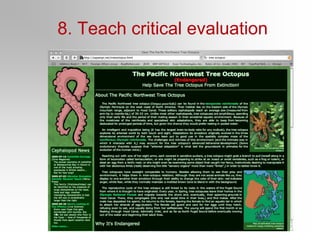
8. Teach critical evaluation
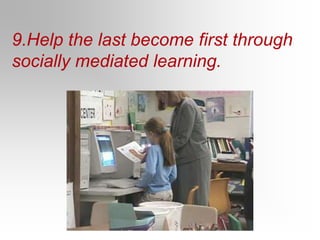
9.Help the last become first through socially mediated learning.
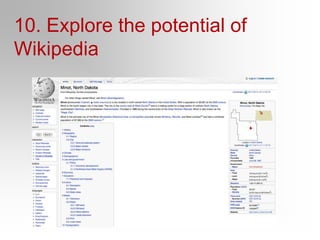
10. Explore the potential of Wikipedia
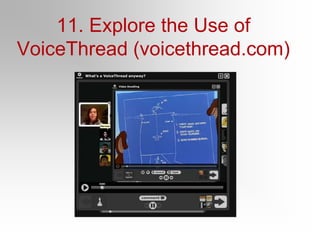
11. Explore the Use of VoiceThread (voicethread.com)
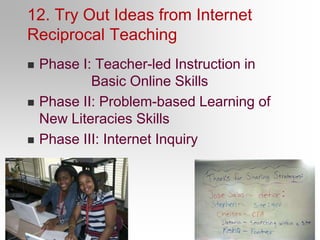
12. Try Out Ideas from Internet Reciprocal TeachingPhase I: Teacher-led Instruction in 			Basic Online SkillsPhase II: Problem-based Learning of New Literacies SkillsPhase III: Internet Inquiry
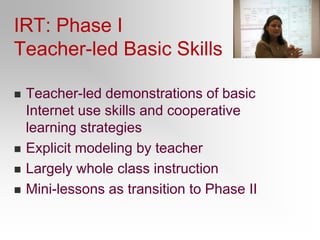
IRT: Phase ITeacher-led Basic SkillsTeacher-led demonstrations of basic Internet use skills and cooperative learning strategiesExplicit modeling by teacherLargely whole class instructionMini-lessons as transition to Phase II
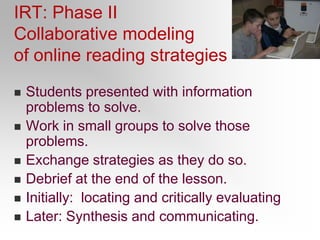
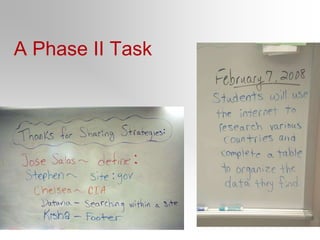
IRT: Phase IICollaborative modeling of online reading strategiesStudents presented with information problems to solve.Work in small groups to solve those problems.Exchange strategies as they do so.Debrief at the end of the lesson.Initially:  locating and critically evaluatingLater: Synthesis and communicating.
A Phase II Task
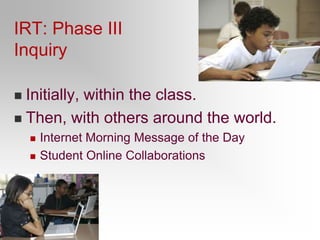
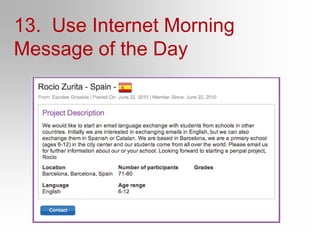
IRT: Phase IIIInquiryInitially, within the class.Then, with others around the world.Internet Morning Message of the DayStudent Online Collaborations
13.  Use Internet Morning Message of the Day
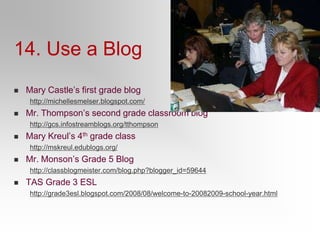
14. Use a BlogMary Castle’s first grade blog http://michellesmelser.blogspot.com/Mr. Thompson’s second grade classroom bloghttp://gcs.infostreamblogs.org/tthompsonMary Kreul’s 4th grade classhttp://mskreul.edublogs.org/Mr. Monson’s Grade 5 Bloghttp://classblogmeister.com/blog.php?blogger_id=59644TAS Grade 3 ESLhttp://grade3esl.blogspot.com/2008/08/welcome-to-20082009-school-year.html
15. Begin Now!
YOU make tomorrow’s world today!THANK YOU!Thank you for everything thatyou do!!!
Talk2 elementary

Talk2 elementary

  • 1.
    15 Easy StepsTo Integrate the New Literacies of Online Reading Comprehension Into Your ClassroomDonald J. LeuNew Literacies Research LabUniversity of Connecticutdonald.leu@uconn.eduKaty ISD – August 18, 2010
  • 2.
    Why we dowhat we do.
  • 3.
    Use Wordle ToBring Print Alive
  • 4.
    1. “Borrow” goodideas and pass them alongGoogle these key words: 4th grade classroom home page 1st grade classroom home pageGet connected to online resources.2. View Online Videos of New Literacies in the Classroom: Use Annenberg for in-house PDwww.learner.orghttp://ctell.uconn.edu/canter/canter_video.cfm
  • 5.
    3. Use Starfall.comfor early reading development
  • 6.
    4. UseRead Write Think at All Levels
  • 7.
    5. Use InternetWorkshop as An Instructional ModelVideos
  • 8.
    6. Use ePals,or another free, student safe email package
  • 9.
    7. Teach thereading comprehension skills of locating information
  • 10.
  • 11.
    9.Help the lastbecome first through socially mediated learning.
  • 12.
    10. Explore thepotential of Wikipedia
  • 13.
    11. Explore theUse of VoiceThread (voicethread.com)
  • 14.
    12. Try OutIdeas from Internet Reciprocal TeachingPhase I: Teacher-led Instruction in Basic Online SkillsPhase II: Problem-based Learning of New Literacies SkillsPhase III: Internet Inquiry
  • 15.
    IRT: Phase ITeacher-ledBasic SkillsTeacher-led demonstrations of basic Internet use skills and cooperative learning strategiesExplicit modeling by teacherLargely whole class instructionMini-lessons as transition to Phase II
  • 16.
    IRT: Phase IICollaborativemodeling of online reading strategiesStudents presented with information problems to solve.Work in small groups to solve those problems.Exchange strategies as they do so.Debrief at the end of the lesson.Initially: locating and critically evaluatingLater: Synthesis and communicating.
  • 17.
  • 18.
    IRT: Phase IIIInquiryInitially,within the class.Then, with others around the world.Internet Morning Message of the DayStudent Online Collaborations
  • 19.
    13. UseInternet Morning Message of the Day
  • 20.
    14. Use aBlogMary Castle’s first grade blog http://michellesmelser.blogspot.com/Mr. Thompson’s second grade classroom bloghttp://gcs.infostreamblogs.org/tthompsonMary Kreul’s 4th grade classhttp://mskreul.edublogs.org/Mr. Monson’s Grade 5 Bloghttp://classblogmeister.com/blog.php?blogger_id=59644TAS Grade 3 ESLhttp://grade3esl.blogspot.com/2008/08/welcome-to-20082009-school-year.html
  • 21.
  • 22.
    YOU make tomorrow’sworld today!THANK YOU!Thank you for everything thatyou do!!!