Vishnu Durga.K
Content:-

 Mass Media Role

 Knowledge gap Theory
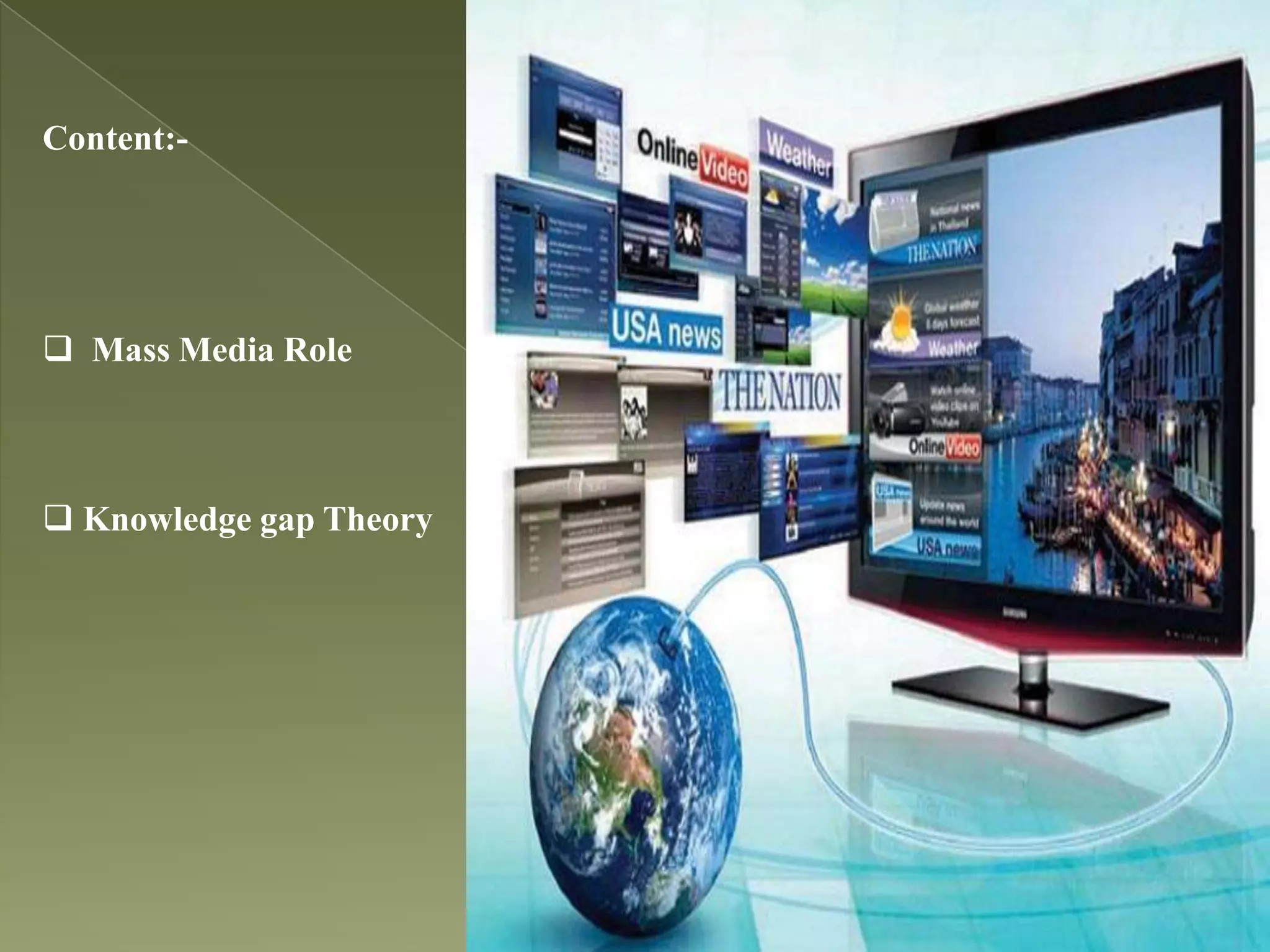
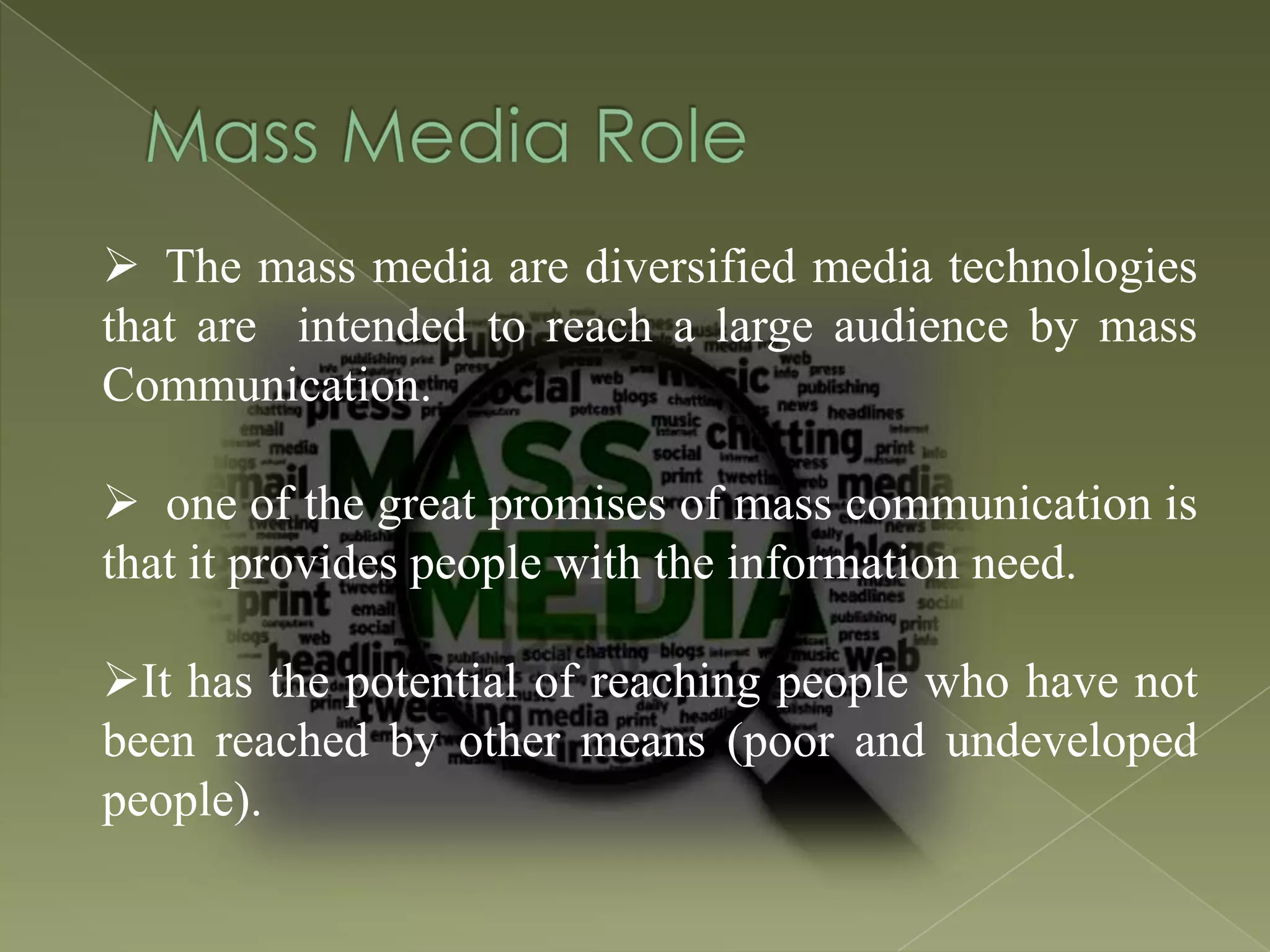
 The mass media are diversified media technologies
that are intended to reach a large audience by mass
Communication.
 one of the great promises of mass communication is
that it provides people with the information need.
It has the potential of reaching people who have not
been reached by other means (poor and undeveloped
people).
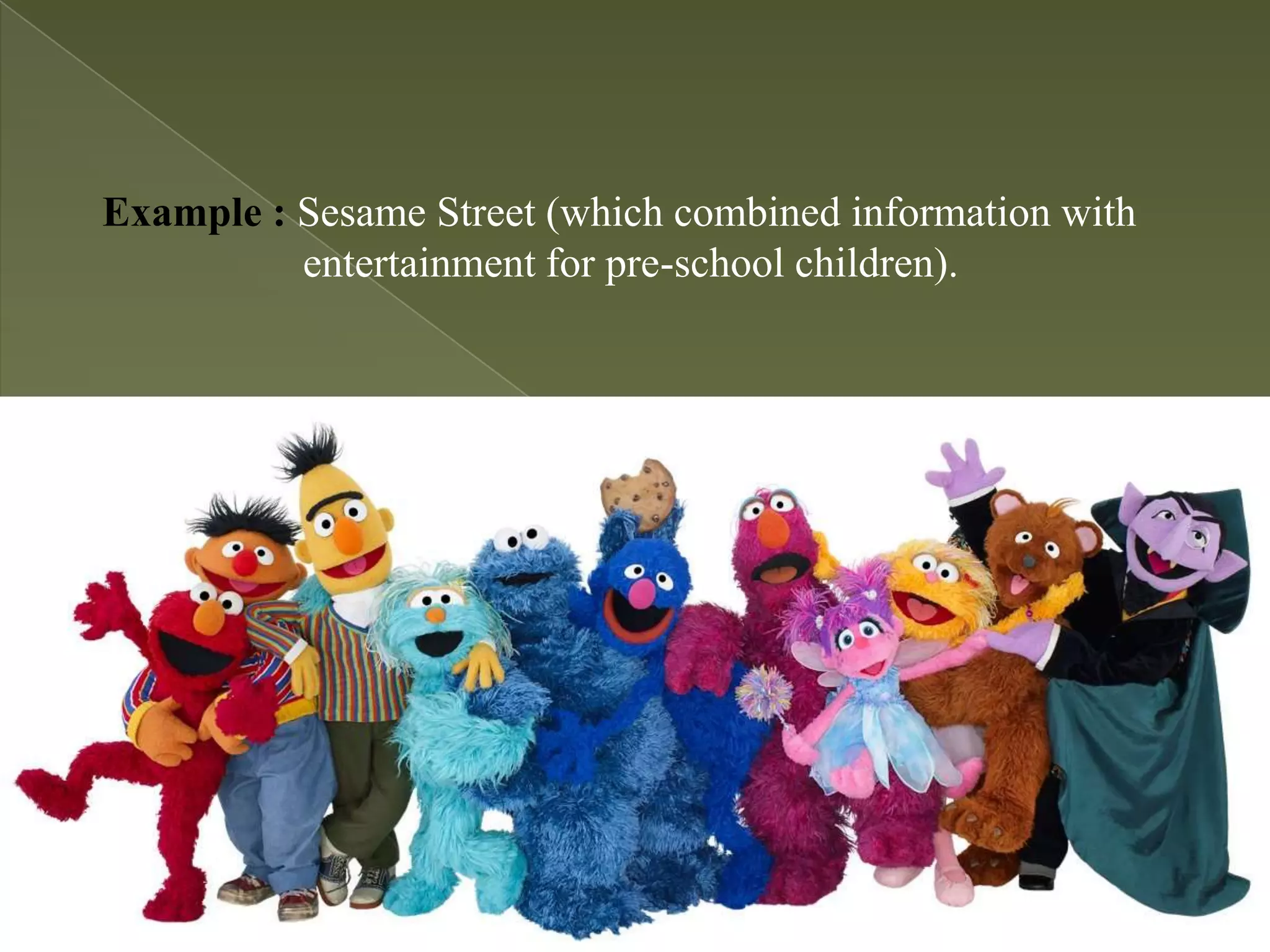
Example : Sesame Street (which combined information with
entertainment for pre-school children).


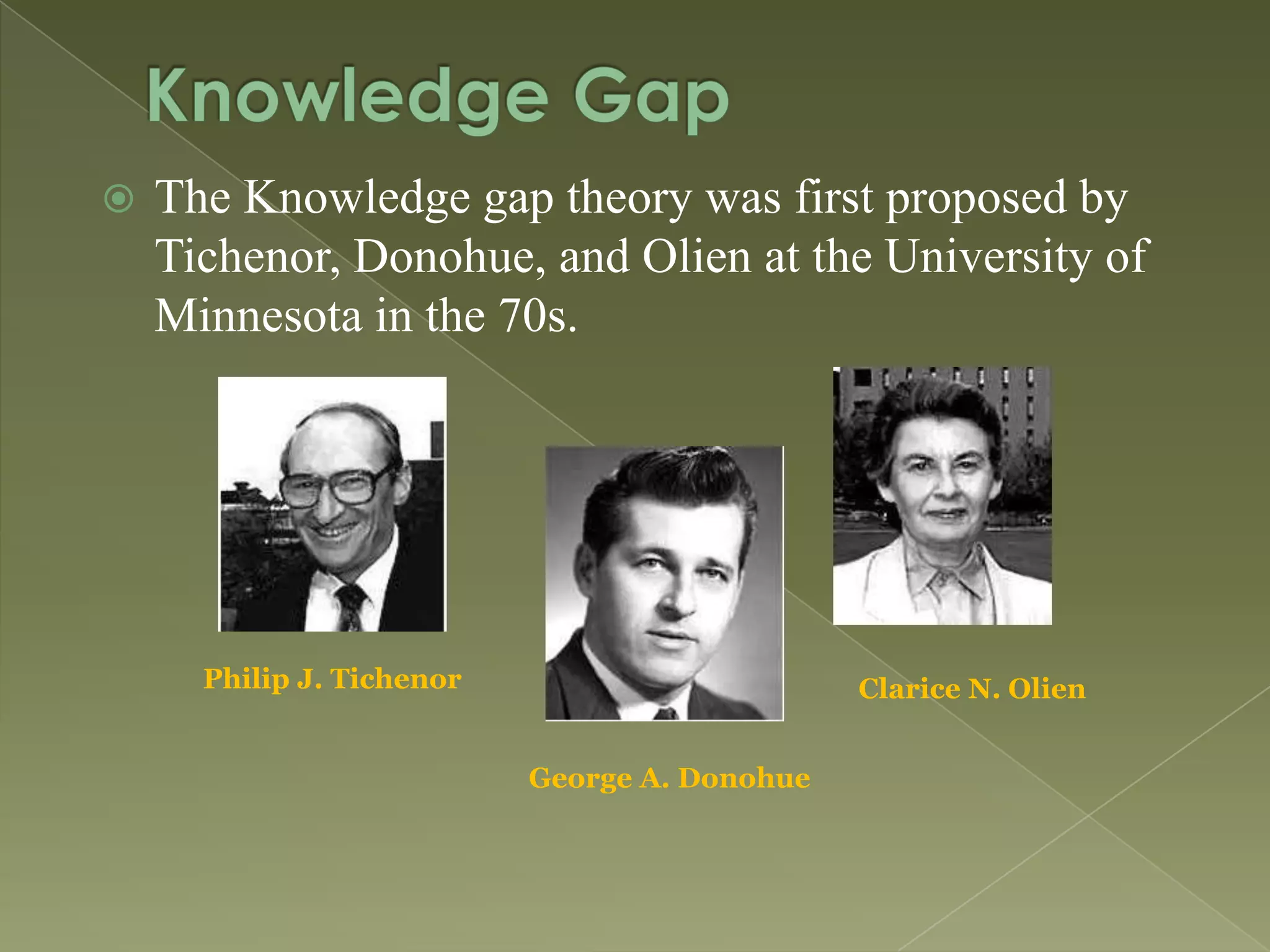
The Knowledge gap theory was first proposed by
Tichenor, Donohue, and Olien at the University of
Minnesota in the 70s.

Philip J. Tichenor

Clarice N. Olien
George A. Donohue


This theory is concerned mainly with “Information”
and “knowledge” and emphasizes that knowledge is
not distributed equally through out the society.



They believe that the increase of the information in
society is not evenly acquired by every member of
the society
- People with higher socioeconomic status
tend to have better ability to acquire information
(Weng, S.C.2000)


As the infusion of mass media information into
social system increases, segments of the population
with higher economic status tend to acquire this
information
at a faster rate than the lower status
segments, so that the gap in knowledge between
these two segments tend to increase rather than
decrease.
 People of both high and low socio-economic status

will gain in knowledge because of the additional
information, but that persons of higher socioeconomic status will gain more.


This would mean that the relative gap in knowledge
between the well-to- do and less well –off would
increase.
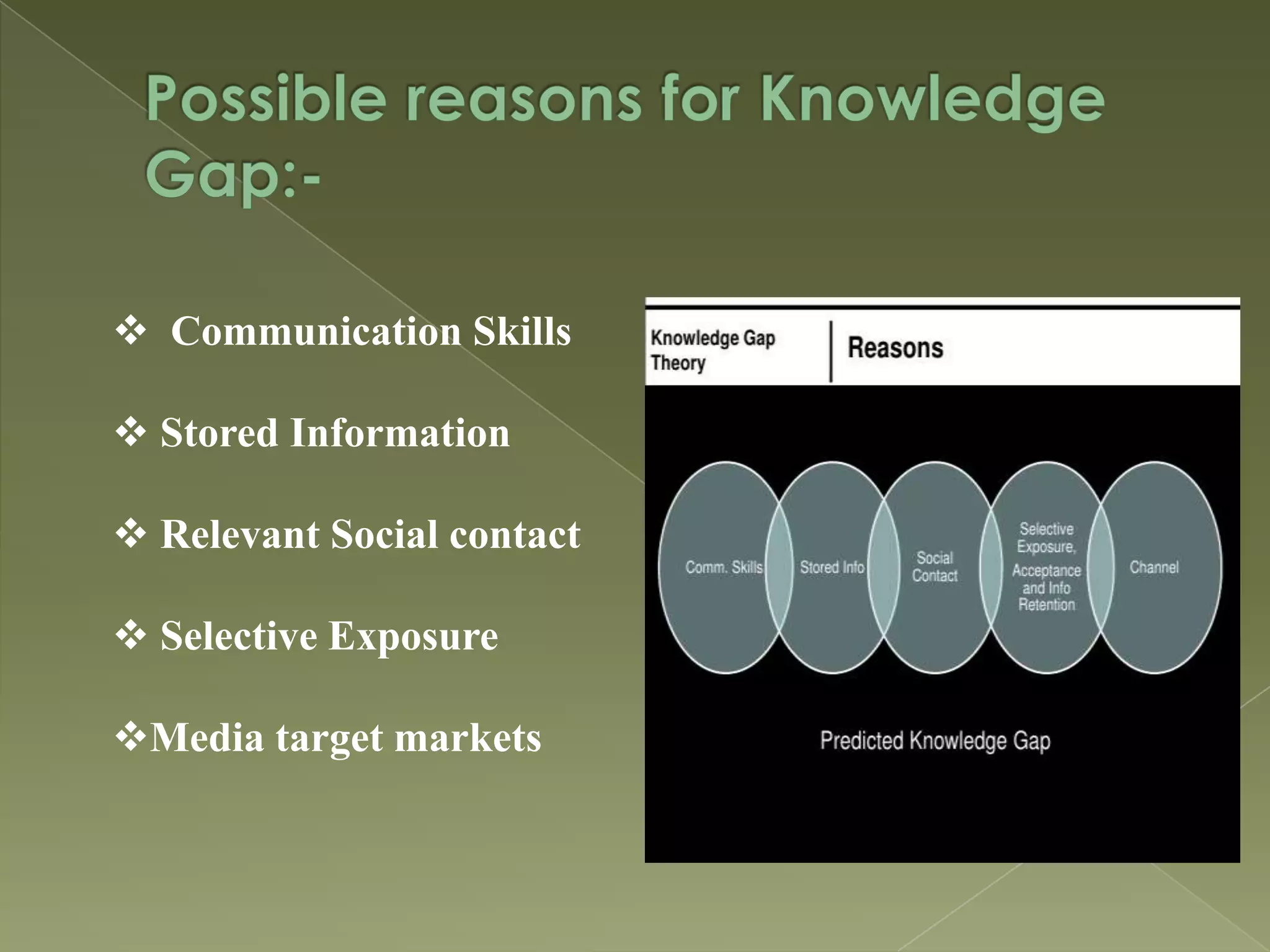
 Communication Skills
 Stored Information
 Relevant Social contact
 Selective Exposure
Media target markets
 Many of the technologies are very expensive.

Because of the cost, these technologies may be more
available to the well –to-do than to less-well-off.
If the access to these information services is not
universally available throughout the society, then
those already “information-rich” may reap the
benefits while the “information-poor” get relatively
poorer.
 A widening of this gap may lead to increase tension.

 What

is digital divide?

The digital divide is the gap between people with
access to digital information technology, and those
that have limited access to digital information
technology.
 The digital divide causes an increased knowledge
gap.
› People who lack access to the internet will not be
receiving the information provided by the internet
› People who have internet learn how to interpret
and understand information the information
presented




The information Rich have access to information and
information technology equipment such as many TV and
radio channels , books, newspapers and journals and of
course computers and world wide web.
The information poor tend to not to have access to the
web and probably find out difficult to access relevant
books and journals . Even in general conversations a
discussion about a television program shown on satellite
Tv will be lost on people. The information Poor may lack
the skill or knowledge to access information.
The gap between the information rich and
information poor is often called as Digital Divide. It
is not a gap between those with lots of money and
those without.
 The gap can exists between:1. Old and young
2. English speaking and non english speaking
3. Third world and developed world society.
4. Different cultural groups
5. Rural and Urban Locations.

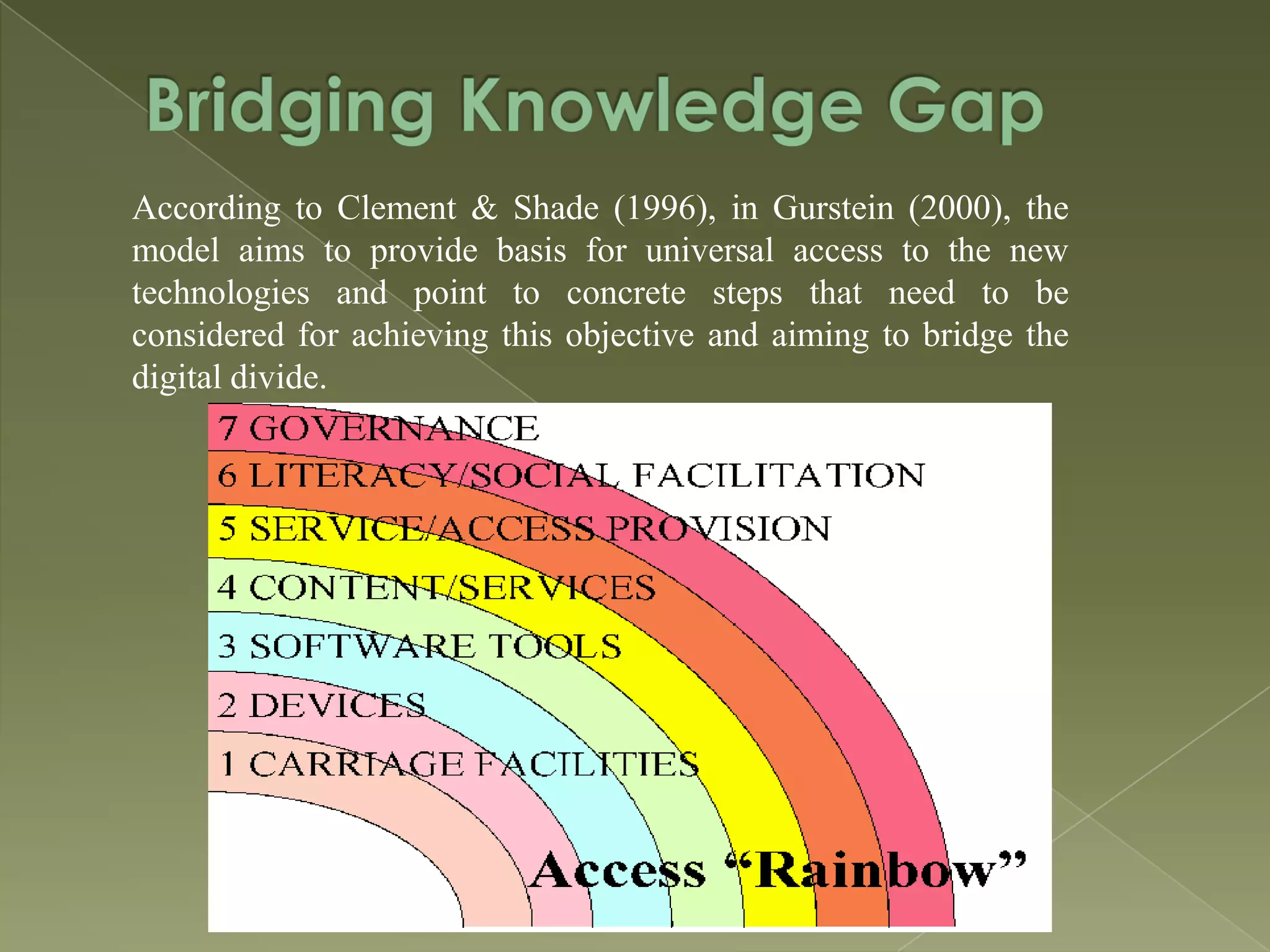
According to Clement & Shade (1996), in Gurstein (2000), the
model aims to provide basis for universal access to the new
technologies and point to concrete steps that need to be
considered for achieving this objective and aiming to bridge the
digital divide.
In 1970s Tichenor, Donohue and olien at the
University of Minnesota, they conducted a research
to identify the knowledge gap among people
 For that they divided into two groups : One with
individuals with a higher education , and one with
individuals who have lower education who know
less.
 Particularly the theory believes that people of lower
socio- economic status have little or no knowledge
about the public affair issues, are disconnected for
news events and important news discoveries, and
they usually don’t concerned about their lack of
knowledge.



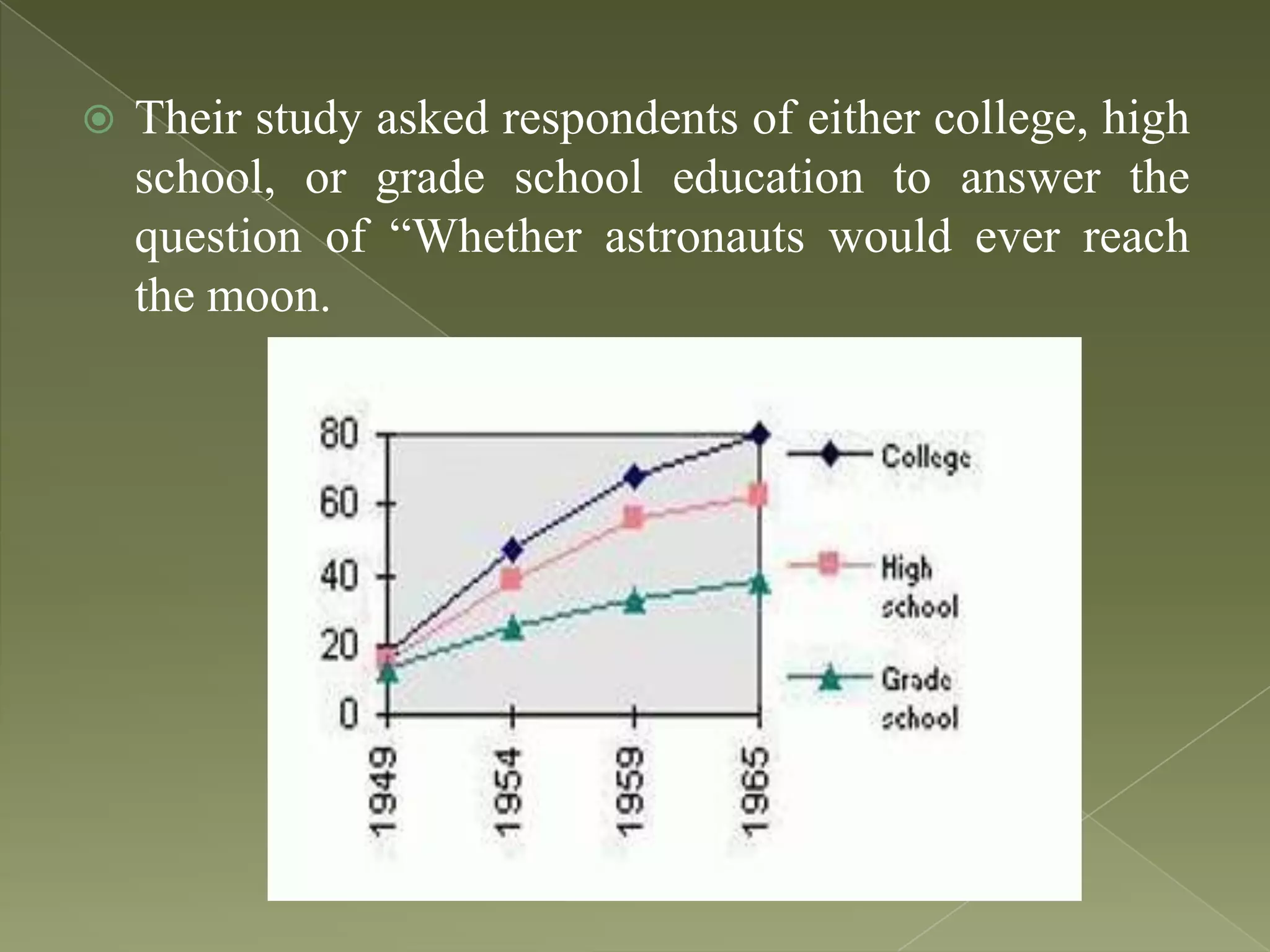
Their study asked respondents of either college, high
school, or grade school education to answer the
question of “Whether astronauts would ever reach
the moon.

Knowledge gap- Information Rich and Information Poor

  • 1.
  • 2.
    Content:-  Mass MediaRole  Knowledge gap Theory
  • 3.
     The massmedia are diversified media technologies that are intended to reach a large audience by mass Communication.  one of the great promises of mass communication is that it provides people with the information need. It has the potential of reaching people who have not been reached by other means (poor and undeveloped people).
  • 4.
    Example : SesameStreet (which combined information with entertainment for pre-school children).
  • 5.
     The Knowledge gaptheory was first proposed by Tichenor, Donohue, and Olien at the University of Minnesota in the 70s. Philip J. Tichenor Clarice N. Olien George A. Donohue
  • 6.
     This theory isconcerned mainly with “Information” and “knowledge” and emphasizes that knowledge is not distributed equally through out the society.  They believe that the increase of the information in society is not evenly acquired by every member of the society - People with higher socioeconomic status tend to have better ability to acquire information (Weng, S.C.2000)
  • 7.
     As the infusionof mass media information into social system increases, segments of the population with higher economic status tend to acquire this information at a faster rate than the lower status segments, so that the gap in knowledge between these two segments tend to increase rather than decrease.
  • 8.
     People ofboth high and low socio-economic status will gain in knowledge because of the additional information, but that persons of higher socioeconomic status will gain more.  This would mean that the relative gap in knowledge between the well-to- do and less well –off would increase.
  • 9.
     Communication Skills Stored Information  Relevant Social contact  Selective Exposure Media target markets
  • 10.
     Many ofthe technologies are very expensive. Because of the cost, these technologies may be more available to the well –to-do than to less-well-off. If the access to these information services is not universally available throughout the society, then those already “information-rich” may reap the benefits while the “information-poor” get relatively poorer.  A widening of this gap may lead to increase tension. 
  • 11.
     What is digitaldivide? The digital divide is the gap between people with access to digital information technology, and those that have limited access to digital information technology.  The digital divide causes an increased knowledge gap. › People who lack access to the internet will not be receiving the information provided by the internet › People who have internet learn how to interpret and understand information the information presented
  • 12.
      The information Richhave access to information and information technology equipment such as many TV and radio channels , books, newspapers and journals and of course computers and world wide web. The information poor tend to not to have access to the web and probably find out difficult to access relevant books and journals . Even in general conversations a discussion about a television program shown on satellite Tv will be lost on people. The information Poor may lack the skill or knowledge to access information.
  • 13.
    The gap betweenthe information rich and information poor is often called as Digital Divide. It is not a gap between those with lots of money and those without.  The gap can exists between:1. Old and young 2. English speaking and non english speaking 3. Third world and developed world society. 4. Different cultural groups 5. Rural and Urban Locations. 
  • 14.
    According to Clement& Shade (1996), in Gurstein (2000), the model aims to provide basis for universal access to the new technologies and point to concrete steps that need to be considered for achieving this objective and aiming to bridge the digital divide.
  • 15.
    In 1970s Tichenor,Donohue and olien at the University of Minnesota, they conducted a research to identify the knowledge gap among people  For that they divided into two groups : One with individuals with a higher education , and one with individuals who have lower education who know less.  Particularly the theory believes that people of lower socio- economic status have little or no knowledge about the public affair issues, are disconnected for news events and important news discoveries, and they usually don’t concerned about their lack of knowledge. 
  • 16.
     Their study askedrespondents of either college, high school, or grade school education to answer the question of “Whether astronauts would ever reach the moon.