


Facts About
Headache
 A headache is defined as "a pain or ache in the head...It accompanies
many diseases and conditions, including emotional distress."
 Headaches are one of the most common symptoms that can be
experienced. Most people will experience a headache at some point of
their lives. They can affect anyone regardless of age and gender.
 The World Health Organization (WHO) reports that around 47% of the
world's adult population will have experienced a headache within the
last year. As well as being symptoms of other conditions, headache
disorders can lead to the development of other illnesses.
 Depression is three times more common in individuals with severe
headaches than healthy people.
 Primary headaches
 Direct physical stimuli, such as temperature and external pressure
 Pain over the scalp
 Physical exertion
 Other miscellaneous headaches.
 Secondary headaches
 Blood clots
 Brain freeze (ice cream headaches)
 Carbon monoxide poisoning
 Dehydration
 Glaucoma
 Overuse of pain medication (rebound headaches)
 Panic attacks
 Stroke
 Headaches that occur suddenly (acute-onset) are usually due to an
illness, infection, cold, or fever. Other conditions that can cause an acute
headache include sinusitis (inflammation of the
sinuses),pharyngitis (inflammation or infection of the throat), or otitis (ear
infection or inflammation).
 Common causes of tension headaches or chronic nonprogressive
headaches include emotional stress related to family and friends, work, or
school; alcohol use; skipping meals; changes in sleep patterns; excessive
medication use; tension and depression. Other causes of tension
headaches include eyestrain and neck or back strain due to poor posture.
 Headaches can also be triggered by specific environmental factors that
are shared in a family's household, such as exposure to secondhand
tobacco smoke, strong odors from household chemicals or perfumes,
exposure to certain allergens, or eating certain foods. Stress, pollution,
noise, lighting, and weather changes are other environmental factors that
can trigger headaches for some people.
Here are some key points about headaches. 
Headaches can be stand alone illnesses or the symptom of another
condition.
Depending on the specific type of headache, they can last for any time
between a few hours and several weeks.
Primary headaches are caused by problems with or overactivity from
pain-sensitive structures in the head.
The most common form of primary headache is the tension-type
headache.
A wide variety of conditions can cause secondary headaches, ranging from
hangovers to brain tumors.
The most common form of secondary headache is the rebound headache
(medication-overuse headache).
 Here are the characterizing symptoms of some of the more prominent
forms of headache:
1. Tension-type headaches
 Tension-type headaches are the most common form of primary
headache. They are described as feeling like a tight band around the
head, with a constant, dull ache being felt on both sides. Sometimes the
pain spreads to or from the neck. They normally begin slowly and
gradually in the middle of the day.
 Tension-type headaches can be either episodic or chronic. Episodic
attacks are normally a few hours in duration, but can last for several
days.
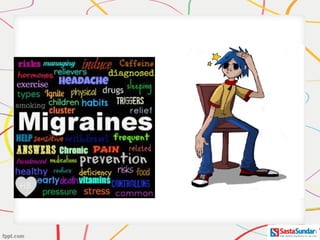
2. Migraines
Migraine is the second most common form of primary headache and has
been ranked as the seventh-highest specific cause of disability
worldwide.5 They can last for any amount of time between a few hours and
2-3 days.
A migraine headache may cause a pulsating, throbbing pain that can
occur on either one side or both sides of the head. The aching can also be
accompanied by blurred vision, lightheadedness, nausea and sensory
disturbances.
3. Rebound headaches
Rebound, or medication-overuse headaches are the most common
secondary headache, caused by the excessive use of medication to treat
headache symptoms. They usually begin early in the day and persist
throughout, improving with pain medicine but worsening when its effects
wear off.
Rebound headaches can cause a number of symptoms, and the pain can
be different each day. Along with the aching, rebound headaches can cause
neck pain, restlessness, nose stuffiness and unrestful sleep.
4. Cluster headaches
•Cluster headaches are a relatively uncommon form of primary headache
that affect less than one in every 1,000 adults. They strike quickly, once or
more daily at the same time each day and often without warning. They
usually last between 45-90 minutes and persist for the duration of a cluster
period, normally 4-8 weeks.
•The pain caused by cluster headaches is severe, often described as sharp or
burning, and is normally located in or around one eye. The affected area
can become red and swell, the eyelid can droop and the nasal passage on
the affected side can become stuffy and runny.
 Yes, headaches, especially migraines, have a tendency to run in families.
Most children and adolescents (90%) who have migraines have other
family members with migraines. When both parents have a history of
migraines, there is a 70% chance that the child will also develop
migraines. If only one parent has a history of migraines, the risk drops to
25%-50%.
 Self-care
 There are a number of things
that can be done within the
daily routine that can ease the
pain of headaches:
 Apply a heat pack or ice pack
to your head or neck
 Avoid things that are stressful
 Eat regular meals
 Exercise regularly
 Get enough rest and regular
sleep
 Have a hot shower.
 Alternative therapies
 Acupuncture
 Chiropractic treatment
 Cognitive behavior therapy
 Herbal health products
 Hypnosis
 Meditation.
Know The Major Facts About Headache

Know The Major Facts About Headache

  • 1.
  • 3.
     A headacheis defined as "a pain or ache in the head...It accompanies many diseases and conditions, including emotional distress."  Headaches are one of the most common symptoms that can be experienced. Most people will experience a headache at some point of their lives. They can affect anyone regardless of age and gender.  The World Health Organization (WHO) reports that around 47% of the world's adult population will have experienced a headache within the last year. As well as being symptoms of other conditions, headache disorders can lead to the development of other illnesses.  Depression is three times more common in individuals with severe headaches than healthy people.
  • 4.
     Primary headaches Direct physical stimuli, such as temperature and external pressure  Pain over the scalp  Physical exertion  Other miscellaneous headaches.  Secondary headaches  Blood clots  Brain freeze (ice cream headaches)  Carbon monoxide poisoning  Dehydration  Glaucoma  Overuse of pain medication (rebound headaches)  Panic attacks  Stroke
  • 5.
     Headaches thatoccur suddenly (acute-onset) are usually due to an illness, infection, cold, or fever. Other conditions that can cause an acute headache include sinusitis (inflammation of the sinuses),pharyngitis (inflammation or infection of the throat), or otitis (ear infection or inflammation).  Common causes of tension headaches or chronic nonprogressive headaches include emotional stress related to family and friends, work, or school; alcohol use; skipping meals; changes in sleep patterns; excessive medication use; tension and depression. Other causes of tension headaches include eyestrain and neck or back strain due to poor posture.  Headaches can also be triggered by specific environmental factors that are shared in a family's household, such as exposure to secondhand tobacco smoke, strong odors from household chemicals or perfumes, exposure to certain allergens, or eating certain foods. Stress, pollution, noise, lighting, and weather changes are other environmental factors that can trigger headaches for some people.
  • 6.
    Here are somekey points about headaches.  Headaches can be stand alone illnesses or the symptom of another condition. Depending on the specific type of headache, they can last for any time between a few hours and several weeks. Primary headaches are caused by problems with or overactivity from pain-sensitive structures in the head. The most common form of primary headache is the tension-type headache. A wide variety of conditions can cause secondary headaches, ranging from hangovers to brain tumors. The most common form of secondary headache is the rebound headache (medication-overuse headache).
  • 8.
     Here arethe characterizing symptoms of some of the more prominent forms of headache: 1. Tension-type headaches  Tension-type headaches are the most common form of primary headache. They are described as feeling like a tight band around the head, with a constant, dull ache being felt on both sides. Sometimes the pain spreads to or from the neck. They normally begin slowly and gradually in the middle of the day.  Tension-type headaches can be either episodic or chronic. Episodic attacks are normally a few hours in duration, but can last for several days.
  • 9.
    2. Migraines Migraine isthe second most common form of primary headache and has been ranked as the seventh-highest specific cause of disability worldwide.5 They can last for any amount of time between a few hours and 2-3 days. A migraine headache may cause a pulsating, throbbing pain that can occur on either one side or both sides of the head. The aching can also be accompanied by blurred vision, lightheadedness, nausea and sensory disturbances.
  • 11.
    3. Rebound headaches Rebound,or medication-overuse headaches are the most common secondary headache, caused by the excessive use of medication to treat headache symptoms. They usually begin early in the day and persist throughout, improving with pain medicine but worsening when its effects wear off. Rebound headaches can cause a number of symptoms, and the pain can be different each day. Along with the aching, rebound headaches can cause neck pain, restlessness, nose stuffiness and unrestful sleep.
  • 12.
    4. Cluster headaches •Clusterheadaches are a relatively uncommon form of primary headache that affect less than one in every 1,000 adults. They strike quickly, once or more daily at the same time each day and often without warning. They usually last between 45-90 minutes and persist for the duration of a cluster period, normally 4-8 weeks. •The pain caused by cluster headaches is severe, often described as sharp or burning, and is normally located in or around one eye. The affected area can become red and swell, the eyelid can droop and the nasal passage on the affected side can become stuffy and runny.
  • 13.
     Yes, headaches,especially migraines, have a tendency to run in families. Most children and adolescents (90%) who have migraines have other family members with migraines. When both parents have a history of migraines, there is a 70% chance that the child will also develop migraines. If only one parent has a history of migraines, the risk drops to 25%-50%.
  • 14.
     Self-care  Thereare a number of things that can be done within the daily routine that can ease the pain of headaches:  Apply a heat pack or ice pack to your head or neck  Avoid things that are stressful  Eat regular meals  Exercise regularly  Get enough rest and regular sleep  Have a hot shower.  Alternative therapies  Acupuncture  Chiropractic treatment  Cognitive behavior therapy  Herbal health products  Hypnosis  Meditation.