Lunch Lesson  Kitchen Sessions   Western Culinary Institute Oregon Department of Agriculture  March 11th and 12th, 2009  Portland, Oregon
  What to consider when sponsoring a    lunch lesson kitchen session  Contact a culinary program in your area. Community College, City College,  Pro-Start High School Program or a  Cordon Bleu Program.  Explore mutual benefits and how farm to school, processed products and scratch cooking can be used in school cafeterias.  Is there a culinary  instructor that wants to develop curriculum  that would include school lunch programs?  Does the culinary school want the student body to consider supporting school lunch programs as a working  option post graduation?  Find sponsors such as local processors, mills, produce companies  and broad line distributors that will benefit from exploring options for local foods and scratch cooking programs in schools.
Partner with Broad-line Distribution Companies Produce specialist Randy Gehrig and Chef Mark Bernetich from Sysco Food Services discuss local product, seasonal availability, how it can be ordered and cooked
Broad-line Distribution Assisting with Tracking Oregon Products   These workshops included discussions with  Sysco Food Services  about tracking Oregon products sold into schools to assist with framing the economic development aspect of farm to school  programs in Oregon
Partnerships with Local Food Companies  Bob’s Red Mill  Food Services of America  Truitt Brothers  Organically Grown Coop  Oregon State University  Food Innovation Center
Which Recipes?  Use tested recipes from school kitchens Ann Cooper shared recipes from the Berkeley school lunch program Bobbi Phillips from Springfield, Oregon offered tested recipes from her cafeteria
Price Point Equation  The workshops included food cost analysis.  Local product can be more expensive and scratch cooking takes more time. This could translate to higher labor cost or re-thinking production methods.  The actual hard cost of running the sessions not including industry in-kind hours or filming was under $1000.00
Cooking Skills are not the Primary Barrier  This group of 26 women and 2 men had excellent skills and went right to work.  Some produced recipes beyond the written curriculum.
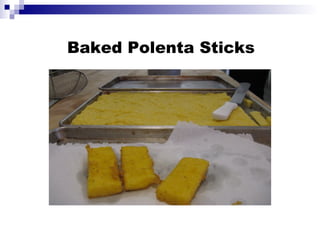
  Baked Polenta Sticks
Mariana Sauce with Zucchini  and Minestrone Soup
Calzone with Marinara Sauce and Zucchini
Bobs Red Mill Gluten-Free Bread Sticks Truitt Brothers Vegetarian Chili with Commodity Ground Turkey Turkey Meatballs with Roasted Leeks and Quinoa
Finished Product for 8th Grade Student Feedback
Student Feedback This portion of the training was added for feedback and press value. The 8th grade students from Laurelhurst School in Portland enjoyed the tour and the food, and they seemed most excited about turkey meatballs with leeks and quinoa prepared by Jim Rowan.
Cooking from Scratch
Spread The Word  DVD’s of the sessions will be distributed to  farm to school groups, Cordon Bleu certified culinary schools, state agricultural agencies and departments of education as an example of potential training programs to consider. Available May 2009


Kitchen Sessions

  • 1.
    Lunch Lesson Kitchen Sessions Western Culinary Institute Oregon Department of Agriculture March 11th and 12th, 2009 Portland, Oregon
  • 2.
    Whatto consider when sponsoring a lunch lesson kitchen session Contact a culinary program in your area. Community College, City College, Pro-Start High School Program or a Cordon Bleu Program. Explore mutual benefits and how farm to school, processed products and scratch cooking can be used in school cafeterias. Is there a culinary instructor that wants to develop curriculum that would include school lunch programs? Does the culinary school want the student body to consider supporting school lunch programs as a working option post graduation? Find sponsors such as local processors, mills, produce companies and broad line distributors that will benefit from exploring options for local foods and scratch cooking programs in schools.
  • 3.
    Partner with Broad-lineDistribution Companies Produce specialist Randy Gehrig and Chef Mark Bernetich from Sysco Food Services discuss local product, seasonal availability, how it can be ordered and cooked
  • 4.
    Broad-line Distribution Assistingwith Tracking Oregon Products These workshops included discussions with Sysco Food Services about tracking Oregon products sold into schools to assist with framing the economic development aspect of farm to school programs in Oregon
  • 5.
    Partnerships with LocalFood Companies Bob’s Red Mill Food Services of America Truitt Brothers Organically Grown Coop Oregon State University Food Innovation Center
  • 6.
    Which Recipes? Use tested recipes from school kitchens Ann Cooper shared recipes from the Berkeley school lunch program Bobbi Phillips from Springfield, Oregon offered tested recipes from her cafeteria
  • 7.
    Price Point Equation The workshops included food cost analysis. Local product can be more expensive and scratch cooking takes more time. This could translate to higher labor cost or re-thinking production methods. The actual hard cost of running the sessions not including industry in-kind hours or filming was under $1000.00
  • 8.
    Cooking Skills arenot the Primary Barrier This group of 26 women and 2 men had excellent skills and went right to work. Some produced recipes beyond the written curriculum.
  • 9.
    BakedPolenta Sticks
  • 10.
    Mariana Sauce withZucchini and Minestrone Soup
  • 11.
    Calzone with MarinaraSauce and Zucchini
  • 12.
    Bobs Red MillGluten-Free Bread Sticks Truitt Brothers Vegetarian Chili with Commodity Ground Turkey Turkey Meatballs with Roasted Leeks and Quinoa
  • 13.
    Finished Product for8th Grade Student Feedback
  • 14.
    Student Feedback Thisportion of the training was added for feedback and press value. The 8th grade students from Laurelhurst School in Portland enjoyed the tour and the food, and they seemed most excited about turkey meatballs with leeks and quinoa prepared by Jim Rowan.
  • 15.
  • 16.
    Spread The Word DVD’s of the sessions will be distributed to farm to school groups, Cordon Bleu certified culinary schools, state agricultural agencies and departments of education as an example of potential training programs to consider. Available May 2009
  • 17.
  • 18.
  • 19.