YOUR APPETIZER TO A HEALTHIER C
MAKING FOOD . . .
ADVANTAGES
• Control over Ingredients and therefore nutritional value
• Portion size
• Cost-Effective (by at least 10-15%) by our projections
• Communal Effort and enjoyed together
OBSTACLES
• TIME
• Meal Preparation Time
• Menu Planning
• ACCESS
• Financial burden for Fresh, raw, and balanced ingredients
• Food Desert
FOOD DESERTS
“The closest thing that we had to a grocery store was a corner store that sold only
processed and sometimes expired vegetables, chips, candy and sugar sweetened
beverages.”
“My mother worked long hours to provide for my family; by the time she got home
from work she was often too tired to cook anything so we would walk three minutes
to McDonald’s or Burger King. That was if we had any food at all, sometimes we just
didn’t.”
A team of cooks and educators dedicated to the
flourishing of young people in their interactions with
food, community, nutrition, and cooking. We will
provide a safe and educational environment that
promotes thoughtfulness and creativity in the kitchen
and prepares students to enter the world as advocates
for themselves, their community, nutrition, and food.
EXISTING LYNN PROGRAMMING
• Governmental Programming (Federal & State)
- National School Lunch Program (NSLP)
- School Breakfast Program (SBP),
- Supplemental Nutrition Assistance Program (SNAP).
• Red Cross mobile food pantry
• The Food Project’s Lynn farmer’s market (SNAP benefits)
• Looking at Existing Programming in Lynn
Helps us define What we Are and Are Not
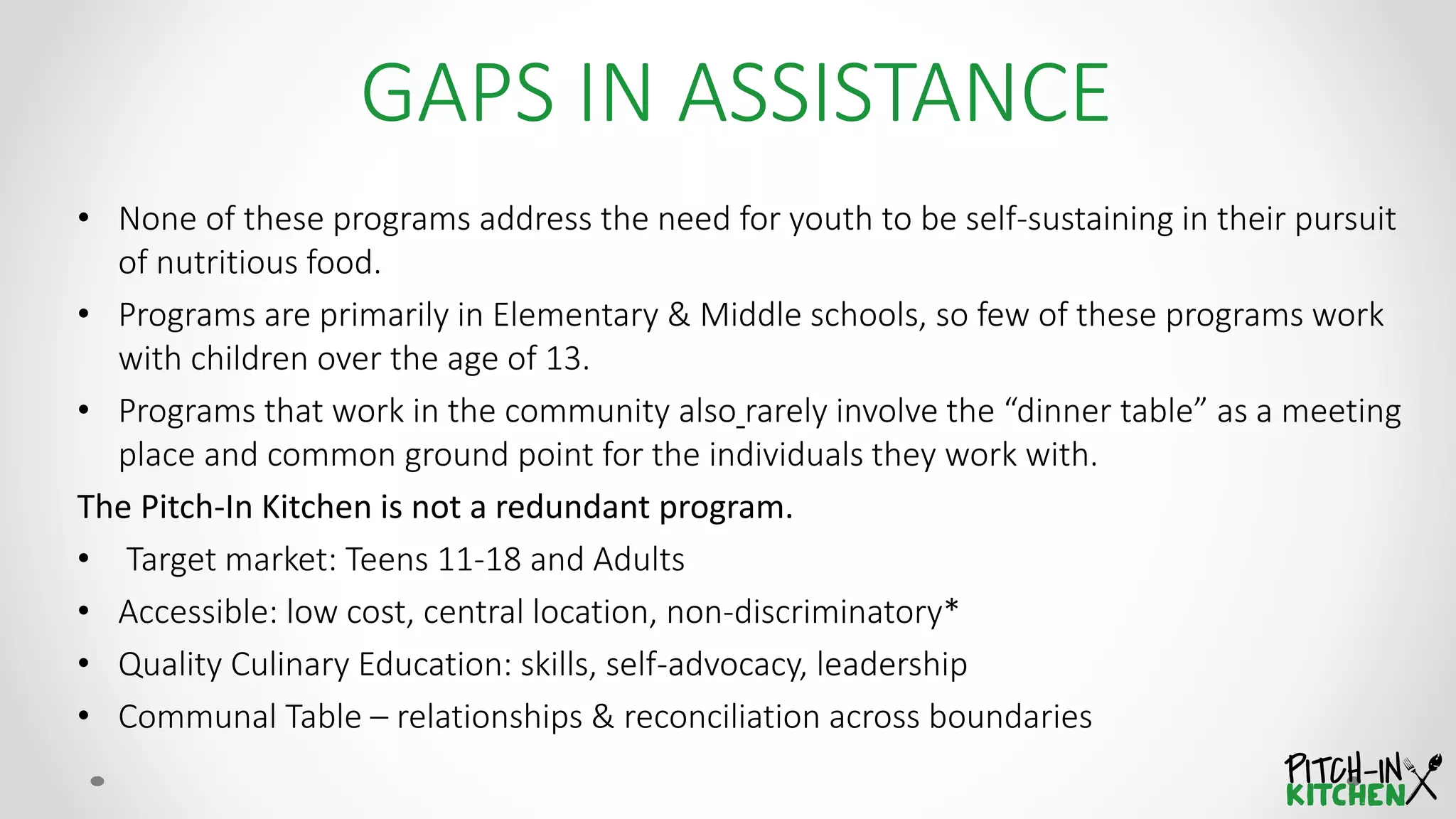
• None of these programs address the need for youth to be self-sustaining in their pursuit
of nutritious food.
• Programs are primarily in Elementary & Middle schools, so few of these programs work
with children over the age of 13.
• Programs that work in the community also rarely involve the “dinner table” as a meeting
place and common ground point for the individuals they work with.
The Pitch-In Kitchen is not a redundant program.
• Target market: Teens 11-18 and Adults
• Accessible: low cost, central location, non-discriminatory*
• Quality Culinary Education: skills, self-advocacy, leadership
• Communal Table – relationships & reconciliation across boundaries
GAPS IN ASSISTANCE
WHO’S HERE
• Chef/Primary Cooking Instructor
• Kitchen Assistant
• Dialogue & Community Meal Organizer
• Nutritional & Menu Consultant
WHAT’S HAPPENING
• Youth Cooking Class
• Dinner Date for adults and groups
• Menu Planning for parents and caregivers
Discussions The Pitch-In Kitchen centers on a dialogue about food and its place in our lives. Topics will vary,
and will include educational aspects around nutritional value, appreciation for multicultural foods, celebratory foods, and
organic/local foods.
Food Preparations After the discussion and class time concludes, students will commence to prepare a
meal. This is a supervised time of learning kitchen skills. Depending on a students’ ability, and experience, each will have
different responsibilities that teach them new skills and let them hone old ones.
Meal Times: Once the meal has been prepared, students will sit to enjoy the meal as a group. Parents,
caregivers, and siblings will also be invited for this time. This will demonstrate community values and make this a time where
students can show their parents their own skills and enjoyment of food. Occasionally, students will be encouraged to pack up
their food as a take-out meal and bring it back to their own homes instead of eating in the school itself.
Iron Chef: A crazy, entertaining, and humorous model for meal preparation based off of a popular television show.
YOUTH CLASS
CELEBRATING CULTURE IN CURRICULUM
Week 5: American Foods
Grilled Chicken, Potatoes
Kale & White Beans
Week 6: Ethiopian Food
Doro Wat (Spicy Braised Chicken)
Lentils with Yams
Injera (flat bread)
Week 7: Lebanese Food
Yakhnet Batata (Meat and Potato soup)
Tabouleh
Lebanese Rice Pudding
Week 8: Puerto Rican Food
Puerto Rican Rice and beans
Pastelon De Carne
Week 9: Vietnamese Food
Pho
Spring Rolls
Week 1: Brazilian Street Foods
Brazilian Chicken Skewers
Vinaigrette and Watercress Salad
Cashew Juice, Passion Fruit Juice
Week 2: Italian Food
Pizza Margherita
Strawberry Granita
Sparkling Water - Italian meal customs
Week 3: Mexican Food
Enchiladas
Mango-Chili Paletas
Week 4: Nigerian Foods
Jollof Chicken and Rice
Shuku Shuku (Coconut Dessert)
• Celebrate diversity
• Celebrate richness of culture
through food
• Break through boundaries of
difference over communal eating
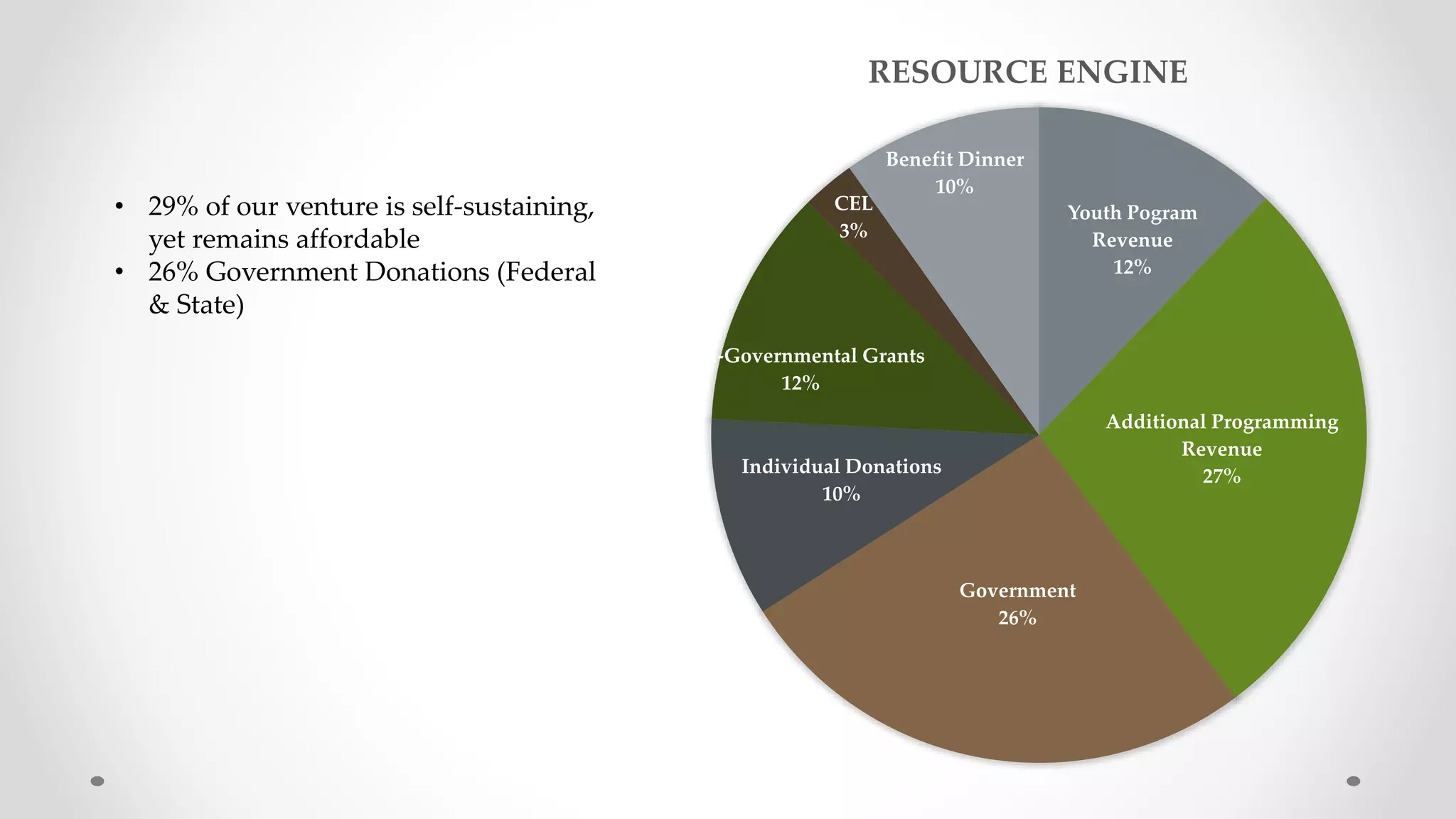
Youth Pogram
Revenue
12%
Additional Programming
Revenue
27%
Government
26%
Individual Donations
10%
Non-Governmental Grants
12%
CEL
3%
Benefit Dinner
10%
RESOURCE ENGINE
• 29% of our venture is self-sustaining,
yet remains affordable
• 26% Government Donations (Federal
& State)
Outcomes
• Returning Customer Base
• Re-Evaluating our Resource Engine
• Creating a core group of teens who exhibit interest, leadership, & talent
• Present Pitch-In as a way for highschoolers to receive community service
credit for their participation
NEXT STEPS
• Reaching out to restaurateurs
• Space
• Culinary Grad
• Appleton Farms and Essex County Partnerships
• Food Project Green Market
YOUR APPETIZER TO A HEALTHIER COMM

ISE Presentation

  • 1.
    YOUR APPETIZER TOA HEALTHIER C
  • 2.
    MAKING FOOD .. . ADVANTAGES • Control over Ingredients and therefore nutritional value • Portion size • Cost-Effective (by at least 10-15%) by our projections • Communal Effort and enjoyed together OBSTACLES • TIME • Meal Preparation Time • Menu Planning • ACCESS • Financial burden for Fresh, raw, and balanced ingredients • Food Desert
  • 3.
    FOOD DESERTS “The closestthing that we had to a grocery store was a corner store that sold only processed and sometimes expired vegetables, chips, candy and sugar sweetened beverages.” “My mother worked long hours to provide for my family; by the time she got home from work she was often too tired to cook anything so we would walk three minutes to McDonald’s or Burger King. That was if we had any food at all, sometimes we just didn’t.”
  • 4.
    A team ofcooks and educators dedicated to the flourishing of young people in their interactions with food, community, nutrition, and cooking. We will provide a safe and educational environment that promotes thoughtfulness and creativity in the kitchen and prepares students to enter the world as advocates for themselves, their community, nutrition, and food.
  • 5.
    EXISTING LYNN PROGRAMMING •Governmental Programming (Federal & State) - National School Lunch Program (NSLP) - School Breakfast Program (SBP), - Supplemental Nutrition Assistance Program (SNAP). • Red Cross mobile food pantry • The Food Project’s Lynn farmer’s market (SNAP benefits) • Looking at Existing Programming in Lynn Helps us define What we Are and Are Not
  • 6.
    • None ofthese programs address the need for youth to be self-sustaining in their pursuit of nutritious food. • Programs are primarily in Elementary & Middle schools, so few of these programs work with children over the age of 13. • Programs that work in the community also rarely involve the “dinner table” as a meeting place and common ground point for the individuals they work with. The Pitch-In Kitchen is not a redundant program. • Target market: Teens 11-18 and Adults • Accessible: low cost, central location, non-discriminatory* • Quality Culinary Education: skills, self-advocacy, leadership • Communal Table – relationships & reconciliation across boundaries GAPS IN ASSISTANCE
  • 7.
    WHO’S HERE • Chef/PrimaryCooking Instructor • Kitchen Assistant • Dialogue & Community Meal Organizer • Nutritional & Menu Consultant WHAT’S HAPPENING • Youth Cooking Class • Dinner Date for adults and groups • Menu Planning for parents and caregivers
  • 8.
    Discussions The Pitch-InKitchen centers on a dialogue about food and its place in our lives. Topics will vary, and will include educational aspects around nutritional value, appreciation for multicultural foods, celebratory foods, and organic/local foods. Food Preparations After the discussion and class time concludes, students will commence to prepare a meal. This is a supervised time of learning kitchen skills. Depending on a students’ ability, and experience, each will have different responsibilities that teach them new skills and let them hone old ones. Meal Times: Once the meal has been prepared, students will sit to enjoy the meal as a group. Parents, caregivers, and siblings will also be invited for this time. This will demonstrate community values and make this a time where students can show their parents their own skills and enjoyment of food. Occasionally, students will be encouraged to pack up their food as a take-out meal and bring it back to their own homes instead of eating in the school itself. Iron Chef: A crazy, entertaining, and humorous model for meal preparation based off of a popular television show. YOUTH CLASS
  • 9.
    CELEBRATING CULTURE INCURRICULUM Week 5: American Foods Grilled Chicken, Potatoes Kale & White Beans Week 6: Ethiopian Food Doro Wat (Spicy Braised Chicken) Lentils with Yams Injera (flat bread) Week 7: Lebanese Food Yakhnet Batata (Meat and Potato soup) Tabouleh Lebanese Rice Pudding Week 8: Puerto Rican Food Puerto Rican Rice and beans Pastelon De Carne Week 9: Vietnamese Food Pho Spring Rolls Week 1: Brazilian Street Foods Brazilian Chicken Skewers Vinaigrette and Watercress Salad Cashew Juice, Passion Fruit Juice Week 2: Italian Food Pizza Margherita Strawberry Granita Sparkling Water - Italian meal customs Week 3: Mexican Food Enchiladas Mango-Chili Paletas Week 4: Nigerian Foods Jollof Chicken and Rice Shuku Shuku (Coconut Dessert) • Celebrate diversity • Celebrate richness of culture through food • Break through boundaries of difference over communal eating
  • 10.
    Youth Pogram Revenue 12% Additional Programming Revenue 27% Government 26% IndividualDonations 10% Non-Governmental Grants 12% CEL 3% Benefit Dinner 10% RESOURCE ENGINE • 29% of our venture is self-sustaining, yet remains affordable • 26% Government Donations (Federal & State)
  • 11.
    Outcomes • Returning CustomerBase • Re-Evaluating our Resource Engine • Creating a core group of teens who exhibit interest, leadership, & talent • Present Pitch-In as a way for highschoolers to receive community service credit for their participation
  • 12.
    NEXT STEPS • Reachingout to restaurateurs • Space • Culinary Grad • Appleton Farms and Essex County Partnerships • Food Project Green Market
  • 13.
    YOUR APPETIZER TOA HEALTHIER COMM

Editor's Notes

  • #3 TALITA Our findings are from our distributed survey and demographic research
  • #4 Teens and Adult - access to a full range of fresh and wholesome ingredients to learn to cook Eat together – bridging gaps and forming community
  • #6 LEMON
  • #7 LEMON
  • #8 TALITA
  • #9 LEMON
  • #10 TALITANutrition Lesson Basic Kitchen Skills Custom/Cultural Lesson Diverse Foods Bring in People who are running restaurants
  • #11 Finacnces -lemon
  • #12 Lemon & Talita
  • #13 Lemon/talita