Growing Chefs! Ontario
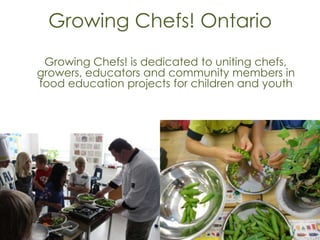
Growing Chefs! is dedicated to uniting chefs,
growers, educators and community members in
food education projects for children and youth
the mission...

To get kids excited about wholesome
healthy food!

Growing Chefs! Ontario:
provides children with the confidence, knowledge and enthusiasm to grow and
prepare local, seasonal and healthy cuisine
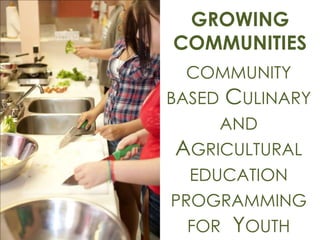
GROWING
COMMUNITIES
COMMUNITY
BASED

CULINARY
AND

AGRICULTURAL
EDUCATION

PROGRAMMING
FOR YOUTH
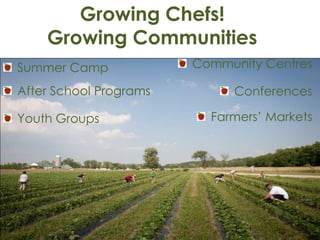
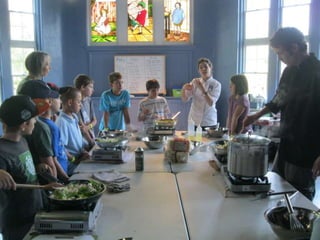
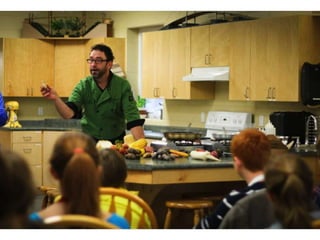
Growing Chefs!
Growing Communities
Summer Camp
After School Programs
Youth Groups

Community Centres

Conferences
Farmers’ Markets
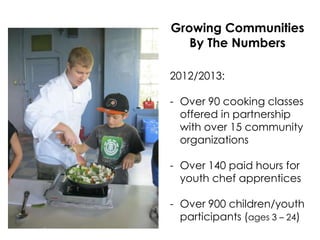
Growing Communities
By The Numbers
2012/2013:
- Over 90 cooking classes
offered in partnership
with over 15 community
organizations
- Over 140 paid hours for
youth chef apprentices

- Over 900 children/youth
participants (ages 3 – 24)
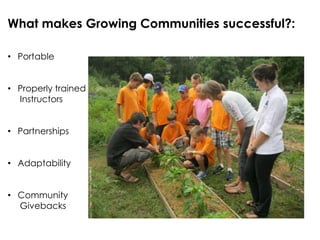
What makes Growing Communities successful?:
• Portable
• Properly trained
Instructors
• Partnerships

• Adaptability
• Community
Givebacks
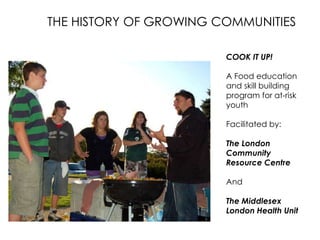
THE HISTORY OF GROWING COMMUNITIES
COOK IT UP!
A Food education
and skill building
program for at-risk
youth
Facilitated by:

The London
Community
Resource Centre
And

The Middlesex
London Health Unit
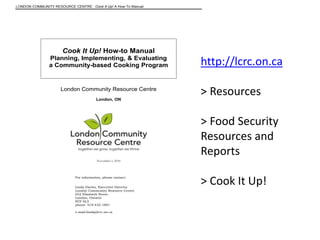
LONDON COMMUNITY RESOURCE CENTRE: Cook It Up! A How-To Manual

Cook It Up! How-to Manual
Planning, Implementing, & Evaluating
a Community-based Cooking Program

London Community Resource Centre
London, ON

http://lcrc.on.ca
> Resources
> Food Security
Resources and
Reports

November 1, 2010

For information, please contact:
Linda Davies, Executive Director
London Community Resource Centre
652 Elizabeth Street.
London, Ontario
N5Y 6L3
phone: 519-432-1801
e-mail:linda@lcrc.on.ca

> Cook It Up!
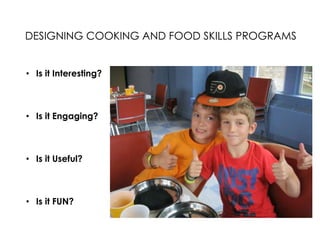
DESIGNING COOKING AND FOOD SKILLS PROGRAMS
• Is it Interesting?

• Is it Engaging?

• Is it Useful?

• Is it FUN?
INTERESTING

ENGAGING

USEFUL

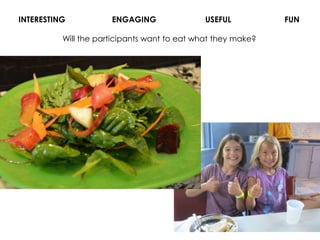
Will the participants want to eat what they make?

FUN
INTERESTING
•
•
•

ENGAGING

USEFUL

FUN

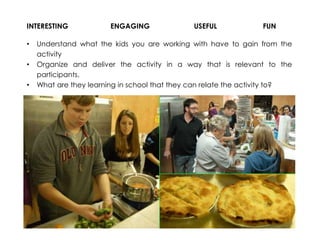
Understand what the kids you are working with have to gain from the
activity
Organize and deliver the activity in a way that is relevant to the
participants.
What are they learning in school that they can relate the activity to?
Example:

Salsa

EXAMPLE #1
Children who are 3 – 7 years
Skills: measurement (math), following a recipe (literacy), identifying
ingredients (geography/history), following instructions in a specific
order, cleaning up.
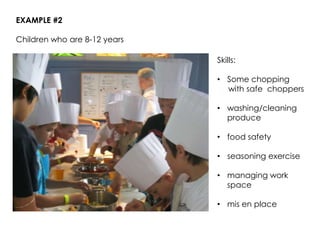
EXAMPLE #2
Children who are 8-12 years
Skills:

• Some chopping
with safe choppers
• washing/cleaning
produce

• food safety
• seasoning exercise
• managing work
space
• mis en place
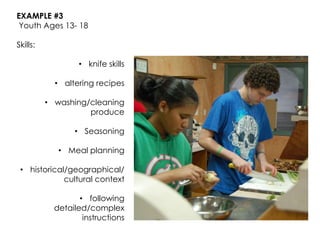
EXAMPLE #3
Youth Ages 13- 18
Skills:
• knife skills
• altering recipes
• washing/cleaning
produce
• Seasoning
• Meal planning
• historical/geographical/
cultural context
• following
detailed/complex
instructions
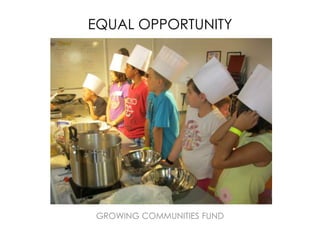
EQUAL OPPORTUNITY

GROWING COMMUNITIES FUND
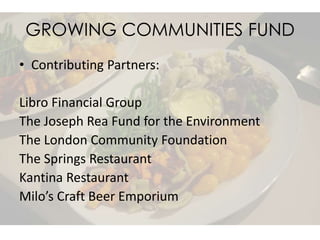
• Contributing Partners:
Libro Financial Group
The Joseph Rea Fund for the Environment
The London Community Foundation
The Springs Restaurant
Kantina Restaurant
Milo’s Craft Beer Emporium
Thank You!

Growing Chefs! Ontario

  • 2.
    Growing Chefs! Ontario GrowingChefs! is dedicated to uniting chefs, growers, educators and community members in food education projects for children and youth
  • 3.
    the mission... To getkids excited about wholesome healthy food! Growing Chefs! Ontario: provides children with the confidence, knowledge and enthusiasm to grow and prepare local, seasonal and healthy cuisine
  • 4.
  • 5.
    Growing Chefs! Growing Communities SummerCamp After School Programs Youth Groups Community Centres Conferences Farmers’ Markets
  • 6.
    Growing Communities By TheNumbers 2012/2013: - Over 90 cooking classes offered in partnership with over 15 community organizations - Over 140 paid hours for youth chef apprentices - Over 900 children/youth participants (ages 3 – 24)
  • 8.
    What makes GrowingCommunities successful?: • Portable • Properly trained Instructors • Partnerships • Adaptability • Community Givebacks
  • 11.
    THE HISTORY OFGROWING COMMUNITIES COOK IT UP! A Food education and skill building program for at-risk youth Facilitated by: The London Community Resource Centre And The Middlesex London Health Unit
  • 12.
    LONDON COMMUNITY RESOURCECENTRE: Cook It Up! A How-To Manual Cook It Up! How-to Manual Planning, Implementing, & Evaluating a Community-based Cooking Program London Community Resource Centre London, ON http://lcrc.on.ca > Resources > Food Security Resources and Reports November 1, 2010 For information, please contact: Linda Davies, Executive Director London Community Resource Centre 652 Elizabeth Street. London, Ontario N5Y 6L3 phone: 519-432-1801 e-mail:linda@lcrc.on.ca > Cook It Up!
  • 13.
    DESIGNING COOKING ANDFOOD SKILLS PROGRAMS • Is it Interesting? • Is it Engaging? • Is it Useful? • Is it FUN?
  • 14.
  • 15.
    INTERESTING • • • ENGAGING USEFUL FUN Understand what thekids you are working with have to gain from the activity Organize and deliver the activity in a way that is relevant to the participants. What are they learning in school that they can relate the activity to?
  • 16.
    Example: Salsa EXAMPLE #1 Children whoare 3 – 7 years Skills: measurement (math), following a recipe (literacy), identifying ingredients (geography/history), following instructions in a specific order, cleaning up.
  • 17.
    EXAMPLE #2 Children whoare 8-12 years Skills: • Some chopping with safe choppers • washing/cleaning produce • food safety • seasoning exercise • managing work space • mis en place
  • 18.
    EXAMPLE #3 Youth Ages13- 18 Skills: • knife skills • altering recipes • washing/cleaning produce • Seasoning • Meal planning • historical/geographical/ cultural context • following detailed/complex instructions
  • 19.
  • 20.
    GROWING COMMUNITIES FUND •Contributing Partners: Libro Financial Group The Joseph Rea Fund for the Environment The London Community Foundation The Springs Restaurant Kantina Restaurant Milo’s Craft Beer Emporium
  • 21.