Downloaded 35 times

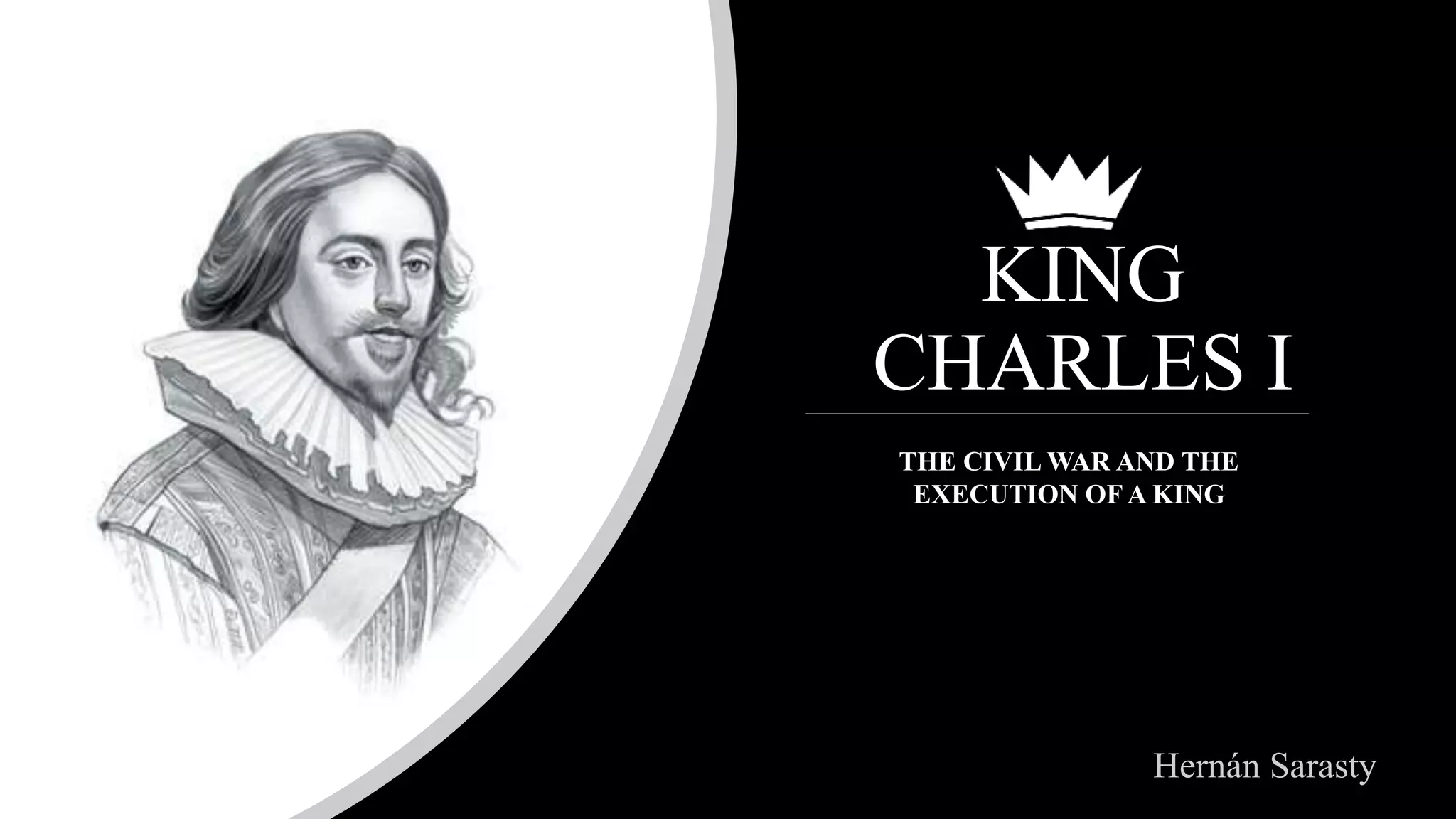
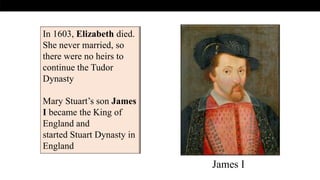
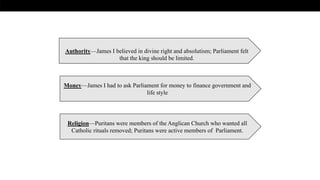
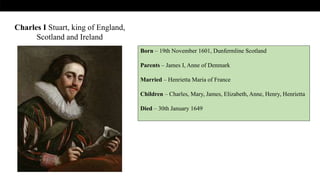
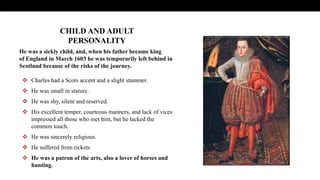



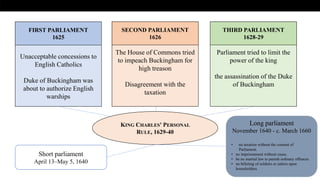
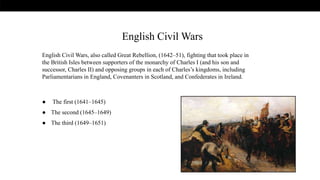
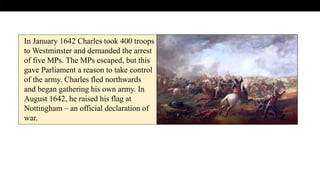
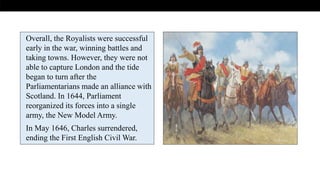
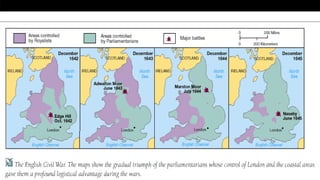
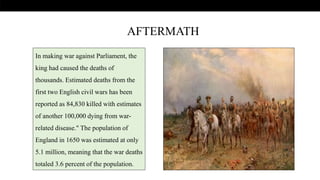
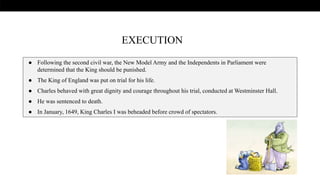
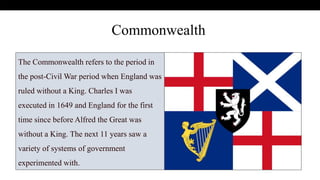
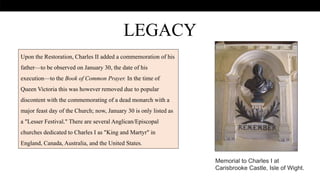

Charles I became King of England in 1625 after the death of his father, James I. Charles believed in the divine right of kings and absolute monarchy, which put him in conflict with Parliament who believed the king's power should be limited. This led Charles to dissolve Parliament in 1629 and begin 11 years of personal rule without Parliament. In 1640, Charles was forced to recall Parliament due to financial problems, but tensions rose and the English Civil Wars broke out in 1642 between royalist and parliamentary forces. Charles was eventually captured and executed for treason in 1649 after the parliamentary forces emerged victorious, establishing England as a republic without a monarch.


