ARTIST REVIEW
LET’S GET READY FOR OUR TRIP TO THE
WADSWORTH!
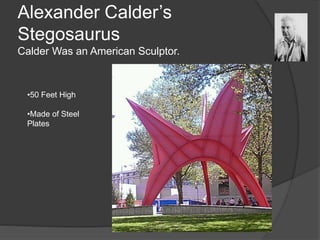
Alexander Calder’s
Stegosaurus
Calder Was an American Sculptor.
•50 Feet High
•Made of Steel
Plates
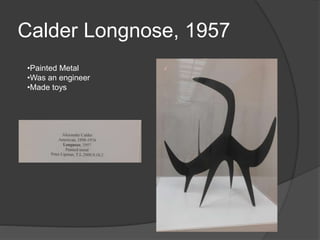
Calder Longnose, 1957
•Painted Metal
•Was an engineer
•Made toys
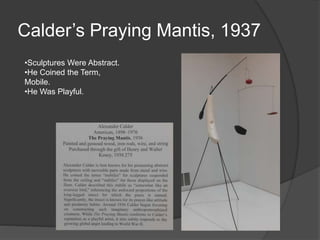
Calder’s Praying Mantis, 1937
•Sculptures Were Abstract.
•He Coined the Term,
Mobile.
•He Was Playful.
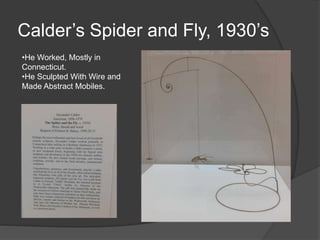
Calder’s Spider and Fly, 1930’s
•He Worked, Mostly in
Connecticut.
•He Sculpted With Wire and
Made Abstract Mobiles.
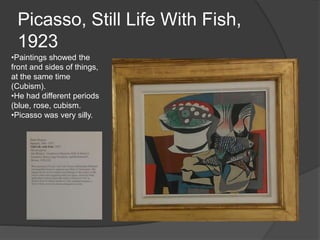
Picasso, Still Life With Fish,
1923
•Paintings showed the
front and sides of things,
at the same time
(Cubism).
•He had different periods
(blue, rose, cubism.
•Picasso was very silly.
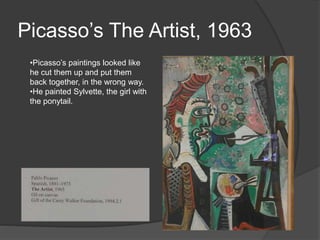
Picasso’s The Artist, 1963
•Picasso’s paintings looked like
he cut them up and put them
back together, in the wrong way.
•He painted Sylvette, the girl with
the ponytail.
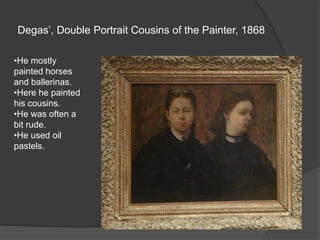
Degas’, Double Portrait Cousins of the Painter, 1868
•He mostly
painted horses
and ballerinas.
•Here he painted
his cousins.
•He was often a
bit rude.
•He used oil
pastels.
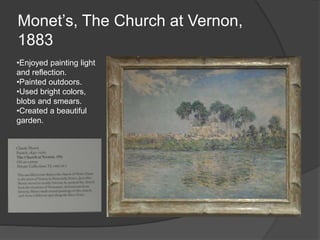
Monet’s, The Church at Vernon,
1883
•Enjoyed painting light
and reflection.
•Painted outdoors.
•Used bright colors,
blobs and smears.
•Created a beautiful
garden.
Renoir, Claude Monet Paining His Garden,
1873
•Worked with
Monet.
•Painted
outdoors.
•Used bright
colors.
•Painted light,
like Monet.
Georgia O’Keeffe, The Lawrence Tree, 1929
•She painted close-
ups of flowers in
bright, bold colors.
•She simplified her
subjects so that
nothing remained
except the most
important parts.
•She simplified her
subjects so that
nothing remained
except the most
important parts.
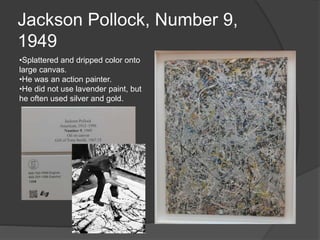
Jackson Pollock, Number 9,
1949
•Splattered and dripped color onto
large canvas.
•He was an action painter.
•He did not use lavender paint, but
he often used silver and gold.
Mondrian, Composition in Blue and White,
1935
•Painted primary colors,
squares, rectangles and black
lines.
•He wanted to paint very simply,
using simple shapes and
colors.
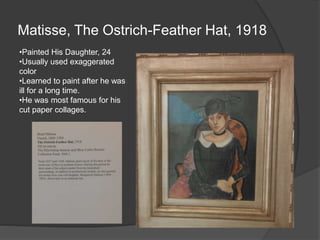
Matisse, The Ostrich-Feather Hat, 1918
•Painted His Daughter, 24
•Usually used exaggerated
color
•Learned to paint after he was
ill for a long time.
•He was most famous for his
cut paper collages.
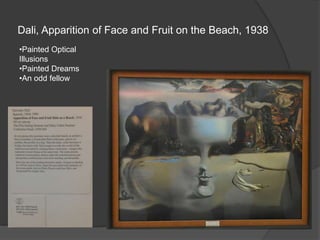
Dali, Apparition of Face and Fruit on the Beach, 1938
•Painted Optical
Illusions
•Painted Dreams
•An odd fellow
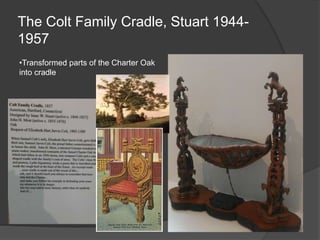
The Colt Family Cradle, Stuart 1944-
1957
•Transformed parts of the Charter Oak
into cradle
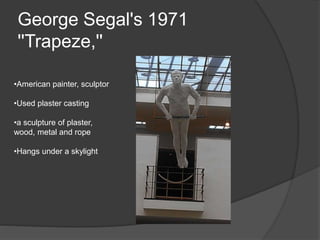
George Segal's 1971
''Trapeze,''
•American painter, sculptor
•Used plaster casting
•a sculpture of plaster,
wood, metal and rope
•Hangs under a skylight
Rules when visiting the
Wadsworth
• .
 Because even small amounts of oil and dirt can
cause damage, please do not touch the artwork,
including sculpture, furniture, paintings and other
objects.
 Please remember that food, drink, and gum are not
permitted in the galleries.
 Keep a safe distance between you and the artwork.
We prefer that you don’t point, and never point with
an object in your hand. At times, Protection Services
Officers may require more distance between visitors
and the artwork.
 Please walk. Running and pushing can cause
accidents and disrupt other visitors.
 Sharp or pointed objects are not permitted in the
galleries, including scissors, umbrellas, and other
pointed objects.

Kindergarten Wadsworth Tour Powerpoint

  • 1.
    ARTIST REVIEW LET’S GETREADY FOR OUR TRIP TO THE WADSWORTH!
  • 2.
    Alexander Calder’s Stegosaurus Calder Wasan American Sculptor. •50 Feet High •Made of Steel Plates
  • 3.
    Calder Longnose, 1957 •PaintedMetal •Was an engineer •Made toys
  • 4.
    Calder’s Praying Mantis,1937 •Sculptures Were Abstract. •He Coined the Term, Mobile. •He Was Playful.
  • 5.
    Calder’s Spider andFly, 1930’s •He Worked, Mostly in Connecticut. •He Sculpted With Wire and Made Abstract Mobiles.
  • 6.
    Picasso, Still LifeWith Fish, 1923 •Paintings showed the front and sides of things, at the same time (Cubism). •He had different periods (blue, rose, cubism. •Picasso was very silly.
  • 7.
    Picasso’s The Artist,1963 •Picasso’s paintings looked like he cut them up and put them back together, in the wrong way. •He painted Sylvette, the girl with the ponytail.
  • 8.
    Degas’, Double PortraitCousins of the Painter, 1868 •He mostly painted horses and ballerinas. •Here he painted his cousins. •He was often a bit rude. •He used oil pastels.
  • 9.
    Monet’s, The Churchat Vernon, 1883 •Enjoyed painting light and reflection. •Painted outdoors. •Used bright colors, blobs and smears. •Created a beautiful garden.
  • 10.
    Renoir, Claude MonetPaining His Garden, 1873 •Worked with Monet. •Painted outdoors. •Used bright colors. •Painted light, like Monet.
  • 11.
    Georgia O’Keeffe, TheLawrence Tree, 1929 •She painted close- ups of flowers in bright, bold colors. •She simplified her subjects so that nothing remained except the most important parts. •She simplified her subjects so that nothing remained except the most important parts.
  • 12.
    Jackson Pollock, Number9, 1949 •Splattered and dripped color onto large canvas. •He was an action painter. •He did not use lavender paint, but he often used silver and gold.
  • 13.
    Mondrian, Composition inBlue and White, 1935 •Painted primary colors, squares, rectangles and black lines. •He wanted to paint very simply, using simple shapes and colors.
  • 14.
    Matisse, The Ostrich-FeatherHat, 1918 •Painted His Daughter, 24 •Usually used exaggerated color •Learned to paint after he was ill for a long time. •He was most famous for his cut paper collages.
  • 15.
    Dali, Apparition ofFace and Fruit on the Beach, 1938 •Painted Optical Illusions •Painted Dreams •An odd fellow
  • 16.
    The Colt FamilyCradle, Stuart 1944- 1957 •Transformed parts of the Charter Oak into cradle
  • 17.
    George Segal's 1971 ''Trapeze,'' •Americanpainter, sculptor •Used plaster casting •a sculpture of plaster, wood, metal and rope •Hangs under a skylight
  • 18.
    Rules when visitingthe Wadsworth • .  Because even small amounts of oil and dirt can cause damage, please do not touch the artwork, including sculpture, furniture, paintings and other objects.  Please remember that food, drink, and gum are not permitted in the galleries.  Keep a safe distance between you and the artwork. We prefer that you don’t point, and never point with an object in your hand. At times, Protection Services Officers may require more distance between visitors and the artwork.  Please walk. Running and pushing can cause accidents and disrupt other visitors.  Sharp or pointed objects are not permitted in the galleries, including scissors, umbrellas, and other pointed objects.

Editor's Notes

  • #17 Charter Oak. Governor of Connecticut’s Chair. State Tree. Connecticut was going to be split between NY and MA if the charter was not returned.