Renal failure
Nephron
Function of Kidney
1. Excretion of waste products
2. Regulation of acid-base balance
3. Regulation of salt-water balance
4. Formation of renin and erythropoietin
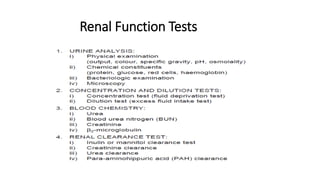
Renal Function Tests
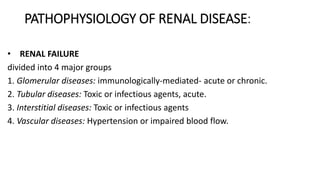
PATHOPHYSIOLOGY OF RENAL DISEASE:
• RENAL FAILURE
divided into 4 major groups
1. Glomerular diseases: immunologically-mediated- acute or chronic.
2. Tubular diseases: Toxic or infectious agents, acute.
3. Interstitial diseases: Toxic or infectious agents
4. Vascular diseases: Hypertension or impaired blood flow.
Acute Renal Failure (ARF)
It is a syndrome characterised by rapid onset of renal dysfunction, chiefly oliguria
or anuria, and sudden increase in metabolic waste-products in the blood with
consequent development of uraemia.
Pathogenesis
• Prerenal- cause sudden decrease in blood flow to the nephron.
Renal ischaemia,cardiac output and hypovolaemia.
• Intra Renal- disease of renal tissue itself.
vascular disease, diseases of glomeruli, acute tubular necrosis
• Post renal-obstruction to the flow of urine anywhere along the renal tract
distal to the opening of the collecting ducts.
CLINICAL FEATURES
• Depends on underlying cause and stage of the disease.
3 major patterns
• 1. Syndrome of acute nephritis- acute post-streptococcal glomerulonephritis,
rapidly progressive glomerulonephritis
• mild proteinuria, haematuria, oedema and mild hypertension.
2. Syndrome accompanying tubular pathology
• destruction of the tubular cells of the nephron
i) Oliguric phase-7 to 10 days is characterised by output <400 ml/day, low
Specific gravity
• ii) Diuretic phase- healing of tubules, leads to improvement in urinary output
urine is of low or fixed specific gravity
• iii) Phase of recovery-Full healing in about half the cases, while others
terminate to death.
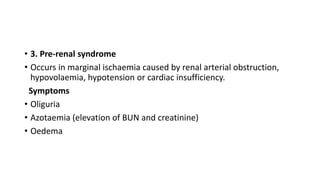
• 3. Pre-renal syndrome
• Occurs in marginal ischaemia caused by renal arterial obstruction,
hypovolaemia, hypotension or cardiac insufficiency.
Symptoms
• Oliguria
• Azotaemia (elevation of BUN and creatinine)
• Oedema
Lab findings
Complications of ARF
Chronic renal failure
• It is a syndrome characterised by progressive and irreversible deterioration of
renal function due to slow destruction of renal parenchyma.
ETIOPATHOGENESIS
Diseases leading to CRF classified into 2 major groups:
• causing glomerular pathology,
• causing tubulointerstitial pathology.
• In the final stage of CRF, all parts of the nephron are involved.
• 1. Diseases causing glomerular pathology.
• Glomerular destruction results in changes in filtration process and leads to
development of the nephrotic syndrome characterised by
• proteinuria, hypoalbuminaemia and oedema.
Examples
• i) Primary glomerular pathology- various types of glomerulonephritis
• ii) Systemic glomerular pathology: systemic lupus erythematosus, serum
sickness nephritis and diabetic nephropathy.
2. Diseases causing tubulointerstitial pathology.
• Cause alterations in reabsorption and secretion of important
constituents.
According to initiating etiology categorized into 4 groups:
• Vascular,
• Infectious,
• Toxic
• Obstructive.
CLINICAL FEATURES.
Clinical manifestations of fullblown CRF explained by
• primary (renal) uraemic manifestations
• Secondary (systemic or extra-renal) uraemic manifestations.
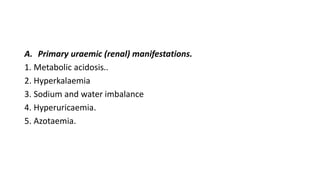
A. Primary uraemic (renal) manifestations.
1. Metabolic acidosis..
2. Hyperkalaemia
3. Sodium and water imbalance
4. Hyperuricaemia.
5. Azotaemia.
B. Secondary uraemic (extra-renal) manifestations.
1. Anaemia.
2. Integumentary system: Deposit of urinary pigment urochrome
3. Cardiovascular system. Increased workload, congestive heart failure.
4. Respiratory system: pulmonary congestion, pulmonary oedema
5. Digestive system: Anaemia, Gastrointestinal irritation
6. Skeletal system. Renal osteodystrophy
• Two major types of skeletal disorders may occur:
• i) Osteomalacia
• ii) Osteitis fibrosa occurs due to elevated levels of parathormone
Lab findings in CRF
• Elevated BUN & creatinine
• Decreased GFR
• Hyperkalaemia
• Hyponatremia
• Acidosis
• Hypocalcaemia
• Hyperphosphatemia
• Elevated Uric acid
• Hypoproteinemia
• Anaemia
• Elevated cholesterol levels
Complications
1. Decreased renal reserve.
• Damage to renal parenchyma is marginal and the kidneys remain functional.
• GFR is about 50% of normal, BUN & creatinine- normal.
2.Renal insufficiency.
• 75% of destroyed. The GFR- 25%
3.Renal failure.
• 90% destroyed. GFR is approximately 10%
• Findings: oedema, metabolic acidosis, hypocalcaemia, and uraemia.
4.End-stage kidney. The GFR -5%
Questionarrie
• Define Renal failure
• Classify renal failure on etiological basis
• Define Acute Renal failure
• Discuss the etiopathogenesis of ARF
• Describe the pathology of ARF
• Enumerate the laboratory Findings in ARF
• Enumerate the clinical features and complications of ARF
• Renal function test
• Define Chronic Renal Failure
• Discuss the etiopathogenesis of CRF
• Describe the pathology of CRF
• Enumerate the lab findings in CRF
• Complication of CRF

Kidney failure.pptx

  • 1.
  • 2.
  • 3.
    Function of Kidney 1.Excretion of waste products 2. Regulation of acid-base balance 3. Regulation of salt-water balance 4. Formation of renin and erythropoietin
  • 4.
  • 5.
    PATHOPHYSIOLOGY OF RENALDISEASE: • RENAL FAILURE divided into 4 major groups 1. Glomerular diseases: immunologically-mediated- acute or chronic. 2. Tubular diseases: Toxic or infectious agents, acute. 3. Interstitial diseases: Toxic or infectious agents 4. Vascular diseases: Hypertension or impaired blood flow.
  • 6.
    Acute Renal Failure(ARF) It is a syndrome characterised by rapid onset of renal dysfunction, chiefly oliguria or anuria, and sudden increase in metabolic waste-products in the blood with consequent development of uraemia.
  • 7.
    Pathogenesis • Prerenal- causesudden decrease in blood flow to the nephron. Renal ischaemia,cardiac output and hypovolaemia. • Intra Renal- disease of renal tissue itself. vascular disease, diseases of glomeruli, acute tubular necrosis • Post renal-obstruction to the flow of urine anywhere along the renal tract distal to the opening of the collecting ducts.
  • 8.
    CLINICAL FEATURES • Dependson underlying cause and stage of the disease. 3 major patterns • 1. Syndrome of acute nephritis- acute post-streptococcal glomerulonephritis, rapidly progressive glomerulonephritis • mild proteinuria, haematuria, oedema and mild hypertension.
  • 9.
    2. Syndrome accompanyingtubular pathology • destruction of the tubular cells of the nephron i) Oliguric phase-7 to 10 days is characterised by output <400 ml/day, low Specific gravity • ii) Diuretic phase- healing of tubules, leads to improvement in urinary output urine is of low or fixed specific gravity • iii) Phase of recovery-Full healing in about half the cases, while others terminate to death.
  • 10.
    • 3. Pre-renalsyndrome • Occurs in marginal ischaemia caused by renal arterial obstruction, hypovolaemia, hypotension or cardiac insufficiency. Symptoms • Oliguria • Azotaemia (elevation of BUN and creatinine) • Oedema
  • 11.
  • 12.
  • 13.
    Chronic renal failure •It is a syndrome characterised by progressive and irreversible deterioration of renal function due to slow destruction of renal parenchyma.
  • 14.
    ETIOPATHOGENESIS Diseases leading toCRF classified into 2 major groups: • causing glomerular pathology, • causing tubulointerstitial pathology. • In the final stage of CRF, all parts of the nephron are involved.
  • 15.
    • 1. Diseasescausing glomerular pathology. • Glomerular destruction results in changes in filtration process and leads to development of the nephrotic syndrome characterised by • proteinuria, hypoalbuminaemia and oedema. Examples • i) Primary glomerular pathology- various types of glomerulonephritis • ii) Systemic glomerular pathology: systemic lupus erythematosus, serum sickness nephritis and diabetic nephropathy.
  • 16.
    2. Diseases causingtubulointerstitial pathology. • Cause alterations in reabsorption and secretion of important constituents. According to initiating etiology categorized into 4 groups: • Vascular, • Infectious, • Toxic • Obstructive.
  • 17.
    CLINICAL FEATURES. Clinical manifestationsof fullblown CRF explained by • primary (renal) uraemic manifestations • Secondary (systemic or extra-renal) uraemic manifestations.
  • 18.
    A. Primary uraemic(renal) manifestations. 1. Metabolic acidosis.. 2. Hyperkalaemia 3. Sodium and water imbalance 4. Hyperuricaemia. 5. Azotaemia.
  • 19.
    B. Secondary uraemic(extra-renal) manifestations. 1. Anaemia. 2. Integumentary system: Deposit of urinary pigment urochrome 3. Cardiovascular system. Increased workload, congestive heart failure. 4. Respiratory system: pulmonary congestion, pulmonary oedema 5. Digestive system: Anaemia, Gastrointestinal irritation 6. Skeletal system. Renal osteodystrophy • Two major types of skeletal disorders may occur: • i) Osteomalacia • ii) Osteitis fibrosa occurs due to elevated levels of parathormone
  • 20.
    Lab findings inCRF • Elevated BUN & creatinine • Decreased GFR • Hyperkalaemia • Hyponatremia • Acidosis • Hypocalcaemia • Hyperphosphatemia • Elevated Uric acid • Hypoproteinemia • Anaemia • Elevated cholesterol levels
  • 21.
    Complications 1. Decreased renalreserve. • Damage to renal parenchyma is marginal and the kidneys remain functional. • GFR is about 50% of normal, BUN & creatinine- normal. 2.Renal insufficiency. • 75% of destroyed. The GFR- 25% 3.Renal failure. • 90% destroyed. GFR is approximately 10% • Findings: oedema, metabolic acidosis, hypocalcaemia, and uraemia. 4.End-stage kidney. The GFR -5%
  • 22.
    Questionarrie • Define Renalfailure • Classify renal failure on etiological basis • Define Acute Renal failure • Discuss the etiopathogenesis of ARF • Describe the pathology of ARF • Enumerate the laboratory Findings in ARF
  • 23.
    • Enumerate theclinical features and complications of ARF • Renal function test • Define Chronic Renal Failure • Discuss the etiopathogenesis of CRF • Describe the pathology of CRF • Enumerate the lab findings in CRF • Complication of CRF

Editor's Notes

  • #4 of waste products resulting from protein metabolism.
  • #6 4 major groups according to the predominant involvement of corresponding morphologic components
  • #10 Oliguric-metabolic acidosis, hyperkalaemia, hypernatraemia and hypervolaemia due to secondary effects of circulatory overload and pulmonary oedema.