Keys to
Successful Social
Media
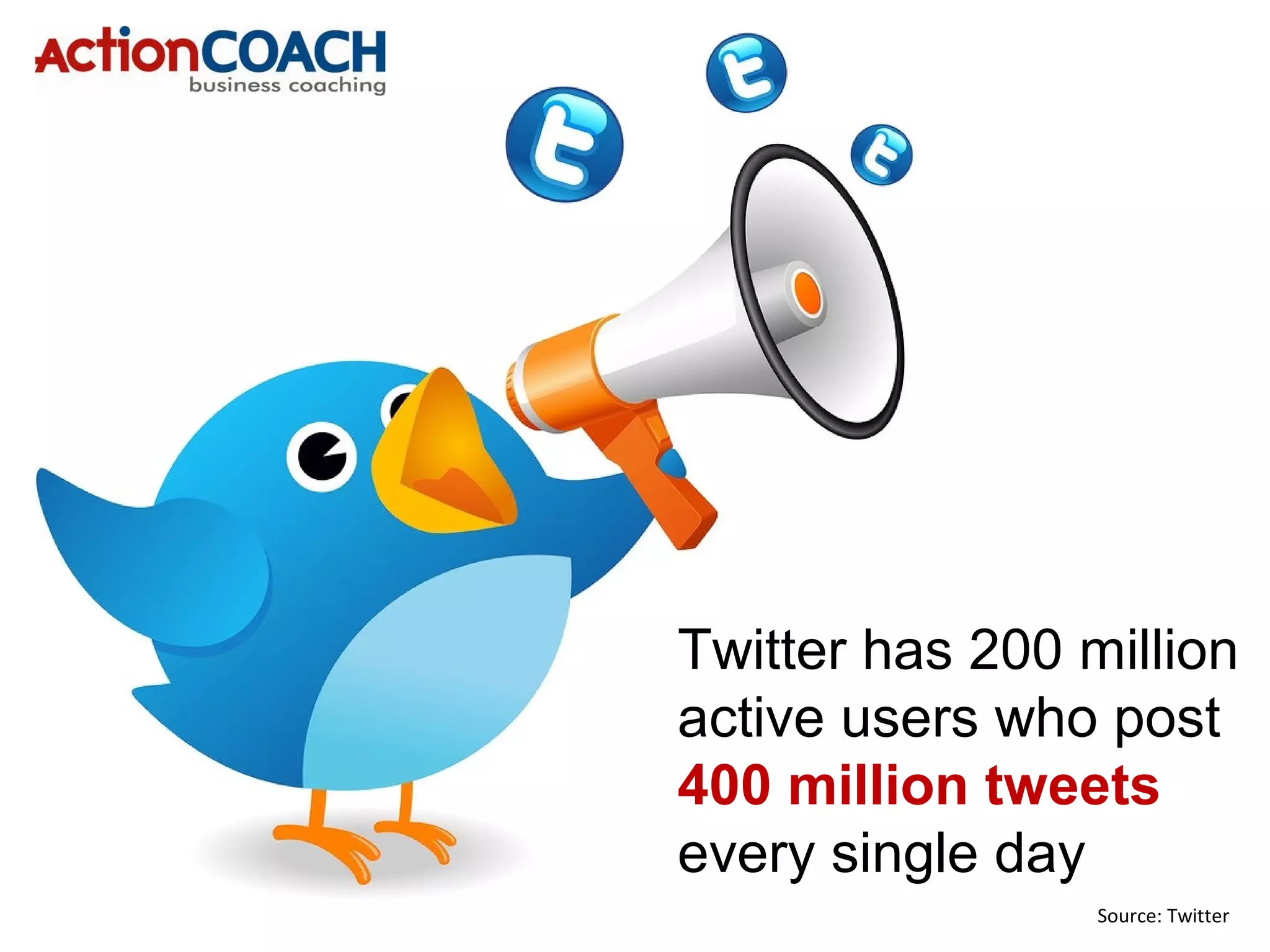
Twitter has 200 million
active users who post
400 million tweets
every single day
Source: Twitter
Facebook’s weekly traffic
is greater than …
GOOGLE’S
Source: HubSpot
is the world’s 2nd
largest
search engine
77%
of buyers say they are more
likely to buy from a company
whose CEO uses social media
Source: Emarketer
LinkedIn has more
than 200 million
members
Source: LinkedIn
34%
of marketers have generated
leads using Twitter and
20% have closed deals
Source: Emarketer
Facebook has
over 610 million
daily active users
Source: CNet
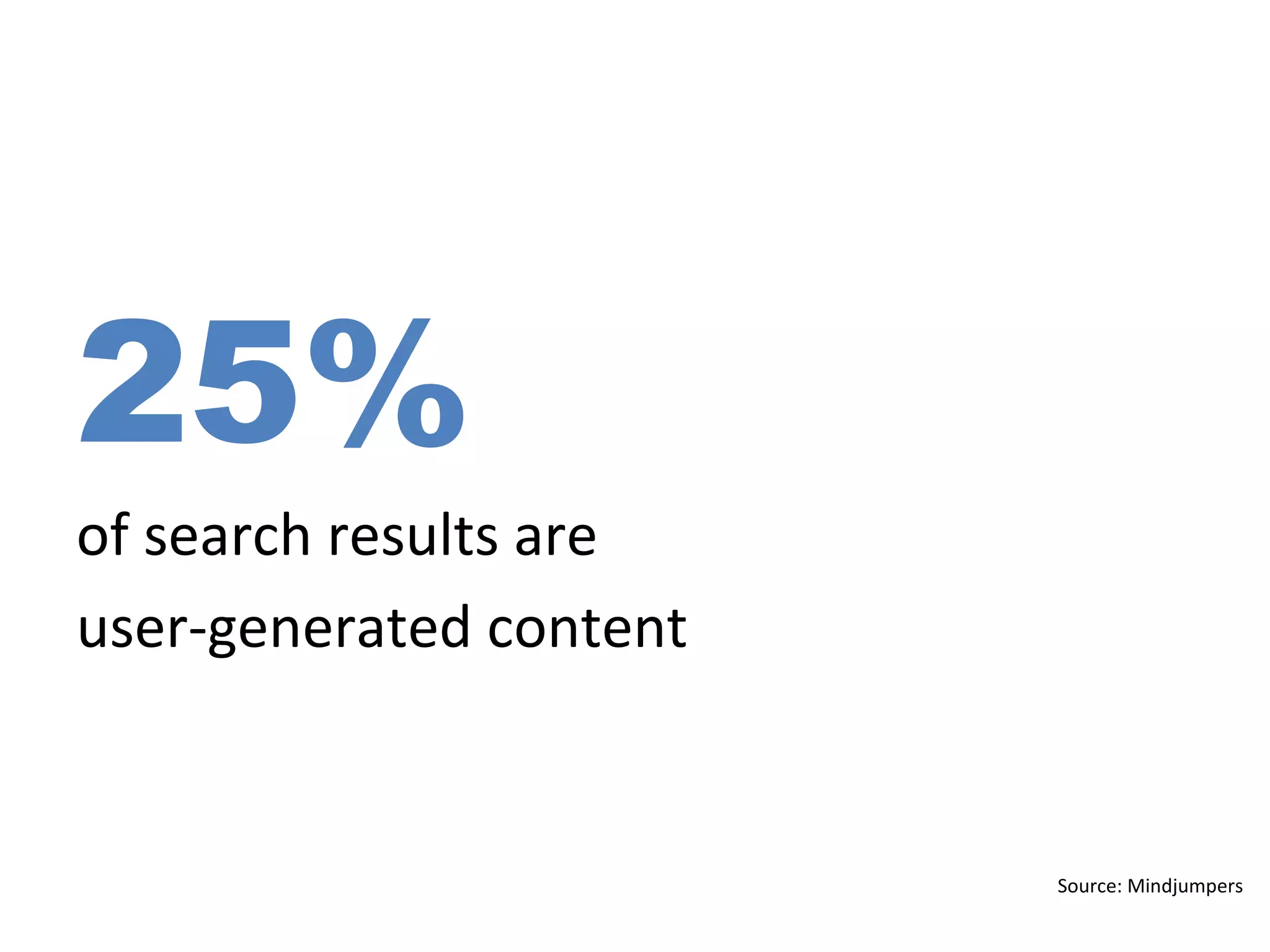
25%
of search results are
user-generated content
Source: Mindjumpers
Google+
has over
500 million users
Source: Business Times
Source: Dan Zarella
Is social media relevantIs social media relevant
to your business?to your business?
Getting Started
 Set clear goals
 Capability to produce quality
content
 Available human resources
 Incorporation of social marketing
strategies throughout the buying
process
 Aware of customers’ social
preferences
 Commitment to making every
campaign social
Your Social Marketing Plan
• Set goals for results
• Defined target group
• Strategies for success (Test & Measure)
What should I talk about?
Content
• Visual-Auditory-Kinaesthetic
Graph source: Marketo
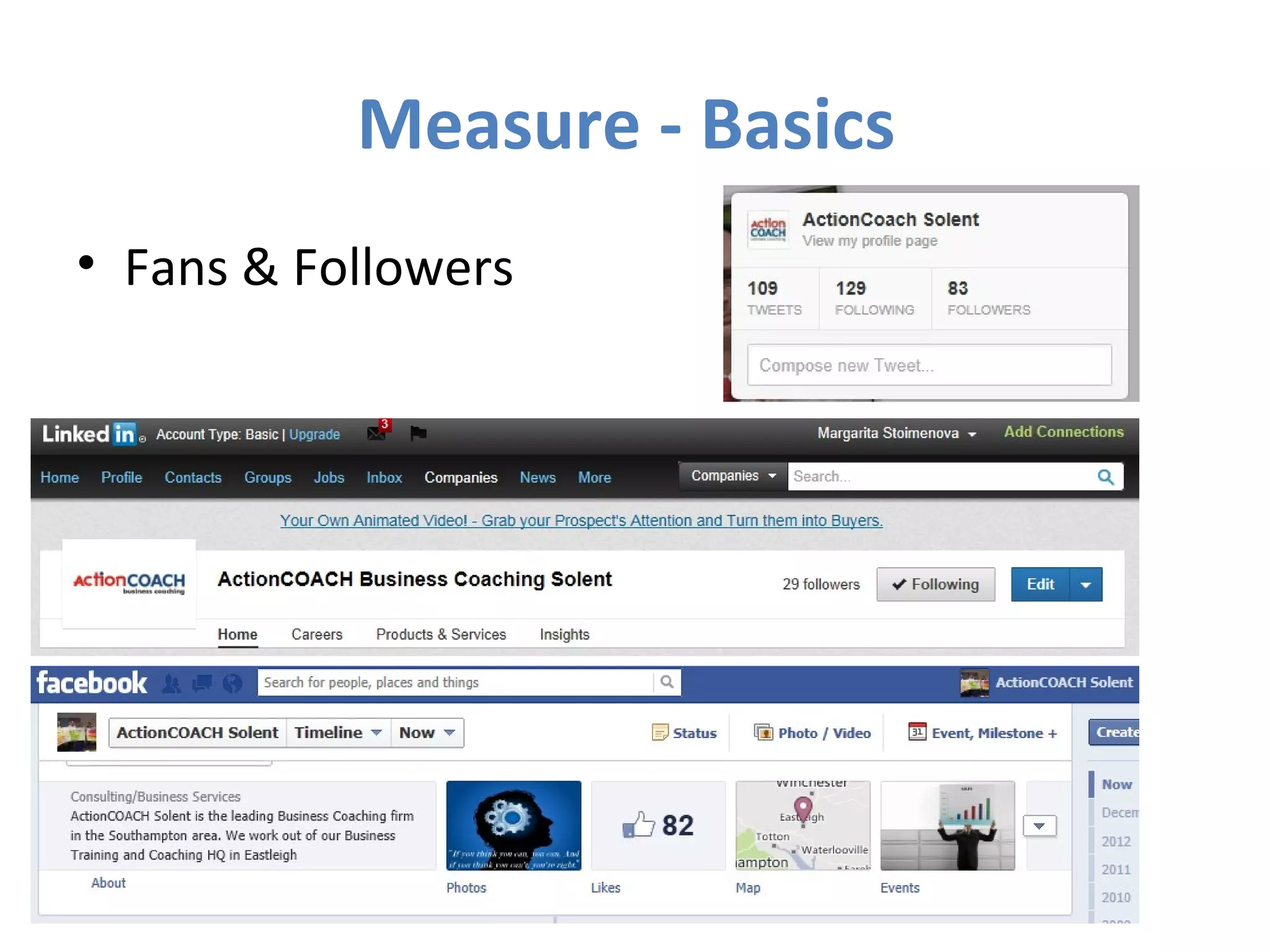
Measure - Basics
• Fans & Followers
Measure - Engagement
• Re-tweets, likes, shares, +1s
• Comments
• Conversations
• Web traffic
Measure - Influence
• Klout
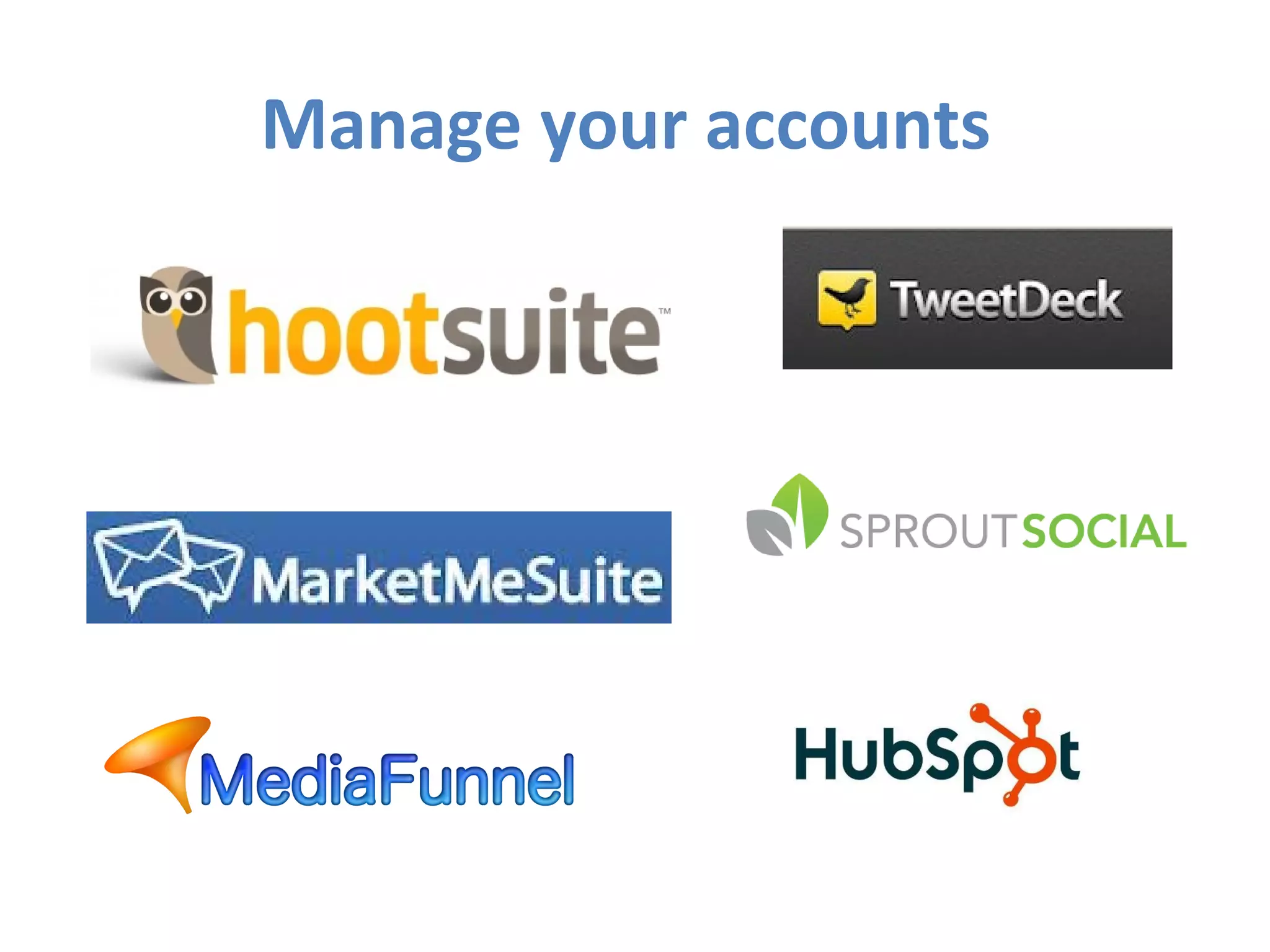
Manage your accounts
Quick summary
• DO NOT BUY YOUR AUDIENCE!
• Make it easy to share
• Ask for comments
• Share and comment
Checklist: AVOID!
x Diving into social marketing
unless you’re ready
x Being a big brag
x Being afraid of the challenging
ROI
x Being afraid to try it because it
doesn’t rely on the traditional
metrics
x Using social media as advertising
alone
x Assuming that every social media
site is good for your business
x Merely creating social pages and
thinking that you are done
Learn more:
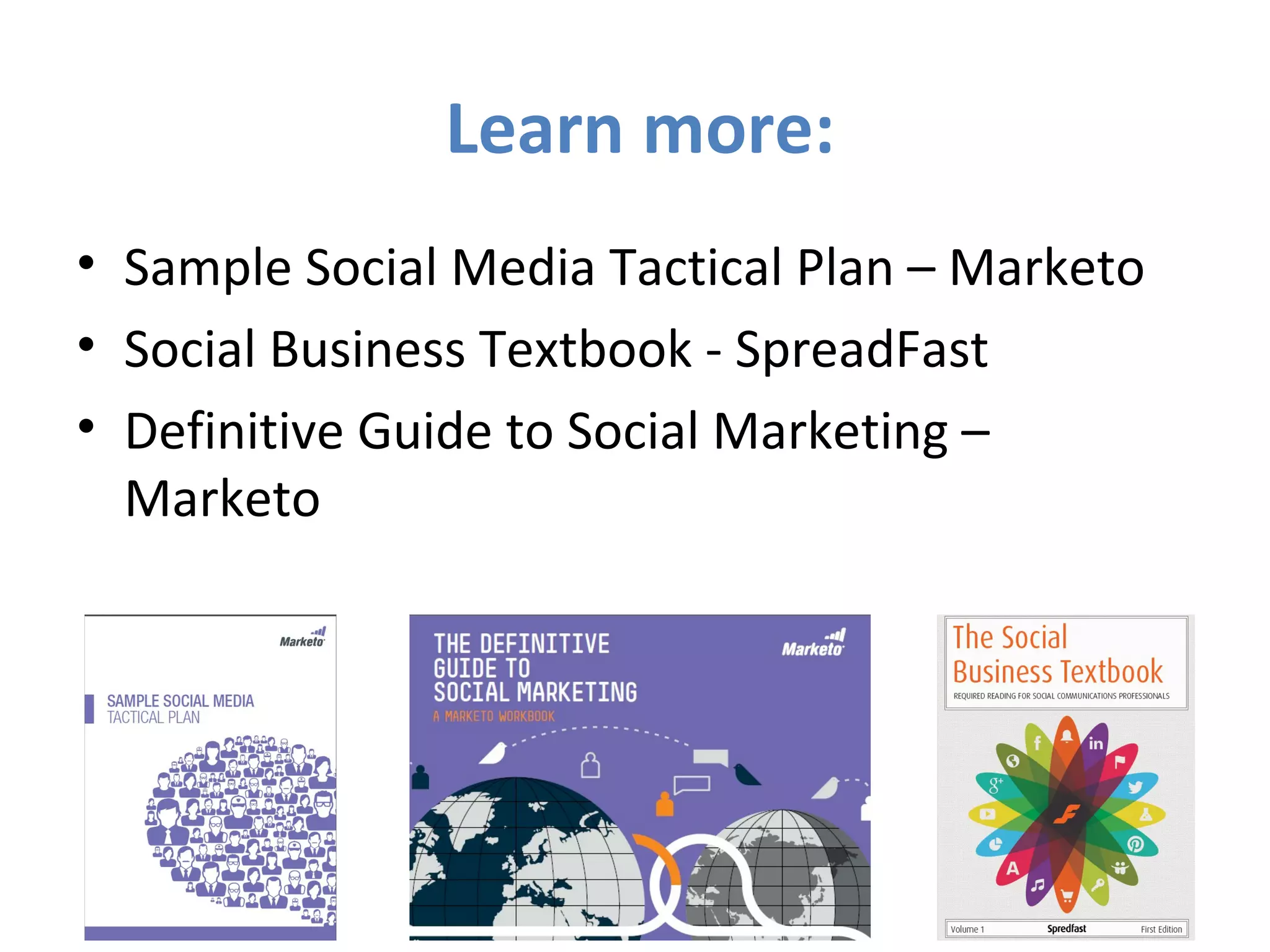
• Sample Social Media Tactical Plan – Marketo
• Social Business Textbook - SpreadFast
• Definitive Guide to Social Marketing –
Marketo
Quotes of the day
• “What happens in Vegas stays in Vegas; what
happens on Twitter stays on Google…
forever!”
Jure Klepic
• “You are what you tweet.”
Alex Tew
Thank you for your time!

Keys to successful social media

Editor's Notes

  • #4 Source: Twitter
  • #5 Source: HubSpot
  • #7 Source: Emarketer
  • #8 Source: LinkedIn
  • #9 Source: Emarketer
  • #10 Source: CNet
  • #11 Source: Mindjumpers
  • #12 Source: Business Times
  • #13 Source: Dan Zarella
  • #14 If you say that social media isn’t relevant to your business is like saying “we don’t need to talk to people to grow our business”. Do you know of a business that is not communicating with it’s customers? No matter the business type or the industry. Every good company is trying to build a relationship with their customers. Because people buy into people and that plays a huge role in the purchasing decisions that they make. Social media is simply an extra platform which allows you to form these relationships. Social media is the perfect arena for consumer brands, what with coupons and special offers being pinged around like wildfire but B2B companies have a different advantage over B2C companies….they tend to have a much better understanding of their customers which means they are able to target them with content that genuinely connects with them. Social media provides the perfect platform to get that content to them. Social media can also be used for any industry – it’s true that it’s highly regulated such as banking or an older industry such as printing. But there are always things you can talk about. Besides, you have to remember that what you post in your social media shouldn’t be all about you, it should be targeted to your customers and what they find interesting and useful.
  • #15 Social marketing holds tremendous opportunities for companies looking to drive new business and increase revenue, but only if you first develop a solid foundation and an understanding of what makes the world of social marketing tick. No matter how good your current marketing strategy is, you’ll have to revisit it and add a social spin to it.   My company has clear goals for social marketing . Be as specific as you can and keep these objectives in mind for every initiative you execute. Think and discuss with your team your social marketing priorities and strategy. It is important to have a solid understanding of your business’ personal social marketing methodology and how your team will execute in order to define metrics.   We have the human resources to commit to social marketing. Before you start your social marketing ask yourself if you can allocate the resources needed. Social marketing is about real-time response and continuously updated information – both of which require commitment and dedication.   We produce enough quality content to sustain social marketing conversations. Content feeds the social marketing beast. Audit your existing marketing assets and identify your thought leadership pieces. Also make sure you put a plan in place that will enable you to consistently produce social marketing-worthy content, including blog posts, infographics, videos, and white papers. You can use external resources, such as news, pictures external blogs   We know which social media sites are popular with our prospects and customers. Do your research and focus your energy and investments where your audiences are.   We are ready to incorporate social marketing strategies throughout the buying process . Social marketing is not just for the top of the demand generation funnel. It’s important to monitor and track your prospects and customers throughout your sales pipeline.   We are committed to making every campaign social. As you determine what your campaign calendar looks like for the next six months or a year, you want to make sure that you have a plan to use social to amplify every marketing tactic. Whether you have just created a new content piece or are running a demand generation campaign, be sure to include social sharing and create tactics within the campaign that encourage relationship building across your social landscape.
  • #16 Developing a social marketing plan is similar to developing any other strategy. There is no standard approach, the basics can be addressed by answering few questions: What do you want to accomplish and what are your distinct action items for each goal? Social marketing requires time, effort and resources. Take the tactics you’ve decided on and associate clear goals, objectives and action items for each one. As with any new strategy, try and test a variety of social marketing channels and tactics to see which has the most significant impact on your goals. Who are you targeting with social marketing? Prospects? Customers? Media? Once you’ve decided on the targets, define characteristics of each group. Develop your perfect customer: a fictional character that represents a target group. Start by listing the characteristics you would have for a typical customer, but add a social marketing dimension to it.   How can you deploy social marketing tactics for measurable success? So you have your social media set up, you’re tweeting, posting etc, but how do you know if it actually has any effect? You need to measure everything. Bear in mind that to actually start generating revenue from social media can take up to a year! But by setting up correct objectives, ones that you could measure, you will give yourself a peace of mind and confidence that you’re going in the right direction. Using the correct tools helps too, but we’ll mention those a bit later. Think : Target, Offer, Copy  
  • #17 While it’s great to tell the world about how great you, your business, services or products are people are not really interested to hear all that. If I came along to you today and told you buy from me because I am awesome what would you tell me? You need to find the right content, something that will get your audience talking about you, sharing and commenting on your posts, tweets etc.
  • #18 You want to make sure that you are creating a variety of content types to share on social media channels so your audience remains engaged. Content is a great way to show your expertise and your personality. There are many purposes for creating content, and although your main goal is building your brand expertise, you also want to make sure you also integrate fun, shareable pieces. What are the learning styles are there? How do people learn? Always remember that people are Visual-Auditory-Kinaesthetic , so make sure that you have various types of content The Content Marketing Institute put out a great diagram to explain content purposes and how often each type should be shared on your social channels. These content types can take many forms, but you will want to make sure you have a good mixture in your content strategy: • Ebooks and Definitive Guides • White papers • Tip sheets/checklists • Blog posts • Infographics • Videos • Fun visual content such as memes and cartoons • Slideshows • Podcasts You can go about it by putting together a content plan. Use the information that you already have – events coming up or attending, new products or services. When writing a blog make sure that it has relevant information something that adds value and it’s a good quality, add variety. Obviously if you’re busy and don’t have time to write daily blogs, produce weekly podcasts or videos you can use somebody else's. Make sure that the information is relevant though and it’s coming from a good source. Also make sure that you add a little something which shows that you’ve actually read the content in there and you genuinely recommend it, e.g. “I think that having extra funding options for entrepreneurs will really help improve the state of our economy. “ One thing to remember is that you should never just copy a blog post to your own blog, because Google will automatically improve the original blog post’s SEO while decrease yours. That means that when people are looking for this certain topic on Google, the original article will show up on top while yours will be left somewhere lower down on the result’s page.
  • #19 Now that you’re set up on all your social sites you need to see how they are doing. Despite some of the uncertainty around measuring social marketing interactions, there are best practices that you can put in place. Again, the way you go about measuring your ROI will have to be altered, as social marketing is a much more fluid channel than the traditional marketing methods. - Start with the first and most obvious metric. Don’t get too hung up on these numbers and don’t give in to companies that offer you “thousands of followers in 2 weeks” . On Twitter, for example they do this by following thousands of accounts who will follow back automatically. (stream full with completely useless content and loads of followers who are completely irrelevant to you.) - The more people follow you the bigger potential reach your content and marketing message has - partially true, but people should follow you only if you have something interesting to say, and unless that’s the case they wont share your content. - Grow your audience organically. That means that they’ve come across something you’ve published and thought “hey those people know what they’re talking about and I’d like to hear what they’ve got to say in future”. Those people are more likely to share your content, reply to posts and link to your articles in their blog posts. - Target some influential people with large audiences and try getting them to follow you. If they re-tweet or share your content you’ll be surprised how many relevant followers and fans you’ll be able to get to follow you. -Number are important but not to the point where you have a thousand followers and none of them is actually engaging with you.
  • #20 Online Engagement I believe that this is the most important thing to concentrate on. If you’re posting content on your social media and are not getting any interactions then it’s not going to be long before you get unmotivated and disappointed. So what can you measure: Re-tweets, shares, likes, +1’s These people are endorsing your content. Maybe they’ve read a news article that you’ve published or a blog post, they’ve found useful, valuable and informative and wanted to share it others. The power of these actions should never be underestimated as these people can become your brand ambassadors. You can use software that reports on such activities such as Spout Social or HootSuite. If you don’t want to pay to produce that kind of reports you can always use the “insights” of your Facebook and LinkedIn pages and the owl. reports from HootSuite for twitter clicks, or even Google Analytics. Comments Some people will go one step further and actually comment on your content. This shows that your content has connected with them at a deeper level, inspired them, solved a problem or provoked a disagreement. Whatever the reason, tracking the number of comments should be on your list. Conversation We are talking about when the interaction goes beyond “thanks for the RT/share” etc. It doesn’t have to be about your business or a serious news. Conversation could be about the weather or a sporting events, in that way you are building a relationship with this person on a deeper level. Track all conversations and chit-chats as those can turn out to be quite powerful relationships. Web traffic You can also connect your Google analytics to track the traffic to your web page. So when you post a link on your social media pages that refers to piece of content on your webpage make sure you track the number of people who click through.
  • #21 Let’s first mention he influence tracking sites, as Klout. By using it you can quickly see where you stand against your competition, who are your main influencers and who you influence. Klout has some drawbacks to it (doesn’t incorporate LinkedIn business pages), but it’s a nice tool to see how you’ve been doing in the last 90 days and gives you score. The Klout Score measures a person’s overall online influence on a scale of one to 100, with 100 being the most influential. Klout’s system analyses variables across multiple social networks based on your engagement. Bear in mind that Klout Score is a reflection of influence, not activity.
  • #23 The whole point of having social media presence is to engage and interact with your audience. There is no point of having a lot of fans and followers if none of them are actually engaging with you. Never, ever, buy your followers. So you’ve got your content right you need to do something to spark engagement. Make sure you have “like” “share this” buttons on your blog, website etc. Ask for comments at the bottom of your article or blog. Ask people to “take action”. People are more likely to do so if you ask them to. Share other people’s content and add a nice pre-fix (as we said before when we spoke about your content). Often you’ll get a reply saying thank you, which can open up a conversation Asking people to comment on your content is one thing, but in order to make the most of it you should leave comments as well. But put a bit more effort in thought than just saying “nice piece”, there is no reason for the author to reply if you leave a message like this. Try something like “nice piece, what do you think about X?” or “loved it, what would be your advice on Y?” Always think of a way to extend the conversation. You would be surprised how often the other person will go and check out your Twitter feed or blog afterwards, follow you and start sharing your content and at the end of the day that’s what it’s all about.
  • #24 Don’t dive into social marketing unless you’re ready. You need objectives, goals and ways to measure success and accountability. Don’t be a big brag . Know the difference between becoming a thought leader and endless self-promotion. Don’t be afraid to try social marketing because it doesn’t rely on the traditional metrics you’re used to. Don't be afraid of social media because the ROI will be challenging. There are ways to measure impact if you have a baseline to start with. Additionally, the branding and visibility you can achieve through it will definitely impact your bottom line. Don’t use social media sites as advertising opportunities alone . Keep your brand human on social media sites and save your ad-speak for real advertising or when you have a more significant presence on social sites. Don’t assume every social media site is good for your business. Research which social media sites your customers frequent and how they prefer to consume content. Don’t merely create social pages and think you are done. Instead, dig deeper and create a social presence that resonates with your target audience and promotes relationship building and sharing.
  • #25 When it comes to social media marketing, there are a lot of available books, but they’re only relevant for few months (if even that long!), so I prefer white papers. They’re usually shorter, straight to the point, available online and free. Those are the ones that I think will give a good starting point on your social media. If you have time you could always have look for some other, new ones.