KETONE BODIES GENERATION
AND UTILIZATION
Unit III: Lipid metabolism
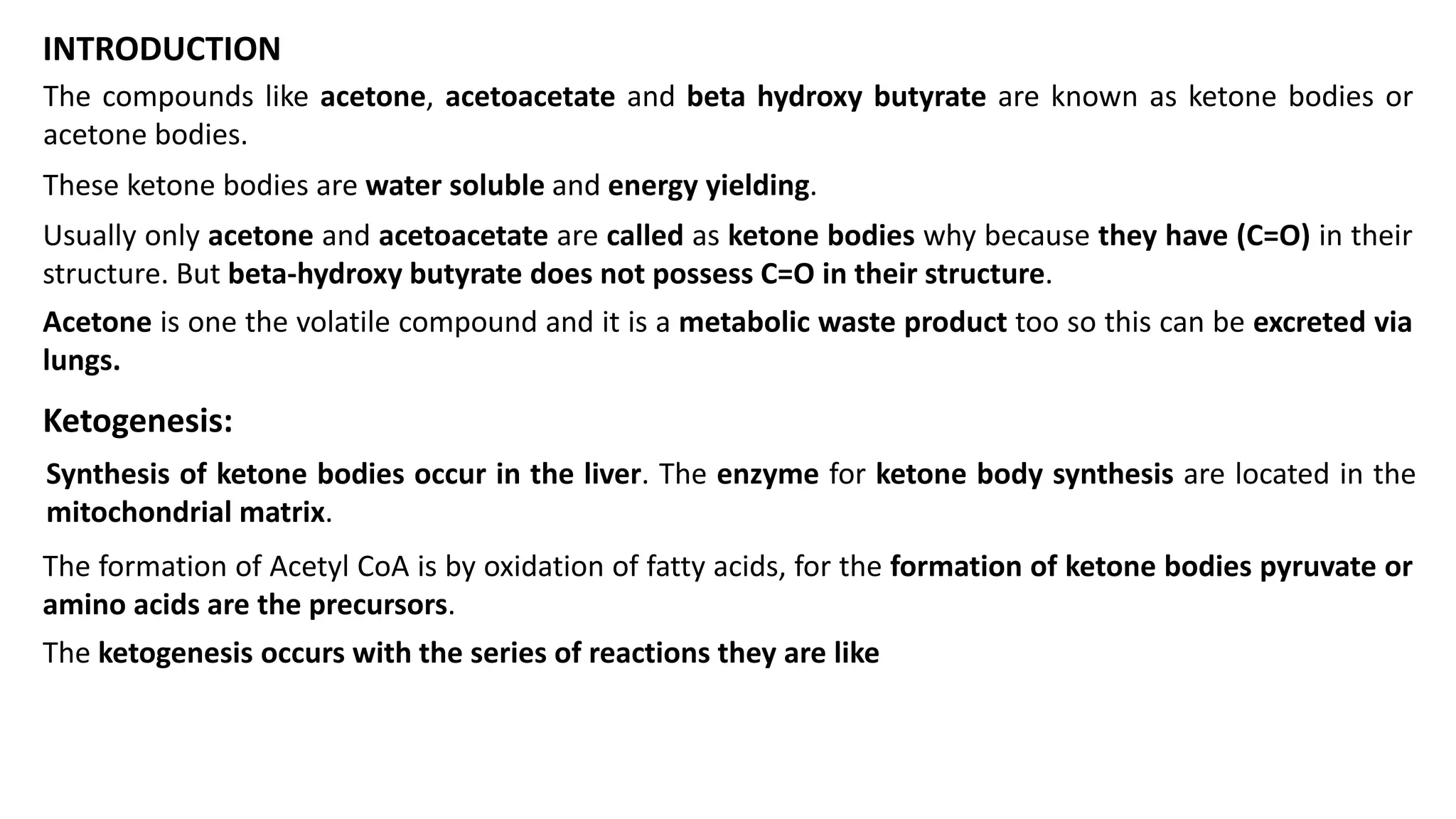
Contents:
• Introduction
• Ketogenesis
• Utilization of ketone bodies
• Reaction of ketone bodies
• Ketoacidosis
INTRODUCTION
The compounds like acetone, acetoacetate and beta hydroxy butyrate are known as ketone bodies or
acetone bodies.
These ketone bodies are water soluble and energy yielding.
Usually only acetone and acetoacetate are called as ketone bodies why because they have (C=O) in their
structure. But beta-hydroxy butyrate does not possess C=O in their structure.
Acetone is one the volatile compound and it is a metabolic waste product too so this can be excreted via
lungs.
Ketogenesis:
Synthesis of ketone bodies occur in the liver. The enzyme for ketone body synthesis are located in the
mitochondrial matrix.
The formation of Acetyl CoA is by oxidation of fatty acids, for the formation of ketone bodies pyruvate or
amino acids are the precursors.
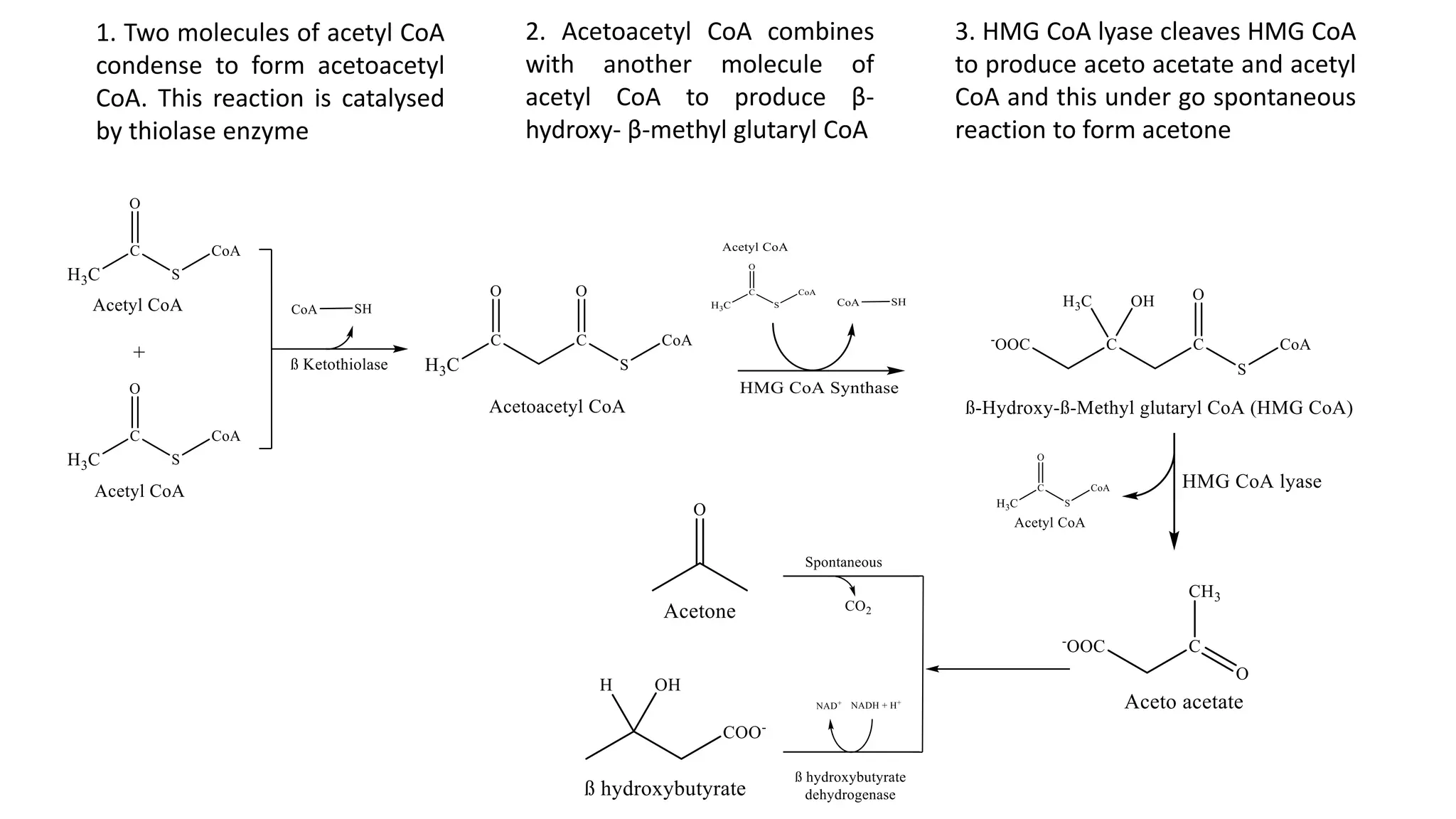
The ketogenesis occurs with the series of reactions they are like
1. Two molecules of acetyl CoA
condense to form acetoacetyl
CoA. This reaction is catalysed
by thiolase enzyme
2. Acetoacetyl CoA combines
with another molecule of
acetyl CoA to produce β-
hydroxy- β-methyl glutaryl CoA
3. HMG CoA lyase cleaves HMG CoA
to produce aceto acetate and acetyl
CoA and this under go spontaneous
reaction to form acetone
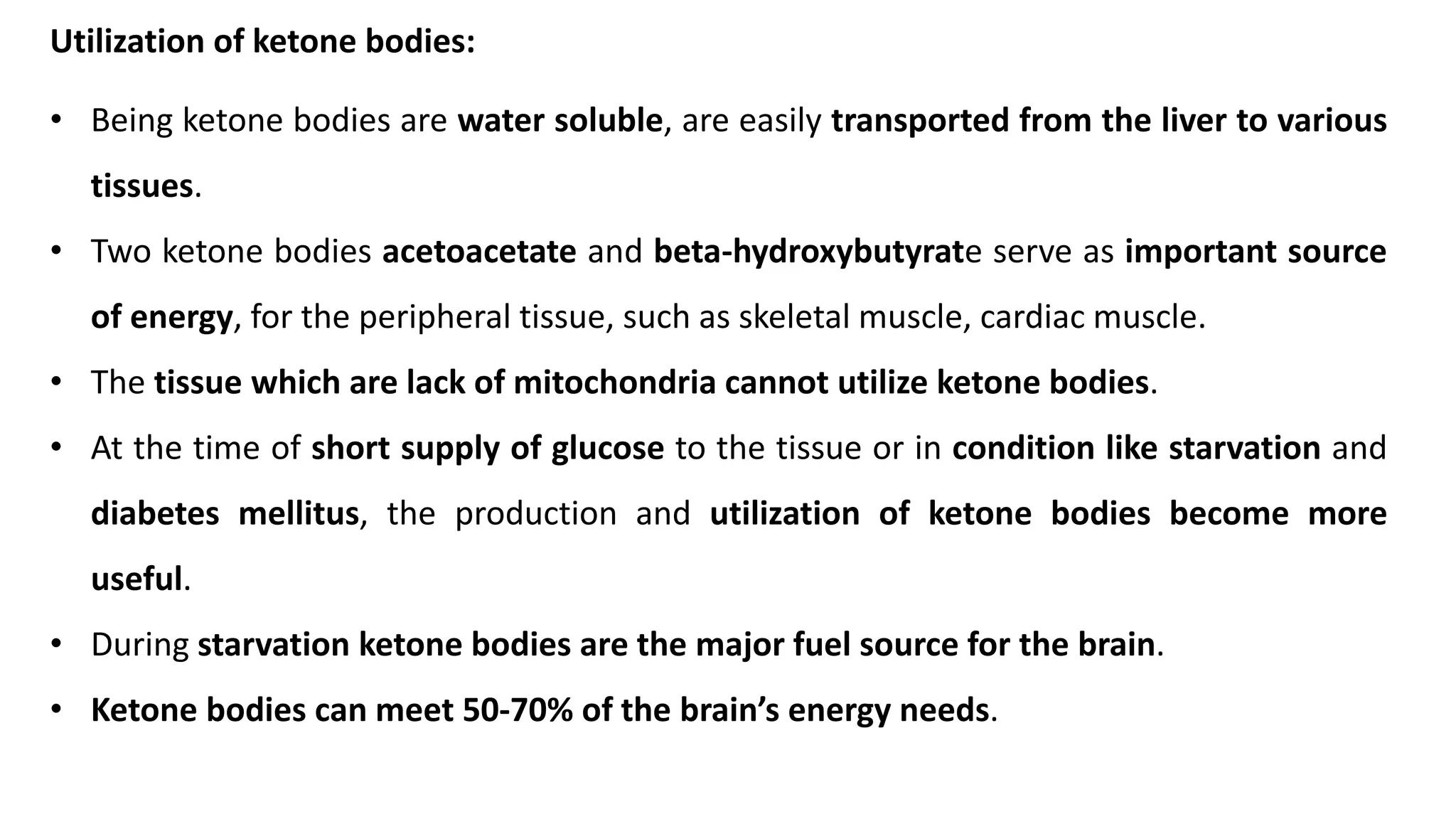
Utilization of ketone bodies:
• Being ketone bodies are water soluble, are easily transported from the liver to various
tissues.
• Two ketone bodies acetoacetate and beta-hydroxybutyrate serve as important source
of energy, for the peripheral tissue, such as skeletal muscle, cardiac muscle.
• The tissue which are lack of mitochondria cannot utilize ketone bodies.
• At the time of short supply of glucose to the tissue or in condition like starvation and
diabetes mellitus, the production and utilization of ketone bodies become more
useful.
• During starvation ketone bodies are the major fuel source for the brain.
• Ketone bodies can meet 50-70% of the brain’s energy needs.
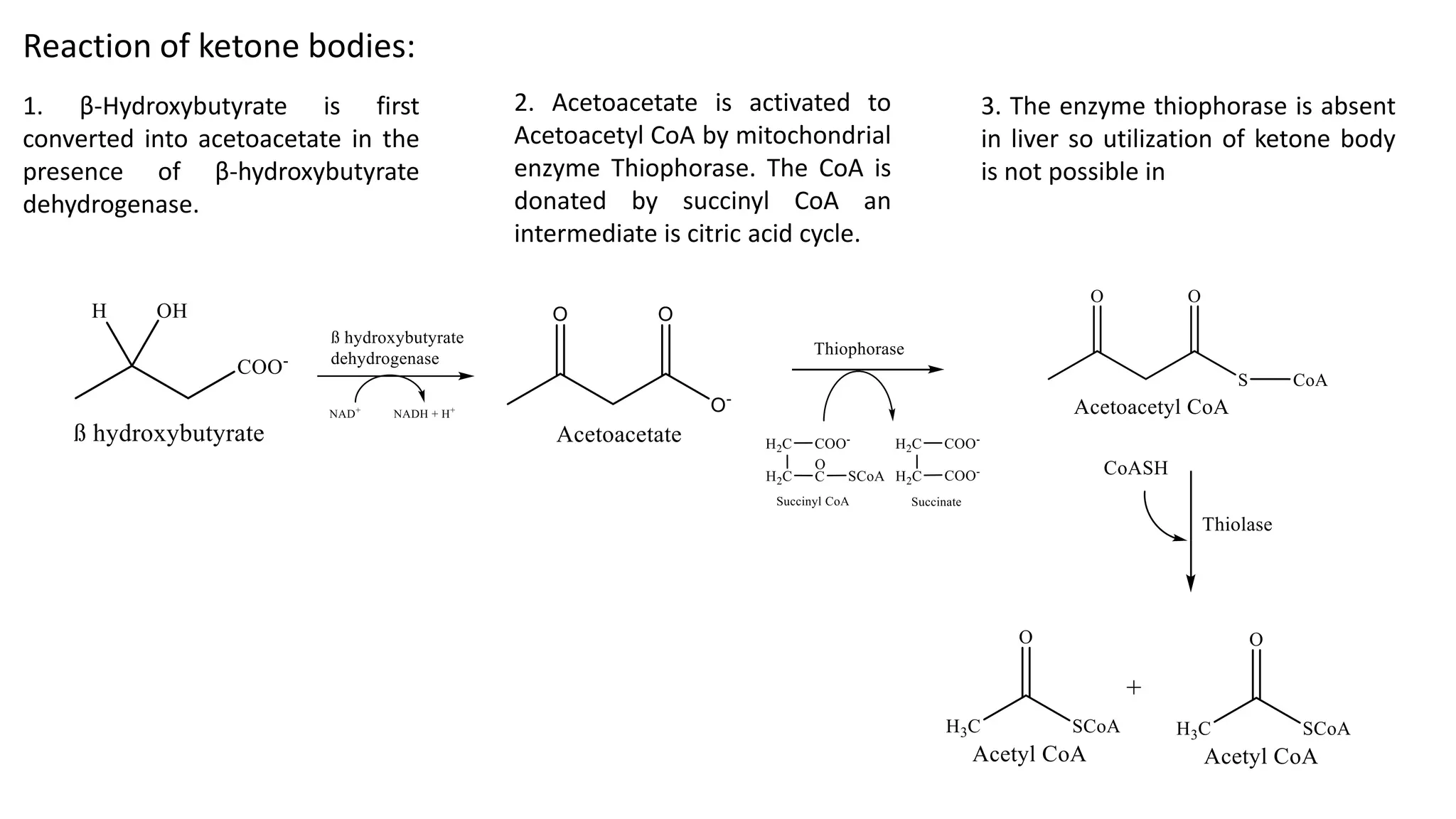
Reaction of ketone bodies:
1. β-Hydroxybutyrate is first
converted into acetoacetate in the
presence of β-hydroxybutyrate
dehydrogenase.
2. Acetoacetate is activated to
Acetoacetyl CoA by mitochondrial
enzyme Thiophorase. The CoA is
donated by succinyl CoA an
intermediate is citric acid cycle.
3. The enzyme thiophorase is absent
in liver so utilization of ketone body
is not possible in
Ketoacidosis:
Both acetoacetate and beta-Hydroxybutyrate are strong acids, increase their
concentration in blood could cause acidosis.
The carboxyl group which is present in the ketone bodies has pKa of around 4, so ketone
bodies dissociate and release H+ ions which lower the pH.
Diabetic ketoacidosis is dangerous may result in coma and even death if not treated.
Treatment:
Insulin administration is necessary to stimulate uptake of glucose by tissue and inhibition
of ketogenesis.

Ketone bodies Generation and utilization

  • 1.
    KETONE BODIES GENERATION ANDUTILIZATION Unit III: Lipid metabolism
  • 2.
    Contents: • Introduction • Ketogenesis •Utilization of ketone bodies • Reaction of ketone bodies • Ketoacidosis
  • 3.
    INTRODUCTION The compounds likeacetone, acetoacetate and beta hydroxy butyrate are known as ketone bodies or acetone bodies. These ketone bodies are water soluble and energy yielding. Usually only acetone and acetoacetate are called as ketone bodies why because they have (C=O) in their structure. But beta-hydroxy butyrate does not possess C=O in their structure. Acetone is one the volatile compound and it is a metabolic waste product too so this can be excreted via lungs. Ketogenesis: Synthesis of ketone bodies occur in the liver. The enzyme for ketone body synthesis are located in the mitochondrial matrix. The formation of Acetyl CoA is by oxidation of fatty acids, for the formation of ketone bodies pyruvate or amino acids are the precursors. The ketogenesis occurs with the series of reactions they are like
  • 4.
    1. Two moleculesof acetyl CoA condense to form acetoacetyl CoA. This reaction is catalysed by thiolase enzyme 2. Acetoacetyl CoA combines with another molecule of acetyl CoA to produce β- hydroxy- β-methyl glutaryl CoA 3. HMG CoA lyase cleaves HMG CoA to produce aceto acetate and acetyl CoA and this under go spontaneous reaction to form acetone
  • 5.
    Utilization of ketonebodies: • Being ketone bodies are water soluble, are easily transported from the liver to various tissues. • Two ketone bodies acetoacetate and beta-hydroxybutyrate serve as important source of energy, for the peripheral tissue, such as skeletal muscle, cardiac muscle. • The tissue which are lack of mitochondria cannot utilize ketone bodies. • At the time of short supply of glucose to the tissue or in condition like starvation and diabetes mellitus, the production and utilization of ketone bodies become more useful. • During starvation ketone bodies are the major fuel source for the brain. • Ketone bodies can meet 50-70% of the brain’s energy needs.
  • 6.
    Reaction of ketonebodies: 1. β-Hydroxybutyrate is first converted into acetoacetate in the presence of β-hydroxybutyrate dehydrogenase. 2. Acetoacetate is activated to Acetoacetyl CoA by mitochondrial enzyme Thiophorase. The CoA is donated by succinyl CoA an intermediate is citric acid cycle. 3. The enzyme thiophorase is absent in liver so utilization of ketone body is not possible in
  • 7.
    Ketoacidosis: Both acetoacetate andbeta-Hydroxybutyrate are strong acids, increase their concentration in blood could cause acidosis. The carboxyl group which is present in the ketone bodies has pKa of around 4, so ketone bodies dissociate and release H+ ions which lower the pH. Diabetic ketoacidosis is dangerous may result in coma and even death if not treated. Treatment: Insulin administration is necessary to stimulate uptake of glucose by tissue and inhibition of ketogenesis.